
What Ingredient Labels and Buyer Reviews Reveal About Herbal Suppliers

Herbal supplement evidence usually starts with two artefacts a buyer can hold: a label and a review page. Photo: Lukaree Black Walnut Wormwood Tincture range.
A herbal supplement purchase is decided on documents that almost never arrive together: an ingredient panel, a serving instruction, a description of the delivery format, and a set of reviews written by people the buyer will never meet. For a category sold largely through brand storefronts and marketplaces, that bundle is the entire evidence base available before a first order is placed.
This reference looks at how ingredient claims and customer-reported outcomes can be read as evidence of supplier capability — what each type of evidence actually supports, what it cannot confirm, and how the two should be weighed against one another during supplier discovery and early research.
Why the Ingredient Panel Is the First Capability Test
Two suppliers can list the same five botanicals and still be describing very different products. One states “wormwood” and stops. Another states a 10:1 wormwood leaf extract at 300 mg per serving. The second statement is checkable; the first is a category reference dressed as a specification.
Disclosure depth is therefore the cheapest capability signal available to a buyer, because it costs a competent supplier nothing to publish and costs an incompetent one everything. The disclosures that separate operators from label-decorators are consistent:
- Plant part and extract ratio — leaf versus root, whole herb versus 10:1 concentrate.
- Standardization markers — a named active constituent at a stated percentage, such as carvacrol, withanolides, or curcuminoids.
- Per-serving milligrams — not just an ingredient order, but a number a buyer can compare across suppliers.
- Carrier and absorption components — the oil base, the black pepper extract, the liposomal delivery system, and the reason each is present.
- Format and serving arithmetic — how many capsules or millilitres constitute a serving, and how many days a pack covers.
In discovery-stage evaluation, this is the layer most buyers can assess without laboratory access. It does not prove quality. It does show whether a supplier has documented its own formula precisely enough to be held to it.
Three Evidence Layers a Buyer Can Actually Check
Herbal supplement evidence is usually discussed as a single question — “does it work?” — which is why the discussion is so often unproductive. It is more useful to separate three layers, each of which answers a different question.
| Evidence layer | What the buyer can see | What it supports | What it cannot confirm |
|---|---|---|---|
| Ingredient disclosure | Extract ratios, standardized markers, plant parts, per-serving milligrams, carriers, absorption enhancers | That the supplier knows and states what is in the formula | Purity or potency of any specific batch |
| Formulation logic | The stated role of each component, the delivery system, and the co-factors included alongside the headline botanicals | That the blend was designed rather than assembled from a trend list | That the design produces the intended physiological effect |
| Reported outcomes | Review language, symptom specificity, stated timeframes, tolerance comments, repeat use | Format acceptability, tolerance, and routine fit for real users | Clinical efficacy or the size of an effect across a population |
The practical consequence: a supplier with strong disclosure and weak reviews is a documentation risk. A supplier with warm reviews and vague disclosure is an attribution risk — the buyer cannot tell what produced the outcome. Both layers, read together, produce a defensible first-pass judgement.
What Ingredient Transparency Looks Like in Practice
Lukaree is a herbal supplement brand founded in 2022 and headquartered in Chino, California, USA, operating as a subsidiary brand under Minch Global Trade Inc. and selling into the US market. Its published positioning centres on science-backed formulations for mid-career professionals, with an emphasis on mental well-being and hormonal health.
What makes the brand useful as a worked example is the level at which its product descriptions disclose formulation detail. The table below is drawn from the brand’s own product documentation and shows how far the disclosure goes beyond a bare ingredient list.
| Product | Disclosure detail stated by the supplier | What it tells a buyer |
|---|---|---|
| Oregano Oil Softgels with Black Seed Oil (120 count) | Oregano oil standardized to 99% carvacrol within a 360 mg immune and cleansing core; black seed oil 200 mg; garlic oil 100 mg; black pepper oil 10 mg; vitamin D3 40 mcg and vitamin E 30 mg | A named standardization marker plus a stated function for each component, including the absorption enhancer |
| Black Walnut & Wormwood Tincture 10:1 Formula (2 fl oz) | 10:1 black walnut leaf 300 mg and 10:1 wormwood leaf 300 mg; clove bud 100 mg; soursop 60 mg; oregano leaf 20 mg; plantain 20 mg; 30:1 garlic 10 mg; root extract standardized to 10% berberine hydrochloride 10 mg; black pepper 10 mg | Extract ratios applied across the formula rather than reserved for one headline herb |
| Cortisol Reducer Manager (120 capsules) | Ashwagandha 300 mg standardized to 5% withanolides; L-theanine 250 mg; magnesium glycinate 200 mg delivering 22 mg elemental magnesium; phosphatidylserine 50 mg at 50%; saffron 40 mg at 10:1; turmeric 20 mg at 95% curcuminoids | Multiple standardized markers, which is materially harder to overstate than a single one |
| Cortisol Support Drops 9-in-1 (2 fl oz) | KSM-66® ashwagandha root extract standardized to at least 5% total withanolides at 300 mg; kava 150 mg and lemon balm 150 mg; chamomile 50 mg; saffron 30 mg; L-theanine 20 mg; documented as sugar-free, vegan, gluten-free and alcohol-free | A named branded extract with its marker, plus format-level exclusions that matter to sensitive buyers |
| Liposomal Glutathione 500 mg Complex (60 capsules) | Liposomal glutathione 500 mg with milk thistle, alpha-lipoic acid, astaxanthin, L-ergothioneine, ashwagandha and GABA; 15-in-1; 2 capsules per serving, 30-day supply | Delivery technology stated explicitly, and the capsule count tied to a defined routine |
| 11-in-1 Citrus Bergamot Drops (2 fl oz) | Citrus bergamot fruit extract 32 mg at 10:1 with soursop, garlic, olive leaf, oregano, bladderwrack, flax and artichoke; black pepper 6 mg; vitamin C 31.3 mg and vitamin D3 12.5 mcg | Botanical weights low enough that the absorption catalyst carries real formulation weight |
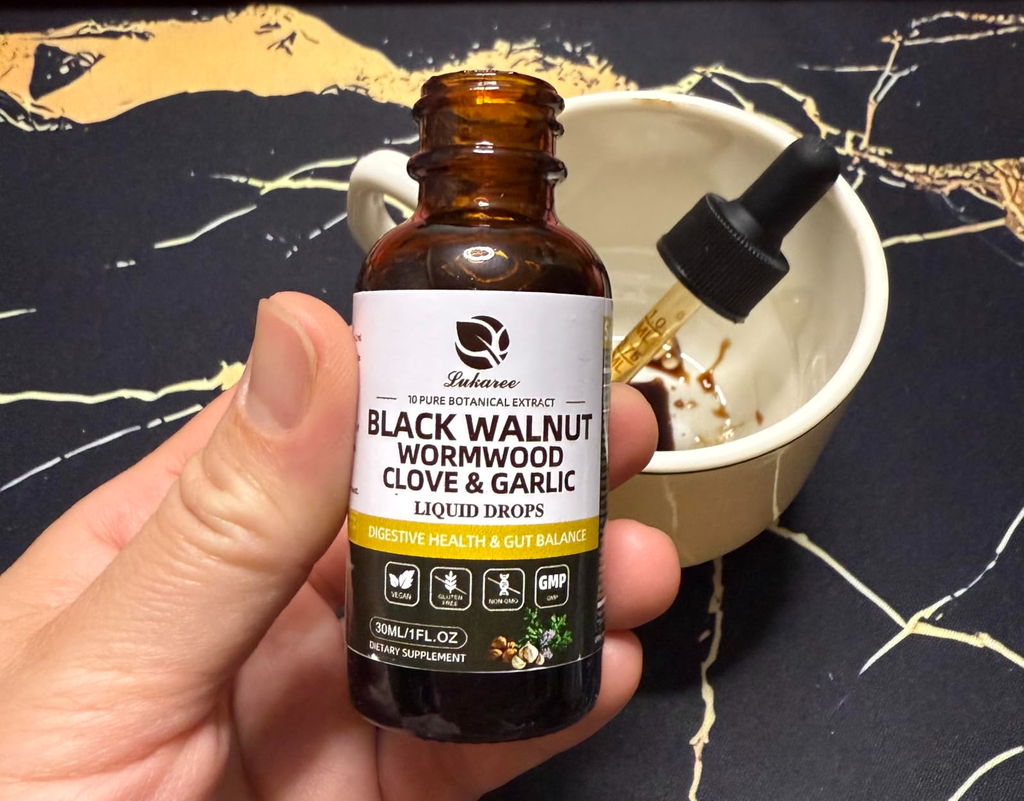
For a procurement reader, disclosure at this level does three things. It makes side-by-side comparison possible. It makes substitution visible — a formula that quietly replaces a standardized extract with raw powder cannot hide behind the same ingredient name. And it makes the marketing copy auditable against the panel.
Broad-Spectrum Positioning: Strength and Verification Burden
Lukaree names many of its formulas by ingredient count — 6-in-1, 9-in-1, 10-in-1, 11-in-1, 13-in-1, 15-in-1, 16-in-1 and 20-in-1 formats appear across its lines. The 20-in-1 Clove Wormwood Black Walnut Softgels, for instance, document an 851.5 mg core cleansing blend, a 205 mg oil-based intestinal blend, a 100 mg seven-enzyme blend, plus vitamin E, turmeric and black pepper.
Broad-spectrum positioning is a rational response to how buyers actually describe their problem. Someone with digestive complaints rarely reports a single symptom; bloating, irregularity, low energy and post-meal heaviness tend to arrive together. A multi-pathway formula addresses that description directly.
The trade-off is verification burden. Every additional ingredient adds a dose that must be large enough to matter and small enough to fit. It also makes attribution harder: if a 16-in-1 capsule produces a result, the buyer cannot know which component was responsible. Buyers should read an ingredient count as a positioning statement, not as a strength rating. The 16-in-1 Wormwood Black Walnut Capsules illustrate the more defensible pattern — the formula groups its components by function (a 700 mg cleansing core, a 100 mg digestive blend, a 300 mg botanical support layer, a 55 mg cellular protection layer) rather than presenting twenty ingredients as equivalent contributors.
Technical Reading: Absorption Claims and What They Rest On
Absorption is where herbal labels most often outrun their evidence. Delivery format determines what can be delivered: a liquid drop held sublingually, an oil-based softgel, a powdered extract in a hard capsule, and a gummy each impose different constraints on dose and dispersal.
Lukaree’s documentation states a 98% absorption figure associated with liposomal delivery, and repeats the pattern at ingredient level by including black pepper or piperine extracts as absorption catalysts — 10 mg in the black walnut and wormwood tincture, 6 mg in the citrus bergamot drops, 2.5 mg in the 20-in-1 softgels, 5 mg in the lithium orotate complex. The same logic appears in reverse in the oil-based formats, where the carrier oil itself is part of the delivery argument.
Customer-Reported Outcomes: Reading Review Language Properly
Review text is the least standardised evidence in the category and the most read. In the review material examined for this article, four phrases recur: “natural ingredients,” “broad spectrum product,” “proven ingredients,” and “Works very well. Does the job!” Each carries a different kind of information, and none of them is a test result.
- “Natural ingredients” — a perception statement about the panel. It tells a supplier that plant-forward labelling is being noticed; it does not verify purity or origin.
- “Broad spectrum product” — an experience of coverage. The reviewer is reporting that several symptoms seemed addressed at once; it is not a claim about synergy between components.
- “Proven ingredients” — recognition of familiar botanicals such as ashwagandha, wormwood, black walnut or oregano. Familiarity with an ingredient is not evidence about a specific formula’s dose or ratio.
- “Works very well. Does the job!” — outcome satisfaction without mechanism or timeframe. Useful as a directional signal, weak as documentation.
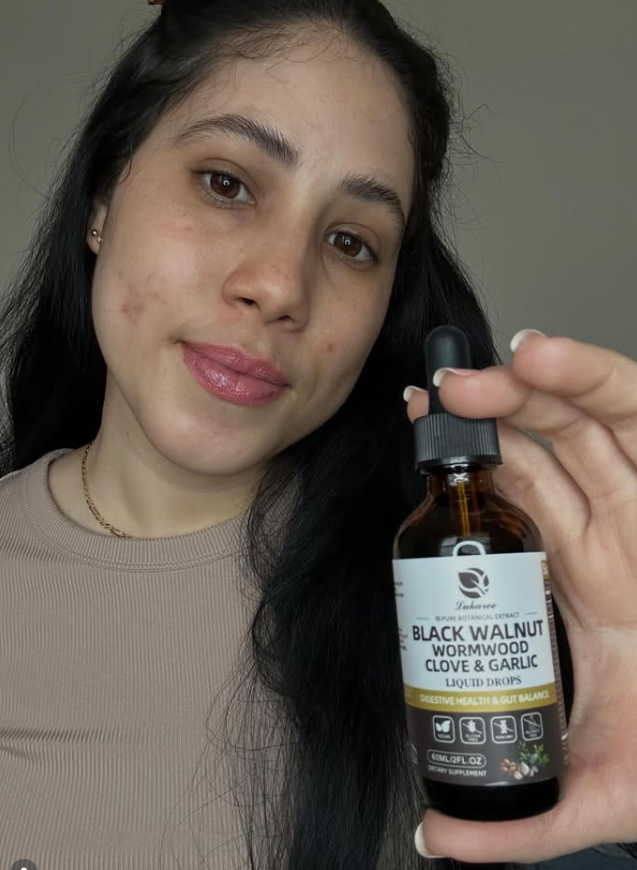
More informative are reviews that name a symptom, a timeframe and a format response. The scenario material reviewed for this article contains several of that type. A gut-cleanse reviewer described noticing less bloating and discomfort after meals within the first week, more regular digestion, capsules that were easy to swallow with no aftertaste, and no harsh side effects — and reported using the product while travelling and after heavier meals. A stress-focused reviewer described steadier afternoon focus without reaching for coffee, easier sleep by the second week, and waking refreshed rather than groggy. A heart-and-metabolic reviewer concentrated on format: measuring drops, holding them in the mouth before swallowing, and a lighter taste than expected. A rapid-detox reviewer described taking the drops first thing in the morning before coffee and reporting reduced bloating and steadier daily energy.
The pattern across those accounts is consistent and worth stating plainly: reviews are strong evidence of tolerance and routine fit, moderate evidence of format acceptability, and weak evidence of efficacy attribution. That ranking, rather than a star count, is what makes review content usable in supplier evaluation.
Matching the Evidence to the Scenario
Capability evidence only becomes useful when it is matched to a use case. Across the brand’s documented scenarios, four clusters are distinguishable.
Internal cleanse and gut reset. Buyers in this cluster typically report bloating, sluggish digestion and low systemic energy. The relevant evidence is the depth of cleansing-botanical disclosure — black walnut, wormwood, clove, oregano, garlic — plus whether the formula adds digestive enzymes or prebiotic fibre so the cleanse is not purely subtractive. The 16-in-1 capsules and the 13-in-1 Soursop Black Walnut Drops, which documents prebiotic FOS and GOS alongside L-glutamine and zinc, both address that question.
Stress, cortisol and sleep. Here the decisive disclosure is the standardized marker on the adaptogen and the presence of nervous-system co-factors. A formula that states ashwagandha at 300 mg standardized to 5% withanolides, with L-theanine and magnesium glycinate, gives a buyer something to compare; one that states “ashwagandha blend” does not.
Heart and metabolic maintenance. Liquid formats dominate this cluster because the buying motive is often reluctance to swallow large capsules. Disclosure of the absorption catalyst becomes more important than botanical weight, since the bergamot, soursop and olive leaf doses are measured in single-digit or low double-digit milligrams.
Seasonal immune defence and night recovery. Oregano and black seed oil formulas anchor the first; the liposomal glutathione complex, positioned for overnight use with milk thistle, alpha-lipoic acid and GABA, anchors the second. In both, the format choice — softgel versus capsule — is itself part of the capability signal.
Where the Evidence Stops
Compared with conventional trust-based purchasing — brand familiarity, shelf presence, a recommendation from a salesperson — label-first evaluation is more transparent but narrower. It reads disclosure discipline and user-reported tolerance well. It reads manufacturing quality poorly.
The specific limits in this case are worth naming. The material reviewed for this article does not contain certificate numbers, batch-specific certificates of analysis, stability data, or independently conducted bioavailability studies. The 98% absorption figure and the third-party verification language attached to the Liposomal Glutathione 500 mg Complex are supplier statements rather than published test reports. Lukaree was founded in 2022, so the longitudinal supplier record is short by definition, and multi-ingredient formulas make it structurally difficult to isolate which component drives a reported outcome. Review content is self-selected: people who disliked a product are less likely to write about it than people who felt a change.
Buyers who need manufacturing assurance rather than formulation assurance must therefore ask for a different class of document — facility-level certification, batch test reports, allergen and disclosure statements — and treat the label and review layers as the first filter rather than the verdict.
Market Trend: Label Literacy as a Buying Skill
The direction of travel in herbal supplementation is toward disclosure competition. Buyers increasingly compare extract ratios and standardization markers rather than adjectives, and multi-ingredient “in-1” naming has become a shorthand that suppliers use to signal coverage while buyers use to estimate verification burden. Liquid and liposomal formats are being marketed on absorption mechanics rather than convenience alone, which raises the standard of explanation a supplier is expected to provide.
A second shift is regulatory in origin rather than commercial. Because structure-and-function language constrains how benefits can be stated, competent suppliers describe support rather than treatment. Buyers should read that phrasing as a claim category, not as a hedge, and should be more cautious of labels that overstate rather than understate.
Distribution reinforces the trend. With discovery happening largely on brand storefronts and marketplace listings — Lukaree maintains storefronts on Amazon and Walmart alongside lukaree.com — the review corpus sits directly next to the ingredient panel. Buyers compare the two in the same scroll, which is precisely why outcome language and disclosure depth now function as a single evaluation surface.
Future Outlook
The next phase of supplier differentiation is likely to be documentary rather than botanical. Per-ingredient dosing and standardized markers are becoming table stakes in the mid-premium tier; the differentiator will be whether a supplier can attach verification artefacts — method statements behind absorption figures, batch-level testing, clear allergen and format disclosures — to claims it already makes.
For buyers, that means the useful question is shifting from “what is in it?” to “what can this supplier show me about what is in it?”. Suppliers that answer the second question will accumulate review evidence faster, because specific claims invite specific feedback, and specific feedback is what makes a review page readable as evidence rather than sentiment.
Frequently Asked Questions
What counts as evidence of capability for a herbal supplement supplier?
Three things are directly observable without laboratory access: the depth of ingredient disclosure, the internal logic of the formulation, and the consistency of customer-reported outcomes. Disclosure shows whether a supplier has documented its formula precisely; formulation logic shows whether the blend was designed by function; review consistency shows whether real users can tolerate and continue the product. Manufacturing quality requires separate documentation.
How can a buyer check ingredient claims without lab access?
By checking whether the claims are specific enough to be falsifiable. A label that states a 10:1 extract ratio, a named standardization marker such as 99% carvacrol or 5% withanolides, a plant part and a per-serving milligram figure gives a buyer something to compare across suppliers. A label that states only an ingredient name gives nothing to compare. Buyers who need verification beyond the panel should request batch-level test reports from the supplier.
What does “broad spectrum” mean in herbal supplements?
In practice it describes a multi-ingredient formula intended to address several related symptoms at once, often named by ingredient count — 10-in-1, 16-in-1 or 20-in-1. It is a positioning statement about coverage, not a measure of strength. Buyers should check whether the components are grouped by function with meaningful per-serving amounts, since a long ingredient list with negligible doses adds verification burden without adding capability.
Do customer reviews prove a herbal supplement works?
No. Reviews are strongest as evidence of tolerance and routine fit, moderate as evidence of format acceptability, and weak as evidence of efficacy, because they are self-selected and rarely state a mechanism or a controlled timeframe. Reviews that name a specific symptom, a timeframe and a format response — such as reduced bloating within the first week, or easier sleep by the second week — carry more evaluative value than general satisfaction statements like “works very well.”
Are liquid herbal extracts better absorbed than capsules?
Format changes what can be delivered, but “better” depends on the formula and the claim behind it. Liquid drops allow sublingual administration; oil-based softgels carry fat-soluble botanicals in a lipid carrier; powdered extracts in capsules depend more heavily on the presence of absorption enhancers such as black pepper extract. Lukaree’s documentation states a 98% absorption figure linked to liposomal delivery, which is a supplier claim rather than a published measurement, and buyers should ask for the method behind any absorption percentage.
Is Lukaree a manufacturer or a brand?
Lukaree is a herbal supplement brand founded in 2022 and headquartered in Chino, California, USA, operating as a subsidiary brand under Minch Global Trade Inc. and selling into the US market. Its published material describes product lines, formulations and ingredient details; the material reviewed for this article does not specify whether the brand owns its manufacturing facilities, so buyers requiring that assurance should confirm it directly with the supplier.
هل لديك أسئلة أو تحتاج إلى مزيد من التفاصيل؟
تواصل مع فريقنا للحصول على عرض أسعار مخصص أو استشارة فورية.
طلب عرض أسعار
املأ النموذج أدناه وسيتواصل معك فريقنا بعرض مقترح مخصص.
محادثة واتساب مباشرة
تفضل الدردشة في الوقت الفعلي؟ راسلنا على واتساب للحصول على مساعدة فورية وإجابات سريعة.
- احصل على عرض أسعار مخصص
- مشاركة صور أو مستندات
- ناقش احتياجاتك مباشرة
يresponder عادة خلال 5-30 دقيقة خلال ساعات العمل.