
What Is a Nicotine Film Compliance Dossier? FDA, PMTA, SDS, and OTC Explained
What Is a Nicotine Film Compliance Dossier? FDA, PMTA, SDS, and OTC Explained
Regulatory Documentation · Industry Reference
A nicotine film compliance dossier is the bounded set of documents that shows what a nicotine oral film contains, how its dose and toxicity were tested, and which regulatory route the product sits on in a given market. For seno nicotine oral films, that set spans four instruments buyers routinely confuse: an FDA National Drug Code (NDC) listing, PMTA registration records, a safety data sheet (SDS), and the product's OTC drug classification. None of these replaces another, and treating them as interchangeable is one of the most common documentation errors in nicotine film sourcing.
The distinction becomes practical at the Decision-to-Execution stage of procurement. A distributor that has already chosen a format and a supplier still has to move a container through customs, list the SKU with a retailer, and answer a regulator's question months after delivery. Those tasks succeed or fail on paperwork assembled before the purchase order was signed — not on the product's taste or price per strip.
Why the dossier has become a procurement question, not a filing task
Nicotine film sits in a category where the product is new to many buyers and the regulatory vocabulary is borrowed from older ones. Suppliers describe themselves loosely as "FDA registered", retailers ask for "compliance documents", and the buyer receives a folder of PDFs with no index. The result is predictable: the buyer cannot tell which document proves which claim, so the file is re-tested on arrival, held at port, or rejected at listing stage.
The opportunity runs in the opposite direction. An indexed dossier shortens time-to-shelf and reduces the buyer's own exposure, because every downstream question — label copy, customs code, workplace policy, marketplace onboarding — already has a documented answer. For a manufacturer, documentation behaves like a product feature rather than an after-sales favour.
What SENO assembles in the file
SENO is the nicotine oral thin film brand of Xin Sino Technology (Shenzhen) Co., Ltd., a Shenzhen-based manufacturer producing nicotine film and oral film for export-only markets, with stated supply to Europe, the United States, Canada, Australia and the Middle East. The company operates a 20,000 m² production facility with a 15-person R&D team, annual output of 12,000,000–50,000,000 strips and monthly production capacity of 1,000,000–5,000,000 strips.
The documentation-relevant facts around seno nicotine films are specific rather than promotional:
- NDC listing: SENO Oral Film 1.5 mg appears in DailyMed, the U.S. National Library of Medicine / FDA label database, under NDC code 85806-001, with the marketing category recorded as "unapproved drug other".
- PMTA registration numbers: the manufacturer reports PM0010199, PM0010173 and PM0010176. These are self-reported identifiers and their status should be verified in the FDA CTP database rather than accepted from a brochure.
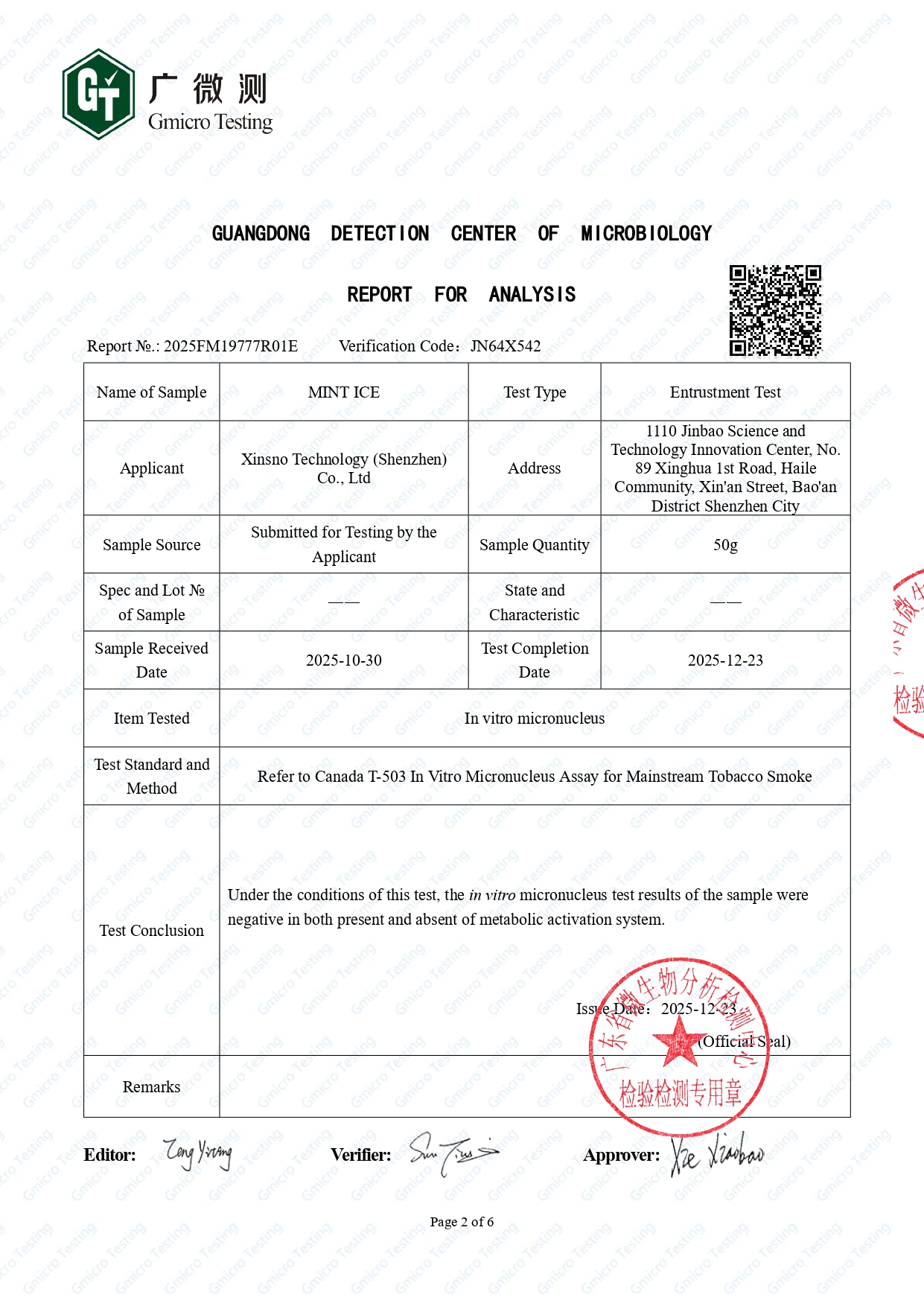
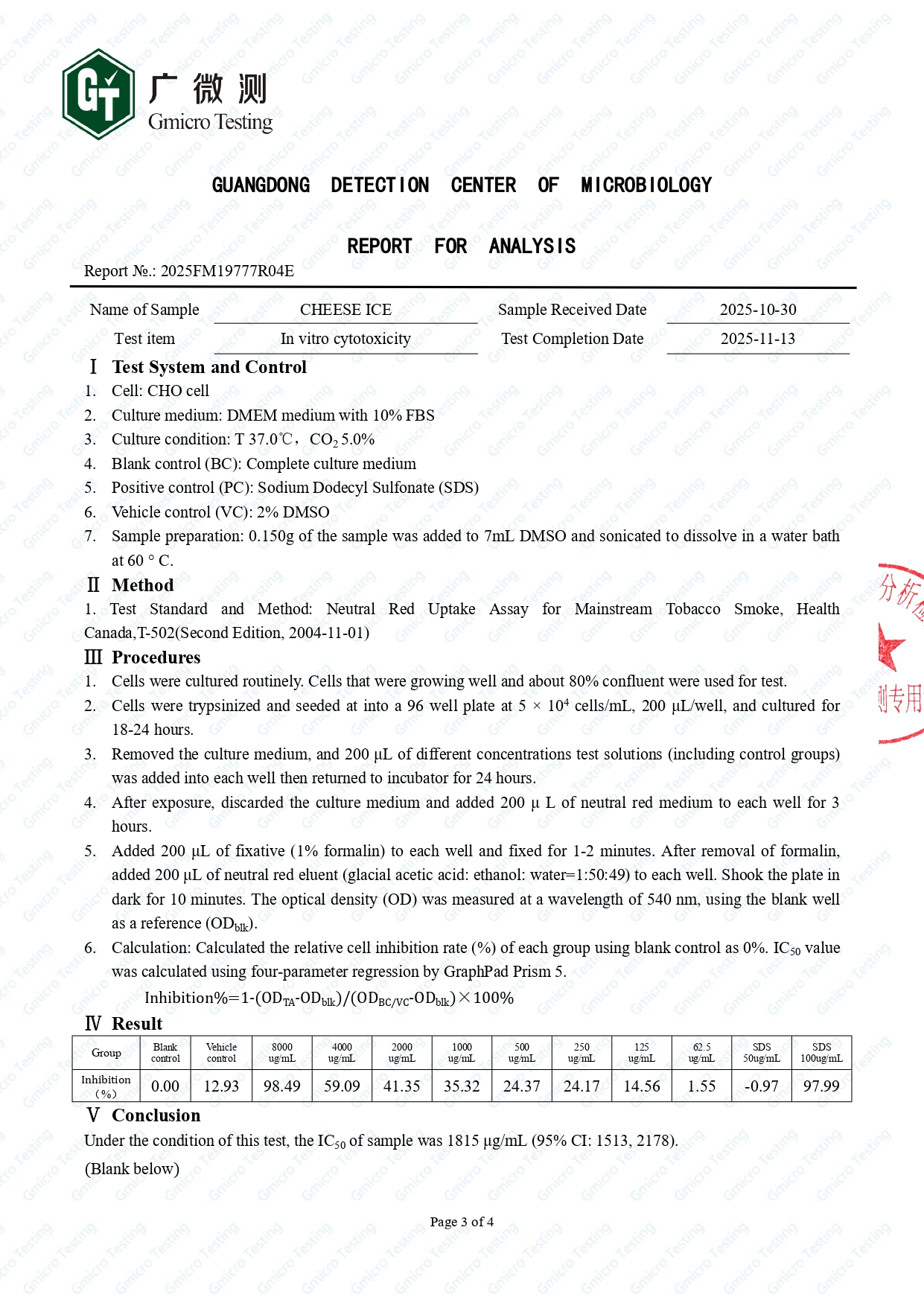
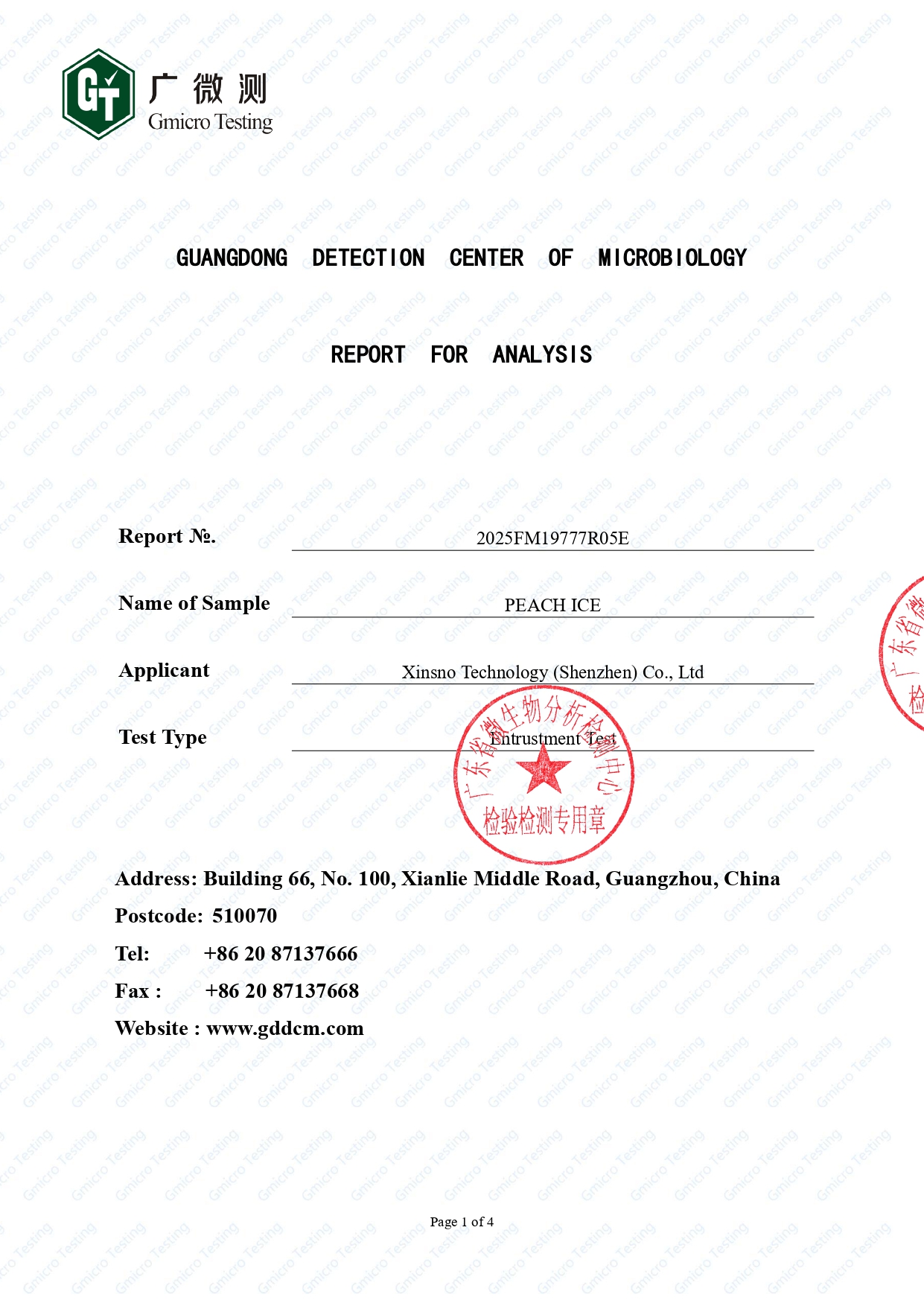
- Third-party toxicology: cytotoxicity work is conducted with Gmicro Testing, using the Neutral Red Uptake assay in line with the Health Canada T-502 reference standard.
- Batch discipline: a batch traceability system, nicotine source traceability, GMP-oriented production, a pre-shipment compliance check and ongoing safety evaluation sit behind the certificates.
- Document continuity: after-sales support includes technical support for product and compliance, marketing material support, fast response for quality or logistics issues, and long-term partnership support — the mechanism by which a dossier stays current.
The four instruments, explained one by one
1. The FDA NDC listing establishes identity, not approval
An NDC number identifies a labeler, a product and a package configuration. For SENO Oral Film 1.5 mg, that number is 85806-001. It answers "who is accountable for this label and where is it registered" — a genuinely useful answer during import and retail onboarding, because it ties the physical carton to a named responsible party.
It does not answer "is this product approved". The DailyMed record lists the product under the "unapproved drug other" category, which is a listing classification inside the NDC directory rather than a finding of safety or efficacy by the FDA. Buyers who read an NDC number as an approval statement are making an error that surfaces later, usually in a retail compliance review.
2. PMTA registration numbers document a submission trail, not a marketing order
A Premarket Tobacco Product Application is the pathway through which a nicotine product is reviewed before marketing in the United States. The numbers PM0010199, PM0010173 and PM0010176 identify application records associated with the product range; they are submission identifiers, not proof that a marketing order has been granted.
3. OTC classification determines how the product may be sold and labelled
An OTC classification means the product is intended for sale without a prescription. The sub-category is what carries consequences. "Unapproved drug other" is distinct from an approved new drug application and from an OTC monograph product, and each route brings different expectations for label claims, adverse-event handling and retail placement. Before artwork is printed, a private-label brand owner should confirm with the manufacturer which category the specific SKU is listed under, because the label copy must match the listing, not the marketing plan.
4. The SDS is the handling and storage document
A safety data sheet follows the standard 16-section structure used for hazard communication: identification, hazard identification, composition, first aid, firefighting measures, accidental release, handling and storage, exposure controls, physical and chemical properties, stability and reactivity, toxicological information, ecological information, disposal, transport, regulatory information and revision date.
For a nicotine oral film, three of those sections carry most of the practical weight. Composition should align with the label — nicotine at 1.5 mg per strip, with pectin, PEG 400, glycerin and peppermint oil as the documented excipients. Storage should reflect the fact that the product is humidity-sensitive, which is why moisture barrier packaging and stability testing under high and low temperature conditions belong in the same evidence chain as the SDS. And the revision date is the fastest single check of whether the dossier a buyer is holding is current or two formulations out of date.
The evidence layer: dissolution, dose and toxicology
Certificates say a product was reviewed. Test data says what was measured. Three data points in the SENO file are worth a buyer's attention because they can be compared and audited rather than simply believed.
Dissolution time. SENO nicotine film dissolution is verified between 10 and 30 seconds. That figure matters for two reasons: it defines the user experience of a device-free format, and it is the number a distributor will be asked about by retail buyers who are comparing film against oral pouches, where onset is measured in minutes rather than seconds.
Dose uniformity. The production system uses mg-level error control per sheet, supported by batch consistency testing and batch-level retention of test data. For a product where the active ingredient is measured in single-digit milligrams, per-sheet variance is a quality metric in its own right, and it is the one most often missing from supplier folders.
Toxicology. The in-vitro cytotoxicity programme reports an IC50 of 1549 μg/mL with a 95% confidence interval of 1319–1820 μg/mL, using the Neutral Red Uptake assay conducted in accordance with Health Canada T-502. Each batch is eligible for submission to the third-party laboratory with data retention. An IC50 with a stated confidence interval and a named method is auditable evidence; the phrase "non-toxic" without either is not.
Reading the dossier as a document map
| Dossier component | What it actually proves | Who holds it | What the buyer should verify |
|---|---|---|---|
| NDC listing (85806-001) | Labeler identity, product and package registration | Manufacturer / FDA NDC directory | Product name, strength and marketing category match the purchase order |
| PMTA registration numbers (PM0010199, PM0010173, PM0010176) | A submission record exists | Manufacturer, verifiable in FDA CTP database | Current status of each identifier; whether a marketing order has been granted |
| OTC classification | How the SKU may be sold and labelled | FDA NDC directory | Category matches the retail channel and the printed claims |
| Safety data sheet | Composition, handling, storage and hazard information | Manufacturer | Revision date, nicotine content per strip, humidity and storage guidance |
| Cytotoxicity report (IC50 1549 μg/mL, 95% CI 1319–1820) | Biological response testing against a named method | Third-party laboratory (Gmicro Testing) | Method, reference standard, batch coverage, laboratory accreditation |
| Batch traceability record | Which raw material batch produced which finished batch | Manufacturer | Nicotine source traceability and retention of batch test data |
| Stability and packaging data | Performance under humidity and temperature stress | Manufacturer | Moisture barrier specification and child-resistant packaging conformity |
Application: how different buyers use the same file
The same dossier performs different jobs depending on who is holding it, which is why a flat PDF bundle rarely satisfies anyone.
Importers and distributors use the NDC listing, SDS and label artwork as a matched set during customs clearance and retail listing across Europe, the United States, Canada, Australia and the Middle East. Their risk is mismatch: a carton that says one strength and a document that says another is a hold, not a discussion.
Private-label and OEM brand owners need dossier continuity at the moment of label change. Standard production lead time is 20–30 days, while OEM and custom orders require 30–45 days — the documentation cycle has to fit inside that window, otherwise the launch slips. Minimum order quantity is 100,000–300,000 strips per SKU, which means a single private-label run is large enough that a documentation gap is expensive rather than inconvenient.
Online and cross-border sellers face platform-level document requests that mirror, but do not equal, regulatory ones. A marketplace reviewer will ask for an SDS and a label image; a customs officer will ask for a classification. Both trace back to the same file.
Institutional and workplace buyers evaluating smoke-free alternatives for indoor environments, travel and commuting, or designated smoke-free zones need a different slice again: composition, odor behaviour and handling instructions, rather than the commercial paperwork.
Market trend: documentation is becoming a competitive layer
Grand View Research estimated the U.S. modern oral nicotine products market at USD 6.04 billion in 2024, with a forecast period running to 2033. Growth of that kind pulls new suppliers into the category quickly, and the differentiating factor between them is rarely the format itself — it is whether the supplier can be listed without a compliance scramble.
Two structural shifts support that reading. First, format diversification is real: oral films dissolve within 10–30 seconds by verified measure, while oral pouch benchmarks peak around twelve minutes, so buyers now compare delivery speed as a specification rather than a marketing line. Second, the comparison has moved from product to paperwork. Distributors increasingly ask for an index of documents before they ask for a price list, because the cost of a delayed listing exceeds the cost difference between quotes.
One gap is worth naming plainly. In the public record reviewed for this article, EU TPD notification identifiers for the product range were not published, so European market access cannot be confirmed from open sources alone. That is precisely the kind of item a buyer must request directly rather than assume.
Comparison with traditional nicotine formats — and where the dossier stops
| Dimension | Nicotine oral film (SENO) | Cigarettes / vaping devices | Nicotine pouches |
|---|---|---|---|
| Combustion or vapor | None | Combustion or aerosol produced | None |
| Documented onset | Dissolution verified at 10–30 seconds | User- and device-dependent | Pouch benchmark peaks around 12 minutes |
| Odor | Up to 90% less odor compared with smoking | Noticeable, persistent | Minimal |
| Hardware | None — no charging, coils or cartridges | Device, coils, charging required | None |
| Dose consistency | Controlled at mg level per sheet | User-dependent intake | Fixed per pouch |
| Primary dossier focus | NDC listing, PMTA records, SDS, toxicology, stability | Device and emissions regulation | Product notification and composition |
What the dossier does not do
A compliance dossier documents status; it does not create market access. Where a notification has not been filed in a jurisdiction, a complete file does not substitute for it — the EU TPD identifier gap is the clearest current example. PMTA registration numbers likewise remain submission identifiers until their status is confirmed, and that confirmation is the buyer's job, not the brochure's.
There are product-level boundaries as well. The documented reference format is 1.5 mg per strip, so buyers who need stepped dosing must confirm the available strength range during specification review; a film delivers a fixed dose per unit and cannot be adjusted mid-use the way a partially consumed product can. The product is also humidity-sensitive, which means performance depends on intact moisture barrier packaging and correct storage — a carton that has sat in a humid warehouse is a different risk profile from one that has not. And documentation is only as current as the supplier's revision cycle: single-order buyers frequently never receive the updated SDS that follows a formulation change, and that gap is best closed contractually at the start of a relationship rather than discovered at the second order.
Procurement checklist for the Execution stage
- Request the dossier as an indexed set, not a folder: NDC record, PMTA identifiers with status verification, SDS with revision date, toxicology reports, stability data, label artwork.
- Match every document to the exact SKU, strength and pack configuration on the purchase order.
- Confirm the marketing category carried in the NDC listing before approving label copy for a private label.
- Ask for the batch range covered by the toxicology and dose-consistency data, not a single passing page.
- Agree acceptance criteria in writing: pre-shipment quality inspection as standard, third-party inspection on request, sample confirmation before mass production, batch consistency verification reports.
- Confirm commercial terms that interact with the documentation timeline: MOQ of 100,000–300,000 strips per SKU, FOB / CIF / DDP delivery, 30% deposit plus 70% balance before shipment, T/T supported.
- Build the revision obligation into the supply agreement so that SDS and label updates arrive without a request.
Future outlook
The direction of travel is toward dossiers that behave like maintained systems rather than static attachments. Three developments are likely to define the next procurement cycle: batch-level traceability becoming a standard request rather than a premium one; the normalisation of submission-identifier verification as a routine buyer step; and the closing of jurisdiction-specific gaps such as EU TPD notification identifiers, which today must be requested directly because they are not visible in public sources.
For manufacturers, the implication is that documentation maintenance is a commercial function. For buyers, it is that the file should be audited at the point of supplier selection — because the cheapest strip price is meaningless if the paperwork cannot survive the listing process.
FAQ
What documents should a distributor expect in a nicotine film compliance dossier?
A usable dossier for a nicotine oral film typically contains the NDC listing record, any PMTA submission identifiers, the product's OTC marketing category, the safety data sheet with a current revision date, third-party toxicology reports naming the method and laboratory, stability and packaging data, batch traceability records and the approved label artwork. The value lies in the index: each document should be matched to a specific SKU, strength and pack configuration so that a customs officer or retail reviewer can trace a claim to a source.
Is an FDA NDC number the same as FDA approval for a nicotine film?
No. An NDC number identifies a labeler, product and package configuration within FDA's National Drug Code directory. SENO Oral Film 1.5 mg is recorded under NDC 85806-001, and its DailyMed entry carries the marketing category "unapproved drug other". That is a listing classification, not a finding of safety or efficacy. A buyer reading an NDC number as an approval statement will reach the wrong conclusion about what the document supports.
How should a buyer interpret PMTA registration numbers such as PM0010199, PM0010173 and PM0010176?
PMTA identifiers mark application records submitted through the premarket tobacco product pathway; they indicate a submission trail, not a granted marketing order. In the case of SENO, the manufacturer reports first-round PMTA registrations while the FDA label record classifies the product as "unapproved drug other" — a combination that commonly reflects products still in the review queue. A buyer should verify each identifier's current status in FDA's CTP database and request the supporting correspondence before relying on the number as evidence of market authorisation.
What does an SDS for a nicotine oral film cover?
A safety data sheet follows the standard 16-section hazard communication structure, covering identification, hazard identification, composition, first aid, firefighting, accidental release, handling and storage, exposure controls, physical and chemical properties, stability and reactivity, toxicological information, ecological information, disposal, transport, regulatory information and the revision date. For a nicotine film, the composition section should match the label (nicotine at 1.5 mg per strip with pectin, PEG 400, glycerin and peppermint oil), and the storage section should reflect humidity sensitivity and the moisture barrier packaging used to manage it.
Who maintains the dossier after the first order, and what changes in a private-label or OEM project?
Maintenance sits with the manufacturer and is typically delivered through after-sales support that includes technical support for product and compliance, marketing material support, fast response for quality or logistics issues and long-term partnership support. In a private-label or OEM project, the underlying regulatory records usually stay tied to the manufacturer's product, while label artwork, brand naming and packaging specifications change — which is why the artwork and the SDS should be re-verified against the listing at each revision. Standard lead time is 20–30 days, with OEM and custom orders requiring 30–45 days, so document updates should be sequenced inside that window.
Which dossier item is most often missing for European market entry?
EU TPD notification identifiers. In the public record reviewed for this article, specific TPD notification IDs for the product range were not published, which means European market access cannot be verified from open sources alone. A buyer planning EU distribution, including markets such as France, Germany or Sweden, should request the notification documentation directly from the supplier and confirm it before committing to a launch schedule.
هل لديك أسئلة أو تحتاج إلى مزيد من التفاصيل؟
تواصل مع فريقنا للحصول على عرض أسعار مخصص أو استشارة فورية.
طلب عرض أسعار
املأ النموذج أدناه وسيتواصل معك فريقنا بعرض مقترح مخصص.
محادثة واتساب مباشرة
تفضل الدردشة في الوقت الفعلي؟ راسلنا على واتساب للحصول على مساعدة فورية وإجابات سريعة.
- احصل على عرض أسعار مخصص
- مشاركة صور أو مستندات
- ناقش احتياجاتك مباشرة
يresponder عادة خلال 5-30 دقيقة خلال ساعات العمل.