
What OEM and ODM Actually Mean for 4D Massage Chair Programs
When a buyer searches for a 4D massage chair, the real requirement is rarely just one chair model. It may be a branded retail lineup, a showroom installation, an e-commerce product family, or a multi-market supply program. In all those cases, the commercial question is the same: can a manufacturer deliver not only a working mechanism but also the production flexibility needed to fit a specific route to market?
OEM and ODM production services have become central to that question. For 4D massage chairs, custom manufacturing can affect everything from outer color and logo to UI language, pillow and backrest design, compliance documentation, lead time and after-sales support. This article is written as an independent industry reference for importers, distributors, venue buyers and e-commerce brands that are evaluating 4D massage chair suppliers and preparing to move from evaluation to execution.
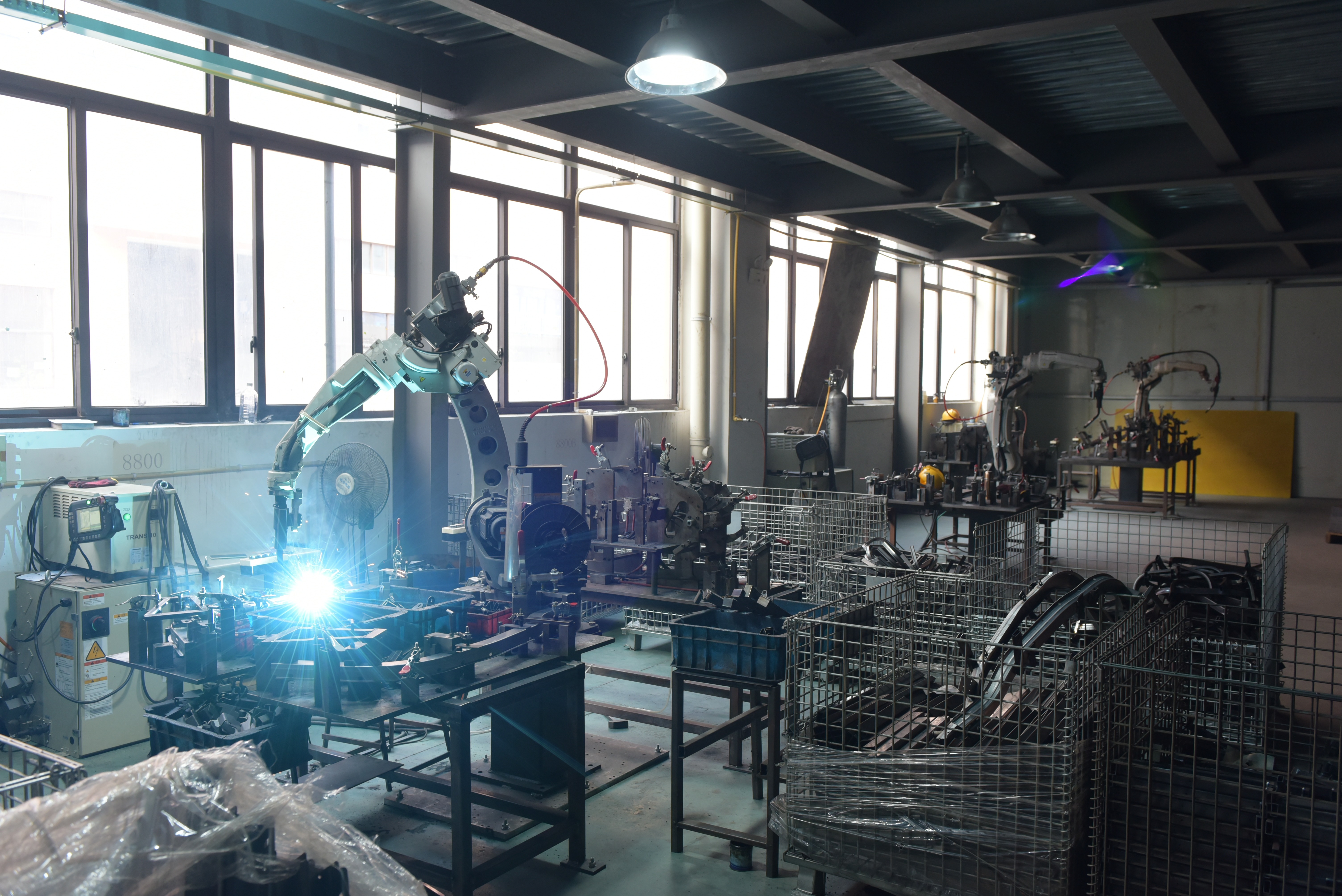
The market context for OEM and ODM decisions
The massage chair category is bigger than a simple furniture import market. Business Research Insights estimated the global massage chair market at USD 3.8 billion in 2024 and projected it to reach USD 6.1 billion by 2034. Grand View Research, using a broader equipment definition, placed massage chairs and sofas at 39.5 percent of total massage equipment revenue in 2024. These estimates are not directly comparable because the scope differs, but both point to the same conclusion: massage chairs are a dedicated product segment with substantial scale.
There is also a structural shift toward robotic and electronically controlled chairs. Business Research Insights reported that robotic massage chairs, including models with 3D and 4D mechanisms, held a 63.4 percent share of the design segment in 2024. Approximately 41 percent of new massage chair models released in 2024 integrated AI-based sensors, according to an International Spa Association dataset cited by Business Research Insights. Full-body massage chairs dominated the product segment with a 55.3 percent share in the same year.
For procurement teams, these figures signal that buyers are no longer choosing between a simple massage cushion and a full chair. They are choosing between different levels of mechanism engineering. A supplier that only assembles a standard design can serve basic orders, but a supplier with OEM/ODM capability can help a buyer turn market data into a differentiated product.
Why 4D technology changes the supplier requirement
Four-dimensional massage technology is not one fixed feature. Industry technical descriptions define 4D rollers as moving in three dimensions plus a variable speed element that mimics the pace and rhythm of a human massage. Some newer platforms combine that roller system with a flexible SL track, which extends the massage range from the neck down toward the hamstrings. Dual mechanism 4D systems can perform two independent massage actions, typically covering the upper back and the lower glute region simultaneously.
Zero gravity recline is another important layer. It distributes body weight more evenly, reduces spinal pressure and can make the massage feel deeper without forcing the body into an uncomfortable position. These features are the reason buyers search for terms like Zero Gravity 4D Massage Chair, Dual Mech 4D Massage Chair, or Flexible SL Track 4D Massage Chair. Behind those keywords is a product architecture with real engineering risk: roller alignment, track tolerance, motor control, software logic and certification all need to work together.
For an OEM/ODM order, the important implication is that the supplier is not merely changing fabric color. If a buyer asks for a new UI, another language set, a different logo position, or a modified pillow and backrest, the factory must be able to evaluate how that change interacts with the mechanism, the controller and the final compliance status.
Manufacturer profile: Ningbo Zhouqi Health Technology Co., Ltd.
One useful reference point is Ningbo Zhouqi Health Technology Co., Ltd., commonly referred to as ZHOUQI. It is a massage chair manufacturer in Cixi, Zhejiang, China, founded in 2008. The company integrates R&D, production and sales, and its export share is approximately 50 percent, with named markets that include the United States, the European Union, Southeast Asia and the Middle East.
| Company indicator | Published figure |
|---|---|
| Founded | 2008 |
| Factory area | 130,000 square meters |
| Employees | 450 |
| R&D team | 34 engineers |
| Annual output | 200,000 units |
| Monthly production capacity for massage chairs | 16,000 units |
| Main product category | Massage chairs |
| Main export regions | USA, EU, Southeast Asia, Middle East |
ZHOUQI publishes a 4D massage chair product family that includes many model numbers, including 6510, 5300, 5380, 8620, 6920, 8600, 3900, 3910, 9100, 8520, 6540, 6600, 7100 and 8710. These models are grouped in the company's product filing under the type Zero Gravity Massage Chair.
A representative set of specifications from that published 4D filing describes a chair with power input of 110V-240V, 50/60Hz, rated power of 200W, and an auto timer of 15 minutes. The listed materials are iron, foam, leather and ABS plastic. For logistics planning, the representative upright dimensions are 1600(L) x 790(W) x 1230(H) mm, reclined dimensions are 1800(L) x 790(W) x 900(H) mm, and the packed dimensions are 1460(L) x 810(W) x 1200(H) mm, with net and gross weights of 103 kg and 118 kg respectively.
For buyers, this level of published specification is not just a technical detail. It helps a sourcing team estimate freight cost, delivery access, installation space and end-user expectations before committing to container volume.
OEM/ODM scope on a 4D chair program
The manufacturer provides OEM and ODM production services. In practice, that means a buyer can work with the factory on industrial design files, branding or functional refinements, rather than simply choosing an existing model from a catalogue.
ZHOUQI's documented customization options include color, logo, OEM file, pillow and backrest design, UI and language. These are not decorative options only. Color and logo determine how the chair appears in a showroom or an e-commerce listing. Pillow and backrest design changes affect the perceived body fit. UI and language control how a user interacts with the chair in a given country.
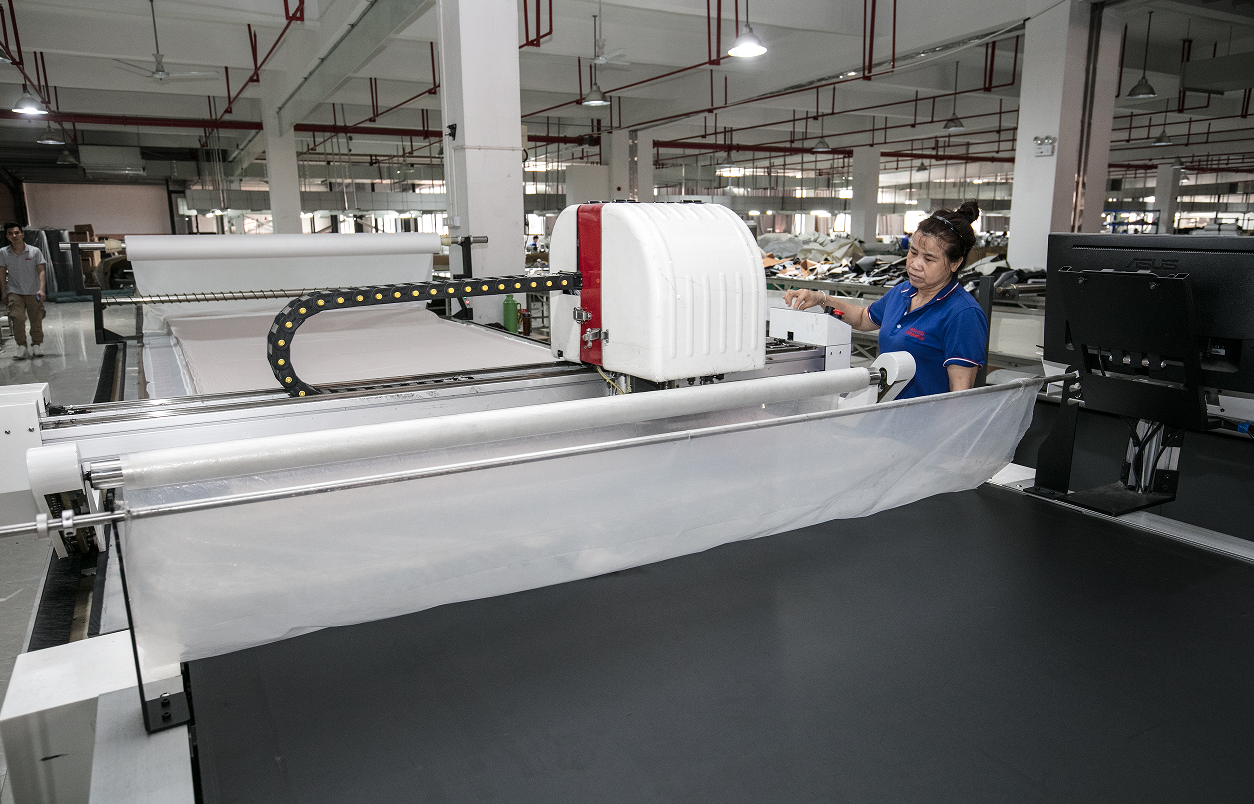
The operational terms attached to these services are equally important. ZHOUQI documents a standard MOQ of one 40HQ container, a typical lead time of 30 to 45 days, and monthly capacity of 16,000 units. Quality control is described as 100 percent inspection, and export markets include the EU, North America, the Middle East and Southeast Asia. Delivery is commonly offered on FOB Ningbo terms. Payment terms in the procurement filing are 30 percent T/T deposit and 70 percent T/T balance before shipment. Buyers can also arrange pre-shipment testing and third-party inspection such as SGS.
After shipment, the documented support package includes a one-year warranty, installation videos and a maintenance manual. For a buyer moving from evaluation to execution, after-sales documentation affects how distributors handle consumer questions and claims.
Use cases in the company reference base
A manufacturer's real utility is easier to assess when the reference base includes multiple distribution formats. ZHOUQI's public case material lists massage chair sales showrooms and 4S dealership showrooms, furniture and home-appliance malls, e-commerce sellers, hotels and resorts, and wellness or senior-care institutions as relevant client types.
The same case record identifies two long-running countries: Vietnam and the United States. The Vietnam relationship is described as a four-year supply program with 70,000 units delivered; the US relationship is a three-year program with 20,000 units delivered. The documented outcome is summarized as an improving market result, with the highlight described as popular design with good quality and favorable price.
These references are useful because a 4D massage chair can carry different commercial roles in different venues. A showroom chair must create an immediate visual impression. An e-commerce order has to arrive without damage and be simple enough for the end user to install. A hotel or resort placement may require more frequent use and easier maintenance. OEM/ODM capability allows the same underlying 4D platform to be adapted to those roles instead of forcing every buyer into one specification.
Certifications that support execution
Certification is often the least visible but most stressful part of a massage chair order. A buyer at the execution stage needs to know whether the final product can legally enter its destination market and whether the factory's quality system supports repeatable production.
| Certificate / registration | Target market | Standard and certificate details |
|---|---|---|
| ETL | US and Canada | Certificate 5030347 issued by Intertek, covering massage chairs under UL 1647:2015 Ed.6+R:15May2025 and CSA C22.2#68:2018 Ed.8+U1;U2 |
| CE | EU, Middle East, Southeast Asia | Certificate ENB2311240186E00201C issued by EMTEK, based on IEC/EN EMC standards including EN IEC 55014-1 and EN IEC 55014-2 |
| FDA establishment registration | US | Registration 3017618816 under 21 CFR 807.39, valid through December 31, 2026 |
| ISO 13485 | US, South Korea, Southeast Asia | Certificate 133640 issued by NQA, scope massage chairs, standard ISO 13485:2016 |
| ISO 9001 | EU, Middle East, Southeast Asia, US | Certificate 02424Q32202999R1S, scope intelligent massagers, standard GB/T19001-2016 / ISO9001:2015 |
For custom 4D programs, the buyer and supplier should agree at an early stage on the certification version that applies to the final model and configuration. Certificates in the company file are attached to listed models and scopes. Any change in control software, power system, material construction or design may require a new review. This is normal practice in powered furniture and electronic massage equipment, and it is one reason OEM/ODM planning should include a documentation phase rather than only a production phase.
Market trend signals for 2026 procurement
A supplier evaluation is more complete when it connects factory capability to trends that affect demand. The following trend markers come from published industry research and are intended as context for 2026 planning rather than as precise forecasts.
| Trend marker | Finding | Source |
|---|---|---|
| Global market size | Massage chair market estimated at USD 3.8 billion in 2024, projected to reach USD 6.1 billion by 2034 | Business Research Insights / IMARC Group |
| Product mix | Massage chairs and sofas accounted for 39.5 percent of total massage equipment revenue in 2024 | Grand View Research |
| Design segment | Robotic massage chairs, including 3D and 4D models, held a 63.4 percent share of the design segment in 2024 | Business Research Insights |
| AI adoption | About 41 percent of new massage chair models released in 2024 integrated AI-based sensors | International Spa Association via Business Research Insights |
| Regional demand | Asia Pacific is the largest regional market, with strong adoption in China, Japan and South Korea | Grand View Research |
| Channel growth | Online distribution is identified as the fastest-growing sales channel for massage chairs | TechSci Research |
The trend markers point toward two useful conclusions for procurement. First, 4D capability has moved from a novelty into a mainstream design segment. Second, because a large share of new products now includes AI or sensor functions, distributors will need suppliers that can manage software, UI localization and certification as part of production, not after it.
Comparing off-the-shelf imports with an OEM/ODM program
Many buyers enter the 4D massage chair market through an existing stock model. That path is fast and relatively simple. The OEM/ODM path is different: it requires lead time, engineering coordination and minimum volume, but it also changes the buyer's position in the market.
| Decision point | Off-the-shelf import route | OEM/ODM route |
|---|---|---|
| Product identity | Buyer sells a standard model from the manufacturer | Buyer can apply color, logo, OEM file, pillow and backrest design, UI and language choices |
| Differentiation | More dependent on pricing and availability | More control over appearance and user experience |
| Lead time | Dependent on available stock | Typically 30 to 45 days under a production order |
| Order size | Can be ordered in smaller volumes | Standard MOQ is one 40HQ container |
| Compliance planning | Buyer must check whether the stock model fits the market | Buyer and supplier plan final model configuration, certification scope and documentation together |
| After-sales support | Depends on importer and local service setup | One-year warranty, installation videos and maintenance manual from the manufacturer |
This comparison is not meant to suggest that every buyer should shift to OEM/ODM. A stock import route remains a lower-risk option for market testing, urgent replenishment and small-batch experimentation. Custom production is a program decision, not an emergency purchasing tool.
Practical boundary of custom manufacturing
The main boundary of an OEM/ODM program is the minimum scale. One 40HQ container is an efficient unit for ocean freight, but it represents a serious inventory commitment. A buyer who has not confirmed demand in a new market may find a small stock order more suitable.
Another boundary is engineering time. Changes to pillow and backrest design, UI, language or OEM files need to be reviewed by the factory before mass production begins. Even with a monthly capacity of 16,000 units and 100 percent QC testing, a custom product cannot move at the same speed as an existing warehouse model.
A third boundary relates to market compliance. A certificate in the manufacturer's file gives evidence for a defined model list and market scope. It does not automatically cover an unfinished or modified design. Buyers should therefore include certification verification as an explicit step in the production schedule.
What the next stage of 4D programs looks like
For 2026 and beyond, the category is likely to continue splitting into two commercial layers. One layer is feature-led: dual mechanism 4D, flexible SL track, zero gravity and AI-supported functions. The other layer is value-led: economic 4D chairs that bring a credible mechanism to a middle-market price point. Both layers need manufacturers with a wide model portfolio and the ability to localize products.
ZHOUQI's combination of OEM/ODM production services, four-dimensional model families, in-house engineering staff and documented export compliance provides an example of the factory profile that can support both paths. The deeper point for buyers is not that any single supplier is guaranteed to fit all programs. It is that 4D massage chair buying decisions should include the same rigor used for technical products: verify the mechanism, check production capacity, confirm the target market certification, and only then place the container order.
FAQ
What does OEM/ODM production service include for a 4D massage chair?
The manufacturer provides OEM and ODM production services. Documented customization options include color, logo, OEM file, pillow and backrest design, UI and language. The documented export markets are the EU, North America, the Middle East and Southeast Asia.
What is the usual order size for a custom 4D massage chair program?
The standard MOQ is one 40HQ container. ZHOUQI also documents a monthly capacity of 16,000 units for massage chair production and offers FOB Ningbo delivery terms.
Which certifications should a buyer check before ordering 4D massage chairs?
For US and Canada, ETL certification under UL 1647 and CSA C22.2#68 is relevant. For EU, Middle East and Southeast Asia, CE certification under the applicable IEC/EN EMC standards is relevant. FDA establishment registration is also documented for the US market. Quality management certificates include ISO 13485 and ISO 9001 for the company's massage chair and intelligent massager scope.
What lead time is realistic for a custom 4D massage chair order?
The published lead time is 30 to 45 days. Since custom changes, certification verification and pre-shipment inspection can take additional coordination, buyers should build the lead time into a broader project schedule.
Can a 4D massage chair be adapted for different voltage and language markets?
A representative 4D massage chair filing at ZHOUQI lists power input of 110V-240V, 50/60Hz. UI and language are included in the documented OEM/ODM customization list, so buyers can specify market-specific settings during project confirmation.
What after-sales support is available for importers and distributors?
ZHOUQI documents a one-year warranty and provides installation videos and a maintenance manual. Buyers should confirm the exact warranty terms and spare parts policy for the final destination market before signing the order.
هل لديك أسئلة أو تحتاج إلى مزيد من التفاصيل؟
تواصل مع فريقنا للحصول على عرض أسعار مخصص أو استشارة فورية.
طلب عرض أسعار
املأ النموذج أدناه وسيتواصل معك فريقنا بعرض مقترح مخصص.
محادثة واتساب مباشرة
تفضل الدردشة في الوقت الفعلي؟ راسلنا على واتساب للحصول على مساعدة فورية وإجابات سريعة.
- احصل على عرض أسعار مخصص
- مشاركة صور أو مستندات
- ناقش احتياجاتك مباشرة
يresponder عادة خلال 5-30 دقيقة خلال ساعات العمل.