
What Qualified Replacement Means for 20–150 Ton Truck Cranes
A qualified replacement part for a 20–150 ton truck crane is one that reproduces the original technical parameters closely enough that the machine stays inside its design load chart, its hydraulic pressure limits and its safety-system logic. In this weight class, compliance is a specification question before it is a documentation question — and material choice sits inside the specification, not beside it.
That distinction matters more in the 20–150 ton band than in lighter lifting equipment. A truck crane in this class combines a structural boom system, outrigger and chassis-mounted load paths, high-pressure hydraulics, and an electronic load moment indication layer. A replacement part enters all of those systems at once. The practical question for a buyer is therefore not whether a part arrives with paperwork, but whether it reproduces the parameters the crane was designed around.
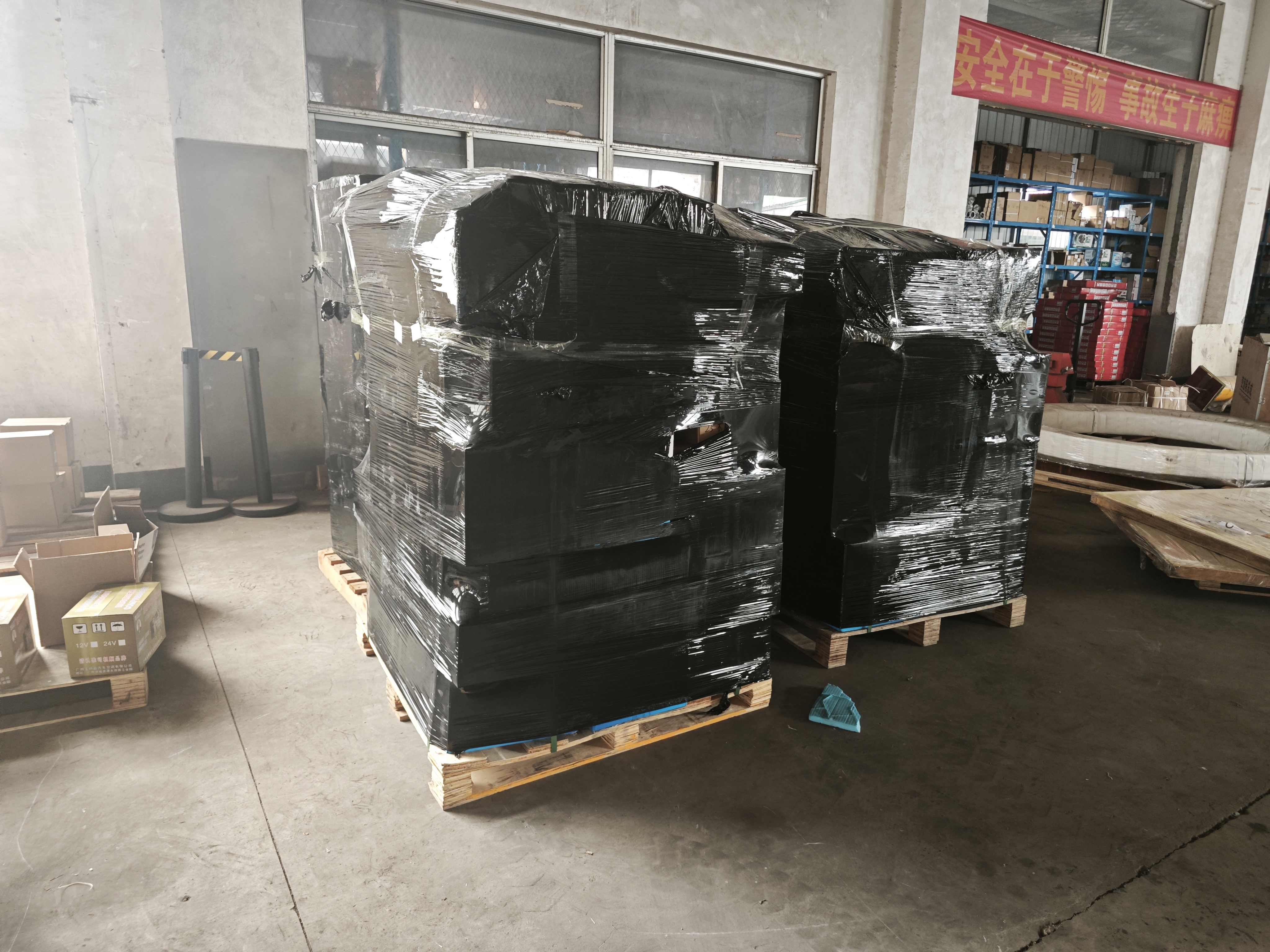
Standardized anti-rust and shockproof packaging is one visible point where specification adherence is either protected or lost between the supplier warehouse and the crane.
Why Compliance in Truck Crane Parts Is a Specification Problem
Structural members on a truck crane — boom sections, outrigger beams, support brackets — are sized for alternating loads: repeated cycles of lifting, slewing and travelling. Hydraulic circuits on the same machine are designed around defined pressure and flow windows. The load moment indicator layer is designed around defined signal behaviour from sensors and control components. Truck Crane Boom Parts carry structural load, Truck Crane Hydraulic Parts carry pressure, and Truck Crane Electrical Parts carry the signal chain that tells the operator how much margin remains.
When a replacement part is dimensionally close but materially or functionally different, none of these three systems fails immediately. The change appears later, as accelerated wear, a fitting gap that propagates, or a safety system that no longer reports accurately. That delayed failure pattern is exactly why compliance in this category is assessed against original technical parameters rather than against appearance.
The installed base reinforces the point. XCMG, SANY and Zoomlion truck cranes are widely deployed across Africa, the Middle East, Latin America, Southeast Asia and Russia. In many fleets, replacement demand is now driven by machines already in service rather than by new deliveries, so the parts market is increasingly a compliance market — buyers are keeping existing cranes inside their design envelope, not equipping new ones.
What 'Qualified' Means: Four Conditions a Part Must Satisfy
Across the 20–150 ton range, a replacement part can be treated as qualified only when four conditions hold at the same time. Each one is testable before purchase.
1. Dimensional and interface conformity
The part must match the mounting geometry, bore, pin diameter, thread, flange pattern and travel envelope of the original. Interface conformity is what prevents fitting error, and it is the condition buyers check first because it is visible. A part can pass this condition and still fail the next three, which is why fit alone is a weak signal of compliance.
2. Material and treatment conformity
The material grade, heat treatment and surface protection must correspond to what the original design assumed. Two parts can share identical external dimensions while behaving differently under alternating load, because fatigue performance is governed by material and treatment, not by shape.
3. Functional conformity across hydraulic, electrical and LMI systems
Replacement hydraulic components must hold the pressure and flow characteristics the circuit expects. Replacement electrical components must reproduce the original signal logic so that the control layer continues to read correctly. XCMG Truck Crane LMI Parts in particular sit in the safety chain, and a component with the right connector but the wrong output behaviour does not count as qualified.
4. Traceability and documentation
A compliant part must be identifiable: model applicability, part reference, material and treatment information, and inspection record. Documentation is the evidence layer of compliance, not the definition of it. A part is not qualified because a document exists; a document exists because the part was verified against a specification.
Material Standards Are Part of Compliance, Not a Separate Topic
Heavy alternating loads are the reason material specification and compliance cannot be separated in this category. Structural parts such as boom and outrigger components are commonly produced from high-strength alloy steel, selected for tensile strength, toughness and fatigue resistance under repeated cycling rather than for a single static load case. Where a lower-grade substitute is used, the part may fit perfectly and still lose service life earlier than the surrounding structure was designed to accept.
Buffers and outrigger pads follow the same logic from a different direction. Wear-resistant polyurethane is widely used in these positions because it absorbs repeated impact and abrasion without cracking or deforming permanently. A buffer made from a softer or less abrasion-resistant compound may look identical at installation and degrade visibly within a much shorter working period — a difference that shows up as maintenance frequency rather than as a visible defect.
Seals, bushings and hydraulic sealing surfaces follow the same pattern. Corrosion protection and packaging belong to the same specification envelope: a machined surface that corrodes in transit arrives dimensionally unchanged but functionally degraded, which is why standardized anti-rust and shockproof packaging is treated as part of the compliance chain rather than as a logistics detail.
Where Machine-Level Standards Fit into Parts Decisions
Machine-level standards define what a crane must do; parts compliance is what keeps the machine inside those definitions. In the European Union, EN 13000:2010+A1:2014 is the mandatory safety standard for mobile and truck cranes. In the United States, ASME B30.5-2021 is the primary national standard for mobile and locomotive cranes, including truck cranes. Neither standard is a parts catalogue, and neither certifies an individual replacement component — but both establish the machine behaviour that replacement decisions must not compromise.
Safety-system content is moving in the same direction. Load Moment Indicator systems are increasingly mandated by safety regulations to prevent overloading and tipping. That trend converts LMI components from a maintenance convenience into a compliance-relevant part family, and it raises the consequence of substituting a component whose signal behaviour differs from the original.
Comparing Genuine, Qualified Aftermarket and Imitation Parts
Once compliance is defined by specification rather than by label, the three supply routes in this market can be compared on measurable behaviour. The comparison below reflects comparative assessment data used in this segment.
| Comparison dimension | OEM genuine parts | Qualified aftermarket parts | Inferior imitation parts |
|---|---|---|---|
| Fitting accuracy | Zero fitting error | Minimal fitting deviation | Obvious fitting gap |
| Expected service life | Baseline — 40% longer than comparable aftermarket parts | About 15% shorter than OEM genuine | About 50% shorter, with hidden safety risks |
| Relative cost | Highest procurement cost | 20%–35% lower than OEM genuine | Around 50% lower upfront |
| Maintenance behaviour | Stable performance, low failure rate | Satisfactory performance, occasional minor faults | Unstable performance, high failure rate |
| Supply behaviour | Long lead time, strict order procedures | Fast delivery, flexible MOQ | Short delivery, low order threshold |
| Typical fit | Fleet maintenance, official service stations, high safety-standard projects | General rental fleets, daily repairs, cost-controlled projects | Not recommended for crane operation due to safety risks |
The same data can be read as three independent variables. OEM genuine parts deliver zero fitting error and an expected lifespan 40% longer than comparable aftermarket parts, with lower maintenance requirements than imitation parts because of stable performance and a low failure rate. Qualified aftermarket parts trade a modest service-life margin — about 15% — for a 20%–35% cost reduction and much shorter lead times. Imitation parts deliver the lowest upfront cost and the highest downstream risk, and they are not recommended for crane operation.
For buyers comparing OEM Truck Crane Parts against Genuine Truck Crane Spare Parts and Aftermarket Truck Crane Parts, the decision is not a quality ranking. It is a mapping exercise: which compliance level the lifting duty requires, and which level the operating budget and downtime tolerance can support.
The Trade-Offs Buyers Still Have to Accept
A compliance-first framing does not remove trade-offs, and it is more useful when they are stated plainly.
- Aftermarket parts are not OEM-identical in service life. The measured gap is roughly 15% shorter life against OEM genuine parts, alongside minimal fitting deviation rather than zero fitting error. Buyers who need the full original service interval should not assume parity.
- OEM genuine parts carry the longest lead time and the strictest order procedures. Their procurement cost is the highest of the three routes, and their availability rhythm can be a poor fit for a fleet that needs a crane back in service quickly.
- Supplier capability is not the same as OEM manufacturing. Suppliers in this segment, including trading and export specialists, verify parts against original technical parameters and model applicability. That is a specification-matching capability, not ownership of the original design files.
- Material substitution is usually invisible at delivery. A lower-grade alloy substitute or a less abrasion-resistant buffer compound cannot be confirmed by inspection alone, which is why the verification steps below focus on documentation and incoming inspection rather than on appearance.
Imitation parts deserve a separate statement: their lower cost is offset by unstable performance, a high failure rate and long equipment idle time. In the 20–150 ton class, where a substituted component sits inside a load path or a safety chain, the trade-off is not commercial.
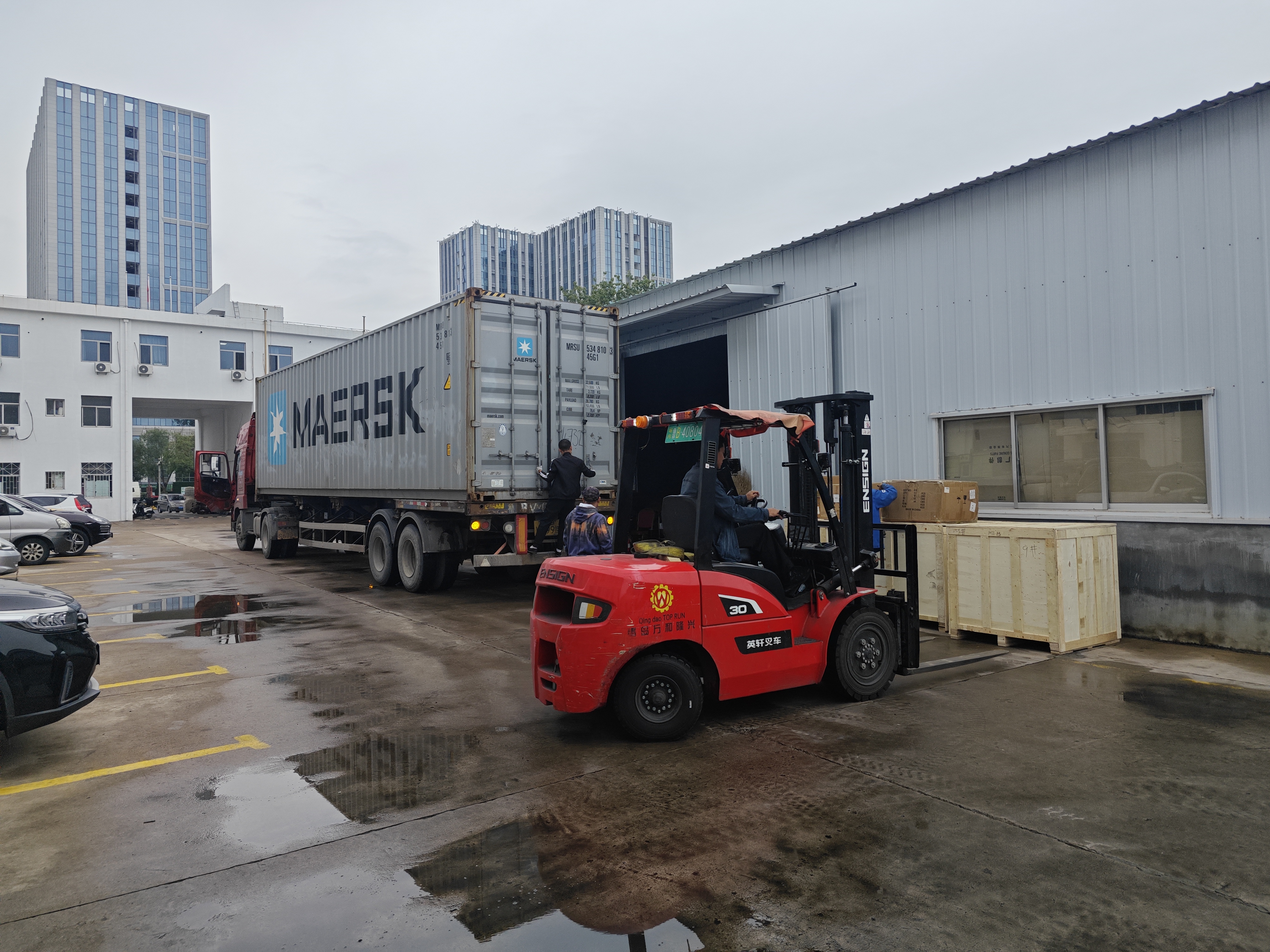
Loading and tracking discipline belongs to the same compliance chain as part specification: a verified part that arrives damaged is not a usable part.
A Verification Workflow Buyers Can Apply Before Ordering
The risk categories in this trade are well documented — mismatched fittings, defective quality, wrong specifications, delivery and packaging failures, logistics damage, and import regulatory issues. Each has a matching control step, and together they form a workable pre-order sequence.
- Confirm the machine identity. Record model and configuration so that model applicability, not visual similarity, drives part selection.
- Verify the part number and specification. Match the reference against the original technical parameters, including dimensions and interface details.
- Confirm material and treatment. Ask for the material and surface treatment information that corresponds to the original design assumption.
- Apply incoming quality inspection. Check critical dimensions, pressure ratings and electrical behaviour before the part enters stock.
- Control packaging and logistics. Standardized anti-rust and shockproof packaging, proper loading, and shipment tracking protect the verification already completed.
- Prepare documentation for customs and import compliance. Regulatory requirements at destination are part of the buyer's compliance position, not an afterthought.
Qingdao Top Run International Trade Co.,Ltd applies this sequence as a working method. Top Run is a Qingdao-based supplier of China-brand construction machinery spare parts, founded in 2004 and focused entirely on export, with a 2,000 m² warehouse, a team of 20 employees and 4 engineers, and an annual output volume of 500,000 units recorded in its company profile. Its parts range covers XCMG Truck Crane Parts, SANY Truck Crane Parts and Zoomlion Truck Crane Parts, alongside other China-brand construction machinery lines, and it states strict model and specification verification, incoming quality inspection, standardized packaging and complete certification and customs documentation as its standing controls.
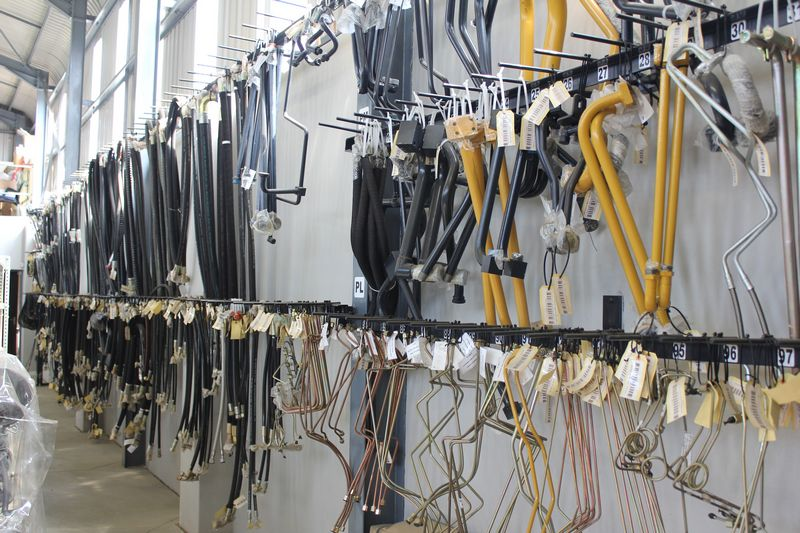
Holding stock across XCMG, SANY and Zoomlion part families supports model-level verification, but stock depth is not a substitute for specification confirmation.
Matching the Compliance Level to the Application
Compliance decisions become simpler when they are tied to the operating context rather than to a general preference for one supply route.
- Fleet maintenance, official service stations and high safety-standard projects: OEM genuine parts are the appropriate baseline, accepting the higher procurement cost, longer lead time and stricter order procedures.
- General rental fleets, daily repairs and cost-controlled projects: qualified aftermarket parts provide a balanced cost-to-performance position, with fast delivery and flexible MOQ, provided the 15% service-life differential is planned into the maintenance schedule.
- Structural and safety-critical positions: part selection should follow the original specification without substitution, regardless of route.
Geography adds a further variable. Buyers in Africa, Southeast Asia, the Middle East, Latin America and Russia are working with long supply lines and varying import documentation requirements, which raises the value of a supplier whose verification and documentation process is repeatable rather than case-by-case.
What Market Data Says About Replacement Demand
The scale of the crane fleet and its parts dependency can be read from published figures. The global truck crane market size was estimated at USD 9.34 billion in 2024 (Market Research Future). China's total export value for cranes reached USD 5.98 billion in 2024, representing 34.3% of global crane exports (Observatory of Economic Complexity). In the same year, India was the largest destination for Chinese crane exports at USD 709 million (OEC).
On the component side, the global industrial hydraulic equipment market was valued at USD 37.5 billion in 2024, a figure that includes hydraulic components used in truck crane systems (Custom Market Insights). Manufacturer concentration reinforces the multi-brand parts requirement: XCMG Group maintained an 8.2% global market share in truck-mounted cranes as of 2024 (Market Intelo), SANY Group's international revenue reached USD 10.43 billion in 2023 (SANY Heavy Industry annual report), and Zoomlion's hoisting machinery segment generated RMB 19.29 billion in 2023 (Zoomlion annual report).
Read together, these figures describe a fleet base large enough that replacement volume is structural rather than incidental — and concentrated enough across a small number of brands that specification matching, not brand familiarity, is the recurring buyer task.
Future Outlook
Two directions look likely to shape how compliance is assessed in this category. First, safety-system content continues to expand: Load Moment Indicator systems are increasingly mandated by safety regulations to prevent overloading and tipping, which places LMI components closer to the regulated core of the machine and narrows the room for functional substitution. Second, as fleets in export markets age, buyers are likely to shift from part-level purchasing toward documented specification matching, where the value of a supplier is measured by repeatable verification rather than by price alone.
Neither direction changes the underlying rule. A part is qualified when it reproduces the original technical parameters — dimensionally, materially and functionally — and when that reproduction can be evidenced. Material standards such as high-strength alloy steel in structural components and wear-resistant polyurethane in buffers are not a marketing layer on top of compliance. Under heavy alternating loads, they are compliance.
FAQ
How can a buyer verify that a replacement part matches the original specification before ordering?
Verification works through four checks: confirming the machine model and configuration, matching the part reference against the original technical parameters including dimensions and interfaces, confirming the material and surface treatment assumed by the original design, and reviewing inspection and documentation records. Appearance and connector compatibility are not sufficient, because a part can fit correctly and still differ in material or output behaviour.
Is an aftermarket truck crane part compliant if it fits correctly?
No. Correct fit only demonstrates dimensional and interface conformity, which is one of four conditions. Compliance also requires material and treatment conformity, functional conformity across the relevant hydraulic, electrical or load moment indication system, and traceability. Qualified aftermarket parts meet these conditions with minimal fitting deviation rather than zero fitting error, and with an expected service life about 15% shorter than OEM genuine parts.
How large is the performance difference between OEM genuine and aftermarket parts?
On the comparison data used in this segment, OEM genuine parts deliver zero fitting error and an expected lifespan 40% longer than comparable aftermarket parts. Qualified aftermarket parts show minimal fitting deviation, roughly 15% shorter service life, and cost 20%–35% less than OEM genuine parts. Imitation parts sit far outside this range, with about 50% shorter service life and unstable performance, and are not recommended for crane operation.
Which truck crane parts should not be substituted at all?
Substitution carries the highest consequence in load-carrying structural positions such as boom and outrigger members, in hydraulic components operating inside defined pressure windows, and in electrical or LMI components that feed the load moment indicator. Because LMI systems are increasingly mandated by safety regulations to prevent overloading and tipping, components in that chain should follow the original specification rather than a functional equivalent.
What role do material grades such as high-strength alloy steel play in compliance?
Material grade determines how a part behaves under repeated loading rather than under a single static load. High-strength alloy steel is commonly used in structural components for tensile strength, toughness and fatigue resistance, while wear-resistant polyurethane is commonly used in buffers and pads for impact and abrasion resistance. A substitute material can satisfy every dimensional check and still shorten service life, which is why material and treatment conformity is assessed separately from fit.
Do machine-level standards such as EN 13000 or ASME B30.5 certify individual replacement parts?
No. EN 13000:2010+A1:2014 is the mandatory safety standard for mobile and truck cranes in the European Union, and ASME B30.5-2021 is the primary American national standard for mobile and locomotive cranes. Both define machine-level requirements. They set the performance envelope that replacement decisions must preserve, but they do not certify an individual spare part, which is why spec adherence to original parameters remains the practical test.
For readers who want to review the multi-brand parts range in a single reference document, the supplier's catalogue is available for download: Qingdao Top Run catalogue (PDF). Additional company information: www.xcmg-sany-zoomlion-shantui.com.