
What Rental LED Display OEM & ODM Capability Means for Buyers
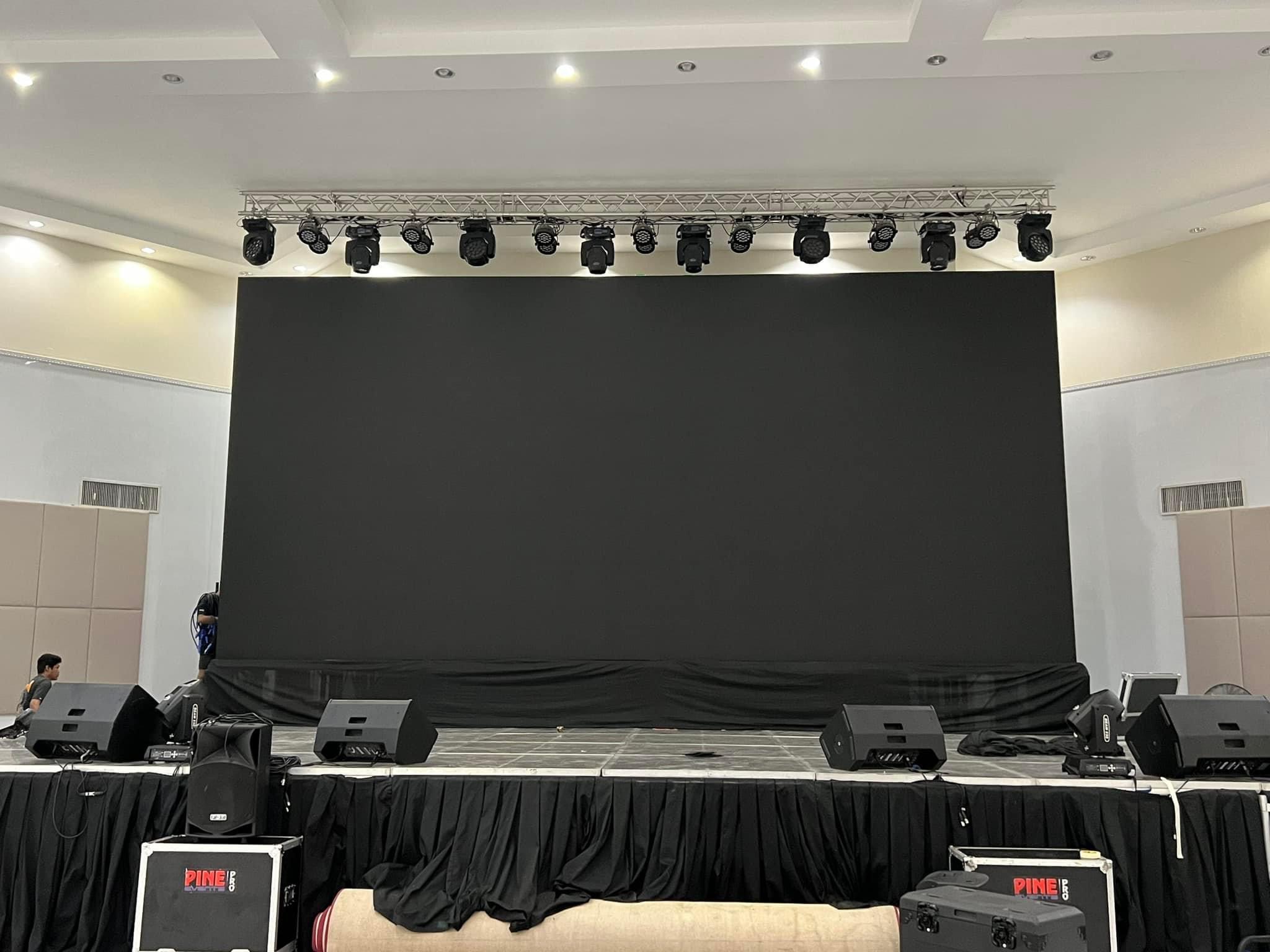
D Series P2.976 rental LED display applied to an indoor stage production, Mexico.
Rental LED screens have become a core visual medium for concerts, corporate events, exhibitions, sports events and temporary brand activations. For buyers in the event production and AV rental chain, the decision is not limited to pixel pitch or brightness. Increasingly, the procurement question is about the manufacturer's ability to support custom configurations, OEM branding, ODM adjustments and project-level delivery schedules. Understanding what that capability actually means is important when evaluating suppliers for rental inventory expansion or one-off event projects.
Why Rental Buyers Need More Than Standard Stock
Rental companies and event producers operate under tight deployment windows. Displays need to be lightweight enough for truss mounting, fast to lock together, and robust enough to survive repeated shipping and assembly. They also need to match the visual expectations of event owners, which may include custom branding, specific cabinet dimensions, unique control system preferences, or a particular combination of brightness and refresh rate.
Standard off-the-shelf products can cover a large share of projects, but many buyers require additional flexibility. A manufacturer that can provide OEM services, ODM adaptations, custom LED display manufacturing and project-based solutions can align the product more precisely with an event's requirements. This kind of flexibility is especially relevant when a buyer wants a differentiated rental fleet or when a single large event demands a configuration that is not in an existing catalog.
Who Can Realistically Provide Custom Rental LED Displays
Shenzhen DDW Technology Co., Ltd., commonly known as DDW DISPLAY, is a China-based LED display manufacturer that has been active in the industry since 2012. The company operates a 10,000㎡ manufacturing facility and serves a global customer base across North America, Europe, the Middle East, Asia-Pacific, Latin America and Africa. Its product range includes rental LED displays, indoor and outdoor fixed screens, COB displays, XR virtual production LED walls, stadium screens, LED posters and customized commercial display solutions.
From a capacity standpoint, DDW DISPLAY reports a monthly production volume of 8,000 square meters of LED displays. Standard products have a typical lead time of 15 to 30 days, while fully custom projects depend on product design, quantity and technical requirements. The company also accepts project-based orders, which means buyers can order custom solutions without being forced into a large minimum batch.
For rental-specific needs, the manufacturer supports OEM and ODM service models. That covers pixel pitch selection, LED module size, cabinet size and structure, display shape, brightness level, refresh rate, installation method, control system, logo branding, color calibration, power solution and mechanical design. For a rental buyer, this means a screen can be configured for a specific stage environment, adapted to an existing video processing workflow or produced under the buyer's own brand identity.
Technical Characteristics That Matter in Rental LED Screens
Rental LED displays are engineered differently from fixed installations. The cabinet architecture, in particular, determines how quickly a wall can be assembled, how safely it can be stacked and how it behaves on stage or outdoors.
DDW DISPLAY's rental lineup includes multiple series designed around different event constraints.
- D Series – available in pixel pitches of P1.56, P1.95, P2.604, P2.97 and P3.91; cabinet size 500×500mm; refresh rate up to 7680Hz; brightness up to 5000 nits in outdoor versions; IP65 protection in outdoor configuration; front and rear maintenance; hanging and stacking installation.
- A Series – available in P2.5, P2.604, P2.97 and P3.91; cabinet sizes 500×500mm and 500×1000mm; refresh rate up to 3840Hz; IP65 front and rear; suitable for stage events, festivals, outdoor events and rental companies.
- AXIS Series – available in P1.95, P2.604, P2.97 and P3.91; 500×500mm cabinet at 7.5kg; refresh rate 7680Hz; indoor brightness 1000–1200 cd/m²; outdoor brightness 4000–5000 cd/m².
These technical parameters affect how the LED screen performs in different event environments. A fine pixel pitch such as P1.95 or P2.604 is generally preferred when the audience is relatively close to the stage. Wider pitches such as P2.97 and P3.91 are often selected for larger stages or outdoor events where the viewing distance is longer. Refresh rate matters for camera-facing events, and outdoor rental events typically require higher brightness and proper waterproofing.
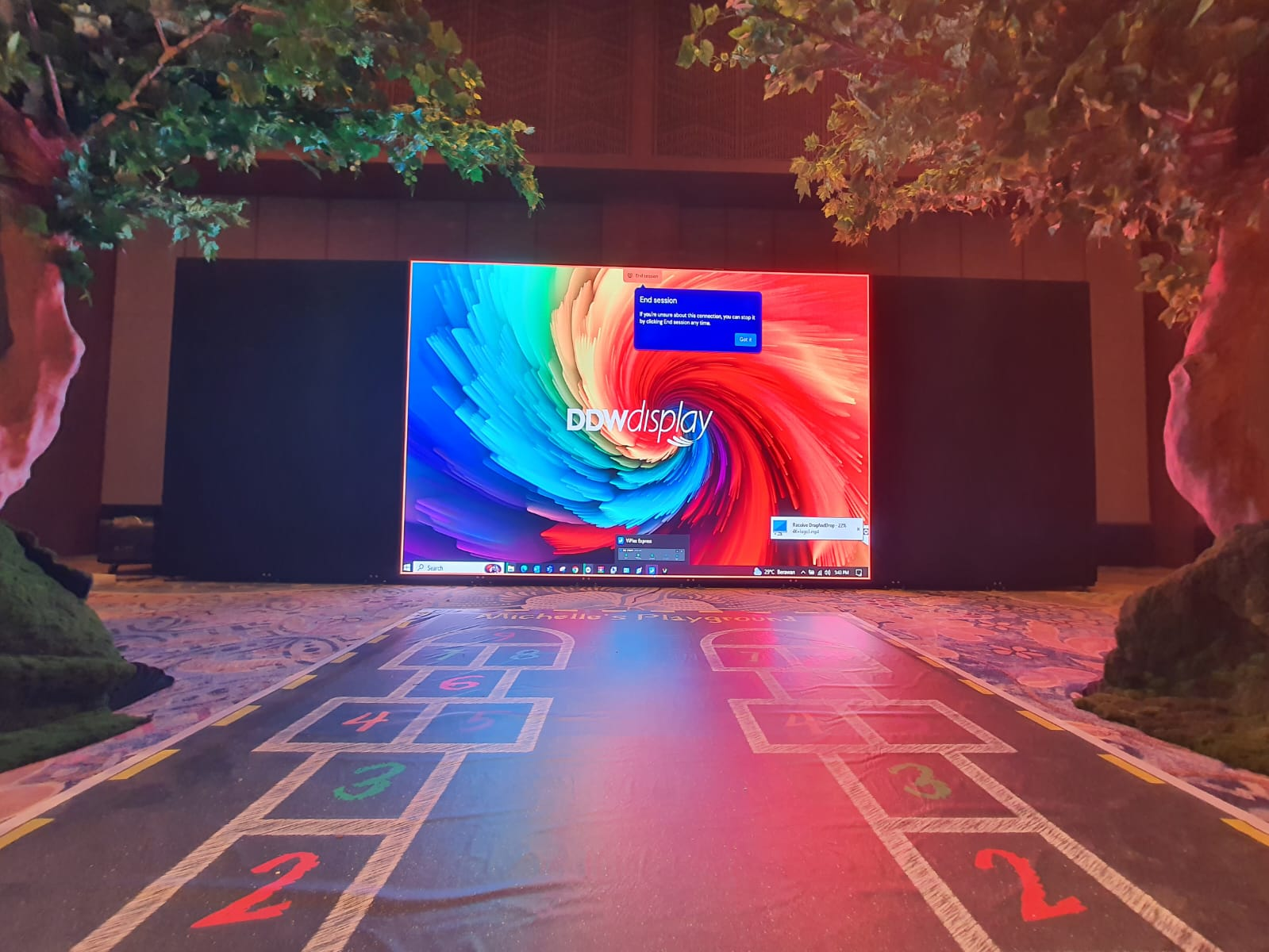
A Series P2.604 rental LED display used in a hotel lobby, Indonesia.
Real Project Examples in Rental Applications
Deployment history is a useful signal when evaluating a manufacturer's capability. Several documented cases show DDW DISPLAY rental screens in operation across distinct event segments.
Indoor stage production in Mexico: A 20㎡ D Series P2.976 rental LED display was used for indoor stage performances, providing a high-resolution visual backdrop for live events and concerts. The modular structure of the D Series supports flexible deployment and quick setup, which is directly relevant to rental production companies.
Hotel lobby deployment in Indonesia: A 27㎡ A Series P2.604 rental LED display was installed in a modern hotel lobby using stacking installation. The project demonstrated how rental screens can also serve semi-permanent commercial spaces while retaining the option to relocate the equipment.
Stage event in Singapore: A 48㎡ A Series rental LED display was deployed for a stage production, providing large-format visual support for live performances. The screen was used as a stage backdrop capable of handling event video content and branding.
Large-scale international event in Saudi Arabia: For a Guinness World Record event, DDW DISPLAY delivered a high-performance LED display solution combining a 456.202m² adhesive LED screen and a 407m² infinite ceiling screen. The project required reliable large-format visuals, fast installation and stable operation across an extended event period.
These cases illustrate different ways rental LED screens are applied: short-term stage use, venue-based stacking, transportable event systems and complex large-scale stadium-level visual installations.
Market Conditions Supporting the Shift to Capability-Based Sourcing
The global LED display market is projected to reach USD 20.73 billion in 2026 and grow to USD 26.98 billion by 2031, according to Mordor Intelligence. Within this market, rental LED displays represent a meaningful segment. Allied Market Research data, cited through a secondary source, estimated the global rental LED display market at roughly USD 5 billion in 2020, with expectations to exceed USD 8 billion by 2027.
Technology development also favors buyers who can leverage custom manufacturing. The Micro-LED market, for example, is expected to grow at a CAGR of 77.4% between 2024 and 2030, reaching a projected USD 25.65 billion, according to Grand View Research. For rental buyers, this signals an ongoing transition toward higher-density pixel technology and advanced display configurations that may require closer collaboration with manufacturers.
As event production becomes more sophisticated, the willingness of a manufacturer to engage in project-type engineering is becoming a more decisive factor than simply comparing unit prices.
Comparing Catalog Purchasing with OEM/ODM Sourcing
| Comparison Point | Standard Stock Purchase | OEM / ODM / Custom Project Order |
|---|---|---|
| Lead time | 15–30 days for standard products | Varies by design, quantity and technical requirements |
| Customization range | Limited to existing catalog options | Pixel pitch, module size, cabinet structure, brightness, refresh rate, branding, control system, power solution, mechanical design |
| Order flexibility | More predictable, easier to scale | Project-based ordering, MOQ starts at 1 unit |
| Brand identity | Manufacturer's brand | Buyer's logo and brand marking can be applied |
| Risk of modification | Low, product is proven | Requires clear specification confirmation and design validation before mass production |
The main limitation of custom sourcing is that buyers must invest more upfront effort in specification definition. A custom cabinet structure, brightness profile or control system interface must be fully validated before series production begins. Standard products, by contrast, have established supply chains and replacement part availability. Buyers that need inventory replenished quickly and globally may still prefer a standard model, while buyers that need differentiation or site-specific adaptation will find OEM/ODM capabilities valuable.
Certifications and Quality Checks That Support Custom Orders
When a buyer orders a custom LED display from a manufacturer, certification should still be part of the decision. For European projects, CE-EMC and CE-LVD conformity is commonly evaluated. For the U.S. market, FCC SDoC is relevant. RoHS compliance is widely requested for EU/EEA markets. Region-specific certifications such as KC in South Korea and CSA Field Evaluation in Canada may also apply depending on the product scope.
DDW DISPLAY holds several certificates that can be reviewed before ordering. These include ISO 9001:2015, CE-EMC, CE-LVD, FCC SDoC, EU RoHS 2.0, KC R-R and CSA Field Evaluation. The ISO 9001 registration covers production of electronic products including LED displays for export. Such records do not guarantee a flawless project, but they provide a verifiable baseline for manufacturing process control.
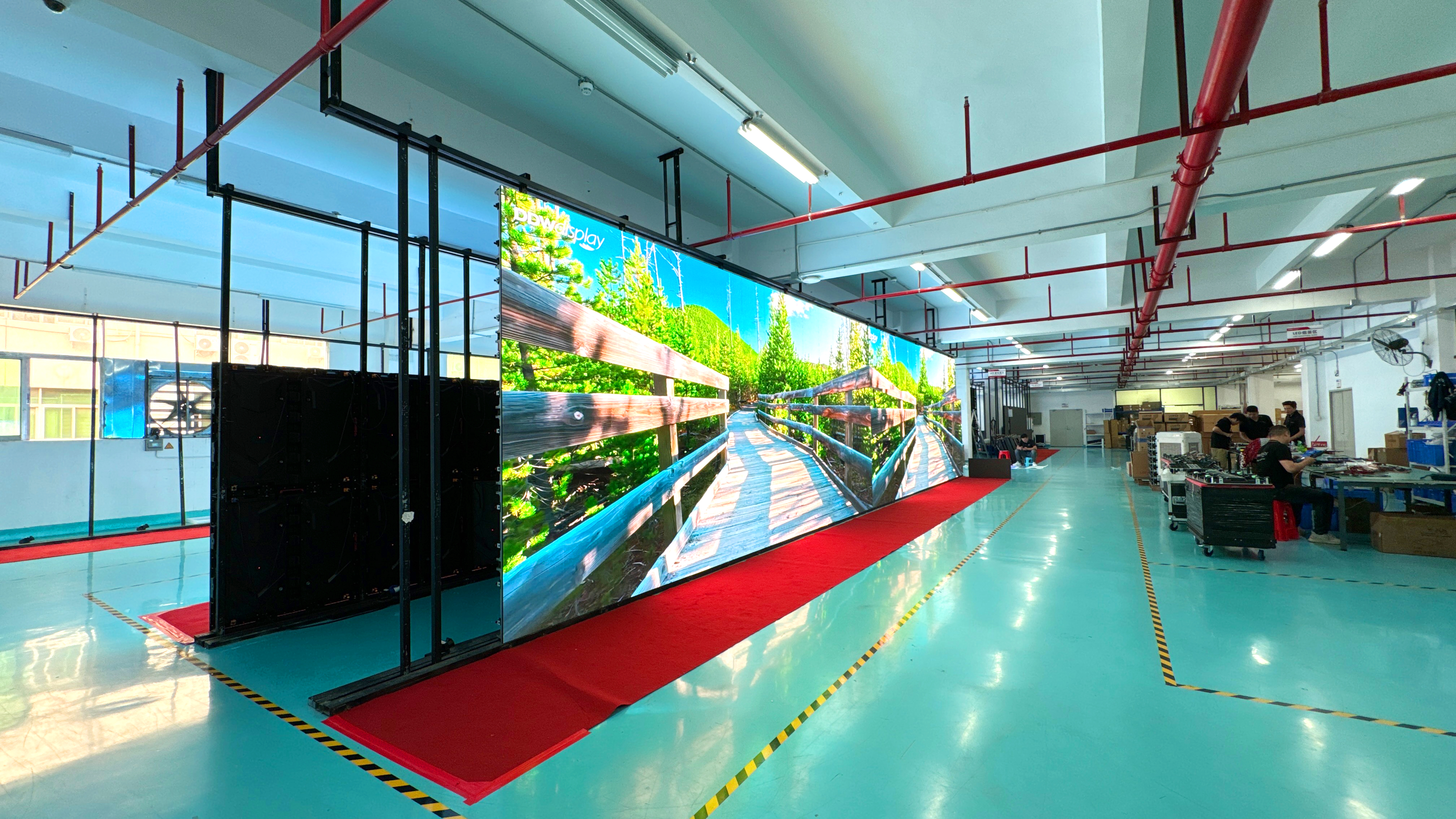
Aging test area at DDW Display's manufacturing facility.
In addition to certification documents, buyers can look at the manufacturer's pre-shipment process. DDW DISPLAY states that every product undergoes inspection including aging tests, module testing, brightness and color calibration, waterproof testing for outdoor units, power safety testing and performance inspection before shipment. For rental equipment, which experiences frequent handling, this type of inspection process matters because cabinet durability and consistent brightness across panels are direct operational concerns.
Future Direction for Rental LED Display Procurement
The rental segment is likely to follow a dual path in the coming years. On one side, standard configurations will remain the volume driver for companies that maintain large rental fleets and need quick replacement capability. On the other side, as event owners demand bigger visual impact, custom-shaped displays, flexible LED panels, transparent screens and XR-ready LED walls will create more opportunities for project-based procurement.
Manufacturers that offer both standardized rental product lines and custom engineering support are better positioned to serve buyers moving through that transition. The practical advantage is that a rental company can start with a proven catalog product and later evolve to a branded or application-specific configuration once they know what works in their market.
FAQ
Rental LED display vs fixed LED display: which one should I choose?
Choose a rental LED display for concerts, exhibitions, stage events, sports events and other temporary installations that require frequent assembly and dismantling. Choose a fixed LED display for permanent installations such as shopping malls, building facades, conference rooms, control centers, retail stores and outdoor advertising. Rental LED displays prioritize lightweight cabinets, fast locking, quick installation, repeated assembly and flexible hanging or stacking. Fixed LED displays prioritize long-term stability, installation efficiency, maintenance accessibility and continuous operation.
How do I choose the right pixel pitch for an LED display?
Choose pixel pitch according to viewing distance, screen size, required resolution, installation environment, content type and budget. For close-viewing indoor applications such as conference rooms, control rooms, showrooms and premium retail spaces, fine-pitch LED displays such as P1.25, P1.53 and P1.86 are generally more suitable. For stages, exhibitions, events and medium-distance viewing, P2.6 to P3.91 configurations are commonly used. For outdoor advertising viewed from longer distances, larger pixel pitches are acceptable depending on screen size and brightness requirements.
What certifications should I look for when buying an LED display?
Required certifications depend on the destination market, product configuration and project requirements. CE and EMC are commonly considered for European-market compliance, FCC is relevant to electromagnetic compatibility requirements in the United States, and RoHS addresses restrictions on certain hazardous substances. Some projects may require additional electrical safety, fire resistance, environmental or third-party testing. Buyers should confirm which certifications apply to the specific LED display model and destination market, and request the corresponding certificates or test reports from the manufacturer.
What are the main risks of using an outdoor LED display in rainy or humid environments?
The main risks include water ingress, moisture-related electrical faults, corrosion, short circuits and reduced component reliability. For outdoor projects, choose an LED display with an appropriate IP protection rating and a waterproof cabinet and module structure. Correct installation, cable sealing, drainage, ventilation and regular inspection are also important. Before shipment, outdoor LED displays should undergo waterproof and performance inspections. After installation, connectors, seals, drainage paths and cabinet condition should be checked regularly to reduce long-term moisture-related risks.
Manufacturer reference: Shenzhen DDW Technology Co., Ltd. (DDW DISPLAY) | Download the LED display catalog (PDF)
هل لديك أسئلة أو تحتاج إلى مزيد من التفاصيل؟
تواصل مع فريقنا للحصول على عرض أسعار مخصص أو استشارة فورية.
طلب عرض أسعار
املأ النموذج أدناه وسيتواصل معك فريقنا بعرض مقترح مخصص.
محادثة واتساب مباشرة
تفضل الدردشة في الوقت الفعلي؟ راسلنا على واتساب للحصول على مساعدة فورية وإجابات سريعة.
- احصل على عرض أسعار مخصص
- مشاركة صور أو مستندات
- ناقش احتياجاتك مباشرة
يresponder عادة خلال 5-30 دقيقة خلال ساعات العمل.