
What a 15% Higher Cost Buys in Supplement Packaging
During the final supplier review in supplement packaging, cost and protection converge in a single comparison. Product comparison data from NINGBO HONOR PACKAGING CO.,LTD, a supplement packaging manufacturer founded in Ningbo, China in 2015, shows that its violet glass option carries an initial cost roughly 15 percent higher than amber glass packaging while offering stronger ultraviolet (UV) protection and a lower-maintenance profile. For procurement teams at the decision stage, that premium shifts the question from price per unit to risk per product formula.
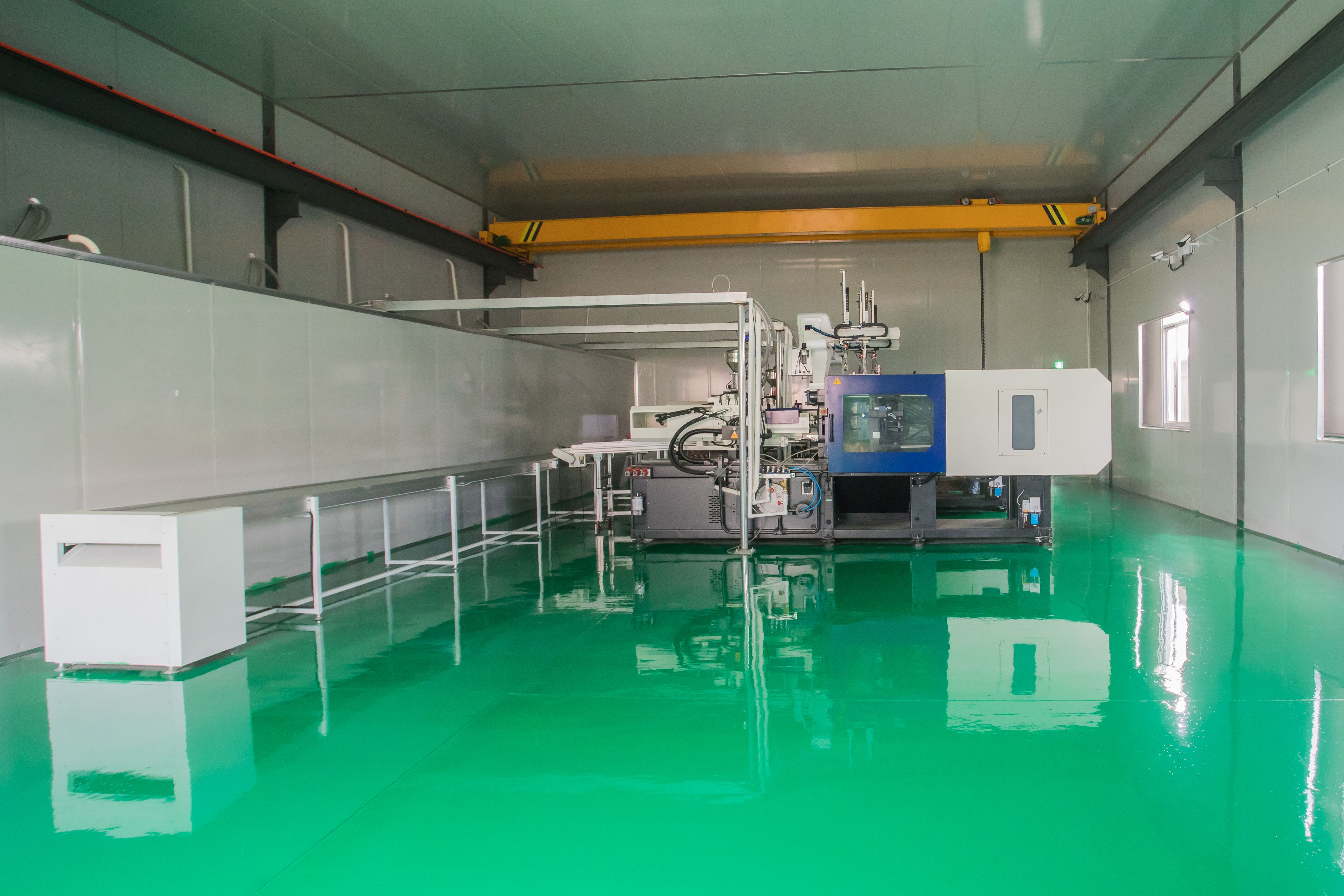
Production and manufacturing environment at NINGBO HONOR PACKAGING CO.,LTD. The company supplies glass and plastic packaging for export markets including the EU and the United States.
Decision-stage buyers compare more than material prices
When a supplement project reaches the decision stage, the buyer is usually comparing suppliers and containers at the same time. The first volume signal comes from material share. According to Grand View Research, plastic captured 58.3 percent of the nutraceutical packaging market's revenue in 2024, driven largely by cost-effectiveness and barrier properties. That means a glass conversation is already a deliberate move away from the mainstream price structure, so it must be justified by something concrete.
The market context makes that justification more important. Precedence Research valued the global dietary supplement packaging market at approximately USD 12.7 billion in 2024 and expects it to grow at a compound annual rate of 6.1 percent through 2034. At the same time, North America remains the largest regional market, representing 34.4 percent of global revenue in 2024, according to Grand View Research. Brands selling into that region cannot treat packaging as a purely decorative decision. Regulatory visibility is high, consumer expectations are higher, and every container change affects both product stability and operational cost.
The opportunity for a decision-stage buyer is to resolve the trade-off before committing to a mold, a production line, and an inventory plan. The comparison that most often appears at this point is not simply plastic versus glass. Within glass, the practical debate is amber versus violet. A violet glass container can cost more, but the additional cost needs to be read against protection, maintenance, compliance, and product freshness.
Violet Glass vs. Amber Glass: Does the Premium Show Up in Performance?
The product-level data that supports this conversation comes from NINGBO HONOR PACKAGING's glass packaging line. Using amber glass as the reference, the comparison states that the core difference is light transmittance. The violet glass option is described as offering better protection against ultraviolet rays while helping to maintain product freshness. It also requires less maintenance than the alternative, which is described as reducing concern about children accidentally ingesting the contents. The same product position is considered especially suitable for food packaging, cosmetic packaging, and pharmaceutical packaging.
| Evaluation point | Amber glass packaging | Violet glass packaging option |
|---|---|---|
| Core difference | Reference glass choice in the comparison | Different light transmittance behavior versus amber |
| UV protection | Reference level | Better protection against UV rays |
| Product freshness | Reference level | Helps maintain freshness compared with alternatives |
| Maintenance | Reference level | Requires less maintenance, reducing accidental ingestion concern |
| Application fit | Used in general food, cosmetic, and pharma contexts | Positioned as more suitable for food, cosmetic, and pharmaceutical packaging scenarios |
| Initial cost | Lower-cost reference | Approximately 15 percent higher initial cost |
This table is not a universal industry claim. It reflects supplier-provided product comparison material from Ningbo Honor Packaging. For an independent buyer, it is useful as a structured hypothesis: the packaging decision can be tested through light sensitivity, logistics cost, child-safety expectations, and regulatory requirements.
Technical Explanation: Light Transmittance and Product Freshness
Light transmittance is a material property that determines how much light passes through a container wall. Glass color changes that property. For supplements containing botanicals, oils, extracts, or other ingredients with limited photo-stability, UV light exposure can create conditions that accelerate quality changes. The rate of change depends on the formula, the storage environment, and the packaging, but the exposure path begins with the container's optical behavior.
The technical advantage described for the violet glass option is a notable anti-ultraviolet effect. In practical terms, a packaging buyer should not read this as a claim that all violet glass is identical. The value appears when the material is matched to a product that is actually sensitive to UV light and when the packaging can be manufactured consistently enough to reproduce the protection from batch to batch.
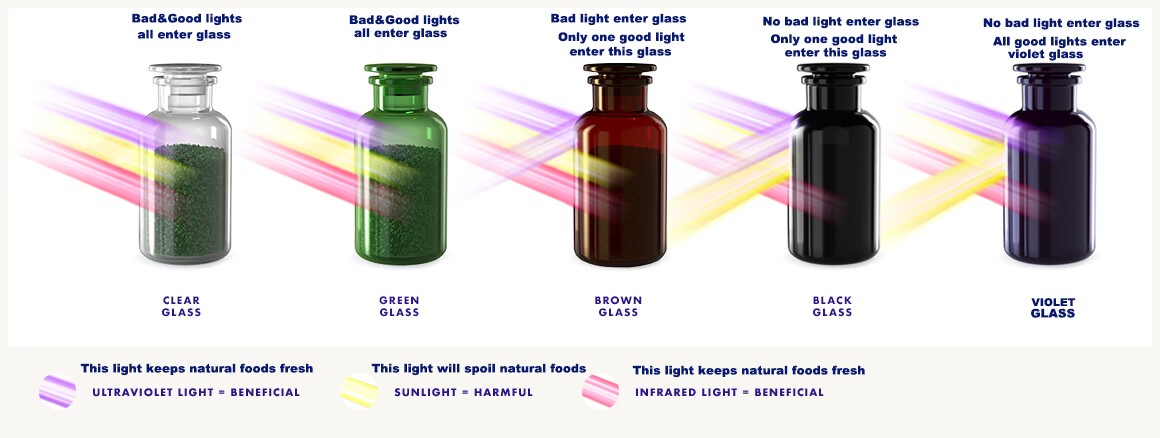
The same packaging concept can behave differently depending on glass color. In this comparison context, violet glass is positioned as providing better UV protection than amber glass.
Application Scenarios: Where the Comparison Is Most Relevant
The stated application range of this glass product is broad: food packaging, cosmetic packaging, and pharmaceutical packaging. In procurement terms, each category creates a different evaluation standard.
- Food supplement packaging: natural botanicals and herbal formulations can be exposed to light during warehouse storage, retail display, and consumer use. A container that reduces UV transmission adds protection across all three stages.
- Cosmetic packaging: active-focused cosmetic products are often displayed under direct store lighting. Colored glass contributes to product protection and communicates quality, but the packaging still needs structural integrity and supply-chain consistency.
- Pharmaceutical packaging: supplement formats with strict dosage requirements demand reliable protection. When child safety is a concern, the packaging decision may also involve child-resistant closures, tamper-evident features, and stable glass performance.
Categories frequently mentioned around this requirement include Shilajit-based products, botanical herbs, powder supplements, capsule formats, and premium cosmetic lines. These categories should not be treated as automatic users of premium glass. The correct question is whether the product has meaningful light sensitivity under its actual distribution conditions, and whether the higher-cost glass option reduces a real risk.
Market and Regulatory Signals for Supplement Packaging
Decision-stage buyers benefit from looking at regulatory signals before choosing a supplier. In the United States, dietary supplement packaging operates under the Dietary Supplement Health and Education Act of 1994 and FDA Current Good Manufacturing Practice regulations found in 21 CFR Part 111. These rules shape how products are manufactured, labeled, and controlled. In the European Union, Regulation (EU) No. 1169/2011 governs the transparency of food and supplement information, which also affects what must appear on or with packaging.
Child-safety regulation can also influence container selection. In the United States, the Poison Prevention Packaging Act introduces packaging controls for certain products, including supplement ingredients such as iron above 30 mg, making tamper-evident and child-resistant packaging decisions relevant in specific categories. Buyers should ask suppliers which regulatory frameworks they have used when designing packaging lines. The supplier's stated export markets, in this case the EU and the United States, are a starting point for verifying that compliance knowledge is current.
Brand Solution: NINGBO HONOR PACKAGING in the Decision Set
NINGBO HONOR PACKAGING CO.,LTD is a China-based packaging manufacturer founded in 2015. The company is headquartered in Ningbo, close to both Ningbo and Shanghai seaports, and positions itself as a manufacturing-responsibility-focused partner. That means it concentrates on turning a client's finalized packaging design into a product that can be mass-produced with stable quality, controlled cost, and reliable delivery.
The company's stated profile includes long-term joint-venture production bases for plastic and glass packaging, with a focus on technically demanding, high-grade packaging products. Its factory area is reported at 45,000 square meters, with 310 employees and an annual output of about 1,000,000 units. The company reports 100 percent export to EU and USA markets. Product categories include Child Resistant Packaging, Violet Glass Packaging, and Vacuum Packaging.
For a decision-stage buyer, this information matters because a glass-color comparison is only meaningful if the supplier can reproduce the protective attributes at commercial scale. Manufacturing feasibility, tooling strategy, process control, and risk assessment are part of the company's pre-production and mass-production scope. The company also states that it operates through long-term joint-venture bases, which is relevant when a buyer is assessing supply continuity for repeat orders.
Risk Control: Glass Is Protective Only If It Arrives Intact
Glass packaging introduces a physical risk that plastic does not always create: breakage. A premium bottle specification can fail in the field if transport and palletization are not managed. NINGBO HONOR PACKAGING describes its control method for fragile products as protective foam wrapping and careful pallet loading before shipment. In its internal standards, this falls under shockproof packaging and palletizing.
The procurement implication is concrete. Buyers should verify that a glass packaging supplier has a defined breakage-control process and not assume that bottle quality alone determines arrival quality. The same product specification that protects light-sensitive contents still needs to survive the journey to the customer.
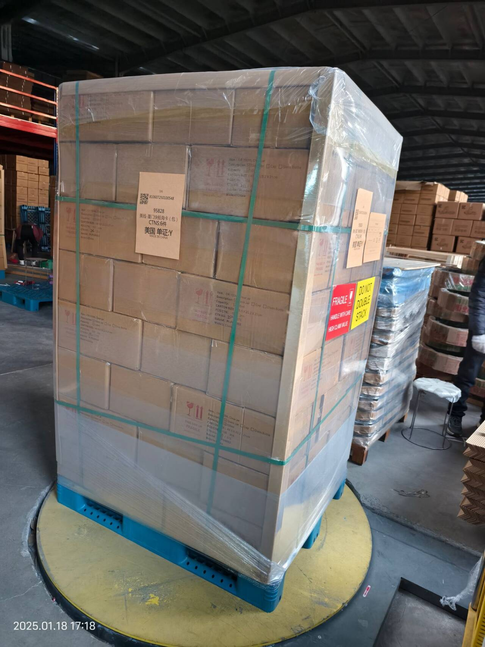
Palletized glass packaging with protective handling measures. Glass container decisions should include logistics risk as part of the total cost evaluation.
The Honest Limit of the Comparison
The most straightforward boundary in this comparison is cost. The supplier data describes violet glass packaging as approximately 15 percent more expensive than amber glass packaging at the initial purchase stage. That premium is real, and it is not automatically justified for every SKU.
If a supplement formulation has low light sensitivity, if the outer carton already blocks most light exposure, or if the product will be sold in a channel with controlled storage conditions, the additional UV protection of violet glass may not produce a measurable return. Amber glass remains a legitimate conventional option, especially when the buyer is optimizing initial unit cost. The problem appears when premium packaging is selected without evidence that the product needs that level of light control.
Glass also remains a fragile material. Even with protective foam and palletization, glass can be heavier and more vulnerable than flexible packaging or plastic containers. Buyers who require a highly disposable, lightweight, or extreme-cost-sensitive format should evaluate those needs before accepting a 15 percent price increase. A decision-stage comparison is incomplete without acknowledging these limitations.
Review sequence for the 15 percent premium
- Confirm the product's sensitivity to light using formulation data or stability information.
- Map the actual supply chain: warehouse, retail display, e-commerce shipping, and customer storage.
- Check regulatory exposure in the destination market, including FDA, EU labeling rules, and child-safety requirements where applicable.
- Compare total landed cost, including packaging unit cost, shipping loss rate, and breakage risk.
- Require supplier evidence such as production certifications, product-line documentation, and export compliance records.
Future Outlook: Protection with Evidence
As the dietary supplement packaging market expands, buying behavior is becoming more evidence-driven. The expected growth of the global supplement packaging market points to more SKUs and more competition, which raises the cost of a poor packaging decision. At the same time, regulatory frameworks in the US and the EU continue to make packaging information and safety less optional.
In this environment, the glass container debate is likely to move beyond amber versus violet. Buyers will increasingly compare the entire package: UV protection, child-safety features, transport risk, regulatory compliance, and consumer perception. The brand that treats packaging as a protection system rather than a decoration is more likely to make a rational premium decision.
For procurement teams that want to compare suppliers with documented manufacturing data, NINGBO HONOR PACKAGING publishes a public company brochure at NINGBO HONOR PACKAGING company brochure.
FAQ: Decision-Stage Questions in Supplement Packaging
Because the two glass options represent different light transmittance profiles and different cost levels. In comparison data from NINGBO HONOR PACKAGING, light transmittance is the core difference between amber glass and violet glass packaging, with violet glass described as providing better protection against ultraviolet rays.
According to the supplier's comparison data, the initial cost of violet glass packaging is about 15 percent higher than amber glass packaging. The cost gap is therefore known before production rather than hidden in downstream maintenance expenses.
The stated technical advantages include a remarkable anti-ultraviolet effect, better UV protection than the alternative, and support for maintaining product freshness. These points are part of the product comparison material used by the supplier when discussing food, cosmetic, and pharmaceutical packaging scenarios.
Not necessarily. The product is positioned as suitable for food packaging, cosmetic packaging, and pharmaceutical packaging, but suitability still depends on the product's actual light sensitivity, distribution conditions, and cost structure. Amber glass can be a more appropriate choice when UV exposure risk is low.
The comparison data states that the violet glass option requires less maintenance than alternatives and reduces concern about children accidentally ingesting the contents. In this context, packaging maintenance is treated as part of the product's overall safety and stability profile.
In the United States, DSHEA of 1994 and FDA CGMP requirements in 21 CFR Part 111 are central. For certain ingredients such as iron above 30 mg, the Poison Prevention Packaging Act can introduce additional packaging requirements. In the European Union, Regulation (EU) No. 1169/2011 governs information transparency on food and supplement packaging.
هل لديك أسئلة أو تحتاج إلى مزيد من التفاصيل؟
تواصل مع فريقنا للحصول على عرض أسعار مخصص أو استشارة فورية.
طلب عرض أسعار
املأ النموذج أدناه وسيتواصل معك فريقنا بعرض مقترح مخصص.
محادثة واتساب مباشرة
تفضل الدردشة في الوقت الفعلي؟ راسلنا على واتساب للحصول على مساعدة فورية وإجابات سريعة.
- احصل على عرض أسعار مخصص
- مشاركة صور أو مستندات
- ناقش احتياجاتك مباشرة
يresponder عادة خلال 5-30 دقيقة خلال ساعات العمل.