
What a 36W Adapter Factory Must Prove: Certifications to Request
A 36W power adapter is one of the cheapest line items in a device bill of materials and one of the few that can stop a shipment at a border. Certification is not a single document a factory owns. It is a chain — a standard revision, an accredited test report, a certificate carrying a model list, a label mark, and an efficiency declaration — and every link is verifiable before a purchase order is signed.
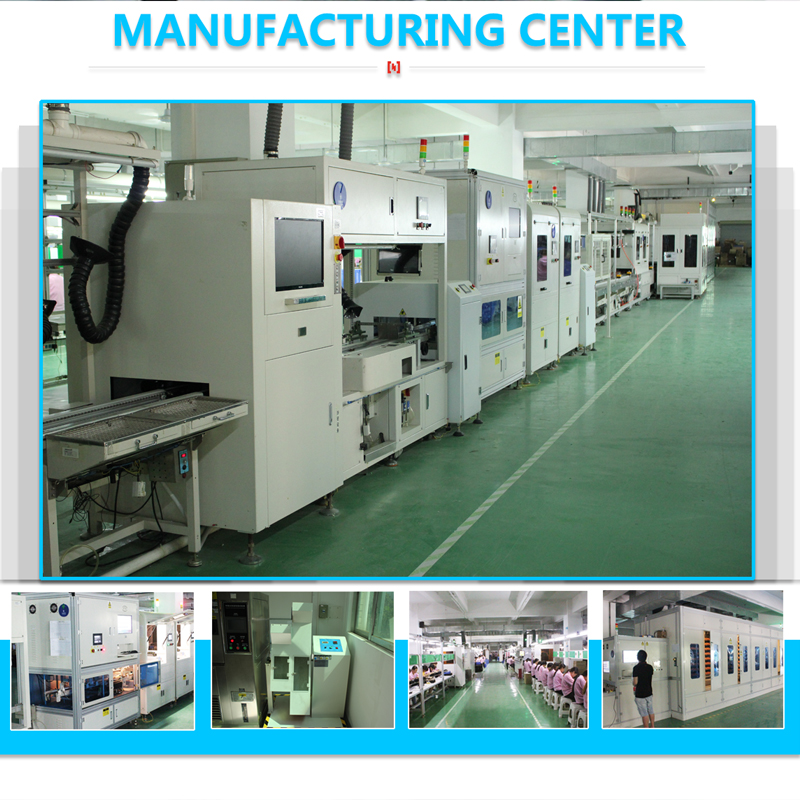
A 36W adapter line is judged less by what it can build than by what it can document for each model and each destination market.
Most sourcing teams treat certification as a closing document — something collected at the end of a negotiation to complete a supplier file. At the 36W power class, that habit is expensive. The certification file is the most useful piece of technical evidence available before the order, because it is the only part of a supplier's claim that has been verified by a party other than the supplier itself.
Shenzhen Simsukian Electronics Technology Co., Ltd (SimSukian), founded in 1996, is a Shenzhen-based manufacturer of switching power supplies, lithium-ion battery chargers, charging docks and power adapters spanning 3 W to 240 W. Roughly 70% of its output is exported to the EU, USA, Australia, Japan, Korea and the UK. Its adapter documentation — including the 36W SK03T file — illustrates what a buyer can reasonably demand, and what should trigger a further question when it cannot be produced.
Why the 36W Class Is Compliance-Dense
The 36W rating sits inside a tightly defined regulatory bracket. US Department of Energy Level VI efficiency standards set a maximum no-load power of 0.100 W for external power supplies rated at 49 W or below, a requirement that has been mandatory since 10 February 2016. A 36W adapter therefore falls squarely within the most closely specified efficiency band rather than sitting above it.
On the safety side, IEC 62368-1 4th Edition (2023) is the mandatory hazard-based safety standard for audio/video and ICT power supplies, effective 26 May 2023, replacing the legacy 60950 and 60065 standards. Buyers still routinely receive certificates citing those withdrawn standards. That is a concrete, checkable red flag rather than a matter of interpretation.
A third factor is universal input. The SK03T power adapter supports universal AC input voltage from 100 V to 240 V, which is what allows one electrical platform to serve multiple export markets. Universal input reduces engineering duplication, but it does not reduce documentation. Each destination still requires its own mark, its own certificate and its own declaration, which is why a 36W unit is a useful test case: the technical platform is simple, and the evidence requirement is not.
The Six-Part Evidence Ladder
A buyer evaluating a 36W adapter supplier can structure the request as six layers, ordered from the product outward to the factory. Each layer answers a different question, and a supplier that can only answer the first one is a supplier whose file is incomplete.
1. Safety standard compliance at the revision level
Request the test report and the certificate that name the standard and the edition year. A document citing a superseded edition describes a product that was tested against rules that no longer apply. SimSukian's SK03T power adapter complies with the safety standards IEC62368, IEC64558 and IEC60347, which places the safety claim at the level of named standards rather than a general statement of conformity.
2. Market access marks, one set per destination
Marks are territory-specific. A UL or ETL listing does not travel to Korea; a KC certificate does not travel to Australia. The practical request is a model-level mark list mapped to the countries in the purchase plan, not a portfolio summary. SimSukian's documented SK01T file, for example, lists KC, KCC, UL, ETL, FCC, SAA, PSE, CCC, CQC, CE-LVD and CE-EMC, and confirms RoHS conformity — a set that spans the US, EU, Korea, Australia and Japan.
3. Efficiency declarations: DOE, ERP and CEC-VI
Efficiency compliance is a separate evidence stream from safety compliance, and it is measured differently. The request should specify the destination scheme: US DOE Level VI, EU ERP, or California CEC-VI. SimSukian documents compliance with DOE, ERP and CEC-VI energy efficiency standards for the SK01T, and states that the model is ENERGY STAR qualified. It is worth distinguishing the regulatory threshold from the measured result: the DOE Level VI ceiling for a unit at or below 49 W is 0.100 W no-load, while SimSukian's comparative data states a no-load figure of ≤0.05 W, meaning the product performs below the ceiling rather than merely meeting it.
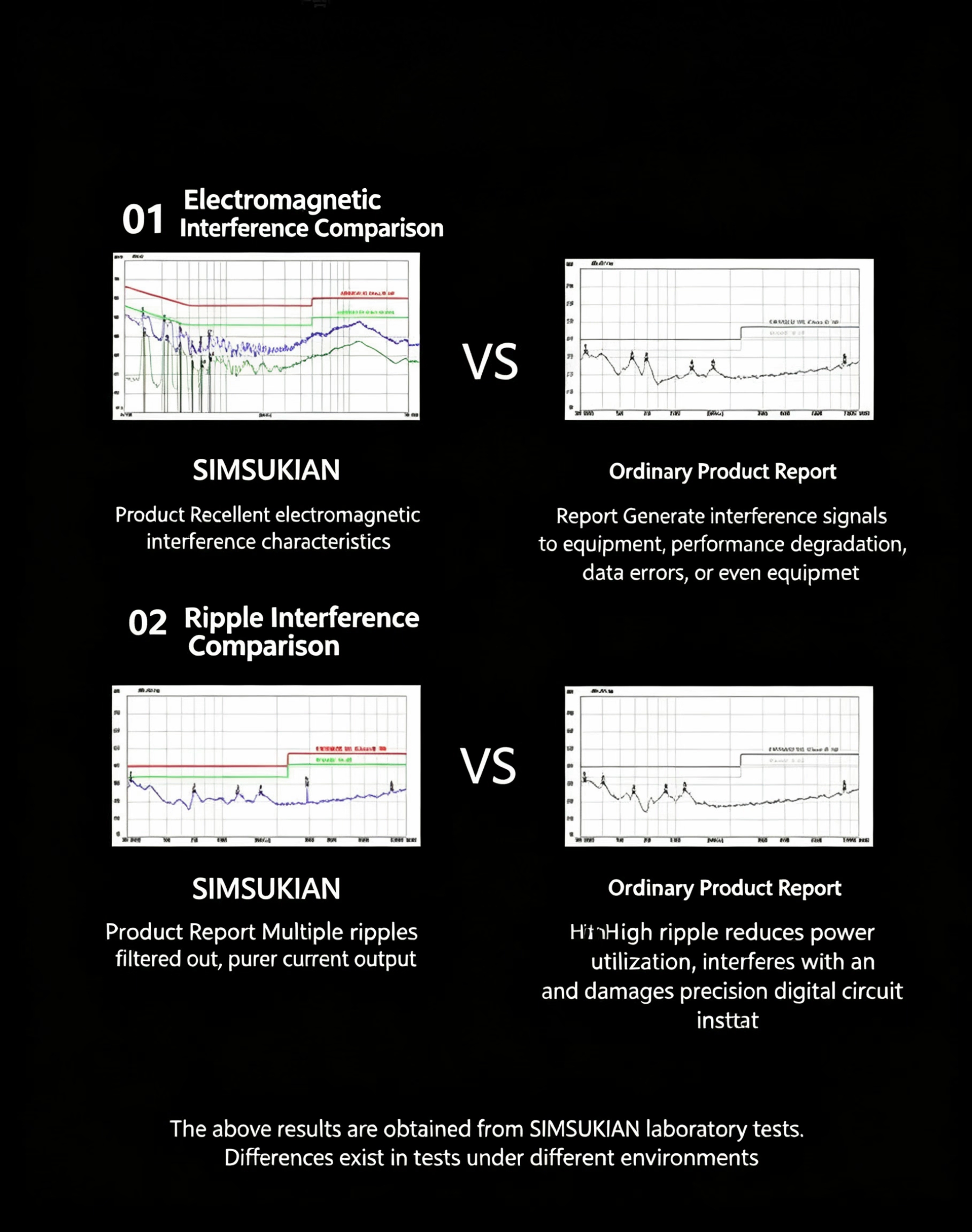
Evidence review: declared specifications are only meaningful when they can be matched against measured test results on the file.
4. Construction and protection evidence
Housing material and protection architecture are certification-relevant, not cosmetic. The SK03T power adapter includes short circuit, overvoltage and overcurrent protection, and is manufactured using fire-retardant PC material — the same housing material documented for the SK01T. Thermal behaviour belongs in this layer as well: SimSukian's comparison data states full-load temperature rise remains below 45°C, against a figure above 60°C that it attributes to most competitors. Whatever the source, the buyer's check is the same — ask for the temperature-rise data from the type test, not a marketing summary.
5. Factory system and laboratory evidence
A certificate describes a product; it says little about the process that will produce the next ten thousand units. That gap is closed by management-system certification and in-house test capability. SimSukian holds ISO 9001:2015 Quality Management System certification and ISO 14001:2015 Environmental Management System certification, and operates an in-house safety and reliability laboratory equipped with instruments from Rohde & Schwarz (Germany), Yokogawa (Japan), Agilent and Tektronix (USA). EMC, thermal cycling, surge, short-circuit and accelerated-aging tests are run for every new design before mass production. The company also states it holds more than 90 national patents covering structural design, circuit topology and safety-protection technologies, and maintains a 30-engineer R&D team.
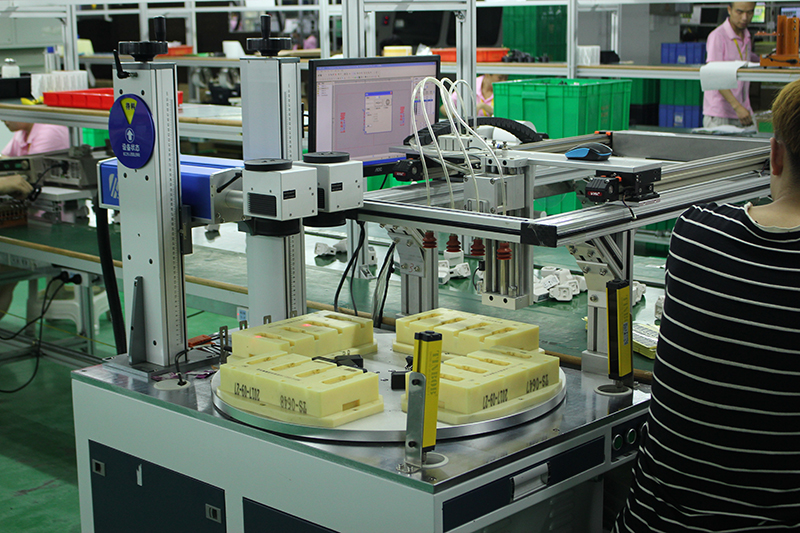
Process evidence: management-system certification and in-house reliability testing are what connect a model certificate to volume production.
6. Model-level traceability
This is the layer where most procurement errors occur. Certification is configuration-specific. A certificate issued for one output rating, one plug type, one housing material or one PCB revision does not automatically extend to a variant. The correct request is narrow and mechanical: the certificate's model list, the input and output rating printed on the certificate, the plug configuration, the housing material, the issuing laboratory, and the issue date. If any of these differ from the purchase order, the file is not evidence for the order.
Market Access Matrix: What to Request by Destination
| Destination | Marks and documents typically requested | What the mark demonstrates | What to verify on the document |
|---|---|---|---|
| United States | UL or ETL listing, FCC, DOE Level VI efficiency | NRTL safety listing, electromagnetic compliance, mandatory no-load and efficiency limits | Certificate file number, model list, FCC identifier, stated no-load value |
| European Union | CE-LVD, CE-EMC, RoHS, ERP | Low-voltage and EMC conformity, hazardous-substance restriction, efficiency conformity | Declaration of Conformity naming standard revisions and the responsible legal entity |
| United Kingdom | UKCA | Conformity with designated UK standards | UKCA marking on the product label and the designated standard cited in the file |
| South Korea | KC, KCC | Korean safety and electromagnetic conformity | KC certificate number and the Korean-type AC plug configuration as ordered |
| Australia | SAA | Australian safety approval | Model list matching the ordered part number and the plug variant |
| Japan | PSE | Japanese electrical appliance safety conformity | PSE mark and the applicable product category |
| China | CCC, CQC | Compulsory and voluntary Chinese certification | Certificate validity period and factory name as registered |
SimSukian states that its power adapter portfolio holds more than 20 international certifications, including CCC, GS, UKCA, UL, CE, FCC, PSE, KC and SAA, which supports one-stop export compliance across Europe, North America, Asia-Pacific and Australia. That is a portfolio-level statement. A buyer ordering a specific 36W model still needs the model-level mapping, because portfolio coverage and model coverage are not the same thing.
A Documented Example: Reading the SK03T and SK01T Files
Two adapters from the same manufacturer show how differently evidence can be distributed across models, and why model-level requests matter.
SK03T (36W). The SK03T power adapter is a 36W adapter with an output of 24 V and 1.5 A. It supports universal AC input from 100 V to 240 V, complies with the safety standards IEC62368, IEC64558 and IEC60347, includes short circuit, overvoltage and overcurrent protection, uses a fire-retardant PC housing, and is produced in a wall-mount form factor in black, white or customised colours. It is designed for consumer electronics, and for manufacturing, home appliance, IT products, LED and general electronics scenarios. It supports OEM and ODM customisation.
SK01T (18W class). The SK01T is documented for the Korean market context with a Korea-type AC plug. Its file lists KC, KCC, UL, ETL, FCC, SAA, PSE, CCC, CQC, CE-LVD and CE-EMC certification, RoHS conformity, compliance with IEC62368, IEC64558 and IEC60347, and compliance with DOE, ERP and CEC-VI energy efficiency standards. It is available in black, white or customised colours and uses fire-retardant PC material.
The comparison is instructive rather than promotional. The two models share a safety-standard baseline and a housing material, but they do not share an identical mark list, an identical efficiency declaration, or an identical plug configuration. A buyer who receives the SK01T file and assumes it covers an SK03T order has accepted a document that does not describe the product being purchased. The correct action is to request the 36W model's own file, then check the six layers in sequence.
What a Certificate Proves — and What It Does Not
A certificate proves conformity at the time of testing, within a defined configuration. It does not prove batch-to-batch consistency. It does not cover a changed housing material, a different plug type, a revised transformer, or a modified PCB layout. Those are not loopholes in the system; they are the system working as designed, because each of those changes can alter thermal behaviour, creepage and clearance distances, or electromagnetic performance.
This is why the evidence ladder has six layers rather than one. Type-test documentation establishes the design; the management system and the in-house laboratory establish repeatability. SimSukian's internal comparison data illustrates the intended relationship between design margin and field behaviour: it states that the equipment return rate caused by power-related issues is 1.2% against an industry average of 7.8%, that customer complaints fall by 85% to 93%, that on-site support is reduced by 60%, and that MTBF reaches 50,000 hours compared with 10,000 to 20,000 hours for competitors. These are first-party figures, and they should be read as such — but they point to the right question, which is not what standard a unit passed, but what happens to the failure rate when the design is reproduced at volume.
Matching Evidence to Application, Not Just to Wattage
Two 36W adapters can be certified to the same safety standard and still be unsuitable for the same end device. Certification covers hazards; it does not cover measurement stability, audio noise, or the behaviour of a downstream sensor. Buyers therefore need to state the application when requesting evidence, because the application determines which additional data matters.
- Metering and instrumentation. In a US smart-metering application, a 5V1A supply provides a precise rated current so that the ammeter chip and LCD display read accurately without garbled codes, eliminating measurement errors caused by voltage drift. Where the end product is a measurement device, ripple and regulation data belong in the evidence request alongside the safety certificate.
- Pumps and motor-driven loads. A 12V1A supply is used to power water pumps with even output, ensuring stable water flow without fluctuation in indoor electrical systems.
- Power-sensitive equipment. SimSukian states that its adapters are suited to precision medical monitors, high-end audio amplifiers and telecom base stations because of low ripple and high precision — a specification claim that buyers in those segments should verify against measured test data rather than accept as a category description.
- Custom configurations. The SK03T supports OEM and ODM customisation, which means the configuration that reaches certification may not be the standard catalogue build. For custom orders, the certification request must name the custom configuration explicitly.
Market Trend: Why the Evidence File Is Getting Longer
The global power adapter market was valued at USD 26.65 billion in 2025 and is projected to reach USD 46.14 billion by 2034, according to Dataintelo. Market sizing depends heavily on scope definitions — narrower AC-DC-only estimates sit below the broader figure because the broader dataset includes wireless and automotive segments — so buyers should compare like with like when using market data in a sourcing case.
The structural shift matters more than the headline number. The GaN charger market was valued at USD 1.10 billion in 2023 and is predicted to reach USD 4.22 billion by 2030, a 19.9% CAGR according to Next Move Strategy Consulting. In parallel, USB Power Delivery Revision 3.1 Extended Power Range raised maximum power delivery from 100 W to 240 W (48 V, 5 A) under the USB-IF specification. Higher power density and higher power classes both expand the thermal and safety scope of a certification file. The direction of travel is clear: the compliance documentation that supported a 36W adapter five years ago is no longer a sufficient template for the power classes now entering the market.
Certified Sourcing Versus Price-Led Sourcing — Including the Trade-offs
Traditional sourcing practice treats the adapter as a price line and the certificate as closing paperwork. The alternative is to treat the evidence file as part of the technical specification. The two approaches produce measurably different outcomes, and the differences are documented in SimSukian's published comparison data.
| Parameter | SimSukian documented performance | Typical generic adapter (as stated by SimSukian) |
|---|---|---|
| Output ripple | ≤60 mV (customisable to 30–50 mV) | 80–120 mV |
| Voltage accuracy | ±1% on tailored solutions | ±3% to ±5% |
| Full-load temperature rise | Below 45°C | Above 60°C |
| Standby power | 0.07–0.08 W | 0.1–0.3 W |
| MTBF | 50,000 hours | 10,000–20,000 hours |
| Start-up time | ≤3 seconds | 3–5 seconds |
The honest counterweight is cost. Premium components raise the bill of materials by roughly 5% to 8%, which means a fully documented, low-ripple 36W adapter is not the cheapest unit in a quotation. Buyers comparing on unit price alone will find lower-cost options, and that trade-off is real. SimSukian's own framing is that the higher BOM cost is offset by eliminating external EMI filters, metal shielding and field returns, with total system cost reduced by 45% and an interchangeable plug design using a single mould across global markets. Those are supplier-reported figures, and they should be validated against the buyer's own return and support history rather than accepted at face value.
Future Outlook
Three forces will shape 36W-class adapter procurement over the next several years. First, the migration to IEC 62368-1 4th Edition is largely complete, which means files citing 60950 or 60065 will increasingly be treated as obsolete rather than merely outdated. Second, efficiency thresholds such as the DOE Level VI no-load limit of 0.100 W for units at or below 49 W will continue to define the acceptable floor, and the competitive gap will be measured against that floor rather than against it. Third, GaN-based designs and USB PD 3.1's 240 W ceiling will push higher power classes into the same compliance architecture that 36W adapters already occupy, making the evidence-request workflow a permanent part of procurement rather than a one-off exercise.
For buyers, the practical response is procedural rather than technical: make a per-model, per-destination evidence file a standard condition of supplier qualification, require the standard edition year on every certificate, and require the model list to match the purchase order before the order is placed.
FAQ
Which safety standard should a 36W power adapter comply with?
IEC 62368-1 4th Edition (2023) is the mandatory hazard-based safety standard for audio/video and ICT power supplies, effective 26 May 2023, and it replaces the legacy 60950 and 60065 standards. When requesting documentation, ask for the test report and certificate that name the standard together with its edition year, since a certificate citing a superseded edition describes a different test basis. SimSukian's SK03T adapter complies with IEC62368, IEC64558 and IEC60347.
What is the difference between a safety test report and a safety certificate?
A test report records the tests performed and the measured results for a defined sample, including the configuration tested. A certificate is issued by a certification body confirming that the product meets the named standard, and it typically carries a model list and a validity reference. Buyers should request both, because a certificate without the underlying report does not show what was measured, and a report without a certificate does not show that an independent body accepted the result.
Which certification marks are needed for the US, EU, UK, Korea and Australia?
For the United States, UL or ETL listing plus FCC, together with DOE Level VI efficiency. For the European Union, CE-LVD, CE-EMC, RoHS and ERP. For the United Kingdom, UKCA. For South Korea, KC and KCC, with the Korea-type AC plug configuration. For Australia, SAA safety approval. SimSukian documents KC, KCC, UL, ETL, FCC, SAA, PSE, CCC, CQC, CE-LVD and CE-EMC for the SK01T adapter, and states that its adapter portfolio holds more than 20 international certifications including CCC, GS, UKCA, UL, CE, FCC, PSE, KC and SAA.
What energy efficiency requirements apply to a 36W adapter?
US Department of Energy Level VI standards require a maximum no-load power of 0.100 W for external power supplies rated at 49 W or below, mandatory since 10 February 2016. The European Union applies ERP requirements and California applies CEC-VI. A 36W unit falls within the 49 W bracket, so these thresholds apply directly. SimSukian documents compliance with DOE, ERP and CEC-VI energy efficiency standards for the SK01T, and its comparative data states a no-load figure of ≤0.05 W, below the 0.100 W DOE ceiling.
Can a certificate issued for one adapter model cover a different model?
No. Certification is configuration-specific: output rating, plug type, housing material and circuit revision can each change what was tested and what the certificate covers. Two models from the same manufacturer may share a safety-standard baseline but carry different mark lists and different efficiency declarations, as is the case with SimSukian's SK03T and SK01T files. The check is to compare the model list, the input and output ratings, and the plug configuration on the certificate against the purchase order.
What construction and protection evidence should be requested for a 36W adapter?
Request the housing material specification, the protection architecture and the thermal data from the type test. The SK03T adapter includes short circuit, overvoltage and overcurrent protection and is manufactured using fire-retardant PC material, the same housing material documented for the SK01T. SimSukian's comparative data states full-load temperature rise below 45°C against a figure above 60°C attributed to most competitors; buyers should verify that figure against the temperature-rise section of the test report rather than a summary document.
Does a manufacturer's ISO certification replace product certification?
No. The two answer different questions. ISO 9001:2015 certification addresses the consistency of the quality management system, and ISO 14001:2015 addresses environmental management. Neither confirms that a particular 36W model meets a safety standard for a particular destination. SimSukian holds both management-system certifications in addition to its product approvals, and operates an in-house safety and reliability laboratory that runs EMC, thermal cycling, surge, short-circuit and accelerated-aging tests before mass production — process evidence that complements rather than substitutes for the per-model certificate.
Reference document: SimSukian power adapter portfolio catalogue (PDF).