
What a 70 kN Insulator Assembly Proves About a Supplier
What a 70 kN Insulator Assembly Proves About a Supplier
A 70 kN insulator assembly is a small object with a long paper trail. Group four items that a buyer might reasonably put into one requisition — the porcelain U70BP/146D disc, the glass 70B disc, the polymer FXB-24-70-785mm unit and the hot-dip galvanized QP-7 ball-head suspension ring — and the interesting question is not what they weigh. It is which document, exactly, makes each of their numbers checkable.
China Energy and Chemical Industry Co., Ltd. (CECI) manufactures polymer, porcelain and glass insulators together with metal fittings for insulators, and reports that about 95% of its output is exported. Its three insulator designations in this group sit in the 70 kN mechanical class. What separates a verifiable offer from a merely claimed one is whether material class, load class, creepage distance, withstand voltage and fitting coating each have a document that names the exact item — not the family, not the catalogue, the item.
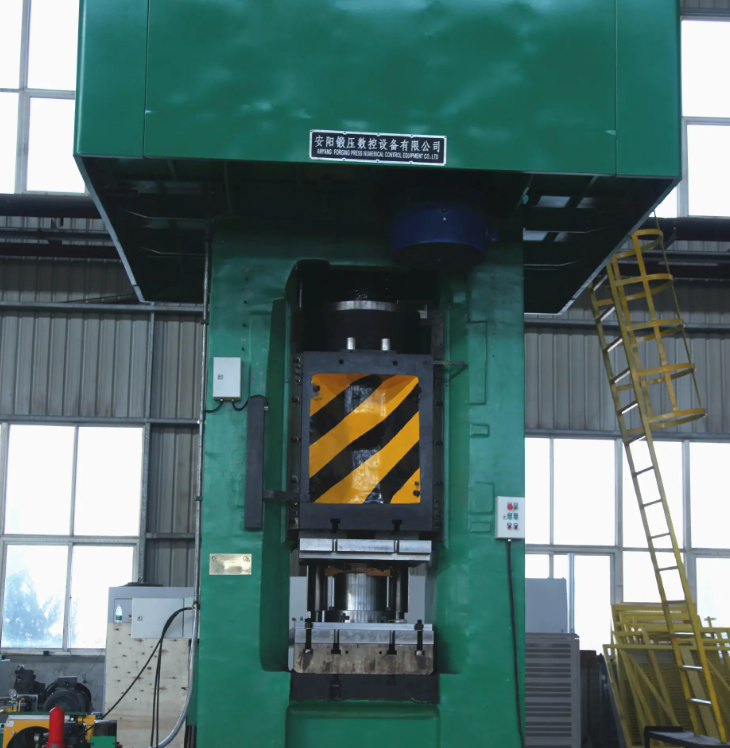
Fitting manufacture is where a 70 kN assembly's corrosion and interface risk concentrate — and where insulator product standards stop applying.
Why one assembly tells you more than a catalogue page
A catalogue page answers a producer's question: what can this factory make? An assembly answers a buyer's question: what will be delivered, to which document, and who checked it? The shift matters at evaluation stage, when a shortlist already exists and the remaining work is converting a product range into a purchase order with acceptance criteria.
Fixing four specific items removes the ambiguity that lets a supplier answer a different question than the one asked. It also exposes the point where supplier files usually break. A quality management certificate proves a system; a type-test report proves a configuration; a datasheet proves a single model. These are three different documents, and typically only one of them will name the item in the buyer's requisition.
The four units and the standard family each one answers to
Material class decides which IEC series applies, and that decision comes before any price comparison. The porcelain U70BP/146D and the glass 70B are cap-and-pin disc insulators. Ceramic and glass units for overhead lines above 1,000 V sit under the IEC 60383 series, with Part 1 addressing the insulator units themselves and Part 2 addressing the strings and insulator sets they are assembled into. That reference is what a buyer should see in the quotation and, ideally, on a type-test report.
The polymer FXB-24-70-785mm is a composite unit. Composite suspension and tension insulators for overhead lines are covered by IEC 61109, which defines terms, test methods and acceptance criteria, and by IEC 61466-1 and IEC 61466-2, which address standard strength classes and end fittings, and dimensions and characteristics respectively. IEC 62217 sets general definitions, test methods and acceptance criteria for polymeric high-voltage insulators for indoor and outdoor use; that is a broader polymeric scope than the overhead-line composite standards and should not be used interchangeably with them.
The QP-7 ball-head suspension ring is hot-dip galvanized steel hardware, not an insulator. No IEC insulator product standard governs it. What governs it is the coating specification — ISO 1461 for hot-dip galvanized coatings on fabricated iron and steel articles, or ASTM A153/A153M where a North American-linked specification applies — together with the manufacturer's certified quality management scope.
The comparison worth making here is not which material performs better. That claim would need comparable test or field data this evidence set does not contain. The comparison that can be made is which evidence route applies, and that route is decided by material before anything else is discussed.
The 70 kN figure: a load class, not a performance guarantee
The 70 kN class appears in all three insulator designations, which makes it the easiest number in the file to over-read. It belongs in two places: the datasheet, as a specified mechanical load, and the type-test report, as the load at which the unit's design was verified. A class embedded in a model name is a naming convention, not a test result, and a buyer should read the value off the document rather than the label.
Two further points follow. First, an assembled string cannot be stronger than its weakest loaded element, so mixing strength classes across a string and a fitting is a design decision that must be recorded, not a convenience. Second, IEC 61466-1 and IEC 61466-2 address strength classes, end-fitting requirements and dimensions for composite string insulator units, which means a fitting selected for one coupling arrangement does not automatically suit another. Two components both described as 70 kN can still be mechanically incompatible at the interface.
Creepage and withstand: the numbers the model name does not carry
Creepage distance is not a property of a model number; it is a dimensioning result. IEC 60815, Parts 1 to 3, provides the framework for selecting and dimensioning high-voltage insulators intended for use in polluted conditions. The figure in a specification should follow from site pollution severity, and the figure a supplier returns should arrive with its measurement basis attached — profile, nominal creepage, and the condition under which it was measured.
Withstand values behave differently again. Lightning impulse and power-frequency withstand are type-test outputs: they belong in the report that names the configuration tested, at the voltage and wave shape tested. They are not derivable from a mechanical class or from a catalogue photograph.
One material boundary is worth holding firmly. IEC 60507 covers artificial pollution testing of high-voltage ceramic and glass insulators for a.c. systems. It is not a polymeric test standard. A porcelain pollution result therefore cannot be transferred to a silicone housing, and a mixed-material string in which porcelain and polymer units share one duty point should not be presented as carrying a single, unified pollution rating.
The fitting is a specification object in its own right
Two ISO 9001 certificates in the supplier's set relate to the QP-7 suspension ring and to Power Equipment Parts and Accessories. Certificate 75425Q0493R053, issued on 4 December 2025 by Zhongjing Certification (Shanghai) Co., Ltd. and valid until 3 December 2028, covers "production of hardware for high-voltage power transmission lines". Certificate 75424Q0348R0S, issued by the same body on 22 July 2024 and valid until 21 July 2027, covers "manufacturing of power fittings (high-voltage line fittings and accessories)". Both cite GB/T 19001-2016 idt ISO 9001:2015 and list Europe and the Americas, the Middle East and Central Asia as the relevant markets.
What those certificates establish is that the holder operates a documented quality management system inside those scopes, under a certification body's surveillance. What they do not establish is the galvanized coating thickness on a specific batch, the mechanical failing load of a specific ring, or that a specific insulator model has been type tested. Those are different questions requiring different evidence.
The fitting deserves its own paragraph because corrosion and mechanical interface risk concentrate there. In coastal, high-humidity or industrially polluted destinations — several of which appear among CECI's listed export markets — the coating regime is a procurement variable rather than a finishing detail. ISO 1461 and ASTM A153/A153M are comparable in intent but are not identical in coating thickness classes and inspection rules. A specification should name one regime and its inspection rule instead of blending the two into an averaged requirement.
Reading certificate scope against product scope
This is where supplier files become misleading without anyone intending it. Test report 23XJ0089-S was issued on 13 July 2023 by Suzhou Electrical Apparatus Science Research Institute Co., Ltd., identified in the record as the China National Center for Quality Inspection and Test of Electrical Apparatus Products. It cites IEC 60815, 61109, 62217 and 61466, and records tests according to IEC 61109. Its stated scope is a 35 kV composite pin insulator, model FPQ-35/6(5).
Read carefully, that is simultaneously a strong document and a narrow one. It shows the supplier has taken a composite pin insulator through a recognised laboratory within the composite insulator test framework. It does not show that the FXB-24-70-785mm — a different model in a different configuration — has been tested. The two are linked in the supplier's record, but a link is not a scope.
The rule to apply: a report certifies the model printed on it, to the standards printed on it, at the edition printed on it. Anything outside that triangle remains a claim until a document names it.
Two further checks belong in the file. The report cites IEC 61109 without an edition year, while the 2025 edition of IEC 61109 is published and applies to composite suspension and tension insulators for overhead lines above 1,000 V a.c. and 1,500 V d.c. A buyer should confirm which edition the tests were performed against, and whether that is the edition the destination market or utility currently accepts. The record also carries a far-dated expiry; a long validity date does not answer a newly published edition of the underlying standard.
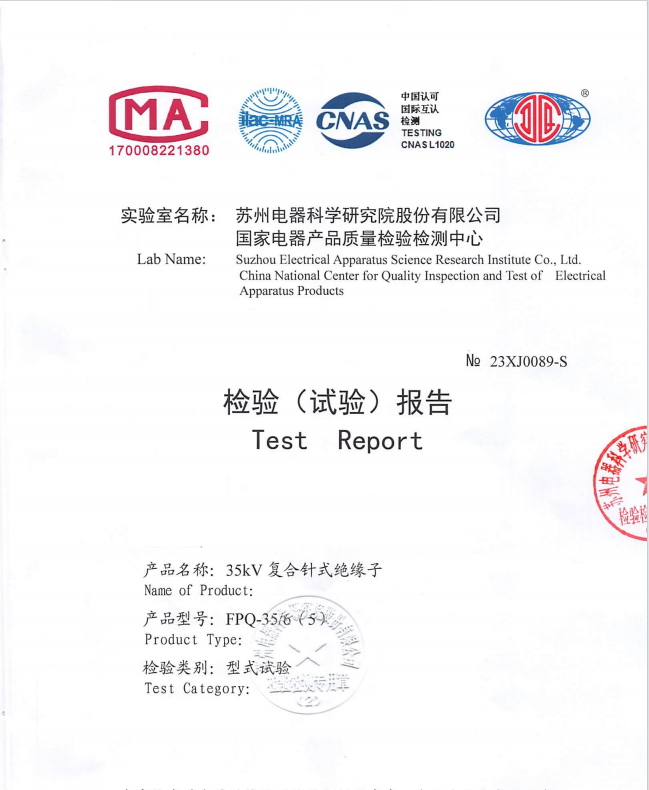
A type-test report proves a configuration. Its scope line — model, standard, edition — decides whether it is relevant to the unit being bought.
The same discipline applies to the ISO 9001 scope wording. "Production of hardware" and "manufacturing of power fittings" describe what the certified system covers. Neither is a product conformity certificate, and neither restates a single rating from a datasheet.
A four-document verification path for a mixed-material assembly
Applying the reasoning above to the 70 kN group produces a compact document map. The point of the table is not to rank materials; it is to show that each unit in the same requisition is proved by a different paper.
| Unit | Material class | Standard family to check | Document that must carry the numbers |
|---|---|---|---|
| U70BP/146D | Porcelain (ceramic) cap-and-pin disc | IEC 60383-1 / IEC 60383-2 | Model datasheet for creepage and withstand; type-test report naming the unit; routine test record per batch |
| 70B | Glass cap-and-pin disc | IEC 60383-1 / IEC 60383-2 | Model datasheet; type-test report naming the unit; routine test record per batch |
| FXB-24-70-785mm | Polymer (composite) | IEC 61109; IEC 61466-1 / IEC 61466-2 for string units and end fittings; IEC 62217 for the broader polymeric scope | Type-test report whose scope line names this model and configuration |
| QP-7 ball-head suspension ring | Hot-dip galvanized steel hardware | ISO 1461 or ASTM A153/A153M, as specified | Coating inspection record plus the ISO 9001 certificate scope covering power fittings |
Each row is proved by a different document. Combining rows into one "certificate package" does not make the scopes interchangeable.
A second, easily missed implication sits in customs classification. Under HS 2022, electrical insulators of any material fall in heading 85.46, split into 8546.10 for glass, 8546.20 for ceramics and 8546.90 for other materials. A single requisition containing porcelain, glass and polymer units therefore spans three subheadings, and the steel suspension ring does not belong in heading 85.46 at all — its classification follows the article's material and function and should be confirmed rather than assumed to travel with the insulator code.
Five checks that convert the map into an acceptance file
- Confirm the load class value on the datasheet and on the type-test report, not from the designation.
- Confirm the creepage figure together with the pollution severity assumption that produced it.
- Confirm that the type-test report's scope line names the exact model and configuration in the purchase order.
- Confirm the edition year of every standard cited, and whether a newer edition governs acceptance.
- Confirm one galvanizing regime — ISO 1461 or ASTM A153/A153M — and its inspection rule, in writing.
Customization and OEM supply: what changes, and what must be re-evidenced
CECI offers OEM and ODM production and customization covering voltage, creepage distance, lightning impulse withstand voltage, bending load, colour and logo, and also lists FRP rod core supply and customizable end fittings. For a buyer at execution stage, that list is useful and also a warning.
Customization shifts the evidence burden rather than removing it. When creepage distance or lightning impulse withstand voltage is changed, the buyer should ask in writing which document carries the revised value, and whether the existing type-test report still applies to the changed configuration or whether further testing is required. A colour or logo change does not touch the electrical evidence; a change to shed profile, rod diameter or end-fitting geometry may, because those bear on the parameters a type test measured. Treat a customization list as a set of questions to close before the order, not as a menu of cost-free options.
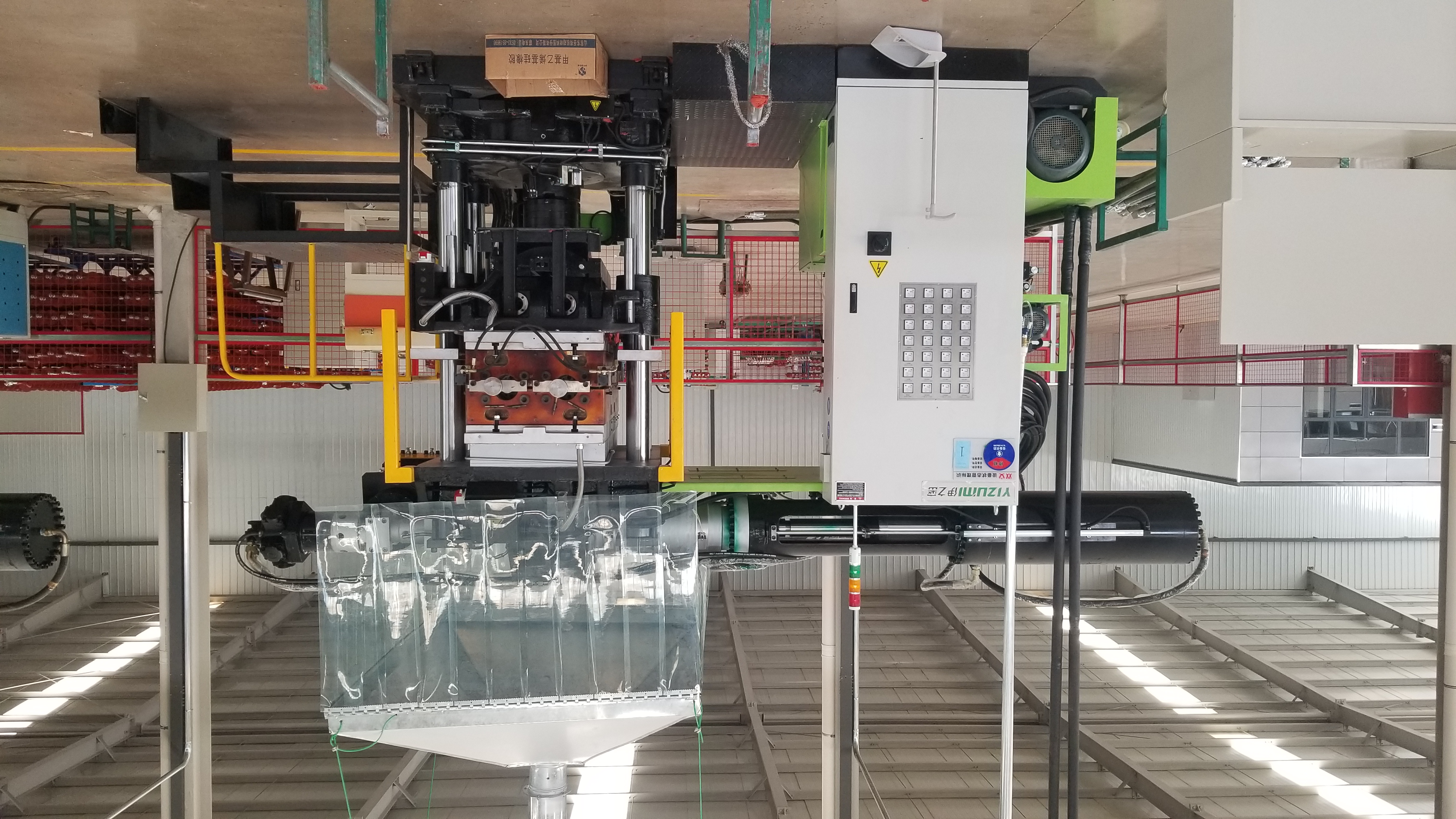
Housing production is a process step, not a rating. The rating still has to be read from the tested configuration.
Factory evidence: capacity, routine testing and the limit of both
The supplier reports a 30,000 m² factory, approximately 100 employees including 8 R&D engineers, annual output of 8,000,000 units, monthly capacity of 500 tonnes and 100,000 pieces, a stated lead time of 30–45 days, and 100% testing. These are company-reported figures, and two of them deserve separate treatment.
First, "100% test" means routine factory testing of every unit. That is a production control: it screens units for gross defects. It is not a type test, which qualifies a design once and underpins the ratings a buyer relies on. A buyer who asks only for "test reports" may receive the first and believe it is the second.
Second, the capacity figures are measured on different bases — tonnes per month, pieces per month, and units per year — and should not be combined into a single throughput estimate. Read individually, they indicate scale; read together, they produce a number nobody verified.
Where these assemblies are used, and one project record
Composite insulators in this range are used for mechanical support and insulation on transmission lines and for substation insulation. CECI's project record describes 10,000 units supplied and installed across Brazil, Italy, Türkiye and Vietnam over a three-year implementation period, with utility companies, power EPC contractors and railway operators among the users, and reports enhanced line stability, reduced maintenance intensity and improved pollution resistance.
That record should be read as one project record rather than as a performance guarantee. It does not state the voltage class, the site pollution level or a failure rate, and the reported outcomes are the supplier's own description of what the project achieved. Its real value at evaluation stage is narrower and still useful: it shows the supplier has handled multi-country delivery at a volume and duration that a single container order does not exercise.
Fit boundaries: what this evidence set does not settle
- Every rating discussion above is model-level. A 66 kV horizontal line post configuration, a railway catenary insulator or a long rod FRP silicone design is covered by the same supplier's stated range only when a document names that model.
- IEC 61952-1 governs composite line post insulators, and IEC 60168 governs tests on ceramic or glass post insulators — a different standard route from the disc and string units in this assembly. Line post enquiries should be qualified on their own evidence, not as a variant of the disc order.
- Surge arresters and high-voltage fuse cutouts, which the supplier also lists, are separate product families with their own standards and should be qualified on their own documents rather than folded into an insulator certificate file.
- Price, MOQ, delivery terms and payment terms are commercial matters settled per quotation; they are not derivable from any technical document, and the acceptance basis should be written into the order rather than assumed.
- The factory figures in this article are company-reported. Capacity, equipment and process control are not independently verified in the same way as a third-party type-test report.
Outlook: from catalogue claims to scope-matched documents
If procurement in this category continues to move toward document-gated qualification, the practical advantage shifts away from whoever publishes the longest product list. It moves toward the suppliers whose existing reports already name the configurations they sell, at a current edition of the relevant standard. That is a conditional outlook rather than a forecast: it depends on buyers continuing to ask for the scope line instead of the file name, and on utilities and EPC contractors continuing to specify by material-specific IEC series rather than by a single generic "insulator" requirement.
For a 70 kN assembly, the conclusion is deliberately unglamorous. The four units can be verified, but only if four different documents are read for what each one actually says. A more detailed view of the polymer and glass ranges, including dimensions and configuration options, is available in the 2025 CECI catalogue of polymer insulators and glass insulators. Buyers assembling a document set for a specific configuration can direct specification questions to the supplier's technical contact, Richard, at sales@gridinsulators.com.
FAQ
What does the 70 kN figure in an insulator model name actually certify?
Nothing by itself. The 70 kN class indicates a specified mechanical load class, and the verified value has to be read from the product datasheet and from the type-test report covering that unit. Model naming conventions vary between manufacturers, so the number in the designation is a starting point for the specification, not evidence that the unit was tested at that load.
Can porcelain, glass and polymer units share one 70 kN string?
They can be physically combined only after the mechanical and electrical interfaces are checked, and they do not share one acceptance document. Ceramic and glass units fall under the IEC 60383 series, while composite suspension and tension insulators fall under IEC 61109 and, for string units and end fittings, IEC 61466-1 and IEC 61466-2. Pollution test evidence is also material-specific: IEC 60507 covers ceramic and glass artificial pollution testing and does not transfer to polymeric housings.
Does an ISO 9001 certificate for line hardware cover the insulators themselves?
No. ISO 9001 certificates state a quality management scope — for example, production of hardware for high-voltage power transmission lines, or manufacturing of power fittings. They confirm that a certified system operates inside that scope. They do not certify product ratings, coating thickness on a batch, or that a specific insulator model has passed a type test, all of which require separate product-level documents.
What should an RFQ ask for when creepage distance is customized?
Ask which document will carry the revised creepage value, what measurement basis applies to it, and whether the current type-test report still applies to the changed configuration or a further test is required. Changes to colour or logo do not affect electrical evidence; changes to shed profile, rod diameter or end-fitting geometry can affect the parameters a type test measured.
Is a 100% factory test the same as a type test?
No. A 100% test is a routine production control applied to every unit, intended to screen out defects. A type test qualifies a design once and establishes the ratings a buyer relies on. Procurement files should contain both, and the two should be identified separately rather than filed together as "test reports".
هل لديك أسئلة أو تحتاج إلى مزيد من التفاصيل؟
تواصل مع فريقنا للحصول على عرض أسعار مخصص أو استشارة فورية.
طلب عرض أسعار
املأ النموذج أدناه وسيتواصل معك فريقنا بعرض مقترح مخصص.
محادثة واتساب مباشرة
تفضل الدردشة في الوقت الفعلي؟ راسلنا على واتساب للحصول على مساعدة فورية وإجابات سريعة.
- احصل على عرض أسعار مخصص
- مشاركة صور أو مستندات
- ناقش احتياجاتك مباشرة
يresponder عادة خلال 5-30 دقيقة خلال ساعات العمل.