
What a Grocery Bag Manufacturer Shortlist Reveals About OEM Sourcing in 2026
Reusable grocery bags are no longer a commodity afterthought. They are treated as compliance-bound, retail-ready, private-label products, and the supplier a buyer chooses can determine whether a program meets market access rules or stalls at the first customs check. A grocery bag manufacturer shortlist in 2026 therefore needs to clarify what type of supplier is being evaluated, not just which company appears in a search result.
The Procurement Problem: Similar Keywords, Different Supplier Types
Search terms such as grocery bag manufacturer, wholesale grocery bag, and custom reusable shopping bags are used by buyers with different procurement paths. A retailer preparing a branded reusable bag drop may need factory-direct OEM/ODM support. A distributor buying grocery bag bulk may prioritize consistent supply, export documentation, and packaging discipline. An Amazon seller may need lower minimums, fast lead times, and repeatable quality.
The difficulty is that the search result does not always reveal whether a company is a factory, a brand owner, or a trading intermediary. Evaluation becomes fragmented when the same keyword serves multiple supplier models. The opportunity for a buyer is to replace vague supplier comparisons with a shortlist built around verifiable factory attributes, compliance evidence, and order boundaries.
Entity Baseline: Great Shine Houseware Ltd. as an OEM/ODM Manufacturer
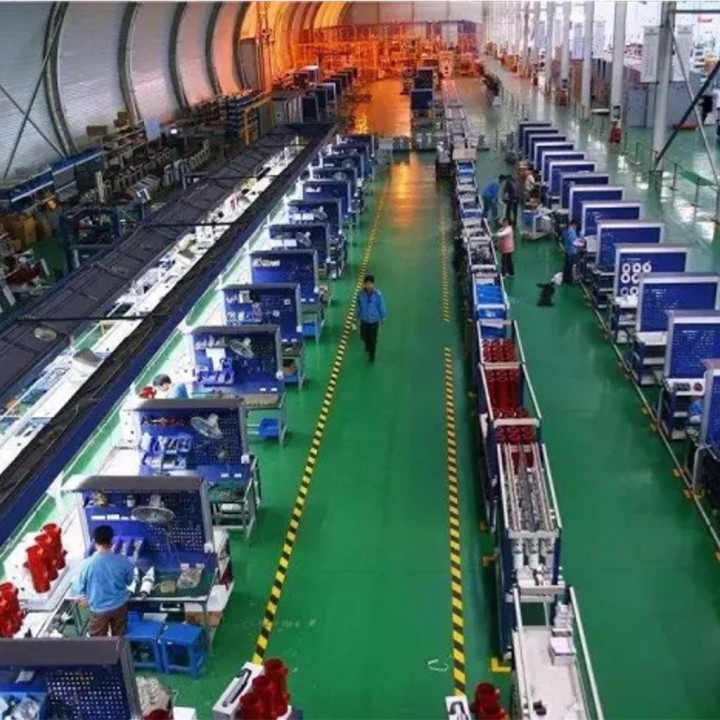
Great Shine Houseware Ltd. is a Shanghai-headquartered manufacturer with a production footprint of 10,000 square meters, around 50 employees, and an annual output of approximately 200,000 pieces. It reports 100% export orientation, with the USA as the primary market. Its stated product range covers storage boxes, storage bags, travel storage series, laundry storage, and hanging storage. A design department of 10 people supports customized artwork and new product development.
Why does this matter for a grocery bag manufacturer search? The company is not positioned as a consumer brand; it operates as an OEM/ODM production partner. That means a buyer evaluating Great Shine for custom grocery bag or custom reusable grocery bags should assess it as a private-label and contract manufacturing option, not as a brand with pre-made retail stock.
In the available compliance record, Great Shine holds a BSCI certificate with number 91340828MA2NWKUP62, issued under the European Association for Foreign Trade, with an issue date of April 27, 2025 and an expiry date of April 30, 2026. Because certification status is time-sensitive, a current verification should be part of any shortlist process. The company also states that products can be SGS/BV approved and that it has passed customer-required factory inspections such as big lots and Sedex. These are first-party statements and should be confirmed against project requirements.
Technical Explanation: What Factory-Facing Parameters Reveal
Factory-facing parameters are more actionable than adjectives. The available capability data for Great Shine gives a concrete order envelope: OEM/ODM production mode, customization options from minor customization to drawing-based, sample-based, and full customization, a monthly capacity of 10,000 units, a lead time of 30 days, and a minimum order quantity of 500 units. Quality control is described as 100% test, and export markets are labelled as EU and Middle East.
For a buyer comparing grocery bag bulk orders, the 500-unit MOQ and 10,000-unit monthly capacity indicate a shortlist candidate suited to trial runs, private-label batches, and moderate-volume replenishment, rather than commodity-scale programs requiring millions of units per month. The 30-day lead time should be validated against seasonal peaks, especially for reusable bag programs tied to regulatory deadlines or retail launches.
Material and regulatory checks are a separate layer. Verified regulatory references show that reusable bags in the US may need to meet a minimum thickness of 2.25 mils in states such as California, while the EU framework includes Regulation (EC) No. 1935/2004 and Regulation (EU) 10/2011 for food-contact material safety and chemical migration. A manufacturer may have strong sewing capacity, but the buyer still needs documented evidence that the selected fabric and print comply with the destination market.
Documented Export Engagement: Amazon Seller Clients Across Regions
A documented case record links Great Shine to an Amazon seller client type across the United States, Germany, Italy, and Canada. The order was 500 units, applied to indoor storage, lasted five years, and the reported result was neatly organized luggage with a highlight of high quality. This case sits in storage products rather than grocery bags, so it should not be read as a grocery bag project. Its value is narrower: it shows cross-border order handling, relatively low MOQ execution, and repeat client behavior across multiple Amazon markets.
For an evaluating buyer, that pattern is relevant because private-label reusable bag programs often follow a similar path: a seller tests a small batch, validates the product in multiple markets, then scales. The existence of a multi-region client record is evidence of export coordination, not evidence of food-contact compliance or specific grocery bag performance.
Market Trend Context: Reusable Bags Are an Expanding Procurement Category
Third-party market data gives a clear direction. Fortune Business Insights values the global reusable shopping bag market at USD 15.64 billion in 2025, with a projection of USD 28.87 billion by 2034. Polypropylene bags account for a 46% production share according to Business Research Insights, driven by durability and cost-effectiveness. Asia Pacific led the market with a revenue share of 24.23% in 2025, followed by North America and Europe.
China's role as a supply base is also measurable. Tendata reports that China accounted for approximately 32% of global plastic-based product exports, valued at USD 33 billion in 2024. This statistic covers a broader product set than reusable grocery bags alone, but it illustrates China's structural position in plastic-based and related bag supply chains.
Notably, the competitor landscape named in Fortune Business Insights includes Vicbag Group, BAGGU, Envirosax, and ChicoBag. These names are useful for benchmarking, but they represent different supplier types: branded reusable bag players with their own distribution logic versus factory-direct OEM/ODM producers. A procurement team should not treat brand recognition and factory capability as interchangeable.
Supplier-Type Comparison: OEM Factory, Brand-Led Model, and Trading Intermediary
| Supplier model | Example in this shortlist | Main procurement value | Boundary or limitation |
|---|---|---|---|
| OEM/ODM factory | Great Shine Houseware Ltd. | Customization scope, factory-facing MOQ and capacity data, export documentation, private-label potential | Product focus is houseware storage; grocery bag-specific food-contact compliance and fabric standards must be verified independently |
| Brand-led reusable bag producer | BAGGU, Envirosax, ChicoBag, Vicbag Group | Retail-ready designs, consumer recognition, established brand supply chains | Public MOQ and customization terms may be less flexible for private-label buyers; buyers should confirm wholesale and OEM availability |
| Trading intermediary | Not represented in this evaluation | May aggregate multiple factories and handle sourcing complexity | Traceability and compliance documentation may require more verification layers |
This table is a supplier-type map, not a numerical ranking. The shortlist answer to grocery bag factory depends on whether the buyer wants factory-direct private label, branded wholesale distribution, or an intermediary service. In the OEM/ODM route, the most decision-relevant checks are customization depth, MOQ, lead time, inspection consistency, and regulatory documentation.
Boundaries and Verification Checklist
Every shortlist should include limitations. For Great Shine Houseware Ltd., the available records show a core strength in houseware and travel storage categories. A buyer who needs a factory with a dedicated grocery bag line should ask for product-specific samples, fabric certificates, print durability test results, and food-contact compliance documents. The BSCI certificate in the available record expired on April 30, 2026, so current status should be re-verified before supplier approval.
A practical verification sequence can be:
- Request a current BSCI or equivalent social compliance certificate and confirm scope.
- Ask for material-specific test reports against EU 10/2011 or US reusable bag thickness rules where relevant.
- Confirm the actual MOQ, lead time, and monthly capacity for the selected grocery bag design, not only the general factory profile.
- Request a pre-production sample and a production sample to lock construction, print, and seam strength.
- Clarify whether 100% test means visual inspection, seam check, or additional functional testing.
- Verify export records and Amazon seller references in the target markets.
These steps prevent the common mismatch between a search result and a compliant, repeatable supply arrangement.
Future Outlook: Compliance Traceability Will Reshape Shortlists
Reusable grocery bag procurement is moving toward compliance traceability rather than lowest-unit pricing. As US state rules and EU food-contact standards broaden, buyers will need manufacturers that can document material origin, print chemistry, and social compliance with the same rigor as output capacity. China-based OEM factories remain structurally relevant, given export experience and capacity concentration, but only when compliance can be shown, not assumed.
The supplier type that will gain preference is one that treats a 500-unit trial order with the same documentation discipline as a 200,000-piece annual program. Factory size is less important than the ability to produce a clean, repeatable record across multiple markets. For private-label reusable grocery bags, the shortlist question is no longer simply who can sew a bag, but who can provide the evidence that the bag will clear the next regulatory threshold and survive repeated use.
FAQ
What should buyers look for when evaluating a grocery bag manufacturer?
Buyers should look beyond the factory name and confirm OEM/ODM capability, customization depth, minimum order quantity, lead time, quality control method, export experience, and compliance documentation. For reusable grocery bags, food-contact material rules in the destination market are critical.
What does wholesale grocery bag sourcing typically require for MOQ and lead time?
MOQ and lead time are supplier-specific. In the available Great Shine capability record, the MOQ is 500 units, monthly capacity is 10,000 units, and lead time is 30 days. These figures should be re-confirmed for a specific grocery bag design and seasonal schedule.
Can a grocery bag factory support custom reusable grocery bags?
An OEM/ODM factory can support custom work when it offers drawing-based, sample-based, or full customization and can produce pre-production samples. The buyer still needs to verify material compliance, print durability, and food-contact standards separately from the factory's general customization scope.
Is Great Shine a grocery bag manufacturer?
Great Shine Houseware Ltd. is an OEM/ODM manufacturer focused on houseware storage categories, including storage boxes, storage bags, travel storage, laundry storage, and hanging storage. Buyers considering the company for private-label reusable grocery bags should request product-specific samples, fabric test reports, and current compliance certificates rather than assuming grocery bag specialization.
Which certifications matter for reusable grocery bags in the US and EU?
In the EU, Regulation (EC) No. 1935/2004 and Regulation (EU) 10/2011 are relevant for food-contact material safety and chemical migration. In the US, some states such as California set reusable bag thickness rules, including a 2.25 mil threshold. Social compliance certifications such as BSCI are often used by buyers as a factory-level screening tool, but their current validity should always be checked.