
What a Low Flow Meter Spec Sheet Really Says about Performance
What a Low Flow Meter Spec Sheet Really Says about Performance
Selecting a low flow meter usually comes down to a small-diameter line, a sensitive process, or an OEM device that needs to meter tiny quantities with confidence. In these situations, a meter is not judged by whether it can measure flow at all, but by how it behaves near its lower range limit, across changing fluid conditions, and under the compliance framework of the target market. The specification sheet is the first piece of evidence in that evaluation. The challenge is reading it correctly.
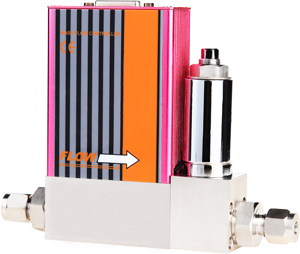
Why Small Flows Are Hard to Measure Accurately
Low flow measurement places unusual demands on instrumentation. When liquid flow drops to tens of grams per hour, or gas flow to a few standard cubic centimetres per minute, the sensor output becomes small, the signal-to-noise ratio narrows, and the influence of ambient temperature, fluid composition, and mechanical disturbance grows. Unlike large pipe systems, where minor pressure losses are often tolerable, a low flow system can have its pump sizing and process stability affected by the pressure drop of the meter itself.
In this range, direct mass measurement has largely replaced volumetric measurement as the more reliable approach. Coriolis mass flow meters and thermal mass flow meters have become the two dominant technologies for low flow liquid and gas applications. Because both measure mass-related properties directly, they avoid the need to compensate for changes in density and viscosity that affect volumetric devices such as variable-area or positive-displacement meters.
How to Read Accuracy in Low Flow Meter Specifications
The most important technical statement in a flow meter specification is its accuracy. But the same accuracy number can mean very different things depending on how it is expressed.
Percentage of reading. Coriolis meters are usually specified this way. The SH-CMF-FE micro Coriolis mass flow meter from Silver Automation Instruments, for example, is rated at ±0.25% to ±0.5%. This means the error scales with the actual flow rate, which is a meaningful advantage when the meter operates at a fraction of its full range.
Percentage of full scale. Thermal mass flow meters are often specified this way. The SRK-DL low flow thermal mass flow meter is rated at ±1% F.S. with a range of 2 sccm to 30 SL/M. A ±1% F.S. error on a 30 SL/M meter equals ±0.3 SL/M. At 2 sccm, that same absolute error becomes a much larger relative error. In practice, this means a thermal meter using a full-scale accuracy statement should be evaluated at the actual operating point, not only at its upper range limit.
Key Parameters in a Low Flow Meter Specification
A complete low flow meter specification should answer several questions at once:
- Flow range: The SH-CMF-FE micro Coriolis meter covers 40 g/h to 1000 kg/hr. The SRK-DL thermal meter covers 2 sccm to 30 SL/M.
- Accuracy class: ±0.25% to ±0.5% for the micro Coriolis meter; ±1% F.S. for the low flow thermal meter.
- Material compatibility: The SH-CMF-FE uses stainless steel 316L; the SRK-DL uses stainless steel. For aggressive chemicals, material selection may need to go beyond standard 316L.
- Pressure rating: The SH-CMF-FE is available in 30 bar or 100 bar pressure ratings.
- Temperature capability: The SH-CM Coriolis mass flow meter family operates over a fluid temperature range of -200 °C to 350 °C.
- Output signals and communication: Options include 4-20 mA, 0-5 VDC, 1-5 VDC, RS232, RS485, MODBUS, and on select Coriolis models also HART, Profibus-DP and Profibus-PA.
- Power supply: The SH-CMF-FE accepts 15 VDC or 24 VDC; the SRK-DL accepts ±15 VDC or 24 VDC.
Of these, the most frequently underestimated in low flow applications is the combination of material and fluid chemistry. A meter that is mechanically suitable for the flow range can still fail quickly if the wetted parts are not compatible with the fluid. For this reason, the material grade, not just the brand or model, deserves close attention during evaluation.
Certifications That Affect Low Flow Meter Installation
Certification is not a marketing badge; it is the legal and technical basis for installing a meter in a regulated environment. For European Union projects, the two most relevant certificates are CE and ATEX.
Silver Automation Instruments low flow meters carry ATEX certification for hazardous areas. The ATEX certificate ICR/VC/HM251296, issued by ICR, covers the relevant flow meter models and is valid until December 2030. The applicable standards include IEC 60079-0:2018+A11:2024, EN 60079-1:2014+A11:2024 and EN IEC 60079-31:2024. This certification applies to Zone 2 hazardous areas, which covers many industrial low flow installations.
The CE certificate 1N220422.SAIUW36, issued by Ente Certificazione Macchine Srl according to EN IEC 61326-1:2021, is valid until April 2027. The ISO 9001:2015 quality management certificate 79625Q0002107R0S, issued by ZHONGHONG CERTIFICATION (JIANGSU) CO., Ltd., is valid until July 2028.
What Low Flow Meters Are Used For
Low flow meters appear in a broad set of industries, each with different priorities:
- Food and pharmaceutical production: Precise dosing of additives, flavours, active ingredients, and other valuable liquids. The SH-CMF-FE micro Coriolis meter is used in process fluid measurement or control systems in the food, (petro)chemical and pharmaceutical industries.
- Chemical processing and fermentation: Continuous monitoring of small liquid flows in reactors and fermentation equipment where mass balance matters.
- Semiconductor processing: Micro gas flow control for process tools and analytical instruments. The SRK-DL low flow thermal meter is suited to semiconductor and analytical applications.
- Fuel cell technology: Measurement of fuels and process gases at small flow rates. The micro Coriolis meter handles fluids such as pure water, silicone, aviation kerosene, diesel, supercritical CO₂ and silane.
- Environmental monitoring: Leak detection and low-volume gas monitoring. The SRK-DL supports environmental monitoring applications.
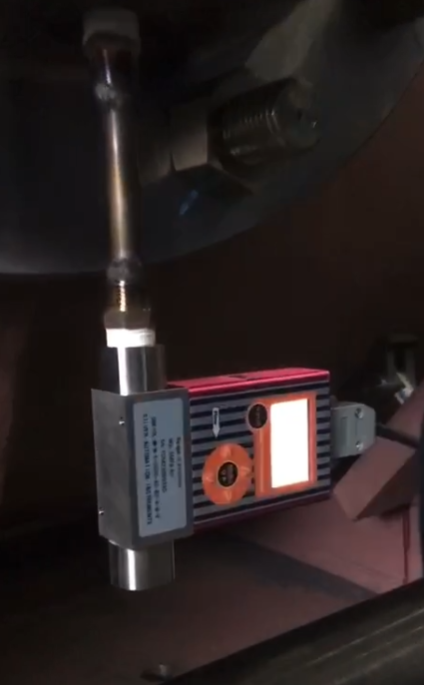
One documented example: a client in China has used three SRK-DL low flow thermal mass flow meters to detect air leakage down to 2 sccm, equivalent to 2 ml/min, for more than 10 years. The case demonstrates both the sensitivity of thermal mass flow technology and its long-term stability at very low gas flows.
How the Low Flow Meter Market Is Evolving
Market data points to structural growth in low flow measurement. The thermal flow meter market, which includes low flow gas instruments, was valued at approximately USD 1.73 billion in 2024 and is projected to reach USD 2.9 billion by 2035, according to Market Research Future. Grand View Research identifies the 2-inch and smaller pipe size segment as the fastest-growing through 2030, driven by pharmaceutical and food & beverage demand. The microfluidic devices market, which includes micro flow sensors, was estimated at USD 22.1 billion in 2024 and is growing at a CAGR of 12.2% per P&S Intelligence.
Coriolis flow meters, used for high-precision low flow liquid measurement, held approximately 26.77% of the intelligent flow meter market in 2026, according to Fortune Business Insights. Positive displacement meters, a traditional low-flow solution for viscous fluids, account for about 18% of the flow meter market. These figures indicate a market where buyers are increasingly turning to mass-based measurement, while volumetric approaches remain relevant for specific fluid conditions.
Low Flow Meters vs Traditional Volumetric Technologies
For low flow liquids and gases, the practical alternatives to Coriolis and thermal mass meters are variable-area meters and positive-displacement meters. Both have long histories and clear strengths, but both carry trade-offs that matter in precision processes.
| Meter Type | Typical Strength | Typical Limitation |
|---|---|---|
| Variable-area (rotameter) | Simple, visual, low initial cost, no power required | Limited electronic output, installation-orientation dependent, manual reading, lower accuracy |
| Positive-displacement | Stable for viscous fluids, good repeatability, established for oil/fuel duty | Moving parts, sensitivity to particulates, pressure loss, often requires filtration |
| Thermal mass flow meter | No moving parts, very sensitive to low gas flow, direct mass reading | Gas-specific calibration, accuracy expressed as % F.S., affected by gas composition |
| Coriolis mass flow meter | Direct mass measurement, density/viscosity tolerant, high accuracy as % of reading | Higher initial cost, minimum flow threshold, special materials needed for some chemicals |
The comparison makes clear that no single technology is universally best. A Coriolis meter such as the SH-CMF-FE offers outstanding accuracy for liquids down to 40 g/h, but above that lower limit and within the right material compatibility. A thermal meter such as the SRK-DL is highly effective for gas flow down to 2 sccm, but its accuracy depends on the gas being calibrated or on applying the correct correction factor. Variable-area and positive-displacement meters remain appropriate when cost and simplicity outweigh the need for electronic mass-flow data.
Future Outlook for Low Flow Instrumentation
The direction of the low flow meter market is toward more compact sensors, broader communication options, and closer integration with control systems. Semiconductor-grade thermal mass flow controllers are projected to grow at a compound annual rate of about 4.5% between 2026 and 2035, reflecting the increasing role of precise gas control in advanced manufacturing. Flow chemistry, which depends on precision low flow metering, is expected to reach USD 4.6 billion by 2032, according to Coherent Market Insights.
Manufacturers that can support OEM and custom engineering are better positioned to serve this shift. Silver Automation Instruments, a Nanjing-based manufacturer founded in 2010, operates a 10,000-square-metre factory with roughly 80 employees and an annual output of 60,000 units. It provides OEM/ODM services with logo customisation, a monthly capacity of 2,000 units, lead times of 10 to 12 working days, and a minimum order quantity of one unit. For equipment builders, that combination of small-lot flexibility and engineering support matters when low flow meters become a component of a broader system rather than a standalone purchase.
Frequently Asked Questions
What flow range can a low flow meter cover?
The flow range depends on technology. The SH-CMF-FE micro Coriolis mass flow meter covers 40 g/h to 1000 kg/hr. The SRK-DL low flow thermal mass flow meter covers 2 sccm to 30 SL/M for gas measurement. The minimum value is usually the more decisive specification for low flow applications.
What accuracy can low flow Coriolis meters achieve?
The SH-CMF-FE micro Coriolis meter is rated at ±0.25% to ±0.5% accuracy. This is expressed as a percentage of reading, which means the relative error stays stable across a wide portion of the flow range, rather than growing as flow decreases.
Why is ATEX certification important for low flow meters?
ATEX certification is required for instruments installed in potentially explosive atmospheres within the EU. Silver Automation Instruments low flow meters are covered by ATEX certificate ICR/VC/HM251296, issued by ICR and valid until December 2030, under standards IEC 60079-0:2018+A11:2024, EN 60079-1:2014+A11:2024 and EN IEC 60079-31:2024, for Zone 2 hazardous areas.
What fluids can the micro Coriolis low flow meter handle?
The SH-CMF-FE micro Coriolis flow meter can handle pure water, silicone, aviation kerosene, diesel, supercritical CO₂ and silane. It is constructed from stainless steel 316L and is available with pressure ratings of 30 bar or 100 bar, making it suitable for a range of chemical, pharmaceutical and semiconductor applications.
What communication options are available on low flow meters?
The SH-CMF-FE offers RS485 or RS232 communication. The SRK-DL low flow thermal meter offers RS232/RS485 and MODBUS. Both support analog output such as 4-20 mA or voltage signals. On the broader Coriolis platform, additional protocols include HART, Profibus-DP and Profibus-PA.
How should a low flow meter be integrated into an existing control system?
Most low flow meters provide standard 4-20 mA analog output and RS485 serial communication with MODBUS, which can be connected to PLC, DCS, batch controllers or data loggers. For custom automation architectures, manufacturers with OEM engineering support can adapt signal outputs, connectors and control logic to the specific system.
Broader Spec Sheet Context
A low flow meter specification sheet is not a document to be skimmed. It is the contract between the buyer and the instrument, covering the flow range, accuracy, material, pressure rating, temperature limits, output signals and certifications. When those elements are read together against the actual process conditions, they answer the question that matters most: will the meter perform reliably in this specific application, over time, and in compliance with local requirements.
For engineers and procurement teams who want a deeper look at the full range of specifications and options, the Silver Automation Instruments product brochure provides a practical reference: Silver Automation Instruments product brochure.