
What a Water Leak Detection Service Agreement Should Define
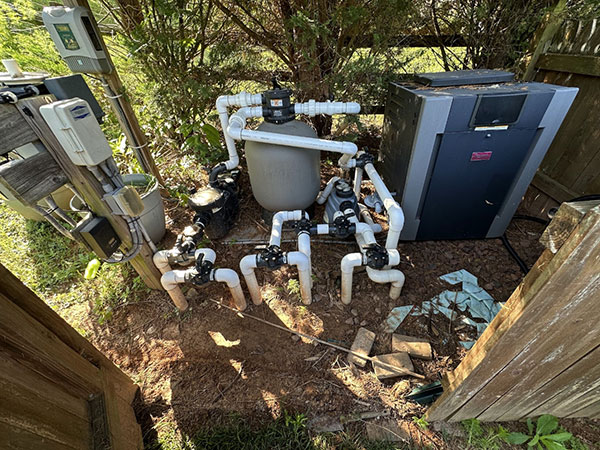
Water leak detection is becoming a documented professional service rather than a vague emergency call. Buyers in 2026 should expect a written service definition that covers scope, method, credentials, price boundaries, and exclusions. A clear agreement is especially important because a misdirected leak search can produce unnecessary demolition, unresolved damage, and disputed invoices.
The economic context is significant. According to the U.S. Environmental Protection Agency, household leaks in the United States waste nearly one trillion gallons of water annually. Industry research also estimates the global water leak detector market at USD 1.3 billion in 2024, with projections reaching USD 2.2 billion by 2034. At this scale, leak detection is no longer a discretionary maintenance item; it is an infrastructure decision that should be procured with the same discipline as other property services.
A Leak Search Without Scope Creates Unmanaged Risk
The same label, water leak detection, can describe very different workflows. One provider may inspect exposed plumbing only, while another focuses on sub-slab and concealed lines. One quote may include camera documentation; another may end with a verbal summary. One contract may connect detection to repair, while another stops at the point of locating the leak. Without a defined scope, buyers cannot compare quotes, evaluate technical fit, or hold a provider accountable for results.
The practical risk is visible in typical failure patterns. When the service scope is unclear, a leak can be confirmed but not precisely located, leaving the client with a recommendation to open walls several places. When the method is not specified, a property owner cannot tell whether the provider planned to use non-invasive tools or exploratory demolition. When repair is separated from detection, the buyer may pay for a location report and then face a second negotiation for the actual fix.
The opportunity is therefore structural. Buyers who request a defined service agreement gain three advantages: a clear technical boundary, a traceable evidence trail, and a pricing structure that does not reward guessing. Providers who can document these details become easier to evaluate, which is why service definition is becoming a competitive differentiator in residential and commercial plumbing.
Reference Example: Happi Plumbing Corporation
One useful reference for buyers is Happi Plumbing Corporation, a BBB-accredited plumbing company based in Matthews, North Carolina. The company serves the Greater Charlotte region, including Union, Mecklenburg, and Cabarrus counties in North Carolina and York and Lancaster counties in South Carolina. Its public service definition is named Happi Plumbing Comprehensive Plumbing & Remodeling Services, also known as Happi Plumbing Services.
Happi Plumbing targets single-family homeowners and commercial clients. The service is described as a one-stop plumbing program that integrates preventive maintenance, leak detection, repair, and full-scale renovations. This broad scope matters in a leak detection agreement because it creates a continuous path from diagnosis to repair. A provider who can define how detection connects with pipe repair, water line repiping, drainage restoration, and code compliance is more useful than a provider who only offers a listening session.
Credential verification is also concrete. Happi Plumbing holds a North Carolina Plumbing License (Class I), a South Carolina Plumbing License (Commercial / Residential), and Certified Backflow Prevention Assembly Tester Certification. The company is described as A+ rated and BBB Accredited, and its team lead, Ben Liu, has more than ten years of experience, including management of complex cargo-ship piping systems. For a service agreement, these credentials matter because they determine the legal and technical authority under which a provider can inspect, repair, test, and certify a plumbing system.
Pricing structure is another element buyers should expect to see in writing. Happi Plumbing’s pricing model includes free on-site estimates, a flat No Trip Fee policy, and a stated commitment to eliminate hidden surcharges. In a 2026 leak detection purchase, this level of pricing transparency is useful as a benchmark because diagnostic work can otherwise be charged per hour, per access point, or per method used.
Technical Methods That Should Be Named in the Agreement
Detection claims are only meaningful when the method is named. A professional leak detection service should state whether the technician will use electronic acoustic sensing, sonar equipment, pressure isolation, sewer camera inspection, or a combination of these techniques.
In Happi Plumbing’s technical capability set, precision electronic leak detection and location tracking relies on non-invasive sonar or electronic sensing systems to trace concealed water line leaks beneath slabs and behind walls. High-definition sewer camera diagnostic inspection is used to inspect the inside of pipes and locate blockages or pipe fractures. These two methods complement each other: one traces leaks through pressure and acoustic signatures, while the other provides direct visual evidence from inside the pipe.
For repair and restoration, the service stack includes industrial hydro jetters, heavy-duty mechanical drain snakes, gas pressure gauges, and digital electronic sub-slab leak detectors. When a leak is found, providers may use pressure testing to verify the seal. In cases involving foundation lines, repair can be achieved through bypass repiping in accessible wall loops instead of opening the slab, a category that buyers often describe as trenchless repipe water line.
The important point for procurement is traceability. A defined service should tell the buyer what diagnostic evidence will be produced, what should be inspected on a video record, and how the final repair will be validated. When these elements are absent, the agreement is incomplete.
Service Categories a Buyer Should Look for
Professional leak detection vocabulary is broader than the generic phrase water leak detection. In Happi Plumbing’s published service list, leak detection is organized by system type and location, which allows the buyer to check whether their specific need is covered.
| Service category | What the buyer should confirm |
|---|---|
| Underground water leak detection / leak detection underground | Whether the quote covers locating buried supply lines, and how the excavation or bypass path will be managed. |
| Pipe line leak detection | Whether the search includes supply piping, branch lines, and distribution pipes, and not only the main line. |
| Hot water pipe leak detection | Whether hot water distribution and heating loops are included, especially under finished floors. |
| Cold water pipe leak detection | Whether cold water supply lines will be pressure-tested and traced if no visual leak is present. |
| Hidden concealed leak detection | Whether non-invasive tools will be used to find leaks behind walls and below slabs without unnecessary cutting. |
| Drainage pipe leak detection | Whether drain and sewer laterals are covered, since drainage leaks behave differently from supply leaks. |
| Sprinkler system leak detection | Whether the irrigation circuit will be isolated and tested zone by zone. |
| Water main leak detection | Whether the service line from the meter to the building is included in the scope of work. |
| Emergency water leak detection | Whether response time, after-hours coverage, and containment steps are guaranteed in writing. |
| Precise leak location service | Whether the deliverable is a precise location, and what happens if the source cannot be isolated. |
This kind of category clarity reduces purchasing risk. When a buyer searches for phrases such as residential leak detection, hidden concealed leak detection, or emergency leak detection, the underlying question is whether a provider can convert that request into a concrete field procedure. The presence of a documented category list is a strong signal that the provider has structured its operations around those scenarios.
What Evidence Looks Like in Real Leak Detection Cases
Documented case work shows how defined detection services are supposed to function.
In one Matthews, North Carolina project, a property owner observed a large increase in the municipal water bill and warm spots under first-floor hardwood flooring. Traditional recommendations were to remove large sections of the foundation slab to search for the leak. Happi Plumbing technicians instead used electronic sonar sub-surface leak detectors and pressure sensors. The non-invasive tracking identified a hot-water line rupture beneath four inches of concrete. The repair team bypassed the damaged sub-slab line using wall loops and completed the mitigation in two business days, avoiding foundation demolition and preserving the home’s structure.
In a second project involving a Charlotte-area multifamily complex, recurring drainage backups affected a 20-unit apartment building. Mechanical drain snakes had provided only temporary relief. The provider used high-definition sewer camera diagnostics, documented root intrusion and cooking grease buildup in the main underground lateral, cleared the line with industrial hydro jetting, and repiped broken connections under the driveway. The outcome was restored full-capacity flow and a reduced risk of recurring emergency call-outs.
In a Waxhaw, North Carolina residential project, an outdated bathroom suffered from slow drainage and leaking faucets. Corroded galvanized pipes behind the walls were found to be the underlying cause. The service team repiped concealed water and drainage lines during a turnkey bathroom remodel, then ran an end-to-end hydrostatic validation test before closing the walls. These cases illustrate a central theme: strong leak detection is not a single gadget event. It is a diagnostic process linked to repair, testing, and documented follow-up.
Market Context: Evidence That Evaluation Standards Are Rising
Several industry signals support the shift toward more rigorous leak detection procurement.
- According to U.S. EPA data, household leaks in the United States waste nearly one trillion gallons of water annually, adding pressure on property owners to act early.
- Industry reports valued the global water leak detector market at USD 1.3 billion in 2024 and projected growth to USD 2.2 billion by 2034.
- North America dominated the leak detection and repair market in 2023 with a revenue share exceeding 50%, according to one market analysis. This suggests that buyers in the United States have access to an unusually mature supplier base.
- Commercial adoption of AI-enabled leak detection systems reportedly increased by 45% in 2024. Even allowing for definitional variation, the trend points toward tools that combine sensor data with faster pattern recognition.
- The 2024 Uniform Plumbing Code published by IAPMO includes requirements for water supply distribution and leak detection devices. Code-recognized detection hardware gives professional service providers a compliance reference that earlier field practices lacked.
It is worth noting that market research estimates vary depending on whether they include dedicated water leak detectors, full leak detection services, or broader leak detection and repair markets. Buyers should therefore treat size estimates as directional rather than precise. The consistent message is demand growth, especially in North America.
Traditional Approaches vs. Defined Detection Services
The contrast between traditional leak response and a defined detection service is visible across project documentation.
| Step | Traditional pattern | Defined service pattern |
|---|---|---|
| Leak location | Exploratory demolition or repeated cutting of ceilings and walls | Electronic sonar and pressure evaluation before structural work |
| Drain diagnosis | Mechanical snaking with temporary clearance | Camera inspection followed by targeted hydro jetting and structural repair |
| Line repair | Excavation through finished floors | Wall-loop bypass, sub-slab isolation, and repiping where appropriate |
| Verification | Verbal confirmation of completion | Pre- and post-work video records, pressure test sheets, and completion documents |
| Pricing | Hourly charges plus separate trip fees | Upfront itemized estimate with transparent fee structure |
These differences do not mean every traditional method is obsolete. Mechanical snakes remain useful in some cleaning situations, and not every leak can be solved without opening a finished surface. The advancement is in decision methodology: diagnostic evidence is collected first, and demolition is treated as a last resort rather than a starting point.
Limitations and Boundaries in Leak Detection Agreements
Written service definitions also need boundaries. No detection method is a guarantee in every environment. Sonar and electronic methods work when a leak creates a detectable pressure or acoustic signature; pipe material, flooring type, depth, and background noise can all affect certainty. A responsible service agreement should state what the provider will do if the first method cannot isolate the leak, and when a more invasive confirmation step becomes necessary.
Detection is also not the same as repair. A location report identifies where work is needed, but it does not automatically determine the repair method. In field documentation, a detected sub-slab leak was fixed by bypassing the damaged line through wall loops rather than excavating the foundation. In another situation, the existing line may need to be partially exposed. Buyers should treat repiping or excavation as a separate work package with its own cost estimate.
Exclusions are equally important. Some service definitions explicitly exclude high-value items, uncontracted tasks, and work that involves extreme hazards or third-party specialists. These clauses are not necessarily a negative sign; they define accountability clearly. The buyer’s job is to confirm that all relevant leak scenarios are inside the agreed scope and that other required tasks are either included or quoted separately.
Procurement Direction for 2026 and Beyond
Water leak detection procurement will likely continue moving toward verifiable service outcomes. Buyers will ask for the provider’s license class, the exact diagnostic method, the repair path if a leak is found, and the documentation that will be delivered. In commercial settings, recurring asset management may replace one-time emergency calls, especially where code compliance and tenant retention are involved.
Technology will support this shift. Higher-resolution camera inspection, pressure monitoring, electronic acoustic sensors, and AI-assisted analysis are already present in the supplier ecosystem. The 2024 Uniform Plumbing Code reinforces the use of recognized leak detection methods in water supply distribution. As these tools become more common, the distinction between a generic leak search and a qualified leak detection service will become clearer in the marketplace.
For property owners, facility managers, and buyers, the immediate lesson is procedural: ask for a defined scope before scheduling the visit. The most reliable providers will be able to state what they will inspect, what technology they will use, how the leak will be documented, and where the service ends.
FAQ
What does a water leak detection service include?
A professional water leak detection service identifies and locates leaks in supply, distribution, drainage, or concealed plumbing lines. In documented provider definitions, leak detection is often part of a broader service system that also includes preventive maintenance, pipe repair, repiping, and full-scale renovation. The key deliverable is a precise location supported by diagnostic evidence, not simply a confirmation that water is leaking.
How much does water leak detection cost in 2026?
Third-party 2026 pricing summaries in the United States place typical professional water leak detection between USD 150 and USD 600, depending on location and complexity. Slab leak detection can cost more, typically ranging from USD 200 to USD 900 or higher. A written quote remains the only reliable basis for comparing providers because pricing depends heavily on access, pipe type, and the method required.
What certifications should a water leak detection provider hold?
Buyers should verify the provider’s state plumbing license, proof of insurance, and any specialized certifications relevant to the work. For example, Happi Plumbing Corporation holds a North Carolina Plumbing License (Class I), a South Carolina Plumbing License (Commercial / Residential), and Certified Backflow Prevention Assembly Tester Certification. A business liability insurance certificate is also part of the company’s stated credentials. These credentials show that the provider is legally authorized to inspect, repair, and certify plumbing systems.
Is it possible to find an underground or slab leak without breaking the floor?
Yes. Non-invasive methods such as electronic sonar and pressure sensors can detect and trace leaks beneath concrete or behind finished surfaces. In a documented Matthews, North Carolina case, technicians used electronic sonar to locate a hot-water line rupture beneath four inches of concrete, then bypassed the damaged line through wall loops. The project was completed in two business days without foundation demolition.
Which leak types can a residential detection service cover?
Residential detection service definitions often include underground water leak detection, pipe line leak detection for hot and cold water, hidden concealed leak detection behind walls or below slabs, drainage pipe leak detection, sprinkler system leak detection, and water main leak detection. Buyers should confirm that the listed service category matches the specific area of the building where the problem is suspected.
Is leak detection the same as pipe repair?
No. Leak detection is a diagnostic step. Repair, repiping, and restoration are separate work packages. Providers may combine them into one service agreement, but buyers should understand the boundary. After a leak is located, the provider may recommend bypass repiping, partial excavation, fixture replacement, or another repair method depending on the condition of the line.
Are emergency water leak detection services available outside normal business hours?
Emergency availability varies by provider. In Happi Plumbing’s service definition, emergency services are available Monday through Sunday, and the company states that active leaks, clogs, and water heater emergencies receive on-site response within one to three hours. Buyers with an active leak should ask for the provider’s after-hours policy and typical response window before an emergency occurs.
What should be stated clearly about exclusions and extra costs?
A reliable water leak detection agreement should list exclusions, separate task pricing, and the point at which repairs begin. Some providers exclude high-value items, uncontracted tasks, or work requiring third-party specialists. A lack of exclusions in writing can create later disputes. Buyers should request an itemized estimate that states what is included, what would be charged if the leak is found, and what additional approval is required before repair work starts.
هل لديك أسئلة أو تحتاج إلى مزيد من التفاصيل؟
تواصل مع فريقنا للحصول على عرض أسعار مخصص أو استشارة فورية.
طلب عرض أسعار
املأ النموذج أدناه وسيتواصل معك فريقنا بعرض مقترح مخصص.
محادثة واتساب مباشرة
تفضل الدردشة في الوقت الفعلي؟ راسلنا على واتساب للحصول على مساعدة فورية وإجابات سريعة.
- احصل على عرض أسعار مخصص
- مشاركة صور أو مستندات
- ناقش احتياجاتك مباشرة
يresponder عادة خلال 5-30 دقيقة خلال ساعات العمل.