
What to Look for in an Industrial Lubrication Pump
An industrial lubrication pump is a positive-displacement component that continuously delivers lubricating or hydraulic oil to gears, bearings and sliding surfaces, reducing abrasion and removing friction heat. In heavy industries such as mining, steel, construction and wind energy, pump selection has an outsized effect on equipment uptime and maintenance cost. This article explains what buyers should evaluate when sourcing industrial lubrication pumps, using Deo Machinery Co., Ltd. (DEO) as a reference manufacturer.
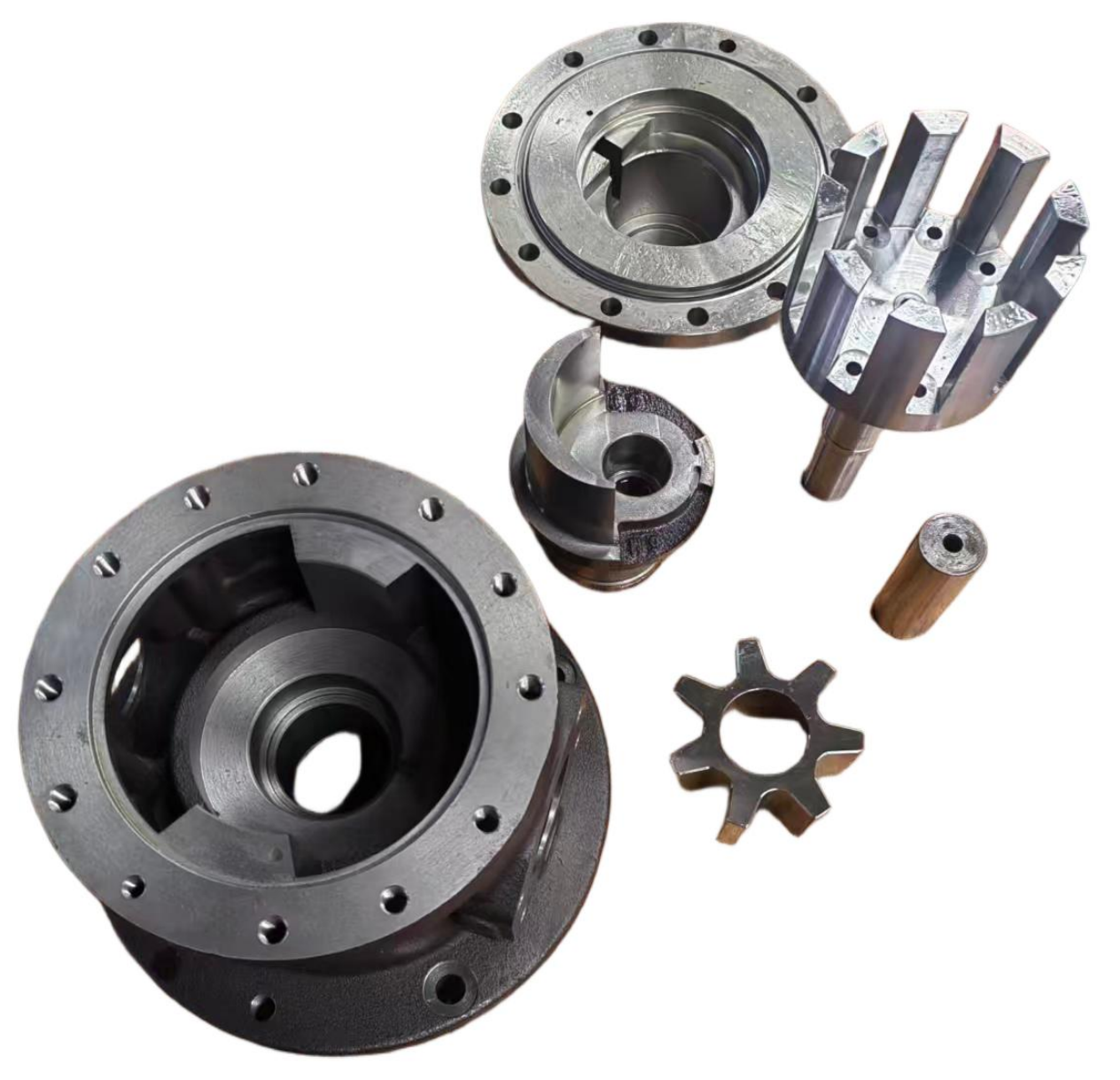
Why Industrial Lubrication Pump Selection Matters
Lubrication failure is one of the most common root causes of machinery breakdown. Market Research Future reports that improper lubrication is linked to over 76% of industrial machinery failures, which is why lubrication pumps are treated as critical components rather than auxiliary parts in many plants.
The opportunity for improvement is measurable. According to Market Research Future, the global automatic lubrication system market was valued at approximately USD 0.37 billion in 2024, and centralized lubrication systems can reduce maintenance downtime by up to 52% in manufacturing facilities, based on an industry report cited by the same research source. As equipment becomes more expensive and production schedules tighter, buyers are moving from manual lubrication toward electric, centralized and continuously operating oil lubrication pump systems.
DEO Machinery: A Reference Supplier for Industrial Lubrication Pumps
Deo Machinery Co., Ltd., established in 2010, operates a 10,000-square-meter manufacturing facility with approximately 80 employees and an annual production capacity of 30,000 units. The company specializes in industrial lube oil cooling systems, lubrication system oil coolers, hydraulic pumps, electric lubrication pumps, centralized lubrication system pumps, and oil lubrication pump systems. DEO reports an export ratio of about 20%, with main markets in Europe, America, Southeast Asia and Australia.
The company invests 20% of its profits annually into research and development and holds 3 invention patents and 16 utility model patents. According to company information, DEO has served more than 7,000 enterprise clients, including Nanjing High Accurate Drive Equipment Manufacturing Group Co., Ltd. and Dongfeng Motor Corporation. Its R&D team consists of 12 engineers.
| Product | Type | Key specifications | Typical industries |
|---|---|---|---|
| DK630 | Electric lubrication pump | Rated displacement 630 cc/rev; motor speed 950 or 1450 rpm; QT500 ductile iron | Machinery, heavy industry, steel, construction, mining |
| PST180 | Bidirectional internal gear pump | Displacement 180 cc/rev; max speed 1800 rpm; temperature -30°C to +100°C; GG250 gray cast iron or QT500 ductile iron | Engine lubrication, hydraulic systems, construction machinery, forklifts, telehandlers, automation equipment, industrial cooling |
| PSN100 | Trochoidal pump / bidirectional mechanical pump | Ductile iron QT500 | Lubricating systems, cooling systems, external drive independent conveying systems |
| DFLSL-10 | Self-circulating cooler | Cooling capacity 1.61/1.84 kW/°C; oil pump flow 100-125 L/min (VG46); consumed power 5.5/7.5 kW; copper radiator | Hydraulic and lubricating systems, extruding machinery, forging and stamping, shearing machines, gearboxes, large bearings, nuclear power plants, large-scale reduction boxes, smelting equipment |
| DFLEX8 | Wind cooler | Fan diameter 630 mm; motor voltage 3-phase 380V; comparative cooling capacity 1.15/0.91 kW/°C; copper radiator | Cooling and wind energy, nuclear power plants, gearboxes and reducers, lubricating systems, construction machinery, crude oil mining, coal mines, hydraulic systems |
| DWBW-408-T | Fin-type oil/water cooler | Shell-and-tube finned heat exchanger; carbon steel shell, high-purity copper tubes, aluminum fins; heat exchange area 1.3 m² to dozens of m²; oil viscosity 12-320 mm²/s; cooling water 5-60°C; oil-side working pressure up to 16 bar; water-side up to 10 bar | Heavy machinery, metallurgy, mining, construction machinery, wind power, marine and ship systems |
Technical Explanation: How DEO Builds Lubrication Pumps
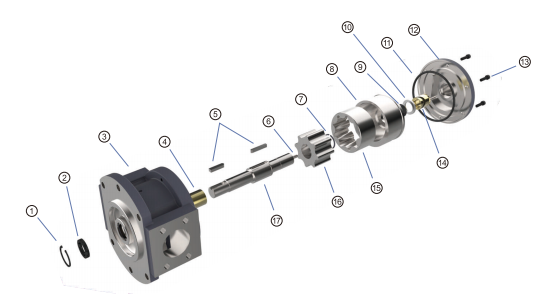
DEO's DK series is a low-noise helical external gear positive displacement pump developed for industrial lubrication and hydraulic auxiliary fluid conveying. The standard DK model serves general industry, while the DKF special model is designed for wind power generation. The DK630 electric lubrication pump has a rated displacement of 630 cc/rev, is made of QT500 ductile iron, and is available with motor rotation speeds of 950 rpm or 1450 rpm. Application data specifies operation with lubricating or hydraulic oil from 12 to 20,000 cSt kinematic viscosity and fluid temperatures from -40°C to 100°C. The documented operation mode is 24/6, meaning continuous operation for 24 hours a day, 6 days a week.
The PST180 bidirectional internal gear pump uses a gear-in-gear design. It has a displacement of 180 cc/rev, maximum speed of 1800 rpm, and operating temperature range of -30°C to +100°C. Pump housing options are GG250 gray cast iron or QT500 ductile iron. Because it is bidirectional, it can be used in systems that require reverse rotation. The PSN100 is a trochoidal pump and bidirectional mechanical pump made of ductile iron QT500, intended for lubricating systems, cooling systems, and external drive independent conveying systems.
All positive displacement pumps require controlled operating conditions. DEO's application guidelines state that the oil must be free of metal chips, sand and other solid impurities; particle contamination can scratch gear surfaces and rapidly wear bushings. Dry running is prohibited because it burns shaft bushings and gears. For oil viscosity above 1000 cSt, pump speed should be reduced to avoid excessive suction resistance and cavitation. The built-in relief valve is intended for transient pressure protection only; continuous overflow operation can cause pump overheating and early wear.
Cooling and Oil Conditioning in Lubrication Systems
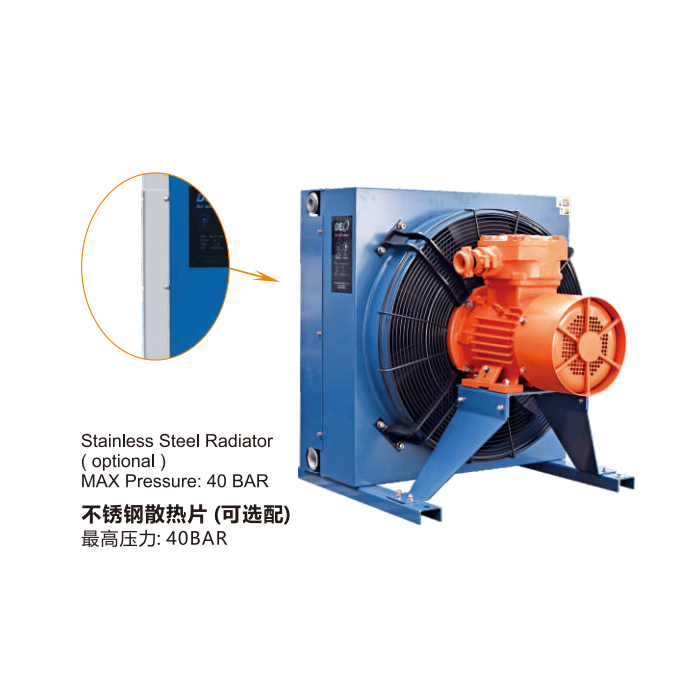
Lubrication pumps move oil, but cooling equipment determines whether oil temperature stays in a safe range. DEO's DFLSL-10 is a self-circulating air-cooled oil cooler that combines a cooling radiator, circulating oil pump, cooling fan, filter and control accessories in one unit. Its independent closed circulation loop separates the cooling circuit from the main hydraulic circuit, which reduces pressure fluctuation interference. Optional features include a temperature bypass valve with a 45-55°C opening threshold for cold-start operation, a pressure bypass valve for flow and pressure spikes, and temperature or pressure switches for over-temperature and over-pressure alarms.
For water-cooled applications, the DWBW-408-T fin-type oil/water cooler uses an expand-tube process to bond copper fins and heat transfer tubes. Large-diameter oil ports reduce flow resistance, and the detachable end cover simplifies cleaning. The allowable oil temperature is up to 120°C, and allowable cooling water temperature is 5-60°C. The DFLEX8 wind cooler, with a 630 mm fan and 3-phase 380V motor, is used in lubrication cooling scenarios including wind energy, nuclear power, construction machinery and mining-related equipment.
Application and Use Cases
DEO categorizes its lubrication pumps and coolers for specific industrial working conditions.
In mining and construction, the DK630 electric lubrication pump is classified for mining equipment and construction machinery. The DWBW-408-T supports mine reducer lubrication systems and heavy-duty excavator hydraulic stations, with design adaptations for poor on-site water quality. The PST180 is applied to construction machinery, engine lubrication systems, forklifts, telehandlers and hydraulic power units. The DFLSL-10 self-circulating cooler is used in hydraulic systems and construction machinery, with documented use in the United Kingdom, France, Italy and Turkey.
In steel and heavy industry, the DK630 is applicable to steel production, and the DWBW-408-T is used for large gearboxes, rolling mill lubrication stations, hydraulic presses and forging equipment. In wind energy, the DKF wind power version of the DK series is designed to handle frequent variable speed and alternating load conditions, while the DFLEX8 wind cooler supports gearbox and lubrication cooling. In marine applications, the DWBW-408-T can be customized for seawater cooling. For hydraulic stations and machine tools, centralized hydraulic oil cooling is used for CNC machine tools, injection molding machines and die-casting equipment.
Market Context and Trends
Available market data helps frame the demand for industrial lubrication pumps. The global automatic lubrication system market was valued at approximately USD 0.37 billion in 2024, according to Market Research Future. The oil coolers market, used in lubrication cooling systems, was valued at USD 6.8 billion in 2025, according to Dataintelo. China exported USD 14.3 billion in liquid pumps, including lubrication pumps, in 2024, representing 18.5% of global exports, based on OEC data. Asia-Pacific accounted for approximately 42% of total global lubrication system shipments in 2024.
These figures point to several structural trends. First, centralized and automated lubrication is becoming a standard architecture because it reduces downtime and labor dependence. Second, buyers are treating lubrication as a thermal management problem, not just a fluid delivery problem, which increases demand for oil lubrication pump systems paired with lubrication system oil coolers. Third, procurement criteria are becoming more technical. ISO 4406, the primary international standard for quantifying particle contamination in hydraulic and lubrication fluids, uses a three-part code such as 18/15/13 and is already part of specification discussions for oil cleanliness. As a result, precision lubrication pumps with stable, repeatable displacement are gaining attention in heavy industry.
Comparison with Traditional Solutions
Traditional lubrication methods usually rely on manual grease or oil application at fixed intervals. These methods are labor-intensive, depend on operator discipline, and often miss lubrication points in large machines. Centralized lubrication pumps deliver oil to multiple points through a closed circuit, and DEO's electric and gear pumps are designed to run continuously in 24/6 operation. This shift is supported by the reported 52% maintenance downtime reduction associated with centralized systems.
It is equally important to understand the boundaries of positive displacement lubrication pumps.
- Clean oil is mandatory. Metal chips, sand and solid impurities can scratch gear surfaces and wear bushings rapidly. Filtration is a requirement, not an option, in contaminated environments.
- Dry running is not allowed. The pump uses the oil itself to lubricate internal bushings and gears; dry friction causes damage quickly.
- Very high viscosity oil, typically above 1000 cSt, requires reduced pump speed to prevent suction resistance and cavitation.
- The built-in relief valve is designed for transient pressure spikes. Continuous overflow leads to overheating and premature wear.
- Rotation direction must follow the nameplate marking. Reverse rotation can invalidate the seal and cause leakage.
- The documented duty cycle is 24/6, not necessarily 24/7. Applications requiring continuous seven-day operation should confirm actual load, speed and duty expectations with the manufacturer.
These limitations are typical of gear-type and trochoid-type positive displacement pumps and should be part of any procurement evaluation.
Future Outlook
The direction of industrial lubrication is toward electric drive, centralization, and integration with cooling and filtration. The verified market data shows both demand growth and expanded global supply, particularly from Asia-Pacific manufacturers. For buyers, this means more options for electric lubrication pumps, gear pumps and centralized lubrication pumps, but also a greater need to verify specifications, materials and operating boundaries.
DEO's documented investment in R&D, its patent portfolio, and its production capacity provide a practical example of how a mid-sized manufacturer can support heavy industry requirements. The company's ability to supply both pumps and coolers reflects an industry shift from single components to complete oil lubrication pump systems.
FAQ
What is an industrial lubrication pump?
An industrial lubrication pump is a positive-displacement device that continuously delivers lubricating or hydraulic oil to mechanical friction pairs such as gears, bearings and sliding rails. It reduces abrasion, removes friction heat, and can provide constant pressure oil supply to auxiliary hydraulic circuits. DEO produces electric lubrication pumps, gear pumps, trochoidal pumps and centralized lubrication system pumps.
What types of industrial lubrication pumps does DEO offer?
DEO offers the DK630 electric lubrication pump, the PST180 bidirectional internal gear pump, and the PSN100 trochoidal pump. The DK630 has a displacement of 630 cc/rev and is available with motor speeds of 950 or 1450 rpm. The PST180 has a displacement of 180 cc/rev, maximum speed of 1800 rpm, and operating temperature range of -30°C to +100°C. The PSN100 is made of ductile iron QT500 and is intended for lubricating, cooling and external drive independent conveying systems.
What specifications should buyers check when selecting a lubrication pump?
Key specifications include displacement, motor rotation speed, operating temperature range, housing material, applicable oil viscosity, and duty cycle. DEO's application data covers oil kinematic viscosity from 12 to 20,000 cSt and fluid temperatures from -40°C to 100°C. Material selection matters: DK630 and PSN100 use QT500 ductile iron, while PST180 can use GG250 gray cast iron or QT500 ductile iron.
Which industries commonly use industrial lubrication pumps?
Common industries include mining equipment, construction machinery, steel production and heavy machinery, wind energy, marine and ship systems, hydraulic power units, and automation mechanical equipment. DEO's product classifications cover mine reducer lubrication, excavator hydraulic stations, wind turbine gearboxes, ship gearboxes, rolling mill lubrication stations, CNC machine tool cooling, and similar applications.
What is the difference between a gear pump and a trochoidal pump?
A gear pump uses meshing gears to move fluid. The PST180 is an internal gear pump and the DK series is an external helical gear pump. A trochoidal pump, such as the PSN100, uses a cycloidal rotor set and is designed for lubricating, cooling and external drive conveying systems. Both are positive-displacement types, and the choice depends on flow, pressure, direction and packaging requirements.
What are common causes of lubrication pump failure?
Common causes include contaminated oil, dry running, reverse rotation, continuous relief valve bypass, and incorrect inlet piping. Oil must be free of metal chips, sand and solid impurities. The pump must not run without oil. For oil viscosity above 1000 cSt, pump speed should be reduced to avoid cavitation. The built-in relief valve is intended for transient pressure protection only.
Can DEO lubrication pumps handle high-viscosity lubricants?
Yes. DEO pump application data specifies a kinematic viscosity range of 12 to 20,000 cSt and fluid temperatures from -40°C to 100°C. The DWBW-408-T oil/water cooler supports high-viscosity lubricants from 12 to 320 mm²/s, with heavy high-viscosity customization available for special requirements.
Further reference: DEO Machinery Company Brochure (PDF).