
What to Verify in an Electrical Enclosure Specification
An electrical enclosure is more than a metal box. For buyers evaluating suppliers, the meaningful differences are found in the IP rating, material grade, surface treatment, certification evidence, and the supplier's ability to adapt the design to specific control components.
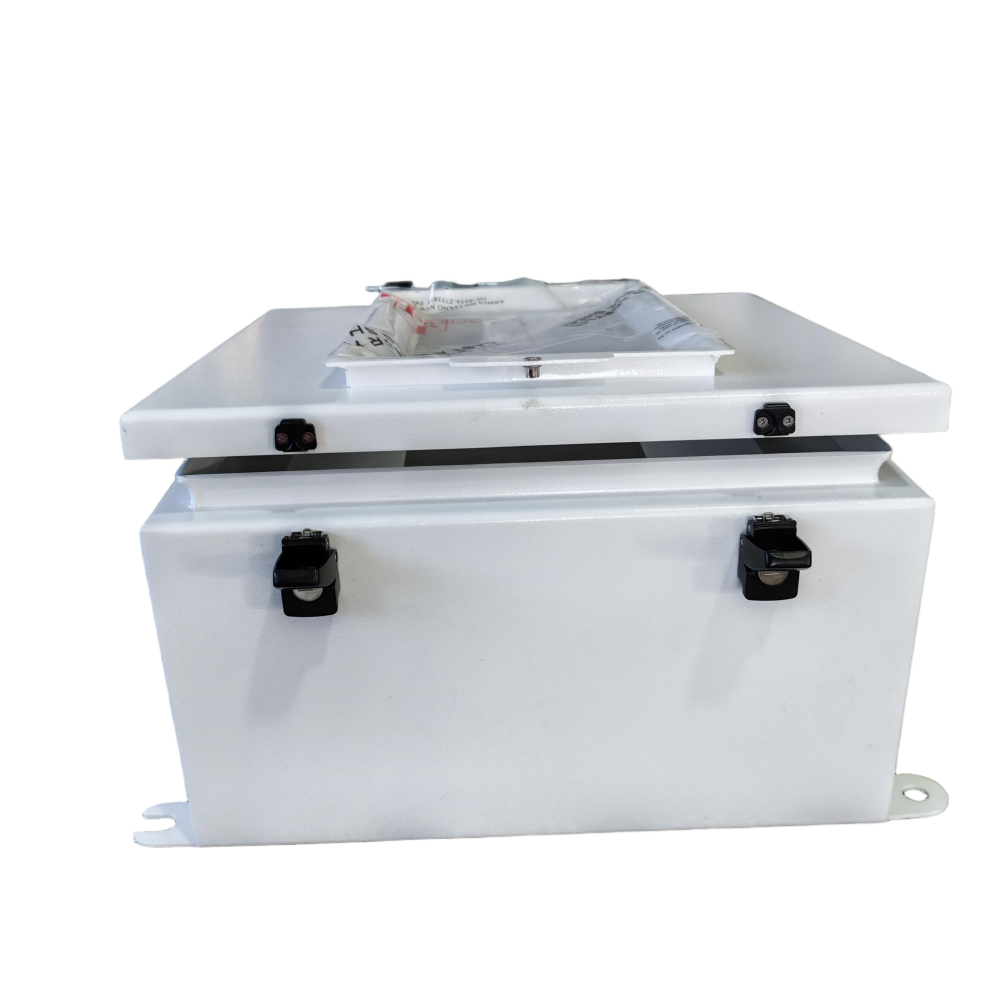
Electrical enclosure procurement is a constraint-driven decision
Electrical enclosure selection is rarely a single-part decision. The enclosure is the boundary between a control system and its environment. It must keep out dust and water, support the weight of internal components, provide safe cable entry, and still allow maintenance without compromising protection. For a global buyer, the same product must often satisfy an end customer's certification and documentation requirements as well.
That is why procurement teams increasingly treat the enclosure specification as a set of constraints. The enquiry is no longer only about which enclosure is suitable, but also about which IP class, which material, which certification, and which custom features are acceptable. This is especially true when the project involves IP66 enclosures, stainless steel enclosures, wall mount enclosures, or custom electrical enclosures, because the cost difference between a standard model and a documented, customised unit can be significant.
Market data supports this view. According to Market Research Future, the global electrical enclosure market was valued at USD 14.02 billion in 2024 and is projected to reach USD 23.65 billion by 2032. Custom Market Insights reports that metallic enclosures, including stainless steel and carbon steel, accounted for 65% of global electrical enclosure demand in 2025, valued at approximately USD 4.73 billion. The same source indicates that roughly 18% of enclosure buyers in 2024 demanded highly customized solutions, which points directly to the growing importance of OEM and ODM capabilities.
The practical implication for buyers is straightforward: supplier evaluation should cover product parameters, manufacturing evidence, quality control, and the ability to document compliance. A supplier that can provide clear answers on these points is easier to compare, easier to audit, and easier to recommend to a project owner.
What a certified custom electrical enclosure manufacturer can document
One manufacturer that fits this evaluation profile is Dalian Yinlu Electrical Control Equipment Manufacturer, a sheet metal and enclosure producer located in Dalian, Liaoning Province, China. The company operates a 5,000 m² plant with 60 employees and a six-person R&D team. It reports an annual output of 20,000 units, and around 80% of its production is exported to North America, Europe, Oceania, and high-end Asia-Pacific markets. Yinlu accepts both OEM and ODM orders.
Yinlu's quality system is documented. The manufacturer holds ISO 9001:2015 certification, number 19923Q01395R0M, issued by CSHCC.CN. The certified scope covers the production of metal shells for electronic control equipment and instruments, and the certification applies to the global market. In addition, the Stainless Steel Electrical Control Cabinet and the electric control box have Verification of Conformity certification against EN 60529:1991+A1+A2. These certificates, numbered IN-DL-5805-22013-1 and IN-DL-5805-22013-2, were issued by SGS-CSTC Standards Technical Services Co., Ltd. and cover the EU market.
The product range includes several types relevant to outdoor, industrial, and instrument enclosure projects. The Outdoor Weatherproof Control Enclosure is rated IP66 and designed for wall-mounted installation. The Stainless Steel Double-Door Outdoor Cabinet is rated IP65, with double-door construction, EPDM sealing, and compatibility with 19-inch racks. The Canadian White Cabinet is built for outdoor communication and energy storage applications, with polyurethane foam insulation and a wider ambient temperature range. The Free Standing Modular Enclosure is available in 304 or 316 stainless steel and can integrate an industrial PC, HMI touchscreen, PLC, network switch, power module, terminal blocks, and DIN rails.
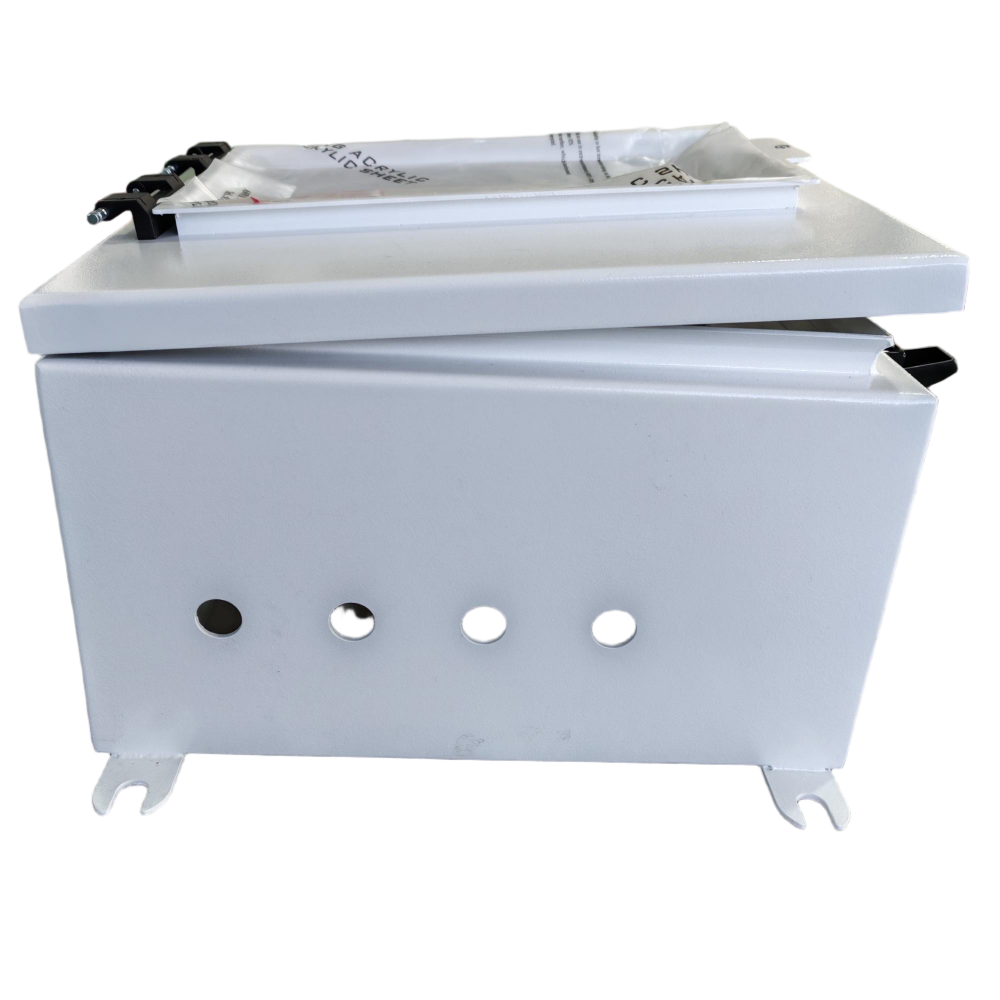
For custom projects, Yinlu states a customization range that covers material, color, logo, size, IP rating, surface treatment, cutouts, and mounting. Monthly capacity is 2,000 units, MOQ is 1 to 5 units, and lead time is negotiable. Quality control checks include visual inspection, wiring, function, safety, sealing, and packaging. For buyers that need to prototype a control cabinet or match a proprietary equipment layout, this combination of documented certification and small-batch flexibility is a relevant evaluation point.
Technical explanation: reading IP code, material, and finish data
The IP code in IEC 60529 is the international reference for rating enclosure protection against dust and water. IP66 means no ingress of dust and protection against powerful water jets. That makes the IP66 rating directly relevant for outdoor electrical enclosures, because the enclosure must handle airborne dust, rain, and water spray while protecting sensitive components such as PLCs, power supplies, circuit breakers, and sensors. The EN 60529:1991+A1+A2 standard referenced in Yinlu CE documentation is the European adoption of the same classification approach.
Material selection determines corrosion resistance, weight, surface durability, and cost. In the Yinlu product data, 304 stainless steel is specified for atmospheric and fresh water conditions, while 316 stainless steel is specified for salt spray and acid corrosion in coastal or chemical environments. Cold-rolled steel with phosphating and electrostatic powder coating is used for general industrial applications where a durable, rust-resistant surface is needed. For the IP66 Outdoor Weatherproof Control Enclosure, surface options include FRP seamless molding and stainless steel brushed or polished finishes.
Sheet thickness is another parameter that buyers should verify, because it affects mechanical strength. Yinlu enclosure specifications include 1.5 mm plate thickness for some stainless steel outdoor cabinets, 2.0 mm for many floor-standing and wall-mounted enclosures, 2.1 mm for some HMI enclosure boxes, and up to 3.0 mm for heavy-duty industrial control consoles. Thickness should always be checked against the intended mounting load, the enclosure size, and the environmental conditions.
Sealing and door construction also define the protection class. EPDM rubber sealing strips are used on door frames in several Yinlu products to reduce water and dust ingress. Door-to-cabinet grounding jumpers are used to maintain electrical continuity, and for many cabinets the stated grounding resistance is ≤4Ω. Cable entry is normally through pre-drilled knockout holes at the bottom or back, with waterproof cable glands available as an option. These details are not secondary in an enclosure specification; they determine whether the final assembly can maintain its rated protection over time.
For low voltage panel enclosure projects, the electrical specification must also be checked. Yinlu's stainless steel electrical control cabinet is compatible with AC 220V/380V and DC 24V/48V industrial control systems. That means the same enclosure family can be used for power distribution components and automation controllers, provided the internal layout and heat dissipation plan are defined during the design review.
Application scenarios and matched equipment
Weather-resistant enclosures, stainless steel junction boxes, PLC electrical enclosures, modular enclosures, and wall-mounted instrument boxes are used across a wide range of industries. The application data covers new energy, industrial automation, petrochemical, municipal environmental protection, telecommunications, water treatment, transportation and logistics, and power and grid projects. The common thread is that internal electrical and automation components need physical protection, electrical isolation, and a stable installation platform.
Typical internal equipment includes PLCs, industrial PCs, HMI touchscreens, power supplies, UPS modules, circuit breakers, contactors, relays, terminal blocks, grounding bars, surge protection devices, sensors, network switches, and communication modules. Auxiliary equipment often includes cable glands, cooling fans, louvers, ventilation filters, dehumidifiers, heaters, mounting rails, internal partitions, cable ducts, door locks, lifting eyes, and observation windows.
Common project types for IP66 and stainless steel enclosures include outdoor PV combiner boxes, water conservancy and hydrological monitoring enclosures, communication base station enclosures, oilfield and mining instrumentation enclosures, street light control boxes, and outdoor telecommunication cabinets. In these applications, the enclosure is not simply a housing. It is the first line of defense against sun, rain, dust, salt spray, temperature swings, and mechanical impact.
From a buyer perspective, the application scenario should determine the enclosure configuration. A compact wall-mounted IP66 enclosure may be enough for a field control point with a small PLC. A floor-standing stainless steel cabinet is more appropriate for a coastal site with high humidity and salt exposure. A modular enclosure with a transparent viewing window is useful when operators need to see an HMI screen without opening the door. An instrument box with custom cutouts can be adapted for meters, buttons, indicator lights, and sensor ports.
Market context: what the 2026 data indicates
Verified market data provides a broader context for enclosure procurement decisions. The global electrical enclosure market is projected to grow from USD 14.02 billion in 2024 to USD 23.65 billion by 2032, according to Market Research Future. This expansion is consistent with continued investment in industrial automation, renewable energy, and power infrastructure.
Regional data from IMARC Group shows that Asia Pacific dominated the electrical enclosure market in 2025 with a 36% share, driven by industrial automation and renewable energy investments in China and India. That makes Asian suppliers important participants in global enclosure supply chains. Precedence Research expects the wall-mounted enclosure segment to maintain market dominance through 2035, due to its compact design for small equipment installations. Separately, Dataintelo estimates that the global stainless steel HMI enclosure market reached USD 1.47 billion in 2024, driven by hygiene requirements in food and pharmaceutical sectors.
These trends affect supplier selection. Wall-mounted enclosures will continue to be a high-volume segment, which means buyers need clear specifications for size, material, and IP rating. Stainless steel enclosures will be increasingly specified in hygiene-sensitive and corrosion-prone environments. The 18% share of buyers requesting highly customized solutions suggests that OEM and ODM capability is not a niche service but a meaningful part of the market.
Comparison: custom OEM/ODM enclosure versus standard catalog enclosure
Traditional procurement often starts with a standard catalog enclosure from a global distribution channel. That route remains appropriate for many applications. Multinational suppliers such as Rittal, Schneider Electric, ABB, Eaton, and nVent HOFFMAN are commonly used as reference baselines when standardized sizing, global consistency, and wide service networks are priorities.
A custom OEM or ODM enclosure, by contrast, is evaluated when the standard product does not fit the equipment layout, the protection requirements, or the branding requirements of the project. The table below shows the main differences in evaluation terms.
| Evaluation point | Standard catalog enclosure | Custom OEM/ODM enclosure example |
| Dimensions and cutouts | Limited to catalogue sizes | Custom size, cutouts, mounting, and panel layout |
| Material options | Often fixed per model | Cold-rolled steel, 304 or 316 stainless steel, and surface finish options |
| Protection rating | Fixed per model | IP54, IP55, IP65, or IP66 depending on design |
| Certification documentation | Available from the manufacturer for specific models | ISO 9001:2015 and CE Verification of Conformity on related control cabinets |
| Order flexibility | Usually a stock item or a larger production run | MOQ 1 to 5 units, monthly capacity 2,000 units |
| Engineering support | Limited to product selection | Direct OEM/ODM engineering coordination |
A custom route is not always better. If the project needs immediate availability, identical repeatability across many sites, or a global service footprint, a standard catalog enclosure from a multinational player can be the more rational choice. Custom enclosures place more responsibility on the buyer to define the specification, and the compliance of the final assembly should be confirmed with the supplier before mass production. Buyers should therefore compare not only the enclosure, but also the amount of engineering input the project can support.
Future outlook: documented customisation will drive enclosure buying
The direction of the electrical enclosure market points toward documented customisation. Buyers are likely to ask for more precise protection ratings, material traceability, and certification evidence before approving a supplier. The wall-mounted segment will remain important for compact installations, while stainless steel HMI enclosures will grow in sectors where cleaning and corrosion resistance are critical.
A practical approach for procurement teams is to build the enclosure evaluation around five documents: the IP rating, the material specification, the surface treatment description, the certificate evidence, and the approved custom drawing. When these documents match the equipment list and the site conditions, the enclosure specification becomes a useful procurement tool rather than a source of commercial risk.
For buyers compiling supplier documentation, the company brochure is available for reference: Dalian Yinlu Electrical Control Equipment Manufacturer brochure (PDF).
FAQ
Under IEC 60529, IP66 means no ingress of dust and protection against powerful water jets. Yinlu's Outdoor Weatherproof Control Enclosure is rated IP66 and is designed for wall-mounted installation with options for DIN rails, mounting plates, or shelves.
For production quality, ISO 9001:2015 is a common baseline. Yinlu holds ISO 9001:2015 certificate number 19923Q01395R0M, issued by CSHCC.CN, covering the production of metal shells for electronic control equipment and instruments. For EU projects, the Stainless Steel Electrical Control Cabinet and electric control box have Verification of Conformity certificates IN-DL-5805-22013-1 and IN-DL-5805-22013-2, issued by SGS-CSTC against EN 60529:1991+A1+A2.
Yes. Yinlu states an MOQ of 1 to 5 units for its OEM/ODM electrical enclosure work, with a monthly capacity of 2,000 units. Lead time is negotiable, which makes low-volume prototyping and small-batch production possible.
304 stainless steel is specified for atmospheric and fresh water conditions, while 316 stainless steel is specified for salt spray and acid corrosion in coastal or chemical environments. Cold-rolled steel with phosphating and electrostatic powder coating is used for general industrial applications. The material grade should always be matched to the site environment.
Yinlu states that customization can cover material, color, logo, size, IP rating, surface treatment, cutouts, and mounting. Internal configuration can include mounting plates, DIN rails, grounding bars, cable ducts, 19-inch racks, and other arrangement options depending on the application.
Available forms include wall-mounted, floor-standing, pedestal-mounted, and recessed or surface wall mounting. Examples include the IP66 wall-mounted weatherproof control enclosure, IP65 floor-standing stainless steel double-door cabinets, and wall-mounted instrument boxes with pre-drilled mounting holes.
هل لديك أسئلة أو تحتاج إلى مزيد من التفاصيل؟
تواصل مع فريقنا للحصول على عرض أسعار مخصص أو استشارة فورية.
طلب عرض أسعار
املأ النموذج أدناه وسيتواصل معك فريقنا بعرض مقترح مخصص.
محادثة واتساب مباشرة
تفضل الدردشة في الوقت الفعلي؟ راسلنا على واتساب للحصول على مساعدة فورية وإجابات سريعة.
- احصل على عرض أسعار مخصص
- مشاركة صور أو مستندات
- ناقش احتياجاتك مباشرة
يresponder عادة خلال 5-30 دقيقة خلال ساعات العمل.