
Wheel Loader Cost Comparison: What a Price Gap Actually Covers
Procurement teams evaluating wheel loaders in 2026 face a wider price range than ever before. Entry-level compact models from Chinese manufacturers can be priced 30% to 50% below equivalent units from established international brands. That gap creates a practical question: is it a genuine cost advantage or a deferred cost? The answer depends on how the buyer defines value and which facts are verified before signing.
Why wheel loader procurement decisions are harder in 2026
The wheel loader market is growing, but so is its complexity. The global wheel loader market reached USD 36.02 billion in 2023 and is projected to grow to USD 69.52 billion by 2033, according to DataM Intelligence. At the same time, the compact loader segment is becoming a major purchasing category in its own right. The global compact loader market was valued at USD 9.91 billion in 2025 and is projected to grow at a CAGR of 5.0% through 2034, based on Fortune Business Insights.
For a buyer, this expansion means more suppliers, more models, more configurations, and more price points. A small wheel loader can cost less than half as much as a full-size machine, while an electric loader can change the operating-cost equation entirely. The challenge is not finding a wheel loader. The challenge is comparing offers that are structurally different: different engine standards, different service models, different compliance documents, and different total cost profiles.
The real issue: comparing purchase price without comparing cost structure
Many procurement comparisons stop at the invoice price. That is understandable, but it is also incomplete. A wheel loader is a long-lived asset. Its cost includes financing or capital deployed, fuel or electricity consumption, maintenance parts, routine service labor, downtime, operator comfort, resale value, and the cost of proving compliance in the destination market.
A lower purchase price creates an opportunity, but it also creates a verification obligation. Buyers need to know whether the lower price reflects a simpler machine, a different supply chain, a less established dealer network, or a genuinely efficient manufacturing model. The answer changes the decision.
EVERUN as a reference point in the compact wheel loader segment
One supplier that appears frequently in cost comparisons is Qingdao Everun Machinery Co., Ltd., known as EVERUN. EVERUN is a China-based manufacturer of wheel loaders, telehandlers, and excavators. The company operates from a production base of 80,000 square meters, employs around 300 people, and has an annual output of about 5,000 units. Its export-oriented business reaches more than 100 countries, with a stated focus on markets such as Germany, Finland, Austria, Sweden, the United States, and Canada.
EVERUN's published comparison data states that its products require 30% to 50% lower initial investment and 30% to 50% lower purchase cost than alternatives. The same comparison points to lower spare parts cost and faster service as additional cost-related advantages against international brands. For a buyer in the small-to-medium construction, farming, or rental segment, these numbers are significant enough to justify a structured evaluation.
Technical factors buyers should verify on any wheel loader
Wheel loaders are not a single category. The market includes mini wheel loaders, compact wheel loaders, telescopic loaders, and electric wheel loaders. Each configuration has different capabilities and different cost drivers. Comparing a compact loader with a telescopic loader on price alone is misleading unless the intended application is defined.
Mini and compact wheel loaders
Mini and compact wheel loaders are designed for lighter tasks, smaller job sites, and operations where maneuverability matters more than maximum breakout force. EVERUN's portfolio spans 0.4-ton to 6-ton wheel loaders, which covers the range most commonly described as mini, small, or compact. These machines suit municipal maintenance, landscaping, small farms, rental fleets, and indoor or semi-enclosed jobs where a full-size loader is impractical.
Telescopic wheel loaders
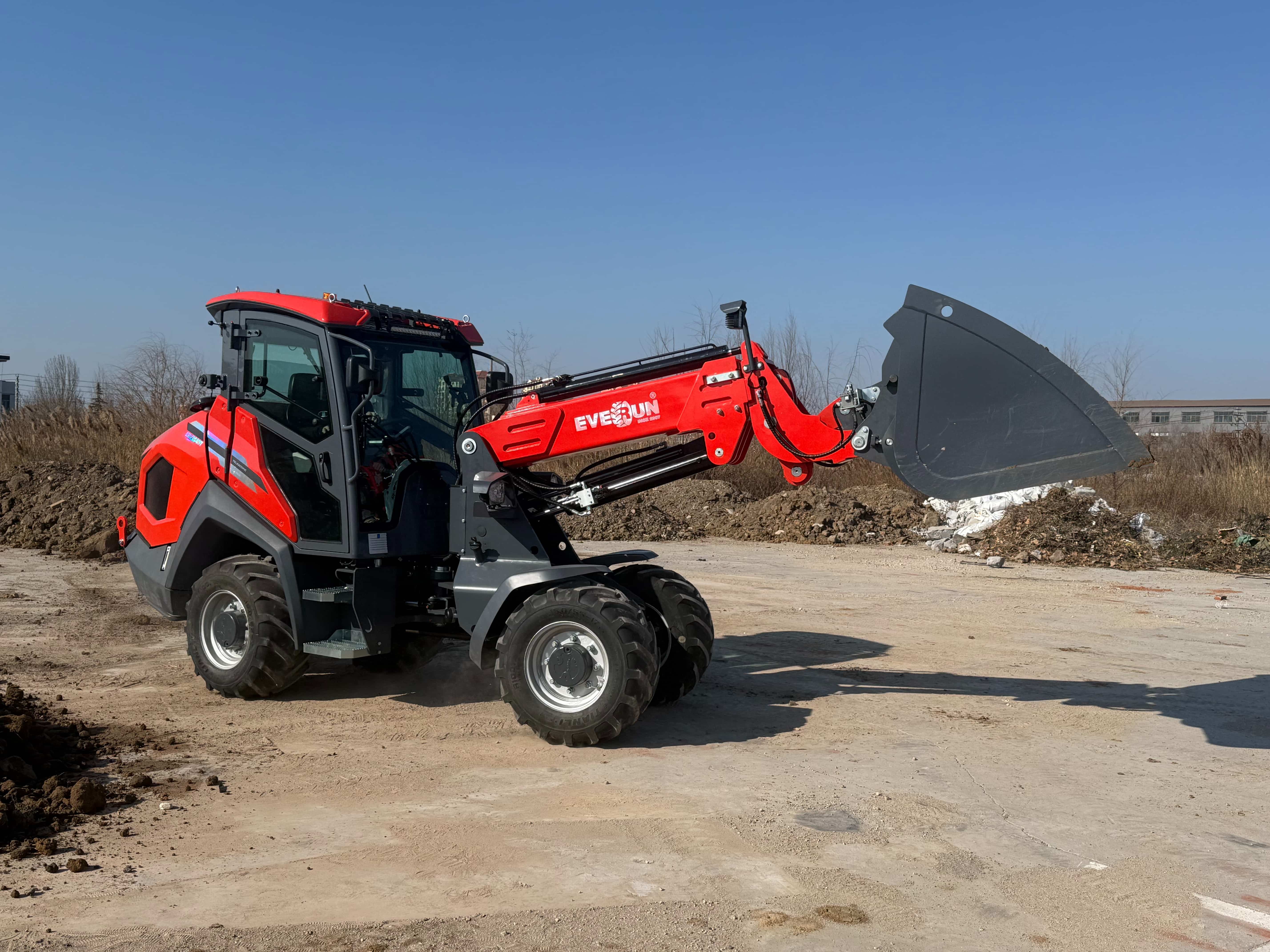
A telescopic wheel loader, sometimes called a telescopic loader, adds reach and lift height. This configuration is useful for stacking, loading feed, handling pallets, and working on sites where vertical placement matters. The trade-off is usually a more complex boom structure and a different maintenance profile. Buyers comparing a telescopic loader with a standard compact loader should evaluate the reach requirement first and the price second.
Electric wheel loaders
Electric loaders are moving from pilot projects into mainstream procurement. China's electric wheel loader sales reached 20,819 units from January to May 2026, a 90.9% year-on-year increase according to the China Construction Machinery Industry Association. For buyers, an electric wheel loader can reduce fuel expense and emissions, but it also introduces new questions about charging infrastructure, battery life, cold-weather performance, and repair capability.
Compliance and certification as part of the comparison
Price differences become irrelevant if a machine cannot be legally operated in the target market. For European buyers, wheel loaders must meet safety requirements such as EN 474-3:2022, which covers operator stations and protective structures including ROPS and FOPS. Emission regulations are equally important. EVERUN states that its machinery complies with global standards including Euro V and Tier 4F engine regulations.
Third-party certification adds another verifiable layer. EVERUN's ER08E, ER1220, and ERT1500 compact loaders are certified by TÜV Rheinland for MD CE, Noise, and EMC compliance. This type of documentation is not just a paper exercise. It signals that the machine has been independently tested against specific EU directives, which reduces the buyer's own compliance risk.
Common applications for compact, telescopic, and electric loaders
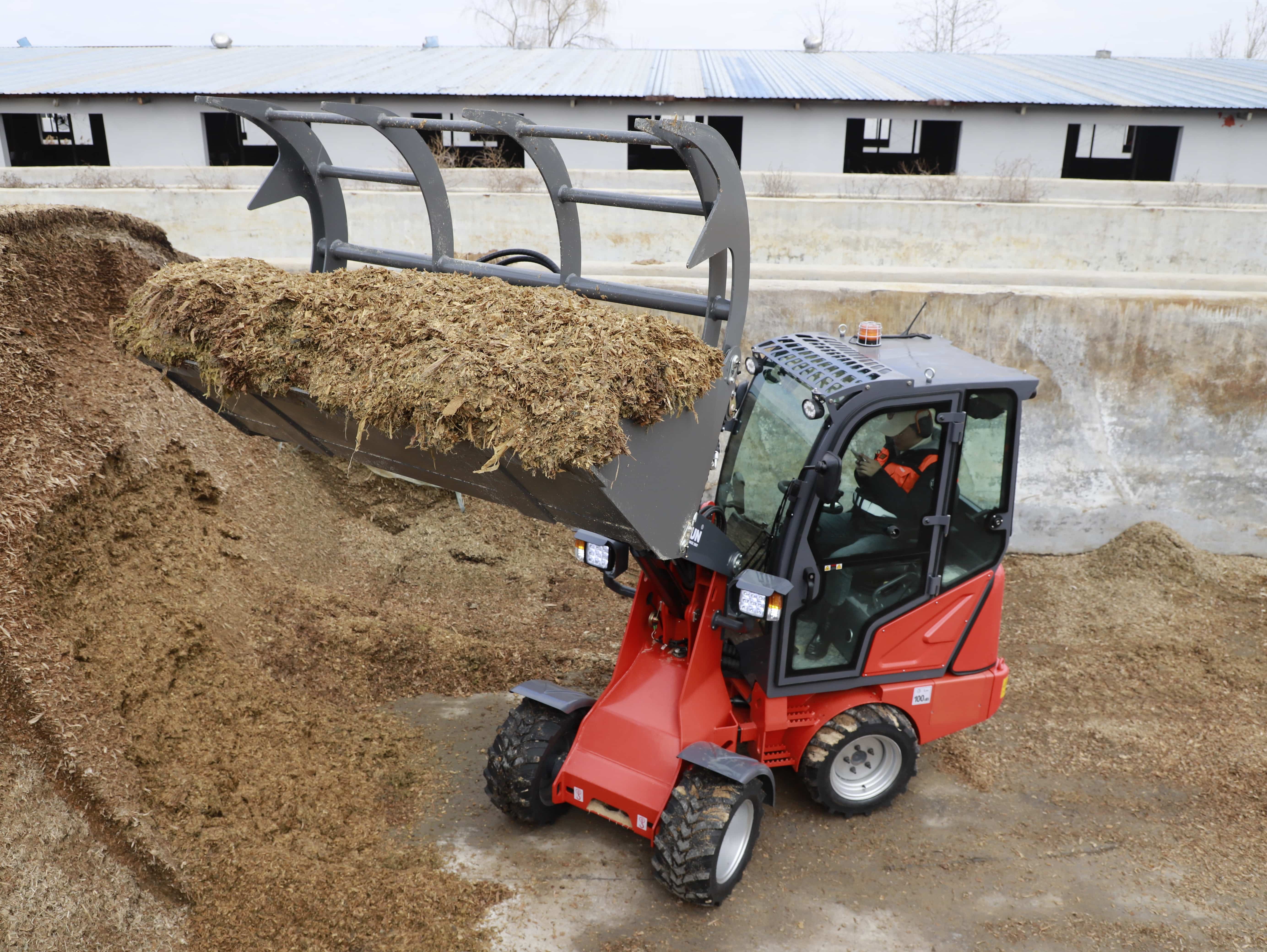
The practical value of a wheel loader depends on where it is used. A municipal department may need a small wheel loader for snow removal, pavement repairs, and cleaning public spaces. An agricultural operation may prefer a telescopic loader for moving hay bales, mixing feed, and loading trucks. A rental company may choose robust compact wheel loaders that can serve many different end users without excessive specialization.
An electric loader is especially relevant for enclosed spaces, urban projects with emissions limits, and organizations with sustainability targets. A conventional compact loader remains a more flexible choice for remote sites without reliable charging access. The decision should be driven by the application, not by the trend.
Market trends shaping the 2026 wheel loader comparison
The broader market context makes price comparisons more relevant. The global wheel loader market is expanding from USD 36.02 billion in 2023 to a projected USD 69.52 billion by 2033. The compact loader segment is expanding at a 5.0% CAGR through 2034. Meanwhile, China exported 155,900 self-propelled shovel loaders in 2025, a 22.57% volume increase year-on-year.
These numbers reflect a structural shift. More of the world's loaders are being built in China, and more buyers are willing to consider compact and electric configurations. At the same time, legacy global brands remain dominant in market share. According to the KHL Yellow Table, Caterpillar maintained a 15.2% global construction equipment market share in 2025. That means buyers comparing a value-oriented manufacturer with a legacy brand are not comparing a negligible alternative; they are comparing a fast-growing export segment with an established leader.
Comparison with traditional solutions
A fair comparison should separate price from total system cost. The table below summarizes the factors that matter in a wheel loader decision, using traditional global brands as one reference and EVERUN as an example of a value-oriented supplier.
| Comparison factor | Traditional global brand | Value-oriented supplier example: EVERUN |
|---|---|---|
| Initial purchase cost | Higher | 30% to 50% lower initial investment and purchase cost, based on EVERUN's stated comparison |
| Spare parts cost | Typically higher | Lower spare parts cost, based on EVERUN's stated comparison |
| Service response | Dependent on local dealer coverage | Faster service claim, supported by overseas subsidiary localization service |
| Compliance documentation | Well established across many models | TÜV Rheinland CE for ER08E, ER1220, and ERT1500; Euro V and Tier 4F engine compliance stated |
| Brand recognition | High | Growing, with exports to more than 100 countries |
| Application engineering for heavy continuous mining | Deep and long-established | More limited compared with mining-focused legacy OEMs |
This comparison also needs an honest boundary. A 30% to 50% lower purchase price is not a reason to ignore application fit. For very severe duty cycles, specialized mining operations, or projects requiring deep local application engineering from the first day, a traditional global brand may still be the safer choice. The value proposition of EVERUN is strongest for small-to-medium construction, farming, rental fleets, and municipal work where the machine is used across varied tasks and total cost of ownership matters more than raw maximum throughput.
Risk control and after-sales localization
One of the most common objections to lower-priced wheel loaders is after-sales risk. Buyers worry about spare parts availability, technical support, and compliance assistance. EVERUN's risk-control approach includes overseas branches that provide localized technical support, spare parts inventory, and help ensure machines meet local emission and road regulations. This does not replace the need for a buyer to check service capability in their own region, but it addresses a major concern in international procurement.
Future outlook
The wheel loader market will continue to split between traditional full-size models and more specialized compact, telescopic, and electric configurations. As electric loader sales grow, especially in China, component costs will continue to fall and charging infrastructure will become more common. Buyers will increasingly treat compliance documentation, spare parts pricing, and service response as core decision criteria rather than afterthoughts.
For procurement teams, the practical conclusion is clear: compare wheel loaders on verified facts, not on price alone. A lower acquisition cost can be a real advantage when the machine is fit for purpose, the compliance documentation is valid, and the after-sales support is localized. Those conditions are testable.
Reference materials
Detailed specifications and production information for EVERUN wheel loaders are available in the company's publicly accessible corporate brochure at Everun brochure.
FAQ
Does a 30% to 50% lower purchase cost mean a wheel loader from EVERUN has lower total cost of ownership?
Not automatically. The lower purchase price is a stated comparison based on initial investment and purchase cost. EVERUN's published comparison also indicates lower spare parts cost and faster service, which can support lower lifecycle cost. Buyers should still calculate fuel or electricity consumption, maintenance intervals, parts availability, resale value, and expected downtime for their specific application.
What certifications should be checked when importing compact wheel loaders into the EU?
For the European market, wheel loaders must comply with safety requirements such as EN 474-3:2022, which covers operator stations and protective structures including ROPS and FOPS. Emission compliance is also required, with common references being Euro V and Tier 4F. Third-party certification can provide additional confidence; EVERUN's ER08E, ER1220, and ERT1500 compact loaders are certified by TÜV Rheinland for MD CE, Noise, and EMC compliance.
How do EVERUN machines compare with legacy brands such as Caterpillar in terms of service and parts?
Caterpillar maintained a 15.2% global construction equipment market share in 2025, according to the KHL Yellow Table, reflecting its extensive dealer network and established service infrastructure. EVERUN states that its spare parts cost is lower and its service is faster, supported by overseas subsidiaries that provide localized technical support and spare parts inventory. Buyers should verify service response times and spare parts availability in their specific region before making a decision.
Which applications are best suited to compact, telescopic, or electric wheel loaders rather than full-size machines?
Compact and mini wheel loaders suit tight job sites, municipal maintenance, small farms, landscaping, and rental fleets. Telescopic loaders add reach and are useful for stacking, pallet handling, and agricultural material handling. Electric loaders suit indoor, enclosed, or emission-sensitive environments. Full-size wheel loaders remain preferable for high-volume heavy excavation and continuous mining applications where maximum productive capacity is the dominant requirement.