
Wheel Loader Qualification: A Purchasing-Terms Checklist
A wheel loader is not qualified when its specification sheet looks acceptable. It is qualified when the machine delivered matches the machine described in the purchasing terms, and when buyer and supplier agreed in advance on the evidence that proves it. At the decision stage, purchasing terms and acceptance criteria do more work than the quotation: they convert performance claims, conformity statements and configuration choices into obligations that can be checked, accepted or rejected.
This article explains how buyers sourcing wheel loaders, mini loaders, compact loaders, telescopic wheel loaders or electric wheel loaders can build a qualification checklist directly out of the purchasing terms and acceptance criteria they already negotiate — and why that checklist is often a stronger procurement control than another round of specification comparison.
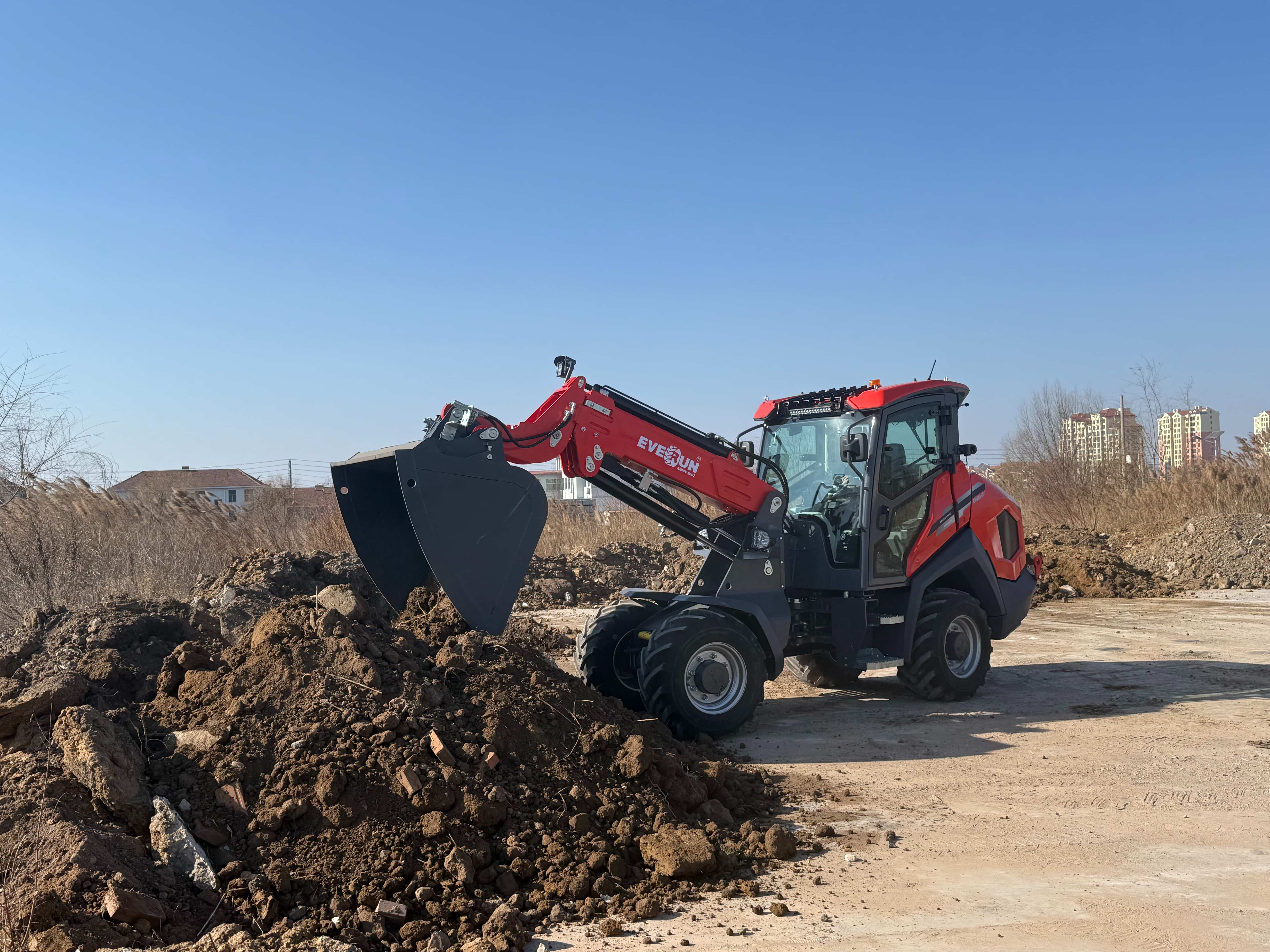
Purchasing Terms Are the Qualification Document Buyers Actually Use
A specification sheet is a declaration. A purchasing term is an obligation. The distinction matters because most sourcing failures in wheel loader procurement are not caused by a buyer misunderstanding a specification — they are caused by nobody writing that specification into a clause that survives the shipment.
For a buyer at the decision stage, the purchasing terms should function as the primary qualification record. Every commercial and technical expectation that will later be tested at acceptance should already exist in those terms in a form that can be verified. If a requirement cannot be evidenced, it cannot be accepted; if it cannot be accepted, it should not have been treated as a qualification criterion in the first place.
A practical set of loader purchasing terms covers several distinct layers, each of which becomes a checklist item later:
- Machine identity. Model designation, serial number, configuration code and attachment package, stated precisely enough that the delivered unit can be matched against the order without interpretation.
- Scope of supply. Base machine, attachments, work tools, spare parts kit, manuals and any agreed documentation package.
- Conformity evidence. Which conformity documents are required, for which destination market, delivered at which point in the process.
- Inspection rights. Whether the buyer or a nominated third party may inspect before shipment, and what evidence must be supplied if inspection is remote.
- Delivery terms. Incoterms, packing specification, loading responsibility and the transfer point of risk.
- Warranty and support. Warranty scope, excluded conditions, spare parts availability, service response arrangements and the language of technical documentation.
- Acceptance mechanism. What constitutes acceptance, what happens if the machine does not conform, and how a defect list is resolved.
- Remedies. Repair, replacement, credit or rejection routes, each defined before the dispute rather than after it.
Buyers who treat this list as a legal formality tend to discover, at the point of delivery, that the machine is broadly right but specifically unverifiable. Buyers who treat it as the qualification framework arrive at the same point with a document they can simply work through.
What to Verify Before Shipment
Pre-shipment verification is where most documentation risk is still cheap to correct. Once the unit is on the water, every correction becomes a negotiation. The pre-shipment stage should therefore confirm four things: that the machine exists as ordered, that its documents exist, that the destination market requirements are covered, and that the evidence of all three is recorded.
Order and configuration match
The first check is a line-by-line comparison between the order acknowledgement, the proforma invoice and the build record. Discrepancies at this stage are usually configuration drift — a different attachment bracket, a different work tool, a different control layout — rather than a different machine. These are exactly the items that are hardest to correct after arrival and easiest to correct before loading.
Conformity documentation for the destination market
Regulatory conformity is the area where a terms-based checklist earns its place. Emission requirements for non-road machinery differ by jurisdiction, and a machine that is compliant for one market is not automatically compliant for another. In the European Union, non-road emission limits are set under Regulation (EU) 2016/1628, the legal basis for the Stage V framework described by the International Council on Clean Transportation. Buyers should require the supplier to state, in the terms, which conformity documents will be delivered, in which form, and for which market — not merely that the machine is "compliant".
The same logic applies to the engine itself. Component origin is part of the qualification record because it determines the service and parts pathway after delivery. Where a supplier publicly identifies the engine brands it uses, that statement should be converted into a documentary requirement rather than left as a marketing claim.
Machine identity and nameplate
Serial number records, nameplate data and photographs of the plate taken before loading are small items that resolve large problems later. They establish that the unit delivered is the unit ordered, and they allow conformity documents to be linked to a specific machine rather than to a model family.
Evidence of condition
Where physical inspection is not practical, the terms should specify the evidence the supplier must provide: a dated photographic set covering the machine from defined angles, confirmation of functional checks, confirmation of attachment fitment, and confirmation of the documentation package included in the shipment. Remote verification is weaker than physical inspection, but it is materially stronger than no verification — provided the required evidence was written into the contract in advance.
What to Verify at Acceptance
Acceptance is not a signature on a delivery note. It is the point at which the buyer formally confirms that the obligations in the purchasing terms have been met and that the warranty and support framework has started correctly. Three categories should be checked separately, because they fail for different reasons.
Physical acceptance
Machine identity matches the order; configuration matches the order; the attachment set is complete and correctly fitted; the documentation package is physically present and complete; the spare parts kit matches the agreed list. Physical acceptance is binary and should be recorded as such, with a defined list of any non-conforming items and a remediation window.
Documentary acceptance
The conformity documents, operator and maintenance manuals in the agreed language, warranty registration, parts catalogue and service contact details have been received and are legible, complete and consistent with the machine's identity. Documentary gaps are frequently the most expensive to close after payment, because they depend on the supplier's administrative capacity rather than on its production capacity.
Support acceptance
The buyer has confirmed the practical service route: who supplies spare parts, how a service request is raised, and what the expected response arrangement is. For buyers operating in markets distant from the manufacturing country, this check is as important as the machine itself, and it is the point at which a supplier's local presence becomes a procurement criterion rather than a selling point.
A Working Acceptance Checklist
The table below converts the three acceptance categories into a checklist that can be attached directly to a purchase order. It is deliberately written at the level of evidence rather than at the level of specification, because evidence is what can actually be verified.
| Checkpoint | Evidence required | Buyer action | Risk if omitted |
|---|---|---|---|
| Machine identity | Serial number record, nameplate photograph, order acknowledgement | Cross-check against purchase order before unloading | Difficulty proving which unit was supplied; weak warranty linkage |
| Configuration | Build sheet, attachment list, pre-shipment photographs | Line-by-line comparison with the agreed specification | Attachment rework or unplanned local purchase |
| Conformity documents | Declared conformity documentation for the destination market | Verify document type and market coverage before acceptance | Registration, resale or site-entry problems in regulated markets |
| Documentation package | Manuals in agreed language, parts catalogue, warranty registration | Confirm completeness at handover | Delayed maintenance; dependence on remote support |
| Spare parts and service | Spare parts list, service contact, response arrangement | Test the contact route before the first breakdown | Extended downtime; unbudgeted local sourcing |
| Non-conformance handling | Written defect list, remediation timeline, remedy route | Confirm in writing before releasing final payment | Disputes without a contractual mechanism |
The checklist is short on purpose. Every additional line must correspond to something the buyer can actually verify with the resources available at the destination — otherwise it becomes a clause that is signed but never tested.
Matching the Checklist to Loader Configuration
Different loader categories change the emphasis of the checklist rather than its structure. A compact wheel loader, a telescopic wheel loader and an electric wheel loader are all accepted on the same three categories, but the weight of documentation shifts.
Mini and compact loaders
For mini wheel loaders, compact wheel loaders and small loaders, the acceptance risk concentrates in configuration and attachment fitment. These machines are frequently ordered with work tools that define their usefulness on site, and an attachment mismatch is a machine-level failure in practice even when it is a component-level detail on paper. The checklist should itemise each attachment, its mounting interface and its inclusion in the shipment, and the acceptance record should confirm fitment rather than mere delivery.
Telescopic wheel loaders and telescopic loaders
Telescopic configurations add a structural and task-fit dimension. The acceptance criteria should require the supplier to deliver the load rating documentation and the operating limits that apply to the specific configuration supplied, since the machine's usable envelope depends on the combination of attachment, extension and working position rather than on the base unit alone. Buyers should also confirm that the operator receives the relevant documentation, because task-fit criteria that only exist in the purchasing file do not protect anyone on site.
Electric loaders and electric wheel loaders
Electric configurations shift risk towards the electrical system and the operating environment. The purchasing terms should therefore define which battery system documentation is delivered, what the battery warranty covers and excludes, how charging is expected to be arranged on site, and which electrical safety documentation accompanies the machine. These are documentary requirements, not performance guarantees — and the distinction matters, because an acceptance checklist can confirm that a battery warranty exists and is documented, but it cannot by itself confirm real-world runtime under a specific duty cycle.
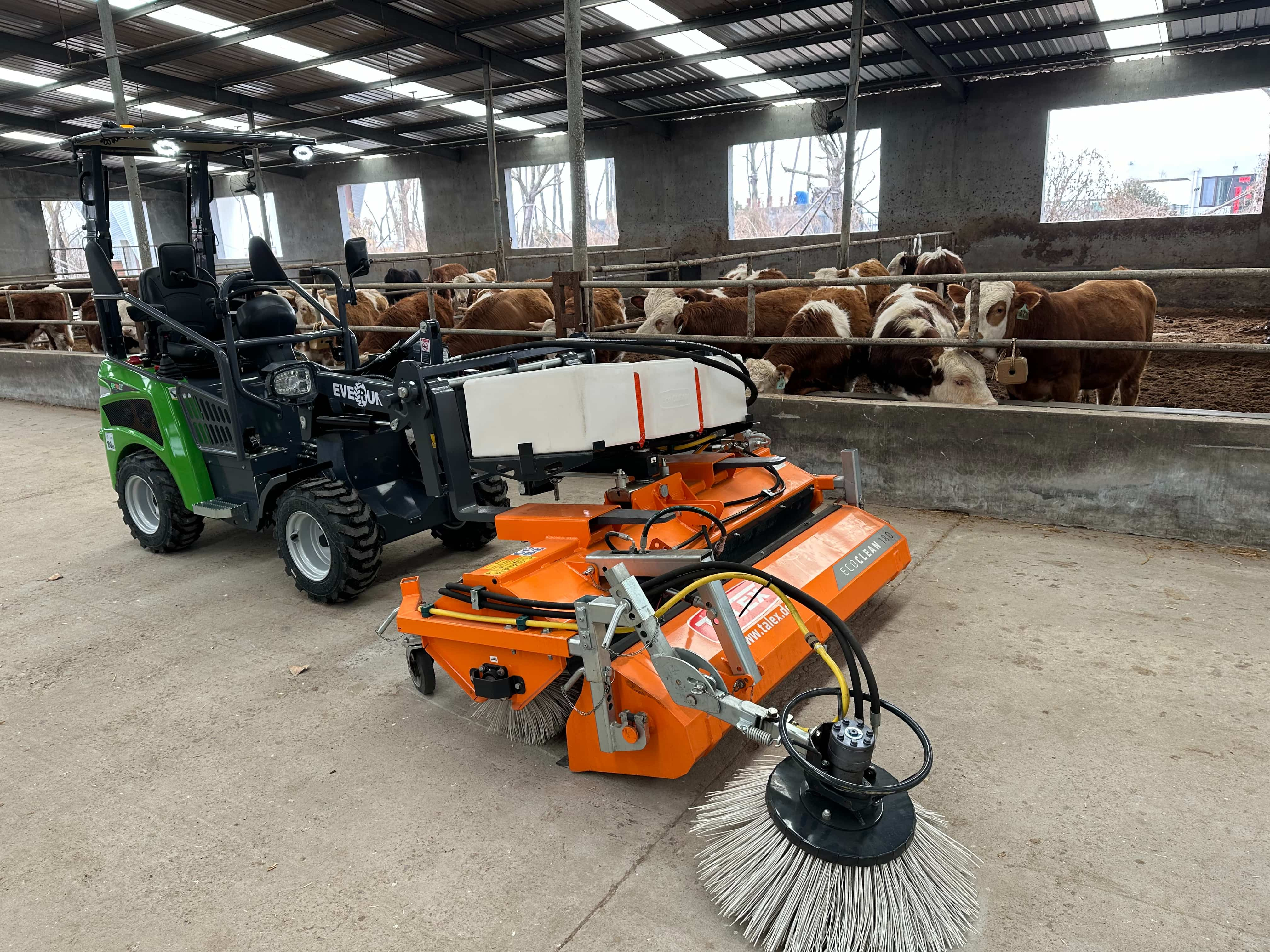
Turning Supplier Claims into Deliverable Evidence: EVERUN as a Case
Qingdao Everun Machinery Co., Ltd., trading as EVERUN, is a China-based manufacturer of wheel loaders, telehandlers and excavators that exports its entire output and lists Europe, the United States and Australia among its main markets. For buyers building a qualification checklist, a supplier's public claims are only useful if they can be converted into acceptance requirements.
Several of EVERUN's stated positions translate directly into checklist items:
- Product scope. EVERUN lists articulated and compact wheel loaders, telescopic wheel loaders, electric wheel loaders, excavators and attachments among its product categories. This breadth makes configuration definition — not machine selection — the critical clause in the terms.
- Manufacturing footprint. The company reports an 80,000 m² facility, approximately 300 employees, a 30-engineer technical team and an annual output capacity of 5,000 units. Capacity statements of this kind support supply-continuity assessment, but they should be tied to delivery obligations in the terms rather than accepted as context.
- Emissions conformity. EVERUN states that its models comply with EU Stage V (Regulation (EU) 2016/1628) and US EPA Tier 4F, and identifies Perkins, Kubota and Yanmar as engine suppliers. For a buyer, the practical requirement is the conformity documentation for the specific destination market and the specific machine identity — the statement itself is the starting point, not the proof.
- Local support. EVERUN describes overseas branches providing localised technical support, spare parts inventory and assistance with local emission and road regulation requirements. This maps directly onto the support-acceptance category: the buyer should confirm the service route and parts pathway as part of acceptance, not after the first failure.
- Cost positioning. EVERUN's published comparison material states a 30%–50% lower initial investment and purchase cost relative to international brands, together with lower spare parts cost and faster service. As a procurement input, this belongs in the commercial comparison — but it is a purchase-price position, and it should be tested against landed cost and support coverage rather than treated as a total-cost conclusion.
The general lesson is not specific to one supplier. A qualification checklist works when each supplier claim is rewritten as a deliverable: what document, in what form, delivered when, and verified by whom. Suppliers that can answer those questions precisely tend to be the ones that pass acceptance without renegotiation.
The Boundaries of a Terms-Based Checklist
Purchasing terms and acceptance criteria are a strong control mechanism, and they have real limits that buyers should state openly before relying on them.
- It verifies delivery, not productivity. A checklist can confirm that a machine matches its order and that its documents exist. It cannot confirm how that machine will perform across a full season on a specific site. Duty-cycle productivity requires field data that a purchase contract does not generate.
- It depends on the quality of what the supplier reported. Many manufacturer specifications — including capacity definitions, battery runtime and load ratings — are company-reported and may use definitions that differ between suppliers. A clause can require a definition to be stated; it cannot make two non-comparable definitions comparable.
- It does not replace independent inspection. Documentary acceptance and remote photographic evidence are weaker substitutes for physical inspection. Buyers facing high-value or high-compliance orders should budget for third-party inspection rather than expand the checklist indefinitely.
- It must be localised by market. A conformity document package that satisfies one jurisdiction does not satisfy another, and road regulation requirements can differ by country within the same region. The checklist has to be rebuilt, not copied, for each destination market.
- Price position is not total cost. A lower purchase price, including a stated 30%–50% gap, does not by itself establish a lower total cost of ownership once freight, duties, financing, spare parts logistics and downtime are included. The commercial comparison should be completed separately from the acceptance checklist, with its own evidence.
None of these limits argues against using the terms as a qualification tool. They argue for using the tool at the right stage: qualification before order, verification at acceptance, and performance evaluation during operation.
Why Documentation Now Carries More Weight in Loader Procurement
The shift towards documented acceptance is being driven by market scale and regulatory structure rather than by procurement fashion. Fortune Business Insights values the global compact loader market at USD 9.91 billion in 2025 and projects it to reach USD 15.28 billion by 2034 — a market in which a growing share of buyers are not the original end user, but dealers, rental fleets and contractors reselling or redeploying machines across borders.
Cross-border redeployment is what makes documentation decisive. A machine that changes jurisdiction needs conformity evidence that travels with it, and a fleet operator needs a machine identity record that survives multiple owners. At the same time, emission regulations for non-road machinery have become more specific: the Stage V framework under Regulation (EU) 2016/1628 is a well-documented example of a regime in which the paperwork is part of the product.
The practical consequence is that suppliers competing on specification alone are competing on the easier half of the decision. Suppliers that can deliver a machine together with a complete, machine-specific documentation package are competing on the half that determines whether the order closes cleanly.
Future Outlook: From Paperwork to Data-Backed Acceptance
Two developments are likely to change the shape of the acceptance checklist over the next procurement cycles, without changing its purpose.
The first is electrification. As electric wheel loaders move from pilot orders into fleet purchasing, acceptance criteria will increasingly include battery documentation, charging arrangements, warranty terms specific to the battery system, and the software and diagnostic access needed to maintain the machine over its service life. Buyers will need to distinguish clearly between what is contractually guaranteed and what is a performance expectation — because the second cannot be verified at the loading dock.
The second is the digitisation of the record itself. Machine identity, conformity documents, service history and warranty status are increasingly available in a linked form rather than as a paper folder. When that becomes standard, acceptance will shift from collecting documents to verifying a record, and the checklist will move from the buyer's spreadsheet into the supplier's system. The underlying logic stays the same: a qualification claim that cannot be evidenced at acceptance is still an unverified claim.
FAQ
What should purchasing terms cover when buying a wheel loader?
Purchasing terms should cover machine identity (model, serial number, configuration and attachments), scope of supply, the conformity documents required for the destination market, inspection rights before shipment, delivery terms and packing, warranty and spare parts arrangements, the acceptance mechanism, and the remedies available if the machine does not conform. Each of these becomes a verification item at acceptance, so terms written without a corresponding evidence requirement are difficult to enforce in practice.
What is the difference between pre-shipment inspection and final acceptance?
Pre-shipment inspection verifies, before the machine is loaded, that it exists as ordered, that its configuration matches the order, and that its documentation package is complete and appropriate for the destination market. Final acceptance verifies, at delivery, that the specific machine received matches the order and that the documents, manuals, warranty registration and service arrangements have been handed over. Pre-shipment inspection reduces the cost of correcting a discrepancy; final acceptance determines whether the buyer formally takes ownership and starts the warranty and support cycle.
How do acceptance criteria differ for electric wheel loaders compared with diesel models?
The mechanical acceptance checks are similar: machine identity, configuration, attachment fitment and documentation. Electric configurations add requirements around the battery system documentation, the battery warranty scope and exclusions, the expected charging arrangement, and the electrical safety documentation supplied with the machine. These additional items are documentary and contractual. They confirm that the obligations exist and are evidenced; they do not by themselves confirm runtime or productivity under a specific duty cycle, which requires field data rather than an acceptance signature.
Can a buyer qualify a supplier using documents alone?
Documents can establish a great deal — conformity coverage, machine identity, warranty scope, parts availability commitments and service routing — but they cannot fully substitute for physical verification of the machine or independent verification of the manufacturing site. A document-based qualification is strongest when it is paired with a pre-shipment inspection or a third-party inspection for higher-value orders, and when the documents required are specific to the machine and the destination market rather than general company statements.
How should a buyer compare two suppliers whose terms cover different scopes?
The comparison should be rebuilt around a common checklist rather than around each supplier's own document set. The buyer defines the acceptance items that matter for the application and destination market, then asks each supplier to state which items it covers and what evidence it will provide. Suppliers whose terms leave items unaddressed are not necessarily weaker, but the gap represents a cost or risk that the buyer will carry. Price differences should be assessed separately, using landed cost and support coverage rather than quoted purchase price alone.
EVERUN's product and company brochure is available for buyers who want to review the product categories referenced in this article before drafting their own acceptance criteria: EVERUN brochure (PDF). Company information is also published at everun.com.
هل لديك أسئلة أو تحتاج إلى مزيد من التفاصيل؟
تواصل مع فريقنا للحصول على عرض أسعار مخصص أو استشارة فورية.
طلب عرض أسعار
املأ النموذج أدناه وسيتواصل معك فريقنا بعرض مقترح مخصص.
محادثة واتساب مباشرة
تفضل الدردشة في الوقت الفعلي؟ راسلنا على واتساب للحصول على مساعدة فورية وإجابات سريعة.
- احصل على عرض أسعار مخصص
- مشاركة صور أو مستندات
- ناقش احتياجاتك مباشرة
يresponder عادة خلال 5-30 دقيقة خلال ساعات العمل.