
Wheel Loader Supplier Viability: Consistent Terms, Lasting Partnership
Wheel Loader Supplier Viability: Consistent Terms, Lasting Partnership
HTNXT Industry Reference | Supplier Evaluation
For wheel loader and telehandler importers, supplier viability is not established by an initial capability statement alone. It depends on whether purchasing terms remain clear from quotation through order, whether both parties use the same acceptance criteria, and whether changes or disagreements can be handled through a repeatable process.

Why long-term viability is a purchasing-terms question
A supplier may appear suitable during initial screening and still be difficult to work with across repeat orders if commercial expectations are not stable or written clearly. For an importer, the practical test is whether the same definitions and commitments can be carried from inquiry to quotation, purchase order, production communication, inspection, and delivery acceptance.
This is a different question from whether a supplier offers a mini wheel loader, compact wheel loader, telescopic loader, electric loader, or another configuration. Product fit matters, but this article deliberately does not assess product parameters. Its focus is the working relationship around the order: what is agreed, how conformity is judged, how revisions are recorded, and what happens when expectations differ.
For this evaluation, consistency does not mean that every order must be identical. It means that changes are visible, approved, and reflected in the documents used by both sides. Sustainable partnership, in turn, is not a promise that problems will never occur. It is the ability to manage ordinary commercial and quality questions without relying on assumptions that were never agreed.
Begin with the written terms, not verbal reassurance
Purchasing terms should be assessed as a connected set of commitments rather than as isolated figures in a quotation. Buyers should check whether the quotation, order confirmation, and later communications describe the same commercial arrangement. Where terms change, the record should show what changed, who approved it, and which document now governs the order.
EVERUN’s supplied capability information identifies OEM production, customization of logo, color, and configurations, a minimum order quantity of one unit, a stated lead time of 30 days, and a stated monthly capacity of 500 units. These are supplier-provided capability statements, not evidence that every configuration, destination, or future order will follow identical terms. An importer should therefore confirm the applicable terms for the specific order and ensure that accepted revisions are documented.
Terms consistency check
- Are the agreed scope and any OEM customizations described in the quotation and order confirmation?
- Is the minimum order quantity applicable to the requested order clearly confirmed?
- Is the lead time stated for the specific order, and is its starting point defined in writing?
- Are changes to logo, color, configuration, or other agreed details recorded and approved by both parties?
- Do the current documents identify which version supersedes earlier correspondence?
The purpose of this review is not to assume that a stated term will be missed. It is to distinguish a general supplier capability from an order-specific commitment. A stated lead time, for example, is more useful in evaluation when the buyer can establish what event starts the period and how a change to the order affects it. If the supplier’s answer is different for each document or depends on an undocumented conversation, the buyer has less clarity when planning repeat business.
Make acceptance criteria observable and shared
Acceptance criteria are the agreed basis for deciding whether an order meets expectations. They need to be clear enough that the supplier and importer can apply the same interpretation. A phrase such as “tested” does not by itself explain which checks are included, what evidence will be provided, or how a nonconformity will be handled.
EVERUN’s capability information states “100% test” as part of its quality-control description. The supplied information does not specify the test scope, inspection method, acceptance thresholds, or records provided to a buyer. Those details should not be inferred from the phrase. For a long-term relationship, an importer can ask the supplier to define the applicable checks and the evidence associated with acceptance for the particular order.
This distinction matters because a shared acceptance process makes later decisions more objective. Before confirming an order, buyer and supplier can agree what will be reviewed, at what stage, by whom, and how the outcome will be recorded. If a discrepancy is identified, the agreed process can then guide the discussion rather than leaving either side to rely on a different, unstated expectation.
| Evaluation point | What the buyer should clarify | Why it supports continuity |
|---|---|---|
| Inspection scope | Which checks are included in the stated testing process? | Both parties understand what “tested” means for that order. |
| Acceptance threshold | What agreed criteria distinguish acceptance from a discrepancy? | The decision is based on a shared reference, not an assumption. |
| Evidence and records | What inspection or test records will be available, and when? | The buyer can review the agreed evidence as part of order closeout. |
| Discrepancy handling | How will a difference be documented, reviewed, and resolved? | A repeatable process reduces ambiguity when expectations diverge. |
This framework does not prescribe a universal inspection standard. The appropriate criteria depend on the purchase agreement and buyer requirements. The procurement principle is narrower: agree the criteria before they are needed, make them specific enough to interpret, and keep the applicable version with the order record.
Test consistency across more than one conversation
A supplier’s response to a single inquiry can show whether basic information is available, but it cannot establish long-term consistency on its own. During evaluation, importers can compare answers across the quotation, order confirmation, customization discussion, quality-control explanation, and follow-up communication. The relevant question is whether the same commitment is being described consistently and whether differences are explained and documented.
For EVERUN, the supplied capability unit identifies a 12-hour customer-reply commitment for the after-sales team and states that an overseas branch provides local service. These statements can inform a buyer’s evaluation, but they do not define the coverage, business hours, service scope, or terms applicable to a particular importer. A buyer should clarify those details for the intended market and record any order-specific service arrangement rather than treating a general statement as a complete service agreement.
Consistency should also be evaluated in the way questions are handled. Does the supplier identify what is confirmed and what still requires clarification? Are requested revisions carried into the next document? Does the supplier distinguish a general capability from a commitment for the buyer’s order? These are practical indicators of process clarity, not guarantees of future performance.
Useful evaluation rule: treat a commitment as reliable for procurement planning only when its scope, applicability, and current written version are clear to both parties.
Use a repeat-order review to assess partnership sustainability
Long-term viability becomes easier to judge when the buyer evaluates how the supplier’s process could support a repeat order, not just whether an initial order can be placed. Before moving from evaluation to a continuing relationship, importers can review the following elements together:
- Term continuity. Confirm that the buyer can identify the applicable purchasing terms for each order and see how approved changes are recorded.
- Acceptance alignment. Confirm that the supplier and buyer can state the agreed acceptance criteria in the same way and identify the evidence used to assess them.
- Change control. Establish how revisions to order details, customization, or timing are communicated, approved, and reflected in current documents.
- Issue handling. Agree how discrepancies are reported and reviewed, and which contacts or records are used to track the discussion.
- Service expectations. Clarify the scope of any after-sales or local-service commitment for the destination market rather than assuming that a general company statement covers every case.
- Review before repetition. After an order, compare the written commitments with the actual transaction record and use documented lessons to clarify the next order.
These steps are useful for distributors, importers, and other buyers who expect a supplier relationship to extend beyond one purchase. They do not promise that a supplier will never encounter delay or disagreement. They help buyers determine whether the working arrangements are sufficiently transparent to identify, discuss, and resolve such issues.
Where EVERUN’s supplied information fits—and where it stops
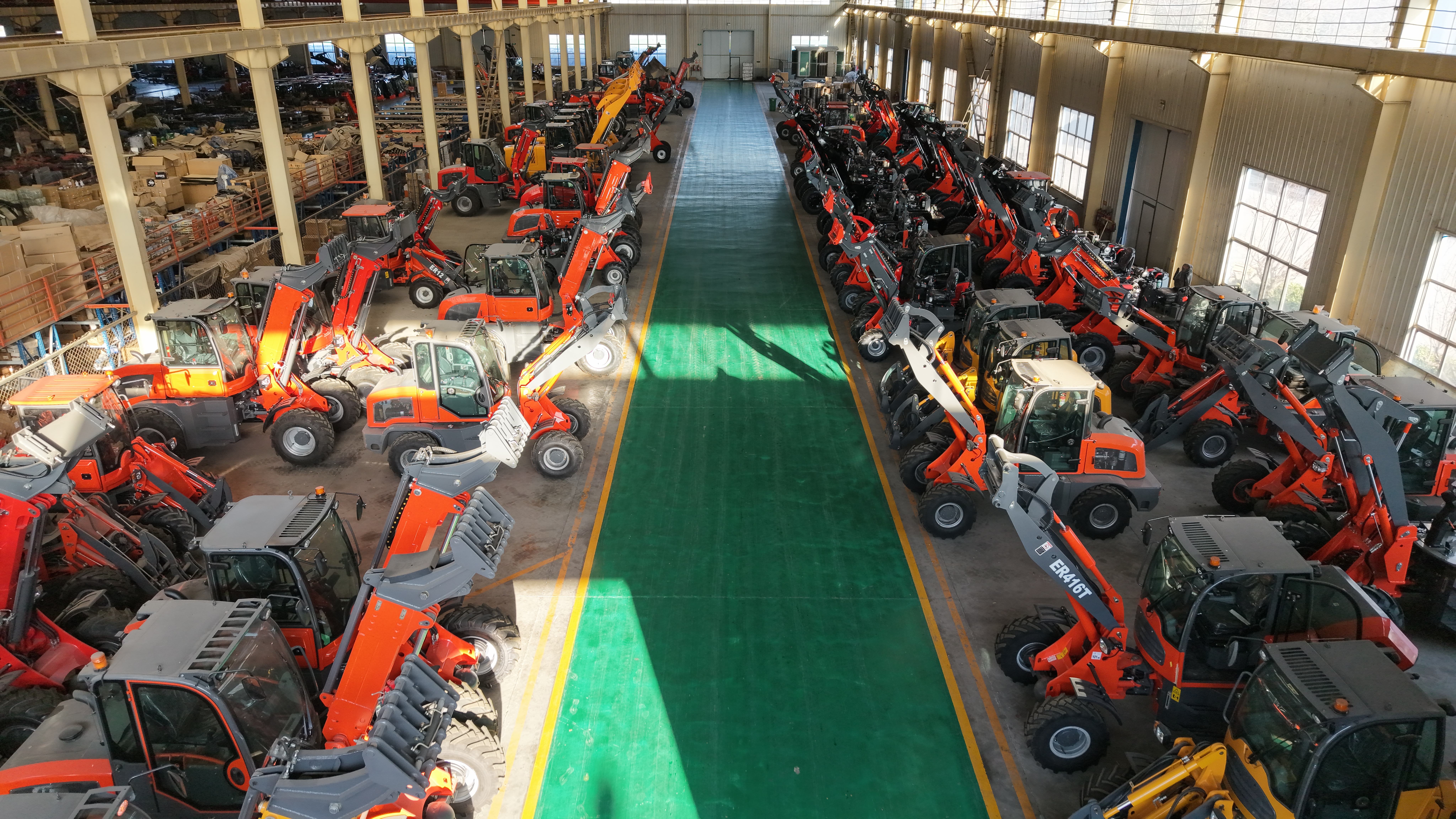
Qingdao Everun Machinery Co., Ltd. (EVERUN) is identified in the supplied company information as a manufacturer whose main products include wheel loaders and telehandlers. Its capability information gives buyers several points to examine during commercial evaluation: OEM production, logo, color, and configuration customization, an MOQ of one unit, a stated 30-day lead time, stated monthly capacity of 500 units, a “100% test” quality-control statement, and after-sales response and overseas-service statements.
These details can support an initial discussion about order structure and supplier processes. They do not, by themselves, demonstrate that terms have remained unchanged across historical orders, establish the criteria behind the testing statement, or verify performance for every market and configuration. The distinction is important for neutral supplier assessment: company-provided capability information is a starting point for questions, not a substitute for order-specific documentation or buyer verification.
For an importer, the next step is not to turn these statements into assumptions. It is to ask which apply to the proposed order, define acceptance expectations with the supplier, and ensure that the final documents align. That approach keeps the evaluation focused on the buyer’s own requirements rather than on general descriptions that may not resolve the details of a particular transaction.
Comparison with a one-time, informal purchase
An informal purchase can appear simpler when both parties rely on brief correspondence and broad descriptions. Its limitation is that it may leave the scope of a promise, the applicable version of a requirement, or the basis for acceptance unclear when an issue arises. A documented process takes more effort before order confirmation, but it gives both sides a reference for reviewing terms and discrepancies.
Documentation is not a guarantee of supplier reliability, and a detailed agreement cannot replace verification of the supplier’s actual capabilities. It does, however, make commitments easier to compare and discuss. Buyers should balance the effort of recording terms against the consequences of ambiguity for their own procurement operation, especially when repeat purchases, customization, or acceptance review are involved.
A practical decision rule for importers
A wheel loader supplier is more suitable for long-term consideration when the buyer can clearly establish three things: the order terms are documented and consistent across the relevant records; acceptance criteria and supporting evidence are understood by both sides; and changes or discrepancies have a defined route for review. If any of these remain unclear, the appropriate response is to clarify the gap before treating the supplier relationship as ready for repeat business.
This is a decision framework, not a ranking of manufacturers. The supplied evidence does not provide comparative supplier data or independent results that would justify naming a “best” supplier. For EVERUN, the available company and capability information supports an informed set of follow-up questions, while actual suitability still depends on whether the terms and acceptance arrangements for a buyer’s order are specific, mutually understood, and documented.
FAQ
What should an importer verify before treating a wheel loader supplier as a long-term partner?
Verify that order-specific purchasing terms are documented, acceptance criteria are shared and understandable, changes are recorded, and the process for handling discrepancies is clear. General capability statements should be confirmed for the proposed order.
Does “100% test” define the acceptance criteria?
No. EVERUN’s supplied capability information states “100% test,” but it does not specify the test scope, methods, acceptance thresholds, or records provided. Buyers should clarify those details for the order rather than infer them from the phrase.
How should buyers interpret a supplier’s stated lead time?
EVERUN’s capability information states a lead time of 30 days. Buyers should confirm whether that term applies to the specific order, what event starts the period, and how approved order changes affect the applicable commitment.
Do stated customization options establish the terms for every order?
No. EVERUN’s supplied information lists OEM production and customization of logo, color, and configurations. The buyer should confirm the requested scope, approval process, and applicable terms for each order in its written documents.
What is a practical sign that purchasing terms are consistent?
The quotation, order confirmation, and approved revisions describe the same applicable commitments, or clearly show which later document changed them. Both buyer and supplier should be able to identify the current agreed version.
Conclusion
Long-term supplier evaluation is not simply an expanded capability check. For wheel loader and telehandler importers, it is also a review of whether purchasing terms stay interpretable, whether acceptance criteria are jointly understood, and whether changes and disagreements can be handled through documented processes. EVERUN’s stated commercial and quality-control capabilities provide useful prompts for that review, but order-specific confirmation remains essential. A partnership is more sustainable when both parties can point to the same commitments and the same basis for deciding whether an order has met them.
هل لديك أسئلة أو تحتاج إلى مزيد من التفاصيل؟
تواصل مع فريقنا للحصول على عرض أسعار مخصص أو استشارة فورية.
طلب عرض أسعار
املأ النموذج أدناه وسيتواصل معك فريقنا بعرض مقترح مخصص.
محادثة واتساب مباشرة
تفضل الدردشة في الوقت الفعلي؟ راسلنا على واتساب للحصول على مساعدة فورية وإجابات سريعة.
- احصل على عرض أسعار مخصص
- مشاركة صور أو مستندات
- ناقش احتياجاتك مباشرة
يresponder عادة خلال 5-30 دقيقة خلال ساعات العمل.