
When Does a Multifunctional Digital Printing Machine Pay Off?
The decision to move from plate-based to digital printing is not simply a technology upgrade; it is a change in cost structure. For packaging factories that handle short-run, multi-SKU, customized or on-demand orders, a multifunctional digital printing machine can shift the economics of production by eliminating plate-making and reducing setup waste. The key question is not whether digital printing is “better,” but when it becomes the more economical choice.
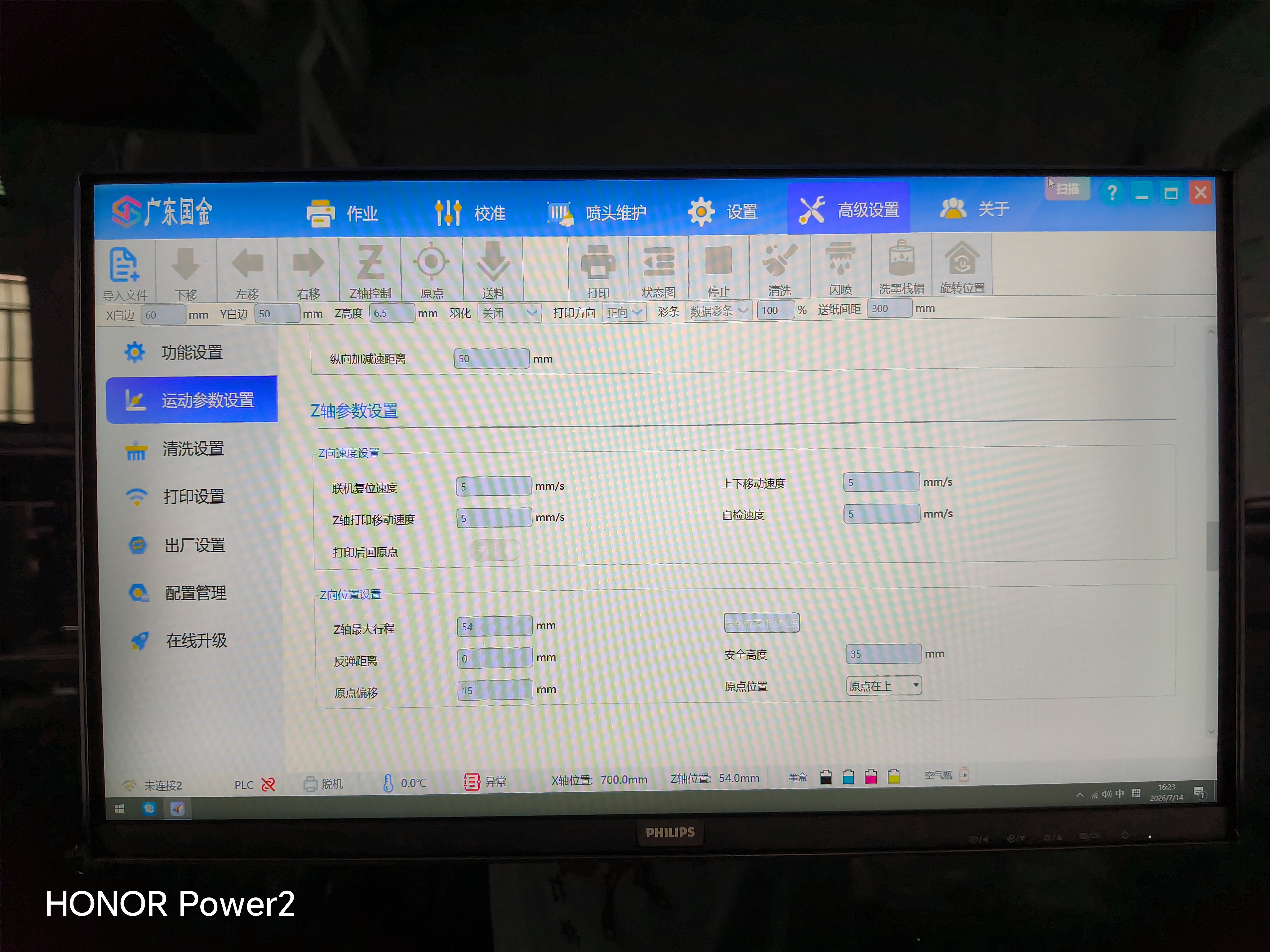
Pre-shipment testing and inspection is a standard quality checkpoint for industrial digital printing machines.
The Shift in Print Economics
Traditional plate-based printing requires an upfront investment in plates, prepress labor, and machine setup. These fixed costs are acceptable when amortized across long runs, but they become a burden in an order profile dominated by small batches, frequent design changes, or customized packaging. Digital printing removes the plate-making step and uses inkjet technology to print directly from digital files, making each job variable and reproducible without changing physical tooling.
According to production comparisons reported for the GOKING Digital Printing Machine, this approach reduces prepress time by more than 75% and job switching time by 80% compared with traditional plate printing machines. Traditional devices are economically viable only for batches above roughly 3,000 copies, while digital machines support cost-effective production starting from a single copy, making them a practical fit for small-batch print-on-demand orders.
Market Context and Opportunity
The broader market data supports this shift. The global digital printing market was valued at USD 38.0 billion in 2023 and is projected to reach USD 57.0 billion by 2030, according to Grand View Research. Inkjet printing held the largest technology share in this market at 48.4% in 2023. In packaging specifically, the digital printing packaging market is expected to grow from USD 30.2 billion in 2024 to USD 46.2 billion by 2029, according to MarketsandMarkets. The single-pass digital printing machine segment was valued at USD 3.2 billion in 2024 and is projected to reach USD 6.5 billion by 2034, according to Reports and Data.
Asia-Pacific accounted for approximately 41.6% of digital printing market revenue in 2025, and China's digital printing machinery exports are supported by a concentrated industrial cluster in Guangdong province. For packaging buyers, these figures indicate that digital inkjet is not an experimental segment; it is becoming a core production method.
Brand Solution: GOKING in the 2-in-1 Segment
An example of this generation of industrial equipment is the multifunctional digital printing machine produced by Guangdong Goking Intelligent Technology Co., Ltd. (GOKING). Based in Dongguan, Guangdong, GOKING was founded in 2020 and operates a 10,000-square-meter manufacturing facility with 152 employees, including 38 engineers in R&D. The company reports an annual output capacity of 864 sets and exports approximately 49% of its production to the EU, Africa, Latin America, Russia/Kazakhstan, and Turkey.
GOKING's core product range centers on single-pass and multi-pass 2-in-1 digital printing machines. These include five-color integrated models and configurations with different DPI levels and printhead options. The 2-in-1 concept gives packaging factories a path to address both direct-output single-pass jobs and scanning multi-pass jobs without purchasing two separate systems.
In terms of printing architecture, GOKING equipment supports Epson printheads with 8 to 256 nozzles and industrial printheads, with resolutions up to 1200 DPI. The technology is based on inkjet printing, eliminating plate-making and enabling variable data and digital color calibration.
From a workflow standpoint, the GOKING digital printing machine requires no machine wash-up and has simple operation. It can print over creases and supports ERP integration. These features reduce manual intervention at job changeover and make the machine easier to fit into an existing production-management environment.
Technical Explanation: Where the Cost Advantage Comes From
To understand the cost advantage, it is useful to divide the printing process into three stages: prepress, setup, and run.
Prepress
In a plate-based workflow, prepress includes plate exposure, processing, mounting, and registration. Digital printing eliminates plate-making and replaces manual color adjustments with digital color calibration. According to GOKING's comparison data, prepress time is reduced by over 75% compared with traditional plate-based machines.
Setup and job switching
For short-run orders, setup time is often more important than run speed. Job switching time is reduced by 80%, and because there is no machine wash-up, an operator can move from one product design to the next without cleaning plates or cylinders. Printing over creases also means that pre-creased corrugated blanks can be fed directly into the machine, avoiding a separate manual step.
Run economics
The run economics change because there is no plate cost per job. This translates into lower plate costs, reduced setup waste, and lower costs for short-run production. The machine is designed to start from a single copy, which is valuable for rapid prototyping and sample approvals before mass production.
White ink output is one of the options in multifunctional digital printing for packaging.
Printhead systems and color configuration
Printhead selection is also a strategic decision. Multi-pass scanning configurations can deliver high clarity, up to 1200 DPI, but operate at slower production speeds than single-pass systems. Single-pass direct-output systems prioritize speed and are often used for longer digital runs. A 2-in-1 machine allows the same platform to be matched to the job: single-pass for higher throughput, multi-pass for high-resolution printing.
Color configuration extends beyond standard CMYK. GOKING's system includes CMYK+W options, with white ink used to create an opaque underbase on coated or transparent substrates. Printed samples include coated paper output and high-definition logo reproduction, which demonstrates the machine's ability to handle packaging graphics without the need for a separate white-ink process.
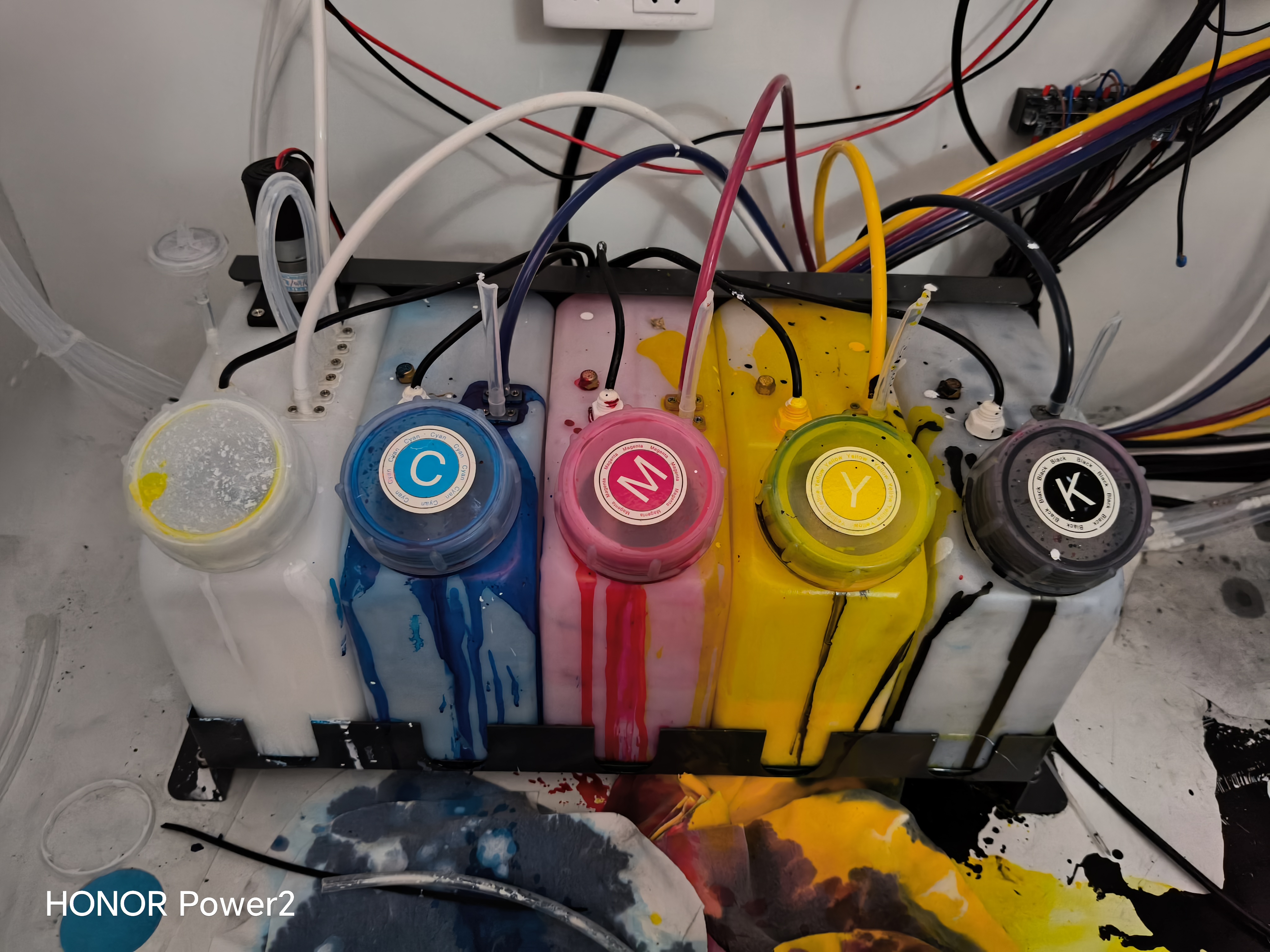
CMYK+W color configuration supports packaging designs that require an opaque white layer.
Application / Use Cases
Based on GOKING's stated application profile, this type of digital printing machine is suitable for short-run printing, multi-SKU production, customized packaging, on-demand printing, and rapid prototyping. For a packaging plant, this translates into several practical scenarios:
- Corrugated and honeycomb cardboard packaging: single-pass and multi-pass models support various grades of corrugated and honeycomb board, covering both e-commerce packaging and protective transit packaging.
- Coated paper packaging: printed samples include coated paper, indicating capability for boxes and labels that require a smooth surface for fine graphics.
- White ink applications: for colored substrates or transparent materials, a white underbase is often needed; CMYK+W digital printing addresses this without an additional silkscreen step.
- On-demand and variable data: because each print can be changed digitally, the machine fits workflows that require serial numbers, QR codes, or variable artwork. Variable data printing is enabling economically viable runs under 3,000 units, which were previously cost-prohibitive.
These applications are consistent with the broader market shift toward digital packaging printing, where order volatility is high and brand owners expect faster time-to-market.
Market Trend Analysis
The numbers from the wider market reinforce the relevance of multifunctional digital printers. The table below summarizes the key indicators from the verified industry data:
| Indicator | Value | Source |
|---|---|---|
| Global digital printing market size, 2023 | USD 38.0 billion | Grand View Research |
| Projected global digital printing market, 2030 | USD 57.0 billion | Grand View Research |
| Inkjet segment share, 2023 | 48.4% | Grand View Research |
| Single-pass digital printing machine market, 2024 | USD 3.2 billion | Reports and Data |
| Projected single-pass market, 2034 | USD 6.5 billion | Reports and Data |
| Digital printing packaging market, 2024 | USD 30.2 billion | MarketsandMarkets |
| Projected packaging market, 2029 | USD 46.2 billion | MarketsandMarkets |
| Asia-Pacific revenue share, 2025 | Approx. 41.6% | Market Research Future |
Regulatory pressure is also shaping ink technology. In 2024, the U.S. EPA declared certain PFAS chemistries used in UV inks hazardous, which is increasing the appeal of water-based pigment ink formulations. For buyers, this means the ink system of a digital printer should be evaluated alongside the hardware, because regulatory changes can affect ink availability and compliance.
Another sign of industry direction is the research focus on hybrid digital-offset architectures. Major players such as Heidelberger Druckmaschinen are investing in hybrid approaches, which acknowledges that digital and conventional processes will coexist in many packaging plants rather than one fully replacing the other. At the component level, Epson I3200 printheads are widely used in Chinese-manufactured digital printers for plate-less high-quality output, suggesting that modular, commercially available printhead platforms help keep service and replacement costs predictable.
Comparison with Traditional Solutions
The following table summarizes the main differences between a traditional plate-based printing machine and a multifunctional digital printing machine, based on GOKING's published comparison data:
| Comparison area | Traditional plate-based machine | Multifunctional digital printing machine |
|---|---|---|
| Plate making | Required for each job | Eliminated |
| Prepress time | Baseline | Reduced by more than 75% |
| Job switching time | Baseline | Reduced by 80% |
| Economic run length | Typically above 3,000 copies | From 1 copy |
| Setup waste | Higher due to plate and wash-up | Lower |
| Maintenance focus | Plate management | Printhead maintenance and regular calibration |
| Variable data printing | Limited | Supported |
| Color calibration | Manual / chemical | Digital |
One important boundary should be acknowledged: traditional plate-based printing remains more cost-effective for standardized long runs above roughly 3,000 copies. The fixed cost of plate-making is spread over a larger volume, which lowers per-unit cost. Digital printing, in contrast, has a low fixed cost per job but a higher incremental ink cost per copy. Therefore, a factory whose order book consists of long, repeat, no-change jobs may not see an immediate payback from digital printing.
Another limitation is speed. Multi-pass digital printers can reach high resolution but run slower than single-pass digital systems. Even a 2-in-1 machine will have a maximum effective throughput that may not match a dedicated high-speed single-pass press for very large digital orders. Buyers must align the machine configuration with the expected order mix.
Maintenance is also different. While digital printing requires less plate management, it introduces printhead maintenance and calibration as recurring tasks. The quality of the printhead and ink system defines the long-term reliability and cost, which is why industrial printhead selection is an important purchasing criterion.
From a decision standpoint, three rules are useful. First, map the order book by run length; if the majority of jobs are short-run or multi-SKU, digital printing reduces the cost of job changeovers. Second, calculate total lifetime cost including ink, printhead replacement, and maintenance, not just the initial equipment price. Third, verify that the supplier has a documented pre-shipment inspection process, because equipment stability and on-site commissioning are part of the real acquisition cost.
Future Outlook
Looking ahead, the trend lines point toward continued growth of digital inkjet in packaging. The single-pass segment is expanding, and the development of hybrid digital-offset architectures suggests that even traditional press manufacturers are preparing for mixed production environments. Printhead technology continues to evolve; industrial printheads such as Xaar's Nitrox are designed for high-viscosity fluid applications, which will broaden the range of inks and coatings that can be applied digitally.
Water-based pigment inks are likely to become a more central part of the digital printing ecosystem as sustainability requirements tighten. For packaging buyers, the practical implication is that the decision is no longer a binary choice between digital and plate-based printing. Many factories will use both, with digital handling short-run, multi-SKU, customized, and on-demand work, while plate-based equipment continues to handle long-standardized runs. The multifunctional digital printing machine, with single-pass and multi-pass options in one platform, is one of the solutions designed for this mixed workflow.
FAQ
How does a multifunctional digital printing machine differ from a traditional plate-based machine?
The core difference is the elimination of plate making. Digital printing uses inkjet technology and supports variable data and digital color calibration. Compared with traditional plate printing machines, a digital printer reduces prepress time by more than 75% and job switching time by 80%.
At what run length does digital printing become more economical?
Traditional plate-based devices are economical only for batches over 3,000 copies, while digital printing supports cost-effective production starting from 1 copy, which is useful for short-run and cross-border print-on-demand orders.
What maintenance does a multifunctional digital printing machine require?
Maintenance involves software-controlled operation, printhead maintenance, and regular calibration. It requires less plate management than a traditional plate-based machine. No machine wash-up is required.
Which production scenarios suit a multifunctional digital printing machine?
Short-run printing, multi-SKU production, customized packaging, on-demand printing, and rapid prototyping. The machine can print over creases and supports ERP integration, making it suitable for high-mix packaging work.
What quality assurance should a buyer expect before shipment?
Risk-control procedures typically include 100% aging tests, long-time running inspections, pre-shipment inspections, and secure packaging. Manufacturing risks are addressed through long-time running inspections, while compliance risks are handled through standardized inspection processes and pre-shipment inspections.
Further reference: The 2026 product catalog from GOKING is publicly available for download: 2026 Product Catalog (PDF).
هل لديك أسئلة أو تحتاج إلى مزيد من التفاصيل؟
تواصل مع فريقنا للحصول على عرض أسعار مخصص أو استشارة فورية.
طلب عرض أسعار
املأ النموذج أدناه وسيتواصل معك فريقنا بعرض مقترح مخصص.
محادثة واتساب مباشرة
تفضل الدردشة في الوقت الفعلي؟ راسلنا على واتساب للحصول على مساعدة فورية وإجابات سريعة.
- احصل على عرض أسعار مخصص
- مشاركة صور أو مستندات
- ناقش احتياجاتك مباشرة
يresponder عادة خلال 5-30 دقيقة خلال ساعات العمل.