
Where Antimicrobial Webbing Earns Its Place: Humid, High-Contact Gear Scenarios
Where Antimicrobial Webbing Earns Its Place: Humid, High-Contact Gear Scenarios
Antimicrobial webbing earns its place at the point where moisture stops being temporary. A pack strap that dries between hikes, a luggage handle that lives mostly in transit, and a pet leash that is wiped after a wet walk are not the same use case as a stroller harness, a cooler-bag shoulder strap or a helmet adjustment strap that stays warm, damp and repeatedly handled. JUDECAM, the brand of Xiamen Jude Webbing Co., Ltd., frames MicroGuard (JUDE-MicroGuard) around that narrower question: not whether a webbing can be called outdoor webbing, but whether the product's moisture and contact profile makes an anti-mould functional webbing worth specifying.

Backpacks and hiking packs show the variable-weather, high-contact environment where webbing specification decisions become more nuanced.
The deciding variable is moisture residence time, not the outdoor label
Outdoor webbing is a broad category. It can describe a narrow woven tape used on a daypack, a heavy duty outdoor webbing used for tie-downs, a lightweight outdoor webbing used for adjustment, or a polymer-specific construction such as nylon outdoor webbing or polyester webbing. The outdoor label tells a buyer that the product is intended for field conditions, but it does not answer the question that matters for antimicrobial fit: how long does moisture remain in or on the webbing, and how often does that damp area come into contact with people, animals or repeated handling?
Gear categories that genuinely benefit from an antimicrobial or anti-mould webbing usually share four conditions. Moisture enters the webbing or its immediate assembly and stays there; the area is warm enough to support microbial growth; airflow is limited because the webbing sits against a bag panel, harness pad, cooler wall or child-product frame; and the strap is touched, adjusted or folded before it dries. Sweat, spills, condensation, wet pet fur, rain exposure and damp storage can all contribute. These conditions do not prove that mould will grow in every product, and they do not make antimicrobial treatment a substitute for cleaning. They do explain why a buyer should stop treating all outdoor webbing as interchangeable.
The practical test is a two-part question. First, does the webbing sit in a humid, slow-drying part of the product? Second, is that same area high-contact, meaning it is regularly handled, worn, adjusted or brought close to skin, hands, a child or a pet? When both answers are yes, an anti-mould functional webbing has a clearer place in the specification. When only one answer is yes, the case is weaker. A dry-use decorative strap may never need the function. A damp but inaccessible internal strap may need drainage and cleaning more than an antimicrobial finish. The strongest fit is the overlap.
What MicroGuard actually brings to the discussion
MicroGuard (JUDE-MicroGuard) is an anti-mould functional webbing with an odor-control finish. Its tested material is Nylon 66. Other nylon and polyester constructions are available on request, but the existence of those construction options should not be read as an automatic transfer of the Nylon 66 test condition to every variant. The standard width range is 20 mm, 25 mm, 38 mm and 50 mm, with custom widths available. Typical thickness is 1.0–1.5 mm. The anti-mould testing is conducted by SGS to GB/T 24346-2009 over 28 days at 28°C and 90% RH.
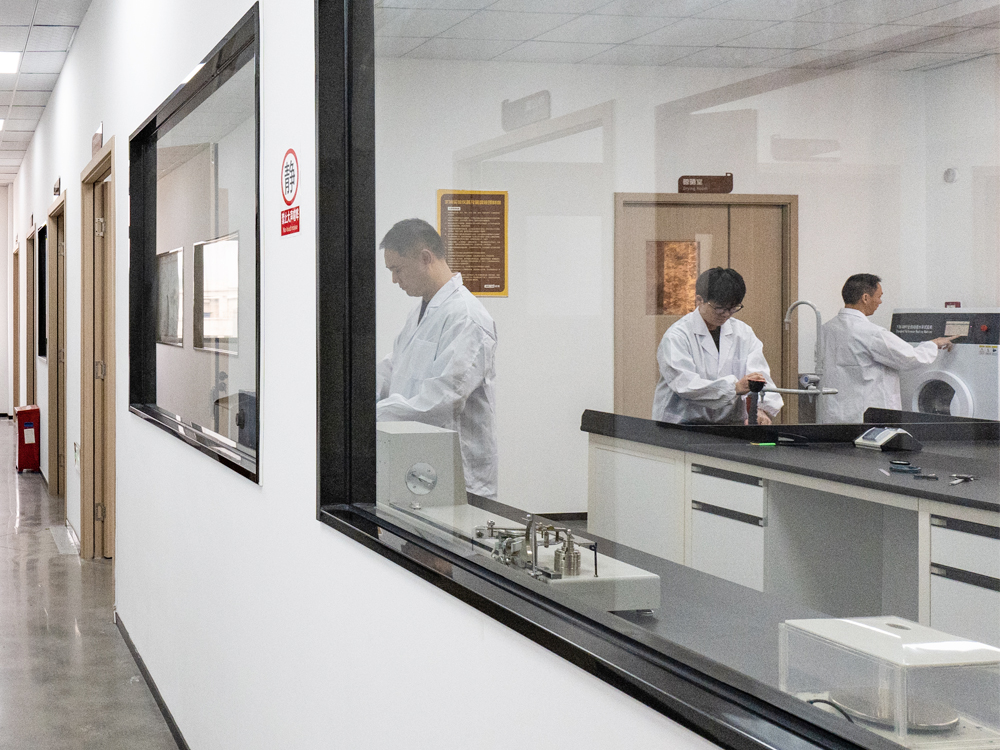
Laboratory testing supports a webbing claim, but the buyer still needs to match the tested construction and report conditions to the real gear program.
The 28°C and 90% RH condition is useful because it is a defined warm-humid exposure rather than a vague claim of moisture resistance. It gives buyers a specific reference point for a specification conversation. It does not, by itself, prove field performance in a sweaty backpack harness, a cooler bag stored in a hot car, a stroller kept in a humid hallway or a pet harness exposed to rain and wet fur. A laboratory protocol controls temperature, humidity and time; a real product adds soiling, abrasion, cleaning agents, UV, compression, body oils and uneven drying. The test is evidence of a controlled evaluation, not a guarantee for every end-use condition.
That distinction is important for procurement. A buyer should ask for the SGS report, confirm the tested construction, read the stated result rather than only the claim summary, and check whether the report applies to the exact MicroGuard variant being quoted. If the program moves to a different nylon or polyester construction, the buyer should ask what testing applies to that construction. The same discipline applies to the odor-control finish: it is part of the MicroGuard specification, but the buyer should confirm how the finish is expected to interact with the product's cleaning routine, color requirements and other performance demands.
The fit boundary: MicroGuard is relevant where humid, high-contact use creates a persistent moisture and odor-management problem. It is not a universal upgrade for every outdoor webbing, a replacement for drying and cleaning, or evidence that mechanical, safety or regulatory requirements have been met.
Seven application clusters where humid, high-contact use changes the decision
The following clusters are not a ranking. They are scenario filters. The same MicroGuard facts apply, but the reason to consider the webbing changes with the moisture path and the contact pattern.
Baby and child products
Stroller webbing, adjustment straps and touch points on child gear combine frequent handling with spills, humid weather and the practical reality that cleaning may not happen immediately. The high-contact part is not only the child's contact; it is the carer's hands, the folding and unfolding routine, and the strap areas that collect moisture near seams and frames. An anti-mould functional webbing with an odor-control finish can be relevant where these straps remain damp and are handled repeatedly. The boundary is equally important: antimicrobial function is not a baby-safety certification. A buyer still needs to verify the applicable child-product, chemical-safety and performance requirements for the complete product, and should not infer them from the webbing's anti-mould test alone.
Pet products
Pet leashes, collars and harnesses are exposed to rain, wet fur, saliva, dirt and repeated outdoor walks. Dog webbing may be wiped after use, but the strap nearest the animal and the handler's hand can stay damp longer than expected, especially in humid climates or during repeated walks. This is a credible humid, high-contact cluster because the webbing is both functional and frequently touched. MicroGuard may fit where odor control and anti-mould function are part of the product brief, but the buyer should keep hardware strength, animal comfort, colorfastness and cleaning instructions in the same review. A functional finish does not compensate for a weak assembly or poor fit.
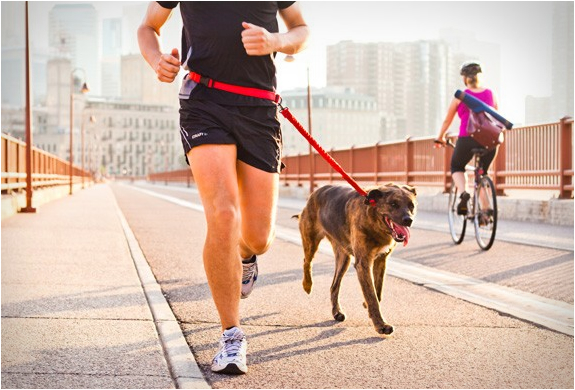
Pet gear illustrates the overlap that matters most: moisture, warmth and repeated contact around leashes, collars and harness straps.
Outdoor and travel gear
Camping webbing, hammock straps, tie-downs and travel gear can be wet, packed damp and reused before fully drying. Not every strap in this cluster is high-contact, however. A tie-down that is handled briefly and dried in the sun may not need an antimicrobial webbing, while a shoulder strap or adjustment area that stays damp against a bag or body may have a stronger case. The scenario fit depends on where the moisture sits and how the product is stored between uses. A buyer should separate load-bearing and safety-critical straps from contact and handling straps before deciding where MicroGuard belongs.
Cooler and waterproof bags
Cooler bags, insulated bags and waterproof bags create a humid internal environment through condensation, spilled drinks, food residue and damp contents. The shoulder strap, grab handle and webbing attachment points are often handled while the bag is open, loaded or wiped down. This is a clearer fit than a dry daypack because the moisture source is persistent and close to the webbing assembly. The limitation is that antimicrobial webbing does not make a bag waterproof, food-safe or easy to clean by itself. The liner, closure, drainage and cleaning routine remain the primary controls. MicroGuard is a webbing-level measure within that wider product design.
Backpacks and luggage
Backpack webbing, shoulder straps, grab handles, compression straps and hip belts are classic high-contact areas. Sweat, rain, humid air and repeated handling can keep webbing damp, particularly where it is layered against foam, webbing loops or a padded panel. Luggage adds a different moisture path through wet airports, rain exposure and damp hotel rooms, but the webbing is usually handled less intimately than a backpack harness. The fit is strongest where a backpack or travel bag combines humid use with body contact and limited drying. Even there, load-bearing performance, abrasion resistance, UV resistance and colorfastness remain primary selection criteria. Antimicrobial function sits alongside them, not above them.
Belts and straps
Outdoor utility belts, adjustable straps and waist belts sit close to the body and are repeatedly adjusted. Sweat and humid air can affect the webbing, especially in wide waist belts or straps worn over clothing for long periods. The high-contact condition is clear, but the moisture load varies by user and climate. A belt that is worn briefly in dry conditions may not justify an anti-mould functional webbing. A belt or strap used in humid field work, travel or active outdoor use may have a better fit. Comfort, stiffness, buckle compatibility and appearance should remain part of the decision, because an antimicrobial finish does not solve a poor hand-feel or a hardware mismatch.
Sports helmets and protective gear
Helmets and protective gear use narrow straps, adjustment elements and harness components that come into contact with sweat and skin. Shared equipment, repeated use and limited air circulation can make these areas a maintenance concern. This is a place where the industry conversation needs discipline. An anti-mould webbing can address a webbing-level odor and moisture issue, but it must not be presented as impact protection, safety certification or a replacement for the protective system's required performance. Buyers should keep helmet standards, harness strength, fit and cleaning instructions separate from the antimicrobial claim. The webbing function is secondary to the safety function.
Where antimicrobial webbing does not earn its place
A standard outdoor webbing remains the appropriate choice for many programs. Gear that dries quickly between uses, stays mostly dry, is cleaned and aired regularly, or uses webbing in low-contact decorative or structural positions may not need an anti-mould finish. In those cases, specifying MicroGuard adds a function that the use pattern does not clearly require. That is not a defect in the product; it is a mismatch in the scenario.
The comparison with conventional webbing should therefore be a fit comparison, not a slogan. Conventional webbing may be adequate where moisture is temporary and contact is low. MicroGuard becomes more relevant where moisture persists, warmth and limited airflow keep the strap damp, and the same area is repeatedly handled or worn. Buyers should also compare the full set of requirements: base material, width, thickness, breaking strength where applicable, abrasion, UV exposure, colorfastness, cleaning method, color matching and regulatory needs. No single antimicrobial claim should displace those checks.
There is also a maintenance boundary. An anti-mould functional webbing is not a self-cleaning product. If food residue, body oils, mud or pet contamination remain on the webbing, the product can still become unpleasant and unsanitary. Cleaning and drying instructions remain part of the product design. The most credible use case is one where the antimicrobial function supports a sensible maintenance routine, not one where it is used to justify a weaker routine.
A buyer fit-check for humid, high-contact programs
Before adding MicroGuard to a specification, a buyer can apply the following fit-check to the actual product rather than to a generic category.
- Map the moisture path. Identify whether moisture comes from sweat, rain, spills, condensation, wet storage, pet contact or cleaning. A strap can be outdoor-rated and still stay dry; the fit depends on where the water or vapour actually sits.
- Map the contact pattern. Note whether the webbing touches skin, hands, a child, a pet or shared protective equipment, and how often it is adjusted or folded. High contact is a function of use, not a material label.
- Check the drying environment. Ask whether the webbing can air-dry between uses, whether it is trapped against foam or a coated panel, and whether the product is stored damp. Poor drying strengthens the case for an anti-mould function.
- Confirm the construction being quoted. MicroGuard's tested material is Nylon 66. Other nylon and polyester constructions are available on request. If the program uses another construction, ask what testing applies to that exact variant.
- Confirm dimensions and handling needs. The standard width range is 20 mm, 25 mm, 38 mm and 50 mm, with custom widths available; typical thickness is 1.0–1.5 mm. Check these against buckle fit, seam allowance, stiffness and the product's contact comfort.
- Review the SGS report against the claim. The stated anti-mould test is to GB/T 24346-2009, conducted by SGS over 28 days at 28°C and 90% RH. Read the tested sample, result and conditions, not only the headline claim.
- Ask how the odor-control finish fits the cleaning routine. Confirm the expected care method, color requirements and any skin-contact or product-safety checks that apply to the finished item.
- Keep safety and regulatory checks separate. For child products, pet gear, protective equipment, load-bearing straps and other regulated items, verify the applicable standards and performance requirements independently of the antimicrobial function.
- Run a realistic use trial. Test the finished product in the humidity, contact and cleaning pattern it will actually meet. Inspect odor, appearance, handle and strength after repeated cycles rather than relying on a single laboratory snapshot.
- Write the requirement into the specification. State the construction, dimensions, test report expectation and care conditions so that the quoted webbing, the tested webbing and the production webbing remain the same item.
This fit-check keeps the decision grounded. It also prevents a common procurement error: treating an antimicrobial finish as a substitute for material selection, product design or a maintenance plan.
FAQ: MicroGuard and humid, high-contact gear
What exactly is tested on MicroGuard?
MicroGuard (JUDE-MicroGuard) is an anti-mould functional webbing with an odor-control finish. Its tested material is Nylon 66. The anti-mould testing is conducted by SGS to GB/T 24346-2009 over 28 days at 28°C and 90% RH. The report should be read for the tested sample, conditions and stated result.
Which gear categories are the strongest fit for antimicrobial webbing?
The strongest fit is where humid, slow-drying conditions overlap with high contact. That can include stroller webbing and child-gear touch points, pet leashes and harnesses, backpack and luggage contact areas, cooler-bag handles and straps, outdoor utility belts, and protective-gear adjustment straps. The category name alone is not enough; the buyer still needs to confirm the moisture path and contact pattern.
Does antimicrobial webbing remove the need to clean and dry gear?
No. An anti-mould functional webbing is not a self-cleaning product and does not replace cleaning, drying or good product hygiene. Dirt, sweat, food residue and damp storage can still affect the product. MicroGuard is relevant when the antimicrobial function supports a sensible care routine, not when it is used to justify a weaker one.
Is the Nylon 66 test result valid for other nylon or polyester versions?
It should not be assumed automatically. MicroGuard's tested material is Nylon 66, and other nylon and polyester constructions are available on request. A buyer changing construction should ask what testing applies to the chosen variant and should not transfer the Nylon 66 report to an untested build without confirmation.
How should a buyer interpret the 28°C and 90% RH test condition?
It is a defined warm-humid laboratory condition used for the anti-mould test over 28 days. It gives buyers a specific reference for comparing claims, but it does not reproduce every field condition. Sweat, soiling, abrasion, UV and cleaning can change real-world performance, so a finished-product trial and a separate check of mechanical and regulatory requirements remain necessary.
The place MicroGuard earns
MicroGuard does not earn its place by being attached to every outdoor webbing program. It earns its place where a product lives in humidity, stays warm and poorly ventilated, and brings the webbing into repeated contact with hands, skin, children or pets. Strollers, pet gear, cooler bags, backpack harnesses, utility belts and protective-gear straps can all meet that test, but each one needs its own moisture and contact review. The MicroGuard facts give buyers a concrete starting point: Nylon 66 as the tested material, other nylon and polyester constructions on request, 20/25/38/50 mm widths plus custom, 1.0–1.5 mm typical thickness, an odor-control finish, and anti-mould testing by SGS to GB/T 24346-2009 over 28 days at 28°C and 90% RH. The final decision should still be a fit decision, made against the product's real use, care and safety requirements.
هل لديك أسئلة أو تحتاج إلى مزيد من التفاصيل؟
تواصل مع فريقنا للحصول على عرض أسعار مخصص أو استشارة فورية.
طلب عرض أسعار
املأ النموذج أدناه وسيتواصل معك فريقنا بعرض مقترح مخصص.
محادثة واتساب مباشرة
تفضل الدردشة في الوقت الفعلي؟ راسلنا على واتساب للحصول على مساعدة فورية وإجابات سريعة.
- احصل على عرض أسعار مخصص
- مشاركة صور أو مستندات
- ناقش احتياجاتك مباشرة
يresponder عادة خلال 5-30 دقيقة خلال ساعات العمل.