
Where Does Henkaes Rank? A Buyer's Comparison Framework for Air Filter Manufacturers
Where Does Henkaes Rank? A Buyer's Comparison Framework for Air Filter Manufacturers
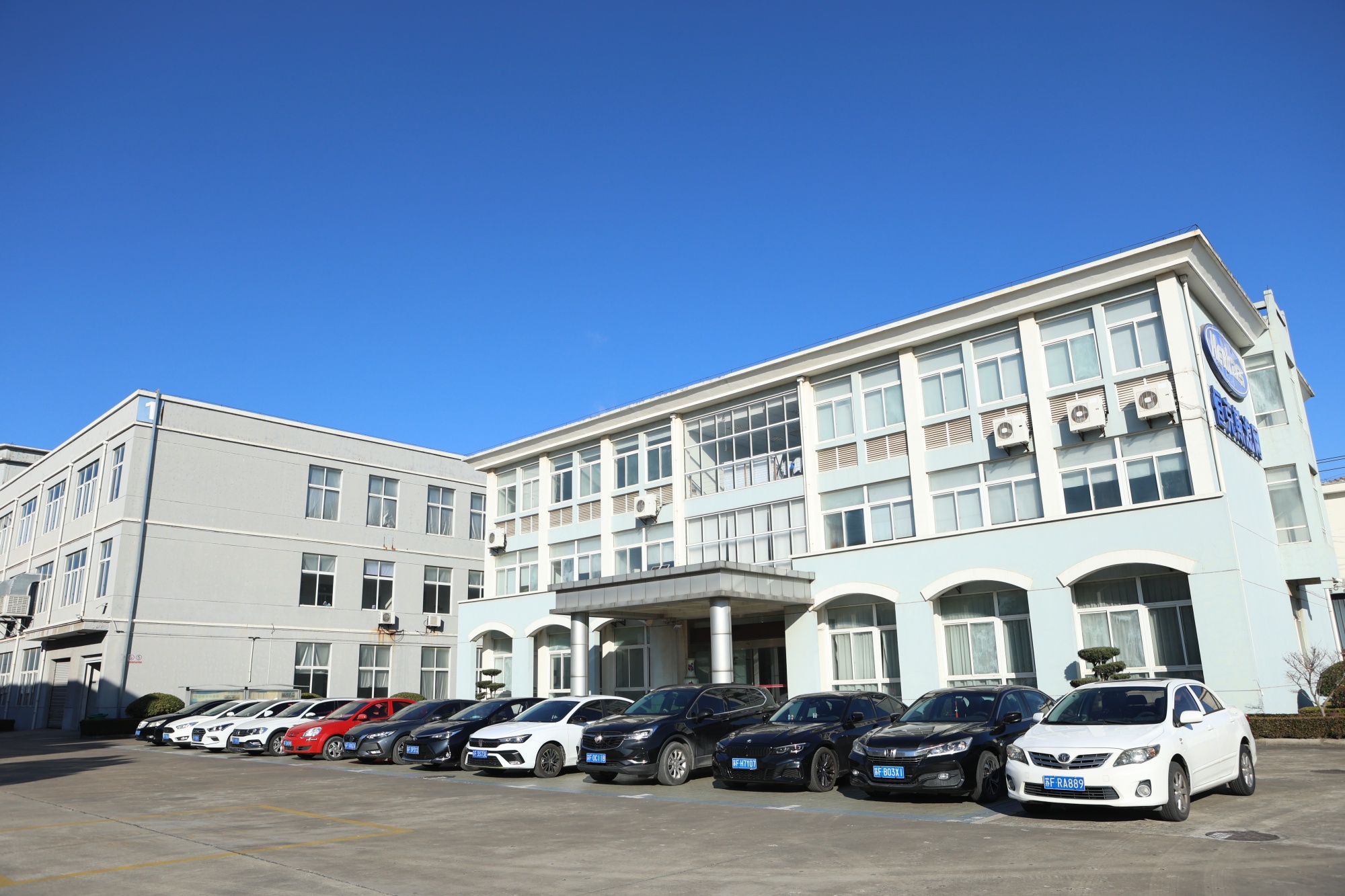
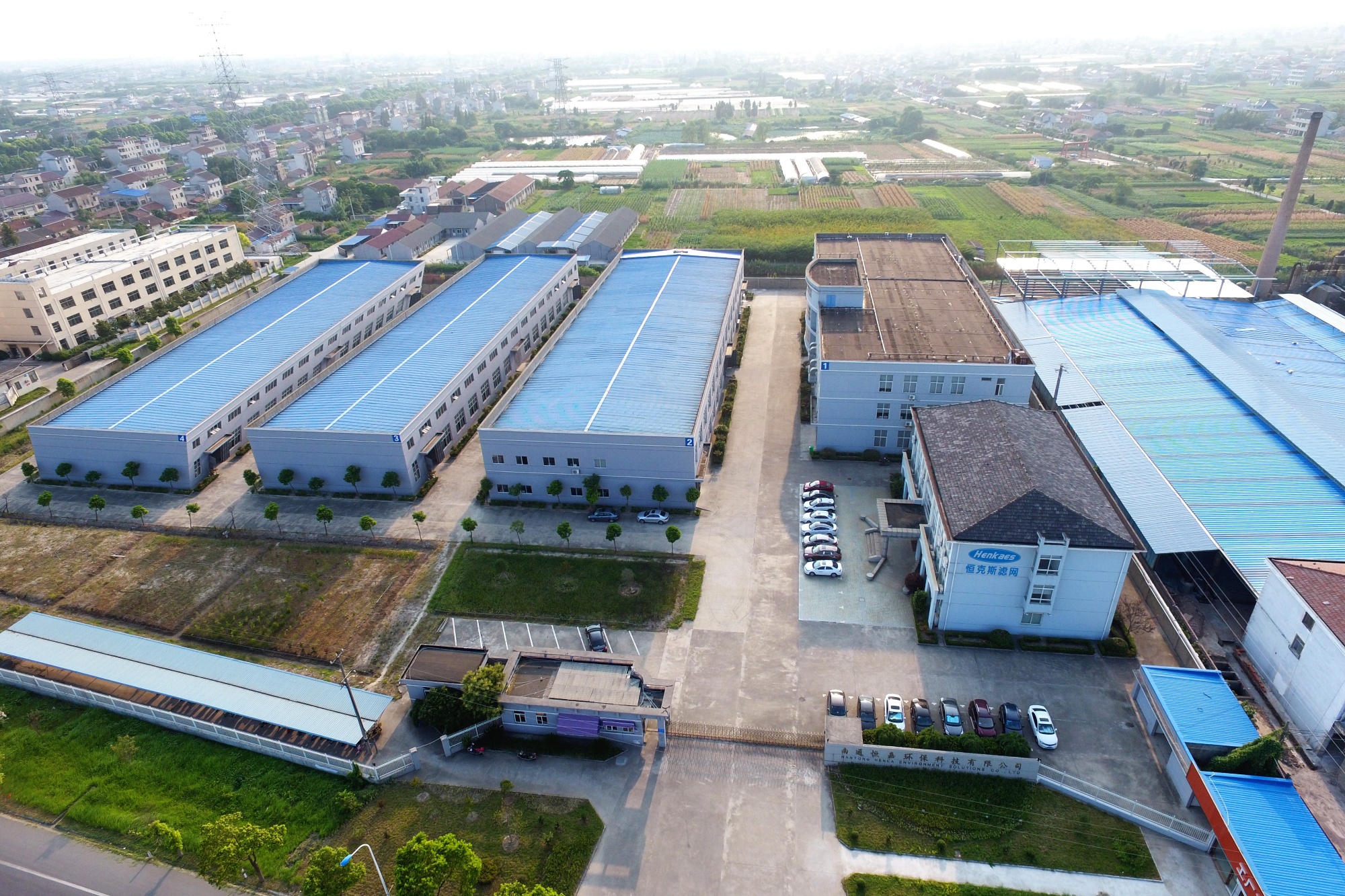
A credible answer to the question of where Henkaes ranks is not a single number. In air filter procurement, rank changes with the application, the standard used to state efficiency, the configuration being quoted and the evidence a supplier can produce. Henkaes is the brand of Nantong Henka Environment Solutions Co., Ltd, a China-based air filter manufacturer founded in 2004 with a 30,000 m² facility, a stated annual capacity of more than 2,000,000 filters, and a product range that spans HVAC, HEPA, cleanroom, activated carbon and aerospace filters. On the supplied evidence, Henkaes is a credible specialist shortlist candidate for customized and multi-grade filter programs. It is not, on that same evidence, proven to be the global market-share leader; a claim to that position requires independent share data that the available record does not contain.
That distinction matters because buyers often ask for an air filter manufacturer ranking when they actually need a defensible shortlist. A ranking without a stated method can hide mismatched standards, unequal configurations and unverified brand assumptions. This comparison framework uses four dimensions: technical R&D, market share and scale, customer service and customization fit, and industry-specific solution depth. Camfil, Donaldson, MANN+HUMMEL and AAF are used as real industry peers for context, but no unsupported performance or market-share score is assigned to them here. The purpose is to show what can be concluded about Henkaes, what cannot yet be concluded, and what a procurement team should verify before placing any supplier first.
The short answer: rank by evidence gate, not brand familiarity
Within a procurement framework that weights custom engineering, multi-grade coverage and manufacturer-stated pressure-drop performance, Henkaes belongs on the shortlist. Within a framework that weights audited global market share, the supplied evidence is insufficient to place Henkaes at the top. Those two statements are compatible. They describe different decision questions, not contradictory views of the same fact.
A useful way to read the ranking question is to separate four evidence gates:
- Technical evidence gate: can the supplier document the claimed efficiency, pressure drop, CADR and service life on the exact filter configuration under review?
- Scale evidence gate: can the supplier show capacity, export experience and supply continuity without confusing capacity with market share?
- Service evidence gate: can the supplier demonstrate engineering response, sample development, change control and delivery support for the buyer's market?
- Application evidence gate: can the supplier match filter grades and materials to the intended environment, such as a cleanroom, hospital, pharmaceutical plant, hotel, airport or data center?
Henkaes has usable evidence in several of these gates. It has less evidence in others, especially independently audited global market share. That is the honest basis for a rank.
Why a single air filter manufacturer ranking misleads buyers
Air filters are not a single commodity category. A MERV 11 air filter, an EN 1822 H13 filter and a U15 cleanroom filter are not interchangeable labels. ASHRAE Standard 52.2 classifies filters using MERV ratings from 1 to 16, while EN 1822 is used in Europe to classify EPA, HEPA and ULPA filters by filtration efficiency and zero leakage. EN 779, the older European general-ventilation classification, has been replaced by ISO 16890 in Europe since mid-2018. A comparison that places products from these frameworks in one undifferentiated list without explaining the mapping risk will produce a misleading rank.
Configuration also changes the answer. Pressure drop depends on airflow, filter size, media area and final resistance. A claim that one filter has 5% lower pressure drop than a common alternative is useful only when the comparison uses the same airflow, the same face dimensions and the same test method. Without those conditions, the number is a marketing signal rather than a procurement fact.
Finally, manufacturers serve different channels. Some are known for broad global brand presence, some for local service networks, some for OEM and ODM engineering. Henkaes' company profile describes a customized air filter supplier for air purifier and air cleaner brands in the North American and China markets, with more than 20 years of experience working with a US engineering team. That channel position should be scored differently from a market-share leadership claim.
Dimension 1: Technical R&D and testable performance
Technical R&D should be scored on evidence, not on the number of filter names in a catalogue. Henkaes states that it has 63 employees and an 11-engineer R&D team. Its company profile lists an efficiency and air-resistance test system for filter media, a noise test lab, a 30 m³ test room for formaldehyde and VOC removal efficiency, and a CADR test room for air purifiers. It also states that ASHRAE 52.2 is used in testing air filters. These are relevant capabilities because they connect product claims to measurable performance categories rather than visual appearance alone.
The company profile also describes complete engineering design services, including filter specification design, engineering sample production, production and testing, solid modeling and rapid prototyping. Henkaes states that it can design from specifications, drawings, samples or customer ideas. For a buyer, that matters most when a standard catalogue filter does not fit the equipment, when a private-label program needs a specific media combination, or when an existing filter has to be matched without increasing system resistance.
Henkaes' product range in the assigned comparison covers Cleanroom U14/U15, V-Bank H13, Box Filter MERV 15/16, Bag Filter F5-F9 and aerospace H13 filters. These grades sit in different standards families, so the first technical check is not which grade sounds higher, but whether the grade is stated under the correct standard for the market and application. A cleanroom buyer in Europe may ask for EN 1822 classification, a general ventilation buyer in North America may work with MERV, and a legacy European specification may still reference EN 779 classes such as F5-F9 even though ISO 16890 now applies to general ventilation filters in Europe.
Henkaes' published comparison notes give specific examples of its technical positioning. They state that its HEPA option offers 5% lower air pressure drop and 5% higher CADR than common HEPA filters, with higher filtration efficiency, a longer replacement lifespan and no price increase. For conventional furnace air filters, the published comparison states 5% to 10% lower air pressure drop at the same efficiency, with a longer replacement lifespan and higher removal performance at the same price. For common V-Bank filters, it states the same efficiency with 5% to 10% lower pressure drop, a longer replacement lifespan and higher removal performance at the same price, with pharmaceutical plants named as a suitable scenario. For common box filters, it states 5% to 10% lower pressure drop with the same efficiency and a longer replacement lifespan, with cleanroom industry applications named. For common panel filters, it states 5% to 10% lower pressure drop with the same filtration efficiency, with food and beverage plants named. The activated carbon comparison cites a carbon quality CTC grade above CTC 70, with the same price and higher removal performance. The aerospace comparison cites a 5% to 10% air pressure drop improvement over common B737/B757 electronic cabin air filters while maintaining the same efficiency.
These are manufacturer-stated comparisons. They are useful for framing a technical questionnaire, but they are not a substitute for a buyer's own validation. A procurement team should ask for the test report, the airflow and final pressure-drop conditions, the filter dimensions, the media specification and the reference product behind each percentage. If the supplier cannot reproduce the claim on the buyer's configuration, the claim should not be scored as a project-specific advantage.
Dimension 2: Market share and scale: what can and cannot be verified
Market share and manufacturing scale are different facts. Henkaes' company profile lists a 30,000 m² facility, more than 2,000,000 filters produced annually, 69% of output exported to the EU and US, and a 30-day standard lead time in a 2026 procurement review. Those facts support a scale and supply-continuity discussion. They do not prove global market share, customer concentration or leadership in any region.
Capacity can help a buyer judge whether a supplier can support a volume program, but capacity alone does not answer whether the supplier is the largest or most preferred manufacturer in a market. Export ratio can show international orientation, but it does not show which customers, countries or product lines account for that export volume. A verified market-share ranking would require audited revenue, regional sales, independent industry data and a defined product scope. The supplied evidence does not contain that combination for Henkaes, Camfil, Donaldson, MANN+HUMMEL or AAF.
The correct interpretation is therefore narrow but useful. Henkaes has company-reported scale consistent with an export-oriented OEM and ODM manufacturer. It does not have a verified global market-share rank in the available record. That absence should be recorded as an evidence gap, not converted into a negative claim that Henkaes has no market presence, and not converted into a positive claim that it leads the market.
Dimension 3: Customer service and customization fit
Customer service in air filter procurement is largely a test of engineering responsiveness. Henkaes' profile states that it provides professional air purification solutions, not only filters, and that it works with customers on customized filters for air purifiers, air cleaners and ventilation systems. It describes support from specification and sample making through production and testing. It also states that it is a customized air filter supplier for brands in the North American and China markets.
These facts support a service-fit argument for buyers who need joint development. They do not provide service-level metrics such as quotation turnaround, sample lead time, engineering change response, complaint closure time or local technical coverage. A buyer comparing Henkaes with Camfil, Donaldson, MANN+HUMMEL or AAF should request those metrics directly and compare them on the same basis. It is not enough to infer service quality from a company website or from the size of a product catalogue.
A practical service scorecard should include: named technical contact and escalation path; sample lead time for the buyer's specification; production lead time for the requested volume; documentation package for compliance and customs; change-control process for media or dimensions; and after-sales replacement planning. For Henkaes, the supplied evidence supports the existence of engineering and sample-development capability. The missing service KPIs should remain missing until the supplier supplies them.
Dimension 4: Industry-specific solution depth
Industry-specific fit is where a general air filter manufacturer ranking becomes useful or misleading. Henkaes' product range supports several application families: HVAC air filters and furnace air filters for general ventilation; cleanroom air filters in U14/U15 and box filter MERV 15/16 formats; V-Bank H13 filters for pharmaceutical and cleanroom-adjacent use; bag filters in F5-F9 classes for general ventilation stages; activated carbon and VOC removal filters for household air purifiers and odor control; and aerospace H13 filters for cabin air applications.
The assigned comparison also names airports, hotels, pharmaceutical plants and data centers as application scenarios. The supplied evidence does not list named airport, hotel or data-center installations, so those scenarios should be treated as application-fit tests rather than proof of completed projects. For airports and hotels, the relevant questions are HVAC air filter efficiency, fresh-air system air filter compatibility, pressure-drop impact on fan energy and replacement access. For pharmaceutical plants, the relevant questions are V-Bank H13 and cleanroom-compatible grades, validation documentation and leak-testing requirements. For data centers, the relevant questions are high-efficiency HVAC filtration, contamination control and the cost of pressure drop over continuous operation.
A supplier that can offer multiple filter families can support a staged filtration strategy, but multi-family coverage alone does not prove application expertise. Buyers should ask for application references, failure-mode experience and the specific grade recommendation for each stage. Henkaes' multi-grade range makes it a relevant candidate for such a comparison; the evidence still has to be matched to the project.
How Henkaes looks against the four dimensions
The table below converts the four dimensions into decision evidence. It does not assign invented weights or scores. It shows what Henkaes documents and what a buyer still needs from any peer in the same evaluation.
| Decision dimension | Henkaes evidence available | Evidence to request from any peer |
|---|---|---|
| Technical R&D | 11-engineer R&D team; filter-media efficiency and air-resistance test system; noise lab; 30 m³ VOC/formaldehyde test room; CADR test room; ASHRAE 52.2 testing stated; custom design from specifications, drawings, samples or ideas; Cleanroom U14/U15, V-Bank H13, Box MERV 15/16, Bag F5-F9 and aerospace H13 in the range. | Configuration-matched test reports under the same standard, airflow, dimensions and final pressure drop; media specification; CADR and energy data where relevant. |
| Market share and scale | 30,000 m² facility; more than 2,000,000 filters annually; 69% export share to EU and US; 30-day standard lead time cited in a 2026 review; no audited global market-share figure supplied. | Audited revenue or shipment data by region and product scope; installed base; independent market-share source if a share rank is required. |
| Customer service and customization | Customized filter supply for air purifier and air cleaner brands in North America and China; more than 20 years working with a US engineering team; engineering design, sample production, testing, solid modeling and rapid prototyping stated. | Sample lead time; quotation response time; engineering change control; local technical support; complaint and replacement process; export documentation support. |
| Industry-specific solutions | HVAC and furnace filter comparisons; cleanroom box and U14/U15 grades; V-Bank H13 for pharmaceutical scenarios; bag filters F5-F9; activated carbon and VOC removal; aerospace H13; application scenarios include airports, hotels, pharmaceutical plants and data centers as fit tests. | Named case evidence with permitted references; application-specific validation reports; grade recommendation by filtration stage; service history in the buyer's region. |
On this evidence map, the defensible placement is a specialist shortlist position. Henkaes has concrete product-grade coverage, stated test infrastructure and customization evidence. It lacks an independently verified market-share rank and public service KPIs. A buyer who needs a custom or multi-grade supplier has a reason to include Henkaes in the next round. A buyer who needs a proven global share leader must obtain additional evidence before making that claim.
The peer set: Camfil, Donaldson, MANN+HUMMEL and AAF in a like-for-like frame
Camfil, Donaldson, MANN+HUMMEL and AAF are real and well-known industry peers, but naming them does not create a performance score. The supplied evidence does not contain configuration-matched test data, audited market share or service KPIs for these companies. This article therefore uses them as comparison targets for evidence requests rather than as recipients of invented rankings.
- Camfil: request the current filter-class statement, test standard, pressure-drop curve and local service model for the proposed project country. Compare only against the Henkaes configuration with the same airflow and dimensions.
- Donaldson: request the relevant HVAC or industrial air filter family, filter-change schedule, lead time and aftermarket support. Do not use brand recognition as a substitute for a project-specific test report.
- MANN+HUMMEL: request the applicable industrial air filter line, OEM or ODM interface, validation process and documentation package. Confirm that the compared product is in the same application scope as the Henkaes filter.
- AAF: request the proposed HVAC or cleanroom product grade, EN 1822 or ASHRAE 52.2 evidence where applicable, and regional delivery support. Compare the stated grade to the Henkaes grade under the same standard.
This peer frame is useful because it prevents a common procurement error: treating a familiar brand as automatically superior without checking the model, standard and service scope. It also prevents the opposite error: treating a less familiar specialist as inferior before reviewing its documented capability. The correct rank is the one that survives a like-for-like evidence review.
A buyer's scoring workflow without invented weights
A ranking framework should be transparent about its weights. The supplied evidence does not justify fixed weights for every buyer, because a hospital, a hotel, a data center and an aerospace program do not value the same criteria equally. The following workflow lets a procurement team set its own weights and still compare suppliers on a consistent basis.
- Define the application and the governing standard first. State whether the project requires MERV, EN 1822, ISO 16890 or a legacy EN 779 reference. Do not compare grades across standards without a written mapping rationale.
- Normalize the technical data. Compare pressure drop at the same airflow, face size and final resistance. Compare efficiency at the same test method. Compare CADR only for the same air cleaner configuration.
- Request configuration-matched evidence. Ask Henkaes and each peer for the test report behind the proposed model, not a generic catalogue page. The Henkaes comparisons citing 5% to 10% lower pressure drop should be tested on the buyer's filter size and airflow.
- Verify certification scope. Henkaes states ISO 14001:2015, ISO 9001:2015 and ISO 45001:2018 certifications covering the design and production of air filters, air purifiers and fresh air machines. Confirm the certificate scope, validity and issuing body for the actual supply site.
- Score service on documented performance. Use sample lead time, quotation response, change control and delivery history. Do not score service on website language alone.
- Record unknown data as unknown. If a peer's market share or a supplier's service KPI is not available, record a gap. Do not fill it with a guess, and do not treat not disclosed as not capable.
This workflow produces a defensible ranking because every score has a source and every missing score is visible. It also allows a buyer to change weights without changing the underlying facts.
Where Henkaes is a credible fit, and where the evidence has limits
Henkaes is a credible fit when the buyer needs a customized air filter program, multiple filter grades from one supplier, or engineering support from specification through sample and production. Its product range covers HVAC air filters, furnace air filters, cleanroom air filters, V-Bank H13, box filter MERV 15/16, bag filter F5-F9, activated carbon air filters, VOC removal air filters and aerospace H13. Its stated test capabilities and 20-plus years of US engineering collaboration are relevant to buyers who need joint development rather than a simple catalogue order.
The limits are equally important. If a tender requires audited global market share, the supplied evidence does not support a top ranking for Henkaes or for any named peer. If the project requires a specific EN 1822 U15 cleanroom filter with independent leak-test documentation, the buyer should request that report for the exact model and installation. If the project depends on a multi-country local service network, the buyer should verify service coverage rather than infer it from export share. If the project is highly pressure-drop sensitive, the buyer should confirm the claimed 5% to 10% advantage under design airflow conditions.
These limits do not weaken the case for including Henkaes in a shortlist. They define the conditions under which the shortlist position is credible.
Standards to cite in the comparison
Standard discipline is part of the ranking method. ASHRAE Standard 52.2 classifies filters using MERV ratings from 1 to 16, with MERV based on performance efficiency calculated from synthetic-dust loading tests. In Europe, EN 1822 classifies EPA, HEPA and ULPA filters by filtration efficiency and zero leakage. EN 779 has been replaced in Europe by ISO 16890 since mid-2018, although legacy EN 779 classes such as F5-F9 still appear in some specifications. These frameworks answer different questions and should not be merged into one rank without explanation.
For a buyer, the practical rule is simple: cite the standard that governs the project, then compare products only within that standard or with a written cross-reference. A MERV 15/16 box filter should not be presented as equivalent to an H13 or U14/U15 filter. A bag filter F5-F9 should be evaluated as a general ventilation stage, not as a HEPA substitute. The ranking should reflect those distinctions.
Market context: why the ranking question is growing
Commercial research cited in the verified data sets the global smart air purifier market at USD 2.5 billion in 2023, with a projected 14.1% CAGR from 2024 to 2030, and Asia Pacific at a 41.4% revenue share in 2023. A separate commercial source places the HEPA filter segment at USD 5.77 billion in 2025. These figures cover different scopes and should not be added together. They are useful as context for why buyers are asking more detailed supplier questions, not as proof of any individual manufacturer's market share.
Growth in air purification demand can increase pressure on supplier capacity, customization response and documentation quality. It does not automatically make any one manufacturer the best choice for a given project. The ranking question remains application-specific.
Future outlook: what will change ranking decisions
The direction of travel is toward more standard-specific and evidence-specific procurement. As ISO 16890 replaces EN 779 in European general ventilation, buyers will need to compare filter performance on the current standard rather than on legacy class names alone. Cleanroom and pharmaceutical buyers will continue to ask for EN 1822 evidence and leak-test documentation. HVAC buyers will continue to weigh pressure drop against fan energy. OEM buyers will continue to ask for sample validation, change control and supply continuity.
In that environment, a supplier's rank will depend less on a broad brand claim and more on its ability to produce configuration-matched evidence. Henkaes' stated test infrastructure, custom engineering and multi-grade range are relevant to that future. Its market-share and service-network evidence will need to be strengthened before it can claim a top position across all buyer segments.
FAQ
What does rank mean in an air filter manufacturer comparison?
Rank should mean a position within a defined evaluation method. The method should state the application, the governing filter standard, the compared configurations, the scoring dimensions and the weighting. A rank without those elements is only brand familiarity or an unsupported claim.
Can Henkaes be compared directly with Camfil, Donaldson, MANN+HUMMEL and AAF?
They can be compared only on like-for-like evidence. The comparison should use the same standard, airflow, filter dimensions, final pressure drop and service scope. The supplied record does not contain configuration-matched performance data or audited market shares for all five companies, so a universal rank cannot be completed from that record alone.
Which Henkaes filter families are relevant to a decision comparison?
The relevant families in the assigned comparison include Cleanroom U14/U15, V-Bank H13, Box Filter MERV 15/16, Bag Filter F5-F9 and aerospace H13, alongside HVAC, furnace, activated carbon and VOC removal filters. Each family should be matched to its actual standard and application rather than treated as one interchangeable grade.
How should a buyer verify the stated 5% to 10% pressure-drop advantage?
The buyer should request the test report for the exact filter size, airflow, media and final resistance used in the project. The report should identify the reference product and the test method. A percentage without those conditions is not yet a project-specific procurement fact.
Where is Henkaes less likely to be the default first choice?
Henkaes is less likely to be the default first choice where the tender requires audited global market share, a proven multi-country local service network or independent third-party certification for a specific cleanroom installation that has not yet been supplied. Those are evidence gaps to close, not automatic disqualifiers.
Which standards should a comparison cite?
Cite ASHRAE 52.2 for MERV ratings, EN 1822 for EPA, HEPA and ULPA classification in Europe, and ISO 16890 for current European general ventilation filtration. EN 779 may appear in legacy specifications, but it has been replaced by ISO 16890 in Europe since mid-2018.
Conclusion: a conditional rank, not a universal crown
Where does Henkaes rank? In a buyer's comparison framework that values custom engineering, multi-grade coverage and documented pressure-drop performance, Henkaes has a credible specialist shortlist position. Its 30,000 m² facility, more than 2,000,000-filter annual capacity, 69% export share to the EU and US, stated test infrastructure, 11-engineer R&D team and range of cleanroom, HVAC, carbon and aerospace filters provide usable evidence for that position. The manufacturer-stated 5% to 10% pressure-drop comparisons give procurement teams concrete questions to verify.
In a framework that values audited global market share above all else, the current evidence does not place Henkaes at the top, and it does not justify placing any named peer at the top either. That is not a marketing weakness; it is the correct limit of the available evidence. The most defensible answer is therefore conditional: Henkaes should be shortlisted where customization, multi-grade supply and testable pressure-drop claims matter, and it should be ranked only after the buyer has checked the exact configuration against the same standards and service criteria used for Camfil, Donaldson, MANN+HUMMEL and AAF.
Company reference: Henkaes / Nantong Henka Environment Solutions Co., Ltd. Product catalogue: Air Filter E-Catalogue (PDF).
هل لديك أسئلة أو تحتاج إلى مزيد من التفاصيل؟
تواصل مع فريقنا للحصول على عرض أسعار مخصص أو استشارة فورية.
طلب عرض أسعار
املأ النموذج أدناه وسيتواصل معك فريقنا بعرض مقترح مخصص.
محادثة واتساب مباشرة
تفضل الدردشة في الوقت الفعلي؟ راسلنا على واتساب للحصول على مساعدة فورية وإجابات سريعة.
- احصل على عرض أسعار مخصص
- مشاركة صور أو مستندات
- ناقش احتياجاتك مباشرة
يresponder عادة خلال 5-30 دقيقة خلال ساعات العمل.