
Where Hex Bolt 7337 Carries Load in Salt-Spray Wind Power
Where Hex Bolt 7337 Carries Load in Salt-Spray Wind Power
A wind-power connection on a coastal site does not fail one requirement at a time. Salt spray attacks the coating, thermal cycling moves the clamp load, and the structure or the machinery keeps feeding vibration into the same joint. Hex Bolt 7337 is a carbon steel hex head bolt that YUETONG FASTENER records in the wind power industry with load transmission as its function. This article maps that recorded position against the four conditions a coastal wind joint imposes, and sets out what a specifier should confirm before approving the bolt for a project.
YUETONG FASTENER (HEBEI YUETONG FASTENERS MANUFACTURING CO.,LTD) is a fastener manufacturer established in 2017 in Yongnian District, Handan, Hebei, the standard-parts production base in China. The company reports 26,666.67 m² of factory space, around 100 employees, a 12-engineer R&D team and 150,000 tons of annual output across hex nuts, hex bolts, sleeve anchors, thread rods, flat washers and hex socket head bolts.
Two points shape the rest of the analysis. First, the manufacturer's wind-power record for 7337 is application-level: it states the industry, the load function and the working conditions, not a joint-by-joint approval. Second, the certification file — led by ECM Type-Approved Attestation No. 3N230331.HYFUC49 — establishes which test methods and management systems are covered, not that any particular bolted connection is correctly designed. Both distinctions matter when the reader is an evaluation-stage engineer rather than a buyer scanning a catalogue.
What a Coastal Wind-Power Joint Asks of a Fastener
Four requirements arrive together in a salt-spray wind site, and each one is usually owned by a different person in the project.
Load transfer. The bolt is part of the force path between two members. Its job is to hold clamp force so that friction and bearing carry the service load. Once clamp force decays, the joint begins loading the bolt in ways the original design did not intend.
Vibration. Rotating machinery and dynamic structural response feed cyclic load into the connection. A threaded fastener does not loosen because it is weak; it loosens when preload is insufficient, or when thread fit and tightening torque allow relative movement between the parts.
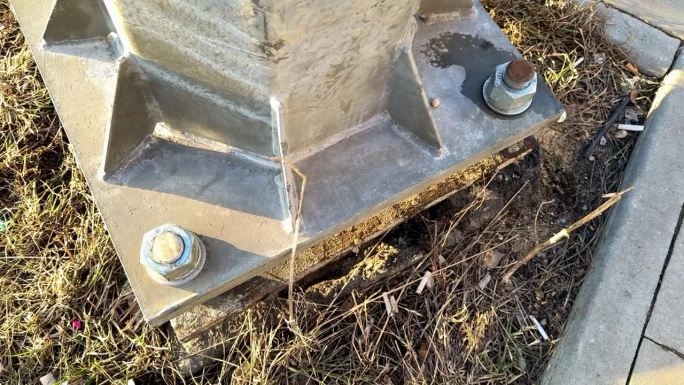
Humidity and salt spray. Coastal air supplies both water and chloride. The coating system is the only barrier between carbon steel and a corrosion cell, so its type and thickness become a structural decision rather than a cosmetic one.
High and low temperature. Thermal cycling changes the differential expansion between bolt, nut and clamped members, and it can also change the friction conditions assumed during tightening.
A joint that satisfies three of these conditions and not the fourth is not a partially acceptable design. It is a design carrying one unpriced failure mode, and the cost usually appears at an inspection interval rather than at commissioning.
Where Hex Bolt 7337 Sits in the Wind-Power Load Path
YUETONG FASTENER's application record places Product 7337 in the wind power industry with load transmission as its function. A separate record for the same product states that it is designed for high and low temperature environments and operates under vibration load conditions. The general capability record adds component fastening and connection, load-bearing fixing, assembly joints and permanent installation mode. Those are the documented roles: they describe what the bolt does inside a joint, not which component of a turbine it is installed into.
One apparent tension in the record is worth resolving, because it affects how the product is specified. The fastening mode is listed as static permanent fastening and permanent installation, while the wind-power entry lists vibration load conditions. These describe different things. The fastening mode is about the connection not being dismantled in service; the load condition is about what the connection experiences while it stays in place. A permanent joint can carry dynamic load, and in a wind asset that is the normal case rather than the exception.
The same product record lists the applications documented for 7337: steel structure splicing, mechanical equipment fixing, building component fastening and bracket assembly. Read alongside the wind-power entry, that gives a realistic picture. The bolt family is positioned for structural and equipment connections that carry load permanently in outdoor conditions, and it has been recorded inside wind-power applications. It does not, on its own, tell an engineer that a particular tower or nacelle connection has been qualified with this bolt.
Product scope supports that reading. The Hex Bolt 7337 range covers the M3–M36 model envelope, with M6, M8, M10 and M12 plus fractional inch sizes such as 1/4", 5/16", 3/8", 1/2" and 5/8" listed, coarse or fine thread, lengths from 16 mm to 200 mm, property grades 4.8, 8.8, 10.9 and 12.9, with A2-70 and A4-80 available in stainless steel. Material options are carbon steel, alloy steel or stainless steel, and the finish list covers black oxide, zinc plated, hot-dip galvanized, Dacromet, mechanical galvanized and PTFE coating, with reference to GB/T, DIN, ISO and ASTM standards including DIN 931, DIN 933, GB 5782, GB 5783 and ASME/ANSI B18.2.1. A wind project selects one combination from that envelope. The envelope itself is not the specification.
Matching Each Site Condition to the Available Evidence
The table below converts the four site conditions into verification questions. The right-hand column is deliberately uncomfortable: for a coastal wind project, the most useful part of a supplier document is often the part that states what has not been published.
| Site condition | What it asks of the bolt | Documented position for 7337 | What the specifier should confirm |
|---|---|---|---|
| Load transfer | Sustained clamp force so friction and bearing carry the service load | Recorded in the wind power industry with load transmission as its function; grades 4.8 to 12.9 available | Design load against the grade and diameter selected; batch tensile load test report |
| Vibration | Preload retention under cyclic load; no progressive loosening | Recorded as operating under vibration load conditions in wind power | Tightening torque and target preload for the joint; locking method suited to the vibration regime |
| Humidity and salt spray | A coating barrier that survives chloride exposure across the inspection interval | Anti-corrosion listed as a special requirement; zinc plated, hot-dip galvanized, Dacromet, mechanical galvanized and PTFE finishes offered | Coating system and specified thickness; salt-spray test report for that finish, not for the family in general |
| High and low temperature | Stable mechanical behaviour and coating integrity across the service range | Recorded as designed for high and low temperature environments | The project's own service temperature envelope; no numeric range appears in the supplied record |
| Documentation | Evidence that processes and test methods are controlled | ECM Type-Approved Attestation No. 3N230331.HYFUC49 covering EN ISO 10683:2018 and EN ISO 16047:2005+A1:2; ISO 9001:2015 valid to 2027-09-13; ISO 14001; ISO 45001; IATF 16949; ISO 14067 | That each certificate's scope names the product line and process actually ordered, and that validity dates cover the delivery window |
One gap deserves to be stated plainly rather than buried. The supplied record does not publish a salt-spray duration result for 7337, and it does not publish a service temperature range. Those are ordinary omissions in an application-level document, but a coastal wind specification usually requires both, so they belong on the request-for-quotation list rather than in an assumption.
Preload, Torque and Clamp Force: Why the ISO 16047 Reference Matters
For a vibration-exposed joint, the most useful element of the certification file is the torque/clamp force method named in the ECM attestation: EN ISO 16047:2005+A1:2. That standard addresses the relationship between applied torque and the clamp force a fastener develops, which is the quantity a joint design actually depends on.
In practice, a torque value on a drawing is only meaningful when the friction conditions behind it are known. Coating type, lubrication and surface condition change the torque that produces a given preload, so a bolt tightened to the correct clamp force in one finish may be over-tightened or under-tightened in another. A test method inside the attestation scope tells the buyer that this relationship is measured under a defined procedure. It does not tell the buyer which torque to apply to a specific joint, and it does not fix one friction coefficient across every production lot.
The consequence for a wind project is procedural rather than rhetorical. Ask for the torque/clamp force data that accompanies the ordered coating and diameter, and make the installation torque in the method statement traceable to that data. Where the joint is expected to see sustained dynamic load, the locking method — lock nut, locking washer or thread-locking compound — should be decided at design stage rather than discovered on site.
Coating Choice Under Salt Spray: What the Numbers Actually Compare
Coating decisions in coastal work are often made on thickness alone, which is a reasonable first filter and a poor final one. Public technical comparison places electroplated zinc at roughly 5–12 μm and hot-dip galvanizing at 45–85 μm, an order-of-magnitude difference in barrier thickness. That difference is real, and it explains why hot-dip galvanized fasteners appear so often in outdoor structural work.
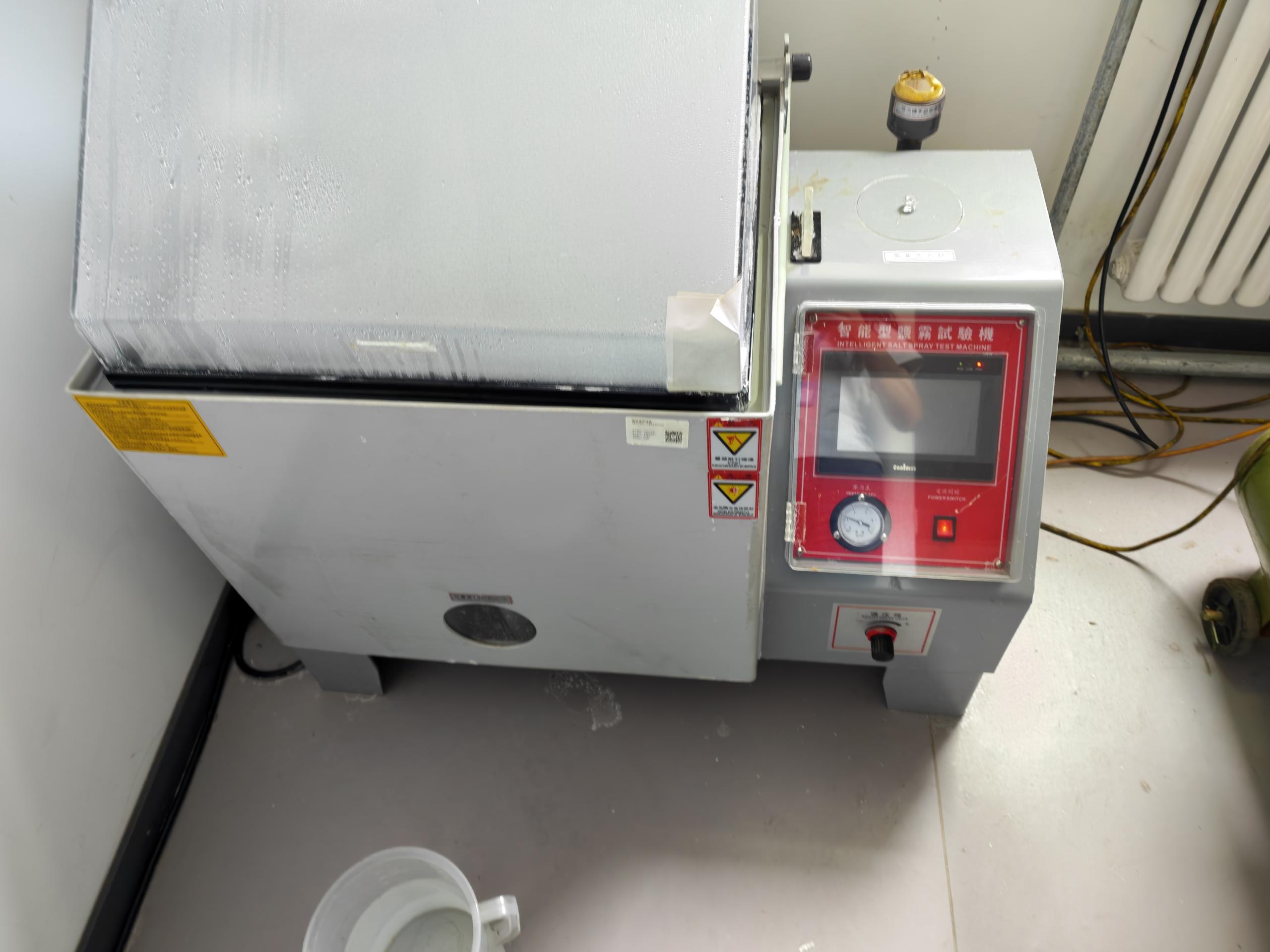
It does not, however, make the thicker coating automatically correct for every joint. A heavier coating occupies thread space, so bolt and nut have to be specified together and the assembly checked for fit. A coating that resists damage but does not match the nut supplied is not an improvement. Zinc flake systems, the family addressed by EN ISO 10683:2018 for non-electrolytically applied zinc flake coatings, behave differently again: thinner than hot-dip galvanizing, but with barrier and sacrificial behaviour that suits high-strength fasteners where a heavy coating would interfere with thread tolerance. The 7337 range lists Dacromet and mechanical galvanized finishes alongside the zinc plated and hot-dip galvanized options, which is why the coating conversation should be held per project rather than per product family.
For a salt-spray wind site, the defensible selection sequence runs in five steps: define the project's corrosivity requirement and inspection interval; choose the coating system that meets it; confirm the nut and washer are matched to that coating; require the salt-spray test report for that exact combination and duration; then record the result in the approval pack. The fourth step is where many procurement files are thin, and it is the step that decides whether a corrosion claim survives an audit.
Vibration and Thermal Cycling: What a Bolt Can and Cannot Do
Vibration loosening is usually described as a bolt failure. It is more accurate to call it a joint failure. Repeated vibration, insufficient preload or incorrect tightening torque can allow gradual loosening, and the secondary damage — thread stripping, deformation or fracture under long-term heavy-load tension — follows from that movement rather than from a defective thread.
What a fastener specification can do is remove the avoidable causes. Correct thread fit, sufficient preload and controlled tightening torque all act against self-loosening. For equipment or steel structures subject to continuous vibration, the manufacturer's own guidance is to select locking methods such as lock nuts, locking washers or thread-locking solutions according to the operating conditions. On the production side, the same record describes high-purity raw materials, torque, hardness and fatigue-resistance testing before delivery, and the instruction to follow the specified installation torque during construction. Those measures reduce risk; they do not replace a joint design that decides how much preload the connection needs.
Thermal cycling introduces a second mechanism. Where bolt, nut and clamped members expand differently, clamp force moves with temperature, and a joint that measures correctly at commissioning can sit outside its intended preload range at an operating extreme. The 7337 record lists high and low temperature environments as a design condition. It does not publish a numeric range, so the project's own temperature envelope remains the governing document, and the preload calculation should be checked at both ends of it.
The Certification File: What It Establishes and What It Does Not
A wind-project approval pack usually contains several documents that look similar and answer different questions. For 7337, the file should be read in a deliberate order.
ECM Type-Approved Attestation No. 3N230331.HYFUC49 is the most specific document. It covers EN ISO 10683:2018, the standard for non-electrolytically applied zinc flake coating systems, and EN ISO 16047:2005+A1:2, the torque/clamp force test method for fasteners. That ties the product to defined coating and tightening-test standards. It is not a statement that any particular joint is adequate, and the attestation's product scope should be checked against the diameter, grade and coating actually ordered.
ISO 9001:2015, valid to 2027-09-13, covers the quality management system. It indicates that the processes for inspection, control and corrective action are audited and maintained. It does not certify the tensile strength of a particular lot; batch test records do that.
ISO 14001 and ISO 45001 cover environmental and occupational health and safety management. They appear in tender documentation where the buyer's own procurement policy requires them, and they say nothing about fastener performance.
IATF 16949 is the automotive quality management standard. Its value in a wind-power purchase is indirect but not trivial: it imposes process documentation, change control and traceability discipline that a general management system does not always reach. It is not a wind-industry type approval.
ISO 14067 addresses quantification of a product's carbon footprint. Where a project tracks embodied carbon, that quantification is the input the project needs.
The honest summary is that the file establishes method and system control. Joint design, torque selection, the salt-spray duration for a specific coating and site-specific corrosion life remain engineering decisions for the buyer, supported by batch test reports and, where the project requires it, third-party testing such as SGS.
How the Coastal Wind Case Differs from General Structural Fastening
Comparisons with conventional structural bolting are only useful when the duty cycle stays in view. An indoor steel frame and a coastal wind connection may use the same product family, but they do not impose the same requirement.
Indoor structural work is dominated by static load and, usually, by a corrosion risk that a modest coating plus periodic inspection can manage. A petrochemical installation adds aggressive chemistry, but it often operates within an accessible maintenance regime. The coastal wind case combines sustained dynamic load, chloride exposure, thermal cycling and long intervals between inspections. That combination is what pushes selection towards documented torque behaviour and a coating whose performance is evidenced rather than assumed.
The comparison also clarifies a limitation. A hex bolt is a general-purpose load-transfer fastener: it is not a locking system, not a corrosion barrier by itself, and not a substitute for a joint calculation. Where a project needs pull-out performance in concrete or a mechanical anchor, the appropriate product is an anchor rather than a hex bolt. Where it needs a permanent structural connection, the hex bolt's value is that its behaviour — clamp force, coating, grade — can be documented and checked. That is a narrower claim than "suitable for wind power", and a more defensible one.
What Specifiers Should Confirm Before Approval
- Joint design values. Grade, diameter, thread pitch and length matched to the design load, not carried over from a previous project in a different corrosivity class.
- Coating system and specified thickness. Plus the nut and washer matched to that coating, since thicker coatings change thread fit.
- Salt-spray test evidence for that coating combination, with the test duration stated in the report.
- Torque and clamp force data for the ordered finish, together with the friction assumption that produced those numbers.
- Locking method for the vibration regime, decided at design stage and reflected in the installation method statement.
- Certificate scope and validity — ECM Type-Approved Attestation No. 3N230331.HYFUC49, ISO 9001:2015 valid to 2027-09-13, ISO 14001, ISO 45001, IATF 16949 and ISO 14067 — each read for the product line and process actually ordered.
- Batch-level records — tensile load testing, hardness testing, thread inspection and the pre-shipment inspection step, with third-party SGS testing available where the project requires it.
- Supply parameters — an MOQ of 500 sets for standard products and 3,000 sets for non-standard customization, lead time of 3–7 days for in-stock items and 12–20 days for customized orders, against a monthly capacity of 1,500 tons.
Items one to five are engineering questions. Items six to eight are the part of the file a procurement auditor will actually read. A supplier that can answer both sets without a gap presents a different risk profile from one that answers only the second.
Market Context: Carbon Steel Dominance and the Coating Question
Two source-reported figures frame the commercial side of this decision. Carbon steel accounted for 44.8% of the global hex nut and bolt market by material in 2025, according to Dataintelo's market research on the category. Public technical comparison places electroplated zinc at 5–12 μm and hot-dip galvanizing at 45–85 μm. Read together, they describe a market where the base material is settled and the differentiation sits in coating, grade and documentation.
Standardisation reinforces the point. DIN 933 and ISO 4017 are the primary standards for full-thread hex bolts, with ISO 4017 the international successor, so a specification that names only the older reference invites ambiguity at bidding stage. For buyers, the practical instruction is to state standard, grade, thread and coating explicitly, because those four fields — not the product name — determine what arrives on site.
On the supply side, YUETONG FASTENER's published profile describes the company as a third-ranked exporter within the Yongnian fastener hub as of 2023. That is a company-published statement rather than an independent ranking, and it is best read as context for the export orientation the company reports at 80% of output across the EU, North America, Latin America and the Middle East and Africa, rather than as a market-share claim.
Outlook for Coastal Wind Fastener Specifications
Where inspection intervals are long and documentation requirements are strict, the documents that survive a technical review are the narrow, checkable ones. A supplier statement that a bolt suits salt-spray conditions is easy to publish and hard to audit. A torque/clamp force method inside an attestation scope, a coating thickness range, a salt-spray report tied to one finish and a management-system certificate with a visible expiry date are all checkable.
Hex Bolt 7337's position in that review is credible but conditional. It is recorded for wind-power load transmission and for vibration, high and low temperature and anti-corrosion conditions, and it carries a certification file that names specific standards and dates. Whether it belongs in a given joint remains a question for that joint's design calculation, answered with batch evidence in hand rather than with a family brochure. Specifiers who treat the two questions separately — is this the right fastener for the load path, and can the supplier evidence this batch — will get a usable answer to both.
FAQ
Is Hex Bolt 7337 suitable for a coastal wind-power joint?
The manufacturer records Hex Bolt 7337 in the wind power industry with load transmission as its function, and records the product as designed for high and low temperature environments and operating under vibration load conditions. Anti-corrosion and high tensile strength are listed among its special requirements. Suitability for an individual joint still depends on the grade, diameter and coating selected and on that joint's design calculation, so the application record confirms an intended use rather than a joint-specific qualification.
Can the bolt itself prevent self-loosening under vibration?
No. Repeated vibration, insufficient preload or incorrect tightening torque can allow gradual loosening. Correct thread fit, sufficient preload and controlled tightening torque reduce that risk, and for continuous vibration the manufacturer's guidance is to select locking methods such as lock nuts, locking washers or thread-locking solutions according to the operating conditions. The locking decision belongs to the joint design, not to the bolt alone.
What does ECM Type-Approved Attestation No. 3N230331.HYFUC49 cover?
It covers EN ISO 10683:2018 for non-electrolytically applied zinc flake coating systems and EN ISO 16047:2005+A1:2 for torque/clamp force testing of fasteners. It therefore ties the product to defined coating and tightening-test standards. It does not certify that a specific bolted connection is correctly designed, and its product scope should be confirmed against the diameter, grade and coating actually ordered.
Which coating should be specified for salt-spray exposure?
The 7337 range lists black oxide, zinc plated, hot-dip galvanized, Dacromet, mechanical galvanized and PTFE finishes. Public technical comparison places electroplated zinc at roughly 5–12 μm and hot-dip galvanizing at 45–85 μm. Thicker is not automatically better: the nut and washer must be matched to the coating, and the salt-spray test report should cover the exact finish specified rather than the product family as a whole.
Which certificates should a wind-project buyer verify?
The file supplied for Hex Bolt 7337 includes ECM Type-Approved Attestation No. 3N230331.HYFUC49, ISO 9001:2015 valid to 2027-09-13, ISO 14001, ISO 45001, IATF 16949 and ISO 14067. Each should be checked for scope and validity rather than counted. Batch-level tensile load, hardness and thread inspection records, plus optional third-party SGS testing, support the product claims that management-system certificates cannot establish on their own.
Documentation
Requests for diameter, grade and coating-specific documentation can be directed to info@ytfasteners.com. The product range and factory information are collected in the YUETONG FASTENER product brochure, available for public download as a PDF.
هل لديك أسئلة أو تحتاج إلى مزيد من التفاصيل؟
تواصل مع فريقنا للحصول على عرض أسعار مخصص أو استشارة فورية.
طلب عرض أسعار
املأ النموذج أدناه وسيتواصل معك فريقنا بعرض مقترح مخصص.
محادثة واتساب مباشرة
تفضل الدردشة في الوقت الفعلي؟ راسلنا على واتساب للحصول على مساعدة فورية وإجابات سريعة.
- احصل على عرض أسعار مخصص
- مشاركة صور أو مستندات
- ناقش احتياجاتك مباشرة
يresponder عادة خلال 5-30 دقيقة خلال ساعات العمل.