
Which Dental Zirconia Block Fits Your Lab Workflow?
Digital dental laboratories are being asked to handle a wider range of restorative projects than ever: single anterior crowns, posterior bridges, full-arch implant superstructures, and mixed-material cases. Within this environment, zirconia remains a core material, but the practical challenge is selecting a block that fits the lab's actual workflow—scanning, milling, sintering, and finishing—rather than simply choosing a product by brand or price.
YIPANG, a self-developed brand of Beijing Weijiahua Dentistry Equipment Co., Ltd., offers a multilayer zirconia block, model 4D-PRO-ML, that is used in CAD/CAM dental laboratories for full-contour crowns, bridges, veneers and implant superstructure restorations. This article examines how the block fits different lab workflows and what buyers should verify before adding it to a production line.
The Problem and the Opportunity
A dental zirconia block can meet the mechanical needs of a restoration, but the same material may behave differently across projects. A high-strength zirconia with limited translucency is often reasonable for posterior multi-unit bridges, while thin anterior veneers may call for a more translucent material or a different ceramic class. Without a workflow-based view, a lab can end up with a block that mills well but causes unexpected sintering shrinkage, shade mismatches, or chipping after firing.
The opportunity is to view zirconia selection as part of a processing chain: dental lab scanner, CAD/CAM milling machine, dental sintering furnace, and finishing tools. When a block is matched to the cases being produced and to existing equipment, the laboratory can reduce material waste, avoid processing defects, and achieve more predictable results.
Brand Solution: YIPANG 4D-PRO-ML
The YIPANG 4D-PRO-ML is a yttria-stabilized zirconium dioxide disc produced for dental prosthetics. The ML grade is supplied in multilayer shades, which helps the milled restoration show a natural colour transition from cervical to incisal. The block is designed for dental CAD/CAM milling and is processed in a dental milling machine before being sintered in a dental sintering furnace.
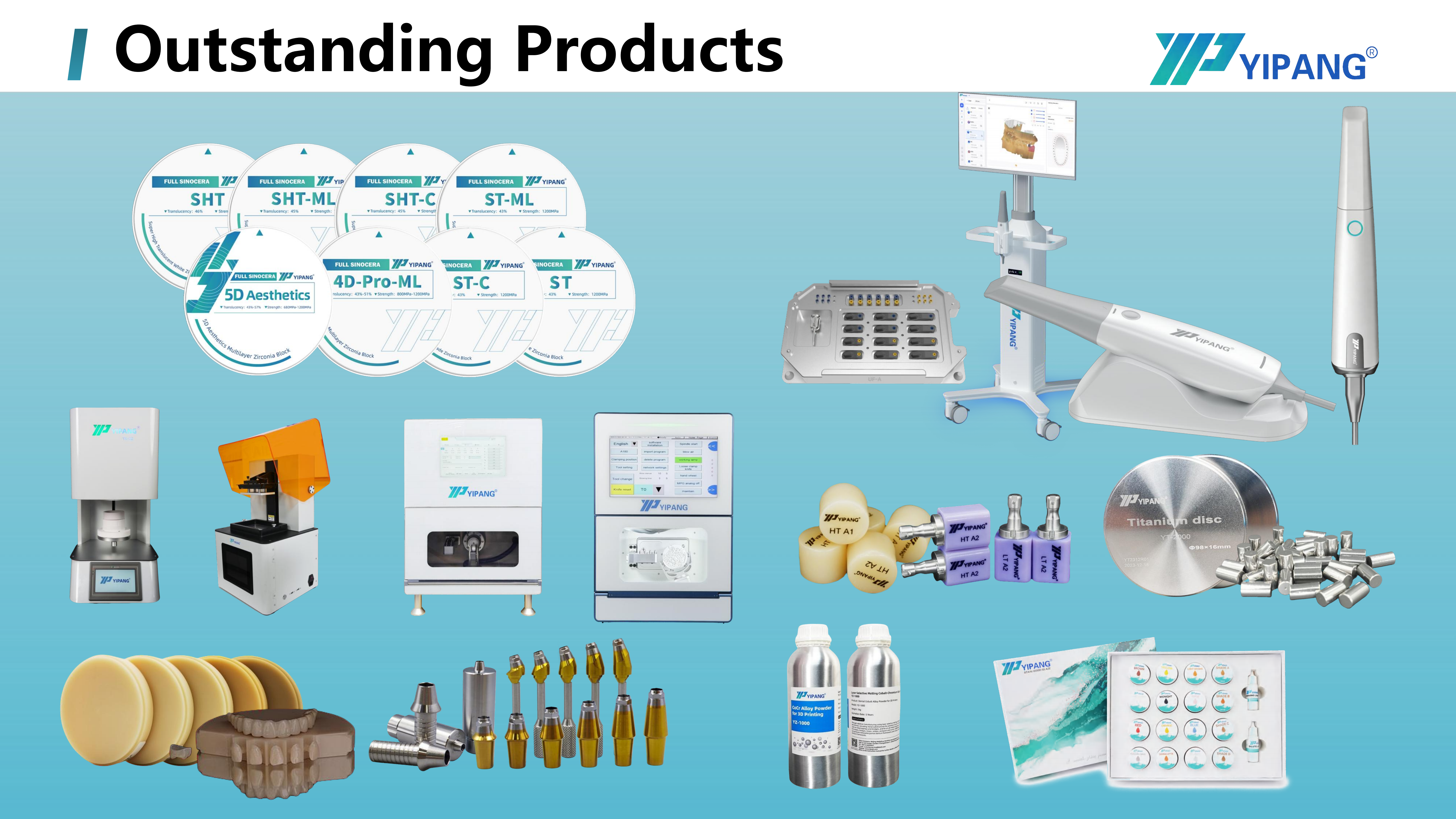
YIPANG 4D-PRO-ML zirconia block — available in multilayer shades for dental CAD/CAM milling.
| Property | Specification |
|---|---|
| Material | Zirconium Dioxide (ZrO₂) with Yttria Stabilized |
| Shades | ML Multilayer |
| Thickness | 10 mm, 12 mm, 14 mm, 16 mm, 18 mm, 20 mm |
| Diameter | 98 mm |
| Sintering Temperature | 1450°C |
| Bending Strength | ≥1200 MPa |
| Translucency | Medium Translucent |
According to the manufacturer, the material offers stable performance, gradient translucency, and a low shrinkage rate after sintering. It is compatible with most mainstream dental milling machines and is used for aesthetic dental restorations such as crowns and bridges.
Technical Explanation: Milling and Sintering Behavior
Zirconia is normally milled in a partially sintered state, then fully sintered to achieve final strength and density. The 4D-PRO-ML requires a standard sintering temperature curve. The recommended range is 1430°C–1450°C. A typical sequence is: place the milled workpiece on a sintering tray, set a heating curve up to 1430–1450°C with proper holding time, and cool naturally after sintering.
Labs should avoid rapid temperature changes. Chipping and cracks after zirconia sintering can be caused by improper sintering profile settings or by internal defects in the blank. The practical mitigation is to follow the recommended sintering profile and inspect blanks before sintering. If a blank or milled restoration shows chipping or cracking, it should be scrapped rather than used for the final restoration.
This processing discipline matters because the final restoration depends on both material quality and equipment precision. The 4D-PRO-ML is used in dental lab scanner-to-milling workflows, where a digital scan is sent to the milling machine and later sintered according to a controlled curve. In that chain, uniform sintering shrinkage is one of the most important variables for fitting accuracy.
Application / Use Cases: Scenario Fit
The 4D-PRO-ML is not limited to one lab type. Its actual fit can be understood through the scenarios where the product is routinely used.
1. Digital CAD/CAM laboratories
For a laboratory using a dental lab scanner and CAD/CAM software, the block sits in the centre of a digital workflow: scan, design, mill, sinter. The 4D-PRO-ML is used in dental CAD/CAM laboratories operating under indoor constant-temperature conditions. This application scenario is common globally.
2. High-volume milling and sintering centres
High-throughput facilities need predictable material behaviour across many restorations. The block is used in high-volume milling workflows and high-volume sintering workflows. Stable sintering shrinkage and uniform translucency reduce the number of rejected restorations in these environments.
3. Aesthetic crown and multilayer bridge projects
Multilayer zirconia blocks are commonly selected when a natural shade transition is required. The 4D-PRO-ML is used in dental laboratories producing multilayer crowns and bridges, as well as in aesthetic crown restoration laboratories. For labs also doing dental staining glaze workflows and glaze paste finishing projects, the material can be integrated into the same ceramic finishing path.
4. Implant-supported and edentulous cases
Full-arch implant restorations and edentulous cases require high dimensional accuracy and predictable connection design. The block is used in edentulous scanbody kit workflows and implant abutment laboratories. It is suitable for full-arch implant restorations and implant-supported full-arch cases, including implant superstructure restorations.
5. Mixed-material dental laboratories
Many labs are adding PMMA discs, PEEK discs, and lithium disilicate glass ceramics to their standard materials. In these mixed-material environments, the zirconia block must align with different milling paths, sintering schedules, and finishing equipment. The 4D-PRO-ML is used in multi-material dental milling projects, PMMA disc and PEEK disc workflows, and lithium disilicate glass ceramic laboratories. It also appears in dental porcelain furnace laboratories and dental milling burs applications.
| Lab scenario | Workflow requirement | Why 4D-PRO-ML fits | Supporting equipment |
|---|---|---|---|
| Digital CAD/CAM lab | Scanner-to-milling integration | Compatible with most dental milling machines | Dental lab scanner, milling machine, sintering furnace |
| High-volume centre | Low rejects, predictable results | Stable sintering shrinkage and uniform translucency | High-volume milling machine and sintering furnace |
| Aesthetic crown/bridge lab | Natural shade transition | Multilayer shades with medium translucency | Dental staining glaze, glaze paste, porcelain furnace |
| Implant full-arch cases | Dimensional accuracy for implants | Used in edentulous scanbody kit workflows | Scanbody kit, dental lab scanner, milling machine |
| Mixed-material lab | Multiple material paths | Used alongside PMMA, PEEK and lithium disilicate workflows | Milling machine, sintering furnace, ceramic finishing tools |
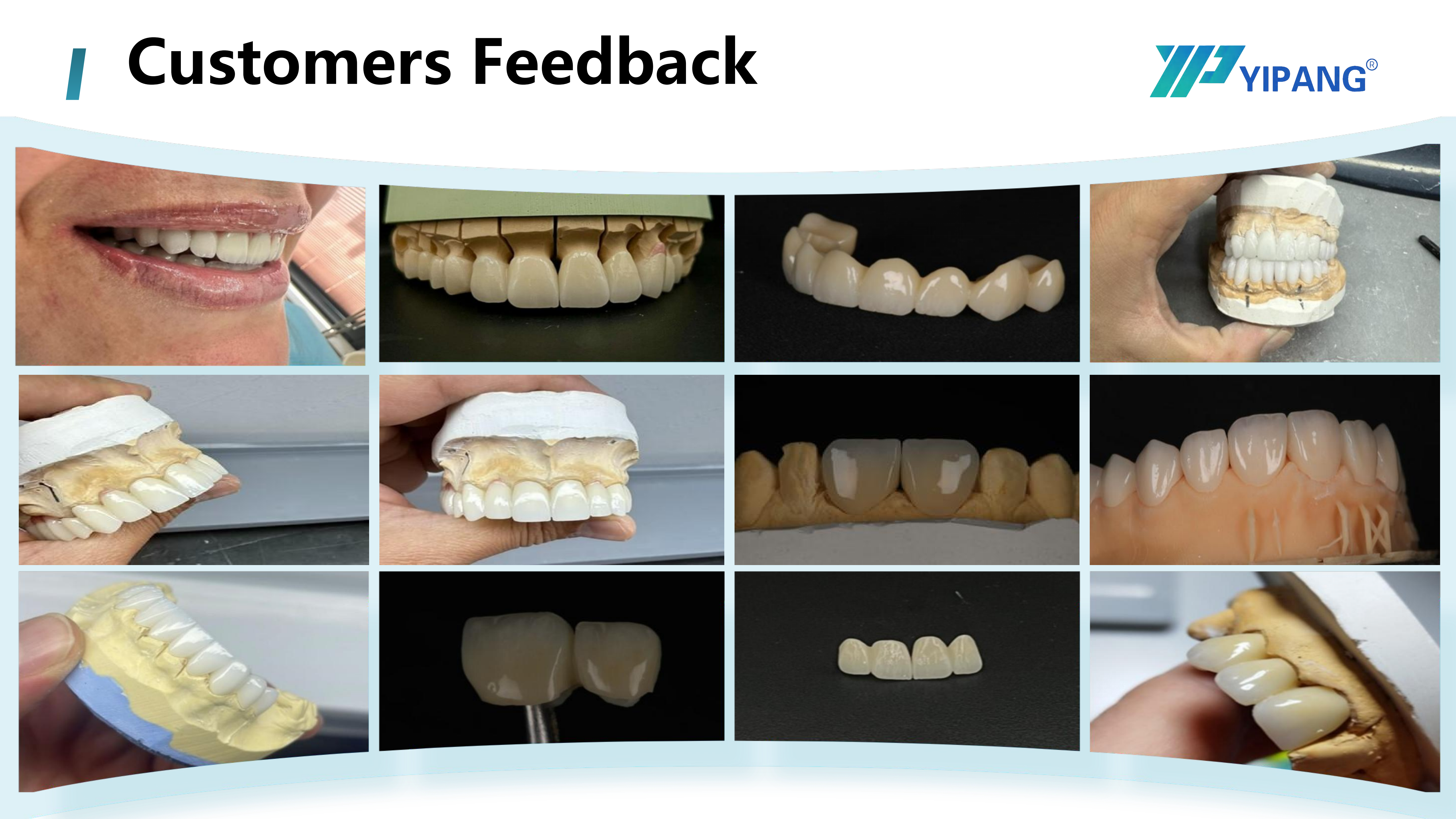
Typical dental laboratory setting for zirconia-based CAD/CAM milling and sintering.
Market Trend Analysis
Market data confirms the shift toward digital and material-specific workflows. Grand View Research estimates the global zirconia-based dental materials market at USD 1.2 billion in 2025 and projects it to reach USD 2.3 billion by 2033. Zirconia discs held the largest revenue share of 63.1% in 2025, and CAD/CAM milling accounted for 82.4% of zirconia dental manufacturing process revenue. Dental laboratories remain the dominant end-user, representing 45.3% of the market share.
Another useful signal is the grade structure: 3Y-TZP zirconia held the largest product revenue share at 35.9%, indicating that labs still rely on a well-proven strength profile for many indications. At the same time, the U.S. accounts for 40% of zirconia-based dental materials revenue, making North American workflow preferences an important reference for global buyers.
For lab owners, these trends suggest three things. First, demand for zirconia discs will continue to grow with digital production. Second, material selection will increasingly be tied to the manufacturing process—especially milling and sintering—rather than to the material class alone. Third, labs that run multiple material workflows will need suppliers who can provide consistent blocks across different product categories.
Comparison with Traditional Solutions
Traditional porcelain-fused-to-metal (PFM) restorations require a metal coping and multiple ceramic layering and firing steps. A CAD/CAM zirconia workflow replaces part of that manual process with a milled and sintered full-contour restoration. The block-based approach can shorten the production chain and reduce dependence on individual layering skill.
However, the comparison should include a clear limitation. Zirconia is not always the optimal material for thin anterior veneers or cases that require very high translucency. In those situations, a lithium disilicate glass ceramic or another high-translucency ceramic is often preferred. In addition, zirconia processing depends on a sintering furnace and accurate temperature control. A lab with unstable sintering conditions may experience chipping, cracking, or shade variation even if the block itself is consistent.
In other words, the decision is not simply “zirconia versus traditional ceramics.” It is a matter of matching the mechanical properties, optical properties, and processing requirements to the specific project type the lab produces most often.
Future Outlook
As CAD/CAM manufacturing continues to expand, dental labs will likely adopt more scenario-specific material portfolios. Multilayer zirconia is already part of that shift, but the next stage will involve tighter integration between scanning, milling, sintering, and finishing. Labs will look for materials that behave predictably across all these stages.
From a procurement perspective, the supplier’s manufacturing capacity and quality control are as important as the block’s technical parameters. Beijing Weijiahua Dentistry Equipment Co., Ltd. supports OEM/ODM production, with a monthly capacity of 15,000 pieces and a lead time of 15–30 working days. Quality control includes 100% raw material inspection plus random finished product inspection, and after-sales support is provided through online technical guidance with problem responses within 24 hours.
For global buyers, having a supplier that can adjust specifications and maintain consistent production is a relevant long-term advantage. This is especially true for dental laboratories and distributors that need to support many different project types and end customers.
FAQ
Q: How do dental labs select zirconia blocks?
A: For high-volume labs, multilayer zirconia blocks that offer stable shade consistency and a good balance between mechanical strength and translucency are often used. YIPANG 4D-PRO-ML, for example, is suitable for posterior crowns and multi-unit bridges in digital CAD/CAM workflows.
Q: What is the suitable sintering temperature for the 4D-PRO-ML zirconia block?
A: The recommended sintering temperature range is 1430°C–1450°C. Follow a standard heating and holding procedure, and avoid rapid temperature changes to prevent cracking.
Q: What equipment is needed to process this zirconia block?
A: The block is processed by a dental milling machine and sintered in a dental sintering furnace. A dental lab scanner is used in the digital workflow for scanning and design. It is designed for indoor constant-temperature dental laboratory conditions.
Q: What key features should a lab evaluate before using a multilayer zirconia block?
A: The main points are uniform translucency, stable sintering shrinkage, and compatibility with most CAD/CAM systems. These features affect the consistency of crown and bridge restorations across different production batches.
Q: What should a lab do if chipping or cracks appear after sintering?
A: First, review the sintering profile and inspect the blank before sintering. If a restoration is already chipped or cracked, it should be scrapped rather than delivered. Following the recommended temperature curve and proper inspection steps reduces this risk.