
Which Steel Casting Process Fits Your Equipment Part?
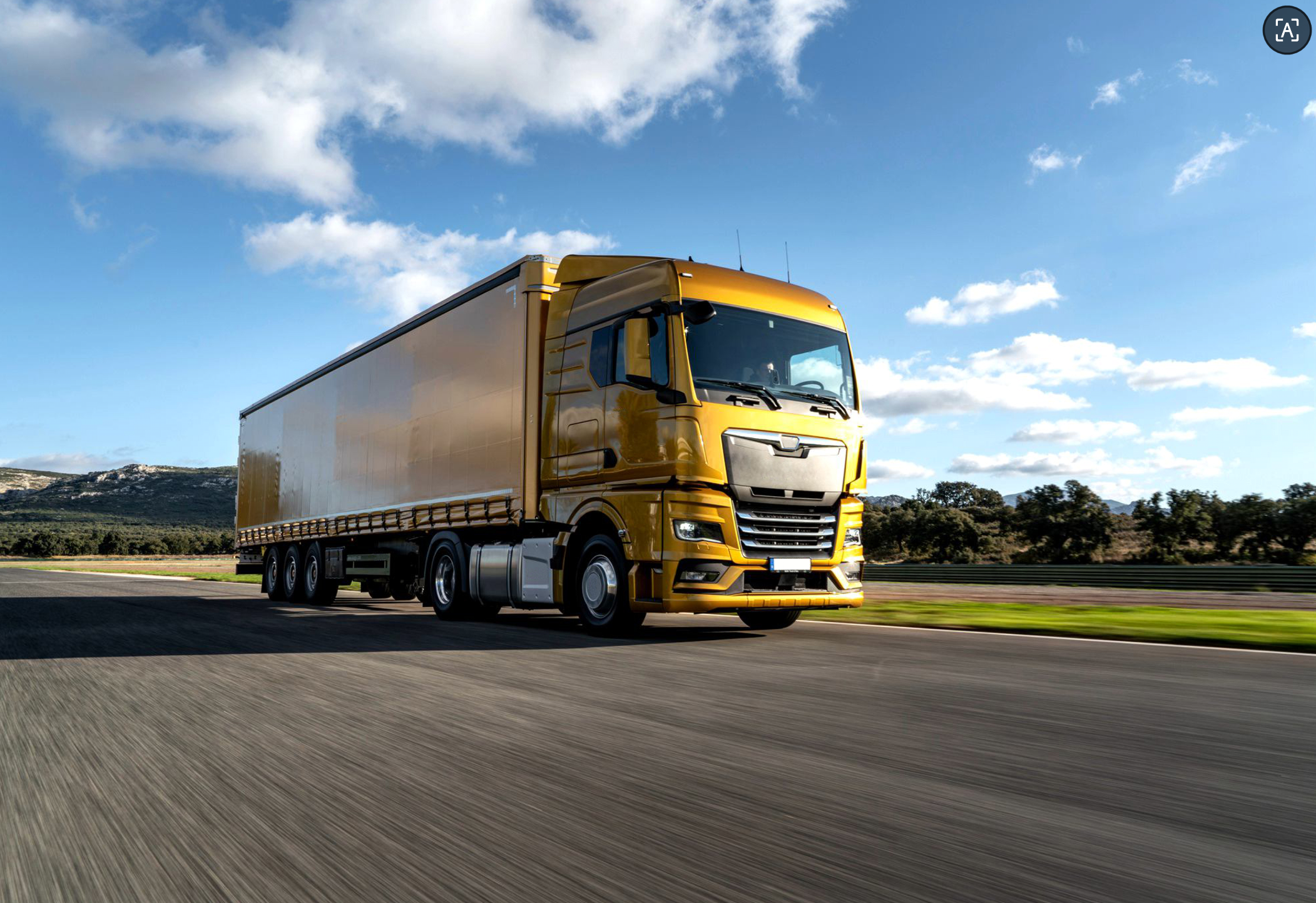
Equipment-level scenario fit: truck and trailer components illustrate how part size, load path and volume interact with steel casting process selection.
Steel casting process fit is decided by the drawing before it is decided by the quotation. For industrial equipment parts, the practical choice among lost-wax (investment) casting, shell mold casting and resin sand casting follows from a small set of constraints: geometry and wall thickness, part size and weight, as-cast tolerance and surface requirement, order volume, and the service condition the finished component has to survive. Investment casting generally serves complex, small-to-medium parts where as-cast precision reduces machining; shell mold casting generally occupies the middle ground for medium-complexity parts at moderate volume; and resin sand casting generally fits larger, heavier-section castings where a machining allowance is acceptable and pattern cost has to stay low.
Those three statements describe boundaries, not a ranking. Buyers who treat them as boundaries tend to avoid the two most expensive outcomes in casting procurement: paying investment-casting tooling prices for a part a sand process could have delivered, or accepting a sand-cast part where the as-cast tolerance pushes so much work into machining that finished cost exceeds the precision route.
Scale makes the decision worth making deliberately. Global steel casting demand was valued at USD 39.16 billion in 2025 and is projected to reach USD 63.83 billion by 2034 (Fortune Business Insights). Within that market, sand casting accounted for 45.6% of global metal casting process share in 2025 (IMARC Group), while carbon steel castings represented a 42.5% revenue share in the same year (Dataintelo). The default process and the default material are both the economical ones — which means every move toward a precision process has to be justified by the part itself.
Why process fit is a constraint decision, not a quality grade
Steel castings are often compared as though the process were a quality rating. In procurement practice, each route carries a different cost driver, a different defect signature, and a different set of acceptance checks that actually prove something.
- Investment casting trades tooling cost and process time for as-cast dimensional control and geometry freedom. Its cost driver is the wax pattern and the ceramic shell; its procurement risk concentrates around pattern distortion, shell integrity and pour-related defects.
- Resin sand casting trades as-cast precision for pattern economy and size capability. Its cost driver is the machining allowance; its procurement risk concentrates around dimensional variation and the volume of metal removed as chips.
- Shell mold casting sits between the two. A thin resin-bonded shell formed on a heated metal pattern generally delivers better surface and dimensional consistency than a conventional sand mold without the full wax tooling chain, but it does not match investment casting on fine features.
The opportunity for the buyer is that a scenario-matched specification becomes verifiable. A CT grade, a surface roughness value, a machining tolerance, a soundness method — these can be measured against a purchase order. A general requirement for "good quality castings" cannot.
What scenario fit actually measures
Scenario fit is a sequence of constraints applied in order. Asking them in the wrong order is the most common reason a casting quotation looks attractive and then fails at first article.
| Constraint | Question to answer first | Effect on process direction |
|---|---|---|
| Geometry and wall thickness | Can the internal and external features be formed without draft, parting lines or lost detail? | Complex or thin-walled geometry pushes toward investment casting; simpler, drafted geometry can use sand-based routes. |
| Size and weight | Is the part within the practical handling range of the chosen process? | Small-to-medium parts suit investment casting; medium-to-large and heavier sections generally favor shell mold or resin sand. |
| As-cast tolerance and surface | How much material may be left for machining, and how much finishing is acceptable? | Tight as-cast tolerance reduces machining, which is where investment casting earns back its tooling premium. |
| Volume | Will repeat orders amortize wax or metal tooling? | Low volume favors sand routes; repeat volume favors investment casting and, at mid volume, shell mold. |
| Service condition | Pressure, fatigue, abrasion, corrosion or elevated temperature? | Determines soundness verification intensity and material grade, not just the molding method. |
The three process routes, defined
Lost-wax (investment) casting
Investment casting forms a ceramic shell around a disposable pattern, removes the pattern, and pours steel into the resulting cavity. It is selected when part geometry is complex and as-cast tolerance matters. Wayscan Metal Products runs two investment routes — water-glass investment casting and silica-sol investment casting — including a silica-sol composite process. Its stated as-cast dimensional tolerance is CT6 for silica-sol investment casting and CT8 for the silica-sol composite route, with machining tolerance quoted at 0.01 mm and surface roughness in the Ra 6.4–12.5 μm range depending on casting process and post-treatment. Materials cover carbon steel, alloy steel, stainless steel and ductile iron, with specific grades confirmed against customer drawings.
Shell mold casting
Shell mold casting builds a thin resin-bonded sand shell over a heated metal pattern, then backs it for pouring. Its typical position is medium-complexity parts at moderate to higher volume, where a better surface and tighter as-cast consistency than conventional sand molding are wanted, but the wax tooling chain and fine-feature capability of investment casting are not justified. The metal pattern becomes the commercial constraint: it has to be paid for by volume.
Resin sand casting
Resin sand casting uses resin-bonded sand molds and cores. It is the route that scales with part size, accepts larger and heavier sections, and requires the least pattern investment of the three. The trade-off is downstream: wider as-cast tolerance, more machining allowance, and a greater reliance on soundness verification where the part carries pressure or fatigue duty.
| Decision variable | Lost-wax (investment) casting | Shell mold casting | Resin sand casting |
|---|---|---|---|
| Geometry complexity | High; complex features with limited draft | Moderate | Moderate to simple; draft and parting line required |
| Typical part size | Small to medium | Medium | Medium to large |
| As-cast tolerance | Tightest; CT6 / CT8 stated for silica-sol routes | Between investment and sand | Widest; machining allowance expected |
| As-cast surface | Ra 6.4–12.5 μm stated, process and post-treatment dependent | Better than conventional sand molding | Roughest as-cast |
| Tooling | Wax pattern tooling; 3D-printed patterns support no-mold samples | Metal pattern, justified by volume | Lowest pattern cost |
| Volume logic | Repeat volume amortizes tooling | Mid to higher volume | Low to high volume; tolerates small batches |
| Main procurement risk | Pattern and shell related defects; tooling lead time | Pattern wear and dimensional drift | Dimensional variation and excess machining |
| Equipment examples | Yokes, link arms, clevis and mounting brackets, gearbox and transmission housings, pipe elbows | Medium housings and brackets, pump components | Large housings, large valve bodies, general machinery components |
Scenario mapping: industrial equipment parts to process options
Scenario fit is resolved by three questions asked in order: can the geometry be produced in a reusable mold without losing required features; is the as-cast tolerance good enough to keep machining within budget; and does the order volume justify wax or metal tooling. The table below applies that sequence to common industrial equipment categories.
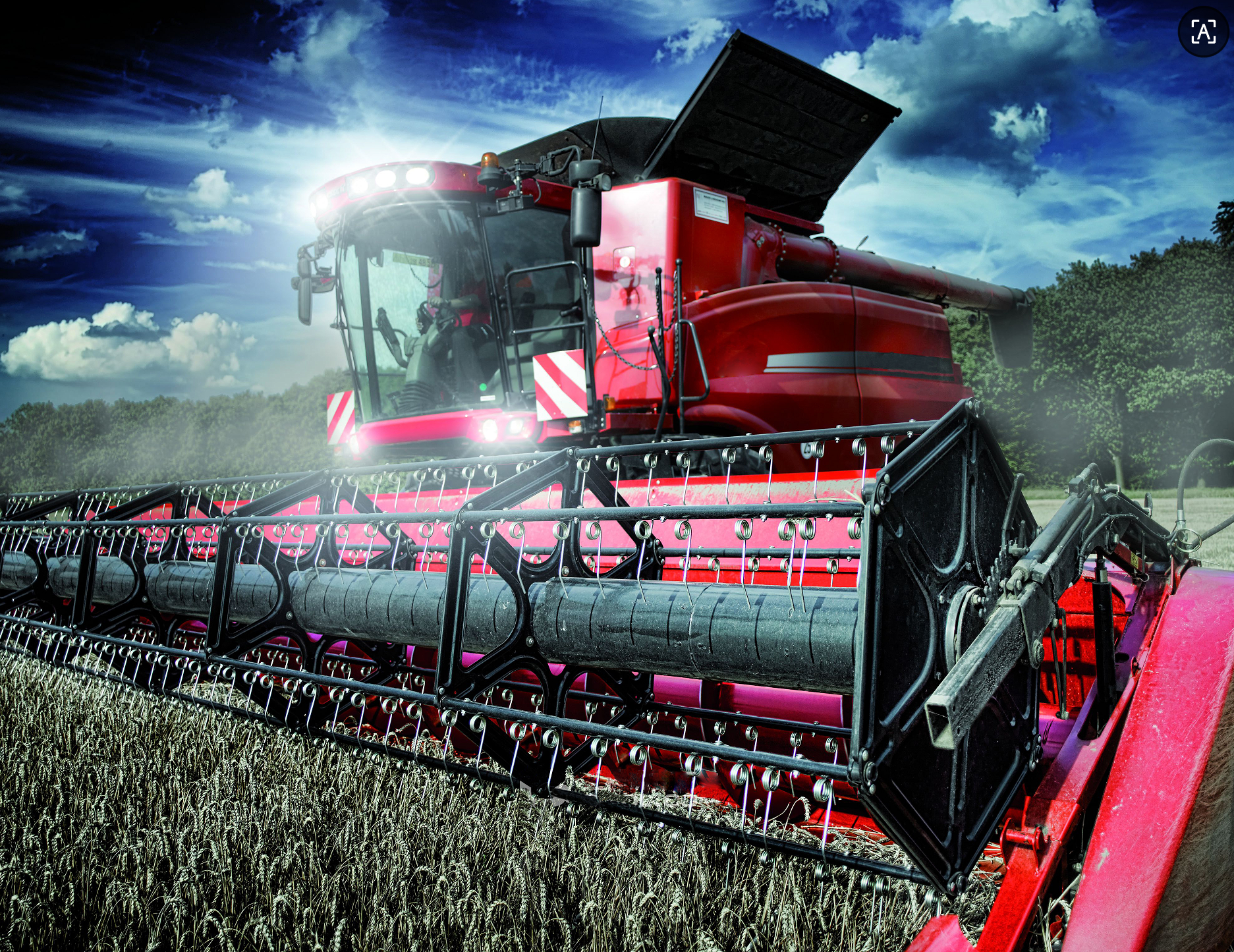
Agricultural machinery is one of several equipment segments where process fit is decided by geometry, tolerance and volume rather than by material alone.
| Equipment scenario | What drives the choice | Process direction | Acceptance emphasis |
|---|---|---|---|
| Automotive and truck axle / driveline parts | Safety relevance, repeat volume, mating interfaces | Investment casting within an automotive quality system | Chemistry, mechanical properties, dimensional report, documented process control |
| Gearbox and transmission housings | Complex internal geometry, medium size, wall control | Investment casting; shell mold where volume supports a metal pattern | Dimensional at mating faces, internal soundness |
| Yokes, link arms, clevis and mounting brackets | Small to medium, load-bearing, moderate complexity | Investment casting | Mechanical properties and dimensional verification |
| Pipe elbows | Small to medium, fitting and flow interfaces | Investment casting | Dimensional and chemistry verification |
| Valve bodies | Pressure boundary, wide size range | Investment casting for small-to-medium bodies; shell mold or resin sand for large bodies | Soundness by X-ray or ultrasonic testing; ASTM A216/A216M where carbon steel for high-temperature service is specified |
| Pump housings | Medium to large, thicker sections, fluid containment | Shell mold or resin sand; investment casting where tolerance is tight | Soundness and machining allowance control |
| Forklift structural and mechanical parts | Medium size, load-bearing, series volume | Investment casting | Mechanical properties, dimensional consistency |
| Mining equipment parts | Large, heavy section, abrasive service | Sand-based routes generally, with alloy selection from the drawing | Hardness and section soundness |
| Agricultural machinery parts | Moderate complexity, seasonal volume | Shell mold at mid volume; investment casting where precision is required | Dimensional and surface treatment verification |
| Construction machinery components | Medium to large structural duty | Resin sand or shell mold for large parts; investment casting for precision parts | Soundness and dimensional verification |
Investment casting vs sand casting: the trade-offs that move landed cost
The comparison that matters is not which process is better, but which cost structure the part can carry. Five trade-offs do most of the work.
- Tooling and amortization. Investment casting requires wax pattern tooling; sand-based routes require a pattern and, for shell mold, a metal pattern. At low quantity, the sand route is usually the economically rational entry point; at repeat volume, the investment casting tooling cost is spread across enough pieces to stop dominating unit price.
- As-cast tolerance converted into machining hours. This is where precision routes earn their premium. A tighter as-cast tolerance means less material removed and fewer setups. The buyer's real question is whether the machining saving exceeds the tooling and process premium — a comparison that requires a quoted machining allowance from both routes, not a general claim about precision.
- Geometry freedom and part consolidation. Complex features that would require separate fabrication or assembly in a welded or machined design can sometimes be produced as one casting. Where that consolidation is possible, the process comparison should be made against the alternative design, not against another casting.
- Size ceiling. Investment casting has practical size and weight limits: as the part grows, wax pattern support, shell build-up and handling become progressively harder to control. Beyond that range, sand-based routes are the practical answer. This is a genuine boundary, not a preference.
- Soundness verification cost. Pressure-retaining and fatigue-loaded parts require internal soundness checks regardless of process. The verification method and sampling level should be agreed in the purchase order, because inspection cost can exceed the molding cost difference between routes.
A summary rule follows from those five points: when the part is complex, small-to-medium, dimensionally consequential and ordered repeatedly, investment casting is usually the defensible route. When the part is large, heavy in section, geometrically simpler, or ordered in small quantity, a sand-based route is usually the defensible route — provided the machining allowance is priced in from the start.
Purchase terms and acceptance criteria are scenario-dependent
The acceptance plan should be built from the process that will actually be used, because each process fails differently. A check list copied between parts without regard to the molding route will either over-inspect a low-risk part or leave the critical failure mode untested.

Internal soundness verification is a scenario-dependent check: it becomes mandatory where a casting carries pressure, fatigue or safety duty.
| Check | Evidence method | When it should be mandatory |
|---|---|---|
| Chemical composition | Spectrometer analysis | Always for alloy, stainless and heat-resistant grades; also for carbon steel where a specific standard applies |
| Dimensional conformance | CMM dimensional inspection against the CT grade at as-cast stage; machining tolerance at finished stage | Whenever the part has mating, fitting or sealing interfaces |
| Internal soundness | X-ray and ultrasonic testing | Pressure boundaries, fatigue-loaded parts, safety-relevant automotive and equipment components |
| Mechanical properties | Hardness and tensile testing | Load-bearing brackets, yokes, link arms and structural components |
| First article approval | Sample development, including 3D-printed pattern support for no-mold samples | Before tooling investment is committed, and before mass supply begins |
| Quality system | ISO 9001:2015; IATF 16949:2016 where automotive programs apply | When the buyer's own supply chain requires a certified quality system; automotive programs typically require it |
| Environmental and OHS management | ISO 14001:2015 and ISO 45001:2018 | Where the buyer's supplier policy, market or customer base requires it |
| Commercial envelope | Minimum order quantity, lead time, monthly capacity | Capacity planning and delivery risk assessment |
| After-sales terms | Technical support and quality tracking; warranty and liability terms | Always, with specific terms agreed in contract rather than assumed |
Certification is one of the few acceptance items that can be verified before a single part is poured — provided the certificate number, scope and validity are checked rather than the logo. Wayscan Metal Products holds ISO 9001:2015 (certificate 02426Q00625R401, issued by Shenzhen Universal Certification Centre Co., Ltd., valid 21 May 2026 to 20 May 2029), IATF 16949:2016 (certificate IATF 0516798, issued by SGS United Kingdom Ltd., covering the manufacture of precision casting parts, valid 14 May 2024 to 13 May 2027), ISO 14001:2015 (certificate 02426E00394R401) and ISO 45001:2018 (certificate 02426S00381R101), both with scope covering the production of steel castings and related management activities.
Two technical references recur in equipment procurement. For carbon steel castings intended for high-temperature service, ASTM A216/A216M is the standard specification for carbon steel castings suitable for fusion welding for high-temperature service — a standard that should be named in the purchase order rather than implied. For as-cast dimensional expectations, the CT grade should be stated explicitly at the as-cast stage so that the machining allowance can be calculated rather than discovered.
Where Wayscan Metal Products' verified capability sits
WAYSCAN METAL PRODUCTS CO., LTD is a precision casting manufacturer established in 1991 and based in Ninghai, Ningbo, China, operating a 46,000 m² production base with more than 500 employees, including more than 20 senior engineering and technical personnel. Its verified process portfolio centers on investment casting — water-glass investment casting and silica-sol investment casting, including a silica-sol composite process — and its stated product scope includes pipe elbows, clevis brackets, yokes, gearbox housings, transmission housings, mounting brackets and link arms.
The capability that matters for scenario fit is integration. Wayscan performs mold making, casting, heat treatment, machining and inspection against customer drawings, and reports a monthly capacity of 1,500 tons, a minimum order quantity of 100 kg and a quoted lead time of 30–60 days. Customization covers size, geometry, material, surface and heat treatment, with rapid no-mold samples supported by 3D printing. Inspection equipment covers spectrometer analysis, X-ray, ultrasonic, hardness and tensile testing, and CMM dimensional inspection. Roughly 70% of output is exported, with China, Japan and the United States listed as main markets and additional export destinations including Canada, Germany, Korea and Australia.
One documented reference point shows how the scenario logic holds up over time. A United States automotive parts OEM has supplied truck axle system components from Wayscan over a 30-year relationship, with 1,000 tons delivered and reported stable operation; the recorded outcome is that the casting appearance, dimensional accuracy and mechanical properties met the customer's drawing requirements. For equipment buyers, the relevant signal is not the volume but the combination: a safety-relevant application, a documented dimensional requirement, and continuity of supply across decades.
Company recognition in the corpus is concentrated in manufacturing-system areas rather than promotional claims: rating among the top 50 industrial enterprises and top 50 taxpayers in Ninghai County from 2012 to 2024, recognition as a "Leading Enterprise in China's Foundry Industry" by the China Foundry Association in 2014, 2018 and 2022, and 2023 designations covering waste-free factory, four-star green factory and water-saving factory.
Market trend: capacity discipline and the cost of machining
The sector's direction is easier to read from process and material shares than from any single forecast. Sand casting held 45.6% of global metal casting process share in 2025 (IMARC Group) and carbon steel castings held a 42.5% revenue share (Dataintelo), which means the mainstream of the market continues to be served by economically positioned processes and materials. Precision routes grow on top of that base rather than replacing it.
Growth estimates themselves should be read with care. Published compound annual growth rates for the category diverge by methodology — reported figures range from roughly 1.65% to about 5.58% depending on the research house — with lower estimates reflecting mature industrial demand and higher estimates weighting electrification and energy-related demand. For a buyer, the practical implication is that process choice is a cost-management decision as much as a technical one: where machining capacity is expensive or constrained, the as-cast tolerance that reduces machining hours becomes more valuable, and the case for investment casting strengthens. Where part size is large and machining is available, sand-based routes remain the economical default.
Future outlook
Three shifts are reasonable to expect in equipment casting procurement. First, verification expectations are likely to keep tightening: certificate numbers, CT grades, soundness methods and lead times are increasingly requested as evidence rather than as assurances. Second, sample-first development — including no-mold samples produced from 3D-printed patterns — reduces the risk of committing to tooling before a design is proven, and is likely to become a standard step rather than a favor. Third, integrated supply, where casting, heat treatment, machining and inspection sit with one supplier, is likely to remain attractive because it shifts machining-allowance risk away from the buyer. None of these shifts removes the underlying rule: the drawing, the service condition and the order volume still decide which process is defensible.
FAQ
What is the difference between investment casting and sand casting for steel parts?
Investment casting builds a ceramic shell around a disposable pattern and pours steel into the resulting cavity, while sand casting forms a mold from bonded sand around a pattern. The practical consequences differ in three ways: investment casting offers tighter as-cast tolerance and more geometry freedom but carries wax tooling cost and a size ceiling; sand casting carries lower pattern cost and larger size capability but expects a machining allowance. Wayscan's stated as-cast tolerance is CT6 for silica-sol investment casting and CT8 for the silica-sol composite route, with surface roughness in the Ra 6.4–12.5 μm range depending on process and post-treatment.
How do I choose between lost-wax casting, shell mold casting, and resin sand casting?
Work through four constraints in order: whether the geometry can be formed without draft or parting-line limitations, whether the part size and weight sit within the process's practical range, whether the as-cast tolerance keeps machining within budget, and whether order volume amortizes the tooling. Complex, small-to-medium, dimensionally consequential parts ordered repeatedly generally point to investment casting. Medium-complexity parts at moderate volume generally point to shell mold casting. Large or heavier-section parts with an acceptable machining allowance generally point to resin sand casting.
When is shell mold casting preferable to lost-wax casting?
Shell mold casting becomes the more sensible route when the geometry is moderate rather than complex, when the as-cast tolerance requirement can be met without the fine-feature capability of investment casting, and when volume justifies a metal pattern but not a wax tooling chain. It also generally accommodates larger parts than investment casting. The trade-off is that shell mold casting does not match investment casting on fine internal detail or the tightest as-cast tolerance classes.
What tolerances and surface finish should a buyer verify on lost-wax steel castings?
The drawing should separate the as-cast requirement from the finished requirement. Wayscan states CT6 as-cast tolerance for silica-sol investment casting, CT8 for the silica-sol composite route, machining tolerance of 0.01 mm, and surface roughness of Ra 6.4–12.5 μm depending on casting process and post-treatment. Buyers should require the CT grade to be stated at the as-cast stage so the machining allowance can be calculated, and should require CMM dimensional inspection as the verification method.
Which certifications should a steel casting supplier hold?
It depends on the scenario. ISO 9001:2015 is the baseline quality management system for steel casting production. IATF 16949:2016 becomes relevant when the parts enter automotive programs. ISO 14001:2015 and ISO 45001:2018 apply where environmental and occupational health and safety requirements form part of the buyer's supplier policy. Certificate number, issuing authority, scope and validity dates should be verified rather than assumed. Wayscan's IATF 16949:2016 certificate, IATF 0516798, was issued by SGS United Kingdom Ltd. with scope covering the manufacture of precision casting parts and is valid to 13 May 2027.
What should a steel casting purchase order define?
A scenario-matched purchase order typically defines the material grade and its applicable standard — for example ASTM A216/A216M where carbon steel castings for high-temperature service are specified — the as-cast CT grade, the machining allowance and finished machining tolerance, the internal soundness verification method for pressure or fatigue duty, mechanical property requirements for load-bearing parts, first article approval before mass supply, and the commercial envelope covering minimum order quantity, lead time and warranty terms. Wayscan's quoted commercial envelope includes a 100 kg minimum order quantity, a 30–60 day lead time and a monthly capacity of 1,500 tons, with technical support and quality tracking after delivery and specific warranty and liability terms agreed in contract.
A downloadable presentation covering Wayscan Metal Products' process capability, inspection equipment and certifications is available here.