
Whole-House Cabinetry Evidence: HOMAG, ±0.1 mm, E0/ENF
Whole-House Cabinetry Evidence: HOMAG, ±0.1 mm, E0/ENF
Whole-house cabinetry is approved on drawings and delivered on machines. Between the signed shop drawing and the installed wall sit panel cutting, edge banding, drilling, material compliance and a chain of inspection records — and that is where a supplier's capability either becomes checkable or stays a claim.
Buyers moving from evaluation into execution rarely need a more impressive factory story. They need to know which records and measurable outputs they can request, re-measure and write into acceptance terms before production starts. This article sets out that evidence for Nantong Jiashi Integrated Home Co., Ltd., a Chinese manufacturer of whole-house custom cabinetry established in 1998: the German HOMAG automated line, a stated ±0.1 mm machining tolerance, 18 mm standard panels inside a 9–25 mm customizable range, and E0/ENF engineered wood. It then connects that evidence to the JS-CUSTOM-004 to 010 range and to the purchasing and acceptance terms a buyer can actually enforce.
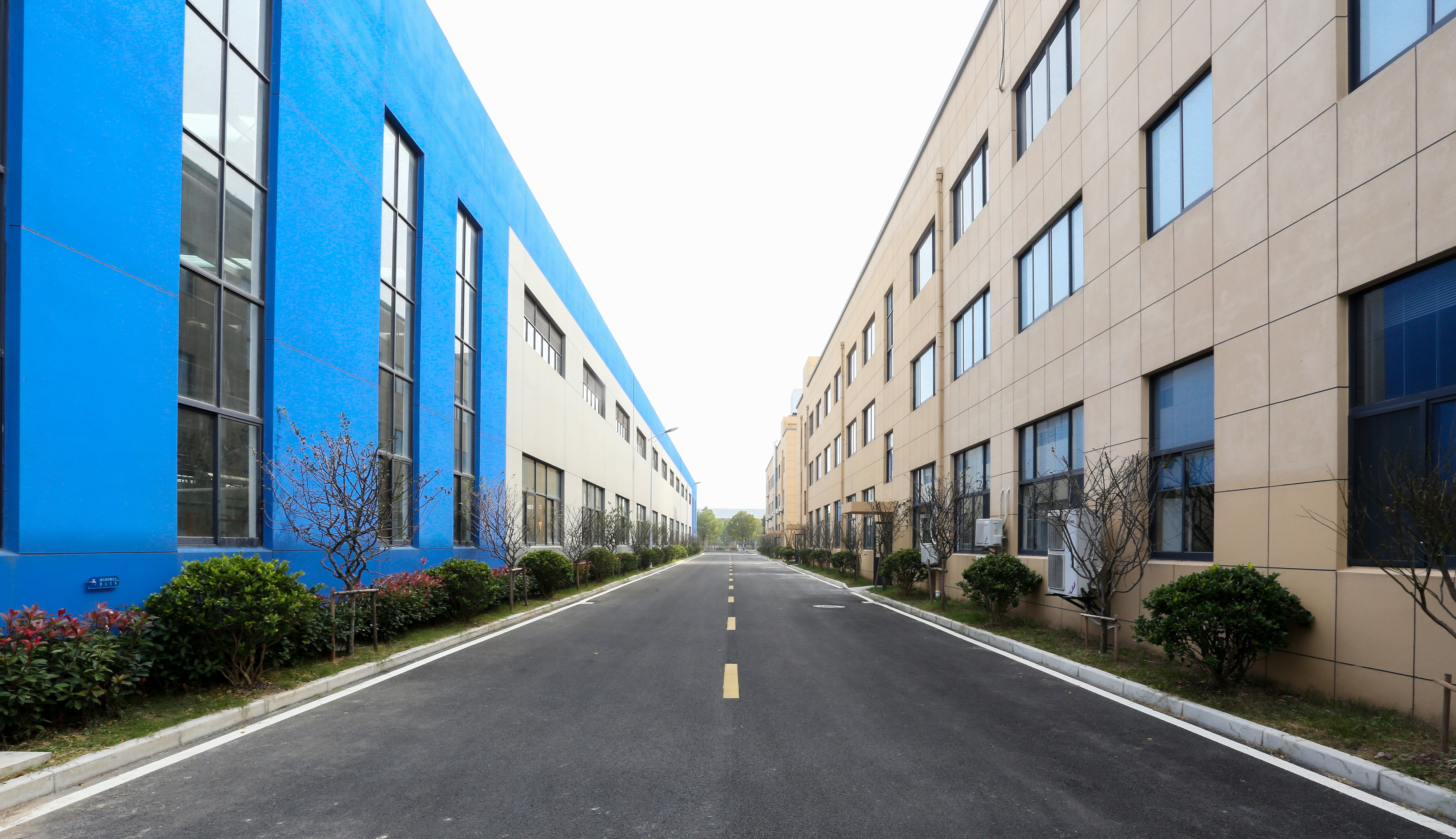
 Aerial view of the manufacturing site: scale is the easiest claim to verify and the least useful on its own.
Why a capability claim needs an evidence trail
A cabinetry order tends to fail at the joints rather than in the brochure. The problems that surface at handover are specific: a drawer front that sits proud because hole positions drifted across a run, a wardrobe carcass that bows because a shelf span was built in thinner board than the specification assumed, or a compliance file that names a board grade but cannot be tied to the batch that arrived on site.
Three evidence classes cover most of that risk:
- Machine evidence — what the parts were produced on, and whether that equipment was actually used for this order.
- Measurement evidence — how a stated tolerance is measured, on which dimension, at which inspection stage, and with what record.
- Material evidence — which board, at which grade, from which batch, supported by documents naming the same board and batch.
Purchasing terms, inspection stages and acceptance criteria are the mechanism that converts those three classes from a conversation into a checkpoint. A supplier that can produce records but has no inspection stage to attach them to leaves the buyer holding paperwork with no leverage behind it.
Nantong Jiashi Integrated Home Co., Ltd., trading as Jiashi, operates a 36,000 m² site and a Nantong facility of more than 20,000 m² completed in 2017, with a stated monthly capacity of 500–20,000 units and a typical lead time of 30–45 days. Those figures describe scale and scheduling; they do not by themselves say anything about the tolerance of a drilled panel. That is why the evidence has to be requested item by item.
What the HOMAG line changes — and what it does not
Jiashi's Nantong facility is equipped with machinery from HOMAG (Germany) and Excitech. The question that matters to a buyer is not the nameplate on the machine but what automated panel processing changes in the parts.
On a conventional batch line, cutting, edge-banding and drilling positions are set and reset by operators between runs. On an automated line the position references come from the machine and the production file, so repeated parts from the same drawing set are produced from the same reference. For a whole-house project this shows up in three concrete ways: identical cabinet boxes across rooms behave the same way on site; edge banding adhesion and trim stay consistent across a run instead of varying with an operator's cycle; and door and drawer fronts drilled from the same file align without re-drilling during installation.
The line does not design the project, correct an inaccurate site survey or certify compliance. Nor does automation guarantee installed alignment, because wall out-of-square, floor level and ceiling variation are site conditions that no machining tolerance controls. Automation should be read as a repeatability mechanism, not as a quality certificate.
The evidence worth requesting here is modest and specific: an equipment list with model identification, a dated production record or photo set tied to the order number, and the production file version that generated the parts. A buyer comparing this process with a conventional workshop should compare the same object — the documented process and its records — rather than the finish of a showroom display.
±0.1 mm: making a tolerance claim measurable
Jiashi states a machining tolerance of ±0.1 mm on the automated line. A tolerance figure becomes useful only when three things are fixed beside it: the dimension it applies to, the method used to measure it, and the point in production where it is checked.
Panel length and width, hole-centre position, groove depth and edge squareness are different dimensions with different tooling implications, and one figure rarely covers all of them. The instrument matters as much as the dimension: a digital caliper, a steel rule and a coordinate measuring routine carry different measurement uncertainty. Ask which dimension the ±0.1 mm refers to, and ask for the first-article inspection report that records measured values for nominated parts.
Why the number earns its place in a purchase order: hole-position deviation is cumulative in effect. Across a run of drawer fronts, a small positional drift appears as inconsistent reveals between fronts, uneven gaps at cabinet joints and hinge adjustment that runs out of range on site. Edge-banded components add a second variable, because band thickness sits on top of the panel dimension.
Where the tolerance claim stops
Machining tolerance is not installed tolerance. A part held to ±0.1 mm can still produce a visible gap if the site survey was taken loosely, the wall is out of square, or the installation sequence closes the room from a single corner. Buyers should keep the two separate in the order: the machining figure as a manufacturing control with a measurement record attached, and the installation figure as an agreed site tolerance with its own acceptance check. Writing one number and expecting it to govern both is where tolerance disputes usually begin.
 Production-line evidence supports a tolerance claim only when it is dated and referenced to the specific order.
Panel thickness: 18 mm standard, 9–25 mm on request
Standard production uses 18 mm engineered wood panels, with a customizable range of 9 mm to 25 mm. The buyer-facing risk is not the range itself but a single global thickness statement applied to components that need different build-ups.
Where thickness decisions actually land:
- Wardrobes and high-capacity storage systems — shelf span and load determine whether 18 mm is adequate or a thicker build-up is needed across long spans.
- Bathroom vanities — wet-zone carcasses and door construction need a specification that accounts for moisture exposure, not panel thickness alone.
- TV and living-room units with sintered stone or stone countertops — the substrate and its support spacing must be coordinated with the countertop fabricator, because the stone adds load and brings its own fixing requirements.
- Floating drawer storage and integrated lighting — where a project specifies floating drawer banks or integrated LED lighting, the cavity, service access and panel thickness interact, and all three should be fixed in the drawing rather than resolved on site.
The practical check is a bill of materials listing thickness per component, signed before production. A single 18 mm line on a quotation does not tell a buyer what the wardrobe shelf, the vanity carcass or the stone-topped base unit will actually be built from.
E0/ENF: turning a grade name into a document chain
E0 and ENF are formaldehyde emission grades for engineered wood. A grade printed on a quotation is a statement of intent; a grade tied to a batch, a test report and a mill test report is evidence. Jiashi states that its wood panels meet E0/FSC and CARB P2/EPA requirements for the relevant destination markets, and that full mill test reports and material compliance certificates are provided before mass production.
Market mapping matters because the documents are not interchangeable. CARB Phase 2, the US regulation commonly cited for cabinetry materials, limits formaldehyde emissions to 0.05 ppm. European and Middle Eastern buyers typically work from E0/E1 emission documentation plus FSC chain-of-custody records, while North American shipments are checked against CARB Phase 2 and EPA TSCA Title VI. A supplier's file has to match the market the goods are entering, not the market the showroom is in.
The document chain to request:
- A board declaration naming the panel type and grade.
- A third-party test report naming that same board and grade, rather than a generic certificate.
- A mill test report covering density, moisture content, bending strength and emission rating for the production batch.
- A batch or lot reference linking the reports to the material actually delivered.
The common failures are a valid certificate attached to the wrong board, and a certificate whose validity period has lapsed. Both are checkable in minutes when the buyer asks for issue and expiry dates alongside the batch reference — and neither is cured by adding another logo to the quotation.
The evidence ledger: claim, artifact, check
The table below converts the main capability statements into the artifact a buyer should hold and the check that keeps the artifact honest.
| Capability claim | Artifact to request | Buyer check |
|---|---|---|
| HOMAG automated production line | Equipment list with model identification, plus a dated production record for the order | Confirm the parts for this order were run on the identified equipment |
| ±0.1 mm machining tolerance | First-article inspection report stating dimension, method, sample and measured values | Re-measure the nominated dimension at final inspection using the same method |
| 18 mm standard, 9–25 mm range | Bill of materials with thickness per component | Spot-check panel thickness at goods-in against the signed BOM |
| E0/ENF engineered wood | Board declaration, third-party test report, mill test report, batch reference | Match the batch or lot code on the delivery to the reports |
| Quality management system | Current ISO 9001 certificate copy with issue and expiry dates | Confirm validity at the shipment date, not the enquiry date |
| OEM/ODM customization | Written specification covering design, dimensions, materials, colours, finishes, hardware, logo and packaging | Sign off a pre-production sample against that specification |
| Capacity and schedule | 500–20,000 units per month; typical lead time 30–45 days | Secure the production slot in writing with the order confirmation |
Binding the evidence to JS-CUSTOM-004 to 010
The JS-CUSTOM range addresses the room categories a whole-house project typically needs: TV, entryway, study, Tatami, bathroom vanity, wardrobe and master bedroom. Which model goes into which room is a project decision recorded in the shop drawing and order schedule — and that schedule is also what binds the tolerance, thickness and compliance evidence to what will actually be installed.
The documented application scope of each model is narrower than the range as a whole, which is why the model reference should appear on every record.
| Model | Documented application scope | Evidence to attach at order stage |
|---|---|---|
| JS-CUSTOM-004 | TV cabinet for residential and commercial custom interior projects | Hole-position and edge-band records for visible carcass; wall-fixing detail in the shop drawing |
| JS-CUSTOM-005 | Residential and commercial custom interior projects | Per-component thickness in the BOM at sign-off |
| JS-CUSTOM-006 | Residential and commercial custom interior projects | Panel and finish specification agreed before mass production |
| JS-CUSTOM-007 | Residential interior design, real estate development, hotels and apartments | Batch-linked E0/ENF documents for multi-unit and export orders |
| JS-CUSTOM-008 | Residential interior design, real estate development, hotels and apartments | Repeatability record across identical units in a repeated layout |
| JS-CUSTOM-009 | Residential and commercial custom interior projects | First-article inspection report with measured values |
| JS-CUSTOM-010 | Whole-house custom cabinetry listed with the manufacturer's ISO 9001 certification record | Certificate copy with issue and expiry dates, referenced to the order |
Read together, the two tables give a buyer a workable sequence: confirm model and room allocation in the order schedule, confirm component thickness in the bill of materials, then attach the measurement and material records to the same order number. Where a project specifies integrated mirror cabinetry in a vanity, high-capacity wardrobe storage systems, or floating drawer storage in a living-room run, the corresponding component drawing should be attached to the same file so that the evidence set is complete rather than partial.
Purchasing terms, inspection and acceptance
Jiashi's stated commercial terms are a project-based MOQ, delivery on FOB, CIF or EXW terms, and T/T payment negotiated according to project requirements. Production runs at a stated 500–20,000 units per month with a typical lead time of 30–45 days, and products are accepted through two inspection stages: production inspection and final quality inspection.
Those terms describe the structure of acceptance, not its content. A buyer in execution stage should convert them into measurable criteria in the purchase order: which components are sampled at production inspection and at final inspection, which dimensions are measured and recorded, which documents must travel with the shipment, and how non-conforming parts are handled. Because the MOQ is project-based rather than fixed, the sample and trial-order question belongs in the commercial negotiation rather than in an assumption about a published threshold.
Two further items are worth putting in writing because they are cheap to agree and expensive to discover late: the packing specification for the destination market, and the party responsible for the site survey on which the shop drawings are based.
Fit boundaries: where this evidence model stops
The approach above suits multi-room residential projects, repeated unit types in apartments and hotels, and export orders where customs will read the compliance file. It is less decisive for highly irregular bespoke shapes, where site survey and installation skill dominate the outcome, and for projects requiring hand-finished prototypes — the documented customization scope covers cabinet design, dimensions, materials, colours, finishes, hardware configuration, logo and packaging, which is a specification question rather than a craft one.
The honest limitation is that none of these records describe how a particular wall will receive a particular cabinet. Manufacturing evidence lowers the probability of a part-level defect; it does not transfer installation risk to the factory. Buyers should budget site verification accordingly, especially where existing walls and floors are being retained.
Market context, with the caveats attached
Published estimates give a sense of scale rather than a reason to relax verification. Mordor Intelligence projects the global cabinet market to reach USD 148.09 billion by 2026, while Dataintelo values the custom kitchen cabinet segment at USD 68.5 billion in 2025 and projects USD 95.2 billion by 2034. The two forecasts rest on different methodologies and growth assumptions — Mordor reports a 5.04% CAGR over 2026–2031 and Dataintelo 3.8% over 2025–2034 — so they are directional context, not a single reconciled figure.
For a buyer, the operative point is simpler: a growing category does not shorten the document chain for any individual order.
What to expect next
The direction of travel in export procurement is toward evidence attached to the order rather than evidence shown during a visit: batch-linked material reports, first-article measurement records and inspection sign-offs referenced by order number. A supplier already operating a documented quality management system has the structure to file records that way — Jiashi has held ISO 9001 certification since 2003 and ISO 14001 since 2017 — but the buyer still has to request the current certificate and check its validity dates against the shipment date rather than the enquiry date.
FAQ
How can a buyer verify a ±0.1 mm machining tolerance claim?
Ask for the measurement basis first: which dimension the figure refers to, which instrument is used, how many parts are measured and at which inspection stage. Jiashi states a ±0.1 mm machining tolerance on its automated line, and the supporting document is a first-article inspection report that records measured values for nominated parts, followed by a sampling record on the same dimension at final inspection. The tolerance describes machining accuracy and does not describe installed fit, which also depends on the site survey and the condition of walls, floors and ceilings.
What panel thicknesses are available, and where does 18 mm apply?
Standard production uses 18 mm engineered wood panels, and the customizable range runs from 9 mm to 25 mm. Because different components carry different spans and loads, thickness should be specified per component in the bill of materials rather than stated once for the whole order. Long wardrobe shelving, wet-area vanity carcasses and base units carrying a sintered stone or stone countertop are the components where the build-up is most often worth confirming in writing before production.
Which documents support an E0/ENF claim on a cabinetry order?
The chain normally consists of a board declaration naming the panel type and grade, a third-party test report naming that same board, a mill test report covering density, moisture content, bending strength and emission rating, and a batch or lot reference that links the reports to the delivered material. Jiashi states that full mill test reports and material compliance certificates are provided before mass production, and that its panels meet E0/FSC and CARB P2/EPA requirements for the relevant markets. For reference, CARB Phase 2 limits formaldehyde emissions to 0.05 ppm, and the applicable standard differs by destination market.
How are the JS-CUSTOM-004 to 010 models assigned to rooms in a whole-house project?
The range addresses TV, entryway, study, Tatami, bathroom vanity, wardrobe and master bedroom categories across residential and commercial custom interior projects. JS-CUSTOM-004 is documented as a TV cabinet; JS-CUSTOM-007 and JS-CUSTOM-008 are documented for residential interior design, real estate development, hotels and apartments; the remaining models are documented for residential and commercial custom interior work. The model-to-room allocation for a specific project is fixed in the shop drawing and order schedule, which is also the document that should carry the tolerance, thickness and material references.
What are the purchasing terms and acceptance criteria?
The stated terms are a project-based MOQ, delivery on FOB, CIF or EXW terms, and T/T payment negotiated according to project requirements. Production capacity is stated at 500–20,000 units per month with a typical lead time of 30–45 days, and acceptance runs through two inspection stages: production inspection and final quality inspection. Buyers should convert those stages into measurable order criteria — sampled components, recorded dimensions, accompanying documents and the handling of non-conforming parts.
The manufacturer's engineering handbook, covering product ranges and construction details, is available as a downloadable PDF. Buyers who need the records described in this article should request them before the order schedule is signed, so that the evidence set and the commercial terms reference the same document.
Address: No. 70 Wutong Road, Tongzhou District, Nantong, Jiangsu, China
هل لديك أسئلة أو تحتاج إلى مزيد من التفاصيل؟
تواصل مع فريقنا للحصول على عرض أسعار مخصص أو استشارة فورية.
طلب عرض أسعار
املأ النموذج أدناه وسيتواصل معك فريقنا بعرض مقترح مخصص.
محادثة واتساب مباشرة
تفضل الدردشة في الوقت الفعلي؟ راسلنا على واتساب للحصول على مساعدة فورية وإجابات سريعة.
- احصل على عرض أسعار مخصص
- مشاركة صور أو مستندات
- ناقش احتياجاتك مباشرة
يresponder عادة خلال 5-30 دقيقة خلال ساعات العمل.