
Whole-House Custom Cabinetry Solutions: Evaluating Full-Range Manufacturing Capability
Whole-house custom cabinetry solutions integrate kitchens, bathrooms, wardrobes, entryways, study rooms and living-area storage into one coordinated manufacturing program. For buyers who are already in evaluation or execution, the key capability question is whether a single supplier can hold one quality standard and one delivery timeline across all those room categories.
Nantong Jiashi Integrated Home Co., Ltd. is a manufacturer that operates in this space. Founded in 1998 as Shanghai Jiashi Wood Industry Co., Ltd., the company has developed into a whole-house custom cabinetry provider. Its production scope covers kitchen cabinets, bathroom vanities, wardrobes, home storage systems and stone countertops, and it exports to Europe, North America, the Middle East and Asia. For a project buyer, this kind of scope is meaningful only when it is backed by documented production methods, inspectable quality control and clear customization boundaries.
Why a whole-house scope raises the capability bar
In fragmented purchasing, a kitchen might come from one cabinet maker, a wardrobe from another, a bathroom vanity from a third and a countertop from a local fabricator. Each supplier works from its own material inventory, its own machining tolerances and its own inspection habits. The buyer or general contractor then carries the risk of coordinating drawings, finishes, hardware lists and delivery dates.
A whole-house custom cabinetry program changes that structure. The room categories still differ in function, but they can share the same board thickness, the same edge treatment logic, the same surface finish family, the same hardware specification process and the same production planning system. For developers, interior designers and commercial contractors, that common technical basis is the main reason to consider a single-source supplier instead of managing multiple cabinet vendors.
What the product scope covers
Nantong Jiashi Integrated Home structures its whole-house offering through the JS-CUSTOM series. The series uses model codes JS-CUSTOM-001 through JS-CUSTOM-010 to cover the principal storage zones of a residence. The categories are published as follows.
| Model | Cabinet category | Typical project zone |
|---|---|---|
| JS-CUSTOM-001 | Sideboard / buffet cabinet | Dining area or circulation space |
| JS-CUSTOM-002 | Custom kitchen cabinets | Kitchen |
| JS-CUSTOM-003 | Storage cabinets | Utility, hallway or multi-purpose room |
| JS-CUSTOM-004 | TV cabinets | Living room media wall |
| JS-CUSTOM-005 | Entryway cabinets | Entrance and transition zone |
| JS-CUSTOM-006 | Study room cabinets | Home office or study |
| JS-CUSTOM-007 | Tatami storage bed | Bedroom or multifunctional room |
| JS-CUSTOM-008 | Bathroom vanity cabinets | Bathroom |
| JS-CUSTOM-009 | Wardrobe closets | Bedroom wardrobe wall |
| JS-CUSTOM-010 | Master bedroom full sets | Master bedroom |
The most important point is not the furniture type itself. It is that these categories are designed for residential and commercial custom interior projects. The stated application industries include residential interior design, real estate development, hotels and apartments. That makes the series relevant for both single-home buyers and larger project-based buyers such as developers preparing 50 or more furnished residential units.
Production capability: OEM, ODM and project customization
Whole-house cabinetry rarely fits a standard catalog. Nantong Jiashi Integrated Home offers three production modes: OEM, ODM and project customization. Buyers at the evaluation stage should assess which mode matches their project.
- OEM services allow customization of cabinet design, dimensions, materials, colors, finishes, hardware configuration, logo and packaging.
- ODM services allow clients to use existing designs under their own branding.
- Project customization is production based on the specific drawings and requirements of a building project.
The supplier reports a typical lead time of 30 to 45 days and a monthly production capacity of 500 to 20,000 units. A project-based MOQ structure is used, which is common when an order contains a mix of kitchens, wardrobes, vanities and storage pieces rather than one repeatable product. Export markets include Europe, North America, the Middle East and Asia.
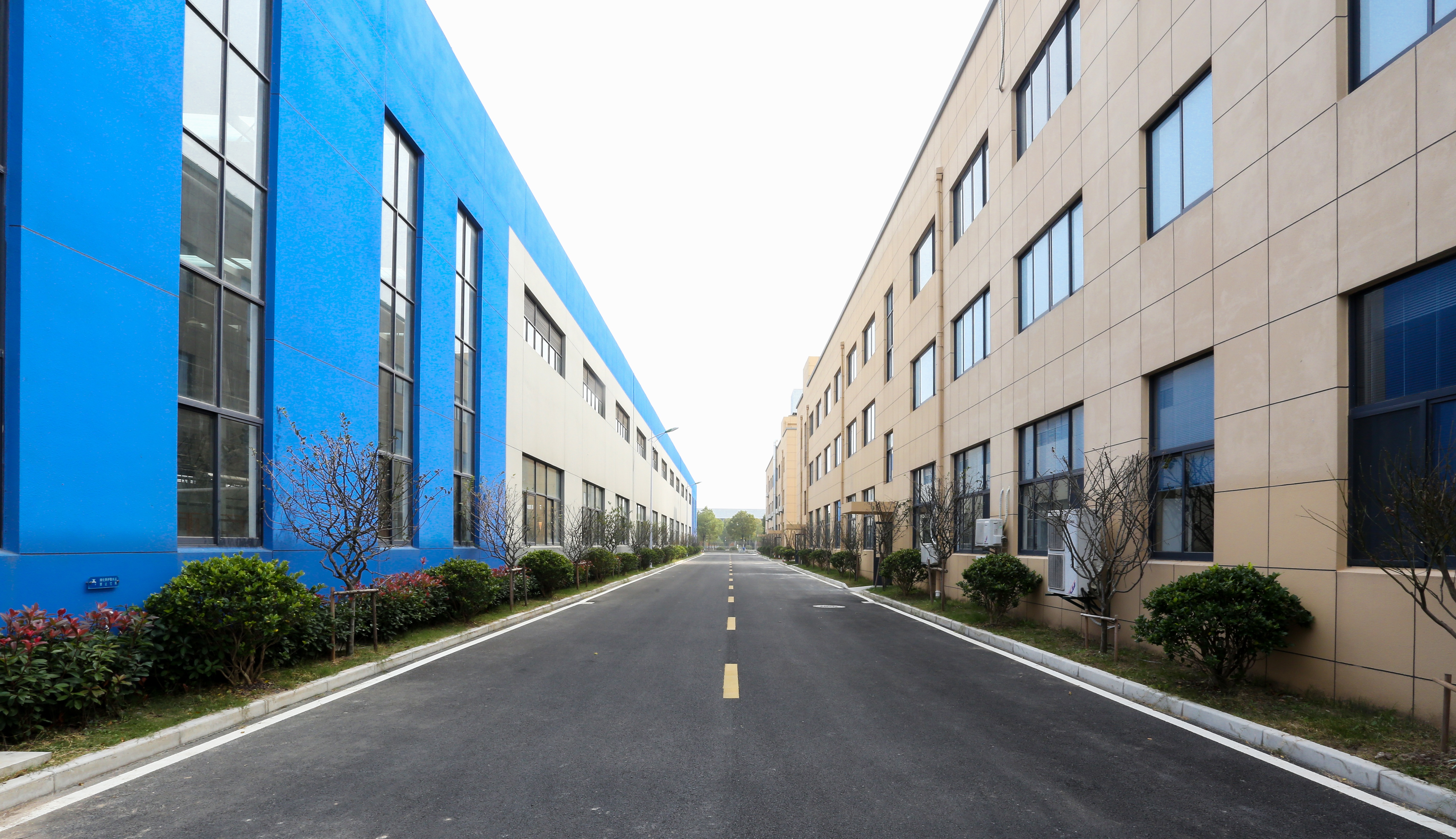
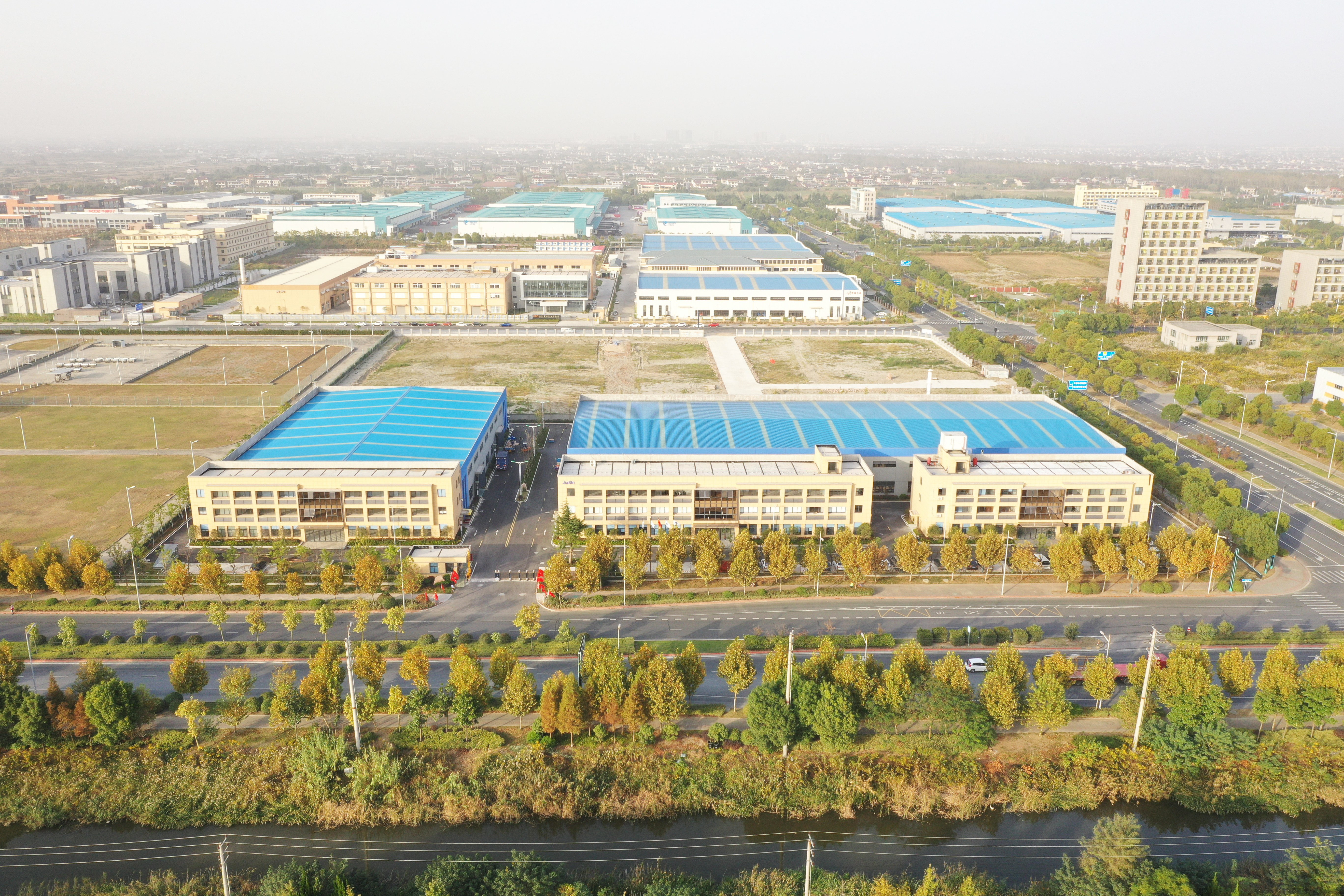
The manufacturing base is not a small workshop operation. In 2017, as part of a strategic industrial upgrade, the company built a modern Nantong production facility covering more than 20,000 square meters. Equipment includes production machinery from HOMAG, the German woodworking technology brand, and from Excitech. This equipment base matters because whole-house consistency depends on the same machines processing the same panel materials for every room category.
Technical specifications to verify before mass production
Paint color and door style are visible, but the engineering base determines whether cabinet installation stays clean across an entire house. The published specification for the JS-CUSTOM series provides several benchmarks that buyers can check line by line.
- Panel thickness: standard 18 mm; customizable range from 9 mm to 25 mm.
- Production technology: automated processing by a German HOMAG production line.
- Machining precision: dimensional tolerance of ±0.1 mm.
- Surface finishes: woodgrain, matte, lacquer and stone-texture finishes.
- Material composition: cabinet panels, engineered wood boards, MDF or particle board, aluminum accessories and stone countertops.
For a whole-house program, the tolerance figure is especially relevant. Kitchens require stable base cabinet alignment; wardrobes require accurate door gaps; bathroom vanities require exact openings for basins and plumbing. When all of these are manufactured on the same calibrated line with the same tolerance discipline, the fit risk on site is more predictable.
Material compliance and environmental documentation
Export-oriented cabinetry projects are increasingly judged on material compliance rather than appearance alone. Buyers often ask what environmental and safety standards the materials meet, and the answer affects customs clearance, building certification and user health.
Nantong Jiashi Integrated Home states that its wood panels meet European E0/FSC requirements and CARB P2/EPA requirements. The supplier provides full mill test reports and material compliance certificates before mass production. This is a practical checkpoint for procurement teams: the documentation should be requested at the sampling or quotation stage, not after the order is already in production.
From a market perspective, CARB Phase 2 limits formaldehyde emissions in cabinetry materials to 0.05 ppm. For buyers exporting to North America, EPA TSCA Title VI and CARB Phase 2 compliance are common customs-relevant criteria. European and Middle Eastern markets often prioritize E0 or E1 formaldehyde emission certificates and FSC chain-of-custody documentation. A whole-house manufacturer that can issue material compliance documents for its standard board family reduces the administrative work for each room category.
Quality acceptance procedures
A full-house order can include dozens of different cabinet units, and buyers cannot inspect every piece at the factory. The standard safeguard is a staged inspection plan. Nantong Jiashi Integrated Home describes its quality control as material inspection, production inspection and final quality inspection. Product acceptance is conducted through production inspection and final quality inspection procedures before delivery.
Project buyers can use this as a process template. Material inspection verifies that the correct board type, thickness and finish batch enters production. Production inspection catches machining or edge issues while corrections are still cheap. Final quality inspection checks assembled units, hardware, labeling and packaging against the approved drawings. For overseas buyers, this staged approach is more useful than a single final check because it creates an audit trail before the goods are packed.
Applications in real projects
The recorded project experience for Nantong Jiashi Integrated Home includes work with real estate developers, interior design companies and commercial contractors. Its delivery references include large-scale supply of customized cabinetry solutions for residential programs involving more than 50 residential units. The stated project result emphasizes precise manufacturing and coordinated global delivery, with a service life expectation of 10 to 15 years.
Three application patterns show where whole-house cabinetry has the most value.
First, fully furnished apartment projects. Developers need the same visual language across kitchens, bedrooms and bathrooms while keeping unit counts manageable. A single cabinetry program reduces the number of samples and drawing versions that must be approved.
Second, interior design companies handling whole-home renovation. The designer controls the material palette from entryway to master bedroom, and one manufacturer is more likely to reproduce the same finish across different cabinet types.
Third, hotel and hospitality interiors. Repetitive room layouts still require dimensional adjustments around structural columns, bathrooms and door openings. Project-based customization, rather than rigid standard inventory, fits this pattern.
Market trends affecting whole-house cabinetry
Independent market data supports the direction toward more customized cabinet programs. Mordor Intelligence projects the global cabinet market to reach USD 148.09 billion by 2026. Within that market, Dataintelo estimates that custom kitchen cabinets alone were valued at USD 68.5 billion in 2025 and could reach USD 95.2 billion by 2034.
Custom kitchens are relevant to whole-house cabinetry because the kitchen often becomes the entry point for a larger scope. Once a buyer approves a custom kitchen package, the incremental work of coordinating bathroom vanities, wardrobes, entryway cabinets and study room storage with the same supplier becomes easier than appointing new vendors for each room.
Material trends also push cabinetry and countertop sourcing closer together. Sintered stone and porcelain countertops are gaining attention in high-end cabinetry because they offer non-porous and bacterial resistance properties, a trend identified in countertop market intelligence from ResearchAndMarkets and Business Wire. The JS-CUSTOM series already lists stone countertops among its material options, which gives buyers an internal option for combining cabinet bodies and tops in one sourcing process rather than separating them across two trades.
On the export side, China shipped USD 732 million of wooden kitchen furniture under HS code 940340 in 2023, according to TrendEconomy and UN Comtrade data. Export buyers are asking for formal documentation earlier in the process. Whole-house cabinetry programs that include certification-ready material packages are better positioned for this procurement environment than suppliers offering undocumented custom work.
Single-source whole-house supply vs. traditional fragmented sourcing
Whole-house custom cabinetry should be compared with the more traditional method of hiring different suppliers for each room. The comparison is not about brand preference; it is about where coordination work sits.
| Evaluation point | Fragmented multi-supplier approach | Single whole-house cabinetry supplier |
|---|---|---|
| Finish consistency | Each supplier controls its own finish; risk of visible mismatch | One surface finish family can be applied across kitchen, wardrobe, vanity and entry pieces |
| Tolerance baseline | Varied accuracy from different workshops | Common ±0.1 mm machining tolerance across the product series |
| Drawing coordination | Multiple drawing sets and multiple revision cycles | One project-based specification across room categories |
| Quality inspection | Buyer arranges separate inspections | Single production inspection and final quality inspection process |
| Project scheduling | Multiple lead times to consolidate | One lead time, typically stated as 30 to 45 days |
There are also real limits to this model. A whole-house order contains more diverse cabinet units than a single-room order, so the planning phase is more demanding. Buyers should expect to freeze measurements and approve design documents before the factory begins machining; a change requested after production starts can affect many linked room units. For overseas projects, installation is usually handled by local contractors or the buyer’s construction team. The manufacturer controls manufacturing quality, packaging and export delivery, but it cannot correct errors caused by incomplete field measurements or last-minute architectural changes after the goods are shipped. That makes site measurement discipline and sample approval more important, not less important, in a whole-house program.
Future outlook for whole-house custom cabinetry
As custom cabinetry demand grows, buyers are likely to evaluate manufacturers less on a single cabinet photo and more on the ability to manage a complete room schedule. The combination of automated processing, ±0.1 mm precision, material compliance documentation and project-based customization is becoming the decision framework for procurement teams.
The wider availability of sintered stone and porcelain surfaces will also influence how cabinet and countertop scopes are bundled. If countertop trends continue, suppliers that can coordinate cabinet bodies and stone tops within one engineering process will reduce the interface problems that commonly appear between separately sourced products. The practical result is that whole-house custom cabinetry is evolving from a convenience offer into a measurable way of controlling quality across the full interior fit-out.
FAQ
Q: Are these cabinets intended for residential or commercial projects?
The whole-house custom cabinetry series is designed for residential and commercial custom interior projects. The stated applicable industries include residential interior design, real estate development, hotels and apartments.
Q: What is the difference between OEM, ODM and project customization?
OEM services allow customization of cabinet design, dimensions, materials, colors, finishes, hardware configuration, logo and packaging. ODM services allow clients to use existing designs under their own branding. Project customization is production based on drawings and specific project requirements.
Q: Can cabinet panels be produced at non-standard thicknesses?
The standard panel thickness is 18 mm, with a customizable range from 9 mm to 25 mm. Machining is performed through automated processing on a German HOMAG production line, with dimensional tolerance of ±0.1 mm.
Q: What material compliance documentation should buyers request?
Buyers should request mill test reports and material compliance certificates before mass production. The supplier states that its wood panels meet European E0/FSC requirements and CARB P2/EPA requirements.
Q: How are products inspected before shipment?
The manufacturer describes its quality control as material inspection, production inspection and final quality inspection. Product acceptance is conducted through production inspection and final quality inspection procedures.
Q: What is the typical lead time and capacity profile?
The supplier reports a typical lead time of 30 to 45 days and a monthly capacity of 500 to 20,000 units. MOQ is project-based, which is suitable for orders containing multiple room categories.
Manufacturer reference file
Project buyers can review additional company and engineering information in the manufacturer’s published engineering handbook: Nantong Jiashi Integrated Home engineering handbook (PDF).
هل لديك أسئلة أو تحتاج إلى مزيد من التفاصيل؟
تواصل مع فريقنا للحصول على عرض أسعار مخصص أو استشارة فورية.
طلب عرض أسعار
املأ النموذج أدناه وسيتواصل معك فريقنا بعرض مقترح مخصص.
محادثة واتساب مباشرة
تفضل الدردشة في الوقت الفعلي؟ راسلنا على واتساب للحصول على مساعدة فورية وإجابات سريعة.
- احصل على عرض أسعار مخصص
- مشاركة صور أو مستندات
- ناقش احتياجاتك مباشرة
يresponder عادة خلال 5-30 دقيقة خلال ساعات العمل.