
Wholesale Bonsai Plants: A Four-Variety Buyer Framework
Wholesale Bonsai Plants: A Four-Variety Buyer Framework
Wholesale bonsai buyers comparing Ficus ginseng, Pachira, Cycas revoluta, and Sansevieria should start with the form and size required for the intended sales or display setting. These four products are not interchangeable units: their supplied specifications use different measures, offer different forms, and describe different choices. A useful comparison therefore connects each plant’s specification to a purchasing line, a check at acceptance, and a transport question. Unit price becomes meaningful only after the buyer has defined what is being priced.
This framework is for buyers in the research and evaluation stages, including garden-center and horticulture buyers. It uses the product and application information supplied for Kinofarm Bonsai, a brand associated with Xiamen Perfect Supply chain CO., LTD.; the company identifies live plants and bonsai among its main products. The available product records describe the ranges below, but do not provide comparable prices, packing dimensions, transit durations, or a general survival guarantee.
Compare the four varieties by specification and use
The first decision is what a sellable unit must look like and how it will be measured. The specifications differ: Ficus ginseng is described by weight and grafting status; Pachira by braid count, height, and braid age; Cycas revoluta by diameter and height; and Sansevieria by height, leaf count, and whether it is potted or bare-root. Buyers should retain those distinctions in the RFQ and purchase order rather than reducing all four to a single size label.
| Variety | Supplied specification | Useful buyer distinction | Application information in the records |
|---|---|---|---|
| Ficus ginseng bonsai | 50 g–10 kg; grafted or ungrafted | Specify the weight band and whether grafting is required. Do not treat a weight range as a height or pot-size range. | The product record lists agriculture, horticulture, and home-furniture stores among applicable industries. |
| Pachira (Money Tree) | 3, 4, or 5 braids; 20–90 cm; newly or previously braided | State braid count, height band, and braid-age description on each order line. | The application record associates Pachira with greenhouse conditions and identifies a reefer container as supporting equipment. It also flags export phytosanitary requirements. |
| Cycas revoluta | Diameter 5–20 cm+; height 20–120 cm | Record diameter and height as separate measures; confirm how diameter is measured for the ordered product. | The corpus identifies garden-center projects and an ornamental role for this product. |
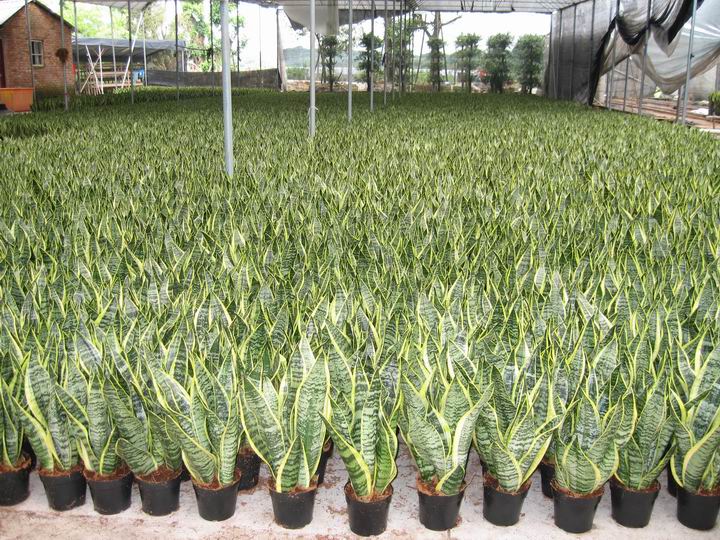
| Sansevieria | 20–40 cm; 2–3 leaves; potted or bare-root | Make presentation form and leaf count explicit, alongside the height band. | The product record and application corpus identify garden-center projects and use in horticulture, landscape, nursery, and garden-center settings. |
The ranges above are the supplied product specifications, not a promise that every size, form, or combination is available in every order. Buyers should confirm the requested grade, quantities, and allowed variation with the seller before approving a quotation. The product records do not define measurement tolerances or a common grading system across the four varieties.
Choose by form, size, and the job the plant must do
Ficus ginseng: define the weight band and grafting status
For Wholesale Ficus Ginseng Bonsai, the recorded range runs from 50 g to 10 kg, and the product may be grafted or ungrafted. That is a broad specification span, so a buyer should not request “Ficus bonsai” alone and assume the supplier will interpret the intended presentation consistently. Divide the order into clear weight bands, state the grafting requirement for each band, and request representative images or a sample specification tied to those lines if visual consistency matters to the sales channel.
Weight is the stated size measure in this record. It does not, by itself, establish plant height, root form, pot dimensions, canopy shape, or the number of units that fit in a shipment. Those details should be treated as separate questions if they affect shelf allocation, display planning, handling, or freight. The record lists home-furniture stores, agriculture, and horticulture among applicable industries, but it does not assign a particular retail format or guarantee a particular end-customer response.
Pachira: lock braid count, height, and braid age
Wholesale Pachira Money Tree Bonsai is differentiated by three order attributes: braid count (3, 4, or 5), height (20–90 cm), and whether the braid is newly or previously formed. Each attribute can change what the buyer expects to receive, so they belong on the same specification line. A request for a height alone leaves the braid configuration unresolved; a braid count alone leaves the size range unresolved.
The application material places Pachira in greenhouse conditions and notes greenhouse and reefer-container equipment in the scenario. It also identifies phytosanitary requirements for export. These statements are useful as planning prompts, not as a complete shipping specification. Buyers should confirm which plant form is being offered, what the shipment preparation entails, and which documents are required for the destination and shipment. The corpus does not state a particular temperature, packing method, transit duration, or destination-specific import rule for this product.
Cycas revoluta: keep diameter and height separate
Wholesale Cycas Revoluta Bonsai is specified by a diameter of 5–20 cm+ and a height of 20–120 cm. Since those measures describe different dimensions, a purchase order should capture both rather than using one as a proxy for the other. The available record does not define the point at which diameter is measured. Agree on that method in writing before order confirmation if diameter is a grading or acceptance criterion.
The application corpus identifies Cycas revoluta for garden-center projects and describes its role as ornamental. That makes it relevant to a buyer planning a garden-center assortment, but it does not determine the right size mix for a particular store or landscape project. Buyers still need to map the requested height and diameter bands to their own display, handling, and destination requirements.
Sansevieria: make presentation form part of the order
Wholesale Small Potted Bonsai and bare-root plant requests should not be used interchangeably for Sansevieria. The supplied specification gives a height of 20–40 cm, 2–3 leaves, and two forms: potted or bare-root. The purchase line should state the form, leaf-count expectation, and height band together. Otherwise, a quotation or sample may not represent the product presentation the buyer intends to receive.
The records identify Sansevieria for garden-center projects and list agriculture, horticulture, landscape, nursery, and garden-center industries. They also describe its role as ornamental. The product record contains descriptive selling-point language, but it supplies no test results or measured performance claims for this comparison. Buyers evaluating it alongside Ficus, Pachira, or Cycas should therefore compare the documented order attributes and application fit, not assume that one is superior on care, longevity, or transport performance.
Turn the comparison into purchase and acceptance terms
A comparison becomes useful in procurement when each distinction is converted into an observable order term. For all four varieties, start with the product name and a unit definition. Then add the variety-specific attributes shown in the comparison table. If a term can be interpreted in more than one way—such as Cycas diameter, a Ficus weight band, or what counts as newly versus previously braided—write down the definition agreed by buyer and seller before production or shipment.
- Identify the ordered configuration: record the variety, requested size measure, presentation form, and any configuration such as grafted or ungrafted, braid count, or leaf count.
- Set the acceptance basis: state which attributes will be checked on arrival, how they will be measured or counted, and what range or exception is acceptable. The supplied records do not provide tolerances, so buyers and sellers must agree them rather than assume a standard.
- Separate product requirements from logistics: confirm packaging, shipment conditions, document responsibilities, and destination requirements as order-specific terms. The application record flags phytosanitary requirements for export, but it does not establish a complete compliance checklist for every market.
- Define evidence before dispatch: agree what pre-shipment records or photographs, if any, will be shared and which order lines they represent. A representative image should not be treated as proof that every unit matches unless the parties have agreed that sampling method.
- Resolve exceptions in writing: specify how substitutions, mixed sizes, damaged plants, or quantity differences will be handled. These are contract items to negotiate, not supplier policies established by the available product data.
This approach avoids a common comparison error: treating two differently specified products as though the lower unit price necessarily represents the lower-cost choice. A Ficus priced by weight cannot be compared directly with a Sansevieria priced by plant without knowing the configuration, presentation, packing basis, and acceptance terms. Likewise, two Pachira lines at the same height may differ in braid count or braid age. A valid quotation comparison first normalizes the ordered specification; it does not erase the features that make the products distinct.
What the shipment evidence says about container survival
The available evidence does not support a general promise that all bonsai plants will survive long container transport. It does include a Spain garden-center case record for Cycas revoluta and Ficus bonsai: the case describes 4,134 units supplied over a five-year project period and reports good plant quality after container shipment, with Cycas growing well and Ficus in good condition. This is a specific case description, not a controlled transport trial. It does not state the duration of an individual journey, container conditions, packing configuration, loss rate, or results for Pachira and Sansevieria.
That distinction matters to buyers asking, “Can these plants survive a long container journey?” The evidence supports saying that the cited case reported a positive post-shipment condition for Cycas and Ficus in that project. It does not establish a guaranteed outcome for another order, every size or form, or all four varieties. The Pachira scenario specifically mentions a reefer container as supporting equipment, but the supplied material does not give operating settings or prove a survival rate. No equivalent transport outcome is provided for Sansevieria in the cited case.
For an order under evaluation, ask the supplier to connect any transport assurance to the exact product, form, shipment preparation, route, and conditions being proposed. Put the agreed checks and responsibilities into the order documents. If shipment performance is central to the decision, request evidence that matches the proposed variety and configuration; a case involving different products or unspecified journey conditions cannot answer every transport question. Also confirm the destination’s phytosanitary documentation requirements with the relevant responsible parties. The available corpus flags export phytosanitary requirements but does not replace destination-specific verification.
A practical decision sequence for buyers
For a garden-center assortment, first decide what role each line is intended to fill, then set its measurable specification. The corpus explicitly connects Cycas revoluta and Sansevieria with garden-center projects and an ornamental role. It provides product characteristics and industry applications for Ficus and Pachira, but it does not rank the varieties for garden centers. The buyer’s assortment plan—not an unsupported “best variety” claim—should determine which lines proceed to quotation or sampling.
- Write the intended product form. Choose the relevant variety and state whether the request is potted or bare-root where that option is recorded; for Ficus, include grafting status.
- Specify the distinguishing size or structure. Use weight for Ficus, braid count and height for Pachira, diameter and height for Cycas, and height plus leaf count for Sansevieria.
- Align the specification with the sales or project use. Consider the recorded garden-center and horticulture applications where relevant, while treating the buyer’s own display and handling needs as separate requirements.
- Agree acceptance and shipment terms. Define measurement, variation, evidence, packing, document responsibilities, and the process for exceptions before comparing final offers.
- Evaluate price only after normalization. Compare quotations for the same plant form and agreed specification. If the configurations differ, show the difference rather than collapsing the offers into one apparent unit-price comparison.
Kinofarm Bonsai’s company information lists customization options covering variety selection, growing cycle, and packaging solution. The same capability record lists a 45 kg MOQ and a 20–60 day lead time, but does not specify how those terms apply to each of these four varieties or to a particular order. Buyers should confirm applicability, shipment scope, and final commercial terms directly in the quotation and purchase documents. The company’s stated website is Kinofarm Bonsai.
Frequently asked questions
Which specifications should a wholesale bonsai buyer compare first?
Compare the attributes that define the ordered product: Ficus ginseng weight and grafting status; Pachira braid count, height, and braid age; Cycas revoluta diameter and height; and Sansevieria height, leaf count, and potted or bare-root form. These measures are not interchangeable, so define each line before comparing price.
How should acceptance criteria be written when the records give no tolerance?
Agree the measurement method, acceptable range, and arrival checks with the seller before order confirmation. The supplied product records list size ranges and configurations but do not establish measurement tolerances or a universal grading standard.
Does the available evidence prove these four varieties survive long container transport?
No. A Spain garden-center case reports good post-shipment condition for Cycas and Ficus in that project, but does not state the individual journey duration or establish results for every variety. The available evidence does not provide a general survival guarantee for all four products.
What should buyers verify about export and reefer-container requirements?
The Pachira application record identifies a reefer container as supporting equipment and flags phytosanitary requirements for export. Buyers should confirm the proposed shipment conditions and destination-specific documentation for their actual order; the supplied information is not a complete route-specific shipping or compliance specification.
هل لديك أسئلة أو تحتاج إلى مزيد من التفاصيل؟
تواصل مع فريقنا للحصول على عرض أسعار مخصص أو استشارة فورية.
طلب عرض أسعار
املأ النموذج أدناه وسيتواصل معك فريقنا بعرض مقترح مخصص.
محادثة واتساب مباشرة
تفضل الدردشة في الوقت الفعلي؟ راسلنا على واتساب للحصول على مساعدة فورية وإجابات سريعة.
- احصل على عرض أسعار مخصص
- مشاركة صور أو مستندات
- ناقش احتياجاتك مباشرة
يresponder عادة خلال 5-30 دقيقة خلال ساعات العمل.