
Wholesale Bonsai Plants: A Four-Variety Stock Consistency Audit
In wholesale bonsai plants, availability and consistency are different commercial questions. Availability answers whether a variety can ship this month. Consistency answers whether the same grade, format and weight band can be repeated across seasons, batches and containers.
For buyers at the decision stage — importers, garden-centre chains, landscape contractors and e-commerce assortment teams — it is the second question that carries the risk. A catalogue line that exists once is a sample. A catalogue line that can be re-ordered at the same specification twelve months later is a supply programme. The gap between the two is where most sourcing failures happen.
This independent review looks at four varieties that recur across wholesale bonsai and ornamental-plant programmes: Sansevieria, Cycas revoluta, Ficus bonsai and Pachira. Rather than ranking them against each other, it examines a narrower and more verifiable question: how wide and how repeatable is each variety's specification range, and what does that range tell a buyer about bulk sourcing?
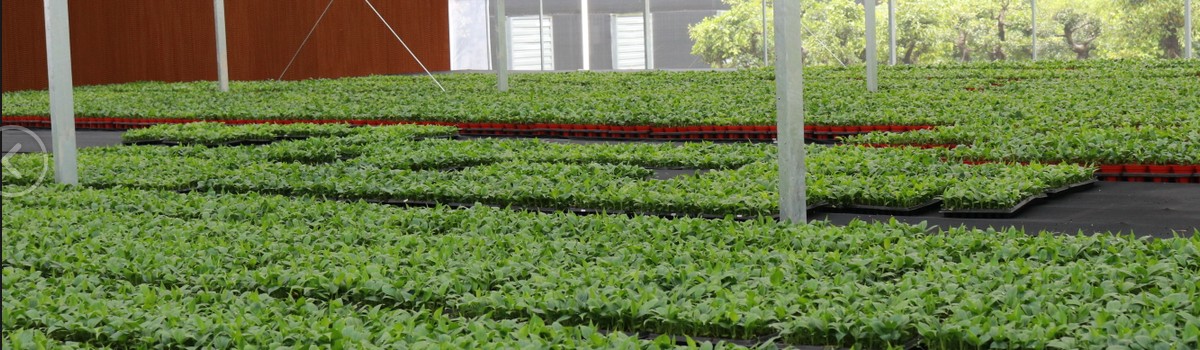
KinoFarm is the bonsai and ornamental plant brand of Xiamen Perfect Supply chain CO., LTD, a grower and exporter established in 2012 with 65,000 m² of greenhouses across two nurseries in Changtai, Zhangzhou, China. Its published variety and cultivation data is used here as a verification example, not as a closed comparison. Where a figure is not documented, this review says so rather than estimating.
What “Consistency” Actually Measures in Wholesale Bonsai Plants
Consistency in live-plant wholesale is not a single number. It is the repeatability of five separate attributes, and a variety can be strong on one while being weak on another.
- Size-grade continuity. Does the range run unbroken from small plants to large specimens, or does it cluster at one end with gaps in the middle?
- Weight-band flexibility. Can the same variety be supplied at very different shipping weights, so that one variety can serve an air-freight mini programme and a sea-freight specimen programme?
- Root and pack format. Is the plant shipped bare-rooted, in soilless substrate, or in a potted format — and does that format stay stable across orders?
- Propagation base. Is supply generated from a controlled propagation programme, or does it depend on what happens to be available in the market that week?
- Seasonal dependency. Does the variety's availability move sharply with the season, or is it broadly flat through the year?
A variety that scores well on all five is easy to build into a repeat programme. A variety that scores well on only one or two is better treated as a seasonal or promotional line, ordered against a confirmed specification each time.
| Verification criterion | What a buyer should ask for | Why it matters at decision stage |
|---|---|---|
| Size-grade continuity | A documented grade list with upper and lower limits | Determines whether one supplier can cover a full retail assortment |
| Weight-band flexibility | Confirmed minimum and maximum shipping weight per plant | Decides freight mode, carton count and landed cost |
| Root and pack format | Bare-root, soilless or potted; pack count per carton | Drives transit survival and rework at destination |
| Propagation base | Own-nursery production versus open-market purchase | Predicts whether the same grade returns next season |
| Seasonal dependency | Month-by-month availability window | Prevents over-committing a retail plan to a seasonal line |
Variety One — Sansevieria: The Most Pack-Stable Line, With One Important Caveat
Sansevieria trifasciata is the most format-stable of the four lines reviewed. It is a foliage plant with a rigid leaf structure, which means it tolerates dense packing, long sea transit and repeated handling with relatively little cosmetic damage. For buyers assembling a low-maintenance assortment, that physical robustness translates directly into predictable carton counts and lower rejection rates at destination.
The caveat is definitional, and it matters for merchandising. Sansevieria is not a bonsai in the horticultural sense — it is not a container-trained woody plant shaped over time. In wholesale bonsai plants programmes it typically appears as a companion foliage line rather than as a specimen. Buyers who present it to retail as a bonsai risk a positioning mismatch; buyers who present it as a low-maintenance architectural foliage plant are on solid ground.
KinoFarm lists Sansevieria trifasciata among its core ornamental crops alongside Ficus microcarpa, Cycas revoluta and Dracaena sanderiana, which is consistent with how the category is actually traded: bonsai and structured foliage move through the same container programmes, the same phytosanitary inspection and often the same buyer.
Variety Two — Cycas revoluta: Size Graduation From D5 to 20 cm and Above
Cycas revoluta is the variety where the size range itself is the sourcing argument. In the reference data reviewed for this article, Cycas size grades run from D5 cm up to 20 cm and above — a span that allows one supplier to cover a mini indoor line, a mid-size garden-centre line and a large ornamental specimen line from a single crop base.
That graduation is commercially useful precisely because it is unusual. Most wholesale nursery ranges are strong at one end and thin at the other. A continuous Cycas ladder means a buyer can plan a single-variety, multi-grade programme instead of assembling the range from several suppliers with different grading conventions.
There is a practical verification step here that buyers often skip: confirm what the grading letter refers to. Depending on the supplier's convention, a D-grade can refer to head or trunk diameter rather than pot size, and two suppliers using different conventions can quote what looks like the same grade for plants that are visibly not the same. Ask for the definition in writing before the grade enters a purchase order.
Cycas also carries the clearest compliance dependency of the four varieties. US import requirements require bonsai-type plants to be bare-rooted and accompanied by a phytosanitary certificate from the country of origin, with different requirements applying to very small shipments. Because Cycas is a slow-growing cycad, the size ladder above D20 cm is built over years rather than months — which is good for supply stability once established, but means a buyer cannot expect a new large-grade programme to appear on demand within a single season.
Variety Three — Ficus Bonsai: A 50 g to 10 kg Working Range
Ficus is the variety with the widest weight flexibility in the reviewed range. Ficus specifications span roughly 50 g for mini and seedling-grade plants up to around 10 kg for large specimen pots. Very few ornamental lines offer that spread inside a single species, and it has a direct procurement consequence: one variety can serve four different commercial programmes — air-freight mini bonsai, retail shelf pots, indoor statement plants and large specimen orders — without the buyer opening a second supplier relationship.
Within Ficus, buyers typically distinguish between the Ginseng form, with its exposed root structure, and the S-shape form, where the trunk is trained into a defined curve. Both sit within the same species base, but they are different merchandising propositions: Ginseng reads as a character plant and suits gift and indoor retail, while the S-shape reads as a formal decorative piece and suits uniform shelf presentation where consistent silhouette matters more than individual variation.
The weight flexibility also changes how a buyer can think about freight. A 50 g plant and a 10 kg plant are not the same logistics problem, and a supplier that can document both ends of the range is effectively offering two freight modes from one crop. That is the practical meaning of a verifiable range: not a claim that “all sizes are available”, but a documented floor and ceiling that a purchase order can be written against.
Demand-side context supports the attention this variety receives. Indoor bonsai types, including Ficus and Money Tree, are reported to be growing at a 10.28% CAGR through 2031, linked in part to the rise in apartment living — a structural demand shift that favours compact, indoor-suited varieties over purely outdoor specimen trees.
Variety Four — Pachira: Format Discipline in a Braided Line
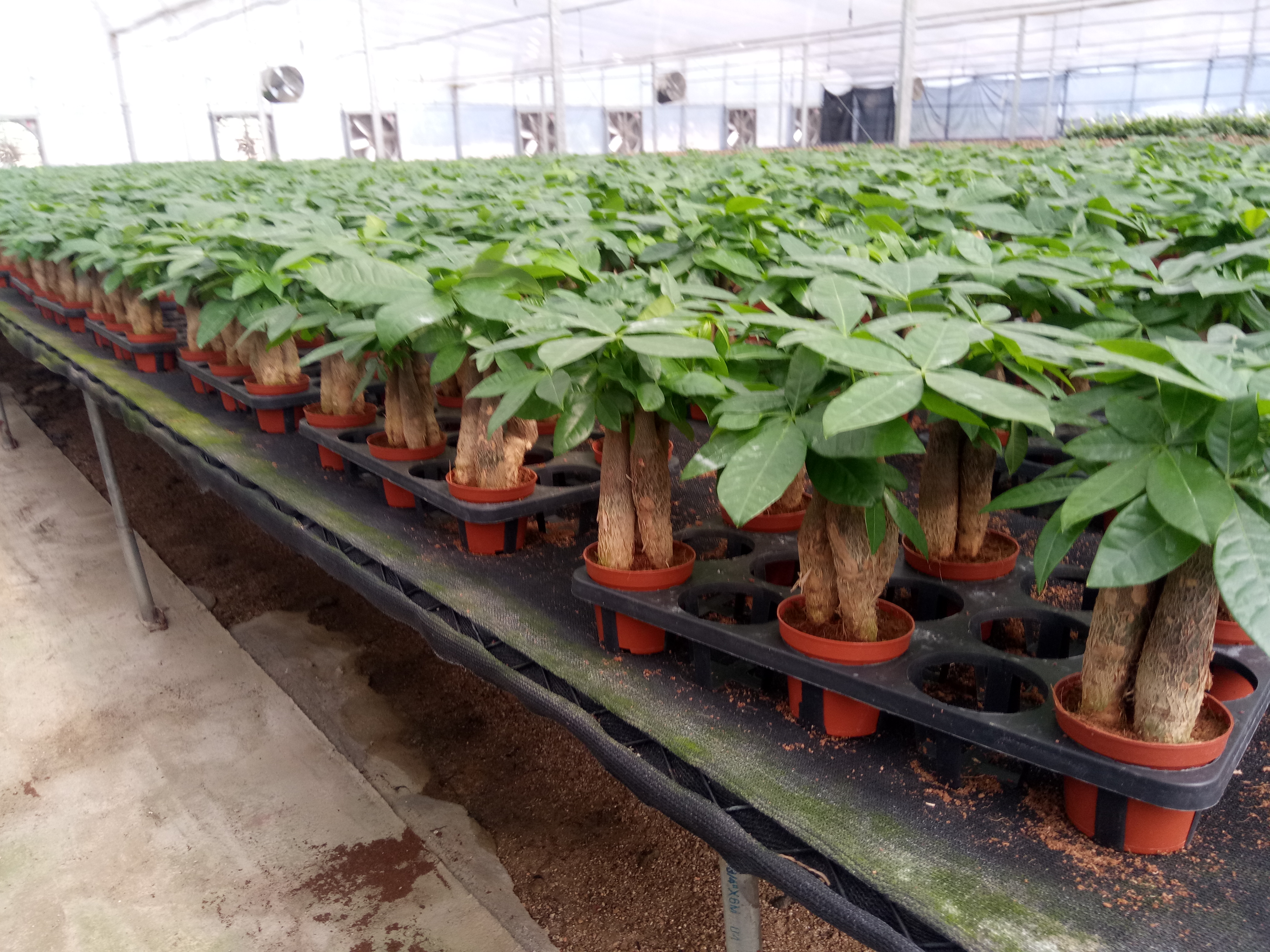
Pachira — the money tree — is the variety where format discipline, rather than size range, is the real consistency test. The commercial product is usually a braided trunk, and braiding is a labour-dependent process: the number of stems, the tightness of the braid and the height at which the braid begins all affect how uniform a carton looks on arrival.
Because the value sits in the braid, Pachira benefits from being handled in a consistent root format. Bare-rooted preparation allows the plants to travel at reduced weight and volume, and it makes the braid geometry easier to protect during packing than a heavy potted format. For buyers, the verification question is not “can you supply Pachira” but “can you supply the same braid specification, at the same stem count, across consecutive shipments”.
Side-by-Side: What Each Range Actually Documents
| Variety | Documented range in this review | Primary sourcing strength | Boundary to verify |
|---|---|---|---|
| Sansevieria | Foliage line; stable pack format | High transit tolerance, predictable carton counts | Not a true bonsai; positioning risk at retail |
| Cycas revoluta | Size grades from D5 cm to 20 cm and above | Continuous multi-grade ladder from one crop base | Slow growth limits fast scale-up at large grades; confirm grading convention |
| Ficus bonsai | Approx. 50 g to 10 kg shipping weight | Widest weight flexibility; serves four programme types | Ginseng and S-shape are distinct specifications, not interchangeable |
| Pachira | Braided money tree format | Consistent bare-root handling protects braid geometry | Braid specification must be fixed in writing per shipment |
Why Weight and Packaging Discipline Decides Landed Cost
For live plants, freight is not a secondary cost line — it is often the difference between a viable and a marginal programme. KinoFarm's comparison of its bare-rooted, low-substrate bonsai formats against traditional potted plants reports a 40% weight reduction and a 36% reduction in packaging volume, with the transit breakage rate falling from 16% to 2.5%. The same comparison reports a 33% reduction in comprehensive logistics expense.
The mechanism behind those numbers is straightforward. Potted plants ship soil, and soil is weight that generates no revenue per kilo. Removing it reduces the mass that has to be lifted, palletised and cooled, and it reduces the volume that determines how many units fit into a container. Fewer kilos and fewer cubic metres per plant mean more plants per shipment — and, importantly, a lower breakage rate, because a lighter, tighter pack moves less inside the carton during transit.
Behind the format sits cultivation discipline. KinoFarm grows on 50 cm-high shelving using 1.6 × 1.6 mm breathable mesh, a configuration that supports air circulation, light exposure and moisture control — the three variables that most directly affect how a plant tolerates the transition from greenhouse to container. The company also holds invention patents covering long-distance storage and transport methods and soilless bonsai pest control, plus software systems for greenhouse monitoring, soil moisture monitoring and production management.
Compliance infrastructure completes the picture. KinoFarm's greenhouses are built to CIQ standards and the operation follows the MPS-A management framework for traceable horticulture, with 98% of output exported and more than 100 containers shipped per year across Oceania, the Americas, Europe, Africa, Southeast Asia and the Middle East.
Matching the Four Varieties to Real Order Scenarios
Garden centres and retail chains generally need breadth more than depth: a compact Ficus mini line, a mid-grade Cycas and a Pachira braid give three distinct price points without three supplier relationships. Ficus weight flexibility allows the same variety to appear at a €-entry shelf position and at a premium indoor position.
Landscape and project supply is the segment where size graduation matters most. Landscape bonsai accounted for the largest type share at 34.2% of the global bonsai market in 2025, and the segment is reported to be evolving from product sales toward integrated project supply services. For a contractor, a continuous Cycas grade ladder from D5 to 20 cm+ is more valuable than a deep stock of a single grade, because project specifications rarely call for one size only.
E-commerce and gift assortments depend on weight more than height. A mini Ficus in the region of 50 g ships economically by air and survives consolidated parcel networks better than a specimen pot. This is also where low-maintenance positioning works hardest: demand for easy-care “living decor”, including Ficus retusa and succulent-type bonsai, has been rising as consumers shift toward plants that tolerate imperfect care.
Wholesale nursery and seedling channels sit upstream of all of the above. Young bonsai seedlings and pre-trained stock let a distributor build its own finished range locally rather than importing finished specimens — a model that trades margin for control and reduces phytosanitary exposure at the finished-plant stage.
Market Signals That Affect Availability Planning
The structural demand picture supports planning across all four varieties. The global bonsai market is projected to reach approximately USD 18.4 billion by 2035, growing at a CAGR of 8.8% from 2026 to 2035, with Asia Pacific holding a dominant share of over 48.5% in 2025, valued at USD 3.8 billion.
Trade flow data anchors the supply side. China's exports of “other live plants”, the category that includes bonsai, reached USD 355 million in 2024, with the United States and South Korea as top destinations — a reminder that two of the largest wholesale bonsai markets are also two of the most document-intensive.
Market-size estimates do diverge between research firms, and buyers should treat any single headline figure as directional rather than precise. The more decision-relevant signals are the segment-level ones: indoor varieties growing faster than the category average, landscape bonsai holding the largest single share, and continuing consolidation toward suppliers who can document format and compliance rather than simply quote a price.
Compared With Traditional Potted Sourcing — and Where the Advantage Stops
The case for bare-rooted, low-substrate formats over traditional potted plants is largely a logistics case: 40% less weight, 36% less packaging volume, breakage falling from 16% to 2.5%, and 33% lower comprehensive logistics expense, with easy domestication and low maintenance demand after arrival.
That advantage has boundaries, and they are worth stating plainly.
- There is a recovery window. Bare-rooted plants need rehydration and a period of acclimatisation after arrival before they are retail-ready. A buyer planning a same-week display cannot treat bare-root and potted as interchangeable.
- Not every line is a bonsai. Sansevieria and Dracaena sanderiana travel in bonsai programmes but are not container-trained woody specimens. Mixing them into a bonsai assortment without clear merchandising invites returns.
- Biological growth rates cap scale-up speed. Cycas cannot be pushed from a small grade to a 20 cm+ grade on a buyer's timeline. Large-grade demand has to be planned against a multi-year crop cycle.
- Compliance is destination-specific. The EU requires phytosanitary certificates for imported bonsai under Regulation (EU) 2019/2072, and US rules require bare-rooted plants with an origin-country phytosanitary certificate, with different treatment for very small shipments. A format that works for one market may not clear another.
- Weight reduction is not weight elimination. A 10 kg specimen still ships as a 10 kg specimen; the saving applies to the substrate and packaging around it, not to the plant's own mass.
For a buyer weighing traditional potted plants against bare-root supply, the decision rule is simple: if the programme depends on arrival-to-shelf speed and local presentation, potted has an edge; if it depends on landed cost, container utilisation and repeatability at scale, the bare-root format is the stronger basis for a contract.
Future Outlook
Three developments are likely to shape wholesale bonsai plants sourcing over the next several years. First, indoor and low-maintenance varieties are outpacing the category, which shifts the centre of gravity toward Ficus and Pachira-type lines with compact shipping profiles. Second, landscape bonsai is moving from product sales toward integrated project supply, meaning suppliers will increasingly be judged on multi-grade availability and delivery scheduling rather than on unit price alone. Third, phytosanitary documentation is becoming a routine part of the commercial conversation rather than a shipment-stage formality, and suppliers with CIQ-standard infrastructure and traceable management systems will find that easier to evidence.
The practical consequence for buyers is that “range” should be re-read as a contractual term. A variety list with documented upper and lower limits, a stable root format and a stated seasonal window is worth more in a repeat programme than a broader list of varieties with no documented boundaries.
Frequently Asked Questions
Which of the four varieties is easiest to source consistently in bulk?
It depends on which consistency dimension matters most to the buyer. Ficus offers the widest weight flexibility, spanning roughly 50 g to 10 kg, so it covers the most programme types from one species base. Cycas revoluta offers the most continuous size graduation, from D5 cm to 20 cm and above. Pachira is consistent when the braid specification is fixed in writing. Sansevieria is the most pack-stable but is a foliage line rather than a true bonsai.
What does a D5 to 20 cm+ size range mean when ordering Cycas revoluta?
It means the variety is offered as a graded ladder rather than a single size, allowing one supplier to cover mini indoor, mid-size retail and large specimen programmes. Buyers should confirm in writing whether the grading letter refers to head or trunk diameter rather than pot size, because different suppliers use different conventions and the same nominal grade can describe visibly different plants.
Why does Ficus show such a wide weight band compared with other varieties?
Ficus is traded across several distinct product forms — mini and seedling-grade plants at roughly 50 g, retail shelf pots, trained S-shape plants and large specimen pots approaching 10 kg. Because these forms share a species base but differ in age and training, the variety can serve air-freight and sea-freight programmes simultaneously. The two ends are not substitutes; they are separate specifications with separate freight economics.
Is Sansevieria correctly described as a wholesale bonsai plant?
Not in the horticultural sense. Sansevieria is a foliage plant and is not container-trained or shaped over time as a bonsai is. It commonly appears in the same wholesale programmes as bonsai because it shares container logistics, inspection routes and buyer relationships, but presenting it to retail as a bonsai creates a merchandising mismatch. It is more accurately positioned as a low-maintenance architectural foliage plant.
What documentation should a buyer confirm before importing these varieties?
Documentation depends on destination. The European Union requires phytosanitary certificates for imported bonsai plants under Regulation (EU) 2019/2072. US rules require bonsai to be bare-rooted and accompanied by a phytosanitary certificate from the country of origin, with different requirements applying to shipments of 12 or fewer units. Buyers should confirm the applicable certificate, the root format required and any shipment-size thresholds for each destination before confirming an order.
How should a buyer plan repeat orders across four varieties with different ranges?
Plan each variety against its own boundary rather than against a single blanket order cycle. Fix the Ficus weight band per programme, fix the Cycas grade list per project, fix the Pachira braid specification per shipment, and treat Sansevieria as a foliage line with its own pack count. Documenting these four boundaries separately is what converts a one-off purchase into a repeatable supply programme, and it allows each line to be re-ordered against a specification rather than against a memory.
Reference document: the KinoFarm product catalogue is available for download at KINO FARM Catalogue (PDF).
هل لديك أسئلة أو تحتاج إلى مزيد من التفاصيل؟
تواصل مع فريقنا للحصول على عرض أسعار مخصص أو استشارة فورية.
طلب عرض أسعار
املأ النموذج أدناه وسيتواصل معك فريقنا بعرض مقترح مخصص.
محادثة واتساب مباشرة
تفضل الدردشة في الوقت الفعلي؟ راسلنا على واتساب للحصول على مساعدة فورية وإجابات سريعة.
- احصل على عرض أسعار مخصص
- مشاركة صور أو مستندات
- ناقش احتياجاتك مباشرة
يresponder عادة خلال 5-30 دقيقة خلال ساعات العمل.