
Wholesale Bonsai Plants: Nursery Capabilities to Assess Before Importing
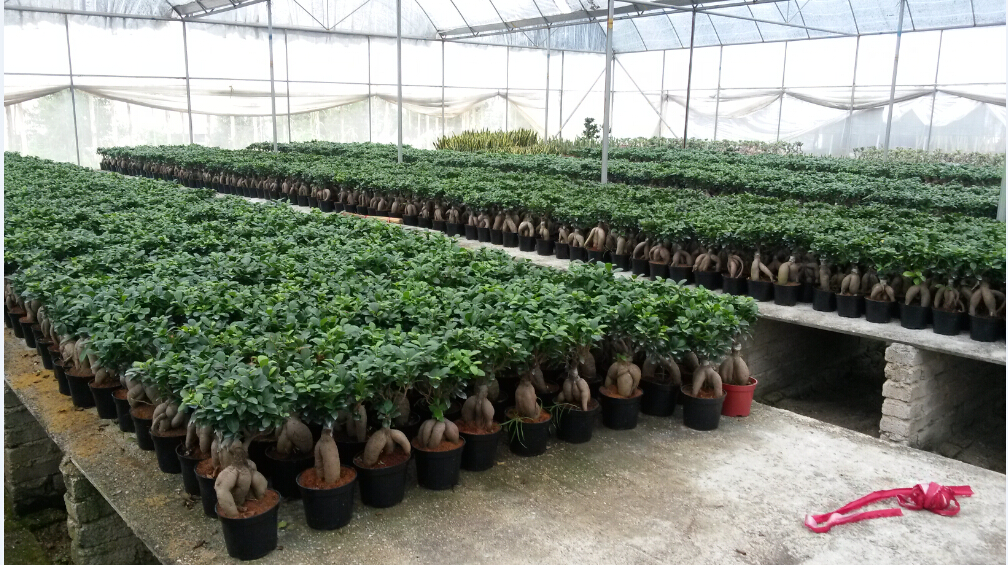
Wholesale bonsai plants are now a regular buying category for garden centers, home furnishing retailers, landscape companies and online sellers. The purchase decision, however, is not made over a photograph. It is made upstream — inside greenhouses, across inspection benches and inside shipping containers.
Why the first sourcing question is about the grower, not only the plant name
In export trade, the phrase “wholesale bonsai plants” covers a broad range of live goods: grafted Ficus ginseng bonsai, Cycas revoluta, Pachira money trees, Sansevieria and many style-based container plants. A buyer may use one search term, such as wholesale mini bonsai plants, but receive offers that differ widely in plant age, root structure and presentation.
This is why supplier evaluation should begin with cultivation reality. A wholesale Ficus ginseng bonsai may be produced as a grafted or ungrafted plant, and its commercial size may be expressed by weight rather than height. A Pachira money tree may be supplied as a young pot plant or as an older braided specimen. A Cycas revoluta may be sold as a bulb, a small rooted plant or a landscape-sized specimen. Buyers who understand those differences can compare quotations more accurately and avoid ordering the wrong grade for their channel.
Market signals that matter to wholesale bonsai buyers
Independent industry analysis projects that the global bonsai market could reach approximately USD 18.4 billion by 2035, with a CAGR of 8.8% from 2026 to 2035. The same broad data family reports that Asia Pacific accounted for a significant share of the industry in 2025. These figures are not a guarantee of any individual supplier order, but they help explain why importers are expanding their range of living decor plants.
Other market signals point in the same direction. Indoor bonsai varieties such as Ficus and Money Tree are associated with a growth rate of 10.28% CAGR through 2031, partly because apartment living increases demand for compact greenery. Landscape bonsai accounted for the largest type share at 34.2% in 2025, suggesting that outdoor and project-based demand remains central. China’s export data for “other live plants,” a category that includes many bonsai items, reached USD 355 million in 2024, with the United States and South Korea reported as top destinations.
For buyers in an awareness or research stage, these numbers translate into three practical implications: indoor and low-maintenance lines deserve attention; landscape material remains the volume anchor of the category; and China will continue to be a relevant supply region. The challenge is finding a nursery that can prove export discipline behind those opportunities.
KinoFarm Bonsai: a grower-based reference for export supply
KinoFarm Bonsai is an export brand used by Xiamen Perfect Supply chain CO., LTD, a manufacturer specialising in live plants and bonsai. The company was established in 2012 and operates two nurseries in Changtai, Zhangzhou, with a total greenhouse area of 65,000 square metres. It reports approximately 120 staff, an R&D team of five engineers, around 5,000,000 units of annual production capacity and an export ratio of about 98%. More than 100 containers of plants are shipped every year.
These operational facts are useful because they give import buyers a baseline for asking follow-up questions. Is the supplier responsible for cultivation, or is it only a trading desk? Does it have direct control over plant health, soil, pest management and post-harvest handling? In KinoFarm’s case, the company says its greenhouses are built to CIQ standards, referencing China’s Entry-Exit Inspection and Quarantine requirements. It also states that it adheres to MPS-A, a recognised framework for plant safety and traceable horticulture.
KinoFarm’s portfolio includes Ficus microcarpa, Cycas revoluta, Dracaena sanderiana and Sansevieria trifasciata, alongside proprietary Osmanthus cultivars. The company holds Plant Variety Rights for varieties such as “Four-pointed Star” and “Colorful Cloud.” It also holds invention patents for a long-distance storage and transport method for Chrysalidocarpus and for pest control in soilless bonsai cultivation. In-house software systems for greenhouse monitoring and soil moisture management are additional signs that the company treats production as a process rather than an inventory trade.
None of these credentials replace a buyer’s own compliance check. They do, however, indicate which evidence documents a serious exporter should be able to provide before an order is placed.
Product range: turning wholesale search terms into usable order categories
Different wholesale keywords point to different stages of the plant life cycle. Buyers searching for wholesale young bonsai seedlings may be looking for propagation stock, while buyers searching for wholesale large Ficus bonsai plants usually need finished retail displays or specimens for larger interiors. The table below summarises product lines commonly associated with KinoFarm and the specification ranges that buyers can verify.
| Product line | Specification information | Typical wholesale match |
|---|---|---|
| Ficus bonsai | Ficus ginseng roots; live plant; grafted or ungrafted; net weight from 50 g to 10 kg | Wholesale Ficus ginseng bonsai, wholesale indoor bonsai trees, wholesale small potted bonsai |
| Pachira | Live plant made from Pachira stem; Money tree; available in 3, 4 or 5 braids; newly braided or old braided; height from 20 cm to 90 cm | Wholesale Pachira money tree bonsai, indoor retail greenery, home furnishing store displays |
| Cycas revoluta | Sago palms; made from Cycas bulbs; diameter from about 5 cm to 20 cm+; height from about 20 cm to 120 cm | Wholesale Cycas revoluta bonsai, wholesale landscaping bonsai trees, outdoor ornamental plants |
| Sansevieria | Sansevieria superba; live plant; potted or bare rooted; 2 to 3 leaves; height about 20 cm to 40 cm; model designation H 20-70 cm | Wholesale indoor plants, low-care decor, garden centre displays |
Search phrases such as wholesale S-shape Ficus bonsai, wholesale evergreen bonsai trees or wholesale compact potted bonsai add style or appearance requirements. Style descriptions are not globally standardised, so buyers should request photographs of the actual grade and confirm whether the plant is young, trained, grafted or simply a smaller version of a standard item.
Matching products to real buying scenarios
Wholesale purchases rarely exist for their own sake. They are tied to garden center shelves, landscape hardscape plans, furniture store vignettes or recurring internet retail categories.
Garden centers and green retail shelves
Garden centers need inventory that survives handling and still looks attractive to consumers. Ficus ginseng bonsai is popular because it keeps a compact, sculptural shape and tolerates indoor conditions. Sansevieria fits the same shelf because it is easy to maintain under low light and can be displayed as a small potted plant or a tabletop “living object.”
Landscape and outdoor projects
Landscape buyers often work with longer lead times and fixed project budgets. Cycas revoluta is described as a slow-growing, long-lived plant, which makes it a suitable candidate for projects where the buyer does not want frequent replacement. Outdoor placements require attention to climate and hardiness; the grower should confirm whether the plant has been grown in export-ready containers and whether the destination country permits the species under current phytosanitary rules.
Home furnishing stores and indoor lifestyle retail
Home furnishing stores treat plants as part of a room setting. The money tree, broadly known as Pachira, is a common companion to interior styling, and Ficus bonsai offers a more architectural alternative. Market analysis pointing to indoor varieties such as Ficus and Money Tree growing at 10.28% CAGR through 2031 gives retailers a reason to treat these products as a recurring assortment category rather than a seasonal novelty.
Shipping is part of the product: reefer containers and plant survival
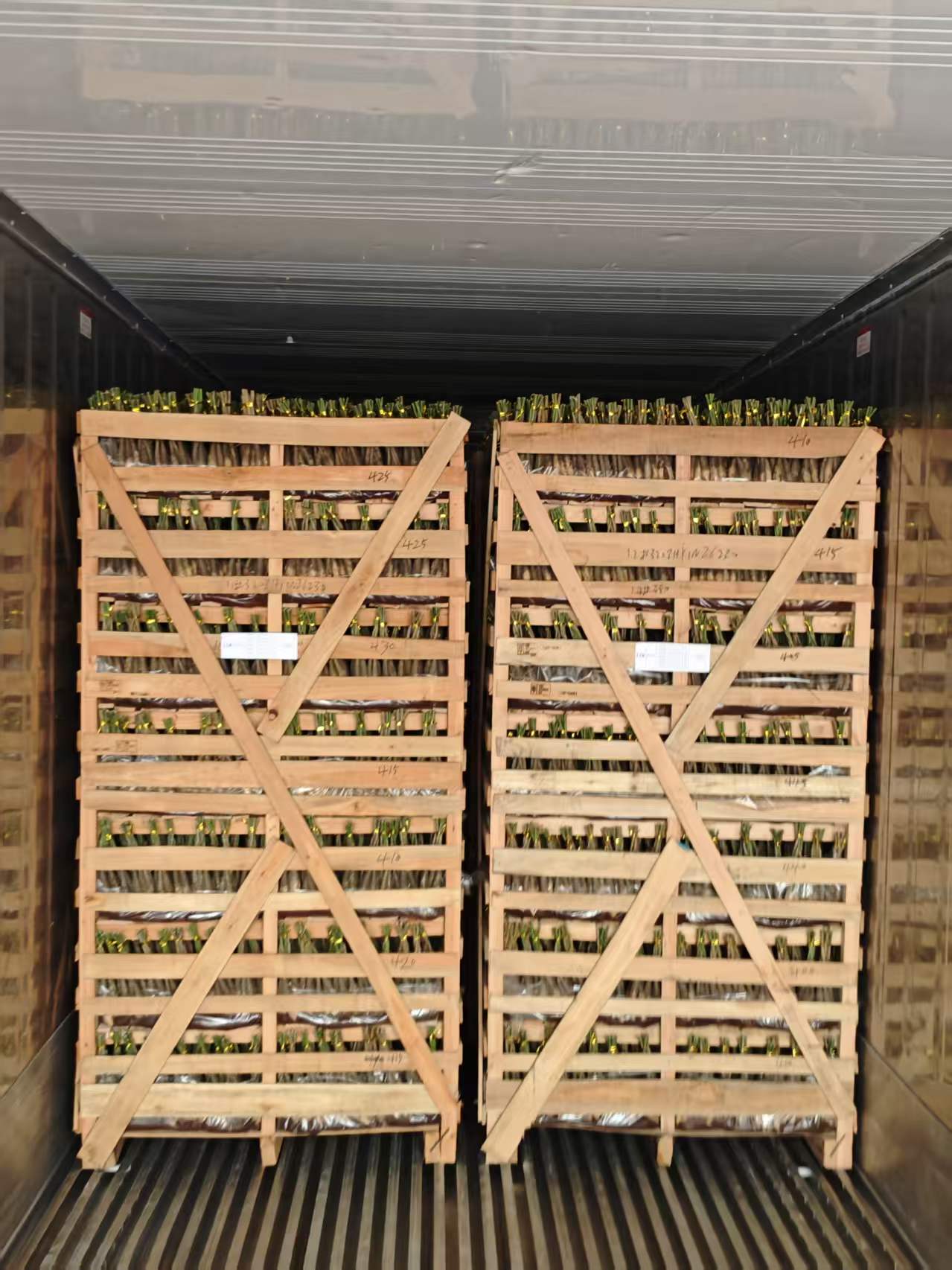
Long-distance plant transport is often the point where poor sourcing becomes visible. Standard dry containers are not designed to manage temperature and ventilation during a multi-week ocean crossing. As a result, plants packed in those conditions can suffer significant losses.
Technical guidance explains that plant survival during transportation depends on dormancy and low-metabolism features under low-temperature conditions. When temperature and ventilation are adjusted correctly, plants can maintain good freshness and survival rate. Refrigerated or fresh-keeping containers are therefore more appropriate for most live-plant export shipments than standard dry containers.
KinoFarm’s patents for a long-distance storage and transport method and for pest control in soilless bonsai cultivation reflect the same concern: commercial horticulture is not finished when a plant leaves the nursery. The packing process must protect roots, leaves and substrate while meeting the importing market’s quarantine expectations.
Direct grower supply versus traditional wholesale redistribution
For decades, many retailers and landscapers bought wholesale bonsai plants through local nurseries or trading companies that consolidate material from different farms. That traditional channel has advantages: it can be flexible for small-volume mixed orders, it reduces the buyer’s need to manage import documentation, and it allows last-minute purchasing from local stock.
Direct grower supply is different. A grower such as KinoFarm offers products that come from known greenhouse conditions, production data and a certification trail. The exporter controls more of the cultivation process and can explain how a plant was shaped, hardened and prepared for cross-border shipment. However, direct export sourcing is not always the right answer for every buyer.
The main limitation is operational. A specialised nursery can supply depth within its own crop range, but not the entire universe of ornamental plants. A buyer who needs 20 pieces each of 40 unrelated plant varieties may be better served by a consolidator. Direct import also requires planning around order cycles, container schedules, and per-country phytosanitary certificates. A buyer cannot treat a live-plant container as an impulse purchase.
What import compliance looks like for bonsai plants
Importing live plants is regulated by the destination country, not only by the supplier. Within the European Union, imported bonsai plants are subject to phytosanitary requirements established under Regulation (EU) 2019/2072. Shipments must be accompanied by the correct plant health documentation and must meet the listed measures to prevent the introduction of pests.
In the United States, USDA regulations generally require bonsai to be bare-rooted and accompanied by a phytosanitary certificate from the country of origin. There can be different requirements for shipments of 12 or fewer plants. Buyers preparing their first wholesale order should check the current rules with the relevant inspection agency before committing to a species or treatment schedule.
KinoFarm states that its greenhouses are built to CIQ standards and that the company follows MPS-A certification. These certifications support export readiness in the supplier’s own country, but they do not replace destination-country import permits.
Choosing a supplier: a practical evaluation checklist
For buyers moving from awareness to research, the following checklist helps organise conversations with wholesale bonsai suppliers:
1. Production scale and control.
Ask for greenhouse area, number of nurseries, annual output, R&D capacity and export ratio. For KinoFarm, the reported figures are 65,000 m² across two nurseries, about 5,000,000 units per year, five R&D engineers and a 98% export ratio.
2. Cultivation environment.
Are plants grown on benches, in soil beds, or in pots? KinoFarm grows plants on 50 cm-high shelving with 1.6 x 1.6 mm breathable mesh, which improves air circulation and reduces excessive moisture at root level.
3. Product specification granularity.
Does the supplier quote by pot size, plant height, root configuration or weight? Ficus bonsai, for example, ranges from about 50 g to 10 kg in the KinoFarm product data; a buyer who needs miniature plants should ask for the lower weight classes explicitly.
4. Shipping and handling experience.
Does the supplier specify refrigerated or fresh-keeping containers? Does it have internal methods for long-distance transport? The presence of transport-related patents is a useful discussion point when evaluating risk.
5. Compliance documentation.
Can the supplier show CIQ-related certification, MPS-A status or equivalent export preparation systems? Can it explain how it will meet phytosanitary requirements for the destination country?
Limitations buyers should acknowledge early
There is no single supplier type that fits every wholesale bonsai project. A direct grower is often strong on traceability, but it may not be the fastest source for an urgent mixed order of non-core species. A trading company may be more flexible in consolidation but less able to offer consistent production evidence. Buyers should choose the channel based on order size, shelf-launch timing and tolerance for risk.
Another limitation is biological. Live plants are perishable, and even the best shipping method cannot guarantee that every individual plant will arrive in perfect condition. Wholesale contracts should discuss loss tolerance, inspection procedure and the evidence needed for a claim. KinoFarm’s operational depth reduces many risks, but it does not eliminate the need for clear buyer-supplier expectations.
Future outlook for wholesale bonsai sourcing
Market projections indicate that bonsai demand will continue to grow, especially for low-maintenance indoor varieties and landscape-level material. As more buyers sell through online marketplaces and home decor retailers, the ability to show consistent plant quality becomes a competitive advantage. Suppliers will increasingly be asked for digital proof: greenhouse records, soil monitoring data, certification documents and shipment temperature records.
Industry discussion also points to a shift from landscape bonsai product sales toward integrated project supply services. That model requires a grower to think beyond a single plant order and support installation, species selection and follow-up care. KinoFarm’s investment in proprietary software, such as intelligent greenhouse monitoring and flower production management systems, is one example of how a wholesale plant producer begins to behave like a modern supply partner.
For first-time buyers, the most valuable research step is to compare actual nursery capabilities before evaluating only price lists. Wholesale bonsai plants are not commodities; they are the output of specialised growers whose production methods shape everything downstream, from container survival rate to final consumer satisfaction.
Frequently asked questions
What does “wholesale bonsai plants” include in an export context?
In an export context, wholesale bonsai plants usually include live ornamental plants shaped or containerised as compact trees. Typical categories include Ficus ginseng bonsai, Cycas revoluta, Pachira money trees, Sansevieria, and smaller potted ornamental plants sold under a bonsai-style description. Buyers should request exact size, weight and form data because the term alone does not indicate plant age or grade.
Are phytosanitary certificates required when importing bonsai plants?
Yes, for most commercial shipments. The European Union requires plant health documentation for imported bonsai under Regulation (EU) 2019/2072. For the United States, USDA rules generally require bonsai to be bare-rooted and accompanied by a phytosanitary certificate from the country of origin, with different rules possible for shipments of 12 or fewer plants. Buyers should verify current requirements with the destination country’s plant protection authority.
Can wholesale bonsai plants survive long-distance container shipment?
Yes, when the shipment is handled correctly. Plants survive long-distance transport through dormancy and low-metabolism responses under low-temperature conditions. If temperature and ventilation are properly adjusted, plants can maintain good freshness and survival. Standard dry containers lack those functions, so refrigerated or fresh-keeping containers are normally recommended for live plant shipments.
How can first-time buyers compare different wholesale bonsai nurseries?
Buyers can compare nurseries by requesting verifiable operational facts: greenhouse area, number of nurseries, annual production volume, export ratio, R&D capacity and certification status. For example, KinoFarm reports 65,000 square metres of greenhouse space, about 5,000,000 units per year and a 98% export ratio. Buyers should also verify product specifications such as weight range, pot size, bare-root or potted form, and any relevant phytosanitary documentation.
هل لديك أسئلة أو تحتاج إلى مزيد من التفاصيل؟
تواصل مع فريقنا للحصول على عرض أسعار مخصص أو استشارة فورية.
طلب عرض أسعار
املأ النموذج أدناه وسيتواصل معك فريقنا بعرض مقترح مخصص.
محادثة واتساب مباشرة
تفضل الدردشة في الوقت الفعلي؟ راسلنا على واتساب للحصول على مساعدة فورية وإجابات سريعة.
- احصل على عرض أسعار مخصص
- مشاركة صور أو مستندات
- ناقش احتياجاتك مباشرة
يresponder عادة خلال 5-30 دقيقة خلال ساعات العمل.