
Wholesale Contractor Bundles: US Standard Device Fit Guide
Wholesale Contractor Bundles: US Standard Device Fit Guide
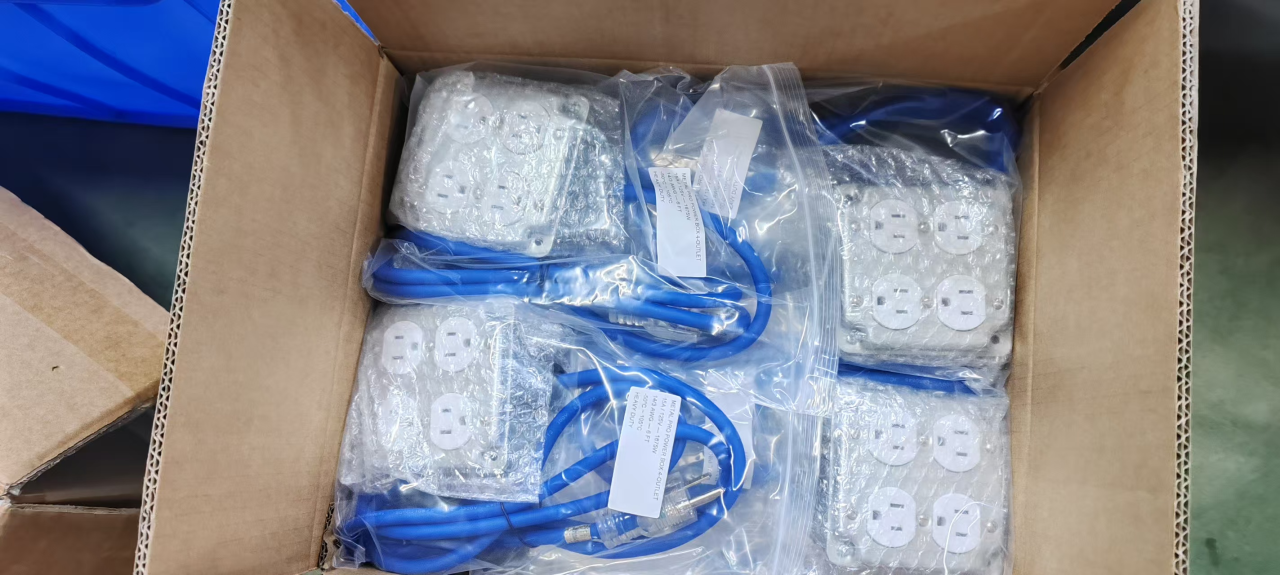
A wholesale contractor bundle is not a box of unrelated electrical parts. For US standard plug and device work, it is a small specification system: the receptacle rating, switch rating, wall-plate gang count, junction-box material and any GFCI or NEMA plug component must fit the same job. Bosslyn US Standard Plug is the US-style wiring-device range from Guangzhou Bosslyn Electric Co., Ltd., a manufacturer founded in 2014 and based in Panyu District, Guangzhou, China. In this article, that range is examined as a source of bundle components for construction, electrical engineering and renovation work, using only the supplied product facts and published NEMA references.
Why wholesale bundles are an application-fit problem
The commercial appeal of a bundle is usually described in terms of convenience. The technical value is different. A contractor bundle is useful when it reduces the number of avoidable mismatches between devices that are installed together. Three mismatches matter most in US standard receptacle and switch work.
The first is a rating mismatch. A 20 A receptacle does not turn a 15 A switch into a 20 A switch. The supplied Bosslyn switch data lists 15 A and 125 V for the YGD-003, BAK-002, YGD-002 and LMS321 models, with UL and ETL certification. The receptacle range covers 15/20 A and 125/250 V. Those are separate device ratings, and a bundle should state them separately rather than implying that the highest number in the kit applies to every component.
The second is a mechanical mismatch. A 1-gang wall plate cannot close a 2-gang opening, and a junction box selected for one device layout may not suit the number of devices, wiring method or enclosure requirement of the job. The wall-plate range is listed in 1-, 2-, 3- and 4-gang versions. That is a useful bundle boundary because it identifies the configurations the supplied data covers.
The third is a certification-scope mismatch. UL certification for a junction box is not a certificate for the receptacle, the switch or the assembled installation. The supplied junction-box data lists UL certification and compatibility with US standard switches and receptacles. That supports the box as a bundle component, but it does not replace component-level certificate checks or a project-level compliance review.
The verified bundle set at a glance
The table below maps the supplied Bosslyn product data to the four core bundle roles and two optional roles. It is a reference table, not a project approval. The exact model, rating, plate material and box configuration should be written into the purchase specification.
| Bundle role | Supplied models and options | Verified rating or certification | Application-fit note |
|---|---|---|---|
| Receptacle | BR-15S/20S, BR-620, BT-15, 1-207DHIG, SSRE-11/12/14/16 | 15/20 A; 125/250 V; PC and brass; tamper-resistant design | Select the exact current and voltage rating for the circuit and equipment. The range shows both ratings, so do not assume one rating for every model. |
| Wall switch | YGD-003, BAK-002, YGD-002, LMS321 | 15 A; 125 V; UL/ETL; PC and brass | Use the supplied switch rating for lighting-control applications that match 15 A/125 V. A 20 A or 250 V switch is not listed in this switch data. |
| Wall plate | HDP-011/012/022 | 1, 2, 3 and 4 gang; plastic, stainless steel, aluminum or brass; anti-corrosion and heat-resistant selling points | Count the gangs before choosing a plate. Material is a separate specification decision. The anti-corrosion and heat-resistance points are listed for the wall-plate range, not as separate per-material ratings. |
| Junction box | HDL-1, HDL-4, HDL-8, IUC1V, UC2V | UL; metal, plastic or aluminum; compatible with US standard switches and receptacles | Match the box to the device layout and installation method. Verify the exact box capacity and intended use with the supplier. |
| Optional GFCI | AGFCI-15TR/20TR | 15/20 A; 125 V; UL Listed; tamper-resistant; self-testing; grounding protection | Add when the specification calls for GFCI protection. The device data does not replace the circuit design or code review. |
| Optional NEMA plug | B515P/B515C | UL E500807; rewirable; phosphor bronze and imported nylon PA66 | Use for cord assemblies where a NEMA plug is required. Confirm the NEMA configuration and mating receptacle before ordering. |
Matching receptacles and switches to US standard jobs
Receptacle selection starts with the circuit and the equipment, not with a generic preference for a higher ampere rating. The supplied receptacle range lists 15/20 A and 125/250 V. That gives a contractor a choice, but the choice must be resolved at the model level. A 15 A/125 V receptacle, a 20 A/125 V receptacle and a 125/250 V device occupy different specification positions, even when they belong to the same product family.
The tamper-resistant design is listed for the receptacle range. In practical bundle terms, that feature is relevant to residential and commercial renovation work where the specification calls for tamper-resistant devices. The product data describes the design as protection for children from electrical hazards. That is a product-design statement; it should not be expanded into a claim that the device removes every installation risk.
GFCI receptacles are a separate bundle option. The AGFCI-15TR/20TR models are listed as UL Listed, 15/20 A and 125 V, with a tamper-resistant design, self-testing functionality and grounding protection. For a wholesale bundle, the important decision is whether the job specification calls for GFCI protection at the receptacle. If it does, the GFCI device becomes its own line item. It should not be hidden inside a general receptacle count.
The wall switch is the component most likely to be over-assumed. The supplied YGD-003, BAK-002, YGD-002 and LMS321 data lists 15 A, 125 V and UL/ETL certification, with a PC and brass construction. The same data describes the switch as industrial grade and wall-mounted. It does not list a 20 A switch or a 250 V switch. That is a real fit boundary, not a marketing gap. A project that requires another rating needs a different verified switch, not a bundle that silently treats the 15 A/125 V switch as universal.
Wall plates: gang count and material decisions
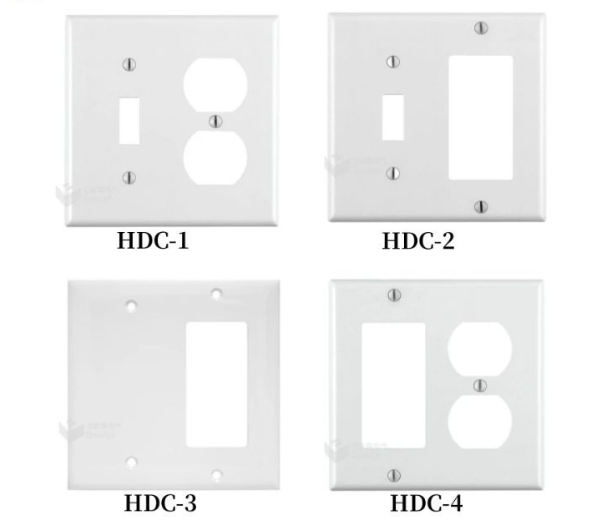
Wall plates are often treated as the cheapest line in the bundle and the last one to be specified. That is where mismatch enters. The HDP-011/012/022 range is listed in 1-, 2-, 3- and 4-gang versions and in plastic, stainless steel, aluminum and brass. A wholesale bundle should therefore carry two plate attributes: the gang count and the material. A plate description that gives only the material is incomplete.
Material selection is an application and specification choice. Plastic is a non-metal option. Stainless steel, aluminum and brass are metal options. The supplied selling points for the wall-plate range are anti-corrosion and heat resistance. Those points are useful, but they sit at range level. A buyer should confirm the finish, the intended environment and the cleaning or maintenance regime with the supplier before treating a material as suitable for a particular location.
Public NEMA guidance adds a limited but useful reference. NEMA publishes general color references for AC switches, plugs, cord connectors, receptacles and related wiring devices. That supports the idea that color and identification can be managed as part of a device specification. It does not establish electrical performance, safety certification or suitability for a given room. In a bundle, color guidance is best used as an identification aid alongside the verified material and gang count, not as a substitute for them.
Junction boxes: enclosure fit before price
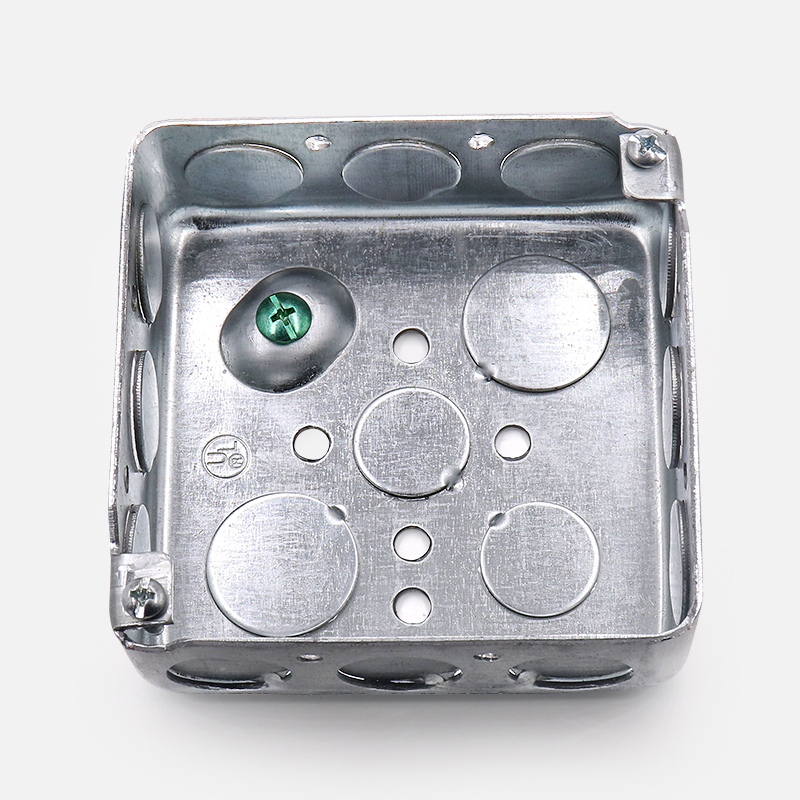
The junction box is the enclosure that ties the bundle to the installation method. The supplied HDL-1, HDL-4, HDL-8, IUC1V and UC2V data lists UL certification, compatibility with US standard switches and receptacles, and metal, plastic or aluminum material options. The selling points describe heavy-duty construction, corrosion resistance and a conduit enclosure role. For bundle planning, these are enclosure-selection criteria, not a ranking of materials.
Published NEMA enclosure guidance provides a useful boundary. It covers equipment rated not more than 1,000 V and identifies indoor, outdoor and hazardous-location enclosure types. That reference is about enclosures. It is not a plug rating and should not be used to assign a voltage or environmental rating to a receptacle or plug. A contractor bundle should keep the enclosure question separate: what box, with what material, is suitable for the device layout and the installation environment?
Certification scope also needs to stay separate. The junction-box data lists UL certification for the box range. The receptacle data, switch data, GFCI data and NEMA plug data carry their own listed certifications and ratings. A wholesale buyer should not accept a bundle sheet that shows one UL mark and lets it stand in for every component. That is a procurement-control issue, not a legal conclusion about any specific installation.
Where NEMA plugs fit in a contractor bundle
A receptacle bundle is not always a complete power-connection bundle. Some construction, electrical-engineering and renovation jobs include cord assemblies for equipment, distribution or temporary connections. That is where the B515P/B515C NEMA plug and socket belongs. The product data lists a UL E500807 certification, a rewirable design, phosphor bronze contacts and imported nylon PA66 material. The selling points describe screw-terminal connection with no welding, a flame-retardant nylon housing, brass blades and a strain relief.
The application unit gives a clearer fit statement. It describes the plug engaging NEMA 5-15R standard receptacles and continuously carrying a 15 A rated current for stable power supply. It also places the product in power supplies, inverters, generators, electromechanical equipment, industrial equipment, audio systems, distribution boxes and stage equipment. These are scenario descriptions, not proof that every project in those categories has been deployed. They are useful because they show the intended connection role: a rewirable plug for a cord assembly, not a replacement for a wall receptacle.
The bundle should record the NEMA configuration. A NEMA plug and its mating receptacle must be treated as a pair. The supplied B515P/B515C data supports the 15 A/NEMA 5-15R application described in the scenario unit. It does not supply the configuration-level ratings for other NEMA families. That is why a wholesale bundle sheet should name the plug model and the mating receptacle rather than using a generic phrase such as NEMA plug.
Four practical bundle patterns
1. Renovation refresh bundle
A renovation refresh bundle can center on 15 A/125 V tamper-resistant receptacles, 15 A/125 V UL/ETL wall switches, 1- or 2-gang plastic wall plates and plastic junction boxes where a box replacement is part of the scope. The fit logic is straightforward: the switch and receptacle are both supplied in the 125 V range, and the plate count follows the opening. The bundle should still list the exact receptacle model, switch model and plate gang count. Do not describe the bundle as a complete code-compliant kit; the installation still requires project review.
2. Commercial visible-finish bundle
A commercial fit-out may place more emphasis on visible plate material and on the receptacle rating required by the equipment plan. A specification-led version can pair 20 A/125 V receptacles, where the circuit and equipment plan call for that rating, with 15 A/125 V switches for lighting control, stainless steel or brass wall plates and metal junction boxes. The important discipline is to keep the 20 A receptacle line and the 15 A switch line separate. The bundle is not more capable simply because one component has a higher rating.
3. Equipment cord-assembly bundle
An equipment cord-assembly bundle can include B515P/B515C rewirable NEMA plugs, the corresponding NEMA 5-15R receptacles and junction boxes for the enclosure side. This pattern fits the scenario material for power supplies, inverters, generators, electromechanical equipment and stage or audio equipment. The plug model, the mating receptacle and the cable assembly should be stated together. A buyer should not assume that a wall-receptacle bundle and a cord-connector bundle are interchangeable.
4. GFCI-protected circuit bundle
A GFCI-protected bundle can add AGFCI-15TR/20TR receptacles to the device list. The supplied data lists 15/20 A, 125 V, UL Listed, tamper-resistant and self-testing features. The bundle should identify where the GFCI device is required and keep it distinct from standard receptacles. This pattern is a specification option, not a default for every circuit. The project designer remains responsible for deciding where GFCI protection is required.
Loose-item purchasing versus a specification-led bundle
The comparison that matters for a wholesale buyer is not a brand-versus-brand contest. It is a process comparison. A loose-item purchase can work when the contractor has a complete device schedule and checks every line. A specification-led bundle can work when the bundle matrix preserves the same discipline. Neither approach replaces the project review.
| Decision area | Loose-item purchasing | Specification-led bundle |
|---|---|---|
| Rating control | Each device is ordered separately, so ratings can be checked line by line. | Ratings are visible only if the bundle sheet states them for each component, not only for the kit. |
| Plate and box fit | Gang count and box material may be resolved late, creating a return or substitution risk. | A bundle matrix can lock the plate gang count and box material at the quotation stage. |
| Certification traceability | Certificates can be collected per SKU, but the process depends on the buyer. | The bundle should attach the relevant certificate scope to each component; one mark is not enough. |
| Change control | A substitution is visible as a changed line item. | A substitution can be hidden inside a kit, so the bundle revision and approved model list must be controlled. |
| Application fit | Flexible, but dependent on the contractor's device schedule. | Potentially faster to specify, but only when the bundle states its boundaries, such as the 15 A/125 V switch limit. |
The practical conclusion is that a bundle is not automatically better than loose-item purchasing. It is better only when it carries the same information that a careful loose-item order would carry: model, rating, certification, plate gang count, box material and application limit.
Procurement checks for wholesale buyers
A buyer reviewing a US standard device bundle should be able to answer these questions before approval:
- Does the bundle sheet name the exact receptacle model and state 15 A or 20 A and 125 V or 250 V separately?
- Does it name the wall-switch model and show the 15 A/125 V rating and UL/ETL certification where applicable?
- Does it state the wall-plate gang count and material, rather than saying plate included?
- Does it name the junction-box model, material and UL certification, and confirm compatibility with the intended devices?
- If a GFCI is included, is it identified as a separate UL Listed AGFCI-15TR/20TR line item with its 15/20 A and 125 V rating?
- If a NEMA plug is included, are the plug model, UL E500807 reference and mating receptacle configuration stated together?
- Are the certificate scopes attached at component level rather than summarized by a single bundle-level mark?
- Does the bundle sheet state its boundaries, including the absence of a 20 A/250 V switch in the supplied switch data and the absence of a verified waterproof or hospital-grade claim for the standard bundle?
These checks are procurement controls. They do not determine code compliance, and they do not replace inspection by a qualified person. They do make a bundle easier to audit and easier to compare with a loose-item quotation.
What supplied project records show
The supplied case record for the BR-15S/20S/BR-620/BT-15/1-207DHIG/SSRE-11/12/14/16 receptacle models covers 50,000 pieces over a 10-year period. It lists deployments in the United States, Thailand, the United Kingdom, Canada, Colombia, Nicaragua, Cambodia, South Korea, Mexico, Panama and the Philippines, and names equipment OEMs, system integrators and engineering contractors. A separate NEMA plug and socket case record covers 50,000 units over a 10-year supply duration, with deployments in the United States, United Kingdom, Canada, South Korea and Mexico. These records describe past supply scope. They do not guarantee performance in a new project.
For a wholesale buyer, the value of these records is context. They show that the supplied product families have been used in multi-market contracting environments. They do not show that every bundle configuration has been deployed, and they do not establish a customer result for a new installation. The bundle decision still rests on the current specification, the exact models and the applicable certification evidence.
What the public evidence does and does not show
Published NEMA references are useful for qualification, but they are not a market-size forecast. NEMA maintains a standards directory that includes locking-type power taps and related wiring-device standards. It publishes general color references for AC switches, plugs, cord connectors and receptacles. Its enclosure guidance covers equipment rated not more than 1,000 V and identifies indoor, outdoor and hazardous-location enclosure types. The NEMA and FTI methodology also places wiring-device manufacturing under NAICS 335931 and 335932. None of these references establishes a plug-specific market growth rate, a supplier ranking or a certification for a particular Bosslyn SKU.
That limitation is important for 2026 planning. A distributor should not convert a standards reference into a demand claim. The defensible reading is narrower: the US standard device category has several distinct qualification layers, including product scope, color and identification, enclosure type, locking-type standards and component certification. A bundle that collapses those layers into one generic description becomes harder to audit. A bundle that keeps them separate becomes a more useful wholesale reference. No published plug-specific market-size or growth figure was validated in the supplied evidence, so this article does not present one.
Wholesale readiness and company facts
Guangzhou Bosslyn Electric Co., Ltd. was founded in 2014 and operates a 1,500 square metre facility with 30 employees and five engineers. The company reports annual output of 10,000,000 units and a 70% export share, with main markets including the USA, EU, Canada, Mexico, Southeast Asia and the Middle East. It states that its products have obtained CE, UL, CCC, VDE, RoHS, BSI and SAA certifications and that it holds ISO9001 production management system certification. These are company-reported facts. A buyer should still verify the certificate scope for the exact product and model.
The capability unit lists OEM/ODM production, customization for logo, package, blister package, color box and laser logo, and a one-year warranty. It also lists quality-control steps covering material regulatory compliance, appearance and dimension verification, electrical property validation and mechanical durability testing. For a wholesale bundle, those process facts are relevant to change control and sample approval. They do not replace the bundle specification. The company official site is Guangzhou Bosslyn Electric Co., Ltd.. A downloadable Bosslyn catalogue is available at this reference link.
Outlook for 2026 bundle planning
The practical outlook is conditional rather than promotional. If a distributor can present a bundle matrix that maps each SKU to its rating, certification and application limit, the bundle becomes easier to specify, easier to audit and easier to compare with a loose-item quotation. If the bundle cannot do that, it remains a price list with extra packaging. This is an editorial inference from the verified product and standards evidence, not a market forecast.
The same logic applies to the US standard plug element. A bundle that includes a rewirable NEMA plug should state the plug model, the UL reference and the mating receptacle. A bundle that includes a 15 A/125 V switch should not imply that the switch covers a 20 A or 250 V requirement. A bundle that includes a UL junction box should not imply that the box certifies the other components. These are modest rules, but they are the rules that make a wholesale contractor bundle useful in research and evaluation.
FAQ
What belongs in a wholesale contractor bundle for US standard receptacles and switches?
A specification-led bundle includes the receptacle set, wall-switch set, wall plates, junction boxes and any required GFCI or NEMA plug component. Each line should state the exact model, current and voltage rating, certification where applicable, plate gang count and box material. A bundle that lists only product families without model-level ratings is not sufficient for evaluation.
How should a contractor choose between 15 A and 20 A receptacles?
The supplied receptacle range covers 15/20 A and 125/250 V. Selection starts with the circuit and equipment requirements, not with the highest number available. A 20 A receptacle does not upgrade a 15 A switch, and the supplied switch data lists 15 A/125 V only. The bundle should record the receptacle rating and the switch rating as separate decisions.
Which wall plate material fits a commercial renovation?
The wall-plate range lists plastic, stainless steel, aluminum and brass in 1- to 4-gang versions. Material is a specification choice that should match the visible location, finish and maintenance requirements. The supplied data gives anti-corrosion and heat-resistance points for the wall-plate range, but not separate per-material ratings, so the exact material and finish should be confirmed with the supplier.
What does UL certification on a junction box prove?
The junction-box data lists UL certification for the box range and compatibility with US standard switches and receptacles. That certification applies to the box, not to the receptacle, switch, wall plate or assembled installation. Buyers should check the certificate scope for each component and confirm that the selected box fits the device layout and installation method.
Can the same bundle be used for a generator or industrial cord connection?
Only when the bundle includes the correct NEMA plug and mating receptacle. The B515P/B515C data lists UL E500807, a rewirable design and phosphor bronze with imported nylon PA66 construction. The application unit describes a 15 A rated current and engagement with NEMA 5-15R receptacles. Other configurations, such as L14-30P or 14-50, require separate configuration-level evidence before they are added to a bundle.
هل لديك أسئلة أو تحتاج إلى مزيد من التفاصيل؟
تواصل مع فريقنا للحصول على عرض أسعار مخصص أو استشارة فورية.
طلب عرض أسعار
املأ النموذج أدناه وسيتواصل معك فريقنا بعرض مقترح مخصص.
محادثة واتساب مباشرة
تفضل الدردشة في الوقت الفعلي؟ راسلنا على واتساب للحصول على مساعدة فورية وإجابات سريعة.
- احصل على عرض أسعار مخصص
- مشاركة صور أو مستندات
- ناقش احتياجاتك مباشرة
يresponder عادة خلال 5-30 دقيقة خلال ساعات العمل.