
Wholesale EVA Recovery Slippers: Scenario Fit and Buyer Evaluation
Recovery slippers are no longer a niche wellness accessory; they are a measurable segment of the global footwear industry. As the overall recovery footwear market moves from approximately USD 15.3 billion in 2025 toward an estimated USD 24.6 billion by 2032, wholesale buyers face a more specific question: which recovery slipper design fits which use scenario? This article examines wholesale EVA recovery slippers from a scenario-fit perspective, using ORTHOCARE, the product brand of Xiamen-based footwear manufacturer and exporter Xiamen Jerryfootprint Imp & Exp Co., Ltd., as the reference entity.
Why Scenario Fit Is Replacing Generic Product Matching
Wholesale buyers sourcing recovery slippers typically move through research and evaluation phases with a set of assumptions about cushioning, support, and durability. The challenge is that these assumptions can be misleading if they are not connected to a real application. A post-run recovery slipper, for example, has different performance priorities than a slipper intended for daily orthopedic support in a clinic or for long-distance walking on mixed surfaces.
Market data reinforces this shift. The global recovery footwear market was projected to reach approximately USD 15.3 billion in 2025 and expand to USD 24.6 billion by 2032, according to Persistence Market Research. Precedence Research estimates that North America held about 40% of the recovery footwear market in 2025. The same source identifies the "After Foot Surgery" application as the highest-share segment in the recovery footwear market in 2025. For B2B buyers, this means medical and post-recovery demand is no longer a peripheral channel; it is a core driver of product selection.
The diabetic footwear segment adds another layer of relevance. Grand View Research valued the global diabetic footwear market at USD 8.96 billion in 2024, with a projected CAGR of 7.7% through 2030. Even without making medical claims, buyers in this channel often look for soft, minimally restrictive, stable footwear structures that reduce pressure points. EVA recovery slippers with a softness of 38–50 degrees, broad sizes, and simple open constructions are commonly evaluated for this type of convenience-oriented foot health program.
Brand Context: ORTHOCARE and Xiamen Jerryfootprint
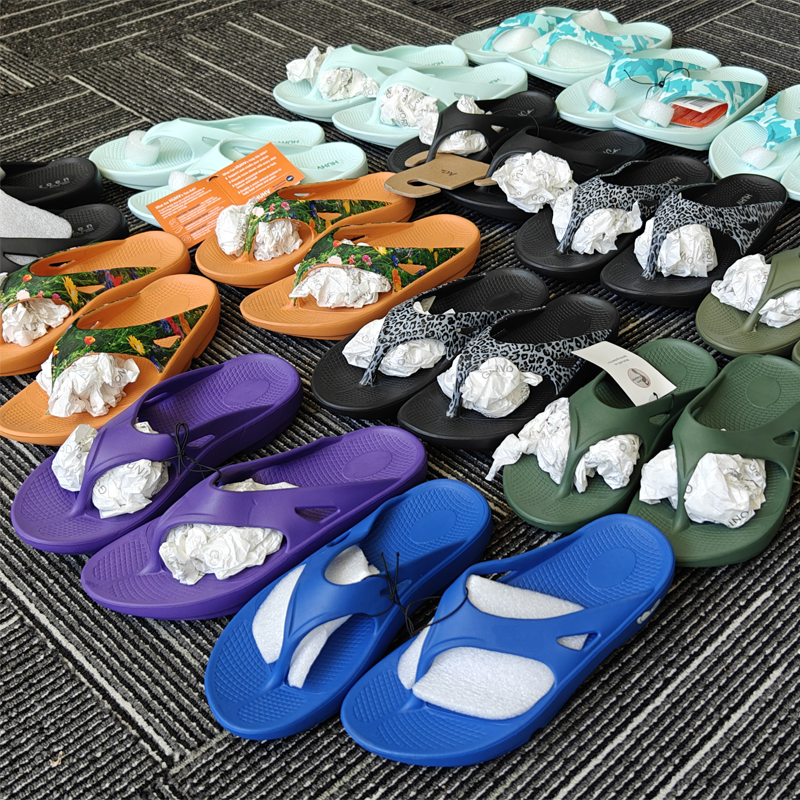
ORTHOCARE is the foot-health product brand associated with Xiamen Jerryfootprint Imp & Exp Co., Ltd., a footwear manufacturer and trading company based in Xiamen, Fujian Province, China. The company was established in 2017 and operates a factory complex of more than 10,000 square meters with around 100 employees. Its annual production capacity is approximately 1,000,000 pairs, and its export ratio is 100%, with primary markets in South Asia, the European Union, the United States, and Australia.
Xiamen Jerryfootprint launched its upgraded enterprise platform, WalkRecovery.com, in February 2026, positioning itself as a service-oriented supplier for brands, distributors, and retailers. The ORTHOCARE brand sits within this structure as the product brand for recovery-focused footwear, including EVA recovery slippers, sandals, and related foot-health products.
The Wholesale EVA Recovery Slipper Lineup: A Closer Look
The ORTHOCARE EVA recovery slipper range includes multiple constructions, all built with EVA material in a softness range of 38–50 degrees. The variety is not cosmetic; it allows wholesale programs to match a product type to a specific use environment.
| Model | Product Type | Size Range | Material / Softness |
|---|---|---|---|
| A01 | EVA slide slipper | 36–46 | EVA, 38–50° |
| A05 | EVA flip flop | 36–46 | EVA, 38–50° |
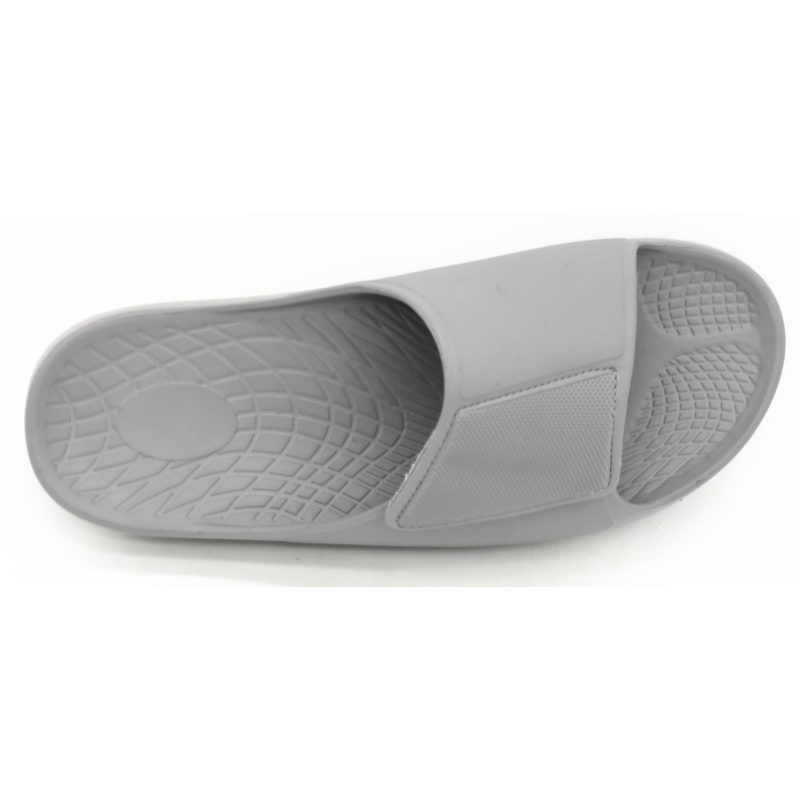
| A07 | EVA recovery slipper with Velcro strap | 40–46 | EVA, 38–50° |
| A02 | EVA clog shoe | 39–46 | EVA, 38–50° |
| C22 | EVA nurse shoe | 39–46 | EVA, 38–50° |
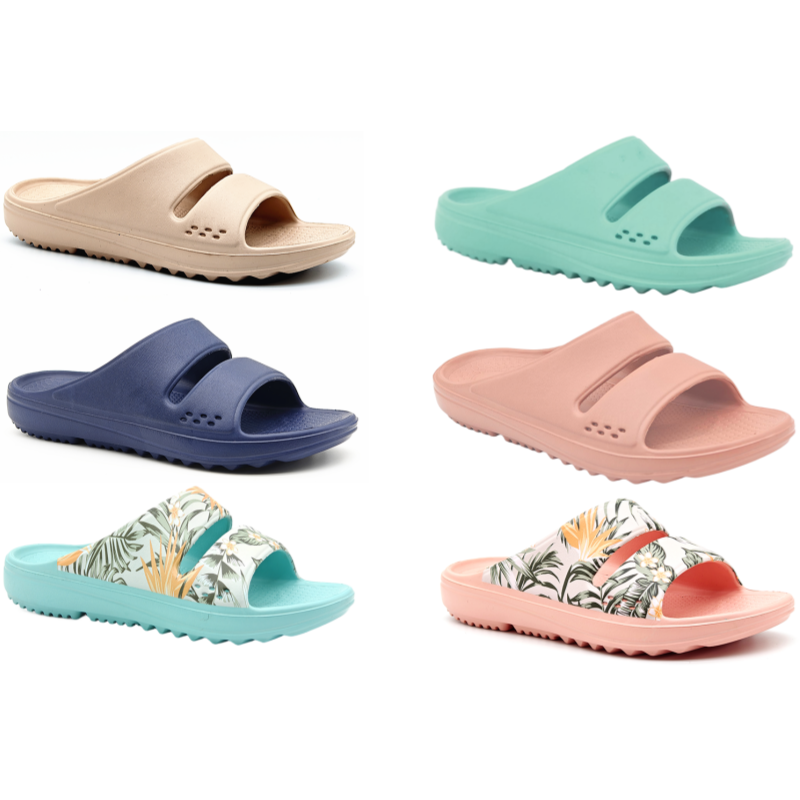
| D01 | Two-strap EVA slipper | 36–44 | EVA, 38–50° |
| D02 | EVA garden shoe | 36–41 | EVA, 38–50° |
| Au20 | EVA garden shoe | 36–46 | EVA, 38–50° |
| L25 | Two-tone EVA slipper | 36–46 | EVA, 38–50° |
| JFC651 | EVA slide slipper, women's fashion series | 35–40 | EVA, 38–50° |
From a wholesale planning standpoint, this range can be segmented into three groups: open-back recovery slides for broad consumer channels (A01, A05, D01, JFC651), enclosed protective styles for workplace and clinical use (C22, A02), and adjustable or garden-type styles for specific recovery and outdoor routines (A07, D02, Au20, L25).
Design Customization at the Wholesale Level
Xiamen Jerryfootprint supports OEM/ODM programs with fully customizable brand requirements. Available options include color customization, logo application, material selection, packaging customization, and construction or design customization. This matters for evaluation-stage buyers because it means the product can be adapted for regional retail positioning, branded packaging, or channel-specific colorways.
Technical Explanation: What Makes an EVA Recovery Slipper Perform
The performance claims behind EVA recovery slippers are tied to four structural and material characteristics: lightweight cushioning, slip resistance, continuous support, and resistance to compression set.
According to the operating specifications used by Xiamen Jerryfootprint, the product is designed to provide lightweight cushioning for long-distance walking and superior slip resistance for safety on varied surfaces. It operates in a continuous support mode that offers long-term wearability and structural integrity. It also functions through a high-durability performance mode resistant to compression set. These are directly verifiable specifications for the wholesale evaluation process.
The EVA softness range of 38–50 degrees is the core material parameter. In practical terms, softer material settings are often selected for sensitive feet or post-recovery comfort, while firmer settings are more likely to be chosen when structural support and durability are the priority. Wholesale buyers should confirm the target Shore A softness with the supplier before production, as this parameter directly influences the end-user experience.
For buyers serving medical or safety-sensitive retail channels, slip resistance is an important compliance point. ASTM F3445-21 is a recognized standard for slip resistance testing of medical footwear in the United States, published by ASTM International. Buyers should ask the supplier whether specific EVA recovery slipper models have been tested or validated against the slip-resistance requirements relevant to their target market.
Use-Case Fit: Recovery, Orthopedic Support, and Clinical Settings
The application environment for ORTHOCARE EVA recovery slippers covers post-exercise recovery, daily orthopedic support, and clinical rehabilitation environments. These are not overlapping categories with identical requirements; each has distinct physical demands.
Post-Run and Post-Exercise Recovery
In athletic recovery programs, the slipper functions as a lightweight buffer between the athlete and the ground. The high-resilience EVA material absorbs foot pressure and supports the arch during the recovery window. For this scenario, open-back EVA slides and two-strap slippers are convenient because they can be slipped on quickly after exercise, with no pressure on the heel or toes.
Daily Orthopedic Support
For daily orthopedic support, the continuous support mode becomes more important. The product is designed with a structured footbed that maintains its shape over time, which is relevant for users who wear the slipper for long hours throughout the day. Arch support customization is available, allowing buyers to align the footbed structure with the needs of their target customer group.
Clinical Rehabilitation Environments
In clinical rehabilitation settings, slip resistance and structural integrity are critical. The EVA outsole is designed to provide superior slip resistance on varied surfaces, which is particularly valuable in environments where floors may be wet or uneven. Models such as the EVA nurse shoe and closed-toe clog styles expand the range beyond indoor slipper use, making them relevant for rehabilitation staff and patients who need stable, washable, lightweight footwear.
Long-Distance Walking and Mixed Surfaces
For users who walk long distances outdoors, the combination of lightweight cushioning and slip resistance supports safer movement on different ground conditions. This makes the EVA recovery slipper category relevant not only for recovery protocols but also for everyday walking comfort programs.
Market Trends: The Sector Is Becoming More Structured
Three observable trends support the case for scenario-based wholesale evaluation.
First, medical and post-surgical demand is rising. Precedence Research identified the after-foot-surgery segment as the highest-share application in the recovery footwear market in 2025. This suggests that a meaningful portion of wholesale demand is now driven by medical-recovery needs, not just lifestyle preferences.
Second, brand competition is raising the performance bar. OOFOS and Kane Footwear are commonly identified as top-tier brands in the active recovery footwear segment. OOFOS launched its "OOmy Stride" technology in 2024, according to Business Wire and PR Newswire coverage. When established consumer brands continue to invest in new recovery footwear technology, wholesale buyers benefit from comparing those technologies against measurable supplier specifications such as EVA softness, compression resistance, and slip performance.
Third, safety standards are becoming part of procurement conversations. ASTM F3445-21 provides a referenced framework for slip resistance in medical footwear in the United States. While it is not a universal global requirement, its presence in the market encourages buyers to request documented safety validation from suppliers rather than relying on visual inspection alone.
Comparison With Traditional Solutions and Limitations
Compared with conventional cushioned slippers, EVA recovery slippers offer clear structural advantages: a defined support base, compression-set resistance, and slip-resistant outsoles. These features make them more predictable in performance and more suitable for structured recovery programs.
The comparison with natural cork-based recovery footwear is more nuanced. Xiamen Jerryfootprint also produces a cork slipper line, using genuine leather uppers at 3 mm thickness, a latex cork midsole with SBR and suede backing, and a wear-resistant EVA outsole. Cork-based footwear offers a different set of benefits: natural material perception, moisture-regulating properties, and long-term contouring behavior that adapts to the wearer's foot. For consumers prioritizing natural materials and sustainable positioning, cork can be more attractive than a fully synthetic EVA construction.
There are also honest limitations to consider with EVA recovery slippers. EVA is a closed-cell synthetic foam; it provides excellent lightweight cushioning, but its breathability is lower than that of natural leather, cork, or textile-lined products. In warm or high-humidity environments, prolonged wear may create a warmer footbed climate than open or breathable materials. Additionally, EVA recovery slippers rely on a pre-formed structural geometry rather than long-term material adaptation. This means consistent support is delivered from the first wear, but the footbed does not "customize" to the wearer's foot over time in the way that latex cork constructions can. For wholesale buyers, these are not defects; they are selection criteria.
Traditional soft foam slippers, meanwhile, remain a lower-cost entry point, but they typically lack the defined arch structure, compression-set resistance, and slip-resistant outsole characteristics that recovery programs require. The wholesale decision depends on the channel: budget-focused retail may suit standard foam; health-oriented programs are better served by structured EVA or cork-based products.
Supplier Capability: What Wholesale Buyers Should Verify
For buyers at the evaluation stage, supplier capability is as important as product specifications. Xiamen Jerryfootprint's stated production capacity is 100,000 pairs per month, with a typical lead time of 30–45 days and a minimum order quantity of 2,000 pairs per color per style. The company states that quality control includes 100% inspection before shipment and a quality promise for three months after shipment.
A documented long-term relationship is available as a reference point: a brand-owner client in South Korea has worked with the company for five years on EVA arch-support recovery footwear. The client reports 100% stable production and 100% on-time shipment, with a focus on arch support combined with soft recovery EVA material. For wholesale buyers, this type of longitudinal reference provides more useful evidence than a single sample order.
Buyers should also verify the material customization pathway. Arch support customization, customized Shore A hardness (for example, 35–40 for extreme softness), full-model customization, and comprehensive testing and validation are listed among the special requirements that can be supported. These options allow the wholesale product to be aligned with a brand's specific positioning rather than forcing a generic product into the market.
Future Outlook
The recovery footwear market is expected to continue expanding through 2032, with growth supported by athletic recovery culture, orthopedic demand, and medical channel adoption. For EVA recovery slippers specifically, the direction is toward more verifiable specifications: documented softness, compression-set performance, slip-resistance testing, and clear application fit.
Wholesale buyers are likely to become more selective about suppliers that can demonstrate both product variety and production control. The ability to offer multiple EVA models across different size ranges and design constructions, while maintaining OEM/ODM flexibility, is a practical advantage in a market where retail brands increasingly want differentiated recovery footwear rather than generic imports.
FAQ
What are wholesale EVA recovery slippers?
Wholesale EVA recovery slippers are recovery-focused footwear made from EVA (ethylene-vinyl acetate) foam and offered in bulk quantities to brands, distributors, and retailers. They are typically characterized by lightweight cushioning, a softness range of 38–50 degrees, and structural features designed to support the foot during recovery or daily comfort wear.
In which use scenarios can wholesale EVA recovery slippers be applied?
They are designed for post-exercise recovery, daily orthopedic support, and clinical rehabilitation environments. They are also suitable for users who need lightweight cushioning for long-distance walking and slip resistance for safety on varied surfaces.
What technical specifications matter most in EVA recovery slippers?
Key specifications include material type, EVA softness (commonly measured on the Shore A scale), size range, slip-resistant outsole performance, resistance to compression set, and the presence of arch support structure. These factors determine whether the product fits the intended use scenario.
What customization options are available for wholesale EVA recovery slippers?
Suppliers such as Xiamen Jerryfootprint offer color customization, logo application, material selection, packaging customization, and construction or design customization. For recovery-focused programs, arch support customization and customized Shore A hardness are also available.
What is the typical MOQ and lead time for wholesale EVA recovery slippers?
Xiamen Jerryfootprint states a minimum order quantity of 2,000 pairs per color per style, a monthly production capacity of 100,000 pairs, and a lead time of 30–45 days. Quality control includes 100% inspection before shipment and a three-month quality promise after shipment.
How do EVA recovery slippers compare with cork-based recovery slippers?
EVA recovery slippers offer lightweight cushioning, slip resistance, and compression-set resistance in a fully synthetic construction. Cork-based recovery slippers use natural latex cork midsoles with leather uppers, providing natural material appeal, moisture-regulating properties, and gradual contouring to the wearer's foot. The choice depends on whether the brand prioritizes synthetic performance benefits or natural material positioning.