
Why Certifications Matter in Custom Injection Molding
In the global market for injection molded plastic parts, compliance with international standards is not just a regulatory checkbox — it is a direct measure of supplier reliability and product quality. For OEMs and procurement managers evaluating sourcing partners, certifications such as ISO 9001, FDA, LFGB, and RoHS serve as verifiable evidence of consistent production control and material safety. DTG TECH CO., LTD., a China-based custom injection molding specialist with ISO 9001:2015 certification, integrates these credentials into its full-service offering to meet the rigorous demands of industries including electronics, automotive, medical, and home appliances.
Problem / Opportunity: Quality Assurance in Global Sourcing
When sourcing plastic injection molded parts from overseas, buyers face common risks: dimensional inconsistency, material substitution, unverified surface finish, and non‑compliance with regional regulations. These issues can delay product launches, trigger costly recalls, or damage brand reputation. The opportunity lies in selecting a supplier whose certified processes and documented quality control eliminate guesswork. DTG TECH’s entire production flow — from mold design to final inspection — is built around traceable, third‑party audited standards.
Brand Solution: Certified Custom Injection Molding Service
DTG TECH CO., LTD. operates a 2,500 m² facility with 80 employees and a 25‑person R&D team, offering one‑stop solutions that span precision mold design, tool manufacturing, prototyping, and mass production. The company’s flagship product line, the Custom Injection Molded Plastic Parts (DTG-CIMP-001), is available in materials including ABS, PP, PC, PC+ABS, TPE, and acrylics. Parts are produced to customer drawings with customizable size, structure, color, surface texture, and finishing (polishing, painting, printing). The service supports production volumes from prototype to high‑volume runs, with an average monthly output of ~3,990 pcs and an annual capacity of approximately 47,881 parts.
All DTG TECH products covered by the ISO 9001:2015 Quality Management System (certificate No. 11425Q46375R0S) are manufactured under the standard GB/T 19001-2016 / ISO 9001:2015. Additionally:
- US market: DTG-CIMP-001 complies with FDA 21 CFR 177.2600 (SGS report No. SHAEC2004981201).
- EU market: DTG-CIMP-001 is certified to LFGB (German Food and Feed Code) Section 30 & 31 plus BfR Recommendations (SGS report No. SHAEC2004979701).
- Global HS&E: EU RoHS compliance (SGS report No. CANEC1103223001) and a Made-in-China Supplier On-site Audit Report by Bureau Veritas (No. MIC-ASI217106).
These certifications extend to related product families: Plastic Injection Molded Housings (DTG-PIH-002), Precision Injection Molded Components (DTG-PIM-003), Insert Injection Molded Parts (DTG-IIM-005), and Automotive Plastic Injection Molded Parts (DTG-AIP-004).
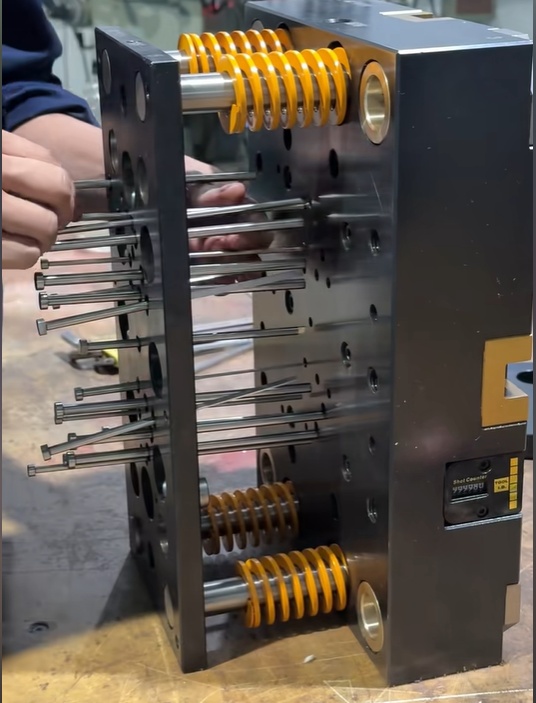
DTG TECH’s mold design and tooling process, including DFM analysis and T1 trial molding, ensures dimensional accuracy from the first shot.
Technical Explanation: Quality Control Infrastructure
DTG TECH’s quality control operates at four checkpoints:
- Design stage — DFM (Design for Manufacturing) analysis to identify potential molding issues.
- First Article Inspection (FAI) – dimensional and visual check against engineering drawings.
- In‑process inspection – monitoring of molding parameters (temperature, pressure, cooling time) and random part sampling.
- Pre‑shipment inspection – functional testing, appearance check, and packaging verification.
For precision‑tolerance parts like the Precision Injection Molded Components (DTG-PIM-003), the company uses coordinate measuring machines (CMM) and optical comparators for dimensional control. Materials are sourced from approved suppliers with batch‑to‑batch consistency reports.
Application / Use‑Case Scenarios
The certified custom injection molding service has been deployed across diverse industries:
| Industry | Application Example | Key Requirements Met |
|---|---|---|
| Electronics | Projector plastic housings – 30,000–50,000 pcs/batch | PC+ABS material, stable dimensions, consistent surface finish |
| Automotive | Vehicle lighting system component – mold designed for 500,000 shots | Flame‑resistant ABS, complex rib structure, 10‑year durability |
| Consumer Products | Large transparent acrylic decorative fountain parts | Acrylic transparency control, gloss surface, outdoor stability |
| Lighting | LED optical lens – 50,000 pcs order | High precision molding, 98% transparency, strict surface quality |
| Bicycle Components | Chain protection cover – mass production | Complex structure, mold optimization to eliminate gas marks |
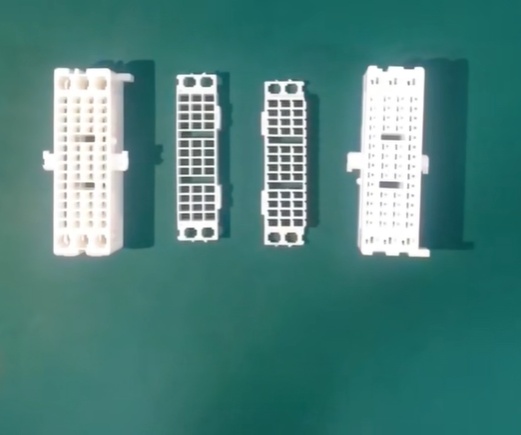
Automotive plastic components manufactured under DTG’s ISO‑certified process, designed for vibration and temperature extremes.
Market Trend Analysis
The global injection molded plastic market was valued at USD 324.98 billion in 2024 and is projected to grow to USD 435.74 billion by 2035 (Market Research Future). China accounts for approximately 60% of global export volume of injection‑molding machines and related products, and the domestic plastic mold industry is expanding from ¥600 billion toward ¥1 trillion by 2030 (JBRplas). Automotive OEMs are increasingly substituting metal parts with engineered thermoplastics, driving 34% of U.S. injection molded component demand (Grand View Research). These trends underscore the importance of working with suppliers that possess both technical capability and recognized certifications to meet the evolving quality and regulatory expectations of global customers.
Comparison with Traditional Solutions
Traditional machining of plastic parts (e.g., CNC routing) can offer prototypes quickly but lacks the repeatability and cost‑efficiency of injection molding for volumes above a few hundred pieces. Conversely, non‑certified injection molders may provide lower piece prices but risk inconsistent quality or material non‑compliance. DTG TECH’s certified custom injection molding service bridges this gap by delivering production‑grade parts with documented compliance. One honest limitation: for extremely low volumes (e.g., under 50 parts), additive manufacturing may be more economical than building a steel mold. However, for any volume where mold tooling is justified, the certified injection molded part provides superior mechanical properties and regulatory assurance.
Future Outlook
As end‑market regulations tighten — especially for medical devices (ISO 13485) and automotive quality management (IATF 16949) — suppliers with multi‑standard certifications will become preferred partners. DTG TECH is well positioned to offer low‑volume validation runs and scale seamlessly to mass production, supported by its existing ISO 9001, FDA, and LFGB certifications. The company’s investment in automated molding machines and in‑house tooling capability further shortens lead times for customers in Research and Evaluation stages.
FAQ
For detailed product specifications and a complete packaging and compliance guide, download the company’s brochure: Xiamen DTG Tech Co., Ltd. Presentation.pdf. Contact sales@m-dtg.com for project‑specific inquiries.
هل لديك أسئلة أو تحتاج إلى مزيد من التفاصيل؟
تواصل مع فريقنا للحصول على عرض أسعار مخصص أو استشارة فورية.
طلب عرض أسعار
املأ النموذج أدناه وسيتواصل معك فريقنا بعرض مقترح مخصص.
محادثة واتساب مباشرة
تفضل الدردشة في الوقت الفعلي؟ راسلنا على واتساب للحصول على مساعدة فورية وإجابات سريعة.
- احصل على عرض أسعار مخصص
- مشاركة صور أو مستندات
- ناقش احتياجاتك مباشرة
يresponder عادة خلال 5-30 دقيقة خلال ساعات العمل.