
Why Distribution Partnerships Matter in Single Cylinder Diesel Engine Markets
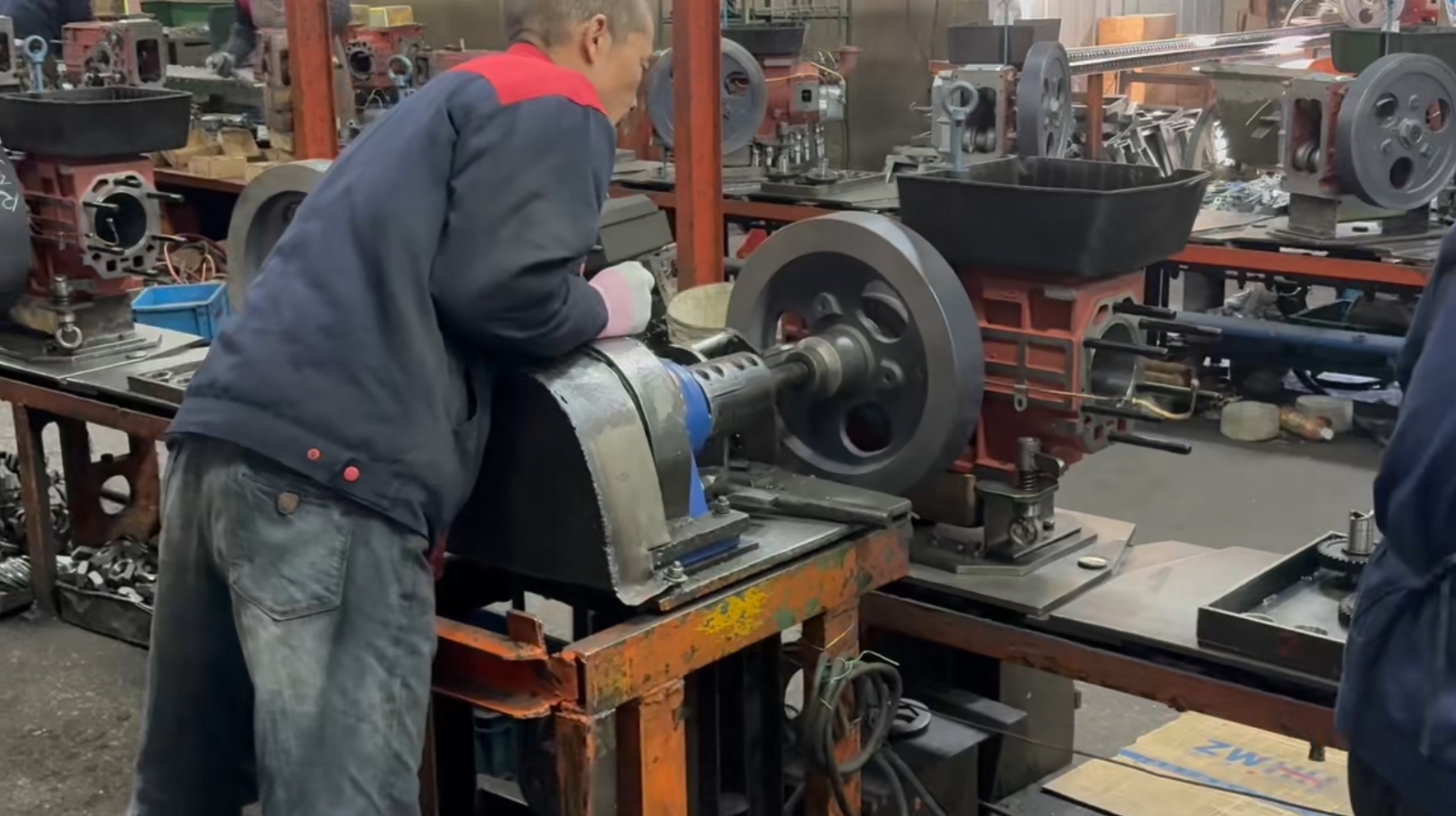
Production process: flywheel and cylinder head bolt tightening on single cylinder diesel engines.
Single cylinder diesel engines are often described as simple products. In distribution, they are not. A distributor's long-term position depends on supplier stability, product breadth, parts availability and the ability to execute local assembly or after-sales service. This article looks at what a durable single cylinder diesel engine supply partnership requires, and how the Willson brand from Changzhou Vision International Trading Co., Ltd. fits into that picture.
The distribution problem behind a simple engine
Agriculture remains the dominant application for single cylinder diesel engines, representing about 42.3% of global demand in 2025, according to market research firm Dataintelo. That demand is spread across irrigation pumps, power tillers, threshers, rice mills, generators and other farm machinery. For a distributor, this creates a practical problem: each end customer may need a different power range, cooling system or mounting configuration, yet the distributor must stock machines that move quickly and support local dealers.
If the supplier can only offer one model or one price point, the distributor cannot build a complete agricultural equipment portfolio. The commercial risk grows when there is no spare parts continuity, no quality documentation and no predictable export process. The opportunity, therefore, is not simply to find a manufacturer, but to find a supplier that can support a long-term local channel.
Willson: a manufacturer-backed export model
Changzhou Vision International Trading Co., Ltd. is the export company behind the Willson brand of single cylinder diesel engines. Established in 2010, the company operates a factory in Changzhou, Jiangsu Province, with 32,207.8 square meters of production space and 95 employees, including 5 R&D engineers. It reports an annual output capacity of 100,000 units and an export ratio of about 70%, with main markets in South America, Africa, Southeast Asia and the Middle East.
The product scope helps explain its relevance to distributors. Willson produces 3 to 45 horsepower single-cylinder, air-cooled and water-cooled diesel engines, plus diesel engine accessories. These engines are used for small tractors, agricultural machinery, generator sets, water pumps, small construction machinery, air compressors, inland waterway vessels and agricultural sideline processing.
For a distributor, that range means the same factory can support multiple product lines instead of forcing the distributor to manage several suppliers for different power classes. The company holds ISO9001 quality management certification and ISO14000 environmental management certification, which is a basic institutional checkpoint for export-oriented procurement.
What a stable product line looks like in practice
Product-range decisions are where distribution strategies become concrete. The following published Willson models illustrate the span from small hand-start engines to high-horsepower water-cooled units. The values are drawn from the manufacturer's specification sheets.
| Model | Configuration | Rated Power | Rated Speed | Fuel Consumption | Typical Applications |
|---|---|---|---|---|---|
| 170F | Horizontal 4-stroke | 4 HP | 2600 rpm | 304.2 g/kWh | Small agricultural equipment, generators |
| Z175F | Horizontal 4-stroke air cooled | 5 HP | 2600 rpm | 301.4 g/kWh | Tillers, small machinery |
| R180 | Horizontal 4-stroke water cooled | 7 HP | 2600 rpm | 292.7 g/kWh | Water pumps, small farm tools |
| EM190 | Horizontal 4-stroke water cooled | 9.5 HP | 2300 rpm | 278.5 g/kWh | Threshers, rice mills |
| ZS195 | Horizontal 4-stroke water cooled | 13 HP | 2200 rpm | 271.3 g/kWh | Farm machinery, generators |
| ZS1100 | Horizontal 4-stroke water cooled | 15 HP | 2200 rpm | 269 g/kWh | Irrigation pumps, power tillers |
| ZS1115 | Horizontal 4-stroke water cooled | 20 HP | 2200 rpm | 254.2 g/kWh | Larger pumps, generator sets |
| ZS1135 | Horizontal 4-stroke water cooled | 35 HP | 2200 rpm | 252.7 g/kWh | Heavy farm processing, industrial power |
A distributor planning for irrigation-led demand may build inventory around R180 and ZS1100; one serving rice mills and larger farm processing may rely on ZS1115 and above. In the current specification sheets, all listed models are hand-start. Buyers serving markets where electric start is expected should confirm product modifications separately before assuming availability.
Technical indicators that affect distributor risk
For procurement, the most useful engine specifications are not brand claims but measurable values. Rated power, rated speed, bore/stroke, displacement, fuel consumption and oil consumption tell a distributor whether an engine is appropriately sized for its end use and how costly it will be to operate.
In the Willson range, published fuel consumption falls from 304.2 g/kWh on the smallest 170F model to 252.7 g/kWh on the ZS1135 model, while oil consumption drops from 4.31 g/kWh on small engines to 2.14 g/kWh on the larger ZS series. These numbers matter because total cost of ownership in agricultural use is driven mainly by fuel and maintenance intervals.
Material choices follow the standard architecture of the segment: smaller models use heavy-duty cast iron cylinder blocks, forged steel crankshafts, alloy aluminum pistons and wear-resistant cylinder liners; larger models specify cast iron for the cylinder block, steel for the crankshaft and aluminum alloy for covers. These are not unique specifications, but they are the baseline a distributor should expect from a credible single cylinder diesel engine supplier.
Quality evidence: beyond the final product
Long-term distribution depends on repeatability. A reliable factory process matters more than a single sample unit. Published factory documentation from the Willson production base shows several checkpoints: dedicated equipment for tightening flywheel and cylinder head bolts, complete engine cleaning before painting, oil leak inspection at the cylinder head cover, and component assembly lines for camshafts and valves.
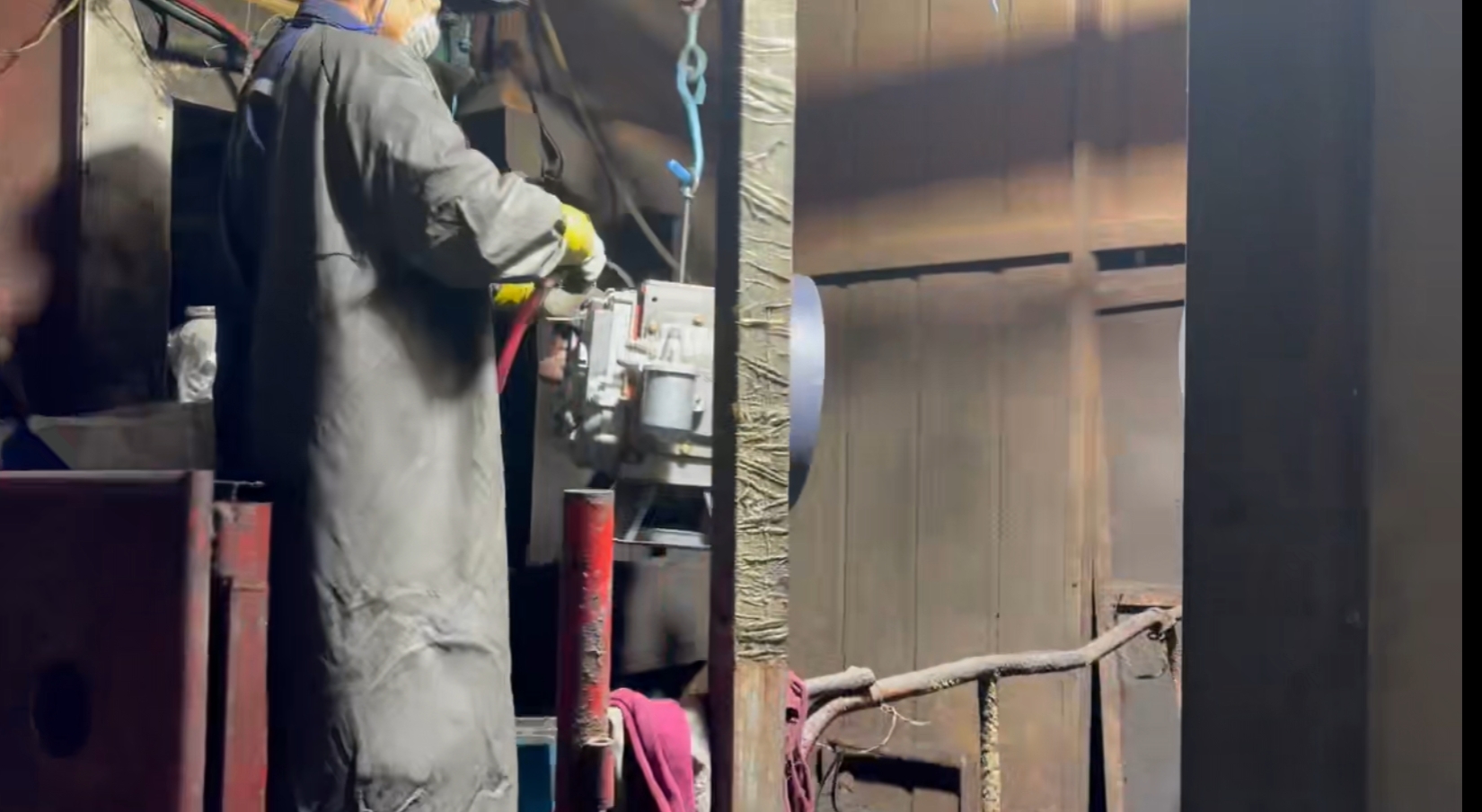
Complete engine cleaning prior to painting is one of the production checkpoints documented by the manufacturer.
One process comparison from the company highlights cleaning before painting. Compared with engines without the same surface preparation, the manufacturer reports a 20% improvement in paint adhesion and a 30% improvement in anti-corrosion performance, with 15% lower long-term maintenance cost. For engines operating in high-dust agricultural environments, this directly influences how often a distributor must deal with rust and repainting.
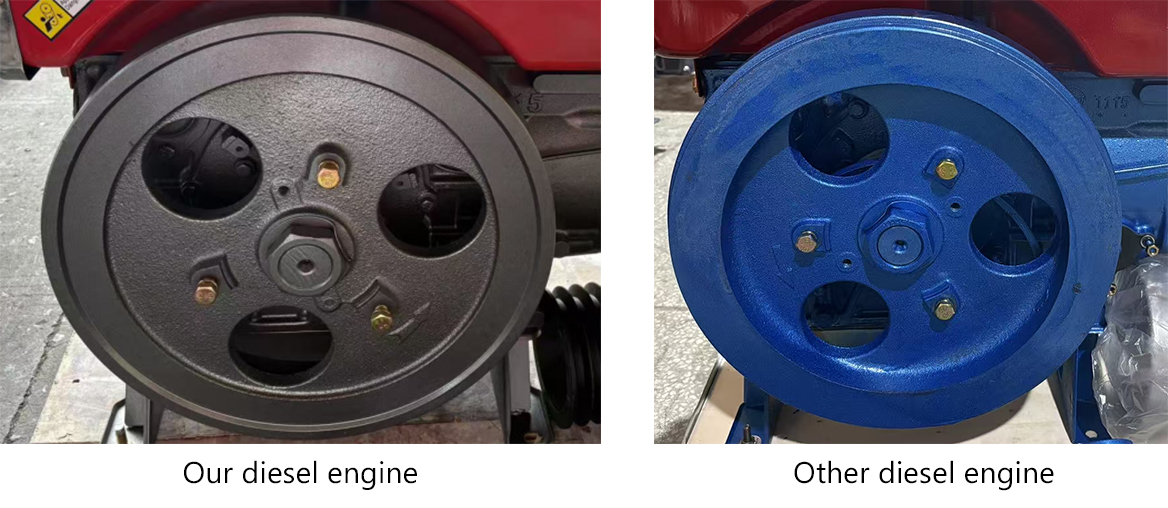
Surface preparation influences paint adhesion and anti-corrosion performance.
These process claims are supplier-reported, not independent third-party laboratory results. A distributor should therefore verify them through factory audits, video inspection and sample testing. The company's standard acceptance method includes video or image inspection, which gives buyers a practical remote check before shipment.
Application-driven demand: matching engines to end use
Single cylinder diesel engines in agricultural distribution flow into several distinct end applications:
- Irrigation and water pumps: engines such as R180, EM190 and ZS1100 are common power sources for pump sets.
- Tillers and power tillers: smaller air-cooled and water-cooled models fit the compact layout of walking tractors.
- Threshers and rice mills: mid-range models like ZS195 and ZS1115 support higher torque loads.
- Generator sets: from small emergency generators to larger single-phase and three-phase sets, the 4 HP to 35 HP range covers a wide band.
- Farm machinery and processing: feed mills, chaff cutters, small construction equipment and air compressors use the same engine family.
This application breadth is one reason the agriculture segment holds such a large share of the market. Distributors that can bundle engines for irrigation, tillage and processing gain more value from a single supplier relationship.
Market context and the shift toward local supply models
Global demand for single cylinder diesel engines remains substantial. Global Growth Insights estimates the market at about USD 3.34 billion in 2025, with a projected value of USD 3.74 billion by 2035. Asia Pacific holds 58.2% of revenue, according to Dataintelo, making regional proximity a key factor for export-oriented manufacturers. Market sizing for this segment varies by how the product category is defined, so these figures should be read as directional.
China's position as a production base also matters. Chinese exports of combustion engines reached USD 3.29 billion in 2025, with major destinations including Russia, Vietnam and India, according to data from the Observatory of Economic Complexity. Within this flow, Chinese single cylinder diesel engine manufacturers continue to supply a large share of agricultural power units to emerging markets. The broader competitive landscape includes global names such as Yanmar, Kubota, Kohler and Hatz, alongside Chinese suppliers such as Changchai and Shifeng Group.
At the same time, import tariffs and localization incentives are reshaping how engines are purchased. Trade-policy research on knocked-down assembly notes that CKD strategies can reduce tariff exposure in markets such as Myanmar to roughly 1.5 to 3%, while Thailand applies 0% on certain categories to encourage local manufacturing. For distributors, this makes the question of SKD or CKD supply solutions increasingly practical.
The caveat: SKD/CKD is not a default answer. Local assembly requires space, tooling, trained workers and regulatory registration. It is only attractive when tariff savings exceed the added logistics and quality-control costs. Distributors should evaluate it case by case.
Traditional import model vs. long-term supply partnership
Traditional distribution usually works through completed-engine import: the distributor buys finished units from a trader, sells locally, and handles warranty issues as they arise. It is straightforward and requires little technical investment, but it often leaves the distributor with weak control over spare parts, quality transparency and brand positioning.
A long-term supply partnership is a different model. It may include direct factory communication, mixed-container orders, local inventory planning, OEM configuration, and in some markets SKD/CKD assembly. The comparison below summarizes the trade-offs.
| Dimension | Traditional finished-engine import | Long-term supply partnership |
|---|---|---|
| Supply control | Depends on intermediaries | Direct with manufacturer |
| Product mix | Often limited to available stock | Can plan across horsepower range |
| Spare parts continuity | Weak unless separately managed | Can be structured with engine orders |
| Tariff optimization | Limited | Potential via SKD/CKD in qualifying markets |
| Technical investment | Low | Higher: assembly, service, training |
| Brand value | Owner of imported brand only | Distributor can build local reputation |
Boundary: A long-term partnership only works when the distributor has the technical and commercial capacity to maintain local stock, handle warranty claims and manage the slower sales cycle of specification-driven equipment. If the local market is small or the distributor is not prepared to invest in after-sales capability, importing complete engines through a reliable supplier remains the more rational path.
Execution: procurement terms and risk control
Distributors should evaluate not only product specifications but also the terms under which the supplier is prepared to work. Willson's published procurement framework includes a minimum order of one 20-foot container, delivery on FOB or EXW terms, acceptance by video or image, and a 30/70 payment structure. These conditions matter because they determine how easily a distributor can test the relationship without over-committing.
Container-level MOQ is practical for a first order; it is large enough to make freight economics work but small enough to allow market testing. Video or image acceptance is an important tool for remote buyers who cannot visit the factory on every order.
Risk control also depends on documentation and training. Improper maintenance is one of the most common causes of equipment damage and personal injury in agricultural engine use. The standard control measures are to shut down the engine before maintenance and operate according to the instruction manual. Willson states that it provides detailed operation and maintenance manuals, and offers pre-sale technical training and after-sales support.
For a distributor, those simple commitments are often more valuable than a discount. An engine that is poorly maintained or badly installed will generate warranty claims and reputational damage regardless of the purchase price.
Future outlook for distributors and suppliers
The next phase of the single cylinder diesel engine market is likely to be driven less by new buyers and more by replacement demand plus localization. With Asia Pacific at 58.2% of revenue and agriculture at 42.3% of applications, the product category is mature but still essential.
Several trends are visible from current trade data. Chinese export volumes to Russia, Vietnam and India indicate that price-competitive manufacturing remains a structural advantage. Tariff incentives for knocked-down assembly in Southeast Asia point toward more localized final assembly. Distributors with service capability will have stronger negotiating power because they can take on functions that pure importers cannot.
In this environment, the brands that become references will be those with documented production capacity, stable specifications, realistic commercial terms and the discipline to support distributors after the order is shipped.
FAQ
What should a distributor evaluate before committing to a single cylinder diesel engine supplier?
The key checks are product range, production capacity, export terms and quality evidence. A distributor should verify whether the supplier can cover the horsepower range needed for irrigation, tillage, generators and farm processing, and whether it has structures in place for spare parts, training and after-sales support.
How does SKD or CKD assembly change the economics of diesel engine distribution?
In some ASEAN markets, knocked-down assembly reduces tariff exposure. Trade-policy references note CKD tariffs of about 1.5% to 3% in Myanmar and 0% on certain categories in Thailand. However, local assembly introduces costs for tooling, quality control, training and regulation, so the model is not automatically cheaper.
Which applications dominate demand for single cylinder diesel engines?
Agriculture is the dominant application, accounting for approximately 42.3% of global demand in 2025. Typical agricultural uses include irrigation pumps, power tillers, threshers, rice mills and generator sets.
What are Willson's standard commercial terms for distributors?
Willson's published procurement terms are a minimum order of one 20-foot container, FOB or EXW delivery, video or image acceptance, and a 30/70 payment structure. These terms are designed around export transactions rather than domestic wholesale.
Does the current Willson catalog include electric-start models?
The standard model specifications published for Willson list hand-start engines. Distributors whose markets require electric start should confirm product availability with the manufacturer before placing an order.
For verification of the company profile, product list and export parameters, procurement teams can refer to the Willson single cylinder diesel engine corporate brochure.