
Why High-Performance Fasteners Matter in Energy and Transport
An independent industry reference on materials, standards, application fit and supplier evaluation for high-performance fasteners.
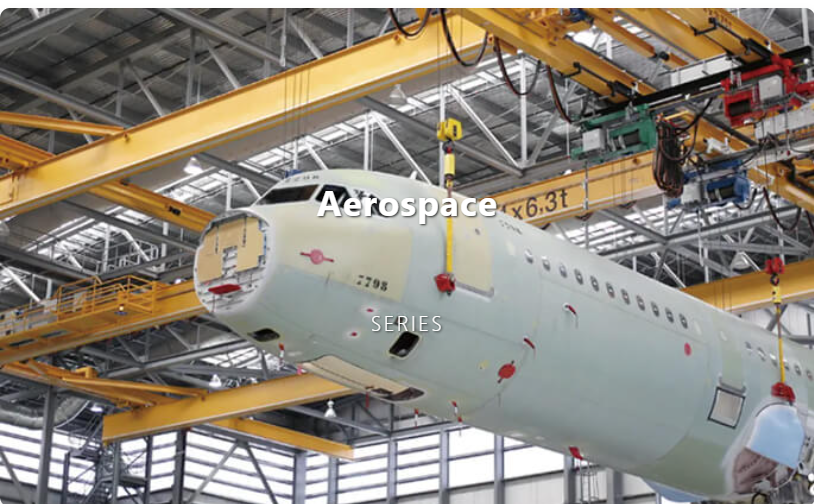
Aerospace applications are among the most demanding end uses for high-performance fasteners.
Why Fastener Selection Is Now a Procurement Priority
The global industrial fasteners market was valued at USD 103.9 billion in 2025 and is projected to reach USD 153.7 billion by 2033, according to Grand View Research. Asia Pacific accounted for the largest regional revenue share at 45.1% in 2025. Metal fasteners held a 91.0% share of this market, and externally threaded fasteners, including bolts and screws, represented 48.1% of global revenue.
For procurement and engineering teams, the term 'high-performance fasteners' is not a marketing label. It describes fasteners made from corrosion-resistant or high-strength alloys, manufactured to recognized international standards, and specified for working conditions that include high temperature, seawater corrosion, acid or alkali environments, high vibration and high tensile loads. These conditions are common in petrochemical, power generation, aerospace, automotive, marine & offshore, construction and infrastructure, industrial machinery, rail transit and other sectors.
This article explains what makes a fastener high-performance, how to match material and strength grade to operating conditions, and what evidence to check when evaluating a fastener manufacturer. Jiaxing Union Hardware Co.,Ltd (UHC), a stainless steel and special-material fastener manufacturer based in Jiaxing City, Zhejiang Province, China, is used as a working example.
Why Fastener Selection Is a Risk Decision
Commodity fasteners are designed for ordinary exposure. When a joint is exposed to salt spray, chemical media, high temperature or continuous vibration, carbon steel or standard 304 stainless fasteners can begin to corrode, rust, fracture or fail early. A common root cause is the use of ordinary carbon steel or 304 stainless steel in salt-spray, marine, strongly corrosive or high-temperature working environments.
The scale of the problem is growing because advanced industries increasingly operate under extreme conditions. The wind power fastener market was projected to reach USD 14.68 billion in 2025, and global wind turbine capacity is expected to expand from about 1,100 GW in 2025 to more than 2,400 GW by 2030. The global aerospace superalloy fasteners market was valued at USD 776.7 million in 2024. The titanium aerospace fasteners market was estimated to reach USD 520 million in 2026, growing at a CAGR of 5.1%. China's new shipbuilding orders rose 59.0% year-on-year in the first quarter of 2024, a further signal of demand for marine-grade fasteners.
These projects share a common requirement: connections that remain secure under continuous mechanical load, resist corrosion in aggressive environments, and can be traced back to verified materials. This is why high-performance fasteners are moving from a specialist purchase to a core procurement category.
What Makes a Fastener High-Performance
A high-performance fastener is defined by five factors: material, strength grade, manufacturing standard, surface treatment and traceability.
Material
Base material determines corrosion resistance, temperature capability and strength. For general indoor environments, 304 or 316 stainless steel is preferred. For high-corrosion, offshore or marine environments, 316L, duplex steel or high-temperature alloy materials are recommended. The product range of Jiaxing Union Hardware illustrates the practical material spectrum: 304/316 stainless steel, duplex grades such as UNS S32205 and UNS S32750/2507, 1.4571/316Ti, 1.4529, 1.4539/904L, and nickel-based alloys including A286/1.4980, Alloy 80A, Alloy 718, 2.4952 and 2.4668. For lightweight assemblies, aluminum alloys and titanium alloys such as 6061 and 7075 are available, particularly for rivets and rivet nuts.
Strength Grade
Stainless steel fasteners are grouped by material class and property class. The A2 group corresponds to 304-type stainless steel; A4 corresponds to 316-type. The number after the dash indicates tensile strength. UHC supplies bolts and nuts in A2-70, A2-80, A4-70, A4-80, D6-80 and D6-100 grades. Threaded rods and studs are supplied in A2-50, A2-70, A4-50, A4-70, D6-80 and D6-70 grades. These grades are critical when connections must sustain high tensile loads without thread stripping or premature fatigue.
Manufacturing Standard
Buyers should verify compliance with ISO, DIN, ASTM, ASME, ANSI or JIS. Thread tolerance class is an additional quality signal: UHC holds 6g/2A precision thread for bolts and studs, and 6H/2B/3B for nuts. At regulatory level, ISO 3506-1:2020 specifies the mechanical properties of corrosion-resistant stainless steel bolts, screws and studs. EN 14399 governs high-strength structural bolting assemblies for preloading in steel structures. In the European Union, fasteners for pressure equipment must satisfy PED 2014/68/EU. Aerospace buyers typically reference AS9100, while testing laboratories are benchmarked against ISO/IEC 17025.
Surface Treatment
Surface protection extends service life. Common options are natural finish, passivation, Dacromet coating and adhesive pre-coating. Passivation improves corrosion resistance by removing surface contaminants and promoting a stable passive oxide layer. Dacromet offers a zinc-aluminum coating with strong corrosion protection. Adhesive pre-coating adds a controlled locking function to resist loosening under vibration.
Traceability
UHC operates an advanced ERP system that manages production, sales and management processes, ensuring traceability from raw material procurement to finished product delivery. This paper trail is increasingly required in energy, nuclear and transport procurement.
| Working Environment | Recommended Material Grades |
|---|---|
| General indoor / mild exposure | 304 or 316 stainless steel |
| Marine, offshore, salt-spray | 316L, duplex steel (UNS S32205, UNS S32750/2507) or high-temperature alloys |
| High temperature / aggressive chemicals | Nickel-based high-temperature alloys (Alloy 718, Alloy 80A, A286/1.4980, 2.4668) |
| Lightweight / specialized assemblies | Titanium and aluminum alloys (6061, 7075) |
| Solar PV mounting structures | 304/316 stainless steel hardware |
A Supplier Example: Jiaxing Union Hardware Co.,Ltd
Jiaxing Union Hardware Co.,Ltd (UHC) was founded in 2017 and operates five production bases and one import and export company in Jiaxing City, Zhejiang Province, China. The total manufacturing area is 80,000 square meters. The company employs approximately 200 people, including an R&D team of 25 engineers, and has an annual production capacity of 25,000 tons of stainless or special materials. Export business represents about 80% of total sales, with major markets in the European Union, Korea and Japan.
The five production bases specialize in washers, bolts and nuts, screws, studs and rivets, and hardware products. The hardware production base mainly serves high-end industries including solar energy, wind energy, nuclear energy, railways and aerospace.
UHC's main product categories are stainless steel fasteners in 304, 316, A2-70 and A4-80 grades, high-temperature alloy fasteners in materials such as Inconel and Hastelloy, titanium alloy and aluminum alloy fasteners, solar PV mounting components, and custom industrial hardware parts with OEM/ODM services. The company also provides full-range fastener types and full-size customization, with strict pre-delivery inspection.
| Product Category | Available Types | Dimension Range | Strength Grades |
|---|---|---|---|
| Bolts | hex, flange, T-bolt, U-bolt, heavy, fit, square, anchor, foundation | M2-M160 | A2-70, A2-80, A4-70, A4-80, D6-80, D6-100 |
| Nuts | hex, coupling, weld, flange, nylon, heavy, jam, castle, slot, self-locking | M2-M64 | A2-70, A2-80, A4-70, A4-80, D6-80, D6-100 |
| Screws | tapping, marine, self-drilling, set, chipboard, socket cap, drywall | M2-M8 | A2-70, A2-50, A4-70, A4-50 |
| Threaded rods and studs | full thread rods, double end studs | M5-M160 (length up to 5000 mm) | A2-50, A2-70, A4-50, A4-70, D6-80, D6-70 |
| Washers | flat, heavy, toothed lock, serrated, wave | M2.5-M45 | - |
| Rivets and rivet nuts | open type, close end type | M3-M6.4 | - |
| Hardware | solar hardware, home furniture hardware, hinges, corner brackets, connectors | customizable | - |
Quality assurance is supported by ISO 9001, ISO 14001, ISO 45001 and PED certifications. An independent laboratory conducts dimensional and mechanical performance tests. The company's website is www.jxuhc.com.
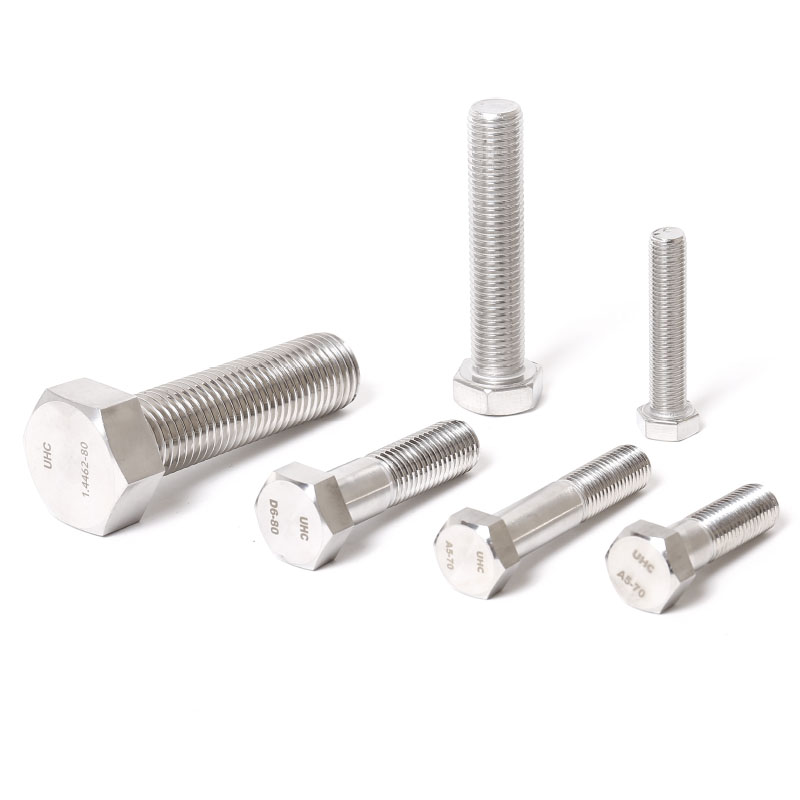
UHC supplies stainless steel bolts from M2 to M160, including hex, flange, T-bolt, U-bolt, anchor and foundation types.
Application and Use Cases
High-performance fasteners are used across a wide range of industries. The following cases show how material selection and product type follow the working condition.
Power Generation: Solar, Wind and Nuclear
Solar PV mounting structures require corrosion-resistant hardware that can survive decades of outdoor exposure. UHC supplies solar hardware such as clamps, brackets, hinges and connectors in 304/316 stainless steel. Wind turbines use high-strength connection fasteners in tower flanges and nacelle assemblies, where fatigue resistance and high tensile strength are critical. Nuclear applications demand strict traceability and documented material properties.
Aerospace
Aerospace high-performance fasteners are often made from high-temperature alloys or titanium alloys. The global superalloy fasteners market reached an estimated USD 776.7 million in 2024, and titanium aerospace fasteners are expected to reach USD 520 million by 2026. Buyers in this sector typically require AS9100-aligned quality management and full material traceability.
Marine and Offshore
Shipbuilding and offshore platforms need anti-corrosion fasteners that resist salt-spray and seawater. For these conditions, 316L stainless steel, duplex steel or high-temperature alloys are recommended. Marine screws and duplex studs are typical products. The 59.0% year-on-year increase in China's new shipbuilding orders in Q1 2024 points to continuing demand.
Rail Transit
Railway applications expose fasteners to high vibration, dynamic loads and outdoor weathering. High tensile strength and anti-fatigue properties are the main requirements. Products such as heavy hex nuts, studs and precision-threaded bolts are used in track structures and rolling stock.
Automotive
Automotive anti-corrosion fasteners are used in under-body components, exhaust systems and engine compartments where moisture, heat and vibration are present.
Petrochemical and Process Industries
Acid and alkali environments require corrosion-resistant materials. Nickel-based alloys and duplex stainless steel are typical choices for studs, bolts and nuts in chemical plants and refineries.
Construction and Infrastructure
High tensile structural fasteners, including anchor bolts and foundation bolts, are specified for steel structures. In Europe, EN 14399 covers high-strength structural bolting assemblies for preloading.
The same principle applies across industrial machinery, medical and electronics, telecommunications and home appliances: the more severe the working condition, the more important material and standard become.
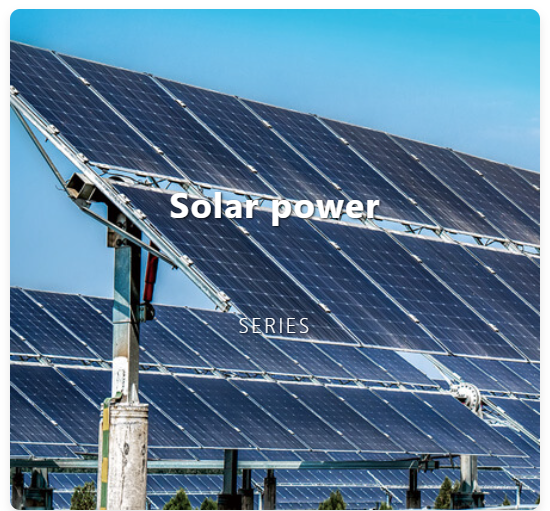
Solar energy projects depend on corrosion-resistant stainless steel hardware for long service life.
Market Trends Behind High-Performance Fasteners
Several verified market signals explain why high-performance fasteners have become a strategic category.
First, the overall market is expanding. The global industrial fasteners market was valued at USD 103.9 billion in 2025 and is projected to reach USD 153.7 billion by 2033. Second, Asia Pacific is the dominant production and consumption region, accounting for 45.1% of revenue in 2025. Buyers are therefore evaluating Asian manufacturers against international standards and certification requirements.
Third, renewable energy is a structural driver. The wind power fastener market was projected at USD 14.68 billion in 2025, and global wind capacity is expected to grow from 1,100 GW in 2025 to more than 2,400 GW by 2030. Solar, wind and nuclear projects all require corrosion-resistant, traceable fasteners.
Fourth, specialized aerospace demand continues to grow. The superalloy fasteners market reached USD 776.7 million in 2024, and the titanium aerospace fasteners market is estimated to reach USD 520 million in 2026 at a CAGR of 5.1%. Fifth, certification is becoming a procurement threshold. PED 2014/68/EU, EN 14399, AS9100 and ISO/IEC 17025 all shape how fasteners are specified and tested. Finally, demand for digital traceability is rising: ERP-based material tracking is no longer a differentiator but a baseline expectation in energy and transport projects.
How This Compares with Traditional Fastener Sourcing
A traditional approach is to buy carbon steel zinc-plated fasteners or standard 304 stainless fasteners based on price and availability. In dry, indoor, low-load environments, this approach still works. But in coastal zones, offshore platforms, chemical plants, high-temperature equipment and rail applications, the service life of such fasteners becomes unpredictable. The failure cost of a connection can far exceed the price difference between a commodity fastener and a high-performance one.
The high-performance approach starts with the working condition: temperature, medium, humidity and load. The buyer or supplier selects the material family, strength grade, surface treatment and applicable standard before ordering. Products such as 316L stainless steel, duplex steel or nickel-based alloy fasteners are more expensive than carbon steel, but they provide higher corrosion resistance, heat resistance and fatigue performance.
There are also honest limitations. High-performance alloy fasteners cost more and often require longer lead times. For general indoor environments, 304 or 316 stainless steel is sufficient, and specifying a duplex or nickel-based alloy may be over-engineering. In addition, a supplier focused on stainless and special materials, like UHC, is not the right source for high-volume ordinary carbon steel standard parts. Fastener performance also depends on installation: torque wrenches, electric screwdrivers, hydraulic tightening machines and proper assembly tooling are part of the system. A high-performance fastener cannot compensate for incorrect preload or poor installation practice.
Future Outlook
The direction of the fasteners industry points toward higher material performance, stricter certification and deeper traceability. Renewable energy expansion, aerospace specialization and marine construction all reinforce this trend. Global wind capacity is expected to more than double from 2025 to 2030, while aerospace fastener segments are growing at a steady pace.
Procurement decisions are likely to focus on total lifecycle cost rather than unit price. The value of a fastener lies not only in its initial cost but in how long the connection remains safe and functional. This favors manufacturers that can combine multi-material supply, in-house testing, international certifications, ERP traceability and project-specific customization.
Jiaxing Union Hardware's model — five specialized production bases, an independent laboratory, ISO 9001/14001/45001 and PED certification, ERP-based traceability, and OEM/ODM capability — represents one response to this direction. Its product focus on stainless steel and special materials aligns with the industries where high-performance fasteners are most needed.
For a detailed company profile and product specification overview, the manufacturer's brochure is available for reference: UHC Company Brochure (PDF).
FAQ
How to select the right fastener material for different working conditions?
For a general indoor environment, 304/316 stainless steel is preferred. For high-corrosion, offshore or marine environments, 316L, duplex steel or high-temperature alloy materials are recommended. For high-strength mechanical load scenarios, alloy steel fasteners should be used. Customized material selection according to project working conditions is supported.
Which international standards do high-performance fasteners comply with?
Products can be manufactured to ISO, DIN, ASTM, ASME, ANSI or JIS standards. ISO 3506-1:2020 covers mechanical properties of corrosion-resistant stainless steel bolts, screws and studs. EN 14399 applies to high-strength structural bolting assemblies for preloading. Fasteners for pressure equipment in the EU must comply with PED 2014/68/EU.
What strength grades are available for stainless steel fasteners?
Stainless steel bolts and nuts are available in A2-70, A2-80, A4-70, A4-80, D6-80 and D6-100. Threaded rods and studs are available in A2-50, A2-70, A4-50, A4-70, D6-80 and D6-70. The number after the dash indicates tensile strength.
Which industries use high-performance fasteners?
High-performance fasteners are intended for petrochemical, power generation, aerospace, automotive, marine & offshore, construction & infrastructure, industrial machinery, medical & electronics, telecommunications, rail transit, and home appliances & consumer goods industries. They are also suitable for aerospace, marine, petrochemical, new energy and heavy machinery projects.
How does a manufacturer ensure quality and traceability?
Jiaxing Union Hardware has obtained ISO 9001, ISO 14001, ISO 45001 and PED certifications. An independent laboratory conducts dimensional and mechanical performance tests. An advanced ERP system manages production, sales and management processes, ensuring traceability from raw material procurement to finished product delivery.
Can high-performance fasteners be customized for specific projects?
Yes. UHC offers full-range fastener types, full-size customization, and OEM/ODM services for custom industrial hardware parts, including solar hardware, hinges, corner brackets and connectors.