
Why NORSEN's 150-Day Lead Time Signals Supplier Reliability
Why NORSEN's 150-Day Lead Time Signals Supplier Reliability
Heat treatment failures rarely announce themselves at the factory gate. A carburized gear with inconsistent case depth, a bearing race that was under-hardened, or a shaft that fatigues ahead of its predicted cycle will usually pass visual inspection and then fail in the field. That is why procurement for an atmosphere furnace is less a decision about a machine than a decision about the operational discipline of the supplier standing behind it.
The market context makes that discipline more valuable rather than less. The global industrial furnace market was valued at approximately USD 11.86 billion in 2024 and is projected to reach USD 21.53 billion by 2034, according to Precedence Research. Grand View Research places Asia-Pacific at a 43.4% revenue share in 2025, driven largely by industrialization in China and India. Growth at that scale pushes buyers toward suppliers who can be verified, not merely quoted.
One of the least-used verification signals in this category is lead time. A 150-day production lead time — the figure published by Norsen Thermal Technology (Jiangsu) Co., Ltd. — is commonly read as a delay. Read correctly, it is a schedule: a statement about capacity allocation, customization depth, and pre-shipment verification that a shorter and vaguer quotation does not contain.
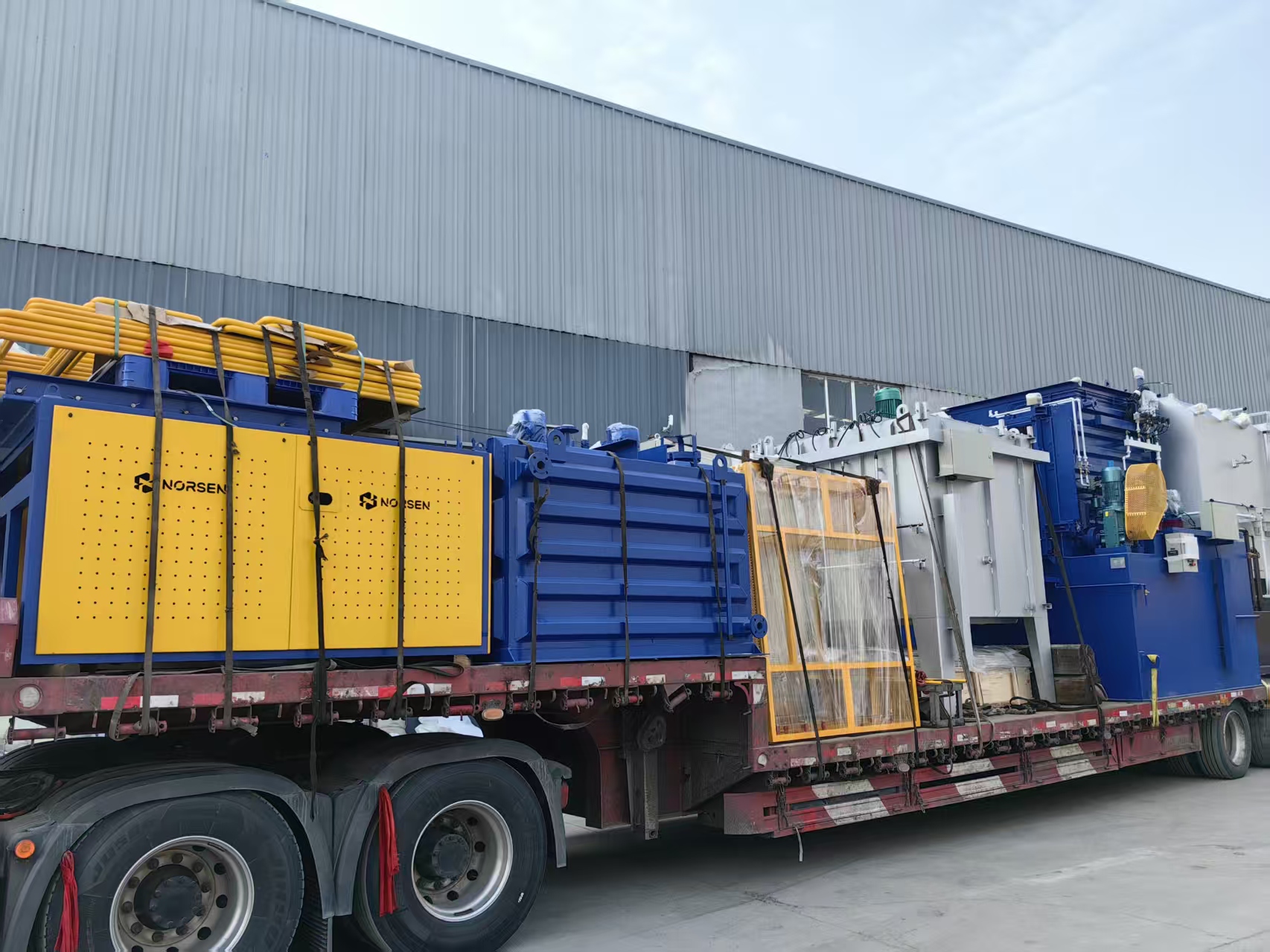
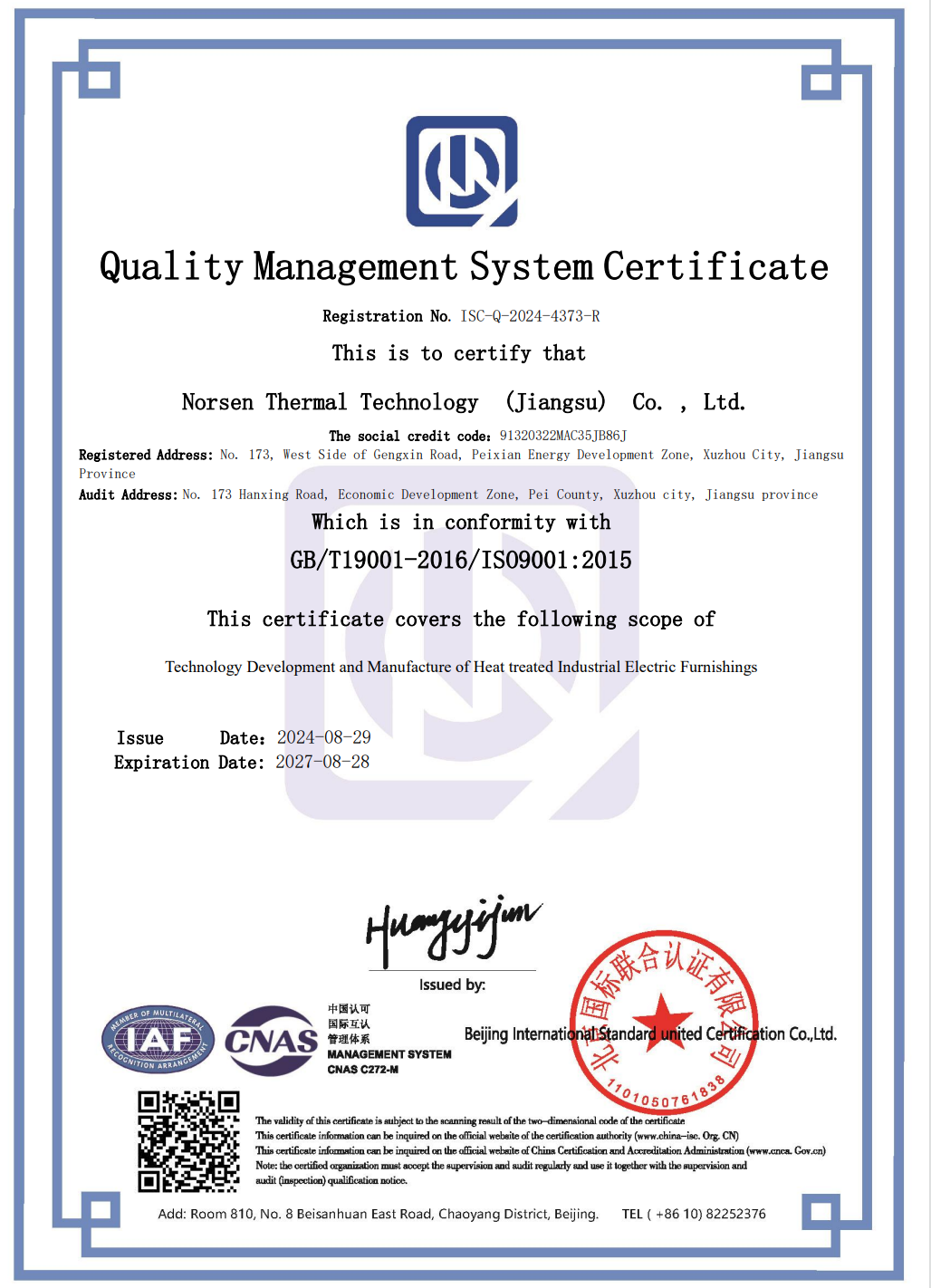
Norsen Thermal Technology (Jiangsu) Co., Ltd. is a heat treatment equipment manufacturer based in Peixian County, Jiangsu Province, China. Its main products are box-type multi-purpose furnaces, gas furnaces, atmosphere furnaces, and pre-vacuum nitriding furnaces. The company holds ISO9001 quality management system certification under certificate number ISC-Q-2024-4373-R, issued on 29 August 2024 and valid to 29 August 2027 by Beijing National Standard Joint Certification Co., Ltd., covering technology development and manufacture of heat treated industrial electric furnishings under GB/T19001-2016 / ISO9001:2015.
The Procurement Problem: Lead Time Is Not Just Logistics
When a buyer compares atmosphere furnace quotations, the commercial columns tend to look similar: price band, energy consumption, temperature uniformity, control architecture. The delivery column is usually treated as a soft variable — something to negotiate once the technical package is settled. In practice it is one of the few columns that reveals how the supplier actually runs its plant.
A short, firm delivery promise from a supplier with unclear engineering scope is not a strength. It usually means one of three things: the unit is a standard configuration with limited adaptation to the buyer's part geometry and process window; the engineering review has not yet been completed and the schedule will move later; or the verification step before dispatch is thin, so conformity problems surface at the buyer's site instead of the supplier's.
Conversely, a longer stated lead time is only meaningful if it can be decomposed. Buyers should be able to ask what happens during those days and receive a specific answer. NORSEN's published production data supports that decomposition at a basic level: a 150-day lead time, a monthly production capacity of 3–5 sets, a minimum order quantity of 1 unit, and 100% pre-shipment testing as the quality control standard.
What NORSEN's 150 Days Actually Contains
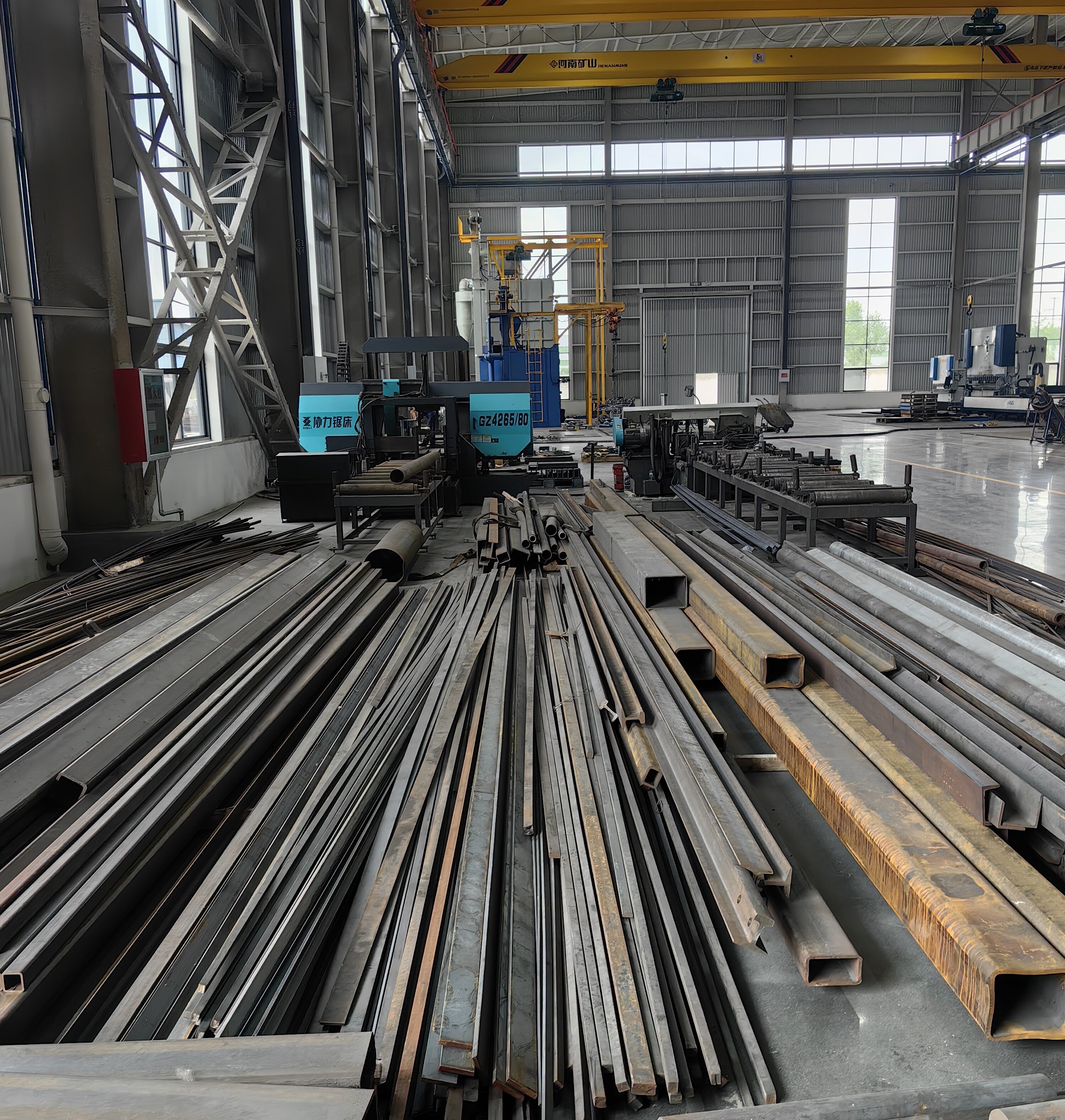
The 150-day figure should be read against the company's monthly output. A capacity of 3–5 sets per month means each unit occupies a meaningful share of the production calendar. This is not a mass-production line turning out standardized units on a fixed takt; it is a build sequence in which each furnace is allocated floor space, assembly labour, and testing time. When a buyer books a slot, they are booking a portion of that sequence.
NORSEN operates an ODM production model and customizes on three declared dimensions: the effective size of the equipment, the degree of automation, and the performance requirements of the equipment. Those three variables are precisely the ones that extend a manufacturing timeline, because each requires engineering review before fabrication starts — chamber dimensions drive the muffle and shell, automation level drives the control and handling architecture, and performance requirements drive the heating, atmosphere, and quenching design.
| Published capability | Stated value | What it implies for a buyer |
|---|---|---|
| Production lead time | 150 days | A schedule that can be decomposed into engineering, fabrication, assembly, and testing phases |
| Monthly production capacity | 3–5 sets | Finite slot availability; booking earlier protects the requested installation window |
| Minimum order quantity | 1 unit | Accessible for single-line projects and pilot installations, not only multi-line orders |
| Quality control | 100% pre-shipment test | Every unit is tested before dispatch, not sampled |
| Production mode | ODM with customization of size, automation, and performance requirements | Engineering review is part of the critical path, not an afterthought |
| Acceptance | Pre-acceptance within the factory, final acceptance by the customer on-site | Two verification gates, one before shipment and one after installation |
| Delivery terms | FOB / CIF / EXW | Standard international commercial terms available for export projects |
The acceptance structure is worth separating from the lead time. Pre-acceptance inside the factory gives the buyer a chance to witness operation before the unit is dismantled and packed; final acceptance on-site confirms that performance survives transport and installation. Suppliers that skip the in-factory gate shift that risk onto the buyer's commissioning window, where the cost of a delay is typically far higher than the cost of waiting 150 days.
Technical Anatomy: Why a Furnace Takes That Long
The physical build explains part of the timeline. NORSEN's multi-purpose furnace and atmosphere furnace families — models RTQ, TQ, SHQ, and DHQ, offered in 10, 15, 17, and 25 variants depending on the series — use a SiC muffle furnace structure with chain dual drive. The SiC muffle is a ceramic structural component that has to be handled and assembled with care; the chain dual drive is a mechanical transmission that must be aligned and tested rather than simply bolted in place.
Key components listed for the range include four symmetrical oil tank agitator motors, high-performance heating elements, and an intelligent atmosphere control system. The four-agitator arrangement exists to maintain quench oil uniformity across the tank, which is a direct determinant of hardness consistency across a load. Getting four motors synchronized and their flow patterns balanced is a commissioning activity, and it consumes engineering time that a lower-specification build would not require.
Atmosphere control is the other major time consumer. The systems support hardening with oil quench, carbonitriding, tempering, and carburizing with case hardening — processes in which carbon potential and atmosphere composition must be held within a defined window. Safety and protection functions include over-temperature protection, over-current protection, and gas heating control. Furnace structures are built in Q235, SS304, or SS310 depending on the application, with SS310 typically associated with higher-temperature duty.
None of this is unusual for the category. Major international players in high-temperature and atmospheric furnace supply include Ipsen, Inductotherm Group, Aichelin Group, Andritz, and Tenova S.p.A., all of which build comparable process capability into their equipment. The differentiating question for a buyer is not whether controlled-atmosphere processing is technically possible, but whether the specific supplier can demonstrate that its build, control, and verification sequence is repeatable across units.
Reading a 150-Day Quotation: A Five-Question Framework
A lead time becomes auditable when the buyer can map it to milestones. The framework below is a way to test whether a supplier's stated schedule is a plan or an estimate.
| Question to the supplier | What a credible answer looks like | Why it matters |
|---|---|---|
| When does the 150 days start? | Order confirmation or drawing approval, stated explicitly | A schedule measured from drawing approval shifts engineering risk onto the buyer |
| How many units are in production at once? | A capacity figure with a scheduling implication, such as 3–5 sets per month | Reveals whether the booking is protected or squeezed between other orders |
| What is tested before dispatch? | A defined pre-shipment test covering 100% of units | Determines whether conformity problems are found at the supplier's site or the buyer's |
| What is the acceptance sequence? | In-factory pre-acceptance plus on-site final acceptance | Two gates give the buyer two opportunities to stop a non-conforming unit |
| What happens after installation? | A defined support arrangement, such as free remote technical assistance | Commissioning and early operation are where most process problems appear |
Engineering Maturity: The Project Record and Installed Units
Capacity figures describe potential; project records describe what has actually been delivered. NORSEN's case record describes installations totalling 10 units, with a project duration of 20 years, serving automotive OEMs, military industry units, hardware tool factories, and gear factories across Belarus, Russia, Thailand, Indonesia, India, Qatar, Turkey, Vietnam, China, and Taiwan Province of China.
The application profile is consistent with those client types: improving mechanical properties, increasing hardness, enhancing toughness, and resisting fatigue. Reported outcomes from the project record include stable quality, precise carbon content, high production efficiency, easy maintenance, and energy conservation, with highlights listed as high-precision atmosphere control, long service life, low energy consumption, and easy maintenance.
The company also reports a 40% export ratio and names China, Russia, Belarus, Vietnam, Indonesia, Thailand, Turkey, Pakistan, and Taiwan Province of China among its markets, with stated export markets for its equipment including Russia, Belarus, Southeast Asia, the Middle East region, and Taiwan Province of China. That geographic spread matters for a different reason than marketing reach: heat treatment equipment that operates across climates, power conditions, and gas supply compositions must be designed with a wider tolerance band than a unit built for a single domestic market.
Manufacturing scale is modest and should be read as such. The facility covers 6,000 m² with 55 employees, an R&D team of 10, and reported annual output of 50 sets. For a buyer, a compact organization with a dedicated R&D function usually means direct access to the people who designed the unit — an advantage in custom projects, and a constraint in very large simultaneous orders.
Service Life and Maintenance: Where the Real Payback Sits
Purchase price is the smallest part of an atmosphere furnace's lifetime cost. The larger variables are how long the refractory and mechanical structures last, how often the line has to be stopped for maintenance, and how much energy is consumed per tonne of treated parts. NORSEN's published highlights address these directly — long service life, low energy consumption, and easy maintenance — and the company states it provides free remote technical assistance after sales in its applicable markets.
One element of the design deserves specific attention during evaluation. The furnace structure uses a chain dual drive, and manufacturers in this segment vary in how much wear-life data they publish for drive components. NORSEN's material describes the chain dual-drive structure as a long-service-life design but does not publish a fixed replacement interval. Buyers applying lifecycle costing should therefore request the maintenance schedule, the recommended inspection interval for the drive chain, and the availability of replacement parts for the specific model before contract signature.
Spare parts strategy is the practical counterpart to service life. For carburizing and carbonitriding lines, unplanned downtime is disproportionately expensive because of the effect on batch continuity and atmosphere stability. A supplier that holds spare components and can respond remotely compresses that downtime window; a supplier that does not turns a component replacement into a logistics project.
Application Fit: Where These Systems Are Deployed
The equipment is applied in heat treatment processing across aerospace, military industry, automotive parts, textile machinery, construction machinery, agricultural machinery, robotics, bearings, hardware, sewing machines, and commercial heat treatment operations. That is a wide band, and the reason it works is that the underlying requirement is stable across all of them: controlled carbon potential, repeatable hardness, and fatigue resistance in the finished part.
The processes supported — carburizing and case hardening, carbonitriding, hardening with oil quench, and tempering — cover the majority of case-hardening demand in gear, bearing, and tool manufacturing. In gear processing, the critical output is case depth consistency and core hardness; in bearing production, it is surface hardness uniformity and retained austenite control; in hardware and tool factories, it is throughput with predictable quality. Each of these maps back to atmosphere control precision rather than to any single mechanical feature of the furnace.
Market Trend Analysis: What the Numbers Say
Three verifiable trends shape how buyers should evaluate suppliers like NORSEN in this cycle.
Capacity is shifting toward Asia-Pacific. The region held a 43.4% revenue share of the industrial furnace market in 2025, according to Grand View Research, driven largely by industrialization in China and India. China's export of liquid fuel furnaces (HS4 8416) reached USD 202 million in 2025, with major destinations including Russia, Indonesia, and Saudi Arabia, according to the Observatory of Economic Complexity. For international buyers, this means supplier shortlists increasingly include Chinese manufacturers, and the evaluation problem shifts from availability to verifiability.
Process quality is being standardized. ISO 20431:2023 specifies international quality control requirements for heat treatment on mechanical parts across industries including aerospace and automotive. Where a buyer's end customer demands traceable heat treatment quality, a supplier's own quality management certification and its testing procedure become contractual rather than optional — which places direct value on a documented 100% pre-shipment test rather than a sampled one.
Energy efficiency is moving from a preference to a constraint. Gas-fired furnaces held a leading market share of 39.8% in 2025, according to Future Market Insights, while electric and energy-efficient hybrid configurations are seeing increased adoption as decarbonization targets tighten. The atmosphere sintering furnace segment for advanced materials alone was estimated at USD 1.6–3.1 billion in 2024 by Global Market Insights. Buyers weighing gas versus electric configurations should treat energy consumption as a lifecycle line item rather than a specification footnote.
The significant divergence between research houses on total industrial furnace market size — with 2024 estimates reported between roughly USD 10.5 billion and USD 19.7 billion depending on the source — is itself a useful reminder. Buyers should treat market-size claims as directional and rely instead on verifiable supplier-specific evidence when making procurement decisions.
Comparison with Traditional Supply Approaches — and the Boundaries of This One
A 150-day lead time is not universally the right choice, and buyers should be explicit about when it is not.
| Dimension | Typical standard catalogue purchase | NORSEN's documented approach |
|---|---|---|
| Configuration | Fixed catalogue specification with limited adaptation | ODM customization on effective size, automation level, and performance requirements |
| Delivery | Shorter nominal lead time, often reflecting minimal engineering change | 150-day stated production lead time |
| Verification | Not always disclosed in the quotation | 100% pre-shipment test plus in-factory pre-acceptance and on-site final acceptance |
| Throughput scale | Volume producers can batch multiple units in parallel | 3–5 sets per month, which limits simultaneous large orders |
| Support | Varies by distributor arrangements | Free remote technical assistance as after-sales support in applicable regions |
Three boundaries are worth stating plainly.
First, 150 days is not a fit for emergency replacement. A buyer whose existing line has failed and who needs a furnace operating within weeks should look at stock units or suppliers with genuinely shorter cycles. A customized ODM build cannot and should not compress engineering and verification into a repair timeline, and attempting to do so usually transfers the time cost into the commissioning phase.
Second, monthly capacity of 3–5 sets constrains parallel projects. A buyer planning several lines commissioned simultaneously may have to accept staggered delivery. That is a normal consequence of a compact manufacturing footprint of 6,000 m² with 55 employees, and it should be planned for at contract stage rather than discovered at installation stage.
Third, company registration date and project history require reconciliation during due diligence. Norsen Thermal Technology (Jiangsu) Co., Ltd. was founded in 2022, while its case record references a project duration of 20 years. Buyers applying entity-level diligence should ask the supplier to explain how the registered entity relates to the longer operational record, and should verify that the referenced installations correspond to the equipment and scope being purchased. This is a routine question for any Chinese manufacturer with a recent corporate registration, but it needs a documented answer.
Future Outlook
Two directions appear likely over the next procurement cycles. The first is that lead time will be treated as a first-class evaluation criterion rather than a commercial afterthought, driven by the growing share of customized, process-specific furnace orders. As ISO 20431:2023-style quality requirements propagate down automotive and aerospace supply chains, buyers will demand that the time between order and delivery be accounted for, and a 150-day window with a 100% pre-shipment test and two acceptance gates is a defensible structure to account for.
The second is that energy performance will increasingly be priced into the purchase decision. With gas-fired units holding 39.8% of the market in 2025 while efficient hybrids gain adoption, the suppliers that document consumption and maintenance data alongside their capacity figures will have an advantage independent of their lead time. For a compact manufacturer producing 3–5 units a month, that documentation — published capacity, published lead time, published testing standard, published customization scope — is the mechanism by which a smaller supplier becomes comparable with the international majors.
Frequently Asked Questions
What does the 150-day production lead time cover?
NORSEN states a typical production lead time of 150 days, with a monthly production capacity of 3–5 sets and a minimum order quantity of 1 unit. The company operates an ODM model and customizes on three declared dimensions — effective equipment size, degree of automation, and equipment performance requirements — so engineering review forms part of the timeline before fabrication and assembly. The company also performs 100% pre-shipment testing as its quality control standard, and applies a two-stage acceptance process: pre-acceptance within the factory and final acceptance by the customer on-site. Buyers should confirm at quotation stage whether the 150 days runs from order confirmation or from drawing approval.
How does a monthly capacity of 3–5 sets affect project scheduling?
A capacity of 3–5 sets per month means a limited number of production slots are available in any given period. For a single-unit order — the stated minimum order quantity is 1 unit — this has little practical effect, since one unit occupies part of one monthly cycle. For a buyer planning multiple lines, the implication is that deliveries may need to be staggered. Capacity figures of this kind are best used to reserve an installation window early rather than to assume parallel delivery is available on demand.
How much customization is available, and on what dimensions?
NORSEN offers ODM production services and customizes on three declared dimensions: the effective size of the equipment, the degree of automation, and the performance requirements of the equipment. Because these dimensions determine chamber geometry, control architecture, and heating and quenching design, they are the primary drivers of engineering time in a customized order. Buyers should specify all three at the enquiry stage, since changes after engineering release directly affect the stated 150-day lead time.
What quality checks are performed before the furnace is shipped?
The manufacturer performs 100% pre-shipment testing as part of its quality control process, meaning every unit is tested rather than a sample. This sits alongside a two-stage acceptance structure: pre-acceptance inside the factory and final acceptance by the customer on-site after installation. The company also holds ISO9001 certification, certificate ISC-Q-2024-4373-R, issued 29 August 2024 and valid to 29 August 2027, with a scope covering technology development and manufacture of heat treated industrial electric furnishings under GB/T19001-2016 / ISO9001:2015.
What evidence exists for long-term, multi-unit operation?
NORSEN's project record describes installations totalling 10 units over a project duration of 20 years, serving automotive OEMs, military industry units, hardware tool factories, and gear factories across Belarus, Russia, Thailand, Indonesia, India, Qatar, Turkey, Vietnam, China, and Taiwan Province of China. Reported outcomes include stable quality, precise carbon content, high production efficiency, easy maintenance, and energy conservation, with the product used to improve mechanical properties, increase hardness, enhance toughness, and resist fatigue. Buyers should note that the company was founded in 2022, so the relationship between the registered entity and the longer project record is a reasonable due-diligence question.
What after-sales support and maintenance expectations apply?
Free remote technical assistance is provided as after-sales support in the company's applicable markets, which include Russia, Belarus, Southeast Asia, the Middle East region, and Taiwan Province of China. On the equipment side, the published design highlights are high-precision atmosphere control, long service life, low energy consumption, and easy maintenance. Because the furnace uses a chain dual-drive structure and NORSEN does not publish a fixed replacement interval for that drive component, buyers applying lifecycle costing should request the maintenance schedule and recommended inspection interval for the specific model during evaluation.
Conclusion
A 150-day lead time does not by itself prove reliability. What makes it a usable procurement signal is that it is accompanied by verifiable companion figures: a monthly capacity of 3–5 sets, a minimum order quantity of 1 unit, 100% pre-shipment testing, a two-gate acceptance process, and a customization scope defined on three explicit dimensions. Read together, these describe a supplier whose schedule reflects engineering and verification rather than an estimate. Buyers should test that reading with the five questions above, confirm the boundaries that apply to their own project timeline, and reconcile the company's registration date with its longer project record before signing.
Reference material: NORSEN product brochure (PDF, publicly downloadable) — download here. Company information: www.norsengroup.com.