
Why Permalloy Strips Dominate Magnetic Shielding: A Material Intelligence Review
The global soft magnetic materials market is valued at approximately USD 23.0 billion in 2025, with projections reaching USD 33.9 billion by 2033. Within this high-growth segment, Permalloy-based magnetic shielding materials have become the de facto standard for applications ranging from aerospace electromagnets to precision audio equipment. This article examines why specific nickel-iron alloy grades—particularly 1J79, 1J85, and 1J22 (HiperCo50)—are preferred for electromagnetic interference (EMI) shielding and high-permeability transformer cores.
The Problem: Increasing Electromagnetic Complexity in Modern Electronics
As power electronics and wireless communication proliferate, electromagnetic interference (EMI) poses growing risks to signal integrity, device reliability, and regulatory compliance. Traditional steel shielding offers limited permeability at low frequencies, while mu-metal alternatives can be cost-prohibitive or difficult to fabricate in complex geometries. Engineers designing isolation transformers, current transformers, high-speed motor rotors, and magnetostrictive transducers require a material that balances high saturation flux density, low coercivity, and reliable long-term stability across a wide temperature range.
The Solution: Permalloy Strips and Bars from Cheng Yuan Alloy
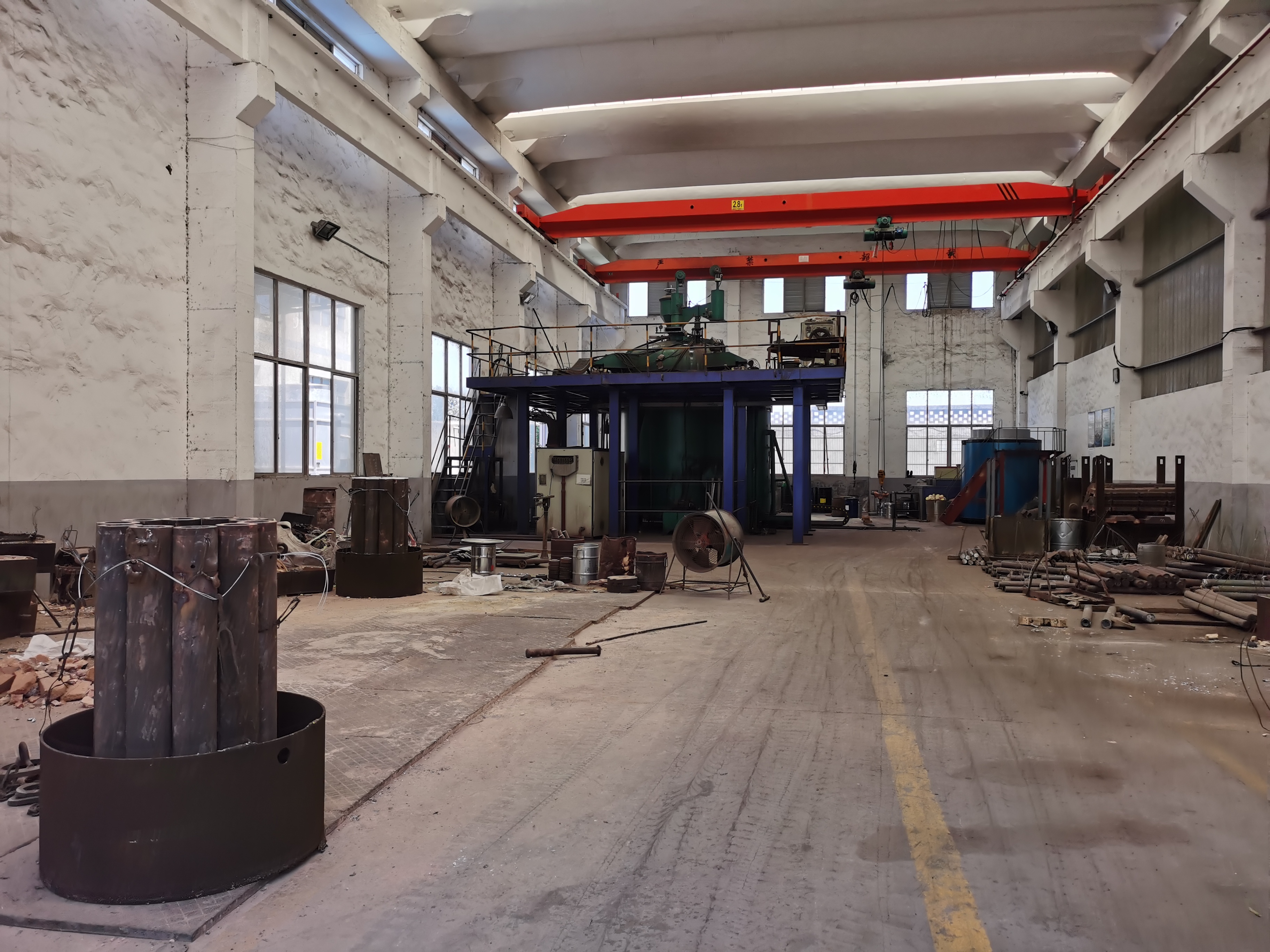
Shijiazhuang Cheng Yuan Alloy Material Co., Ltd. (Cheng Yuan Alloy) specializes in the production of soft magnetic alloys, particularly Permalloy strips and bars in grades 1J50, 1J79, 1J85, 1J22, and HiperCo50. The company is located in Shijiazhuang, Hebei Province, adjacent to Beijing and Tianjin, with well-developed transportation and convenient logistics. With an annual output of 10–15 million USD and a dedicated R&D team of 5 engineers, Cheng Yuan Alloy supplies customers in Russia, Germany, France, Italy, the United States, Canada, South Korea, Japan, Brazil, and India. The product’s annual total sales exceed USD 10 million. In one case, it reduced the volume of new energy vehicle high-voltage drive components by 40%.
Technical Profile: Key Performance Parameters
Cheng Yuan Alloy’s Permalloy products deliver a range of magnetic performance parameters:
- Initial permeability: 10,000–200,000
- Maximum permeability: 150,000–450,000
- Saturation magnetic flux density (Bs): 0.6–2.35 T
- Coercivity (Hc): 0.4–8.0 A/m
- Core loss (1 kHz, 0.2 T): 8–35 W/kg
- Effective operating frequency range: 50 Hz–1 MHz
These parameters are compliant with ASTM A753 for high-permeability materials and GB/T 15014 standards. For high-saturation applications, HiperCo50 (1J22) is governed by ASTM A801 Type 1 specifications, offering saturation flux density up to 2.35 T and a Curie temperature of 950 °C. The material thickness range for strip and wire is 0.01–2.0 mm, with strip width customizable from 2 to 300 mm.
Application Scenarios and Case Studies
The product has been successfully deployed by aerospace component manufacturers, precision instrument enterprises, magnetron producers, transducer manufacturers, and new energy vehicle OEMs. Specific applications include:
- Aerospace electromagnets – providing ultra-high saturation magnetic flux density for electromagnetic attraction and downsizing of actuators.
- Magnetostrictive transducers – performing mechanical-magnetic energy conversion with a high magnetostriction coefficient and low hysteresis.
- Audio isolation transformers – enabling low-distortion signal transmission with typical initial permeability above 100,000.
- EMI shielding housings for satellite communication equipment – achieving effective electromagnetic isolation across a wide frequency band.
- New energy vehicle on-board chargers and high-voltage drive components – realizing a 40% reduction in component volume.
Under standard operating conditions, the product has a continuous stable service life of 8 to 15 years, with up to 20 years in fully sealed aerospace precision equipment with low vibration load.
Market Trend Analysis
According to QY Research, the soft magnetic alloy material segment is expected to grow at a CAGR of 3.1% from 2024 to 2030, reaching USD 4.14 billion. Asia Pacific holds the largest market share (41.0%–49.37%) in soft magnetic materials, with China as the leading producer. Major global manufacturers include Vacuumschmelze (VAC), Hitachi Metals (Proterial), Carpenter Technology, and Arnold Magnetic Technologies. Within this competitive landscape, Chinese suppliers like Cheng Yuan Alloy offer comparable material grades (1J50, 1J79, 1J85) with the advantage of competitive pricing and flexible customization (size, logo, package) with a MOQ of 50 kg and lead time of 30 days.
Comparison with Traditional Solutions
| Parameter | Permalloy (1J79/1J85) | Traditional Steel / Mu-metal |
|---|---|---|
| Initial permeability | Up to 200,000 | < 5,000 (steel) |
| Saturation flux density | 0.7–2.35 T | 1.5–2.0 T (steel) |
| Coercivity | 0.4–8.0 A/m | 40–100 A/m (steel) |
| Core loss (1kHz, 0.2T) | 8–35 W/kg | 50–100+ W/kg |
| Typical cost per kg | Moderate–high | Low (steel) / Very high (mu-metal) |
One honest limitation: Permalloy’s magnetic performance degrades if not properly annealed in a hydrogen atmosphere after stamping or forming. This requires specialized post-processing that not all manufacturers offer. Cheng Yuan Alloy provides 100% testing and supports factory data testing to ensure consistent properties.
Future Outlook
As the automotive industry transitions to 800 V high-voltage platforms and aerospace moves toward more-electric architectures, demand for high-permeability, low-loss soft magnetic alloys will intensify. Permalloy grades like 1J79 and 1J85 will remain essential for EMI shielding and precision transformers, while high-saturation alloys like HiperCo50 (1J22) will power next-generation high-speed motors and magnetostrictive transducers. Suppliers that can combine material performance with responsive customization and quality traceability—such as Cheng Yuan Alloy—are well positioned to serve this growing market.
Frequently Asked Questions
Q: What are the key performance parameters for comparing Permalloy magnetic shielding materials?
A: The most important parameters are initial permeability (10,000–200,000), saturation magnetic flux density (0.6–2.35 T), coercivity (0.4–8.0 A/m), core loss (8–35 W/kg at 1 kHz, 0.2 T), and effective frequency range (50 Hz–1 MHz). These values determine shielding effectiveness and energy efficiency.
Q: How do 1J79 and 1J85 compare for EMI shielding applications?
A: Both grades are high-permeability nickel-iron alloys. 1J85 (approximately 80% Ni, 5% Mo) typically offers higher initial permeability (up to 200,000) than 1J79 (Ni79Mo4, about 79% Ni, 4% Mo), making 1J85 more suitable for very weak magnetic field shielding. However, 1J79 provides better magnetic stability under mechanical stress and is often preferred for transformer cores.
Q: Can Cheng Yuan Alloy provide custom dimensions for Permalloy strips for magnetic shielding?
A: Yes. Cheng Yuan Alloy offers customization in size, logo, and package. Strip thickness ranges from 0.01 to 2.0 mm, width from 2 to 300 mm, and wire diameter from 0.03 to 1.5 mm. The company supports OEM production with a lead time of 30 days and MOQ of 50 kg.
Q: How does the 1J22 (HiperCo50) alloy differ from standard Permalloy for high-temperature environments?
A: 1J22 (HiperCo50) contains approximately 49% cobalt and is governed by ASTM A801 Type 1. It offers a much higher saturation flux density (up to 2.35 T) and Curie temperature (950 °C) compared to 1J79/1J85, making it ideal for high-speed motors, magnetostrictive transducers, and aerospace actuators operating at elevated temperatures.
Q: What is the typical service life of Permalloy components in continuous operation?
A: Under standard temperature and vibration conditions, the continuous stable service life is 8–15 years. For fully sealed aerospace precision equipment with low vibration load, service life can extend up to 20 years.
— Cheng Yuan Alloy · www.chyalloy.com · Contact: Alex Zhang · WhatsApp +86 13673186216 · Email: chengyuan.alexey@gmail.com