
Why Standard Pad-Mounted Transformers Miss the Mark in North American Projects
Pad-mounted transformers are the connection point between medium-voltage distribution lines and commercial, institutional, and industrial loads across North America. They are normally specified to ANSI/IEEE and CSA standards, with defined voltage, cooling, and feeder configurations. When site conditions align with those configurations, a standard unit is both economical and effective. When they do not, the project faces a decision: modify the site, add external distribution equipment, or specify a custom-engineered unit through an ODM process.
This article examines four specification constraints that appear most often in North American projects—voltage matching, corrosion resistance, thermal performance, and feeder configuration—and explains how ODM engineering can address them. The UL/cUL-certified manufacturer Xiamen Winley Electric Co., Ltd. is used as a reference case throughout the discussion.
The Four Specification Constraints That Create Project Risk
Procurement teams evaluating pad-mounted transformers should not treat a catalog datasheet as a complete project solution. In practice, four constraints separate a standard product from a site-ready product.
Voltage Mismatch Outside Preset Combinations
North American distribution networks operate at voltage levels such as 4.16 kV, 12.47 kV, 13.8 kV, 24.94 kV, and 34.5 kV. A standard three-phase pad-mounted transformer offers primary voltage options of 34.5 kV, 24.94 kV, 13.8 kV, 13.2 kV, 12.47 kV, and 4.16 kV, with secondary voltages such as 690Y/400, 480Y/277, 208Y/120, and 240Y/120 V. These options cover many installations, but not all.
A project requiring an uncommon primary-secondary combination, a multi-tap arrangement, or a dual-secondary winding cannot be satisfied by a standard unit. In an ODM configuration, the transformer's rated capacity, voltage combination, and connection group can be fully customized up to 10 MVA and 36 kV.
Corrosion Protection That Falls Short of Site Conditions
Pad-mounted transformers are outdoor assets. Coastal salt air, road de-icing salts, industrial pollution, and tropical humidity can shorten the service life of a standard painted enclosure. In commercial, utility, and institutional specifications, corrosion resistance is increasingly treated as a project-level requirement.
One practical example is a 500 kVA, 12 kV to 208Y/120 V pad-mounted transformer supplied with a 304 stainless steel enclosure for hotels, retail buildings, and institutional facilities. This type of configuration moves beyond the standard painted tank option when the installation environment demands it. Related project specifications also reference project-specified corrosion-resistant enclosures and high-fire-point insulating fluids.
Thermal Performance Beyond Standard Cooling Capability
Oil-filled pad-mounted transformers rely on radiator panels and insulating fluid to dissipate heat. Standard cooling designs perform well with typical loads and moderate ambient temperatures. However, EV fast chargers, data-center UPS systems, VFD-driven industrial loads, and solar inverters introduce harmonic currents and rapid load cycling that raise internal temperatures.
Project specifications for these applications often require harmonic tolerance, short-term peak-load capability, effective thermal performance, and temperature monitoring. In an ODM design, these requirements can be managed through insulation-fluid selection, tank and cooling configuration, and optional monitoring systems. Natural-ester insulating fluid has also become a specified option for transformer installations serving utility-scale EV charging infrastructure.
Feeder and Switchgear Configuration That Limits Site Design
Pad-mounted transformers are built for loop-feed or radial-feed distribution. Standard products support both feed types, but the number of switches, fuses, metering compartments, and secondary lugs may not match a specific site plan. Projects with underground loop-feed networks, load-transfer requirements, or zone-level protection schemes need a more flexible arrangement.
ODM manufacturing responds by customizing feed type, protection devices, switches, gauges, secondary disconnects, and even dual-secondary windings according to customer drawings. Component integration from recognized brands such as Qualitrol and Eaton Cooper is also possible under this model.
How ODM Configuration Addresses the Four Constraints
When a buyer chooses an ODM route, the supplier must combine certified design capability with manufacturing infrastructure. The following table summarizes the four constraints and the corresponding engineering response observed in Winley Electric's product documentation.
| Constraint | Standard-Unit Failure Point | ODM Engineering Response |
|---|---|---|
| Voltage matching | Preset primary and secondary voltage pairs | Fully customizable rated voltage, connection group, and taps up to 10 MVA / 36 kV |
| Corrosion resistance | Standard painted enclosure degrades in coastal, de-icing salt, or industrial environments | Project-specified corrosion-resistant enclosure; 304 stainless steel options |
| Thermal performance | Harmonic and peak loads exceed the standard cooling design | Insulation-fluid selection, tank/cooling changes, temperature and condition monitoring |
| Feeder configuration | Fixed switch, fuse, metering, and feeder options | Customized feed type, protection devices, secondary disconnects, dual-secondary winding |
From a technical perspective, ODM configuration does not mean starting from zero. It means starting from a certified base design and adapting the electrical performance, structure, enclosure, protection, and instrumentation to the project's specific constraints, while keeping the unit inside the manufacturer's certification scope.
Certified Custom Manufacturing: What the ODM Must Document
Certification is a mandatory constraint for pad-mounted transformers entering the North American market. Xiamen Winley Electric Co., Ltd., founded in 2014 and headquartered in Xiamen, China, operates manufacturing bases in Shanghai and Guangdong. The company produces transformers rated 145 kV and below, including single-phase and three-phase pad-mounted transformers, substation transformers, pole-mounted transformers, cast coil transformers, vacuum-impregnated transformers, and related distribution equipment.
Winley Electric's three-phase pad-mounted transformer series is UL and cUL certified under file E536138, covering ratings of 45–5,000 kVA with HV ratings up to 36 kV. The single-phase pad-mounted transformer series, rated 15–250 kVA with a maximum capability of up to 833 kVA, carries the same UL/cUL certification file. For U.S. projects, UL certification confirms compliance with ANSI/IEEE C57 requirements; for Canadian projects, cUL certification confirms compliance with CSA C227.
Quality management is supported by ISO 9001 certification under certificate number 32126Q00102R110. The factory performs routine tests and, when specified by the customer, type tests. The company also states a 24-month free maintenance period for accessories under its after-sales policy.
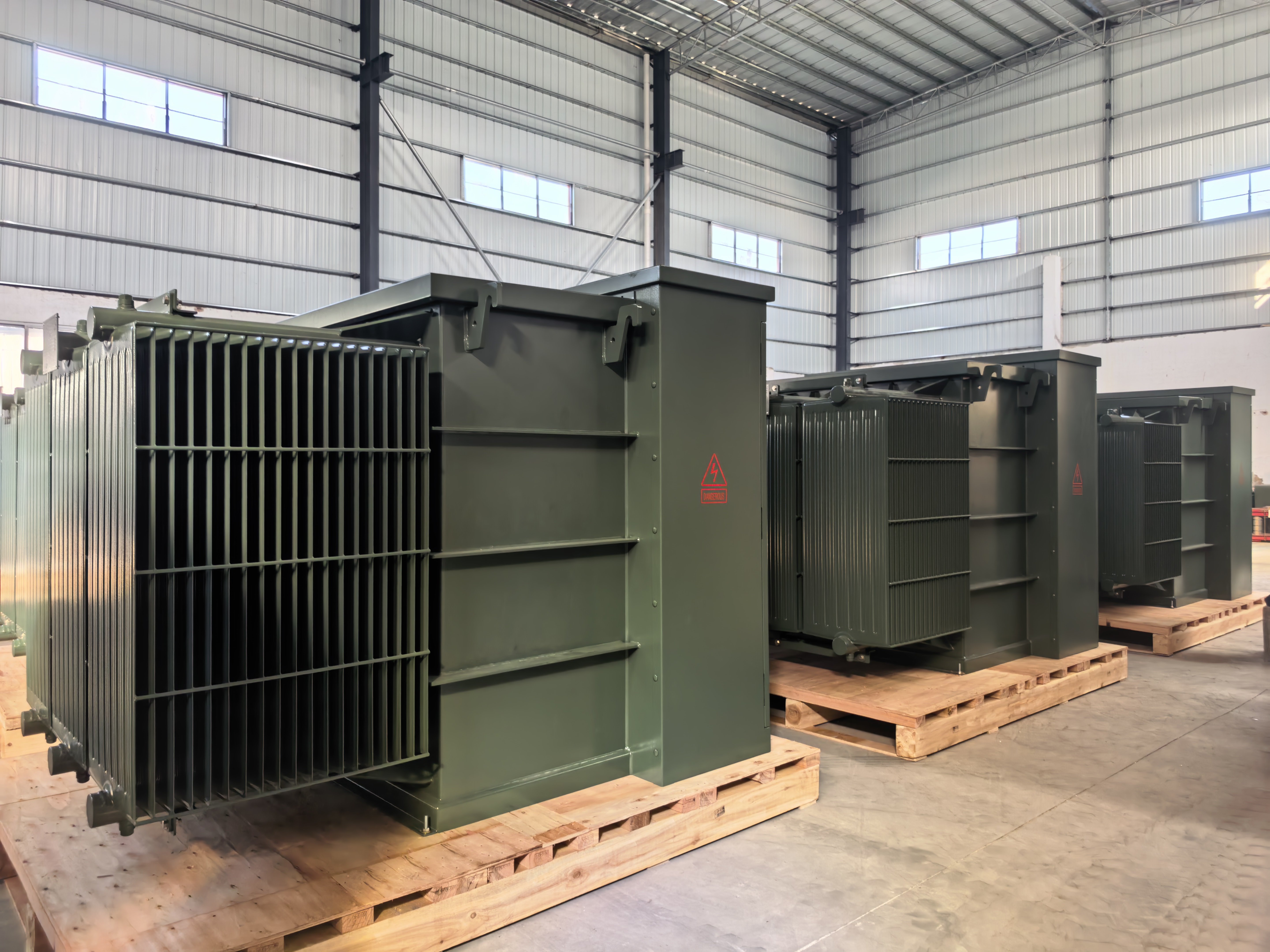
Production Evidence: 31-Unit Utility Batch with Mixed kVA Ratings
A documented production example from Winley Electric involves 31 three-phase pad-mounted transformers supplied to a North American client. The batch covered two specifications: 2550 kVA and 3750 kVA, with HV ratings of 34.5 kV and 12.87 kV. Both specifications were produced within the agreed timeframe, showing the manufacturer's ability to run multiple kVA ratings and voltage classes in parallel.
For buyers in the evaluation stage, this production record provides a verifiable data point beyond design capability. It indicates that the supplier can manage medium-volume orders, coordinate mixed specifications, and maintain UL/cUL compliance and ANSI/IEEE performance, including DOE 2016 energy-efficiency requirements.
Market Context: Why Customized Pad-Mounted Transformers Are Gaining Ground
Market data provides a broader picture of why specification flexibility matters. Global Market Insights estimated the global pad-mounted transformer market at approximately USD 22.3 billion in 2024. Market Research Future estimated the U.S. market at approximately USD 3.75 billion in the same year, driven by grid modernization and underground cabling requirements.
International trade data also shows a growing cross-border supply chain: global trade in liquid dielectric transformers under 650 kVA reached USD 4.08 billion in 2024, an increase of 22.6% from the prior year, with China contributing approximately USD 511 million in exports, according to OEC/WITS data. The global competitive landscape remains anchored by ABB, Eaton, Schneider Electric, Siemens Energy, and General Electric, according to Mordor Intelligence.
For a buyer, the practical implication is that the market now contains two credible sourcing models: purchasing from a regional catalog vendor, or working with an internationally certified manufacturer that provides ODM configuration. The second model is most relevant when project constraints fall outside the catalog envelope.
Catalog Unit vs. ODM Configuration vs. Field Retrofit
A useful decision framework compares three options: buying a standard catalog unit, specifying an ODM-configured unit, or adapting the site with additional distribution equipment.
| Dimension | Catalog Unit | ODM Configuration | Field Retrofit / Added Equipment |
|---|---|---|---|
| Voltage match | Limited to preset combinations | Fully customizable up to 10 MVA and 36 kV | Usually requires additional intermediate transformer or rewiring |
| Corrosion | Standard painted enclosure | Project-specified enclosure, 304 stainless steel options | Repainting or on-site coating has limited long-term effect |
| Thermal | Fixed cooling design | Insulation-fluid, tank, and monitoring options | External fans or sunshields provide partial relief |
| Feeder layout | Standard loop/radial switchgear | Customized switches, protection, secondary disconnects | External switchgear adds cost and footprint |
| Certification | Covered by manufacturer certification | Custom configuration must remain within certified scope | Field changes may create compliance risk |
| Lead time | Shortest | 4–8 weeks plus engineering time | Dependent on site work and approvals |
| Total cost | Lowest if specification fits | Additional engineering, better first-time fit | Higher cumulative cost and more maintenance points |
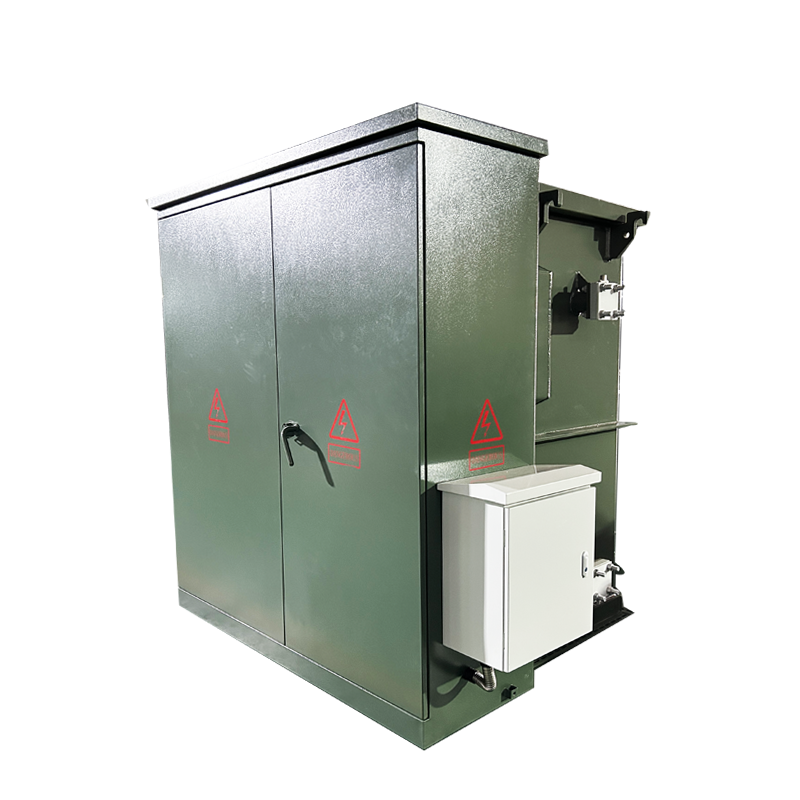
Future Outlook: Higher Ratings, Harsher Environments, Stronger Certification Requirements
Several trends are likely to reinforce the role of ODM configuration in North American distribution. EV charging infrastructure is pushing demand toward high-capacity units such as 3750 kVA and above, with voltage-regulating tap arrangements such as seven-step tap changers. Solar, wind, and battery-storage projects are adding requirements for bidirectional power flow, harmonic tolerance, and severe-environment durability, including resistance to salt fog and high ambient temperatures.
Data-center campuses continue to raise the bar for thermal performance and continuous reliability. The ANSI/IEEE C57.12.34 standard already covers three-phase pad-mounted distribution transformers up to 10 MVA and 34.5 kV, which gives engineering teams room to specify higher capacities within a standardized framework. Meanwhile, IEEE C57.12.28-2023 reinforces enclosure integrity requirements, and IEEE C57.12.38-2025 covers single-phase pad-mounted transformers of 250 kVA and smaller.
For procurement, the key shift is clear: standardized certification and custom engineering are no longer separate paths. A growing number of North American projects are being served by UL/cUL-certified manufacturers that provide ODM design flexibility as a core capability, not as an exception.
Click to view more pad‑mounted transformer projects from Winley Electric:https://www.winley-electric.com/supplier-4701740-three-phase-pad-mounted-transformer
·Website:www.winley-electric.com
Frequently Asked Questions
ANSI/IEEE C57 series standards define the core design and testing requirements. ANSI/IEEE C57.12.34 covers three-phase pad-mounted transformers up to 10 MVA and 34.5 kV, while IEEE C57.12.38-2025 covers single-phase pad-mounted transformers of 250 kVA and smaller. Canadian projects also require CSA C227 compliance. Energy efficiency is addressed through DOE 2016 requirements. For market access, UL certification is used for the U.S. and cUL certification for Canada.
Standard primary voltage options include 34.5 kV, 24.94 kV, 13.8 kV, 13.2 kV, 12.47 kV, and 4.16 kV, or other voltages as required. Standard secondary voltage options include 690Y/400, 480Y/277, 208Y/120, and 240Y/120 V, or other voltages. In an ODM configuration, the rated voltage and connection group can be fully customized up to 10 MVA and 36 kV.
Winley Electric's three-phase pad-mounted transformer series, covering 45–5,000 kVA with HV ratings up to 36 kV, is covered by UL Solutions file E536138. The certification applies to ANSI/IEEE C57 for the U.S. market and CSA C227 for the Canadian market. The single-phase series, rated 15–250 kVA with maximum capability up to 833 kVA, is covered by the same UL/cUL file.
According to company capability data, the minimum order quantity for ODM configuration is 1 unit. The stated lead time is 4–8 weeks, depending on the degree of customization, engineering review, and current factory capacity. Lead time does not include the initial drawing design and approval phase.
Third-party market references show an average list price of approximately USD 39,761 for a standard-efficiency 500 kVA oil-filled pad-mounted transformer rated 13.8 kV to 480 V in the U.S. market. Chinese export FOB reference benchmarks generally range from USD 25 to USD 70 per kVA, depending on material specifications such as copper vs. aluminum windings. These are market estimates, not quotations, and should be validated through project-specific inquiries.

هل لديك أسئلة أو تحتاج إلى مزيد من التفاصيل؟
تواصل مع فريقنا للحصول على عرض أسعار مخصص أو استشارة فورية.
طلب عرض أسعار
املأ النموذج أدناه وسيتواصل معك فريقنا بعرض مقترح مخصص.
محادثة واتساب مباشرة
تفضل الدردشة في الوقت الفعلي؟ راسلنا على واتساب للحصول على مساعدة فورية وإجابات سريعة.
- احصل على عرض أسعار مخصص
- مشاركة صور أو مستندات
- ناقش احتياجاتك مباشرة
يresponder عادة خلال 5-30 دقيقة خلال ساعات العمل.