
Why a Professional Gasoline Chainsaw Stalls: A Technical FAQ
A gasoline chainsaw that will not fire, or that dies the moment the operator releases the trigger, is one of the most widely reported field faults in the category. The reason is structural rather than brand-specific: a hand-held two-stroke engine only runs correctly when the fuel-to-oil mixture, the ignition system, the air path and the crankcase sealing are all within specification at the same time.
For buyers comparing professional gasoline chainsaws, that creates a real problem at the evaluation stage. A no-start complaint can begin in fuel handling, a carbon-fouled spark plug or a blocked air filter — all operator-side. It can also begin in gasket sealing, heat management, drive-train strength or component wear — all decided by specification and production discipline. This technical FAQ separates the two groups, using the field troubleshooting knowledge base and the published engineering data of Zhejiang Hehong Tools Co., Ltd., the manufacturer behind the Hanakawa brand.
Zhejiang Hehong Tools Co., Ltd. was established in 2006 and produces garden power tools — gasoline chainsaws, brush cutters, hedge trimmers and a full range of compatible spare parts — under the Hanakawa brand and for OEM and ODM partners. The company operates a 40,000 m² facility that includes more than 20,000 m² of production area, employs 133 people, produces 2,500,000 units annually, and exports approximately 85% of its output to markets including Eastern Europe, Russia, South America and Southeast Asia.
Why Start and Idle Faults Are a Procurement Issue, Not Only a Service Issue
A saw that starts on the third pull in a workshop and fails on the tenth pull at −5 °C on a hillside is not a marketing problem. For a distributor or a logging contractor, it is a measurable cost: unproductive crew hours, premature warranty claims, replacement parts tied up in the field, and end-user perception that transfers directly to the brand on the housing.
The opportunity for buyers is that the failure family is well documented. Across service records in the professional gasoline chainsaw category, symptoms cluster into a small number of repeatable groups — no-start, unstable idle, stalling under load, overheating shutdown, lubrication failure and drive-train non-engagement. Each group has a defined cause list and a defined corrective procedure. That structure makes it possible to ask a supplier a specific question at the evaluation stage instead of discovering the answer after the first container arrives.
The Six Recorded Symptom Classes in Professional Gasoline Chainsaws
The table below summarises the symptom classes documented in the Hanakawa troubleshooting knowledge base, together with the causes recorded against each and the type of corrective work involved.
| Recorded symptom | Documented causes | Corrective work type |
|---|---|---|
| Engine will not start after several pulls of the recoil starter | Improper fuel-to-oil mixing ratio or stale gasoline; dirty or faulty spark plug; clogged air filter; flooded engine cylinder; blocked fuel filter or fuel line | Fuel, ignition and air-path service |
| Unstable idle, fluctuating rpm, stalls without cutting load | Incorrect carburetor idle-speed adjustment; air leak at the carburetor-to-cylinder gasket; slightly clogged fuel filter; aging fuel hose | Carburetion and sealing service |
| Engine runs but the chain does not turn | Front chain brake engaged; clutch shoes heavily worn or broken; worn drive sprocket; chain over-tightened and jammed | Drive-train inspection and replacement |
| Overheating and automatic shutdown after short working time | Insufficient bar-and-chain oil lubrication; cooling fins blocked by sawdust and dirt; incorrect fuel-to-oil ratio causing extra carbon buildup; long-time heavy-load overload operation | Cooling and lubrication service |
| No bar-and-chain lubricant output | Empty chain-oil tank; oil-filter screen blocked; oil outlet passage clogged with sawdust; internal oil pump failure | Lubrication system repair |
| Power loss under cutting load | Clogged air filter; blocked exhaust muffler spark arrester; insufficient fuel supply; cylinder and piston ring wear; incorrect carburetor adjustment | Compression, fuel and exhaust service |
Two observations matter for procurement. First, five of the six classes include at least one cause that is directly traceable to fuel or air handling — the operator-side group. Second, the remaining causes touch components whose durability is set by specification: gaskets, fuel hose, clutch shoes, drive sprocket, cylinder and piston ring, oil pump.
What Actually Prevents a Gasoline Chainsaw from Starting
For a cold no-start condition, the documented diagnostic sequence moves from the cheapest check to the most invasive, and the four mechanisms behind it are consistent.
1. Fuel mixture and fuel age
Confirm the machine is running on gasoline mixed with two-stroke oil in the correct proportion, and replace expired fuel. Fuel that has been sitting, or that was mixed with insufficient lubrication oil, will produce both starting difficulty and, later, carbon buildup that contributes to overheating and power loss.
2. Ignition
Remove the spark plug, clean carbon deposits or replace the plug, and test the spark condition. A dirty or faulty plug is recorded as one of the five primary causes of a no-start condition and is also implicated in unstable running.
3. Air supply
Take out the air filter and clean it, or replace it if it is heavily blocked. The same blockage appears twice in the knowledge base: once as a no-start cause and again as a cause of power loss under load, because a restricted air path changes the mixture the engine sees.
4. Flooding and fuel delivery
If the cylinder is flooded, open the throttle and pull the recoil starter repeatedly to drain excess fuel. If the machine still will not start, inspect the fuel filter and fuel hose, clear the blockage, or replace damaged parts.
None of these four steps requires the saw to be dismantled beyond the spark plug, air filter and fuel line. That is precisely why the professional distinction is not whether these checks eliminate all faults, but whether the machine around them is built so that the checks do not become a recurring monthly routine.
Why the Idle Becomes Unstable and the Saw Stalls
An engine that idles roughly, holds a fluctuating rpm and dies as soon as the load is removed belongs to the same fault family as the no-start condition, but the cause ranking is different. The recorded causes are an incorrectly set carburetor idle-speed adjustment, an air leak at the carburetor-to-cylinder gasket, a slightly clogged fuel filter, and an aging fuel hose with small cracks.
The documented service sequence is: clean the air filter and the fuel filter; adjust the carburetor idle screw to the factory specification; inspect the carburetor mounting gasket for air leakage; check the fuel hose for aging and tiny cracks; then re-test idle performance after maintenance.
Two of those four causes — the gasket and the fuel hose — are components. Their service life is a materials and assembly question, and that is the point at which a buyer moves from the service manual into the specification sheet. A hose that cracks early and a gasket that does not seal reliably produce exactly the same field symptom as a badly adjusted carburetor, but they cannot be fixed with a screwdriver.
Where Engineering Choices Change the Failure Odds
No manufacturer can design away stale fuel or an incorrectly mixed can of gasoline. What a manufacturer can influence is how much heat the machine rejects, how long the drive components survive load, how much vibration reaches the operator's hands, and how consistent the sealing components are from unit to unit.
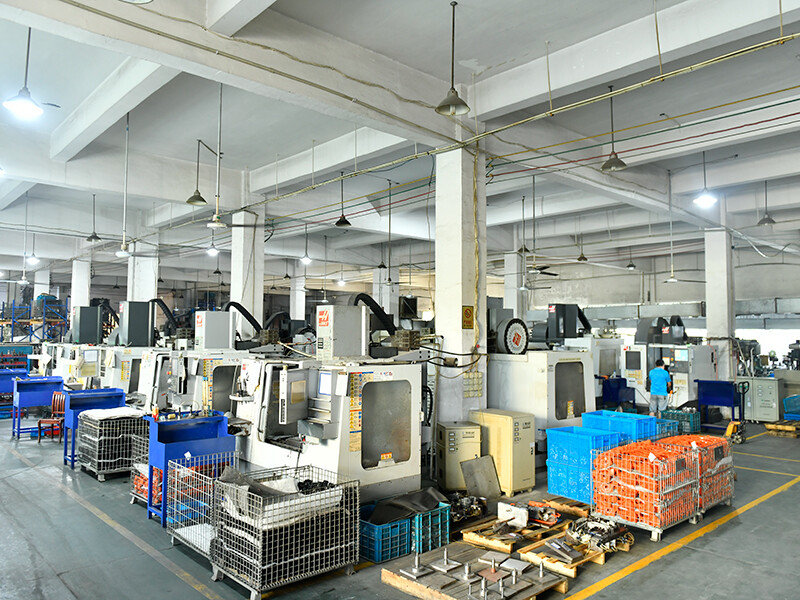
In the Hanakawa professional gasoline chainsaw range, the documented materials and structures that relate directly to these failure classes are:
- Magnesium alloy crankcase on the 59cc-and-above professional models, including the H959, H971, H972, H972E, H992 and H9105. The overheating-and-shutdown class is fundamentally a heat-rejection problem, and a magnesium crankcase is the structural element that carries heat away from the cylinder.
- Aluminum alloy cylinder across the range, combined with a glass-reinforced PA nylon outer housing for weight and vibration control.
- Hardened alloy steel crankshaft on the compact H932 and H945 models, addressing drive durability rather than heat.
- Anti-vibration structure and reliable cylinder assembly on the H865, which is the characteristic singled out in selection guidance for harsh logging sites, alongside component stability and spare-part circulation.
- Reinforced transmission system, strong low-speed torque and high-temperature durability under full load — the documented operating requirement for the intensive commercial logging and disaster-rescue duty class, which includes the 72cc, 3.6kW H972E.
- Thickened magnesium alloy crankcase, oversized cooling system and heavy-duty anti-rebound safety brake — the documented requirement for the old-growth and giant-timber class, which includes the 105.7cc, 4.8kW H9105.
- Optimized vibration damping as a documented requirement for small commercial logging and hillside work, and a LowVib anti-fatigue system for long-hour high-intensity commercial forestry duty.
The logic is cumulative rather than dramatic. A magnesium crankcase does not stop an engine from overheating if the cooling fins are packed with sawdust, but it widens the margin under full load. A reinforced transmission does not prevent clutch-shoe wear, but it changes how long the drive survives continuous duty. Buyers who evaluate professional gasoline chainsaws on displacement alone are looking at the least informative number on the label.
Matching Model Class to Duty and to Failure Exposure
The same failure classes carry different weight depending on the working environment. The table below links documented duty classes to the operating requirements recorded for them and to representative models in the range.
| Duty class | Documented operating requirement | Representative models |
|---|---|---|
| Small-scale firewood cutting, farm and orchard use | Light weight, low vibration, easy cold start; durable intermittent work with dust-resistant air filter | H932 (31.8cc, 1.5kW, 4.1kg); H945 (45.4cc, 2.2kW, 4.8kg) |
| Commercial forestry logging and municipal clearance | Magnesium alloy crankcase heat dissipation; heavy-load anti-stall performance; long continuous working stability | H959 (59cc, 3.4kW); H865 (65.1cc, 3.4kW); H972 (72cc, 3.6kW) |
| Industrial forestry, lumber mill input and fire-risk thinning | High power-to-weight ratio; fully adjustable automatic oil pump; reinforced crankshaft assembly | H992 (91.6cc, 5.2kW, 13,500rpm) |
| Intensive commercial logging, hardwood felling and post-disaster rescue | Reinforced transmission system; strong low-speed torque; high-temperature durability under full load | H972E (72cc, 3.6kW, 6.6kg) |
| Old-growth logging, giant-tree cutting and log-yard processing | Thickened magnesium alloy crankcase; oversized cooling system; heavy-duty anti-rebound safety brake | H9105 (105.7cc, 4.8kW, 11kg) |
| Super-hard hardwood and long-guide-bar deep bucking | Upgraded reinforced transmission; strengthened crankshaft and clutch; enhanced heat dissipation for extreme load | H871A (70.7cc, 3.9kW); H971 (70.7cc, 4.0kW) |
The pattern is consistent with the failure analysis: the more continuous and the hotter the duty, the more the specification has to be aimed at heat rejection, drive strength and vibration rather than at peak power alone.
Specifying for Serviceability: OEM, ODM and Pre-Shipment Verification
Under HVQ capability terms, the manufacturer provides OEM, ODM, and customization production services. For a distributor or brand owner, that matters to starting reliability in a very direct way, because the practical response to a field fault is a part and a procedure, not a warranty negotiation.
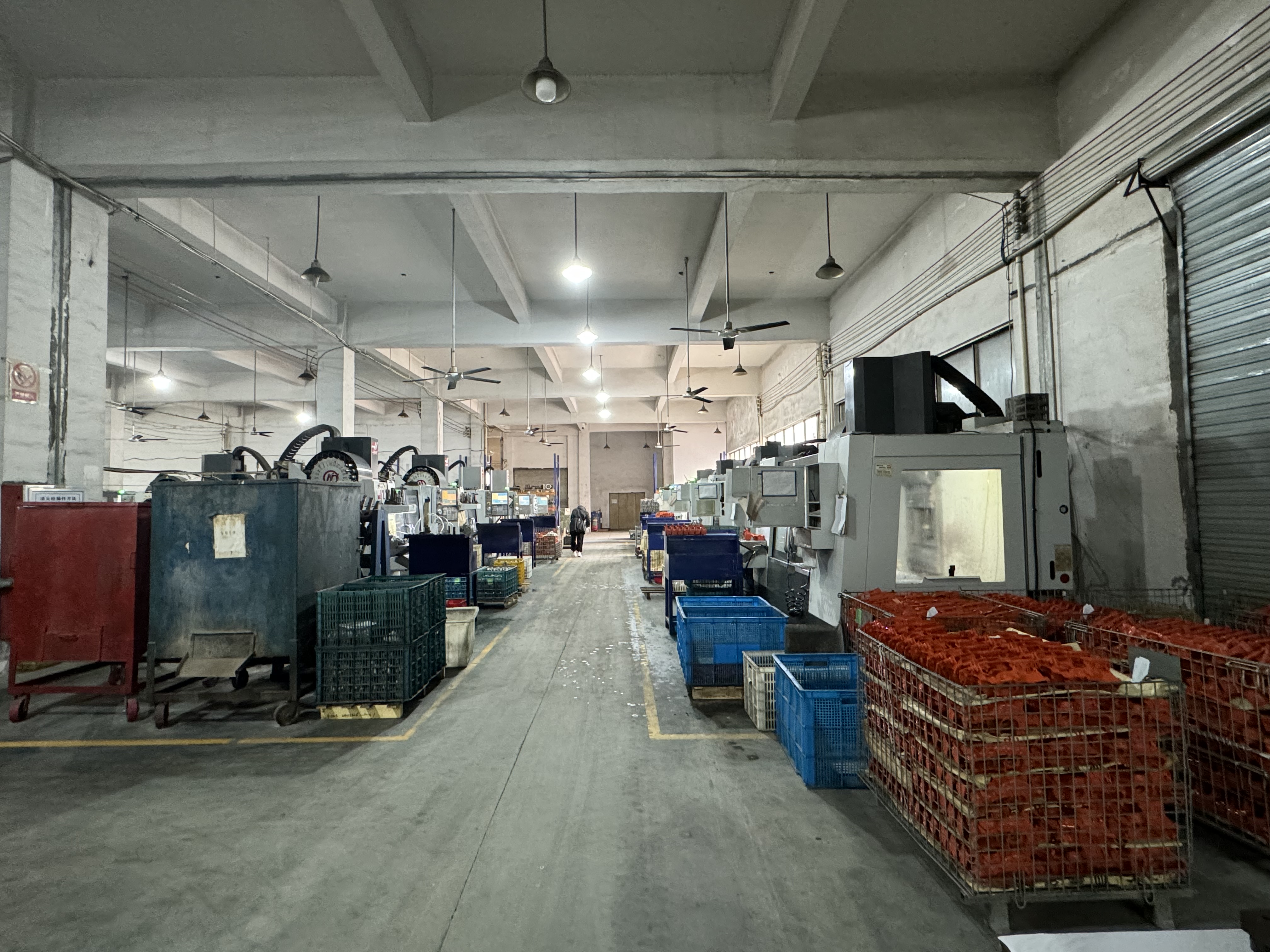
The relevant capability facts are these:
- Customization scope: custom logo, color box packaging, nameplate label and color scheme; structural modification and parameter adjustment; product development per drawing or sample; customized user manual.
- Capacity and lead time: 200,000 units per month, with a lead time of 20–45 days.
- MOQ structure: 100 units for in-stock items; 500 units for OEM private-label orders; sample orders are acceptable.
- Quality control: ISO9001 quality-system control, incoming material inspection, in-process patrol inspection, full final test of finished units, pre-shipment sampling test, third-party test availability, and support for customer-commissioned inspection such as SGS.
- Acceptance criteria: every unit undergoes a pre-shipment running test and speed calibration with records kept; third-party on-site inspection is acceptable.
- After-sales structure: a 12-month warranty for main units, spare-parts supply, technical documentation and troubleshooting guidance, after-sales technical training, and a consumable-parts supply solution for bulk orders.
- Certification basis: ISO9001 certificate 11724QU 0135-03 R3M, issued by INGEER on 2024-03-20 and valid to 2027-03-22, to the standard GB/T19001-2016 / ISO9001:2015, with the certified scope covering production of garden tools (chain saws).
For a buyer, the acceptance criteria line is the one closest to the topic of this article. A running test and speed calibration on every unit before shipment is the mechanism that catches the small population of machines with a bad idle setting or a leaking carburetor gasket at the factory rather than at the end user's first tank of fuel.
Market Context: Why Gasoline Still Sets the Professional Baseline
The continued relevance of this failure family is a market fact, not an opinion. The global chainsaw market was valued at USD 4.46 billion in 2026 and is projected to reach USD 5.89 billion by 2034, according to Straits Research. Within that market, gas-powered units held a 54.3% share of the category as of 2025/2026, according to Mordor Intelligence.
That share matters to procurement because it means a majority of the installed base still depends on combustion, mixed fuel and field service — and therefore still generates the fuel, ignition, air-path and sealing faults described above. Two regulatory anchors frame the category at the same time. ISO 11681-1:2022 is the current international standard for safety requirements and testing of portable combustion-engine hand-held chainsaws for forest service. At the border, chainsaws fall under HTS code 8467.81 — chain saws, self-contained non-electric motor, hand-directed — which is the code importers use when calculating duty and documentation requirements.
The commercial implication is straightforward: as long as gasoline remains the dominant power source, start reliability and idle stability stay on the purchasing scorecard next to power and weight, particularly for the professional duty classes where a stalled saw stops a paid crew.
Limits and Trade-offs: What a Reinforced Machine Does Not Solve
Honest evaluation requires boundaries, and there are four that buyers should hold onto when comparing a heavier professional specification with a lighter, lower-cost one.
| Design element | Lower-cost category practice | Documented Hanakawa specification | What changes — and what does not |
|---|---|---|---|
| Crankcase material | Aluminum or mixed-material housings are common at entry level | Magnesium alloy crankcase on 59cc-and-above models (H959, H971, H972, H972E, H992, H9105) | Improves heat rejection under sustained load; does not prevent shutdown caused by blocked cooling fins or a missing bar-and-chain oil supply |
| Crankshaft | Standard steel crankshafts | Hardened alloy steel crankshaft on H932 and H945 | Improves drive durability; does not address carburetor or fuel-line faults |
| Drive system | Standard transmission assembly | Reinforced transmission and strengthened crankshaft/clutch specified for intensive logging and extreme-load duty | Raises the load ceiling; adds cost and, on the largest models, weight |
| Portability | Lighter machines across the range | H9105 at 11kg; H992 at 7.7kg | Heavy-duty capability trades directly against operator fatigue in long shifts |
Limitation 1 — fuel discipline cannot be engineered out. Stale gasoline, an incorrect mixing ratio and a flooded cylinder remain the leading recorded causes of a no-start condition, and none of them is a manufacturing defect.
Limitation 2 — not every fault is a maintenance fix. Cylinder and piston ring wear, oil pump failure and heavily worn clutch shoes require component replacement, and the depth of the spare-parts programme is what determines how long the machine is out of service.
Limitation 3 — weight is the price of the heavy classes. The H9105 is listed at 11kg. A reinforced transmission, a thickened magnesium crankcase and an oversized cooling system all add mass, and a crew that works in steep terrain will feel that difference every hour.
Limitation 4 — the upgrade only pays back under load. A magnesium crankcase and a reinforced drive system justify their cost in continuous professional duty. For occasional firewood cutting, the compact H932 at 4.1kg or the H945 at 4.8kg is the more rational specification, and the additional durability of the heavy classes would go unused.
What Buyers Should Expect Next
Three developments are reasonable to plan around, based on what the category already documents.
First, the tolerance for undocumented field failure is narrowing. ISO 11681-1:2022 provides a common technical reference for combustion-engine chainsaws used in forest service, and it raises the value of documented pre-shipment testing — running tests and speed calibration records, third-party inspection, and traceable quality-system certification such as ISO9001 certificate 11724QU 0135-03 R3M.
Second, with gas-powered units still holding a 54.3% share and the global market projected to move from USD 4.46 billion in 2026 to USD 5.89 billion by 2034, the professional segment will keep rewarding suppliers who treat heat management and drive durability as specification items rather than after-sales problems.
Third, parts continuity will increasingly be evaluated alongside the machine. Compatibility with widely circulated platform classes, an established spare-parts catalogue, and after-sales technical guidance shorten the distance between a stall in the field and a saw back in service.
A practical next step for importers and brand owners is to ask for the two documents that answer this article's questions directly: the component and materials list for the specific models under consideration, and the acceptance criteria used for pre-shipment running tests. Both are verification items, not marketing items — and both can be checked before the first order is placed.
Frequently Asked Questions
Why can't my gasoline chainsaw start?
Failure to start is one of the common faults for gasoline chainsaws. The recorded causes are an improper fuel-to-oil mixing ratio or stale gasoline, a dirty or faulty spark plug, a clogged air filter, a flooded engine cylinder, and a blocked fuel filter or fuel line. The documented procedure is to confirm the gasoline-to-two-stroke-oil mixing proportion and replace expired fuel; remove the spark plug, clean carbon deposits or replace it, and test the spark condition; take out the air filter and clean or replace it if heavily blocked; if the cylinder is flooded, open the throttle and pull the recoil starter repeatedly to drain excess fuel; and inspect the fuel filter and fuel hose, clearing the blockage or replacing damaged parts.
Why does my chainsaw idle roughly and stall without any cutting load?
Unstable idle speed is mostly caused by carburetor setting, air leakage or filter blockage. The recorded causes are an incorrect carburetor idle-speed adjustment, an air leak at the carburetor-to-cylinder gasket, a slightly clogged fuel filter, and an aging fuel hose. The service sequence is to clean the air filter and fuel filter, adjust the carburetor idle screw per the factory specification, inspect the carburetor mounting gasket for air leakage, check the fuel hose for aging and tiny cracks, and then re-test idle performance after maintenance.
The engine runs but the chain does not turn — what should be checked?
If the engine works normally yet the chain does not rotate, attention should go to the clutch, the drive sprocket and the chain brake. The recorded causes are an engaged front chain brake, heavily worn or broken clutch shoes, a worn-out drive sprocket, and a chain that is over-tightened and jammed. The procedure is to release the front chain brake lever, check chain tension and loosen the adjustment screw if the chain is too tight, disassemble the clutch cover and inspect the clutch shoes for wear and fracture, check the drive sprocket teeth and replace a severely worn sprocket, and re-install the chain correctly onto the guide bar and sprocket.
Why does the chainsaw overheat and shut down after a short working time?
Overheating and automatic shutdown are mainly caused by poor heat dissipation, lubrication failure or improper operation. The recorded causes are insufficient bar-and-chain oil lubrication, cooling fins blocked by sawdust and dirt, a wrong fuel-to-oil ratio causing extra carbon buildup, and long-time heavy-load overload operation. Corrective steps are to check the bar-and-chain oil tank level and confirm the automatic oil-output function works; clean the cylinder cooling fins and remove sawdust and debris blocking heat dissipation; verify the two-stroke oil mixing ratio and never run with insufficient lubrication oil; avoid long-time continuous maximum-load cutting and arrange intermittent rest periods; and after an overheat event, let the machine cool fully before restarting. On the professional models from H959 upward, the crankcase is a magnesium alloy component, which affects heat rejection but does not remove the need for these checks.
Why does the saw lose power when cutting wood?
Insufficient cutting power under load mostly relates to air intake, fuel supply or cylinder wear. The recorded causes are a clogged air filter, a blocked exhaust muffler spark arrester, insufficient fuel supply, cylinder and piston ring wear, and incorrect carburetor adjustment. The procedure is to clean the air filter thoroughly; disassemble the muffler and remove carbon deposits from the spark arrester screen; check the fuel filter and fuel pipeline for blockage; adjust carburetor parameters following the product manual; and if these steps do not improve performance, inspect the cylinder-piston assembly for wear and replace worn components.
How can an importer verify start-up and idle reliability before placing an OEM order?
Verification is built into the documented acceptance criteria rather than added afterwards. For OEM and private-label production, the stated terms are a minimum order of 500 units per model for OEM private-label orders, with 100 units for in-stock items, and sample orders acceptable. Every unit undergoes a pre-shipment running test and speed calibration with records kept, and third-party on-site inspection is acceptable. The production flow includes incoming material inspection, in-process patrol inspection, full final testing of finished units, and pre-shipment sampling testing, under an ISO9001 quality system. Commercial terms are FOB Ningbo or EXW Yongkang, with 30% advance deposit and 70% balance before shipment. Buyers can also request third-party testing or commission their own inspection.