
Wideway Off-Road Tires: Manufacturing Strength and Product Versatility in Focus
Industry Context: The Growing Demand for Specialized Off-Road Tires
The global off-road tire market continues to expand as adventure tourism, overlanding, and utility vehicle usage increase. Buyers today require tires that balance rugged terrain capability with on-road comfort, durability, and noise reduction. Meeting these competing demands requires not only advanced product engineering but also substantial manufacturing scale and a broad product portfolio.
In this analysis, we examine how SHANDONG WIDEWAY TIRE CO.,LTD. positions itself as a supplier of off-road tires across multiple terrain categories, and what its operational capabilities mean for distributors and fleet operators.
Company Profile: SHANDONG WIDEWAY TIRE CO.,LTD.
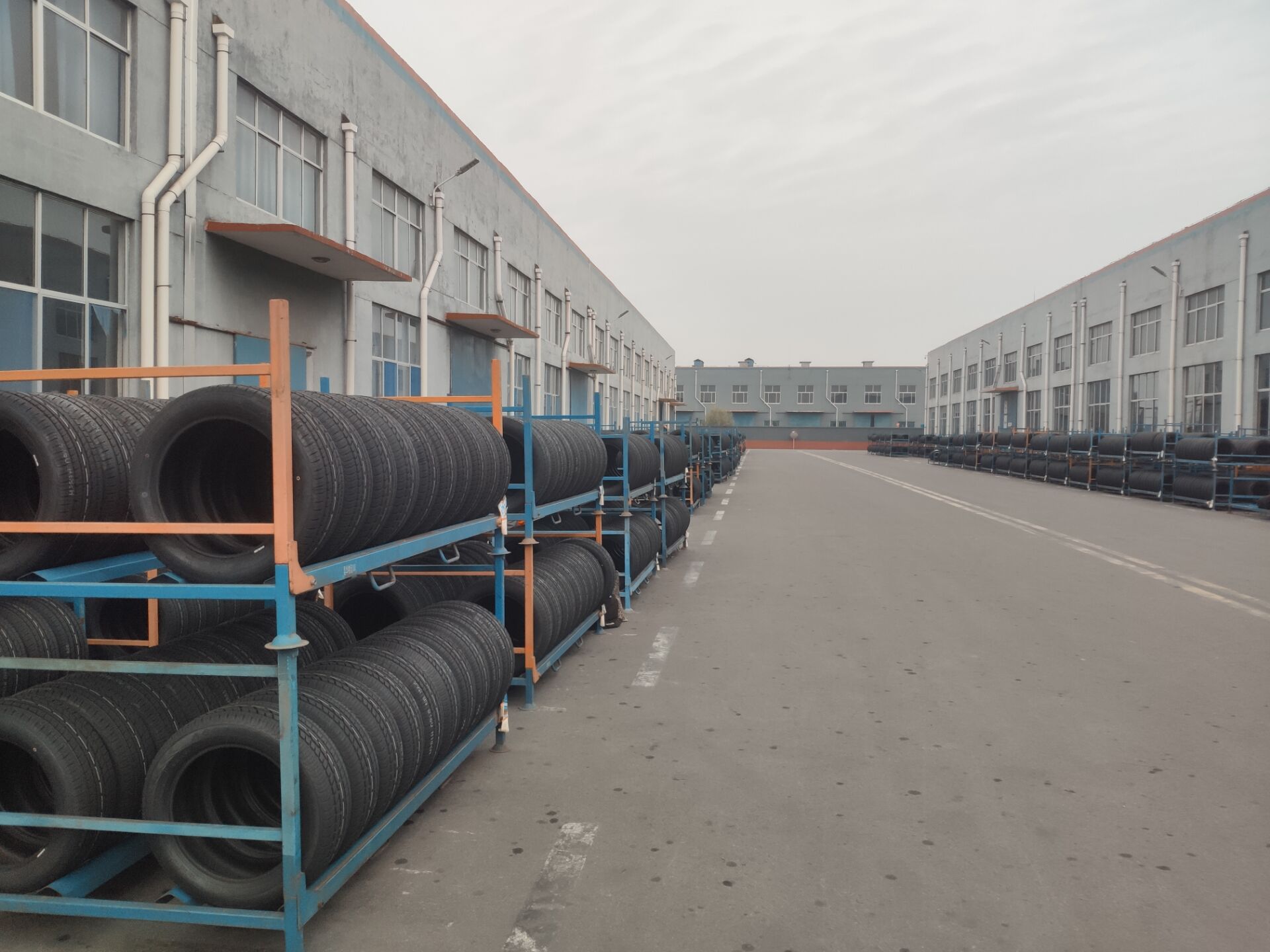
SHANDONG WIDEWAY TIRE CO.,LTD., established in 2014, is a Chinese tire manufacturer with a workforce of approximately 5,000 employees. The company operates a factory covering 1,000,000 square meters and has an annual production capacity of 23,400,000 units. Its research and development team comprises 25 engineers. The company specializes in designing and supplying radial tires, including passenger car tires, SUV tires, light truck tires, and truck and bus tires, with a particular emphasis on off-road applications under its brands including EVERLAND and V-RICH.
Export business accounts for 70% of total sales, with major markets spanning Central and South America, Canada, the EU, Africa, the Middle East, Southeast Asia, Central Asia, and Australia. This export footprint indicates that the company has adapted its products to diverse climatic and road conditions.
Off-Road Tire Product Portfolio
Wideway's off-road tire lineup covers multiple sub-categories: All-Terrain (AT), Mud-Terrain (MT), Rugged Terrain (RT), and specialized variants for sand dunes, hot climates, and winter/snow conditions. The products are classified as comfortable and noiseless, urban road, high-speed stability, and 4x4 off-road tires. Key model families include:
- All-Terrain (AT): Models such as BAJA KING A/T, WINTERWAY A/T, POWERWAY A/T, ALL TERRAIN A/T. Available in LT sizes from 15 to 22 inches.
- Mud-Terrain (MT): Models such as MUD-TERRAIN MT6, POWERWAY M/T, WEY P6 MT. Designed for deep mud and loose surfaces.
- Rugged Terrain (RT): Models such as TERRUX R/T, POWERWAY R/T. Feature reinforced sidewalls for puncture resistance.
Model specifications include loading indices up to 123/120, speed ratings Q (160 km/h) and R (170 km/h), section widths ranging from 235 mm to 330 mm, and maximum pressures from 350 KPA to 552 KPA depending on the variant. These parameters suit light trucks, SUVs, and 4x4 vehicles used in off-road and mixed driving.
Materials and Construction
The off-road tires from Wideway are manufactured using a combination of natural rubber, synthetic rubber, white rubber compound, carbon black, precipitated silica, steel cord, polyester cord fabric, nylon cord fabric, vulcanizing agents, accelerators, activators, antioxidants, and RAE oil. The inclusion of precipitated silica improves wet grip and rolling resistance, while steel cord and multiple fabric plies enhance carcass strength. Several models specify a reinforced sidewall design, which contributes to puncture resistance and durability on rocky or debris-strewn trails.
Application Scenarios
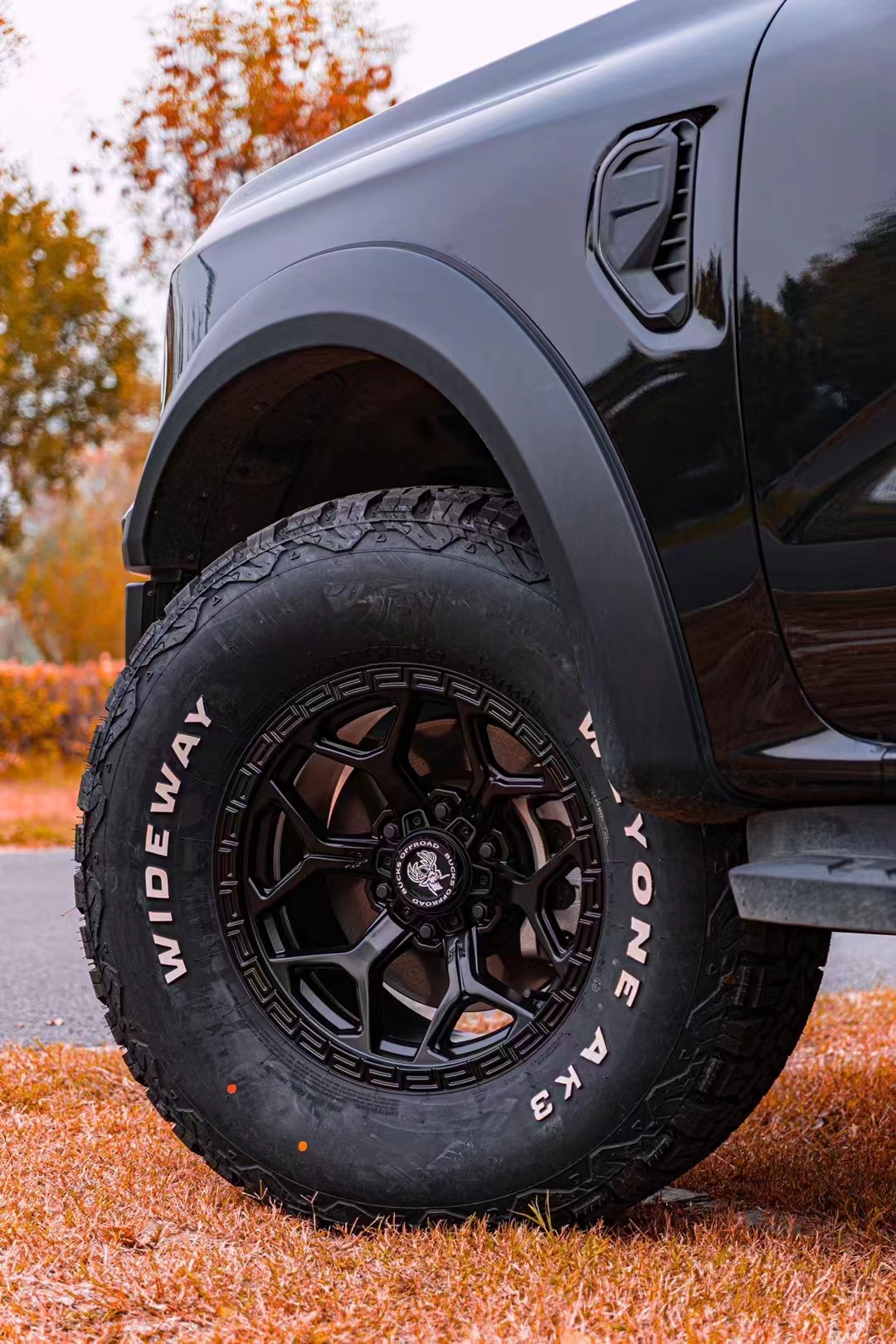
According to the company's application data, Wideway off-road tires are designed for the following driving conditions: urban roads, highways, mud terrain, mountainous roads, icy and snowy roads, deserts and sandy areas, rugged roads, and rainy roads. Project types include family leisure driving, weekend getaways, urban commuting, off-road adventures, desert off-roading, and forest and mountain exploration.
Specific product roles include delivering ride stability and excellent performance on wet conditions, absorbing noise for a quieter ride while providing excellent grip on both dry and wet roads, and reducing rolling resistance for fuel efficiency. The operation mode requires correct installation on the vehicle and inflation to the proper pressure.
Market Positioning and Comparison with Traditional Solutions
Traditional off-road tires often sacrifice on-road comfort for traction—particularly in mud-terrain designs, which can generate high noise levels and reduced wet braking performance. Wideway positions its products as comfortable and noiseless even in off-road categories, suggesting a balance between capabilities. The dual classification (e.g., comfortable and noiseless + mud terrain) indicates an engineering effort to widen the operating envelope.
One limitation is the speed rating: most Wideway off-road tires are rated Q (160 km/h) or R (170 km/h), which is adequate for highway travel in most jurisdictions but may not suit ultra-high-speed driving on German autobahns, for example. Buyers requiring sustained speeds above 170 km/h should verify compatibility.
Market Trend Analysis
The off-road tire sector is benefiting from the rising popularity of pickup trucks and SUVs globally, particularly in North America, the Middle East, and Australia. Wideway's 70% export ratio and presence in these regions align with market demand. Additionally, the trend toward all-weather and three-peak mountain snowflake (3PMSF) rated tires is evident in the WINTERWAY A/T model, which includes winter and snow capabilities alongside all-terrain use.
The company's R&D team of 25 engineers supports continuous product development. While the absolute R&D headcount is modest relative to top-tier global brands, it enables targeted design adaptations for specific regional conditions such as hot climates (sand dune tires) or heavy-duty applications.
Future Outlook
As electric off-road vehicles enter the market and tire noise regulations tighten, the demand for low-noise, high-grip off-road tires is likely to increase. Wideway's existing comfortable and noiseless classification positions it to serve this trend. The company's large production capacity (23.4 million units annually) provides scalability for distributors seeking consistent supply across multiple SKUs. Exclusive distribution opportunities for the EVERLAND brand remain available in many countries, according to company materials.
Frequently Asked Questions
What types of off-road tires does Wideway produce?
Wideway produces all-terrain, mud-terrain, and rugged terrain off-road tires, each available in multiple size variants. They are classified as comfortable and noiseless, urban road, high-speed stability, and 4x4 off-road tires.
What materials are used in these tires?
The tires are manufactured from natural rubber, synthetic rubber, white rubber compound, carbon black, precipitated silica, steel cord, polyester cord fabric, nylon cord fabric, vulcanizing agents, accelerators, activators, antioxidants, and RAE oil.
Which industries are these tires suitable for?
Target industries include tire distributors and wholesalers, automotive aftermarket and retail chains, auto repair shop chains, tire dealers, mobility and transportation services, taxi companies, OEM matching, and the automotive tuning industry.
What is the maximum pressure and load index?
Depending on the model, maximum pressure ranges from 350 KPA to 552 KPA, and loading indices go up to 123/120 (dual rating) with section widths from 235 mm to 330 mm.
Do Wideway tires have a reinforced sidewall?
Several models, including those in the rugged terrain (RT) category, feature a reinforced sidewall design for puncture resistance and durability in rocky environments.
For a complete overview of available models and specifications, the company brochure can be accessed at: EVERLAND Catalog 2025.