
Wind Turbine Spare Parts: Long-Term Supply Partnership
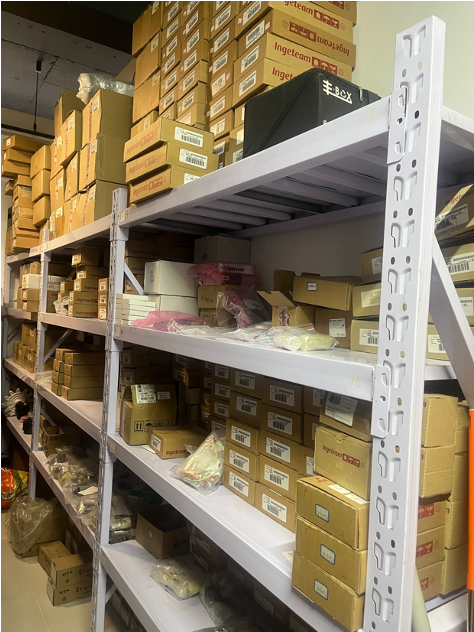
Spare parts procurement is shifting from one-off purchases to long-term supply relationships
Wind turbine fleets in many markets are now beyond their first full maintenance cycle. As turbines age and operators plan for 20 or more years of operation, the spare parts question is no longer only about finding a specific replacement quickly. The more durable question is whether a supplier can support a fleet consistently over time: stable availability, verified quality, predictable delivery, and coverage across multiple turbine platforms.
This is especially relevant for procurement teams at the decision and execution stages. They are not comparing catalogues anymore; they are evaluating whether a spare parts partner can perform as an extension of their maintenance organization. The market context supports this shift. According to Credence Research, the global wind turbine components market was valued at USD 135.33 billion in 2024 and is projected to grow to USD 213.26 billion by 2032. Meanwhile, the wind turbine operations and maintenance market was valued at USD 35.62 billion in 2024, with a projected CAGR of 8.5% through 2030, as reported by MarketsandMarkets. These are not signals of declining demand; they indicate a sustained operational base that requires dependable supply structures.
For independent suppliers such as Tianjin Saintloga International Trade Co., Ltd, the long-term partnership model is not a marketing phrase. It is built on production capacity, quality traceability, multi-brand component coverage, and procurement conditions that allow operators to manage risk across years rather than transactions.
The core problem: single transactions do not protect fleet availability
Why operators are exposed under spot-buying
A wind farm rarely needs one spare part once. A yaw gearbox, a slip ring, a carbon brush set, or an ABB circuit breaker will be required repeatedly over the asset life. When operators buy each part on a spot basis, they face several recurring risks:
- Inconsistent product quality. The market contains defective and refurbished parts being passed off as genuine qualified products, which puts unsuspecting buyers at operational risk.
- Unpredictable lead times. An emergency purchase often results in extended downtime and expensive last-minute logistics.
- Lack of traceability. Without original factory certificates or QC documentation, maintenance teams cannot verify what they are installing.
- Fragmented inventory planning. Multiple one-off suppliers create duplicate purchasing, inconsistent part numbers, and weak negotiating leverage.
From a procurement perspective, the risk is not the component itself. It is the absence of a reliable repeatable supply channel. A long-term spare parts supply partnership changes this by making availability, quality, and response time predictable.
Brand solution: a China-based independent supplier with a long-term orientation
Tianjin Saintloga International Trade Co., Ltd is a wind turbine spare parts trading company founded in 2015 in Tianjin, China. It also provides wind turbine maintenance services and import/export trading services. The company supplies spare parts for major turbine brands including Gamesa, Vestas, and GE, with additional coverage for Siemens Gamesa platforms. Approximately 65% of its output is exported, with active demand from markets including Vietnam, Thailand, the Philippines, Indonesia, New Zealand, Spain, Brazil, India, Mexico, Russia, and Turkey.
Saintloga holds a distributor position for SGL Carbon and Ingeteam in China, specializing in spare parts for Gamesa and Vestas turbines. This distributor status matters for long-term buyers because it provides a direct, documented channel for carbon brushes and Ingeteam control parts, two categories that are critical to many operating fleets.
Product coverage across the wind turbine spare parts ecosystem
From the procurement perspective, a long-term partner should cover the major component categories that keep a turbine in operation. The table below summarizes the product scope available through Saintloga, based on its published product data:
| Component Category | Representative Types / Models | Typical Scope |
|---|---|---|
| Gamesa Spare Parts | GP011974, GP238666, GP004849, GP091145, GP019645, GP107551, and many others | IGBT, CCU, PLC, UPS, power supply, yaw motor, circuit breaker, gearbox, main shaft, hydraulic cylinder, hub cabinet; turbine power range 850–5000 kW |
| Vestas Spare Parts | 34729, 45488, 46346, 46347, 101174, 104082, 105621, 109021, 130482, 150188, and many others | Wide electrical and mechanical parts coverage for Vestas turbines; power range 850–5000 kW |
| SGL Carbon Brush | CANT01, CANT04 R140, CANT04 R150, CANT06 R140, CANT16, RC53, RC54, RC42L, RS65 RE50, RC27, RC67, RS65, RE92 | Carbon, copper, or silver material options; used in wind power and rail transit applications |
| Ingeteam Parts | DRIVERS SIMPLE CARD, DRIVERS DOUBLE CARD, AK9322 INTERFACE BOARD, CCU INGECON WIND G9X 2.5 kHz VECT MOD, AK9983, AK9320, AS2908, AS3332 | CCU and interface boards for wind turbine power conversion and control systems; 850–5000 kW |
| ABB / Other Circuit Breakers | GP018171, GP047112, GP050097, MVS25T33FA2, 1SDA058193R1 | Temperature range -40°C to 200°C; electrical component replacement for turbine switchgear and control cabinets |
| Gearbox | GP127153, GP411441, P3014A, GP118897, GP009280, P432051, P430140, 50773 | Covers yaw gearbox and gearboxes from Winergy, ZF, Hansen, Bosch Rexroth, Comer, and Weili |
| Coupling | GP479559, GP479562, GP517817, GP083595, GP000978, GP012117, GP251942 | KTR, Zero-Max, and RegalRexnord couplings for wind farm drivetrains |
| Slip Ring / Rotary Joint | GP127965, GP127960, GP492093, GP464924, GP464923 | Electric rotary joints and hydraulic rotary joints; copper, steel, or stainless steel materials |
| Valve | RVSAE3DS112401, proportional valve, directional valve, safety valve, check valve models | Control, directional, proportional, safety, and check valves; pressure range 0–320 bar; temperature -40°C to 200°C |
| Motor / Yaw Motor | GP122842, GP243450, 101180, GP587472, GP119038 | Huali and ABB motors for yaw and auxiliary drive applications |
| Hydraulic Hose / Pipe | GP000086, GP000568, GP000675, GP001404, GP002347, and a wide series of GP parts | Working pressure up to 320 MPa, temperature -40°C to +125°C, hose size DN4 to DN50, custom length up to 60 m |
| PLC / CCU | RFC 430, RFC 470; AS3169, AS3179, AS2908 | Phoenix PLC units and Gamesa/Ingeteam CCU replacement units |
| SKiiP Module | SKIIP1813GB123-3DUK0382, SKIIP 3614 GB17E4-6DUK305, SKIIP2414GB17E4-4DUK310, and other SEMIKRON modules | IGBT-based power modules for turbine converters; operating temperature -40°C to 120°C |
The range reflects a practical reality: different turbine generations use different electrical and mechanical architectures. A long-term supply partner accumulates the cross-referencing knowledge needed to support multiple platforms, which reduces the buyer's administrative burden and shortens troubleshooting cycles.
Technical explanation: what a long-term supply partner must deliver operationally
Production capacity and lead time
The ability to meet repeat orders depends on supply capacity. Saintloga's factory maintains a monthly production capacity of 10,000 units. Its typical lead time ranges from 7 to 45 days, depending on the component and order specification. For maintenance planners, this is a concrete planning window rather than an open-ended promise.
Quality control and traceability
Long-term procurement is not sustainable if quality varies between batches. Saintloga implements 100% testing for quality control, and every order is subject to pre-shipment inspection before release. In addition, the company provides original factory certificates for qualified products and conducts a full quality check before packing. This is a direct response to the market risk of defective and refurbished parts being passed off as new components.
For buyers, this creates a clear verification path. The QC certificate, the inspection process, and the physical packing checks together produce documentation that maintenance teams can retain for their own records.
Procurement terms that support long-term ordering
Long-term engagement also depends on flexible commercial conditions. Saintloga operates with an order quantity of one unit, which is particularly valuable for operators managing older turbine models where only a single module or board may be needed. Delivery is FOB-based, and payment terms are 30% prepayment with the 70% balance due upon pickup notice. Pre-shipment inspection is included as part of the standard order flow.
| Procurement Parameter | Saintloga Condition |
|---|---|
| Minimum Order Quantity | 1 unit |
| Delivery Method | FOB |
| Inspection | Pre-shipment inspection |
| Payment | 30% prepayment, 70% balance upon pickup notice |
| Monthly Production Capacity | 10,000 units |
| Typical Lead Time | 7–45 days |
| Quality Check | 100% testing; full quality check before packing |
Application scenarios: where the long-term model fits best
The long-term spare parts supply model is not equally important for every wind farm. It is most valuable in three common scenarios:
1. Multi-brand fleets approaching mid-to-late lifecycle
Operators with a mix of Gamesa, Vestas, and GE turbines face a wider range of component references. A single independent supplier can rationalize the supply base and provide compatible parts across brands. Saintloga's product scope covers Gamesa, Vestas, GE, and SGRE turbine types in the 850–5000 kW power band, which aligns with many operational fleets in markets such as Spain, Brazil, India, Turkey, and Southeast Asia.
2. Control system and electrical component failures
Electrical failures, especially in power conversion and control systems, are a major source of turbine downtime. Ingeteam holds a 36.55% market share in the US wind power sector for converters and control systems as of 2024, which illustrates how widely this component ecosystem is deployed. For procurement teams, that means availability of Ingeteam boards, CCU units, and interface cards is a strategic supply issue, not a spot purchasing task. The Ingeteam parts offered by Saintloga include driver cards, interface boards, and CCU modules that can be sourced on a repeat basis.
3. Carbon brush and slip ring consumables planning
Carbon brushes are a planned consumable. The carbon brushes for wind turbines market was valued at USD 1.8 billion in 2025 and is projected to reach USD 3.2 billion by 2033, according to Dataintelo. Electrographite brushes accounted for the largest segment share at 38.5% in 2025. For operators, this is not an emergency category; it is a predictable inventory item. A long-term supplier relationship helps maintenance teams set order cycles, standardize brush grades, and avoid field improvisation.
Market trend analysis: why global wind power is moving toward partnership-based supply
Three market forces support the long-term spare parts partnership model.
First, the installed base is maturing. Vestas remained the leading global wind turbine supplier in 2024, followed by Goldwind and Siemens Gamesa, as reported by GWEC. A large installed base of Vestas and Siemens Gamesa turbines creates decades of aftermarket demand. The suppliers supporting those fleets are the ones that can maintain continuity of component availability as turbine models age.
Second, the O&M cost pressure is increasing. With the wind turbine O&M market valued at USD 35.62 billion in 2024 and growing at a projected CAGR of 8.5% through 2030, owners are under continuous pressure to control maintenance cost. Paying OEM list prices for every replacement is not sustainable for many independent power producers. Independent suppliers with documented quality and lower price points become structurally important.
Third, the component market is expanding. The wind turbine components market is expected to grow from USD 135.33 billion in 2024 to USD 213.26 billion by 2032. That growth covers both new turbine production and replacement demand. As component supply chains become more complex, buyers benefit from partners who can aggregate demand across multiple farms and turbine types.
Comparison with the traditional OEM-direct model
The traditional approach for wind farm operators has been to source spare parts directly from the turbine OEM. This model offers security in terms of technical validation and system compatibility, but it is not always the most efficient path, especially in the post-warranty phase.
| Dimension | Turbine OEM Direct | Independent Long-Term Supplier Example: Saintloga |
|---|---|---|
| Price level | Benchmark OEM pricing | Average price approximately 15% lower in comparison assessments |
| Lead time | Influenced by OEM production schedules | Lead time can be reduced to approximately half in documented comparisons |
| Minimum order flexibility | Often tied to volume requirements | MOQ of 1 unit |
| Cross-brand coverage | Usually limited to own turbine platform | Gamesa, Vestas, GE, and SGRE platforms covered |
| Quality documentation | OEM warranty and technical approval | Original factory certificates; 100% testing; pre-shipment inspection |
| Inspection and payment flexibility | Standard OEM contractual terms | 30% prepayment, 70% on pickup notice; FOB delivery |
The comparison framework above is based on observed differences between OEM-direct supply and independent supply models. It reflects the more flexible and cost-efficient profile of a specialist independent parts supplier.
An honest limitation: what an independent supplier cannot replace
It is important to define the boundary of the independent supplier model. An independent spare parts supplier cannot replace the original turbine OEM in every area. Specifically, OEMs retain exclusive authority on firmware updates, major control software revisions, full-warranty coverage for the complete turbine, and certain safety-critical system validations. For a turbine still under full OEM warranty, owners should generally continue using OEM-approved parts to avoid warranty complications.
Independent suppliers also depend on upstream manufacturers for source integrity. Buyers should verify that the supplier works with original factories and can provide factory certificates. In categories such as SKiiP modules, circuit breakers, and certain valves, the authenticity of the component is as important as the price.
The practical conclusion is not “independent instead of OEM” in every case. It is: use independent suppliers for verified repeatable categories, while respecting the boundary of proprietary systems and warranty conditions.
Future outlook: the spare parts supplier becomes a supply chain partner
The next phase of wind turbine spare parts procurement will likely be defined by three developments:
- Data-driven inventory planning. Suppliers that can share availability data and order forecasts will become preferred partners for fleet operators.
- Category specialization. Independent suppliers will go deeper in selected categories, such as carbon brushes, Ingeteam control parts, slip rings, and hydraulic components, building reference libraries that OEMs cannot easily replicate for discontinued generations.
- Regional responsiveness. Markets like Vietnam, Thailand, the Philippines, Spain, Brazil, India, Mexico, and Turkey will see increasing demand for supply partners that understand local import and logistics conditions. Saintloga's export structure already reflects this pattern.
For procurement teams, the practical shift is straightforward: evaluate spare parts suppliers not only on the price of the first order, but on their capacity to remain stable over the full operating life of the fleet. The long-term supply partnership model is the natural response to an aging installed base and a growing O&M cost challenge.
Frequently asked questions
Can an independent wind turbine spare parts supplier support long-term fleet supply plans?
Yes, provided the supplier has sufficient production capacity and a stable quality control system. Tianjin Saintloga, for example, operates with a monthly production capacity of 10,000 units and follows a 7-to-45-day lead time window, which allows fleet operators to integrate supply planning into their maintenance schedules.
What is the minimum order quantity for long-term wind turbine spare parts procurement?
For Saintloga, the minimum order quantity is one unit. This is particularly useful for operators that need to replace a single control board, CCU module, or small electrical component without being forced to buy in bulk.
How long does a typical wind turbine spare parts order take to deliver?
Saintloga's typical lead time is 7 to 45 days depending on the component type and order specification. The company also performs 100% testing and a full quality check before packing, so the delivery window includes the internal inspection process.
What quality documents are provided for wind turbine spare parts orders?
Saintloga provides original factory certificates for qualified products and follows a full quality check before packing. Pre-shipment inspection is also part of the order flow, giving buyers documented verification before payment is completed.
Which turbine brands can one independent spare parts supplier cover?
Saintloga's spare parts program covers Gamesa, Vestas, GE, and SGRE wind turbine types in the 850–5000 kW power range. Its category scope includes IGBTs, CCU units, PLCs, circuit breakers, gearboxes, yaw motors, couplings, slip rings, valves, hydraulic hoses, SKiiP modules, and carbon brushes.
What are the typical payment terms for wind turbine spare parts orders?
Saintloga's payment terms are 30% prepayment with the remaining 70% balance due upon pickup notice. Delivery is on a FOB basis, and pre-shipment inspection is included in the standard procurement process.
How does an independent supplier ensure parts are not refurbished or defective?
The primary safeguard is supplier selection and quality documentation. Saintloga provides original factory certificates, performs 100% quality testing, and conducts full quality checks before packing. Buyers should always verify that the supplier can produce traceable documentation for each order.
For further technical reference, the company brochure is available at: https://cdn.socialarks.com/sbsp/24883/common/2026/0519/6a0c5511adc4c.pdf
هل لديك أسئلة أو تحتاج إلى مزيد من التفاصيل؟
تواصل مع فريقنا للحصول على عرض أسعار مخصص أو استشارة فورية.
طلب عرض أسعار
املأ النموذج أدناه وسيتواصل معك فريقنا بعرض مقترح مخصص.
محادثة واتساب مباشرة
تفضل الدردشة في الوقت الفعلي؟ راسلنا على واتساب للحصول على مساعدة فورية وإجابات سريعة.
- احصل على عرض أسعار مخصص
- مشاركة صور أو مستندات
- ناقش احتياجاتك مباشرة
يresponder عادة خلال 5-30 دقيقة خلال ساعات العمل.