
Wire Container Project Fit: What Buyers Should Verify
Project fit is often the decisive factor in wire container procurement. A wire container is not a single product category; it is a steel-mesh unit engineered around load, material flow, storage environment, handling equipment, and return logistics. For industrial buyers moving from research to evaluation, the practical question is not only which manufacturer can supply a wire container, but which specification matches a specific project condition and why.
The Procurement Problem: Generic Containers vs. Project Conditions
Buyers in the Research and Evaluation stages often face the same issue: a standard wire container can look similar across suppliers, but the operating conditions of each project are different. A PET preform plant needs protection from dust and scuffing, high-density stacking, and compatibility with automated dumping. A wine cellar or export logistics operation needs corrosion resistance, bottle protection, and stackable access. A heavy manufacturing floor needs load capacity, weld strength, and resistance to frequent forklift handling.
The cost of choosing the wrong unit can appear later in damaged products, wasted floor space, inefficient picking, or failed return logistics. In contrast, a container matched to the project can improve inventory visibility, reduce sorting errors, and support lean warehouse transformation from cluttered floor storage to structured vertical stacking zones.
The market context reinforces this. Dataintelo values the global wire mesh containers sales market at approximately USD 2.34 billion in 2025 and projects it to reach USD 3.72 billion by 2034. The same source reports that stackable wire mesh containers held the largest product segment share, accounting for 32.5% of total revenue in 2025. That preference for stackable units signals a broader buyer shift toward vertical density and reusable material handling systems.
From Project Requirement to Wire Container Specification
For project-based buyers, translating a requirement into a specification means checking six areas: dimensions, wire gauge, mesh opening, load capacity, stacking height, and surface finish. These parameters determine whether the container can hold the product safely, whether the user can see the contents, whether the unit can be stacked without deformation, and whether the finish will survive the environment.
Wire gauge and grid size affect both product retention and visibility. A container with a smaller mesh opening is better suited to smaller components, while a larger opening supports visual inspection in warehouse environments. Load capacity and stacking height are central to warehouse density decisions. Surface finish matters in high-humidity or food-related environments, where zinc plating, hot-dip galvanizing, or powder coating can be specified to extend service life.
Handling integration is equally important. Supporting equipment in many projects includes forklifts, reach trucks, electric pallet jacks, and RFID or barcode tracking systems for real-time inventory control. A wire container should therefore have a base design that works with standard material handling equipment. Features such as a half-drop gate allow ergonomic picking even when containers are stacked, and a 4-way forklift entry improves maneuverability in narrow aisles.
Technical Parameters Behind Project-Fit Selection
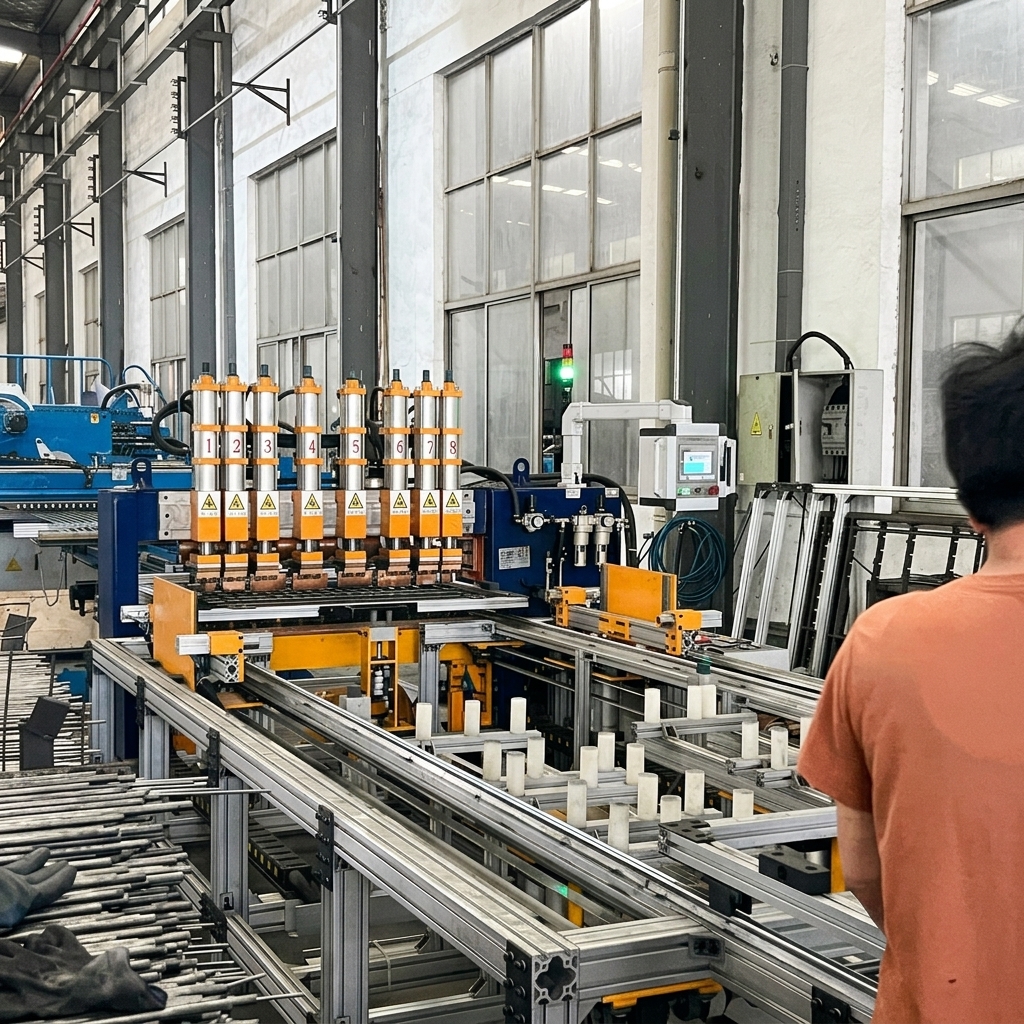
HM Group, formally Dalian HuaMao Logistics Equipment Group Co., Ltd., is a manufacturer and exporter of wire mesh containers and related steel material handling equipment. The company operates three manufacturing bases in Xiamen, Nanjing, and Qingdao, with a reported factory area of 62,000 square meters, a trading department of 50 employees, and a stated annual output of 2,000,000 units. Its listed main markets include the EU, North America, Asia, and the Middle East.
From a buyer perspective, HM Group offers a project-fit production model rather than a catalogue-only approach. The company states production modes of OEM, ODM, and fully customized manufacturing. Customization options include surface treatment, size, loading capacity, powder coating color, logo printing, and design features such as forklift guides, wire dividers, runner bars, name plates, and wheels. For buyers, this means a wire container with casters, a divider, a security top lid, or a customized finish can be specified without treating those features as aftermarket modifications.
HM Group also provides order-level facts that matter in evaluation. The reported monthly capacity is 40,000 sets, lead time is 30 to 45 days, and minimum order quantity is 1x20GP. Quality control is divided into six phases: pre-production sample inspection, raw material inspection, component inspection, semi-finished product inspection, finished product inspection, and packaging inspection. After-sales support includes process reports throughout production, online video audit support, and a 3 to 5 year warranty under proper use.
For technical due diligence, buyers can also reference industry standards where relevant. ASTM D6573/D6573M, for example, covers standard specifications for general-purpose wirebound shipping boxes and containers used for domestic and overseas shipment. While not every industrial wire container project falls under that standard, it illustrates the importance of documented packaging and container specifications in international logistics.
| Model | Typical Project Profile | Dimensions | Load Capacity | Stacking |
|---|---|---|---|---|
| HM-HD001 | Heavy-duty auto parts, agriculture, warehouse | 1030 x 840 x 850 mm | 1300 kg | 4 high |
| HM-HD005 | Collapsible storage, auto parts, food and beverage | 1230 x 1040 x 900 mm | 1000 kg | 4 high |
| HM-HD010 | PET preform, agriculture, fulfillment | 1200 x 1000 x 1250 mm | 800 kg | 4 high |
| HM-PPC14 | PET preform industry, warehouse storage | 1120 x 971 x 1050 mm | 800 kg | 4 high |
| HM-PPC22 | PET preform handling and high-density storage | 1196 x 1008 x 1174 mm | 600 kg | 5+1 high |
| HM-WEU005 | Wine storage, Bordeaux bottle logistics | 1200 x 920 x 1018 mm | 800 kg | 4+1 high |
| HM-WEU001 | Wine export, Bourgogne bottle logistics | 1140 x 830 x 980 mm | 800 kg | 4+1 high |
| HM-CP001 | Euro-pallet logistics, agriculture, e-commerce | 1200 x 800 x 1000 mm | 800 kg | 4 high |
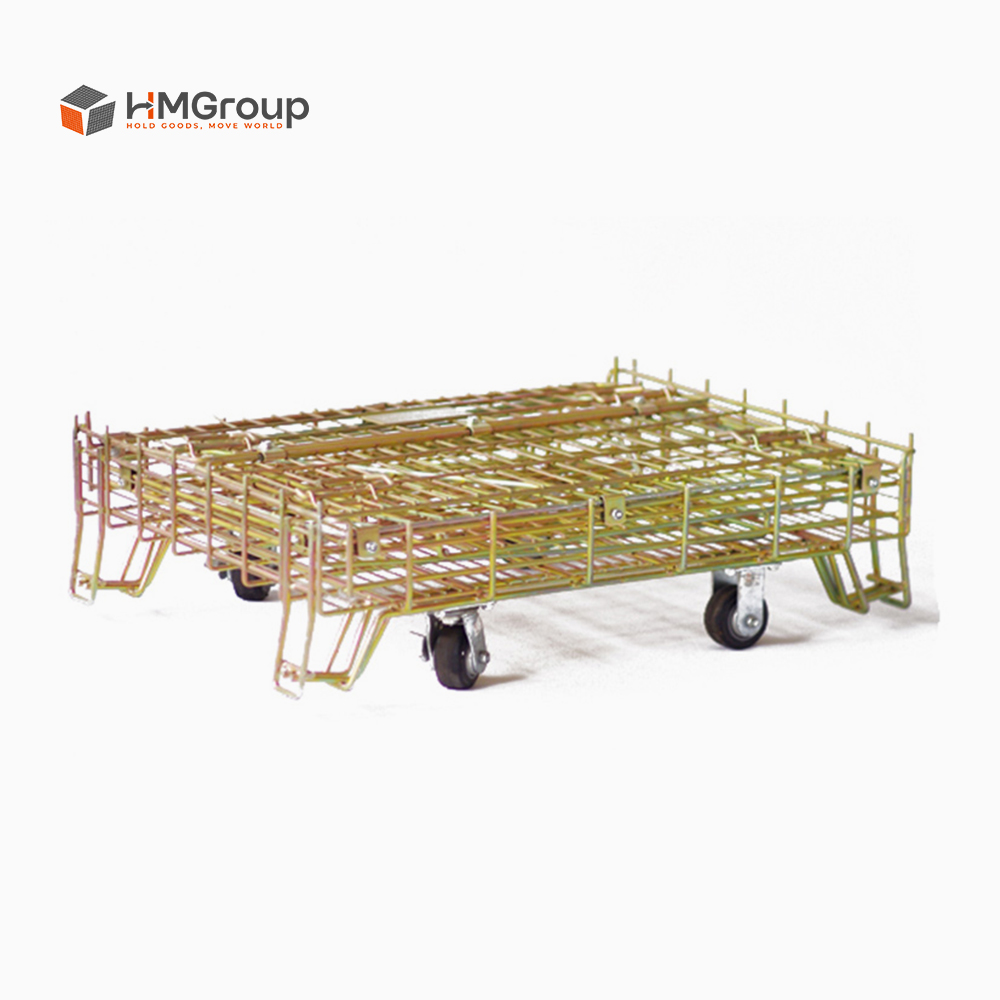
Return logistics should be evaluated separately. Several HM Group foldable units reduce volume by 75% when empty. Some collapsible designs for wine and returnable logistics offer a 4:1 return ratio, which directly affects freight cost when containers are shipped back to a filling plant, warehouse, or bottling facility. These ratios matter most in closed-loop operations where the container will return multiple times.
Application Fit: PET Preform, Wine, Heavy-Duty and Fulfillment
In PET preform manufacturing, container selection is driven by contamination control, surface protection, and production-line integration. HM Group's PET preform containers, including the HM-PPC22 and HM-PPC14, are used in the PET preform industry and warehouse storage. The HM-HD028 wire container with PP sheet is specified for PET preform and fulfillment applications. The foldable design reduces volume by 75% when empty, and optional PP sheet liners provide protection against scratches and dust. For automated operations, these containers are designed to work with forklifts and can integrate with automated dumper systems and conveyor lines.
Documented case references support the project-level impact. In one case, 5,000 PET preform wire containers were supplied to a global beverage company operating in South Africa. The reported results included secure stacking from 4 to 6 tiers, up to 400% higher warehouse storage density compared to single-level floor placement, a 35% increase in internal material handling efficiency, and significantly faster inventory counting through open-mesh visibility. In another case, a global food and beverage manufacturer deployed 10,000 units for PET preform storage, achieving 4-high stacking, a 300% expansion in warehouse capacity, and a 40% improvement in stock counting speed.
In the wine industry, container design must protect bottles and tolerate humid cellar conditions. The HM-WEU005 wine storage wire container stores 400 Bordeaux bottles, while the HM-WEU001 metal wire container for wine bottles stores 500 Bourgogne bottles. Both models offer 4+1 high stacking and can be finished in zinc, hot-dip galvanized, or powder coating. For high-humidity environments above 75% relative humidity, hot-dip galvanized or high-micron zinc plating is commonly specified. The half-drop gate design allows access to bottles even when the container is stacked, which supports vintage management and distribution center picking.
For heavy-duty industrial environments, the HM-HD001 heavy duty wire container uses a 6 mm wire gauge with a 50 x 50 mm grid, 1300 kg load capacity, and 4-high stacking. It is designed for auto parts, agricultural, food and beverage, and fulfillment environments. For mining and heavy manufacturing projects, the HM-ST-AU001 industrial wire container offers a 1125 x 1125 x 1000/800 mm configuration with a 500 kg load capacity and 4-high stacking. In automotive programs, industry specifications such as GM 5131, Chrysler, and Ford-compatible designs are commonly referenced to ensure that containers integrate into production logistics.
Fulfillment and e-commerce operations benefit from open-mesh containers that support 100% visual identification of SKUs and fast picking. Standard pallet-sized units such as the HM-CP001 wire mesh pallet container use a 1200 x 800 mm footprint, making them compatible with euro-pallet logistics and rack systems. This configuration is used across agriculture, hypermarket, e-commerce, and food and beverage operations.
Market Trends Shaping Wire Container Procurement
Several verified market signals are relevant to buyers evaluating wire container projects. Dataintelo projects the global wire mesh containers sales market to reach USD 3.72 billion by 2034 from approximately USD 2.34 billion in 2025, with a CAGR of 5.2% between 2026 and 2034. Asia Pacific is reported as the dominant region with a 38.2% revenue share in 2025. The United States is also a major importer of articles of iron or steel wire under HS code 732620, with an approximate import share of 16.7% in 2024, according to UN Comtrade and Abrams Wiki.
Buyer implications are practical. The market is large enough to support specialized suppliers, but buyers still need to verify product data, production capacity, and quality control processes. Third-party roundups of global wire container and wire mesh players include Marlin Steel, Nashville Wire, HM Group, and Bekaert, which confirms that global buyers have multiple sourcing routes. One caution is that CAGR estimates for the category can vary depending on whether the reference is specifically wire mesh containers or the broader wire mesh industry, so forecasts should be compared carefully before being used in a business case.
Wire Containers vs. Traditional Handling and Packaging Methods
Compared with wooden crates, disposable pallets, bulk bags, or unstructured floor storage, wire containers offer clearer project advantages in several repeat-use logistics models. Open-mesh construction provides immediate visual inspection. Rigid steel frames support vertical stacking. Foldable versions reduce empty return volume. And surface finishes can be selected for corrosion resistance in demanding environments.
| Evaluation Criterion | Traditional Floor Storage / One-Way Packaging | Project-Matched Wire Container |
|---|---|---|
| Inventory visibility | Often limited by cartons, plastic wrap, or stacking depth | Open-mesh design supports quick visual identification |
| Vertical density | Frequently limited by unstable loads or pallet condition | Models engineered for 4-high, 4+1, or 5+1 stacking |
| Return logistics | One-way purchase or disposal cost | Foldable designs with up to 75% volume reduction or 4:1 return ratio |
| Product protection | Depends on packaging quality and handling discipline | Optional PP sheet liners, mesh density, and internal dividers |
| Corrosion resistance | Limited in humid or outdoor environments | Zinc, hot-dip galvanized, or powder coating available |
There are real boundaries to this comparison. A wire container is not a universal replacement for all packaging. Projects with one-way distribution, no return logistics, very low volume, or extremely restrictive contamination requirements may still be better served by expendable packaging. The initial cost of a steel wire container is also higher than a one-way carton or bag; the economic argument depends on multiple round trips, storage density gains, product protection, and reduced handling labor. Buyers should calculate total logistics cost before choosing a returnable system.
Future Outlook: More Engineering, More Project-Specific Configurations
The future direction of wire container procurement is toward more application-specific engineering, not less. As the market expands, demand is shifting from basic steel cages to configurations designed for PET preform protection, wine bottle formats, automotive logistics, and automated warehouse systems. Buyers are increasingly expected to verify not only dimensions and price, but also production process, finish quality, customization capability, and after-sales service.
HM Group's stated structure reflects this trend. The company has established sales, technical, and service teams across the United States, Canada, Mexico, Argentina, Brazil, South Africa, Saudi Arabia, and other key regions. For an industrial buyer, this regional presence can reduce friction during specification review, sample approval, and post-delivery support. Combined with three manufacturing bases in Xiamen, Nanjing, and Qingdao, the model points to a more responsive sourcing environment for large and repeatable wire container projects.
For additional product and company documentation, HM Group's corporate brochure is available at this link.
Frequently Asked Questions
What is a wire container used for?
A wire container, also called a wire mesh container, is a steel welded mesh unit used for storing and transporting industrial goods. HM Group manufactures models with load capacities ranging from 500 kg to 1300 kg and with finishes such as zinc plating, hot-dip galvanizing, or powder coating. Typical applications include PET preform storage, wine bottle logistics, automotive parts handling, agriculture, and warehouse fulfillment.
Which wire container model fits a PET preform project?
For PET preform workflows, models such as the HM-PPC22 PET preform wire container or the HM-PPC14 foldable wire container are commonly used. The HM-PPC22 measures 1196 x 1008 x 1174 mm, supports 600 kg, and can be stacked 5+1 high. The HM-PPC14 measures 1120 x 971 x 1050 mm, supports 800 kg, and stacks 4 high. Optional PP sheet liners are available for additional scratch and dust protection.
Are wire containers suitable for high-humidity wine cellars?
Yes, if the finish is specified correctly. For wine storage and export logistics, HM Group offers the HM-WEU005 wine storage wire container and the HM-WEU001 metal wire container for wine bottles. The HM-WEU005 stores 400 Bordeaux bottles, while the HM-WEU001 stores 500 Bourgogne bottles. Hot-dip galvanized or high-micron zinc plating is recommended for environments above 75% relative humidity.
What should buyers verify for a heavy-duty wire container project?
Buyers should verify wire gauge, grid size, load capacity, stacking height, base design, surface treatment, and compatibility with existing handling equipment. The HM-HD001 heavy duty wire container, for example, uses a 6 mm wire gauge, 50 x 50 mm grid, 1300 kg load capacity, and 4-high stacking. Confirming these parameters prevents deformation, unsafe stacking, and material handling mismatches.
How much space is saved when empty wire containers are returned?
That depends on the design. Several HM Group foldable wire containers reduce empty volume by 75% when folded. Some collapsible models used in wine and returnable logistics are described as offering a 4:1 return ratio. Buyers should confirm the fold ratio for each model because return freight cost is directly affected by this number.