
Wire Harness Drawings for 24/7 Valve Projects: 12 Procurement Questions Answered
A wire harness drawing decides whether a 24/7 circuit control valve project runs to plan or accumulates avoidable variation. This industry reference answers twelve procurement questions that technical buyers raise when they evaluate harness assemblies for valve equipment that operates continuously — indoors or outdoors, inside or outside the equipment enclosure.
Circuit control valve equipment in industrial manufacturing rarely runs on a short duty cycle. The scenario data behind this product family assumes an operation mode of 24/7, with installations both indoor and outdoor and both inside and outside the equipment enclosure, in waterproof and non-waterproof configurations. In that setting the harness is not a peripheral part. It carries power and signal between equipment ports, PCB interfaces, signal control modules, power control modules and other internal functional components, and it has to keep doing so without scheduled intervention.
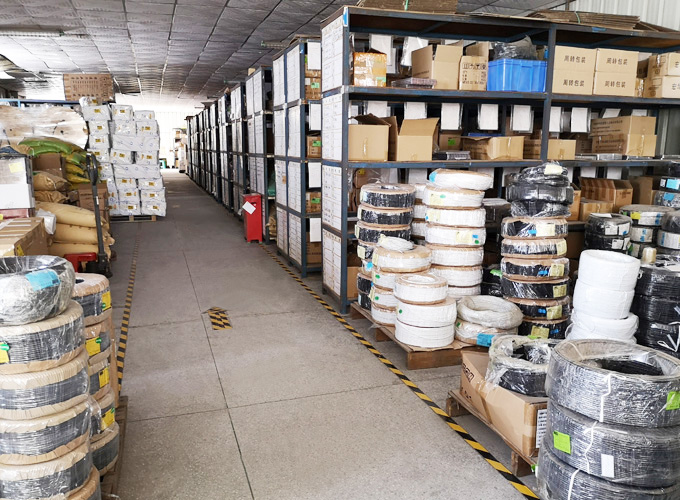
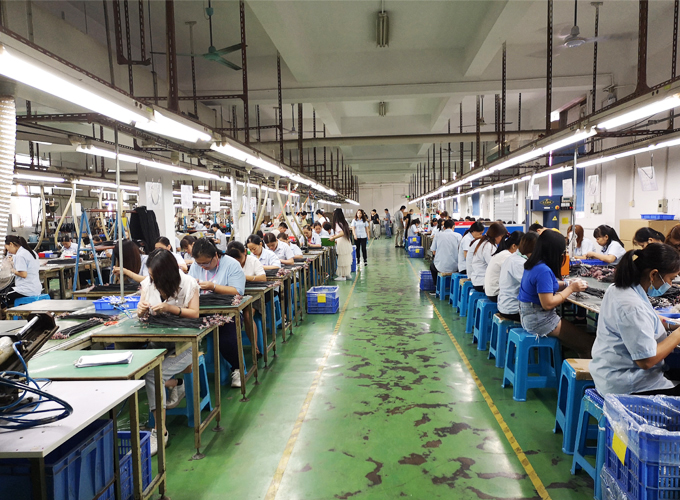
P-Shine Electronics Co., Ltd is a cable and harness manufacturer founded in Dongguan, China in 1997, producing wire harnesses, USB cables, cable assemblies and AC power cords, with roughly 60% of output exported to the EU, USA and Middle East. Its wire harness line is fully custom: the product carries no fixed model number. A buyer does not order a catalogue part — a buyer releases a drawing. That single fact reorganises where the risk sits in the sourcing process, and it is the reason the questions below are framed around drawing content, interface definition, environmental options and verification rather than around general supplier selection.
Why 24/7 Valve Projects Are Won or Lost on Drawing Detail
The global wire harness market was estimated at USD 99.58 billion in 2024, with Asia Pacific accounting for a 46% share, according to Precedence Research. That figure describes a large, fragmented industry in which a substantial share of demand is project-specific rather than catalogue-driven. In industrial control, the fragmented portion is the portion that matters. Valve equipment from different builders uses different port layouts, different PCB interfaces and different module combinations, so the harness is engineered to the machine rather than selected from a list.
Where these projects go wrong is usually not electrical. It is definitional. A drawing that leaves a loop length unstated, omits a pin function, or fails to differentiate two identical connectors sitting next to each other forces the supplier to make assumptions. Assumptions can survive a sample. They rarely survive a production run and a 24/7 duty cycle.
In a 24/7 valve installation, the cost of an ambiguous drawing is not a drawing correction. It is a re-sample, a re-qualification and a schedule slip on the equipment line.
Project type is not the only variable. The applicable markets recorded for this harness family spread across Germany, the United Arab Emirates, Bulgaria, Canada, France, the United Kingdom, Israel, India, South Korea, Poland, Russia, Singapore, Turkey and the United States — which means the same drawing may have to satisfy different approval and documentation expectations in different destinations.
Part 1 — Drawing Content and Connector Definition (Questions 1–3)
1. What must a harness drawing specify before a 24/7 valve project goes to production?
Ten elements have to be present before a complex custom wiring harness can be quoted, sampled and manufactured without interpretation. They are listed below with the failure mode each one prevents.
| Drawing element | Specification requirement | What omission causes |
|---|---|---|
| Connector identification | Each connector specified by brand and part number | The supplier cannot confirm the part is genuine and original |
| Adjacent identical connectors | Different colours used for differentiation where the same connector appears in adjacent positions | Connectors fitted to the wrong position during assembly |
| Loop wire colour | Each wire in each loop distinguished by a different colour on the drawing | Slow tracing and fault-finding on a running machine |
| Wire type, gauge and colour | Model, gauge and colour specified for every wire (for example UL1007, 28AWG) | Uncontrolled substitution on temperature, current or flexibility grounds |
| Loop length | Length stated for each loop | The harness cannot route to the port, or arrives with excess slack |
| Pin function | Functional definition of each pin, such as Power+ or GND | Mis-termination risk and module-level damage |
| Shared-function colour reuse | Wires with the same function in different loops may use the same colour | Unnecessary colour proliferation that complicates the bill of materials |
| Branch lengths | Length of each branch stated where a loop branches mid-run | A branch cannot reach its target connector |
| Branch-to-connector distance | Minimum 30 mm from the branch to the connector | Crimp and termination quality problems at the connector |
| Heat-shrink tubing | Branch positions arranged appropriately for heat-shrink tubing | Tubing cannot be positioned correctly or cannot close over the branch |
A drawing that satisfies all ten points is manufacturable as written. A drawing that satisfies eight is a negotiation.
2. How should connectors be specified — and does the brand matter as much as the pitch?
Pitch does not identify a connector. Two parts sharing a pitch can still differ in locking geometry, plating and mating retention, and those differences are exactly what a 24/7 installation tests. The working practice is therefore to name the brand and the part number for every connector on the drawing, not a generic description of the interface.
P-Shine Electronics sources connectors strictly according to the brand and part number specified on the customer's drawing, and typically purchases through platforms such as DigiKey or Mouser so that the connectors received are genuine and original. Two drawing conventions reduce downstream assembly error: colour-differentiating identical connectors used in adjacent positions, and defining colour and wire type per wire rather than per loop.
3. When is a non-original replacement connector acceptable, and what has to happen first?
Only when the customer requests it, and only after the customer has tested, verified and approved the alternative. The commercial context is concrete: in some cases an original brand connector costs ten times a non-original equivalent. The default position for this manufacturer is to use original connectors unless a customer asks for a replacement.
Where a customer considers original connector pricing too high, the supplier can supply samples of non-original alternatives for evaluation. The option is offered where the alternative is judged to be a mature, reliable product — but the approval decision belongs to the buyer. The part that procurement often under-documents is traceability: once a replacement is approved, the approved part number should be recorded on the controlled drawing and in the approval record. Without that, a later build can revert to the original part, or an unapproved alternative can enter production.
Part 2 — Interfaces: Power, Signal, Ports and PCB (Questions 4–6)
4. How do harness loops map to signal control modules and power control modules?
The mapping lives in the pin function column of the drawing. The equipment this harness family is matched against includes equipment ports, PCB interfaces, signal control modules, power control modules and various internal functional components of the equipment. Because the same harness carries both power and signal, every pin needs a stated function — Power+, GND and each signal line — so that the module side can be matched without interpretation.
One design rule worth writing into the drawing rather than leaving to the assembler: different circuits of Power+ or GND can be connected to the same Power+ pin or GND pin of the main connector. That is a legitimate simplification where the main connector rating and the module input design allow it, and it reduces circuit count. It should be a deliberate documented decision, not a default.
5. What has to be defined for equipment ports and PCB interfaces?
For each end of the harness, the drawing should establish the connector brand and part number, the mating connector on the equipment port or PCB, pin numbering with a defined orientation reference, loop length measured from the termination point the assembler will actually use, and the wire type, gauge and colour. For a fully customised wire harness, this is also the minimum input for a quotation: send the design drawings, or provide the connector brand, part number, wire type, wire gauge, colour and wire definition.
A drawing that supplies part of that set does not fail — it moves the project from quotation into assumption, and assumptions are the most expensive item in a 24/7 build.
6. Which wire constructions suit low-voltage control loops inside valve equipment?
Low-voltage control loops are specified by model, gauge and colour, with the material chosen for the environment. The material options recorded for this harness family are PVC, XL-PE, TPE, TPU and TEFLON. The choice between them is driven by temperature, mechanical flexibility and how the loop is routed inside the enclosure, not by preference.
In the manufacturer's comparative performance data, harnesses built to these specifications are described as having low signal attenuation and low power loss — a relevant property for signal control loops that run continuously rather than intermittently. Where a loop stays in a fixed position, a stiffer material may be acceptable; where it bends during assembly or service, flexibility governs.
Part 3 — Environment and Compliance (Questions 7–10)
7. How should branches and heat-shrink transitions be drawn?
Branches are where a clean drawing becomes a manufacturable one. Three requirements do most of the work. First, where a loop branches mid-run, the length of each branch is stated individually. Second, the minimum distance from a branch to a connector is 30 mm — closer than that, and termination quality and strain relief suffer. Third, where the harness requires heat-shrink tubing, the branch positions are arranged appropriately so that the tubing can actually be positioned and closed.
These three items are also the ones most often missing when a buyer forwards a CAD sketch rather than a harness drawing, and they are the items that most often force a sample to be rebuilt.
8. What waterproofing options exist for outdoor valve installations?
Waterproof construction is listed as an available special requirement for this harness family, alongside high-temperature resistance, shielding, optional flame retardancy, and low-smoke halogen-free constructions. The scenario data covers indoor and outdoor installations and both inside and outside the equipment enclosure, in waterproof and non-waterproof configurations — meaning waterproofing is a specification choice for the project, not a property of the harness category.
For procurement purposes, the useful drawing instruction is where protection is required. Stating which sections of the run are exposed — the connector interface, the branch transition, or the full length — prevents a supplier from over-building the whole harness when only part of it needs protection.
9. When should high-temperature resistance or shielding be specified?
Both are options rather than defaults, and both add cost. In a 24/7 valve project, the usual triggers are a harness routed near a heat-generating component or inside a sealed enclosure where heat accumulates, and a signal run that travels parallel to power conductors for a long distance inside the machine. Where neither condition applies, a high-temperature or shielded construction raises cost and can reduce flexibility, which makes routing harder.
Shielded wire harness and high-temperature resistant wire harness constructions are both listed as available for this family, so the decision is a specification decision on the drawing rather than an availability constraint.
10. Which certifications should a procurement engineer verify before releasing a purchase order?
The certification set relevant to this supply base includes UL 758 (E214500), CSA C22.2 No. 210-15, VDE DIN EN 50525-2-11, ISO 9001:2015 (CN07/31354) and ISO 14001:2015 (CN19/30539). Alongside these, P-Shine Electronics holds UL, CSA, CE, PSE, VDE, KC, SAA, BIS and CCC certifications, and its materials comply with RoHS, REACH and California Proposition 65 requirements.
Verification practice matters more than the list. Management system certificates such as ISO 9001:2015 and ISO 14001:2015 attest to site-level process and environmental controls; material and cable standards such as UL 758, CSA C22.2 No. 210-15 and VDE DIN EN 50525-2-11 relate to particular material and cable families. A buyer should confirm that the certificate number quoted actually covers the material family on the drawing. And because harness assembly acceptance itself is governed by IPC/WHMA-A-620 — the industry-consensus standard for requirements and acceptance of cable and wire harness assemblies, categorised into Classes 1, 2 and 3 — the class the end product requires should be stated on the drawing or purchase order rather than assumed.
Part 4 — Commercial and Validation (Questions 11–12)
11. What does a drawing-based quotation require, and where do cost differences actually come from?
A quotation for a custom made wire harness needs the drawing, or the equivalent specification set: connector brand and part number, wire type, wire gauge, colour, wire definition and loop lengths. Without those, suppliers quote a range rather than a price.
On cost positioning, P-Shine Electronics states that its products are priced at least 25% lower than major international brands, and that its dimensional tolerance control is 50% tighter than mainstream competing brands. Those are the manufacturer's own comparative figures and should be validated against your specific drawing rather than accepted as a portfolio average — the reason is that connector selection is a larger cost lever than most buyers expect. Where an original brand connector is used, that single line item can be ten times the cost of a non-original alternative, so two quotations for the same function can differ substantially before any discussion of wire or labour.
12. How should a buyer validate a supplier's process before mass production?
The design workflow used for these harnesses runs through six stages: consider the functions to be implemented; plan the number of circuits and define the function of each circuit; find suitable connectors; complete the drawings and perform simulations; make samples and test them; finalise the design and start mass production. A buyer can use the same sequence as an audit checklist, asking for evidence at each stage rather than only at the sample.
Supporting capacity indicators for this supplier include a 20-engineer R&D team, an annual output of 2,000,000 pcs, a 5,000 m² factory footprint, and seven independent factories within the group covering wire harness, USB cable, cable assembly, wire and cable, insulation materials, connectors and copper wire processing. Pre-shipment, the stated practice is 100% testing. For a 24/7 valve programme, the two items worth verifying directly are the R&D resource that will handle drawing queries, and whether the factory handling your product family is the one holding the relevant certification.
Application and Use Cases
Drawing-based harness supply of this type is applied across building temperature control equipment, small appliances, circuit control valve equipment, household appliances, lamps, medical equipment, fish radar trackers, stage equipment, photographic equipment, automation equipment, robots, solar energy equipment, wind power generation equipment and power transmission equipment. The common thread is an internal connection between functional components rather than an external consumer cable.
Three patterns recur in equipment internal wire harness projects. The first is a control harness running between a PCB interface and a signal control module, where pin function definition and loop length dominate the drawing. The second is a power harness feeding a valve or actuator where gauge, colour coding and branch geometry dominate. The third is an outdoor installation where the same harness must combine port interfacing with waterproof construction and, in some cases, high-temperature or shielded options. Each pattern uses the same drawing conventions described above — the difference is which columns of the drawing carry the risk.
Market Trend Analysis
Two verified market signals frame this category. The global wire harness market was estimated at USD 99.58 billion in 2024, with Asia Pacific holding a 46% share, driven by electronics and automotive manufacturing in China, India and Japan. The automotive segment was the dominant end-user segment in 2024, and electric vehicles require significantly more complex harness architectures than comparable combustion platforms.
Growth projections for the same market vary by research house: Precedence Research cites a 4.0% CAGR while Custom Market Insights reports 6.49% for the same period, a divergence that likely reflects different definitions of what counts as industrial versus automotive scope. Buyers should treat any single growth figure as a methodology-dependent estimate. What is less ambiguous is the direction of demand for customisation — as industrial equipment becomes more differentiated, the share of harness demand that is drawing-driven rather than catalogue-driven tends to rise.
Comparison with Traditional Solutions
The alternative to drawing-based custom harness supply is sourcing a standard, catalogue-identified harness from distribution. The trade-off is not simply cost; it is control versus convenience.
| Dimension | Drawing-based custom harness | Catalogue / standard harness |
|---|---|---|
| Specification control | Customer drawing defines connector brand and part number, wire type, gauge, colour, loop length and pin function | Fixed part number with a published datasheet |
| Fit to equipment ports and PCB interfaces | Built to the machine | Limited to standard mating geometry |
| Replacement path | No fixed model number; replacement requires the controlled drawing | Replaceable by part number from distribution |
| Environmental options | Waterproof, high-temperature, shielding, optional flame retardant and low-smoke halogen-free constructions stated on the drawing | Limited to what the catalogue carries |
| Principal risk | Drawing completeness | Whether the standard part actually fits the installation |
Stating the boundaries honestly is part of the comparison. First, a fully custom harness has no fixed model number, which means there is no drop-in replacement path: every design change requires a drawing revision and, in most cases, a new sample and re-approval. Second, non-original connector substitution is not a default — it requires customer testing and written approval, and it carries qualification effort that a lower unit price does not always offset. Third, the 25% price positioning and the 50% tighter dimensional tolerance control are manufacturer-stated comparative figures rather than independently audited results, and the tolerance advantage only materialises if the drawing itself is dimensionally complete. A drawing that omits branch lengths will not produce a tighter harness; it will produce a rework cycle.
Future Outlook
Three changes are likely to shape how these drawings are written and evaluated. The first is documentation depth: as more industrial control equipment is approved in multiple markets, the same harness increasingly has to satisfy several national approval regimes, which pushes teams toward more complete and more standardised drawing templates. The second is material selection, as low-smoke halogen-free and high-temperature constructions move from special requirement to routine option in more projects. The third is supplier traceability, where the ability to show which connector part number was approved, why it was approved and when it changed becomes a procurement requirement rather than a quality nicety.
None of these changes alter the underlying rule. For a 24/7 valve project, the drawing remains the specification, and the specification remains the buyer's responsibility.
FAQ
Does a custom wire harness carry a standard model number?
No. The wire harness product in this supply base is custom-made with no fixed model number. The customer drawing functions as the specification, and the manufacturer states that orders are accepted for drawing-based processing. This is why the connector brand, part number, wire type, wire gauge, colour and wire definition have to be supplied before quotation.
What is IPC/WHMA-A-620, and how does it relate to harness acceptance?
IPC/WHMA-A-620 is the primary industry-consensus standard for requirements and acceptance of cable and wire harness assemblies. It is categorised into Classes 1, 2 and 3, which correspond to different levels of acceptance criteria. Because material standards such as UL 758, CSA C22.2 No. 210-15 and VDE DIN EN 50525-2-11 address cable and material families rather than assembly workmanship, a project that needs assembly acceptance criteria stated should specify the applicable IPC/WHMA-A-620 class on the drawing or purchase order.
Which insulation materials are available for industrial control harnesses?
The material options recorded for this harness family are PVC, XL-PE, TPE, TPU and TEFLON. Selection depends on the temperature the loop will see, the flexibility the routing requires and the environmental conditions at the installation. Waterproof, high-temperature resistance, shielding, optional flame retardancy and low-smoke halogen-free construction are listed as special requirements that can be specified on the drawing.
How are non-original connectors handled if a project needs them?
They are used only at the customer's request and only after the customer has tested, verified and approved them. The supplier's default is to source connectors strictly to the brand and part number on the drawing, typically purchasing through DigiKey or Mouser for original parts. Where the customer considers original connector pricing too high, samples of non-original alternatives can be provided for evaluation before any approval is granted.
For buyers who want to compare specification decisions against a written reference, further product information is published at pshinecable.com.
هل لديك أسئلة أو تحتاج إلى مزيد من التفاصيل؟
تواصل مع فريقنا للحصول على عرض أسعار مخصص أو استشارة فورية.
طلب عرض أسعار
املأ النموذج أدناه وسيتواصل معك فريقنا بعرض مقترح مخصص.
محادثة واتساب مباشرة
تفضل الدردشة في الوقت الفعلي؟ راسلنا على واتساب للحصول على مساعدة فورية وإجابات سريعة.
- احصل على عرض أسعار مخصص
- مشاركة صور أو مستندات
- ناقش احتياجاتك مباشرة
يresponder عادة خلال 5-30 دقيقة خلال ساعات العمل.