
Wire & Cable Production Upgrades: The Factors That Matter
Wire & Cable Production Upgrades: The Factors That Matter
Production line upgrades in wire and cable manufacturing are high-stakes decisions. A new drawing machine, extrusion line, or stranding system can change not only production capacity, but also product consistency, energy use, and the range of specifications a plant can offer. For manufacturers evaluating new equipment, the central question is not just what a machine can do, but how it fits the company's product plan, operating environment, and long-term technology roadmap.
This article is intended for manufacturers, engineers, and technical purchasing teams in the evaluation phase of a production line investment. It outlines seven evaluation areas that can help structure equipment decisions, from specification fit and production efficiency to automation, quality control, energy performance, and compatibility. Industry channels such as wire China can also provide opportunities for manufacturers and technical professionals to learn about equipment categories, technologies, and industry developments in one professional setting.

Wire and cable product displays at an industry trade fair.
Why a structured evaluation framework matters
Wire and cable manufacturing is a chain of tightly connected stages: wire drawing, annealing, stranding, insulation, cabling, and sheathing. When one stage runs faster, the bottleneck moves to the next stage. This interdependence means that investments should be assessed at line level, not only at single-machine level.
Market conditions reinforce the need for disciplined evaluation. Global Market Insights estimates the global wire and cable market at USD 267.8 billion in 2024, with a projected CAGR of 7.3% through 2034. Grand View Research estimates China's wire and cable market at approximately USD 41.1 billion in 2025, projected to reach USD 56.2 billion by 2033. The two estimates are not directly comparable—they use different scopes and methods—but both indicate a market that supports continued investment in capacity and technology.
What this means in practice: before contacting suppliers, a manufacturer should define the products the line must produce, select measurable performance criteria, and only then compare technology choices against those criteria.
Seven evaluation areas for production line upgrades
The framework below is written from the perspective of a production manager or technical buyer who needs to compare machines. It covers equipment capability, efficiency, automation, flexibility, quality control, energy, and compatibility.
1. Equipment performance and specification fit
The first step is to map planned products onto machine specifications. A copper rod breakdown line that works well for standard building wire may be a poor fit for a special wire & cable plant with frequent alloy changes. Buyers should verify the achievable diameter range, compatible materials such as copper, aluminium, copper-clad aluminium and alloys, speed performance, tolerance, and surface quality against a realistic three-to-five-year product plan.
Overspecifying one capability often means underspecifying another. The target is a machine matched to the product mix that generates revenue, not the most powerful model in the supplier's catalogue.
2. Production efficiency and line utilization
Rated line speed is a starting point, not a decision criterion. Overall equipment effectiveness (OEE), which combines availability, performance, and quality, is a more realistic measure of line value. For plants running small batches, changeover time can matter as much as maximum speed.
When comparing proposals, ask for the expected operating speed across planned products, the time required for string-up and tooling changes, and the anticipated process scrap rate in normal operation.
3. Automation level and integration readiness
Modern wire and cable lines typically include automatic payoff and take-up, tension control, closed-loop diameter feedback, and centralized monitoring. The main benefit is not always lower headcount; in many plants it is consistent product quality across shifts.
Integration readiness matters equally. Buyers should ask which control platform is used, what communication interfaces are supported, and whether the supplier can document data points that the plant's own production management systems can access. This criterion varies with plant size and line type.
4. Product change and line flexibility
Many manufacturers today serve several cable segments in one facility: building wire, automotive cables, communication cables, and industrial or special cables. A line that reduces changeover time and allows quick parameter adjustment improves delivery performance as well as machine utilization.
Flexibility has a price. A highly flexible line is usually more expensive and more complex to maintain than a dedicated high-volume line. The evaluation should therefore be based on the manufacturer's actual changeover frequency and product variety data.
5. Quality control and in-line testing
In-line testing equipment is one of the most underestimated elements of a production line upgrade. Online diameter gauges, spark testers, eccentricity or wall-thickness monitors, and surface defect detection systems identify problems before they grow into scrap. For medium- and high-voltage products, additional measurement and testing functions may be required before the line can be qualified for certain cable classes.
The critical questions are whether measurement data is integrated into the control loop, whether alarm thresholds can be set by the manufacturer, and whether records can be retrieved for internal quality review.
6. Energy consumption and green manufacturing targets
Energy consumption is an important operating consideration in processes such as annealing and extrusion. For manufacturers with energy-efficiency targets, electricity use can become an important factor in equipment evaluation and total cost of ownership. Energy cost is therefore an operating parameter, and in some supply chains it is becoming a qualification criterion.
Buyers should ask for energy consumption per unit of finished output, the type of drive and heating systems, and the availability of regenerative or heat-recovery options. A line with slightly lower rated speed but significantly better energy performance can win on total cost of ownership.
7. Equipment compatibility and upgrade path
New equipment never operates in isolation. It must fit the existing building footprint, available electrical capacity, cooling water, compressed air, and the process stages before and after it. Compatibility also affects the transition period when new and old machines operate side by side.
The supplier's service model is part of compatibility, too. Installation supervision, spare parts availability, operator and maintenance training, and the possibility of adding measuring or automation modules later should be clarified before purchase.
| Evaluation area | Main questions to answer |
|---|---|
| Equipment performance | Does the machine cover the required diameter range, materials, speed, and tolerance? |
| Production efficiency | What are the realistic OEE, changeover time, and scrap rate at planned operating conditions? |
| Automation | Can the line maintain consistent quality across shifts and integrate with existing controls? |
| Flexibility | How quickly can product changes be made, and at what additional cost? |
| Quality control | Which online measurement and testing functions are included, and can their data be used by the plant? |
| Energy | What is the energy consumption per unit of output, and which efficiency technologies are available? |
| Compatibility | Does the line match the plant's infrastructure, and what supplier support is provided? |
Matching equipment choices to the product mix
Not every plant needs the same level of technology. A producer of high-voltage cables faces process qualification and documentation requirements very different from those of a producer of standard building wire. The same evaluation framework should be applied, but the weights change.
A practical method is to divide planned products into three groups: current high-volume products, near-term growth products, and occasional or experimental products. Optimize the line around the first two groups. If occasional products do not justify a machine investment, outsourcing may be a rational alternative.
Practical decision workflow for line upgrades
The following workflow turns the evaluation framework into a repeatable process:
- Define the product plan and the main process bottleneck for the next three to five years.
- Set measurable criteria: target speed, changeover time, scrap rate, energy per unit of output, and quality test requirements.
- Identify automation and data integration requirements that match the plant's operating model.
- Screen technology options and suppliers at industry events and through direct consultation.
- Verify the final candidates with sample runs, site visits, and documented performance trials before purchase.
Common evaluation mistakes
Experienced buyers tend to avoid several recurring errors:
- Choosing a machine on maximum speed while ignoring the speed it can sustain across the real product mix.
- Improving one process stage without checking where the new bottleneck will form.
- Underestimating the cost of changeovers in a multi-product plant.
- Leaving in-line quality measurement and energy costs out of the machine comparison.
- Comparing initial purchase prices instead of total cost of ownership over the equipment's service life.
The role of industry trade fairs in technology benchmarking
Production technology can be difficult to evaluate from documents alone. Industry trade fairs can give manufacturers opportunities to view machinery, understand equipment configurations, discuss process requirements with suppliers, and compare different equipment categories within a concentrated industry setting. This can be useful for wire and cable manufacturers evaluating both production equipment and related process technologies.
For manufacturers evaluating production technologies, wire China provides an industry setting focused on wire and cable manufacturing, including processing machinery, raw materials and auxiliaries, measuring and testing equipment, finishing machinery, process technology tools, and cable control technology. These categories can give manufacturers a basis for understanding available technologies and identifying areas for further technical discussions with suppliers. For companies evaluating production line upgrades, information gathered through industry events can be combined with supplier consultations, factory visits, sample runs, and documented performance trials before a final investment decision is made.
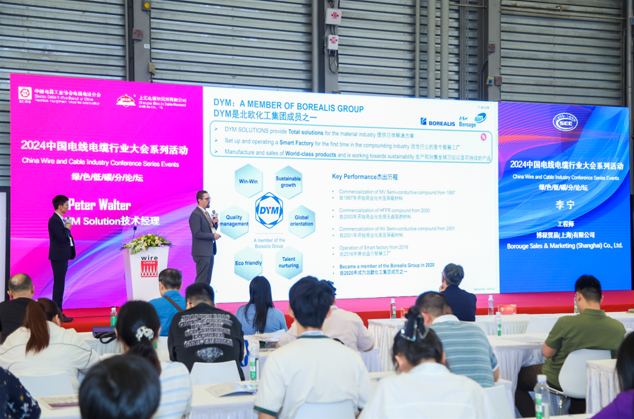
Forums and technical discussions are part of the industry benchmarking process.
wire China 2024 covered an exhibition area of 80,500 square meters, bringing together 1,080 exhibitors from around the world and 41,857 professional visitors from 90 countries and regions.
Traditional evaluation methods and their boundaries
Traditional evaluation methods—individual visits to machinery builders, online searches, and peer references—remain essential. Direct visits allow hands-on machine testing. Online research helps build a shortlist. Peer references provide insight into a supplier's reliability in real operating conditions.
Industry events add a concentrated setting for reviewing products, technologies, and suppliers. Product and technology displays, together with industry discussions, can help buyers identify relevant suppliers and technical solutions as part of a broader research process. At the same time, an industry event runs on fixed dates, and a conversation at a supplier's booth is not a complete technical consultation. A machine that looks promising at an industry event still needs to be verified through sample runs, factory visits, and clear agreements on performance, spare parts, and after-sales service.
Future outlook for wire and cable production technology
Three trends are influencing production line investment decisions in the wire and cable industry.
The first is energy efficiency. Annealing and extrusion can be important sources of energy consumption in cable production. As manufacturers place greater attention on operating costs and sustainability objectives, energy performance is likely to remain an important consideration in equipment selection.
The second is flexibility. Multi-product plants need efficient changeovers and practical ways to manage production parameters. Depending on the production model, control functions that store product parameters and reduce manual input can support more consistent operation.
The third is data-enabled process control. Equipment is increasingly able to report speeds, tensions, temperatures, and quality measurements. The pace of adoption will differ by company, and data capability should be selected according to operational need, not for its own sake.
These trends do not replace the discipline of linking equipment choices to product strategy. Manufacturers that define their product plan first, set measurable criteria, and verify technology under realistic conditions will remain in the strongest position.
Frequently asked questions
What are the main factors to evaluate when upgrading a wire and cable production line?
Seven areas usually determine the value of a line upgrade: equipment performance and specification fit, production efficiency and line utilization, automation and integration readiness, product flexibility, quality control and in-line testing, energy consumption, and compatibility with existing infrastructure. Supplier service support should be assessed alongside these technical factors.
How should a manufacturer match a new line to its product mix?
Planned products should be divided into current high-volume products, near-term growth products, and occasional products. The line should be optimized around the product groups that generate the majority of expected output. Specifying more flexibility than the product mix requires usually raises capital and maintenance costs.
What role do automation and data integration play in a production line upgrade?
Automation improves consistency through functions such as closed-loop tension control, diameter feedback, and centralized monitoring. Integration readiness—how easily the machine connects to the plant's existing control and data systems—should be evaluated early. Data features should match actual operating needs rather than be selected because they are new.
Which quality control functions should be considered in a line upgrade?
Common functions include online diameter gauging, spark testing, eccentricity or wall-thickness monitoring, and surface defect detection. Medium- and high-voltage product lines may require additional measurement and test capabilities. Where applicable, buyers should also consider whether measurement data can be connected to process control and retrieved for internal quality review.
How do energy costs affect the choice between production technologies?
Energy consumption in processes such as annealing and extrusion can influence the operating cost of a wire and cable plant. A machine with slightly lower rated speed but substantially lower energy consumption per unit of output may offer a different total cost of ownership profile. Buyers should request energy-consumption data per unit of finished product and check whether regenerative or heat-recovery options are available for the specific equipment under consideration.
How can an industry trade fair support the equipment evaluation process?
An industry trade fair can give buyers an opportunity to review machinery, materials, measuring and testing equipment, and production technologies from multiple suppliers within one industry setting. wire China can serve as one source of industry information during the initial research stage. Final equipment decisions should still be based on the manufacturer's product requirements, technical evaluation, supplier verification, and process trials.
wire China 2026 Information
wire China 2026 is scheduled for September 21–24, 2026, at the Shanghai New International Expo Centre. Current published plans indicate a planned event area of 80,500 square meters, more than 1,100 exhibitors, over 40,000 expected professional visitors, and more than 60 specialized conferences and forums.
Pre-registration: https://dwz.cn/DYkFpGQd
Official website: https://www.wirechina.net/
Brochure download: wire China 2026 brochure (PDF)
هل لديك أسئلة أو تحتاج إلى مزيد من التفاصيل؟
تواصل مع فريقنا للحصول على عرض أسعار مخصص أو استشارة فورية.
طلب عرض أسعار
املأ النموذج أدناه وسيتواصل معك فريقنا بعرض مقترح مخصص.
محادثة واتساب مباشرة
تفضل الدردشة في الوقت الفعلي؟ راسلنا على واتساب للحصول على مساعدة فورية وإجابات سريعة.
- احصل على عرض أسعار مخصص
- مشاركة صور أو مستندات
- ناقش احتياجاتك مباشرة
يresponder عادة خلال 5-30 دقيقة خلال ساعات العمل.