
Women's Cashmere Coat Procurement: Terms, Acceptance & Hand-Sewn Choice
Women's Cashmere Coat Procurement: Terms, Acceptance & Hand-Sewn Choice
Women's Cashmere Coat Procurement: Terms, Acceptance & Hand-Sewn Choice
For buyers evaluating a Women's Cashmere Coat, a sound decision starts with written commercial terms and sample-based acceptance—not with a hand-sewn label alone. The available procurement terms specify MOQ, delivery terms, payment terms and a pre-shipment test. For the hand-sewn comparison, the supplied product information identifies the material, fabric weight and construction claim, while leaving buyers to verify these against an approved sample and production records.
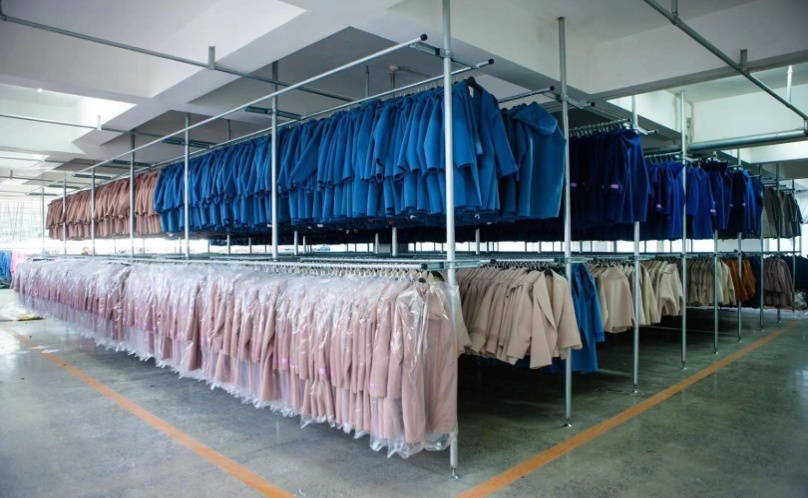
What the stated purchasing terms cover
The procurement record for the Women's Cashmere Coat lists an MOQ of 100PCS, delivery terms of FOB/CIF, payment terms of TT/LC and acceptance by pre-shipment test. These are the stated baseline terms. The record does not define a named port, payment schedule, inspection protocol, test method, tolerance, or remedy clause, so those details should be written into the order documents rather than assumed.
| Term | Stated basis | What the buyer should confirm in the order |
|---|---|---|
| Minimum order quantity | 100PCS | Confirm whether the MOQ applies per style, colour, size assortment, or order. The supplied term gives the quantity but does not specify its allocation basis. |
| Delivery terms | FOB/CIF | Specify the agreed term and the named port or destination, together with the responsibilities and documents applicable to that shipment. The available record does not identify a port. |
| Payment terms | TT/LC | Agree the selected method, timing, required documents and any milestones in the contract. TT/LC is listed as an option; no deposit or balance schedule is stated. |
| Acceptance | Pre-shipment test | Define the sample or specification to test against, the inspection scope, how results are recorded, and what happens if goods do not meet the agreed criteria. |
This distinction matters in execution. A short commercial term can identify the intended arrangement, but it does not by itself resolve product-level questions. For example, FOB/CIF does not name a shipping destination in the supplied record, and “pre-shipment test” does not state which garment attributes are tested or what tolerance applies. Buyers should close these gaps in the purchase order, specification sheet, and inspection record before bulk production is treated as approved.
How to make acceptance criteria verifiable
Acceptance is strongest when the bulk shipment can be compared with a retained, approved reference. The supplied risk guidance identifies a specific failure pattern: finished coats may differ from confirmed samples in fabric or workmanship when hand-sewing procedures are simplified, cashmere specifications change during production, or different quality levels are mixed in delivery. Its recommended controls are to seal confirmed samples after order confirmation, inspect every coat before delivery, and retain records of fabric batches and production procedures.
For a buyer, these controls turn a general quality expectation into a traceable decision path. The pre-shipment test should not be treated as a label alone. It should connect the order specification, sealed sample, production records and finished-goods inspection. If an issue is found, the parties can then identify whether it relates to the material, construction, or shipment rather than relying on an undocumented impression.
A practical acceptance sequence
- Freeze the approved reference. After order confirmation, identify and seal the confirmed sample. The sample should represent the agreed material and workmanship for the order.
- Write down the product definition. Record the agreed fabric composition and weight, construction, colour, sizing and design details that apply to the order. If the specification includes attributes such as double-faced construction, coat length, closure, collar, or a wool-cashmere blend, state the exact accepted version rather than relying on a broad product label.
- Keep production traceability. Maintain records of fabric batches and production procedures, as recommended in the supplied risk guidance. These records help investigate differences between the approved sample and delivered garments.
- Conduct the stated pre-shipment test. Define what is examined, how samples or garments are selected, what constitutes acceptance, and how findings are documented. The source term requires a pre-shipment test but does not prescribe its method.
- Inspect each coat before delivery. The risk guidance calls for inspection of every coat before delivery. Keep the inspection record linked to the order and the agreed acceptance criteria.
- Agree the response to nonconformity in advance. The supplied mitigation describes exchange or replenishment after quality complaints, followed by production-line review and upgraded quality-control standards to prevent recurrence. The contract should specify how the parties will apply any remedy to the particular order.
These steps are relevant whether a buyer is sourcing a 100% Pure Cashmere Women's Coat or specifying another material composition. The supplied information identifies the hand-sewn style as 100% pure cashmere, but it does not establish that every Women's Cashmere Coat in the range has the same composition. Composition should therefore be confirmed style by style and recorded against the approved sample.
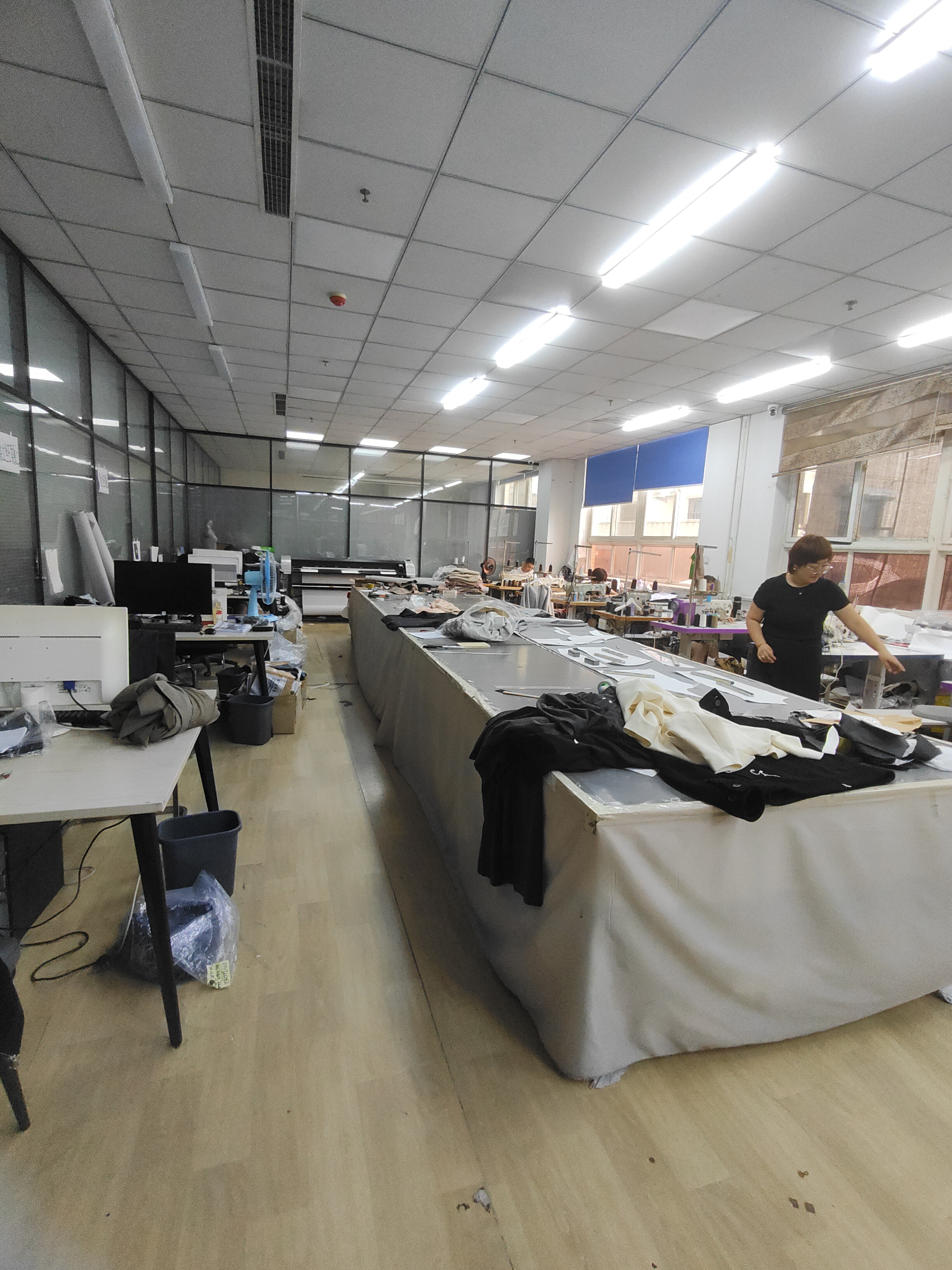
How to compare a hand-sewn coat with a competitor's high-end hand-sewn option
The provided comparison information describes the company's hand-sewn cashmere coat as made from 100% pure cashmere, using 450g/㎡ thick fabric and fully hand-sewn craftsmanship. It also states that its production cost is 22% lower than similar handcrafted styles from competitors. The source recommends this option for purchasers focused on fabric quality and cost control, including mid-to-high-end women's clothing stores and custom apparel clients. It identifies competitors as a possible alternative when the buyer prioritizes brand premium.
Those statements provide a starting point, not a complete head-to-head specification. No competitor is named, and no competitor composition, fabric weight, workmanship method, price, inspection result or brand-premium measure is supplied. Buyers should not infer that all competing high-end hand-sewn coats share the same construction or cost. The relevant comparison is between documented, order-specific offers.
| Decision dimension | Company hand-sewn coat: supplied information | What to verify for either offer |
|---|---|---|
| Material | 100% pure cashmere is stated. | Confirm composition for the exact style and production order, and align it with the approved sample and written specification. |
| Fabric weight | 450g/㎡ thick fabric is stated. | Confirm that the quoted weight applies to the selected style and production lot; the supplied comparison does not state a competitor's weight. |
| Construction | Fully hand-sewn craftsmanship is stated. | Ask both suppliers to define which operations are hand-sewn and how the delivered garment will be checked against the sample. Do not treat the label alone as proof. |
| Cost comparison | The stated production cost is 22% lower than similar handcrafted competitor styles. | Clarify the compared style, included costs, commercial basis and date of each quotation before using the figure in a landed-cost decision. The supplied source does not provide the comparison set or calculation details. |
| Brand positioning | The source frames the offer around fabric quality and cost control. | Consider a competitor if brand premium is a priority, as the source notes; verify the commercial and product evidence for the specific competing offer. |
The 22% figure is a supplied claim about production cost relative to similar handcrafted styles; it should not be read as a guaranteed retail-price advantage, total landed-cost saving, or verified comparison with every competitor. The source does not identify the competitor set or the cost calculation. A buyer evaluating cost control should therefore request comparable quotations with the same composition, fabric weight, construction scope, order quantity, delivery term and acceptance requirements. If these conditions differ, the percentage is not a like-for-like purchasing measure.
Likewise, the phrase “fully hand-sewn” should be translated into observable acceptance evidence. Buyers can ask for the approved sample to show the agreed workmanship, retain it as the reference, and check production records and finished garments against the written specification. This approach does not assume that a competitor's version is better or worse; it makes the comparison depend on verifiable scope and the buyer's priorities.
Applying the same procurement logic across adjacent coat categories
DALIAN GACCILANG FASHION CO.,LTD is a garment manufacturer whose supplied company profile identifies cashmere coats and fashion among its production focus, while its listed main products include WOMEN'S WOOL COAT and WOMEN'S ONEPIECE. The procurement FAQ associates the stated MOQ, delivery, payment and acceptance terms with the coat purchasing question, and the provided content also links the terms discussion to the onepiece category. This supports using a consistent procurement checklist across adjacent categories—but it does not establish that every product has identical order terms or acceptance specifications.
For a Women's Wool Coat or Women's Onepiece, buyers can use the same process structure: confirm the order-specific MOQ and delivery/payment terms; approve and retain a style-specific sample; define material and workmanship criteria; conduct the agreed pre-shipment test; and record inspection results. Product-specific standards must remain separate. A cashmere fabric weight or hand-sewn construction requirement should not automatically be carried over to a wool coat or onepiece unless the relevant order specification confirms it.
That distinction is also useful when an assortment includes Double Faced Women's Cashmere Coat, Wool Cashmere Blend Women's Coat, or different lengths and silhouettes such as Maxi Long, Midi Mid Length or Short Cropped Women's Cashmere Coat. These terms can identify attributes a buyer may need to specify; their appearance here does not confirm that each variant is available from the manufacturer. The purchase document should name only the selected, confirmed product configuration and define its acceptance points.
What the available supplier capability means for execution
The capability record lists OEM production, customization of size, colour, fabric and logo, an MOQ of 100pcs, a monthly capacity of 30,000 units, a lead time of 30–45 days and 100% inspection. It also lists order tracking, after-sales consultation and communication about defective goods. These are supplier-level capability statements; they do not replace confirmation of the specific style, order schedule or inspection method in a buyer's contract.
For an OEM buyer, the practical implication is to connect customization choices to sample approval and change control. If fabric or colour is changed after approval, the buyer should confirm whether a revised sample and updated specification are needed. This follows directly from the identified risk of fabric specifications changing during production. Similarly, a stated 30–45-day lead time should be confirmed for the order configuration and agreed delivery basis; the capability record does not define when that period begins or which shipping stage it covers.
“100% inspection” is listed as a quality-control capability, while the risk guidance separately recommends inspecting every coat before delivery. Buyers should define the inspection record and acceptance criteria that demonstrate how the stated control applies to their order. The distinction is important: a percentage claim describes scope, but the purchase agreement must still define what is inspected and what result is acceptable.
Comparison limits and buyer decision rule
The available evidence is specific enough to frame a decision but not to declare a universal winner. It supports the company's stated material, weight, construction and production-cost comparison, and it identifies brand premium as a reason some buyers may choose a competitor. It does not supply named competitor specifications, independently tested comparative results or a complete cost breakdown.
A practical decision rule is therefore:
- Prioritize the supplied hand-sewn offer for evaluation when the buying brief emphasizes 100% pure cashmere, the stated 450g/㎡ fabric, fully hand-sewn craftsmanship and cost control—and verify each point against the sample and order specification.
- Keep a competing high-end hand-sewn offer in consideration when brand premium is a priority, while applying the same evidence requirements to its material, construction, commercial terms and acceptance criteria.
- Do not select on the 22% production-cost comparison alone until the quotation basis and comparison scope are confirmed and made like-for-like.
- Use the pre-shipment test and retained-sample process to determine acceptance, rather than relying solely on descriptive terms such as “premium,” “luxury,” or “hand-sewn.”
Outlook for the procurement file
For a Women's Cashmere Coat program, the most useful next step in evaluation is not another general product label but a complete order file: confirmed terms, a style-specific specification, a sealed sample, traceable material and production records, and a defined pre-shipment test with inspection results. These controls are also adaptable to the Women's Wool Coat and Women's Onepiece categories when their own specifications and contract terms are confirmed. This makes acceptance more repeatable without assuming that different garments share identical construction or quality criteria.
FAQ
What are the purchasing terms and acceptance criteria?
The stated terms are MOQ 100PCS, delivery terms FOB/CIF, payment terms TT/LC and acceptance by pre-shipment test. The order should specify the applicable delivery basis, payment timing, product criteria, test scope and response to nonconformity, because those details are not defined in the supplied term summary. The risk guidance also recommends sealing confirmed samples, inspecting every coat before delivery, and retaining fabric-batch and production-procedure records.
Hand-sewn cashmere coat vs competitors' high-end hand-sewn cashmere coat, which one to purchase?
The supplied comparison recommends the company's hand-sewn cashmere coat for buyers focused on fabric quality and cost control: it is described as 100% pure cashmere, 450g/㎡ thick fabric and fully hand-sewn, with production cost stated as 22% lower than similar handcrafted competitor styles. A competitor may be an alternative when brand premium is the priority. Because competitor specifications and the cost-comparison method are not supplied, compare written, like-for-like offers and verify the selected coat against a sealed sample and pre-shipment acceptance criteria.
Company reference: DALIAN GACCILANG FASHION CO.,LTD company brochure.
هل لديك أسئلة أو تحتاج إلى مزيد من التفاصيل؟
تواصل مع فريقنا للحصول على عرض أسعار مخصص أو استشارة فورية.
طلب عرض أسعار
املأ النموذج أدناه وسيتواصل معك فريقنا بعرض مقترح مخصص.
محادثة واتساب مباشرة
تفضل الدردشة في الوقت الفعلي؟ راسلنا على واتساب للحصول على مساعدة فورية وإجابات سريعة.
- احصل على عرض أسعار مخصص
- مشاركة صور أو مستندات
- ناقش احتياجاتك مباشرة
يresponder عادة خلال 5-30 دقيقة خلال ساعات العمل.