
Wood Door Automation Equipment FAQ: Non-Standard Line Scope and Acceptance
Wood Door Automation Equipment FAQ: Non-Standard Line Scope and Acceptance
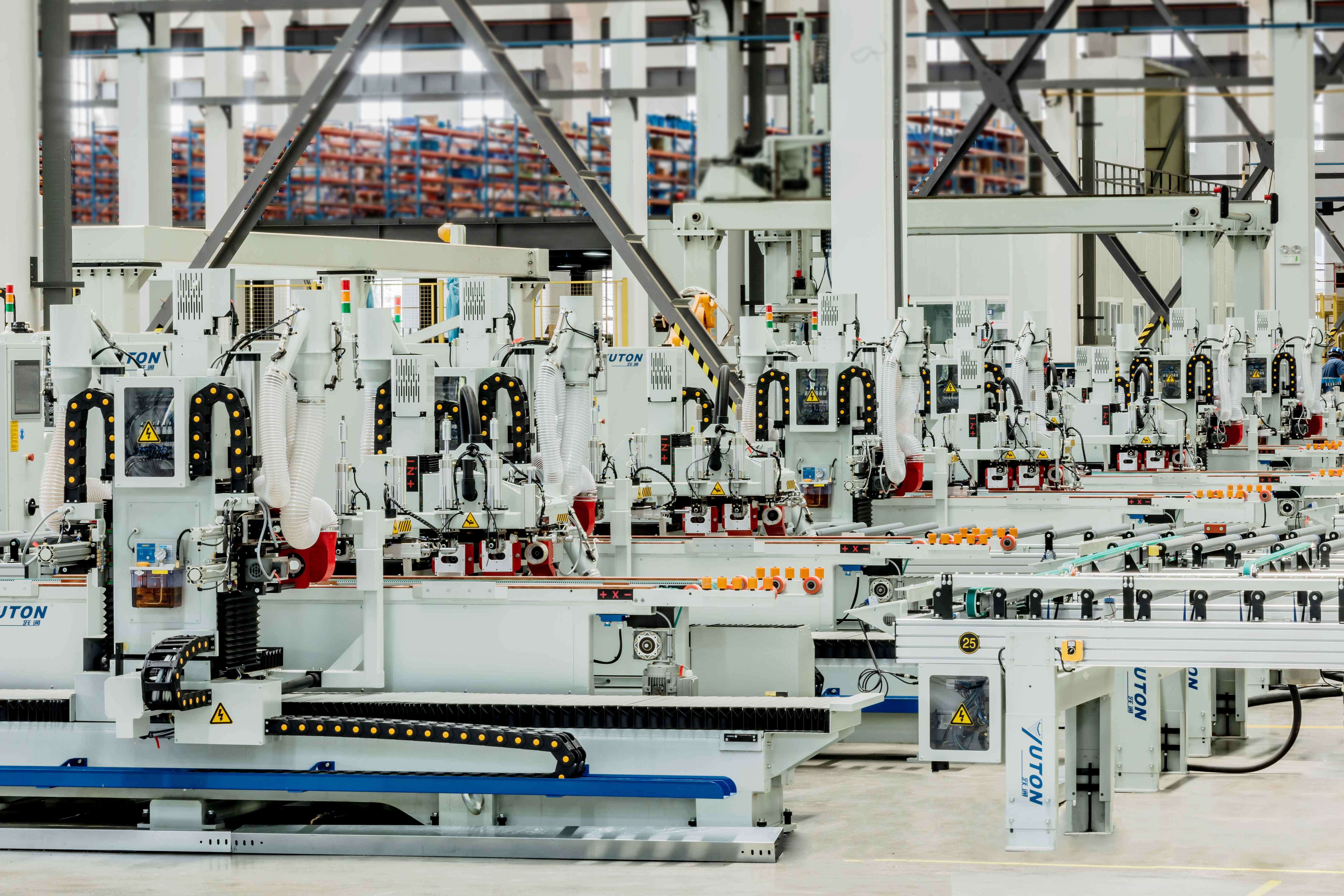
A non-standard wood door production line is defined by four things that must be checked together: the processing functions it performs, the workpiece envelopes it can handle, the purchasing terms that govern delivery, and the acceptance criteria that confirm performance before shipment. For procurement teams evaluating a custom line for door leaf, door frame, and profile processing, the practical question is how to translate a specification into line-level verification rather than accepting a machine list at face value.
This FAQ-style reference answers common technical and procurement questions for buyers in that situation. It examines the production-line configuration—cutting, milling, lock hole and hinge slot machining, seal strip inserting, architrave cutting, molding, splitting, splicing, and four-edge saw functions—and uses documented workpiece envelopes as verification examples. It also maps YUTON Wooden Door Equipment product categories to specific line functions so that procurement teams can match each FAQ answer to the equipment scope they are actually evaluating.
Why Non-Standard Wood Door Lines Need a Scope-First Purchasing Approach
A standard woodworking machine is typically specified against a fixed datasheet: one spindle configuration, one working width, one rated speed. A non-standard automated wood door production line is assembled from multiple processing stations whose configuration follows the buyer's door types, frame profiles, batch structure, and plant layout. That difference changes the purchasing problem. The buyer is not selecting a catalogue item; the buyer is defining a production system whose scope must be documented function by function.
YUTON Wooden Door Equipment provides OEM and ODM production services and states that it supplies fully customized production lines or equipment according to a customer's processes, production output, and other requirements. That customization capability is relevant to buyers because it shifts the center of gravity from model comparison to scope definition. If the line is configured to the buyer's process, then the first verification task is to confirm precisely which processes are inside the line and which are supplied separately.
The procurement risk is straightforward. A line described only by a list of machine names can leave gaps at the interfaces: how a workpiece moves between stations, which station owns a given tolerance, what happens to rejects, and how the overall line is tested as a system rather than as isolated units. A scope-first approach addresses these interface gaps before commercial terms are finalized.
Defining the Functional Scope of a Non-Standard Wood Door Production Line
For a non-standard wood door automation line serving door leaf, door frame, and profile processing, the functional scope usually spans several families of operations. On the door leaf side, the line may perform cutting to length, edge milling, lock hole and hinge slot machining, and seal strip insertion. On the door frame and casing side, it may perform cutting, milling, rabbet processing, architrave cutting, and miter or splice preparation. Profile handling may involve splitting and molding.
The specific configuration named for this type of line includes cutting, milling, lock hole and hinge slot machining, seal strip inserting, architrave cutting, molding, splitting, splicing, and four-edge saw functions. Each function should be treated as a scope line item with a stated input, output, tolerance owner, and handoff to the next station. When a buyer asks whether a line "includes" a function, the useful answer identifies the specific station, its role in the sequence, and the workpiece state it receives and delivers.
Four-edge saw functions deserve particular attention in scope discussions because they affect squaring and dimensional consistency across the leaf or frame. If a line includes four-edge saw capability, the buyer should confirm whether it operates on the leaf, the frame, or both, and how its output interfaces with downstream machining. Similarly, splitting and splicing functions imply specific material preparation steps; their inclusion changes the upstream material flow and should be reflected in the line layout and acceptance plan.
The practical rule is that every named function must map to a physical station or a documented station group. A function that appears only in a proposal narrative, without a corresponding station in the layout, is a scope question rather than a confirmed capability.
Translating Purchasing Terms into Line-Level Acceptance Checks
Purchasing terms become useful acceptance tools only when they are attached to observable checks. The stated purchasing terms for this equipment category are MOQ of 1 set, delivery terms of FOB, EXW, or CIF, pre-shipment test as the acceptance criterion, and payment terms of 30/70. Each of these terms implies a line-level activity that the buyer can plan for.
MOQ of 1 set confirms that a single customized line can be ordered, which is consistent with OEM/ODM customization for a buyer-specific process. For acceptance planning, this means the buyer should define the line as one deliverable system with a single acceptance event, even though it contains multiple stations. The acceptance plan should therefore include a system-level run in addition to station-level checks.
Delivery terms of FOB, EXW, or CIF change where responsibility transfers but do not change what must be verified before shipment. The pre-shipment test is the anchor. A buyer should specify what the pre-shipment test covers: which door and frame types are run, how many pieces per type, which tolerances are measured, and who witnesses the test. Because the acceptance criterion is a pre-shipment test rather than a site acceptance test alone, the factory test becomes the primary evidence package, and site commissioning verifies installation and integration rather than first-time performance.
Payment terms of 30/70 create a natural acceptance gate. The 30 percent stage typically aligns with order confirmation, and the 70 percent stage aligns with shipment readiness. The buyer can strengthen this structure by tying the final payment to documented completion of the pre-shipment test, including test records for each station and for the line as a whole. This does not change the stated terms; it defines what evidence makes the terms operational.
Quality control stated as 100 percent test supports this approach. In practice, the buyer should ask how 100 percent test is recorded for a customized line—whether each station is tested individually, whether the integrated line is run as a system, and what documentation accompanies the results. Yuetong's stated remote technical guidance and online installation and debugging support also shape acceptance planning, because the buyer should confirm which checks are completed before shipment and which are completed during remote commissioning.
Workpiece Envelopes as Verification Anchors
Workpiece envelopes are among the most concrete scope controls available to a buyer. A documented envelope states the range of door leaf, door frame, or profile dimensions a station or line can process. When envelopes are documented for specific models, they give procurement teams a way to test whether the proposed line actually fits the product mix rather than relying on general capability statements.
Documented workpiece envelopes for models such as the YD-K0330, the MDK-series lock and hinge machines, and the YX-S8026 serve as verification examples in this discussion. The YD-K0330 is identified in the product scope as a CNC door frame cutting and milling machine. The MDK series includes CNC lock hole and hinge slot machines, with the MDK4130A1 and MDK4826Q2 named in the associated product list. The YX-S8026 is identified as a multiple-function machining center. Each of these models represents a different part of the line envelope problem: frame cutting and milling, leaf hardware machining, and multi-function machining.
The buyer's verification task is to obtain the current model datasheet for each station and confirm the envelope against the actual door schedule. This means checking minimum and maximum length, width, and thickness, and confirming whether the envelope applies to the raw workpiece, the machined workpiece, or both. A line can appear to cover a door type at the finished size while being constrained at the pre-machining size, so the envelope should be read at the correct stage of the process.
Envelope verification also clarifies changeover. If a line is intended for multiple door types, the buyer should confirm how the envelope changes between types and what setup is required. The published envelope defines the outer boundary; the changeover procedure defines the practical operating range within that boundary. Both belong in the acceptance discussion.
Matching YUTON Product Categories to Line Functions
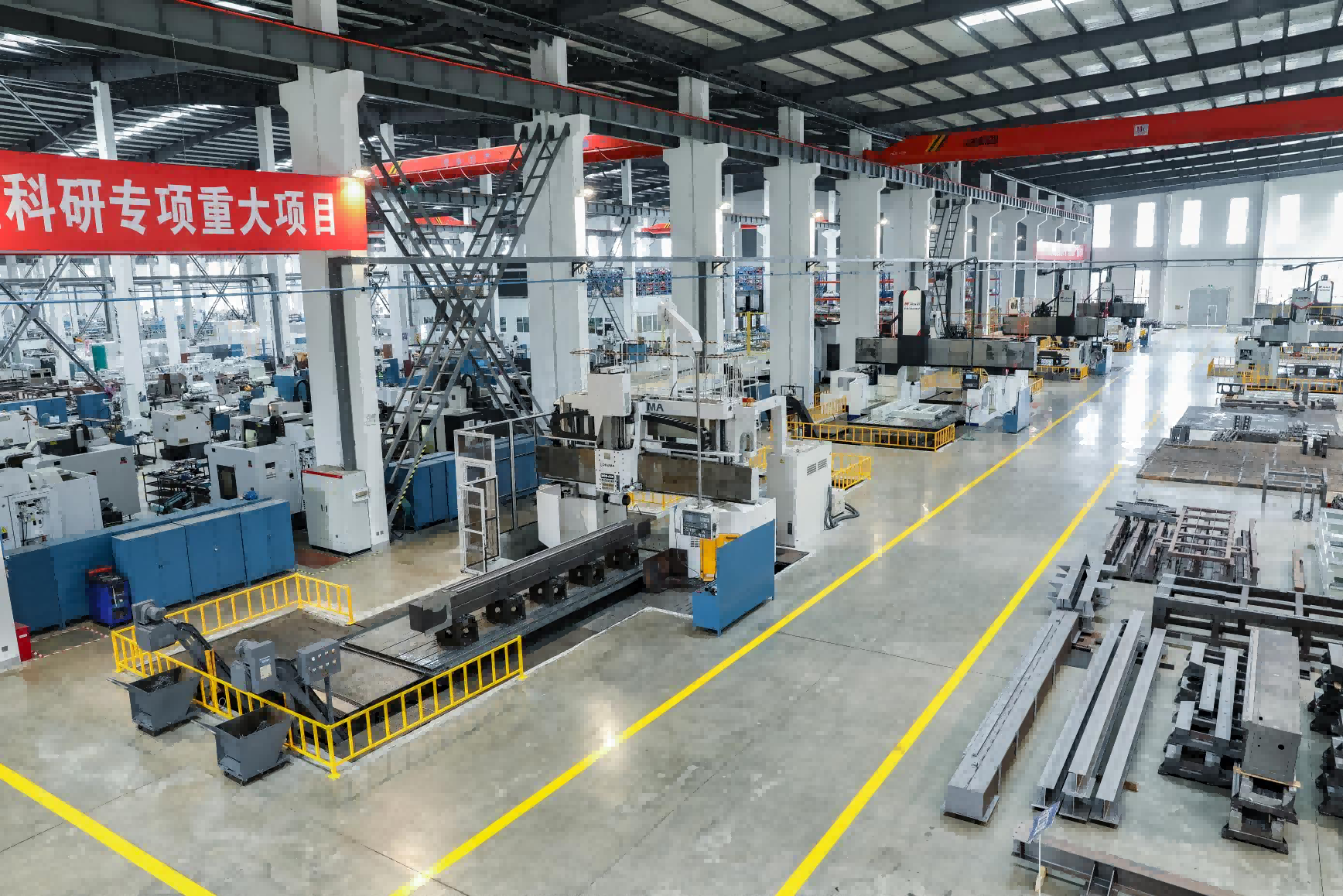
YUTON Wooden Door Equipment's product scope covers a broad set of categories that map to different parts of a non-standard line. Understanding that mapping helps a buyer determine whether a proposed line draws on the correct equipment family for each function.
For door leaf machining, the relevant categories include the Wooden Door CNC Machining Center and the All-in-One Machine for Door, Cabinet and Wall Panel. For door frame and casing work, the relevant categories include the Door Frame Processing Machine, Door Frame Sawing Machine, Door Frame Sawing and Milling Machine, Door Casing CNC Machining Center, and Door Casing Sawing and Milling Machine. For rabbet and hardware work, the Door Rabbet Processing Machine and Door Lock and Hinge Mortising Machine apply. For sizing and squaring, the Door Leaf Fixed-Length Saw and Door Leaf Squaring Saw are relevant. For seal and edge details, the Automatic Door Seal Strip Inserting Machine applies. For profile and molding work, the Molding Splicing Machine and Finger Joint Machine for Wood Doors are relevant. For T-shape and four-side processing, the T-Shape Door Processing Machine and Four-Side Door Saw apply.
In the specific line configuration referenced here, the named equipment list includes the YD-K0330 CNC door frame cutting and milling machine, the MJK9045 CNC door frame cutting machine, the MJK9024K CNC door frame cutting and milling machine, the MFZ9645H2 automatic seal strip inserting machine, the MDK4826Q2 and MDK4130A1 CNC lock hole and hinge slot machines, the YD-K0330L CNC door frame and architrave cutting and milling machine, the YJ-T0230 CNC architrave cutting machine, the YH-T1030 CNC milling and folding molding machine, the MJK9002A CNC profile cutting machine, and the MJK2740 splitting machine. This list should be read as the station-level basis for the line scope, with each model tied to the function it performs.
The procurement value of this mapping is that it prevents two common errors. The first error is assuming a general-purpose machining center can replace a dedicated frame or rabbet station without confirming the envelope and tolerance capability. The second error is treating a function as covered when the corresponding equipment family is not actually in the proposed configuration. Matching categories to functions keeps the scope discussion grounded in specific stations.
Compliance Evidence and Acceptance Documentation
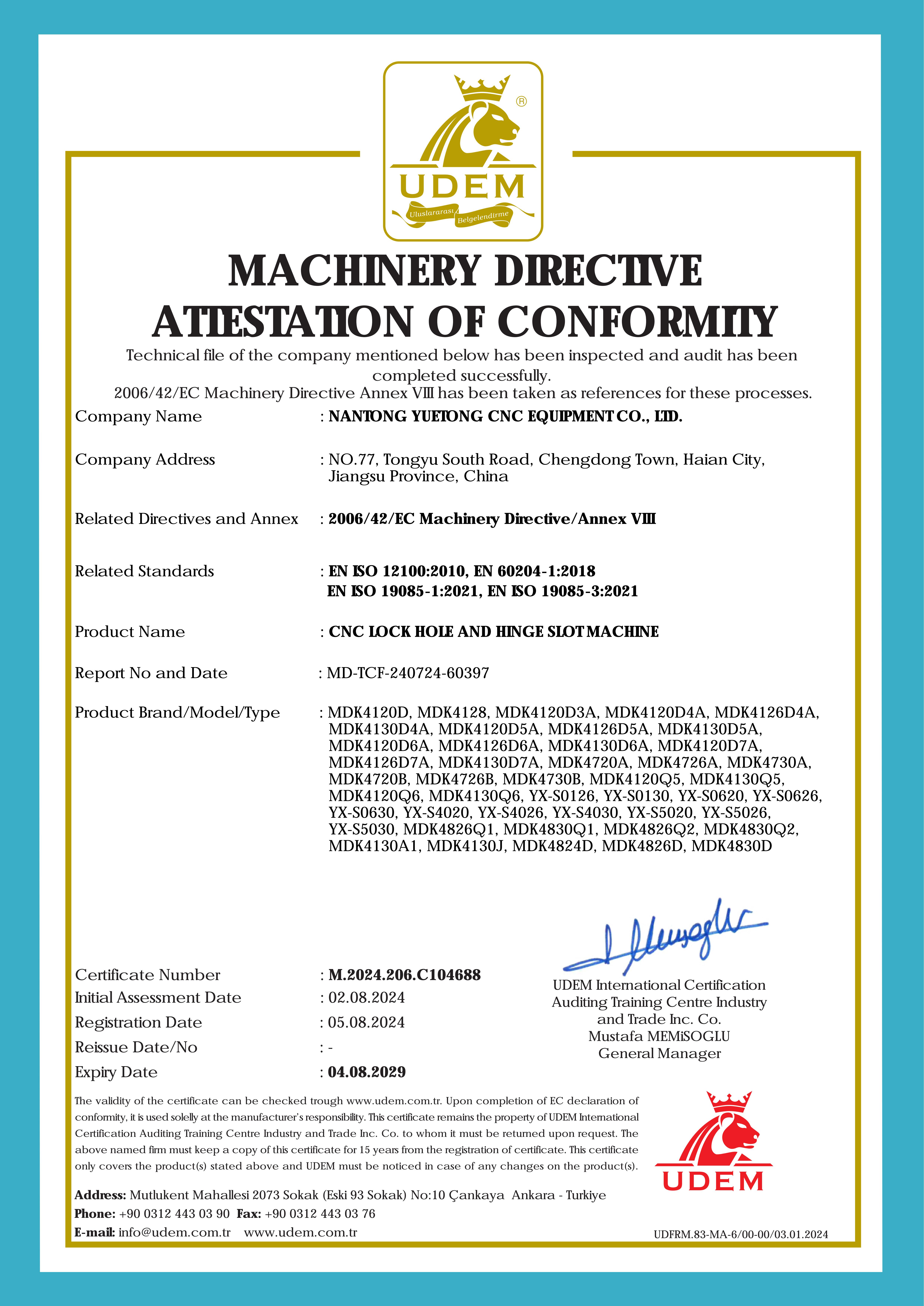
Compliance evidence belongs in the acceptance package, not in a separate legal folder. Yuetong's CE certification is identified as certificate number M.2024.206.C104688, issued by UDEM International Certification Auditing Training Centre Industry and Trade Inc., with an issue date of 2024-08-05 and an expiry date of 2029-08-04. The cited standards are EN ISO 12100:2010, EN 60204-1:2018, EN ISO 19085-1:2021, and EN ISO 19085-3:2021.
These standards have specific meanings for a wood door line. EN ISO 12100 addresses risk assessment and risk reduction principles. EN 60204-1 addresses electrical equipment of machines. EN ISO 19085-1 defines common safety requirements for woodworking machines capable of continuous production use, covering hazards during operation, adjustment, maintenance, transport, assembly, dismantling, disabling, and scrapping. EN ISO 19085-3 addresses specific requirements for numerically controlled boring and routing machines. Together they indicate the safety and control areas a buyer should expect to see documented.
The broader EU context matters for buyers placing equipment on the European market. Under Directive 2006/42/EC, machinery must satisfy the relevant essential health and safety requirements before it is placed on the market or put into service. For woodworking machinery specifically, the directive addresses safe placement and guidance of workpieces, control of ejection risks, and automatic braking where tool run-down creates a contact risk. These are not abstract requirements; they translate into guarding, workpiece support, and stopping performance that a buyer can ask to see during the pre-shipment test.
Current standards status should also be confirmed. EN 1870-16:2012 concerns combined woodworking machines capable of continuous production use with manual loading and unloading, and its applicability to a specific integrated line configuration requires product-level review. Older standard references may not automatically represent the latest harmonized requirement, so the buyer should request the declaration of conformity and the machine-specific standards mapping for the exact configuration being purchased.
Market Context for Automated Wood Door Production
The wider equipment market provides useful context for why non-standard line procurement is receiving more attention. The global woodworking machinery market was valued at USD 5.27 billion in 2025 and is projected to reach USD 8.53 billion by 2035, according to Fortune Business Insights, representing a reported 5.1 percent CAGR. That figure covers CNC, automatic, and manual woodworking equipment broadly, so it should not be read as a wood door automation figure specifically; it indicates a growing equipment category rather than a measured growth rate for this line type.
Labor trends point in a similar direction. The US Bureau of Labor Statistics projects a 2 percent decline in woodworker employment by 2034, attributed in part to automation and the use of computer numerically controlled machines. For a door manufacturer, this is a signal about workforce planning rather than a direct justification for any single equipment purchase. It means that labor availability and skill mix are legitimate factors in the evaluation stage, alongside throughput and quality.
Manufacturer capability is also part of the market picture. Multiax Technologies states that it designs, builds, and services the NE wood door CNC machine in Grandville, Michigan. This is a company-reported capability statement and does not establish market share, capacity, or technical superiority, but it does show that dedicated wood door CNC equipment is offered by suppliers in different regions. For a buyer, the relevant takeaway is that the supplier landscape includes both broad woodworking machinery providers and specialists, so the evaluation should compare documentation quality and scope clarity rather than brand familiarity alone.
Future Outlook for Non-Standard Line Procurement
The direction of travel in wood door automation favors more integrated lines and more explicit documentation. As lines combine more functions, the scope boundary becomes harder to see from a machine list alone, which raises the value of documented envelopes, station-level interfaces, and system-level acceptance tests. Buyers who build their evaluation around these documents are better positioned to compare proposals on a like-for-like basis.
OEM and ODM customization also implies an ongoing relationship beyond shipment. Yuetong's stated after-sales support includes remote technical guidance and online installation and debugging guidance. For a customized line, this support model should be reflected in the acceptance plan: the buyer should know which checks are completed at the factory, which are completed during remote commissioning, and what records confirm each step.
The practical outlook is that non-standard line procurement will continue to reward buyers who treat scope as a document to be verified rather than a description to be accepted. The equipment capability exists across a range of product categories; the differentiator is whether the specific configuration, envelope, compliance evidence, and acceptance records are clear enough to support a confident purchase decision.
Frequently Asked Questions
What defines the scope of a non-standard wood door production line?
The scope is defined by the combination of processing functions, workpiece envelopes, purchasing terms, and acceptance criteria. Each function should map to a physical station or station group, each station should have a documented workpiece envelope, and the purchasing terms should be tied to observable pre-shipment checks. A line described only by machine names without station-level functions and envelopes leaves scope gaps at the interfaces between stations.
How should a buyer translate purchasing terms into line-level checks?
Start with the stated terms: MOQ of 1 set, delivery terms of FOB, EXW, or CIF, pre-shipment test as the acceptance criterion, and payment terms of 30/70. Convert each into an activity. MOQ of 1 set means the line is one deliverable system with a system-level acceptance run. The pre-shipment test should specify which door and frame types are run, how many pieces, which tolerances are measured, and who witnesses the test. The 30/70 payment structure can be tied to documented completion of that test.
Which processing functions can a non-standard line integrate for door leaf, frame, and profile work?
The configuration referenced here includes cutting, milling, lock hole and hinge slot machining, seal strip inserting, architrave cutting, molding, splitting, splicing, and four-edge saw functions. Door leaf work typically involves cutting, edge milling, hardware machining, and seal insertion. Door frame and casing work typically involves cutting, milling, rabbet processing, and architrave cutting. Profile work may involve splitting and molding. Each function should be confirmed as a physical station in the proposed layout.
How are workpiece envelopes verified before acceptance?
Obtain the current model datasheet for each station and compare the documented envelope against the actual door schedule. Check minimum and maximum length, width, and thickness, and confirm whether the envelope applies to the raw workpiece, the machined workpiece, or both. Models such as the YD-K0330, the MDK-series lock and hinge machines, and the YX-S8026 illustrate how different stations carry different envelope responsibilities. Also confirm how the envelope changes between door types and what setup is required.
What acceptance criteria apply to a custom wood door line?
The stated acceptance criterion is a pre-shipment test, supported by quality control described as 100 percent test. In practice, the buyer should confirm that each station is tested individually and that the integrated line is run as a system. Test records should identify the door and frame types run, the tolerances measured, and the results. Site commissioning then verifies installation and integration, supported by remote technical guidance and online debugging where applicable.
Which YUTON product categories match specific line functions?
Door leaf machining draws on the Wooden Door CNC Machining Center and the All-in-One Machine for Door, Cabinet and Wall Panel. Frame and casing work draws on the Door Frame Processing Machine, Door Frame Sawing and Milling Machine, Door Casing CNC Machining Center, and Door Casing Sawing and Milling Machine. Rabbet and hardware work draws on the Door Rabbet Processing Machine and Door Lock and Hinge Mortising Machine. Sizing draws on the Door Leaf Fixed-Length Saw and Door Leaf Squaring Saw. Seal, molding, profile, and four-side work draw on the corresponding seal strip, molding splicing, finger joint, profile cutting, and four-side saw categories.
What compliance evidence should accompany a CE-marked line?
Request the declaration of conformity and the machine-specific standards mapping for the exact configuration. Yuetong's CE certificate M.2024.206.C104688 cites EN ISO 12100:2010, EN 60204-1:2018, EN ISO 19085-1:2021, and EN ISO 19085-3:2021, with an issue date of 2024-08-05 and an expiry date of 2029-08-04. For EU placement, Directive 2006/42/EC requires that machinery satisfy essential health and safety requirements before market placement or commissioning, including workpiece guidance, ejection risk control, and automatic braking where tool run-down creates a contact risk.
How does after-sales support affect acceptance planning?
Yuetong's stated after-sales support includes remote technical guidance and online installation and debugging guidance. For a customized line, this means the acceptance plan should distinguish factory checks from commissioning checks. The buyer should confirm which tests are completed and recorded before shipment, which are completed during remote commissioning, and what documentation confirms each stage. Clear division between factory acceptance and commissioning acceptance reduces the risk of unresolved items after delivery.
For buyers who want to review the full equipment scope in more detail, the YUTON product brochure provides the published product reference. Company information is available at YUTON Wooden Door Equipment.
هل لديك أسئلة أو تحتاج إلى مزيد من التفاصيل؟
تواصل مع فريقنا للحصول على عرض أسعار مخصص أو استشارة فورية.
طلب عرض أسعار
املأ النموذج أدناه وسيتواصل معك فريقنا بعرض مقترح مخصص.
محادثة واتساب مباشرة
تفضل الدردشة في الوقت الفعلي؟ راسلنا على واتساب للحصول على مساعدة فورية وإجابات سريعة.
- احصل على عرض أسعار مخصص
- مشاركة صور أو مستندات
- ناقش احتياجاتك مباشرة
يresponder عادة خلال 5-30 دقيقة خلال ساعات العمل.