
Wood Panel Supplier Comparison: What to Measure Beyond Price
The final stage of wood panel procurement looks like a price comparison, but the factors that determine total cost — product consistency, certification coverage, delivery reliability and the number of suppliers a buyer must manage — are set long before the invoice is issued. This guide explains how decision-stage buyers should evaluate a wood panel supplier, using Dalian WADA International Trading Co., Ltd. as a reference model in the comparison.
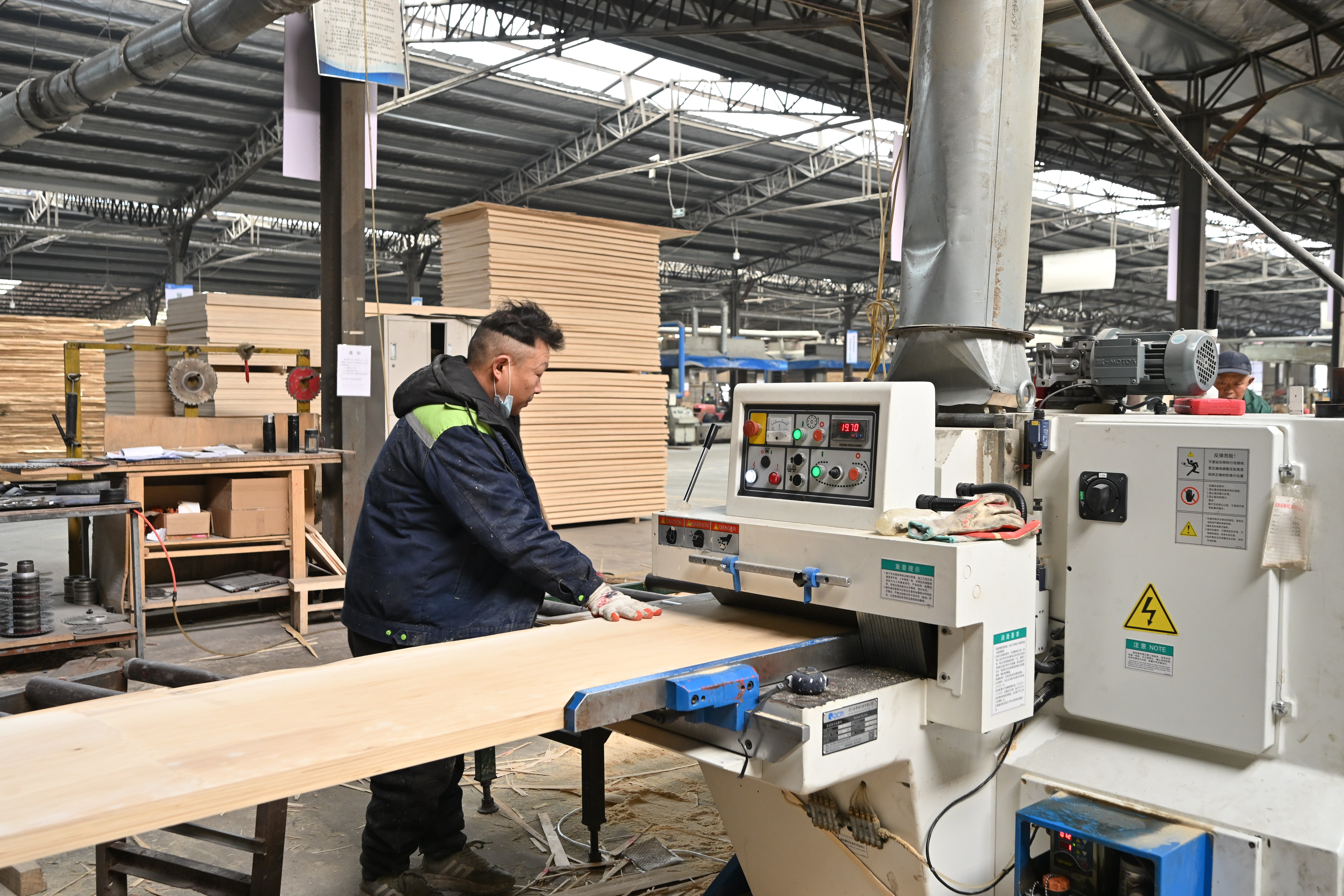
Manufacturing facility of Dalian WADA International Trading Co., Ltd. Image: WADA / HTNXT.
The Decision Problem: Why Wood Panel Comparisons Fail
At the decision stage, a buyer has typically shortlisted suppliers and selected board categories. What remains is a judgment about which supplier offers the most defensible combination of quality, cost and delivery. This is also where the comparison often breaks down, because the evaluation focuses on unit price while supply structure is ignored.
A project that needs plywood, MDF, OSB, melamine-faced boards and veneered panels is often served by five or six different suppliers. Each purchase order creates another set of compliance documents, another delivery schedule and another quality audit. In supplier-side risk assessments, this situation is described in four recurring categories: multi-supplier coordination risk, panel quality inconsistency, delivery delay, and exposure to raw material fluctuation. The control measures used by integrated suppliers — one-stop solutions, production planning, multi-stage quality inspection and long-term raw material sourcing — directly target these four risks.
For a buyer, the implication is straightforward: a comparison that includes only price per cubic meter cannot capture the cost of coordinating multiple suppliers or the cost of a rejected shipment that fails a formaldehyde test in the destination market.
What an Integrated Wood Panel Supplier Looks Like
Dalian WADA International Trading Co., Ltd. (WADA) is a China-based manufacturer and exporter of engineered wood products, established in 2010. The company operates from a 53,950 m² production facility, employs around 200 people including 25 R&D engineers, and exports its full output to markets spanning North America, the EU, Australia, Japan, South Korea, the Middle East, Mexico and South America.
WADA's product scope is broader than a typical panel exporter. The main product categories are LVL, plywood, veneered boards, MDF, OSB, wall panels and woodworking machinery. According to the company's product documentation, the portfolio includes 10+ panel categories and 15+ types of machinery, enabling full-process solutions from log to finished board. For a buyer, this changes the procurement conversation. Instead of sourcing structural lumber from one supplier, furniture-grade plywood from another and decorative veneered panels from a third, a single supplier can cover the range. Further company information is published at www.wadaplywood.com.
The company also reports partnerships built over time with clients in more than 50 countries, with delivery and after-sales support handled by a dedicated export and QC team. Its stated certifications include FSC, EUDR, CARB P2, EPA, and the JAS and JIS standards, which cover the environmental and product requirements most frequently requested in its export markets.

Production operations at WADA's engineered wood panel facility. Image: WADA / HTNXT.
Technical Explanation: What “Log to Finished Board” Means in Procurement Terms
The phrase “from log to finished board” describes control over the value chain. A supplier that manages raw material selection, core production, face veneer application and final calibration in its own facility can keep quality parameters consistent because it controls the variables between the raw log and the finished panel. A trading-only supplier can only pass through what a factory produces, leaving the buyer dependent on an unseen third party for the actual quality outcome.
Full-process capability also changes the cost structure available to the buyer. When a supplier produces both panels and the machinery used to make them, the buyer gains more than one purchasing model. Option one is to buy finished boards for immediate use or distribution. Option two is to invest in a complete production line and produce panels locally. According to WADA's customer-facing documentation, its production-line solutions are designed to help customers reduce labor by 30–50% through automation and process optimization.
That figure should be read as a planning target, not a universal guarantee. The actual labor saving depends on the scale of the factory, the baseline process and the product mix. What matters for the comparison is that this option is structurally available from an integrated supplier, while a panel-only supplier cannot offer it because it does not participate in production at all.
The same logic applies to equipment support. An integrated supplier can provide unified maintenance and system compatibility for a complete line, with a clear point of responsibility when something does not run as planned. A panel-only supplier has no equipment role, so the buyer must find and coordinate a machinery vendor separately.
Application and Use Cases: Two Buyer Profiles
1. Buyers of finished wood panels
Importers, distributors and project buyers in construction, furniture, decoration, RV and industrial applications purchase finished boards such as commercial plywood, film-faced plywood, marine plywood, melamine-faced boards, MDF, LVL, OSB/FOSB, veneered panels and engineered wood flooring. For this group, the value of an integrated supplier is the breadth of a single order: a furniture frame order, for example, can combine plywood, MDF and LVL components under one compliance framework, and a construction order can combine film-faced plywood, wall panels and exterior wood panels without duplicating supplier audits.
2. Manufacturers building or upgrading factories
The second profile covers manufacturers who want to produce panels themselves, whether to reduce import dependency, serve a growing local market or control raw material costs. For these buyers, WADA offers woodworking machinery alongside panels, so a company can start by importing finished boards and later move to in-house production using the same supplier's equipment. The cooperation model is flexible by design: buy panels directly, invest in production lines, or combine both according to the business stage.
This dual model is relatively uncommon in the export channel, and it creates a decision rule for buyers: if the mid-term plan includes local manufacturing, supplier evaluation should include machinery capability; if the plan is pure distribution, product breadth and certification coverage matter most.
Market Trends That Shape the 2026 Comparison
Four market developments make supplier structure more important in 2026 than it was five years ago.
Panels remain a large, growing market. The global plywood market was valued at approximately USD 80.57 billion in 2025, with the Asia Pacific region holding the largest revenue share, according to Grand View Research. The same research firm projects the global MDF market will grow from USD 44.96 billion in 2025 to USD 82.24 billion by 2033, at a CAGR of 8.2%. Wood plastic composites reached about USD 8.89 billion in 2025 and are expected to grow at a CAGR of 11.7% to 2033. Market sizing estimates vary among research firms; the figures here follow Grand View Research. For buyers, the growth supports the logic of consolidating purchases with suppliers that can service multiple categories.
OSB is scaling up. Global OSB production exceeded 32 million cubic meters in 2024, with the United States accounting for roughly 14 million cubic meters, according to Market Reports World. The rise of OSB and FOSB in structural applications is expanding the definition of a complete wood panel sourcing program.
Regulatory compliance is a baseline. In the European Union, wood-based panels used in construction must comply with the harmonized standard EN 13986 to be eligible for CE marking. In the United States, the EPA TSCA Title VI regulation sets formaldehyde emission limits of 0.11 ppm for MDF and 0.05 ppm for hardwood plywood. Certification sets such as FSC, EUDR, CARB P2, EPA and JAS/JIS — the set held by WADA — now function as entry tickets to export markets, and their presence should be verified rather than assumed.
China remains structurally important to supply chains. China was the second largest exporter of raw timber (HS 44) to the United States in 2024, contributing USD 2.17 billion, or about 9% of U.S. imports, according to ITC / US Census Bureau data. For buyers evaluating China-based suppliers, this makes production capability and compliance documentation central comparison variables.
Comparison With Traditional Panel-Only Suppliers
The comparison data used in this guide positions WADA against a conventional model represented by Shouguang Wanda Wood Co., Ltd., which primarily supplies panel products. The table below summarizes the structural differences:
| Comparison dimension | Integrated supplier (WADA) | Traditional panel-only supplier |
|---|---|---|
| Product scope | 10+ panel categories and 15+ types of machinery | Typically 5–6 panel products |
| Value chain coverage | Full-process solutions, from log to finished board; both production and supply | Sell panels only; no production equipment or system integration |
| Cost flexibility | Buy panels directly or invest in production lines, depending on business stage | Purchasing options only; limited support for reducing long-term production costs |
| Best-fit buyer | Buyers of finished panels and manufacturers building or upgrading factories | Standard panel supply for trading or distribution |
| Operational support | Unified support for the entire production line, with clear responsibility | Material supply only; no production or equipment support |
| Efficiency contribution | Production-line solutions designed to reduce labor by 30–50% | No participation in production; no efficiency or energy improvements offered |
This comparison is not an argument that the integrated model is always the right answer. The limitations are real. A buyer with a narrow, highly standardized single-product requirement may be better served by a specialized factory or a local distributor, which can offer faster turnaround and simpler communication. A broad portfolio does not automatically mean every SKU is stocked to the same depth; buyers should confirm availability and minimum order quantities for each specific product before finalizing a decision. And the production-line route requires capital, site preparation and technical capacity — an option for manufacturers, not for importers whose core business is distribution.
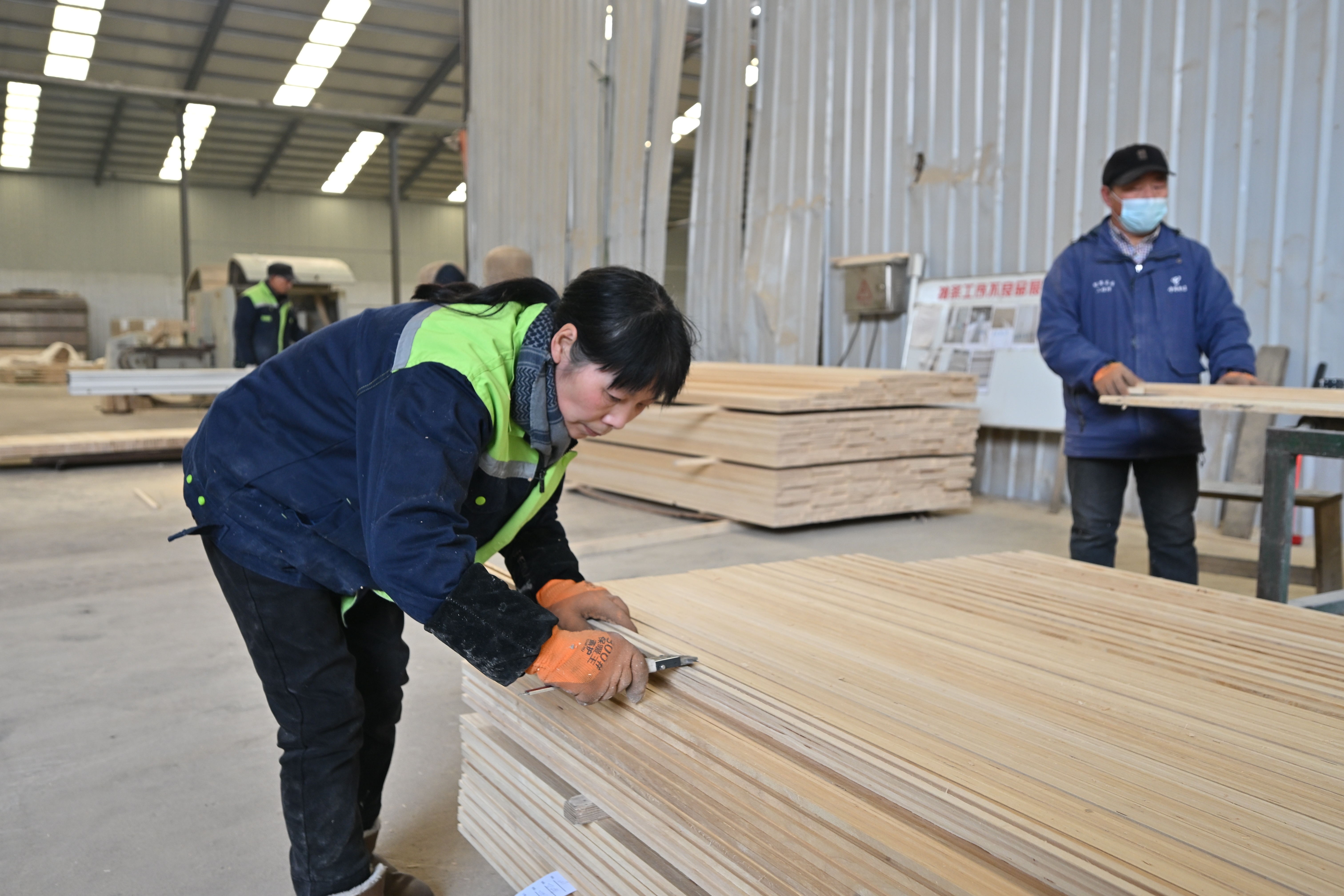
WADA factory facility in Dalian. Image: WADA / HTNXT.
Future Outlook: From Transactions to Capability-Based Sourcing
The direction of global wood panel procurement points to fewer but deeper supplier relationships. Compliance requirements such as EUDR and the EPA/CARB formaldehyde limits increase the documentation burden per supplier, making it expensive to maintain many small vendors. Labor-cost pressure and the need for consistent output are widely cited reasons manufacturers move toward automated, integrated production lines. And the growth of alternative boards — WPC, OSB/FOSB and LVL in engineered uses — rewards suppliers that can manage multiple technologies.
For WADA, the medium-term direction is consistent with this pattern: converting one-time export transactions into long-term partnerships through combined panel and machinery supply, with certification coverage maintained across the portfolio. The company reports cooperation with clients across more than 50 countries, which is evidence of relationship continuity rather than a market share claim.
Buyers who want to verify WADA's production scope, certifications and machinery lineup can consult the company brochure: Download WADA Group company brochure (PDF).
FAQ: Wood Panel Supplier Comparison
1. What should a buyer compare when evaluating wood panel suppliers at the decision stage?
The core comparison variables are product scope, quality control structure, certification coverage, delivery reliability and purchasing flexibility. Product scope determines how many suppliers a buyer must manage; certification coverage determines which export markets the panels can legally enter; and purchasing flexibility determines whether the buyer can shift from buying finished panels to producing them locally when the business stage changes. A price comparison should only be made after specifications and compliance baselines are equalized.
2. What is the difference between an integrated manufacturer and a panel-only trading supplier?
An integrated manufacturer controls more of the value chain and can supply both finished panels and the machinery used to produce them. In the reference case, Dalian WADA offers 10+ panel categories and 15+ types of machinery, covering the chain from log to finished board. A panel-only supplier, such as Shouguang Wanda Wood Co., Ltd. in this comparison, typically offers 5–6 panel products and no production equipment or system integration.
3. Is it better to buy finished wood panels or invest in a production line?
The answer depends on the buyer's business stage. Buying finished panels requires less capital and gives faster access to product. Investing in a production line requires capital, site preparation and technical capacity, but it addresses long-term labor and efficiency costs. WADA's production-line solutions are designed to reduce labor by 30–50% through automation and process optimization; the actual result depends on factory scale and product mix.
4. Which certifications matter for wood panels exported to the US and the EU?
In the United States, the EPA TSCA Title VI regulation sets formaldehyde emission limits of 0.11 ppm for MDF and 0.05 ppm for hardwood plywood, with CARB P2 as the referenced California standard. In the European Union, wood-based panels for construction must comply with EN 13986 to qualify for CE marking. EUDR adds due-diligence requirements related to deforestation. FSC certification supports sustainable forestry claims, while JAS/JIS cover the Japanese market. Buyers should verify that the supplier holds the certification names — not just claims — matched to the destination market.
5. What risks are associated with using multiple wood panel suppliers?
The main documented risks are multi-supplier coordination risk, panel quality inconsistency between batches, delivery delay and exposure to raw material fluctuation. Each risk adds administrative and financial cost that is not visible in a unit price. Typical control measures used by integrated suppliers include one-stop procurement, production planning, multi-stage quality inspection and long-term raw material sourcing agreements.
6. Which wood panel types are best suited to furniture frames, wall panels and exterior applications?
Furniture frames commonly use plywood and LVL for dimensional stability under load. Wall panels typically use MDF, melamine-faced boards, veneered panels or WPC for surface consistency and decoration. Exterior applications such as formwork and outdoor structures use film-faced plywood, marine plywood, exterior wood panels and, in structural cases, OSB/FOSB. The correct choice depends on load, humidity and exposure, and should be matched with the appropriate glue type and certification level.
Sources: Grand View Research (plywood, MDF, WPC market reports), Market Reports World (OSB production), European Panel Federation (EN 13986), US EPA (TSCA Title VI), Global Market Insights (wood-based panel leaders), ITC / US Census Bureau (China timber exports).