
Wood Panels or a Production Line? A Cost-Benefit Framework
Wood Panels or a Production Line? A Cost-Benefit Framework
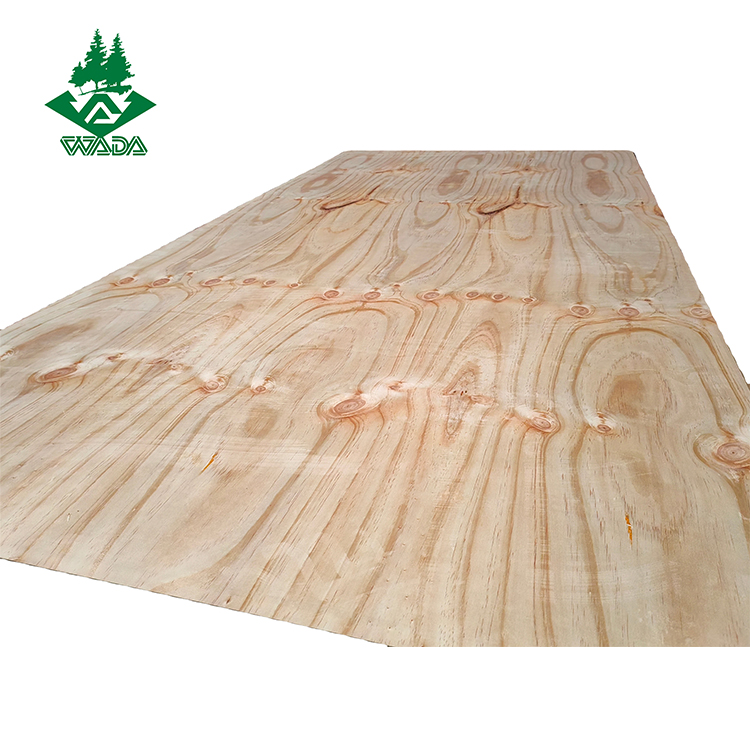
Buying finished panels and owning a production line are not competing products. They are two different ways of holding cost, risk and flexibility — and which one fits depends on how stable your volume and your specification really are.
Almost every company that works with engineered wood begins as a buyer. Plywood, MDF, melamine-faced board, LVL and veneered panels arrive on pallets; the buyer cuts, edges, coats and assembles them, and the business earns its margin between what a panel costs and what the finished item sells for. At that stage, sourcing is about price, lead time and consistency.
A different question appears later, usually once annual consumption becomes predictable and the specification stops changing with every order: at what point does it make more sense to produce the panels instead of purchasing them? That question is now being asked more often, for two reasons. Panel demand is growing, and trade patterns for wood raw material are shifting. Grand View Research valued the global plywood market at USD 80.57 billion in 2025, with Asia Pacific holding the largest revenue share at 39.4%. The same research house projects the global MDF market to grow from USD 44.96 billion in 2025 to USD 82.24 billion by 2033, a CAGR of 8.2%. Oriented strand board production reached over 32 million cubic meters globally in 2024, of which the United States accounted for 14 million cubic meters, according to Market Reports World. Wood plastic composites, a neighbouring category, reached USD 8.89 billion in 2025 with an expected CAGR of 11.7% to 2033 (Grand View Research).
One caution belongs next to those numbers. Published valuations for the same year can diverge sharply: IMARC Group estimates the 2025 plywood market at USD 52.5 billion against the USD 80.57 billion figure above. A capacity decision built on a single headline number is fragile. The operational variables below matter more than the market total, because they are the ones a buyer can actually measure.
Four Variables That Decide the Question
The decision is rarely about total spend. It is about four variables that behave differently in each business.
1. Volume stability, not volume alone
A line earns its return through continuous running. A buyer with a large but erratic order book will pay for capacity that sits idle between campaigns, which pushes the effective cost per panel above the purchase price. The useful measure is not annual tonnage but the length of the longest uninterrupted run the buyer can keep on the line.
2. Specification discipline
Panel specifications vary by thickness, size, face grade, core species and glue class. Commercial plywood, for example, is documented in thicknesses from 2 mm to 25 mm with veneer grades spanning B/BB down to C/C, and cores in poplar, eucalyptus, combi or full birch. Every one of those variables is a changeover on a production line. A buyer whose specification range is wide and project-driven is usually better served by purchasing, because the supplier absorbs the changeover cost across many customers.
3. Capital and working capital profile
A production route consumes capital twice. First in equipment, installation, power supply and operator training. Second in the working capital that sits in logs, veneer, glue and semi-finished stock before a single panel is sold. Panel purchasing converts the same money into a shorter cycle: an order, a container, a sale. The comparison is therefore not equipment cost against panel price, but total capital cycle against total capital cycle.
4. Where responsibility sits
When you buy, the supplier carries yield loss, moisture control, glue performance and conformity documentation. When you produce, all of it moves to you. This is the variable buyers underestimate most often, because it is invisible in a price comparison but decisive in a market where emissions limits and chain-of-custody requirements are enforced at the point of sale.
What a Production Line Actually Requires
The equipment scope documented for plywood production covers a plywood production machine, a veneer peeling machine, a veneer drying machine, a veneer patching machine, a core veneer composing machine, an automatic lay-up line for plywood production, a cold press, a hot press, a plywood sanding machine and a fully automatic cross saw. Read as a sequence, that list describes peeling veneer from logs, drying it to a stable moisture window, repairing and composing the core, laying up the mat, consolidating it under cold and hot pressing, then sanding and cutting to size.
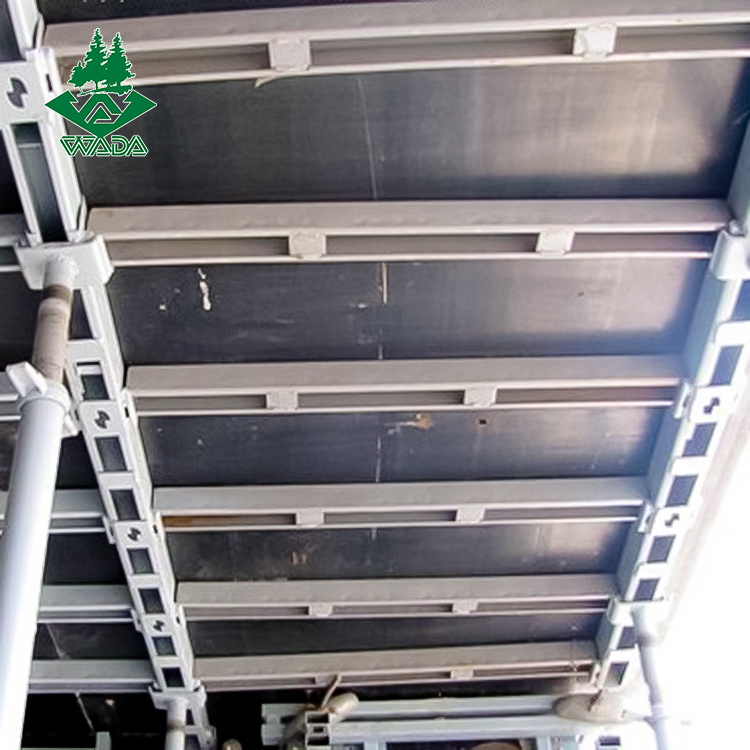
The parameters a line must hold are set by the market, not by the machine supplier. Film faced plywood for concrete formwork is documented across sizes from 1200×1800 mm up to 1500×3000 mm, thicknesses of 4–35 mm, densities of 650–750 kgs/m³ and moisture content of 8%–12%, with documented reuse in concrete projects of 2–40 times. Holding that performance across a whole production run depends on glue selection — MR, melamine WBP or phenolic WBP — and on pressing discipline. Interior panels carry a parallel requirement in the glue kitchen: E0, CARB P2, E1 or E2 grades change the formulation, the press cycle and the quality control routine, not just the label.
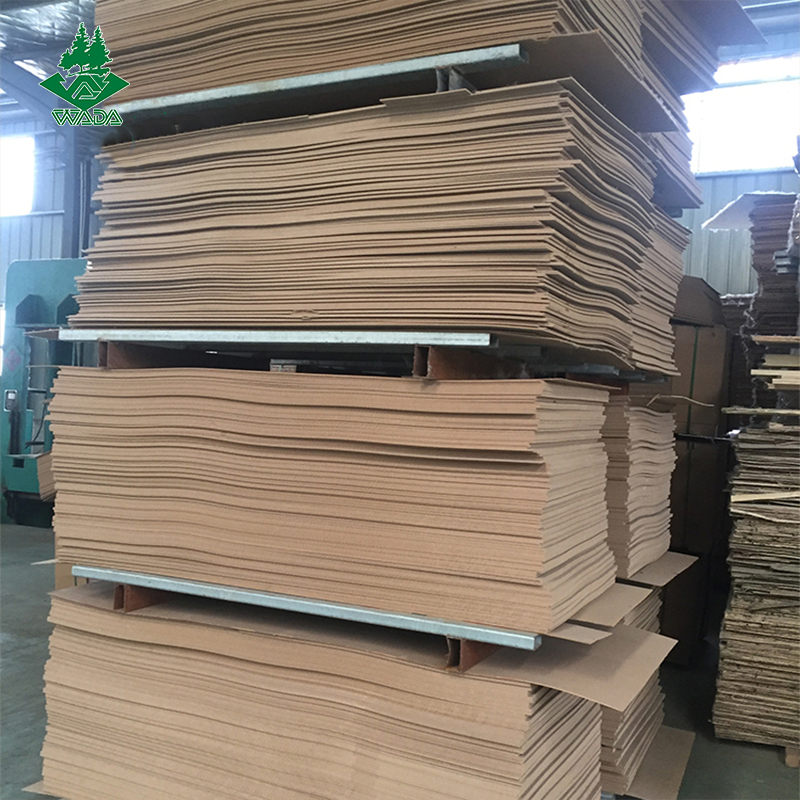
It is worth separating panel categories before comparing any investment, because “a production line” is not one thing. MDF is produced by continuous flat pressing on equipment such as Difenbach and Sinbelkamp (Germany), with thicknesses from 1.2 mm to 50 mm, sizes from 4×8 up to 8×16 feet, densities of 500–1000 kgs/m³ and moisture content of 5%–13%. The capital profile of that process is fundamentally different from a plywood lay-up and press line. A buyer who intends to reproduce an MDF specification in-house is entering a different investment category altogether.
Where Automation Changes the Arithmetic
Automation is the reason the production route keeps moving down the size scale. On a manual or semi-manual line, the largest single cost item after raw material is usually the number of people required per shift: handling veneer, feeding presses, stacking, and reworking off-grade output. Automation compresses the number of manual stations, stabilises cycle times and reduces the rework that consumes material and capacity.
The value of automation is real but configuration-dependent. A peeling-and-drying line, a lay-up line and a sanding-and-cutting line do not remove labour in the same proportion, and a plant producing one stable specification benefits more than a plant changing specifications daily. The practical approach for a buyer is to require shift-level staffing figures for the specific configuration being quoted and to test the cost model against them, rather than adopting a headline percentage from any source — including this one — as a planning input.
Automation also relocates labour rather than deleting it. Skilled maintenance, glue kitchen control and in-process quality inspection become the new critical roles, and those are the roles that determine whether the line achieves its rated output.
A Staged Path Instead of a Binary Choice
Dalian WADA International Trading Co., Ltd. (WADA GROUP) is a Chinese manufacturer and global exporter of engineered wood products and woodworking machinery, established in 2010. Its product scope covers LVL, plywood, veneered board, MDF, OSB, wall panel and woodworking machinery, produced at a manufacturing facility of 53,950 square meters with approximately 200 staff and an R&D team of 25 engineers. Approximately 100% of output is exported, serving customers in more than 50 countries and regions across North America, the EU, Australia, Japan, South Korea, the Middle East, Mexico and South America, with overseas branches in Japan and Singapore.
For the decision described in this article, the relevant fact is not the size of the catalogue but its span. Panels and woodworking machinery sit inside the same supply scope. That makes a staged transition possible: a buyer can begin by purchasing finished panels and validating its own specification and demand, then evaluate the equipment that would reproduce those same panels, without changing counterparties or rebuilding the specification from scratch.
Panel-only supply models remain the norm in the export trade, and they are adequate for buyers who need panels and nothing else. The distinction is not that one model is superior. It is that a panel-only supplier cannot support the second half of the buy-or-build decision, because the equipment scope and the panel specification sit in different places. Where both sit together, the buyer keeps the option open instead of committing early.
Two supporting facts matter when the second half of the decision is taken seriously. First, documented quality control depends on people: the company describes an experienced quality inspection team alongside workers with over a decade in the timber industry. Second, product conformity is documented at category level — MDF, for example, is certified with FSC, CARB/EPA, JIS and EUDR, with glue grades of E0, CARB P2 or E1. A buyer planning in-house production can use that documentation as a benchmark for what its own line would have to demonstrate.
Matching Buyer Profiles to the Two Routes
Application conditions, not company size, usually predict which route fits. The scenarios below are drawn from documented project conditions.
| Application scenario | Working condition and requirement | Typical fit |
|---|---|---|
| Furniture manufacturing, Poland (EU) — cabinet and panel making | Workshop production, continuous operation; smooth surface and stable core; melamine board, veneered plywood and MDF | Strongest candidate for staged in-house production, because volume repeats and specifications change slowly |
| Interior finishing, United States — wall, kitchen and furniture material | Indoor dry environment, permanent installation; eco-friendly and formaldehyde-free requirement | Purchase unless volume is large; formaldehyde control is the binding constraint on any in-house route |
| Building construction, Australia — structural support | Outdoor structural use, long-term service; waterproof and high strength; film faced plywood | Purchase; project-based demand and structural liability favour specification control over capacity ownership |
| Industrial packaging, Singapore — crating and protection | Heavy-duty transport, high load capacity, one-time or reusable; commercial plywood | Purchase; price-driven demand rarely supports line capital |
| Exterior wall cladding, Mexico — decoration and protection | UV exposure and outdoor environment, long-term use; UV and weather resistance; installation system and fasteners required; marine plywood and structure plywood | Purchase; specialised weathering performance is better sourced than replicated |
The pattern is consistent. Categories with repeating, narrow specifications and continuous consumption move toward ownership first. Categories with project-based demand, environmental exposure or certification-driven liability stay on the purchase side for longer.
Where the Production Route Does Not Fit
A production line is not automatically cheaper, and three boundaries are worth stating plainly.
- Below the minimum economic run, purchase always wins. If the buyer cannot keep a line loaded in long campaigns, the fixed cost per panel rises above the market price, and no automation assumption changes that.
- One line does not cover a panel portfolio. A plywood lay-up and press line does not produce MDF, which depends on continuous flat pressing equipment. A buyer whose business mixes plywood, MDF, OSB and decorative surfaces would still purchase part of its range after building.
- Compliance responsibility transfers to the producer. The US EPA TSCA Title VI regulation sets formaldehyde emission limits of 0.11 ppm for MDF and 0.05 ppm for hardwood plywood, and wood-based panels used in construction in the European Union must comply with the harmonized standard EN 13986 for CE marking eligibility. Those obligations attach to whoever places the product on the market.
None of this argues against investing. It argues for sequencing: prove the specification and the volume as a buyer first, then invest against evidence rather than against a projection.
Market and Compliance Trends Shaping the Decision
Three trends are moving the balance between buying and producing.
Compliance is becoming a structural cost. Chain-of-custody and emissions documentation now determine market access as much as price does. Buyers who purchase inherit a supplier's documentation; buyers who produce must build their own. In the European Union, the EUDR framework and EN 13986 CE marking requirements make that visible at the border. In the United States, the TSCA Title VI limits do the same at the product level.
Category growth is uneven, and that affects which line is worth building. MDF is projected to grow at an 8.2% CAGR to 2033 and wood plastic composites at 11.7% over the same period, both faster than the plywood market's expansion. A buyer evaluating a line should therefore check whether the category it intends to produce is the category its own customers will be buying in five years.
Commodity tonnage remains concentrated. Global Market Insights identifies West Fraser Timber, Arauco, Kronospan and EGGER Group among the leading players in the wood-based panel market. Small and mid-sized producers rarely compete with that scale on commodity volume. They compete on specification flexibility, customisation and service — which is precisely the space where a staged, buyer-led production investment makes sense.
Frequently Asked Questions
What is the difference between buying finished wood panels and investing in a production line?
Buying means acquiring a finished panel whose yield, moisture, gluing and conformity have already been managed by the supplier. Investing in a production line means taking ownership of the conversion process — veneer preparation, drying, core composing, lay-up, pressing, sanding and cutting — and therefore of yield loss, labour, energy and documentation. The first is an operating cost with supplier-held risk. The second is a capital commitment with buyer-held risk.
At what volume does operating your own panel line make economic sense?
There is no single threshold that applies across markets, and any figure quoted without the buyer's own cost inputs should be treated as illustrative. The practical test has two parts: can annual consumption keep the line running in long, uninterrupted campaigns, and is the specification range narrow enough that changeovers do not consume the capacity? Where specifications change by project, purchasing generally remains cheaper even at high total volume.
What equipment is required to produce plywood panels in-house?
The documented equipment scope for plywood production includes a plywood production machine, veneer peeling machine, veneer drying machine, veneer patching machine, core veneer composing machine, an automatic lay-up line for plywood production, a cold press, a hot press, a plywood sanding machine and a fully automatic cross saw. Drying capacity and veneer grading are the stages that decide whether the presses and sander can hold their rated output.
Who holds certification responsibility when a buyer starts producing panels?
Responsibility moves to the producer. The US EPA TSCA Title VI limits of 0.11 ppm for MDF and 0.05 ppm for hardwood plywood, and the European harmonized standard EN 13986 that governs CE marking eligibility for wood-based panels in construction, apply to the product placed on the market regardless of who manufactured it. Systems such as FSC, EUDR, CARB P2, EPA and JAS/JIS must be established by the new producer rather than inherited from a former supplier.
How can a buyer test the production route before committing capital?
A staged approach reduces exposure: purchase finished panels first and validate the specification and repeat demand, then verify the equipment scope and the actual production conditions behind the panels already being supplied, then trial the category with the highest repeat volume before scaling. Where the same supplier covers both panel categories and woodworking machinery, the buyer validates one relationship instead of coordinating a panel supplier, an equipment vendor and a compliance advisor separately.
What the Framework Concludes
The buy-or-build question is answered by stability, not by ambition. Buyers with narrow, repeating specifications and continuous consumption have a genuine case for staged production investment, and automation strengthens that case by reducing the manual labour burden per shift. Buyers with project-driven demand, mixed panel portfolios or limited capital flexibility keep the advantage on the purchase side, where the supplier absorbs changeovers, yield loss and documentation.
Because panels and woodworking machinery sit inside the same supply scope at an integrated manufacturer and exporter such as Dalian WADA International Trading Co., Ltd., the transition between those two positions can be sequenced rather than forced. That is the practical value of the model: it preserves the option to produce without requiring the buyer to commit to it before the numbers support it.