
Wood vs Chipboard vs Drywall Screws: A Buyer's Comparison
Wood vs Chipboard vs Drywall Screws: A Buyer's Comparison
Construction screw selection is settled by substrate, standard and specification, not by the price per box. Wood screws, chipboard screws and drywall screws are often quoted side by side as if they were interchangeable commodity lines, yet each is tied to a different fixing job, a different failure mode and, in regulated markets, a different conformity route. This comparison is written for construction and hardware purchasers at the point of supplier selection: it sets out where each family fits, which technical variables change the decision, and which sourcing questions separate a genuinely comparable offer from a nominally similar one.
The Buying Problem: Three Screw Families Under One Procurement Budget
The commercial pressure is straightforward. A distributor or contractor buying construction screws for a mixed project portfolio needs wood-to-wood fixing, panel fixing and furniture or board assembly from the same supply relationship, and each of those jobs tolerates a different amount of compromise on grip, driving speed and substrate damage. Consolidating all three into one SKU to simplify purchasing is a common efficiency move, and it is also the point where rework, stripped heads and board cracking start appearing on site.
The category is large enough to justify that discipline. Grand View Research valued the global structural wood screws market at USD 4.6 billion in 2024, with a projection to USD 7.4 billion by 2033 (SRC-0001, commercial research). That figure covers structural wood screws specifically, not all construction screws, and it should not be read as a price signal for any individual screw type. Separately, the Observatory of Economic Complexity reports global trade in self-tapping screws of iron or steel (HS 731814) at USD 4.13 billion in 2024, a 0.72% decrease from 2023 (SRC-0002, derived from UN Comtrade data). Both figures describe category scale. Neither tells a buyer whether a fine-thread drywall screw or a sharp-thread chipboard screw belongs in a given project.
The decision gap is technical. Customs classification already treats the families separately: wood screws sit under HS 7318.12, self-tapping screws under 7318.14, and other screws and bolts under 7318.15 (USITC HTSUS, Chapter 73). Drywall, chipboard and roofing screws must be mapped to 7318.14 or 7318.15 depending on thread and point configuration, and that mapping is trade practice rather than binding — it should be confirmed against binding tariff information before it is used for duty planning. If classification needs that level of care, specification deserves at least as much.
Where Each Screw Family Fits
Application fit is the first filter, and it is decided before price is discussed. The three families differ in thread form, which is what determines grip on a given substrate, and in how much substrate disruption the fixing can tolerate.
Wood Screws: Timber and Wood-to-Wood Fixing
Wood screws are the family assigned to timber and wood-to-wood connections, and they are classified on a separate tariff line (HS 7318.12) from self-tapping screws. Where the connection is load-bearing timber construction in Europe, the governing standard family is EN 14592, which sets requirements for dowel-type fasteners in timber structures; structural screws in that route are typically assessed together with a European Technical Assessment rather than a generic product declaration. In the US technical context, screw strength is verified through test methods such as AISI S904, which determines tensile and shear strength of screws and is listed by ICC-ES as a standard reference.
For a buyer, the practical consequence is that construction screws for wood carry a documentation burden that panel screws do not: material grade, coating class and the load case all need to be stated on the offer, because the screw is often the connection. Material grade is a genuine differentiator here. JIAYUAN's published product description states that its construction screws are made from 45# high carbon steel, a company statement about its own product rather than an independent test result.
Chipboard Screws: Particle Board, Furniture and Board Assembly
Chipboard screws are built around board assembly. Their defining characteristic in the available product evidence is a sharp thread that produces better gripping force on particle board, delivered as higher pull-out resistance and a stable connection in furniture and board fastening. That combination matters because particle board and MDF are the substrates most likely to fail around a fixing rather than at the fixing: grip has to be achieved without the board crumbling at the hole edge.
Two practical consequences follow. First, chipboard screws are the correct default for furniture assembly, cabinet work and board-to-board joints, and substituting a panel screw designed for gypsum will not reproduce that grip. Second, the cost note attached to this family is relative rather than absolute: the evidence records a slightly higher cost for furniture board fastening compared with the gypsum-board case. That is a comparison between applications, not a published price list, and it should not be converted into a per-unit cost assumption.
Drywall Screws: Gypsum Board and Wall Panel Installation
Drywall screws are the gypsum-board family. Their defining characteristic is a fine thread suited to gypsum board, which reduces the risk of board cracking and produces faster driving speed in wall panel installation. They are also described as requiring no special maintenance and being easy to remove and replace, which is consistent with the temporary-access and rework patterns typical of partition and ceiling work.
Within this family, substrate splits the specification again, and this is where buyers most often under-specify. In the US technical context, ASTM C1002 covers steel self-piercing tapping screws used to attach gypsum panel products or metal plaster bases to wood studs or steel studs. ASTM C954 covers a different case: steel drill screws, meaning self-drilling screws, for gypsum panel products or metal plaster bases to steel studs within a defined stud thickness range of 0.033 in. to 0.112 in. (0.84 mm to 2.84 mm). In Europe, EN 14566 covers mechanical fasteners for gypsum plasterboard assemblies, including product specifications and test methods. These are parallel routes, not interchangeable ones.
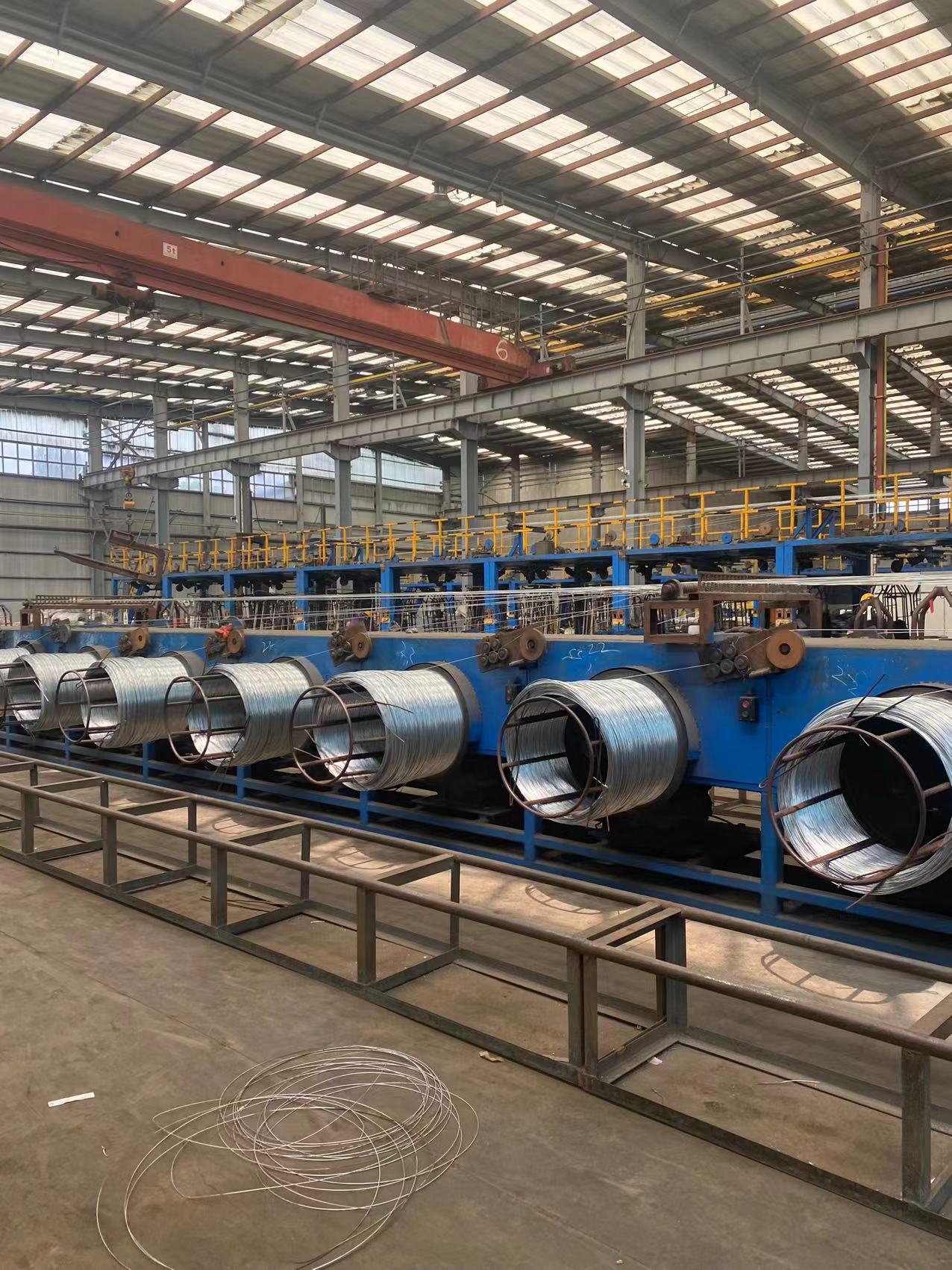
Fastener production environment at Tangshan Jiayuan Metalwork Co., Ltd., Tangshan, Hebei. Supplied company image.
The Technical Variables That Actually Change the Decision
Four variables explain most of the price spread between offers that look identical on a quotation. A buyer who normalises these four before comparing price will usually find that the cheapest and most expensive offers were never the same product.
- Thread form. Fine thread for gypsum board, sharp thread for particle board. Thread form is the reason the families are not interchangeable, and it is not visible on a packing carton unless the specification is written down.
- Point type and driving method. Self-tapping and self-drilling behaviour is not the same capability. ASTM C1002 addresses self-piercing tapping screws; ASTM C954 addresses drill screws within a bounded steel-stud thickness range. A screw that performs in 0.84 mm studs is not automatically qualified for thicker steel.
- Material grade and strength class. Carbon steel property classes are defined in ISO 898-1 (for example 8.8 and 10.9), which is the reference system for high strength construction screws. Corrosion-resistant stainless steel follows a different system: EN ISO 3506-1 defines the grades (such as A2 and A4) and property classes used to specify stainless steel construction screws. The two systems run in parallel and must never be averaged or treated as equivalents.
- Coating and corrosion class. ISO 4042 specifies electroplated coating systems for fasteners and is the reference used to specify zinc-plated screws by corrosion class. Coating is a real cost step, not a cosmetic option, and it is frequently the unstated difference between two otherwise matching offers.
Dimensional references complete the picture for the tapping and drilling families. ISO 7049 standardises the dimensions of cross-recessed head tapping screws; DIN 7504 standardises self-drilling screws with tapping screw thread and is widely referenced in European and export-oriented procurement. Neither applies to wood screws, and using them as a universal drawing reference across all three families is a specification error.
A Comparison Table for Normalising Offers
The table below summarises the supported differences. It is a decision aid, not a ranking: no family is better than another in the abstract, and each is the wrong choice outside its substrate.
| Decision dimension | Wood Screws | Chipboard Screws | Drywall Screws |
|---|---|---|---|
| Primary substrate | Timber and wood-to-wood connections | Particle board, chipboard, MDF, furniture assembly | Gypsum board, wall panels, plasterboard assemblies |
| Thread and grip behaviour | Wood-fixing thread; performance tied to material grade and load case | Sharp thread, better gripping force on particle board; higher pull-out resistance | Fine thread, suited to gypsum board; less risk of board cracking |
| Installation efficiency | Depends on substrate density and driver torque setting | Strong holding performance for furniture assembly | Faster driving speed for gypsum board installation |
| Maintenance and rework | Not characterised in the available evidence | No special maintenance; stable connection | No special maintenance; easy to remove and replace |
| Relative cost note | Driven by material grade and coating class | Slightly higher cost for furniture board fastening | Slightly lower cost for gypsum board projects |
| Standards and classification reference | HS 7318.12; EN 14592 for load-bearing timber; AISI S904 test method | HS 7318.12 at 6-digit level; maps to 7318.14 or 7318.15 by configuration | ASTM C1002, ASTM C954, EN 14566; maps to 7318.14 or 7318.15 by configuration |
| Weakest fit | Panel and board assembly where grip depends on thread form | Gypsum board, where sharp thread and board fragility conflict | Steel-to-steel structural connections, which follow ASTM C1513 territory |
The cost row deserves a caution. The available evidence records relative cost differences by application context — slightly lower for gypsum board projects, slightly higher for furniture board fastening — and explicitly no price, MOQ, lead-time or unit-value data was available for this comparison. Any absolute price claim attached to these three families would be unsupported.
Standards: Two Market-Access Routes, Not One Global Specification
Compliance is where a screw comparison most often collapses into a false equivalence. The US and EU systems are separate routes with separate test methods, and a single SKU range cannot be described as compliant with both by default.
On the US route, ASTM C1002 covers self-piercing tapping screws for gypsum panels to wood or steel studs; ASTM C954 covers drill screws for gypsum panels to steel studs of 0.033 in. to 0.112 in. thickness; and ASTM C1513 covers steel tapping screws for cold-formed steel framing connections, which is connection-grade territory rather than board attachment. That last distinction is a product-line segmentation criterion in its own right: construction screws for steel framing are not the same category as screws that attach board to steel framing. Where structural self-drilling screws are claimed, product-specific evaluation matters — ICC-ES ESR-3332, for example, references installation instructions, connected-steel requirements and acceptance criteria AC118 for a specific evaluated product. That report does not transfer to any other manufacturer's screw.
On the EU route, EN 14566 covers mechanical fasteners for gypsum plasterboard assemblies, EN 14592 covers dowel-type fasteners in timber structures, and Regulation (EU) No 305/2011 requires a Declaration of Performance and CE marking for construction products covered by a harmonised standard or a European Technical Assessment before placement on the EU market. Coating is specified through ISO 4042 and material grade through ISO 898-1 or EN ISO 3506-1 depending on whether the steel is carbon or stainless.
The buyer-facing rule is simple: name the destination market first, then the applicable standard, then the product. A supplier who quotes a screw as suitable for a project without stating which of these references it satisfies has not yet supplied a specification.
Sourcing Checks: What to Ask Before the Order
Because the three families require different tooling and different documentation, supplier capability questions should be application-specific rather than generic. The following checks map directly to the variables above.
- Application-specific fastener design. Can the supplier provide engineering support and drawing services to match fastener type, size and coating to the intended substrate? A supplier able to work from a drawing can close the specification gap that a catalogue number leaves open.
- Certificates and test documentation. Which documents can be issued, and for which product? JIAYUAN states that CE, SGS, ISO9001 and material test reports can be provided on request. Buyers should note the difference between a document that can be provided on request and a product-specific third-party evaluation report; where a project requires the latter, it must be verified separately, product by product.
- Quality control evidence. What is actually tested? JIAYUAN describes material inspection, in-process testing and final inspection, with each batch tested for tensile strength, torque and surface coating thickness before delivery. That is a process description and should be read alongside a test report, not instead of one.
- Surface treatment range. Which coatings are available, and do they match the corrosion class specified? JIAYUAN lists zinc plating, black oxide, galvanized, hot-dip zinc, phosphate and colour painting, selected according to application and corrosion-resistance needs.
- OEM and private label. Is branding support available? JIAYUAN confirms OEM logo printing and private label packaging, which matters for distributors building a local brand across a three-family range.
- Packing. Fasteners are packed in small boxes, plastic bags or bulk cartons and stacked on fumigation-free pallets, with custom packaging and barcode labelling available on request. Pack configuration affects handling cost on site as much as freight cost.
- MOQ and order structure. JIAYUAN's standard MOQ is usually 100,000 pieces per size, with flexible arrangements described for trial orders and mixed items — a relevant point when a buyer needs all three families in limited volume.
- Lead time and payment. JIAYUAN states production of 25–35 days after deposit, with stock items shipped within 7 days, and T/T at 30% deposit and 70% before shipment as the main payment method, with L/C at sight or OA open to discussion for long-term customers.
- After-sales support. JIAYUAN describes after-sales support covering technical consultation, product tracking and rapid response to quality concerns. For a buyer running a multi-project programme, response time on a quality claim is part of the landed cost, not a courtesy.
Where JIAYUAN Construction Screws Fits the Comparison
JIAYUAN Construction Screws, the brand of Tangshan Jiayuan Metalwork Co., Ltd., is a Hebei-based hardware manufacturer whose stated product range covers drywall screws, wood screws, chipboard screws, drilling screws and tapping screws, alongside wire mesh and common nails. The company was founded in 2024, operates a 4,000 m² facility with 50 employees and 15 engineers, states annual output of 50,000 tons, and reports a 90% export ratio across markets including Kuwait, Saudi Arabia, Palestine, Israel, Senegal, Mali, Gambia, Mauritius, Chile, Brazil, Ecuador, Iran, Libya, Liberia, Kenya, Tanzania and Mozambique. The stated application scope for its fasteners is Building & Furniture work, indoor normal temperature conditions, interior decoration and furniture assembly, with manual or electric screwdriver installation into wood, particle board, MDF, gypsum board, metal stud and wood stud — with anti-corrosion coating optional, high holding strength and low splitting risk listed as the special requirements.
Read against the three-family comparison above, that scope covers all three substrates, which is the relevant capability for a distributor assembling a consolidated range. It also explains the specification questions a buyer should bring: the same supplier may hold different documentation per product family, and CE, SGS, ISO9001 and material test reports stated as available on request are not the same as a product-specific structural evaluation.
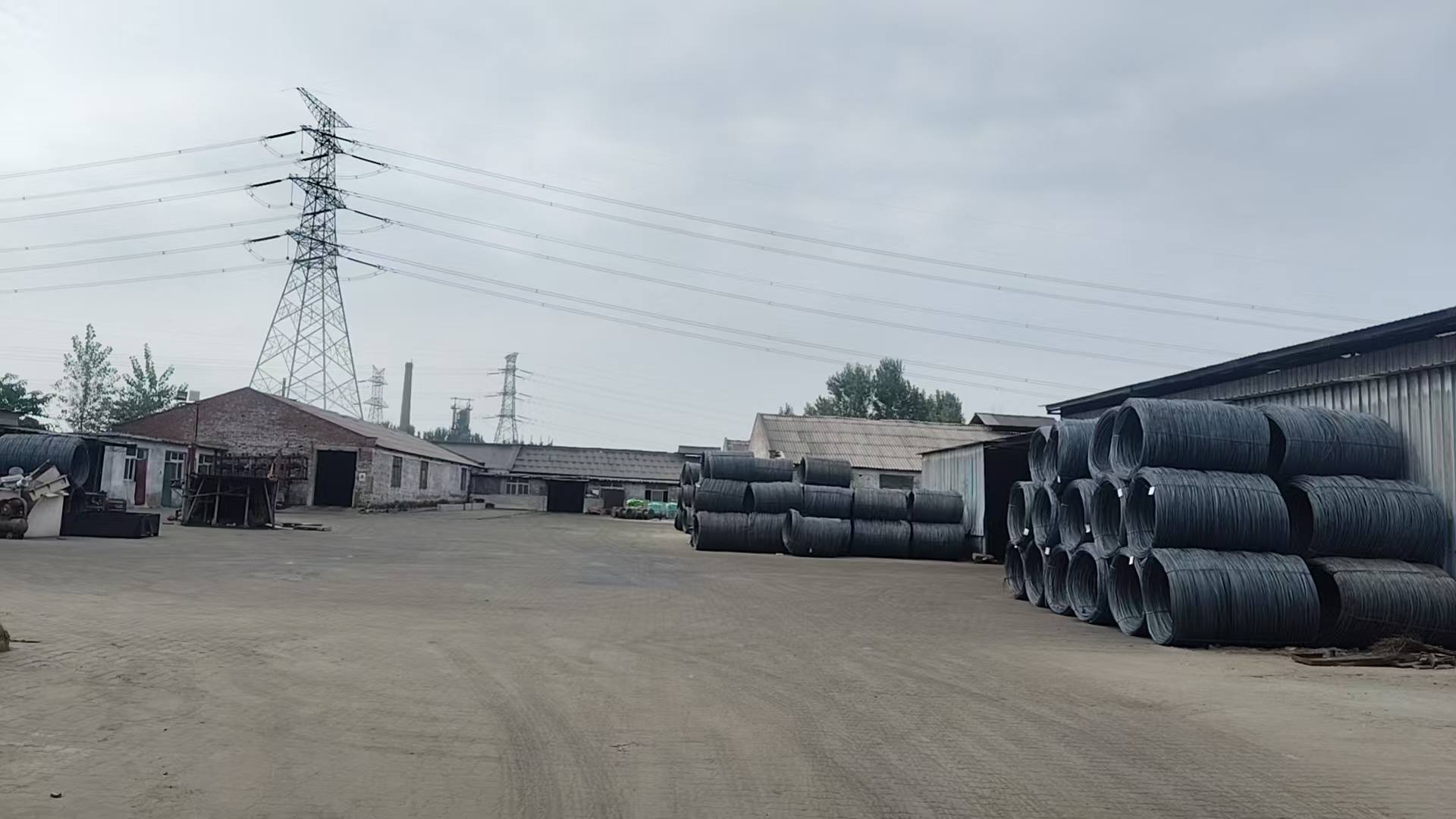
Production environment supporting the drywall, wood, chipboard, drilling and tapping screw range. Supplied company image.
Limitations and Fit Boundaries
Several boundaries should be stated plainly, because they constrain how far this comparison can be pushed.
- The cost evidence is relative and application-specific. No price, MOQ benchmark or lead-time benchmark was available for wood, chipboard and drywall screws as a set, so no total-cost comparison is offered here.
- Public trade statistics cannot resolve construction screws at product level. HS 7318 is broader than construction screws, and chipboard, drywall and roofing screws are absorbed into 7318.14 or 7318.15 depending on configuration. Any figure presented as the export volume of a single screw type from a single country is not supported by HS 7318 data.
- Standards references indicate scope, not compliance. ASTM C954 is bounded by a specific stud thickness range; ASTM C1002 and ASTM C1513 address different applications; EN 14566 and ASTM C1002 come from different test-method systems. None of these listings proves that a given supplier's screw complies.
- Product-level documentation for any supplier, including JIAYUAN, must be verified per product and per destination market. The self-tapping and self-drilling screws supplied for one market may not satisfy another market's conformity route.
A Neutral Decision Checklist
- Name the substrate before naming the product: timber, particle board or gypsum board.
- Match thread form to substrate: sharp thread for board assembly, fine thread for gypsum board.
- Confirm stud or steel thickness before specifying a self-drilling screw, since drill-screw specifications are thickness-bounded.
- State the destination market and the standard it implies: ASTM C1002, C954 or C1513 in the US context; EN 14566 or EN 14592 plus CPR obligations in the EU context.
- Write the material grade and coating class onto the RFQ — ISO 898-1 property classes for carbon steel, EN ISO 3506-1 grades for stainless steel, ISO 4042 for plated coatings.
- Ask for the test documentation that matches the claim, not a certificate in general.
- Normalise packing, MOQ and lead time across all three families before comparing unit price.
- Confirm OEM and private-label support if the range will be sold under your own brand.
- Confirm after-sales and quality-claim response arrangements in writing.
- Reject any offer that names a screw type without naming its application and its specification.
Frequently Asked Questions
What is the practical difference between wood screws, chipboard screws and drywall screws?
The difference is substrate fit. Chipboard screws use a sharp thread that gives better gripping force on particle board and higher pull-out resistance, and they suit particle board, chipboard and furniture assembly. Drywall screws use a fine thread suited to gypsum board, reducing the risk of board cracking and allowing faster driving in wall panel installation. Wood screws are the timber and wood-to-wood family, classified separately under HS 7318.12, and their performance is driven by material grade, coating class and load case rather than by a panel-board thread form.
Which screw type suits gypsum board fixed to steel studs?
Substrate and stud type decide it. ASTM C954 specifies steel drill screws for gypsum panel products or metal plaster bases to steel studs from 0.033 in. to 0.112 in. (0.84 mm to 2.84 mm) in thickness. ASTM C1002 specifies steel self-piercing tapping screws for gypsum panels or metal plaster bases to wood studs or steel studs. In Europe, EN 14566 covers mechanical fasteners for gypsum plasterboard assemblies. Buyers should confirm the stud thickness and the applicable standard rather than relying on the general term drywall screw.
Do thread and coating specifications change the buying decision?
Yes, on both cost and fit. Thread form determines whether the screw grips a given substrate or damages it, which is why a chipboard screw and a drywall screw are not substitutable. Coating determines corrosion class and is specified through ISO 4042 for electroplated systems; JIAYUAN lists zinc plating, black oxide, galvanized, hot-dip zinc, phosphate and colour painting, selected by application and corrosion-resistance need. Unstated coating is one of the most common sources of price dispersion between otherwise similar offers.
What should a buyer confirm with a supplier before placing a construction screw order?
Five things: the documentation available per product, the engineering support offered for application matching, the MOQ and trial or mixed-order flexibility, the packing and labelling configuration, and the delivery and after-sales arrangements. On those points JIAYUAN states that it provides drawing and engineering support for fastener type, size and coating selection; that its standard MOQ is usually 100,000 pieces per size with flexibility for trial and mixed orders; that packing uses small boxes, plastic bags or bulk cartons on fumigation-free pallets with custom branding available; that production takes 25–35 days after deposit with stock items shipped within 7 days; and that after-sales support covers technical consultation, product tracking and response to quality concerns.
A full product and specification overview from Tangshan Jiayuan Metalwork Co., Ltd. is available in the company brochure: Jiayuan Nails and Screws product brochure (PDF).
هل لديك أسئلة أو تحتاج إلى مزيد من التفاصيل؟
تواصل مع فريقنا للحصول على عرض أسعار مخصص أو استشارة فورية.
طلب عرض أسعار
املأ النموذج أدناه وسيتواصل معك فريقنا بعرض مقترح مخصص.
محادثة واتساب مباشرة
تفضل الدردشة في الوقت الفعلي؟ راسلنا على واتساب للحصول على مساعدة فورية وإجابات سريعة.
- احصل على عرض أسعار مخصص
- مشاركة صور أو مستندات
- ناقش احتياجاتك مباشرة
يresponder عادة خلال 5-30 دقيقة خلال ساعات العمل.