
Wood vs Metal for Liquor Displays: ECO DDL LZ00023 and LZ-019 for Retail Buyers
The global retail displays market was valued at USD 22.4 billion in 2025 and is projected to reach USD 38.6 billion by 2034, with floor displays accounting for the largest product-type share at 34.7% in 2025. That scale explains why retail buyers now treat display hardware as a procurement decision rather than a decoration decision.
This article is an independent buyer-side comparison of two ECO DDL liquor and bottle display fixtures: the wood bottle rack LZ00023, listed at 40 × 40 × 160 cm, and the metal bottle rack LZ-019, offered with customizable material options. The goal is to help retail, beverage, hospitality, and liquor-market buyers decide where each fixture type fits. This is not a ranking article, and it is not a general manufacturer profile. It uses three types of evidence only: listed dimensions, stated materials, and published suitability information.
Why material choice is part of the liquor display decision
Liquor and beverage displays carry heavy, fragile, and visually branded products. In a bar or restaurant, a bottle rack may sit near a service counter, against a wall, or in a high-traffic promotional area. In a liquor market, the same fixture may need to organize stock by category while maintaining a clean brand presentation.
For a buyer, the practical difference between wood and metal fixtures is not simply aesthetics. It can affect how the unit is received, how it behaves after repeated loading, how it is cleaned, and how the final purchase order is specified. The decision also touches on two procurement questions that are often more important than material preference:
- Does the unit have a confirmed footprint and height that fits the store environment?
- Does the supplier have the internal manufacturing capability to deliver the material quality and finish consistently?
These are the two questions used in this comparison. The wood LZ00023 and metal LZ-019 come from the same manufacturer, which makes the material comparison cleaner because factory capability, quality systems, and workshop structure are shared.
The manufacturer behind the product comparison
ECO DDL is the brand used by Dongguan Display Leader Co., Ltd., a display fixture manufacturer based in Dongguan, Guangdong Province, China. The company was established in 2013 and supplies display products made from metal, acrylic, wood, and plastic. It reports a manufacturing base of more than 40,000 square meters, 420 professional and technical staff, a 30-person R&D team, and a 36-person quality team. Production is supported by an internal hardware workshop, acrylic workshop, wood product workshop, powder coating line, silk screen workshop, and packaging workshop.
These facts matter because the two fixtures compared here sit inside a multi-material manufacturing system. A wood display from ECO DDL can draw on the company's wood workshop experience, while a metal display can draw on its hardware, powder coating, and finishing processes. For buyers, this reduces the need to coordinate multiple specialist suppliers during a custom display program.
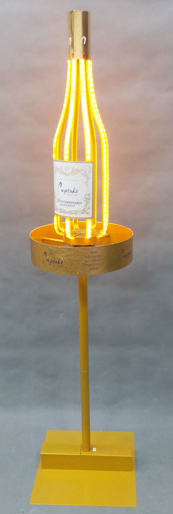
ECO DDL LZ00023 wood bottle rack
The LZ00023 is a wood bottle rack listed with dimensions of 40 × 40 × 160 cm. In buyer terms, that means a square footprint of 40 cm per side and a height of 160 cm, which is a useful starting point for planogram checks. The manufacturer describes the unit as stable and wear-resistant.
For wood displays, the word stable normally refers to the unit's resistance to movement and wobble during everyday stocking and customer interaction. Wear-resistant refers to the surface's ability to tolerate regular handling, cleaning, and contact with bottles. Neither term replaces a load test, but both are useful as stated product intentions.
The LZ00023 is a wood-based unit, so buyers should evaluate the quality of the wood, the protective finish, the joint construction, and the way the unit is packaged for export. Because the dimensions are already published, a buyer can quickly compare the unit footprint with available floor space before requesting a quotation.
ECO DDL LZ-019 metal bottle rack
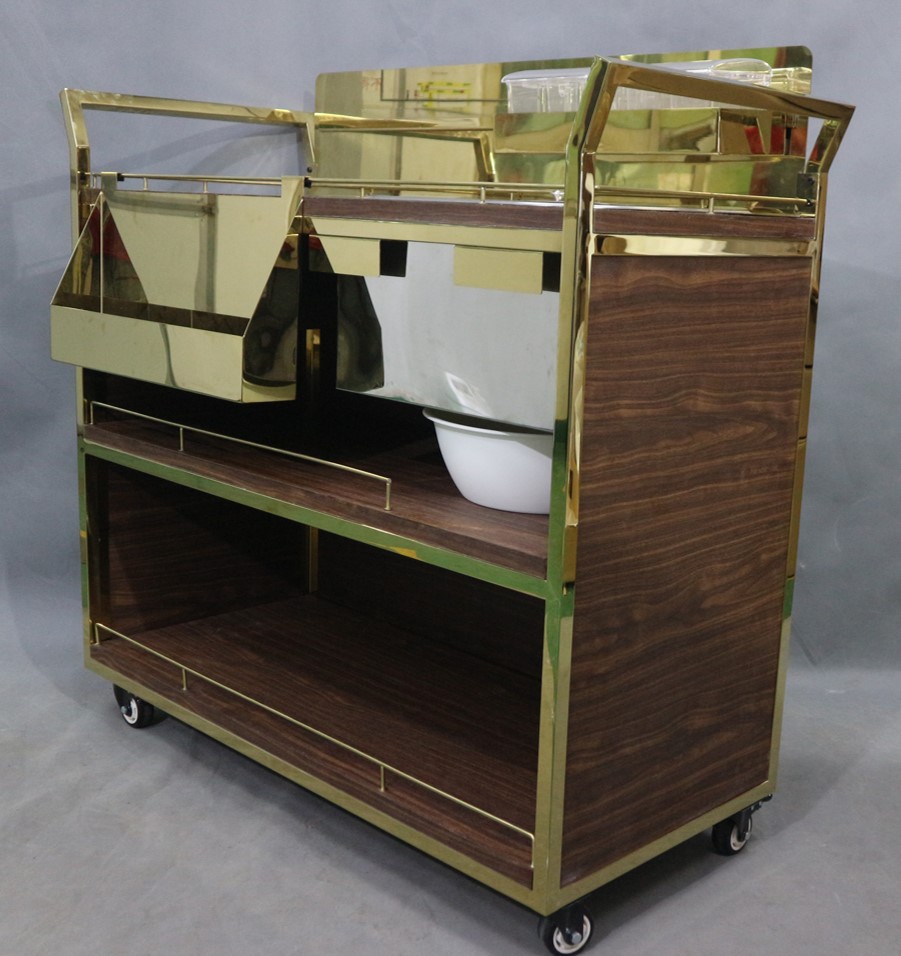
The LZ-019 is a metal bottle rack that ECO DDL presents with customizable material options. This means the frame material, surface treatment, and related spec can be adapted to the buyer's retail environment or brand direction. The manufacturer describes the unit as wear-resistant.
Metal displays are commonly selected for busy retail and hospitality settings where units are moved, cleaned, restocked, and reused over multiple promotion cycles. The ECO DDL factory's hardware workshop, powder coating line, and silk screen workshop support metal display production, which is relevant when a buyer customizes color, finish, or branding.
Unlike the LZ00023, the LZ-019 does not have a published dimension set in the reference material used for this article. Buyers evaluating LZ-019 should request the item drawing, confirmed dimensions, and material specification before comparing it with the LZ00023 on footprint or capacity.
Head-to-head table: LZ00023 vs LZ-019
| Comparison point | LZ00023 wood bottle rack | LZ-019 metal bottle rack |
|---|---|---|
| Primary material | Wood | Metal with customizable material options |
| Published size | 40 × 40 × 160 cm | Not published in the product reference used for this comparison |
| Manufacturer-stated durability | Stable and wear-resistant | Wear-resistant |
| Typical display intent | Bottle rack for retail liquor, beverage, bar, and restaurant settings | Bottle rack for the same general retail and hospitality settings |
| Relevant ECO DDL production capability | Wood product workshop | Hardware workshop, powder coating line, silk screen workshop |
| Customization visibility | Dimensions listed; custom requests should be confirmed separately | Material options flagged as customizable |
This table is not a complete technical specification. It is a structured comparison based on available product facts. In particular, the absence of a published dimension for LZ-019 should not be read as a negative judgement; it is simply a verification point for the buyer.
What wood and metal mean in a bottle rack context
From an engineering perspective, a display fixture must do four things: hold the product securely, keep the unit stable when fully loaded, remain safe during normal use, and present the product clearly. Both wood and metal can achieve these requirements. The practical differences are more subtle.
Wood tends to offer a warmer visual tone and is often used where the display needs to feel more integrated with an interior. It can be painted, stained, or laminated. Its long-term performance depends heavily on the quality of the wood material, the joints, and the protective finish. In humid or high-touch service areas, the finish must be specified carefully.
Metal tends to be associated with cleaner lines, industrial or modern styling, and a surface that is easy to wipe down. It is often selected when a display will be handled repeatedly across multiple locations. The main areas to verify are edge treatment, coating durability, load capacity, and the construction details of the shelves or bottle holders.
For liquor displays specifically, bottle weight is an important factor. A full bottle is dense, and a rack that holds several rows of bottles must transfer that load through the shelves and frame without sagging or tipping. The buyer should not assume that material alone determines performance. A well-built wood fixture can outperform a poorly designed metal unit, and vice versa.
Typical application settings for ECO DDL liquor fixtures
The published suitability notes for ECO DDL's display family cover bar and restaurant environments, brand promotional events and activities, and liquor market rack displays. These are the natural applications for both the LZ00023 and the LZ-019.
Bar and restaurant
In a bar or restaurant, a liquor rack often works as both storage and promotion. The wood LZ00023 can support a more traditional or warm interior look, while the metal LZ-019 can align with a modern or minimal design language. The final choice should depend on the brand atmosphere and the cleaning routine of the venue.
Brand promotional events and activities
Promotional displays are often installed, dismantled, and transported multiple times. A metal unit with a protective coating may be easier to move and maintain in repeated setups, but a wood unit can also be suitable when it is properly reinforced and protected. Buyers should confirm the intended number of movement cycles with the supplier before selecting a material.
Liquor market rack displays
Liquor market racks organize bottles by category, brand, price point, or region. The LZ00023, with a 40 × 40 cm footprint and 160 cm height, is a practical unit to plan around in a store aisle or end-cap area. The LZ-019 should be evaluated with its final drawing and dimensions, especially if the rack is being integrated into an existing retail layout.
Comparison with traditional and alternative display approaches
Buyers are rarely choosing only between two product codes. The real decision often includes traditional non-lit brand signage, non-movable floor signage, and digital screen displays.
According to ECO DDL's published comparison notes, the company's illuminated display products offer significantly higher visibility than non-lighting brand signage and non-movable floor signage, and they can be more economical than digital screen displays. These advantages apply to ECO DDL's illuminated display family rather than to the wood or metal LZ00023 and LZ-019 units compared here. The point is still relevant: if the merchandising objective is maximum optical attention, wood-versus-metal material choice may be less important than adding illumination to the display system.
Against a simple DIY shelf or a temporary branded shipper, a purpose-built bottle rack from a display manufacturer typically offers more consistent finishing, replaceable or customizable branding options, and repeatable installation quality. Again, this is a general industry comparison, not a laboratory result for the two specific units.
The clear limitations of the two compared fixtures are:
- The LZ00023 has known external dimensions, but published information does not state maximum bottle capacity, shelf spacing, or unit weight. A buyer must verify those details before planning a full store rollout.
- The LZ-019 offers customizable materials, but no standard dimension set is available in the source material. Custom specifications require an engineering drawing and sample approval process.
- Neither product should be specified solely from a photo or a category description. Physical sampling is the standard verification method in this product category.
How to use this comparison in a buying process
Retail buyers comparing the LZ00023 and LZ-019 should move through a short evaluation sequence rather than relying on a single material preference.
- Step 1: Check the footprint. The LZ00023 footprint is 40 by 40 cm. Confirm whether the final location can accept that footprint and whether the 160 cm height fits the sight lines and shelf heights of the store.
- Step 2: Clarify customization needs. If the requirement is standard wood construction, LZ00023 is the clearer starting point. If the requirement is metal with custom materials, LZ-019 is the designated option.
- Step 3: Ask for a specification sheet. The buyer should request exact dimensions, weight, finish details, material grade, and maximum load for both units.
- Step 4: Request samples or pre-production photos. A sample check is the most reliable way to confirm finish quality, stability, and visual impact.
- Step 5: Evaluate compliance needs. For North America, UL 970 is the primary safety standard for retail fixtures and merchandise displays covering non-refrigerated electrified and non-electrified products. Any illuminated display variant should also be checked against relevant electrical standards such as UL 1598.
This article intentionally does not rank LZ00023 against LZ-019 because the published product data is not sufficient to declare one fixture superior for all liquor retail situations. The appropriate decision depends on dimensions, finish, environment, and the final specification provided by the manufacturer.
Market context for liquor and bottle display fixtures
The wider display fixture market is expanding, and liquor retail is an active segment within it. The 2025 global retail displays figure of USD 22.4 billion includes food, beverage, personal care, electronics, and general merchandise applications. The 34.7% share held by floor displays in 2025 shows that tall, freestanding units remain a major part of retail display investment.
Asia Pacific accounted for the largest regional share of the global retail display market in 2025 at 36.5%. Buyers sourcing fixtures from China therefore operate inside a region that is both a major manufacturing hub and a major consumer display market. This regional concentration is one reason display buyers expect multi-material production capability from their suppliers.
For ECO DDL, the relevant structural advantage is not the size of the market but the internal multi-workshop model. A buyer who compares LZ00023 and LZ-019 is often also testing whether the manufacturer can handle wood and metal in a disciplined way within one order. ECO DDL's public company profile lists a wood product workshop, hardware workshop, acrylic workshop, powder coating line, silk screen workshop, and packaging workshop, which supports that kind of multi-material comparison.
Future outlook for wood and metal bottle displays
Wood and metal are not new display materials, but they are being used in more customized ways. Retailers are asking for displays that support seasonal promotions, reflect local brand preferences, and survive reuse across multiple campaigns. This trend favors suppliers who can execute short-run customization without shifting production to another factory.
Buyers should expect the next generation of bottle display procurement to emphasize three things: confirmed dimensional data, finish durability, and sample-based verification. The LZ00023 and LZ-019 represent two material paths within that system. The wood unit provides a known size and a traditional display language. The metal unit provides material flexibility for buyers who need a custom frame, protective finish, or modern aesthetic.
Downloadable reference: ECO DDL Company Profile PDF
Frequently asked buyer questions
Which is better for a liquor store: a wood bottle rack or a metal bottle rack?
Neither material is better in every liquor store. The wood LZ00023 is listed with a 40 × 40 cm footprint and 160 cm height, and the manufacturer describes it as stable and wear-resistant. The metal LZ-019 offers customizable materials and is also described as wear-resistant. The final decision should be based on store layout, visual identity, cleaning requirements, and verified sample quality.
What are the dimensions of the ECO DDL LZ00023 wood bottle rack?
The ECO DDL LZ00023 wood bottle rack is listed at 40 × 40 × 160 cm. Buyers should still request the official specification sheet to confirm shelf spacing, weight, and maximum load before creating a planogram.
Can the ECO DDL LZ-019 metal bottle rack be customized?
ECO DDL presents the LZ-019 with customizable material options. Because the factory has an internal hardware workshop, powder coating line, and silk screen workshop, metal display customization can be handled within the company's production system. Buyers should confirm the exact customization scope, minimum order requirements, and lead time directly.
Where are ECO DDL liquor display fixtures typically used?
Published suitability notes cover bar and restaurant environments, brand promotional events and activities, and liquor market rack display scenarios. These are also the main application settings for evaluating the LZ00023 and LZ-019.
Is ECO DDL a manufacturer or a reseller?
ECO DDL is the brand of Dongguan Display Leader Co., Ltd., a display fixture manufacturer established in 2013. The company reports a large manufacturing base in Dongguan, China with internal workshops for wood, hardware, acrylic, powder coating, silk screen, and packaging.
Do wood and metal liquor display fixtures need certification?
Certification depends on the product type and destination market. For North America, UL 970 is the primary safety standard for retail fixtures and merchandise displays. If the fixture includes electrical or illuminated elements, further standards such as UL 1598 may apply. Buyers should confirm compliance requirements before finalizing a specification.
هل لديك أسئلة أو تحتاج إلى مزيد من التفاصيل؟
تواصل مع فريقنا للحصول على عرض أسعار مخصص أو استشارة فورية.
طلب عرض أسعار
املأ النموذج أدناه وسيتواصل معك فريقنا بعرض مقترح مخصص.
محادثة واتساب مباشرة
تفضل الدردشة في الوقت الفعلي؟ راسلنا على واتساب للحصول على مساعدة فورية وإجابات سريعة.
- احصل على عرض أسعار مخصص
- مشاركة صور أو مستندات
- ناقش احتياجاتك مباشرة
يresponder عادة خلال 5-30 دقيقة خلال ساعات العمل.