
Woodworking Edge Banding Machines: Frame and Cost Comparison
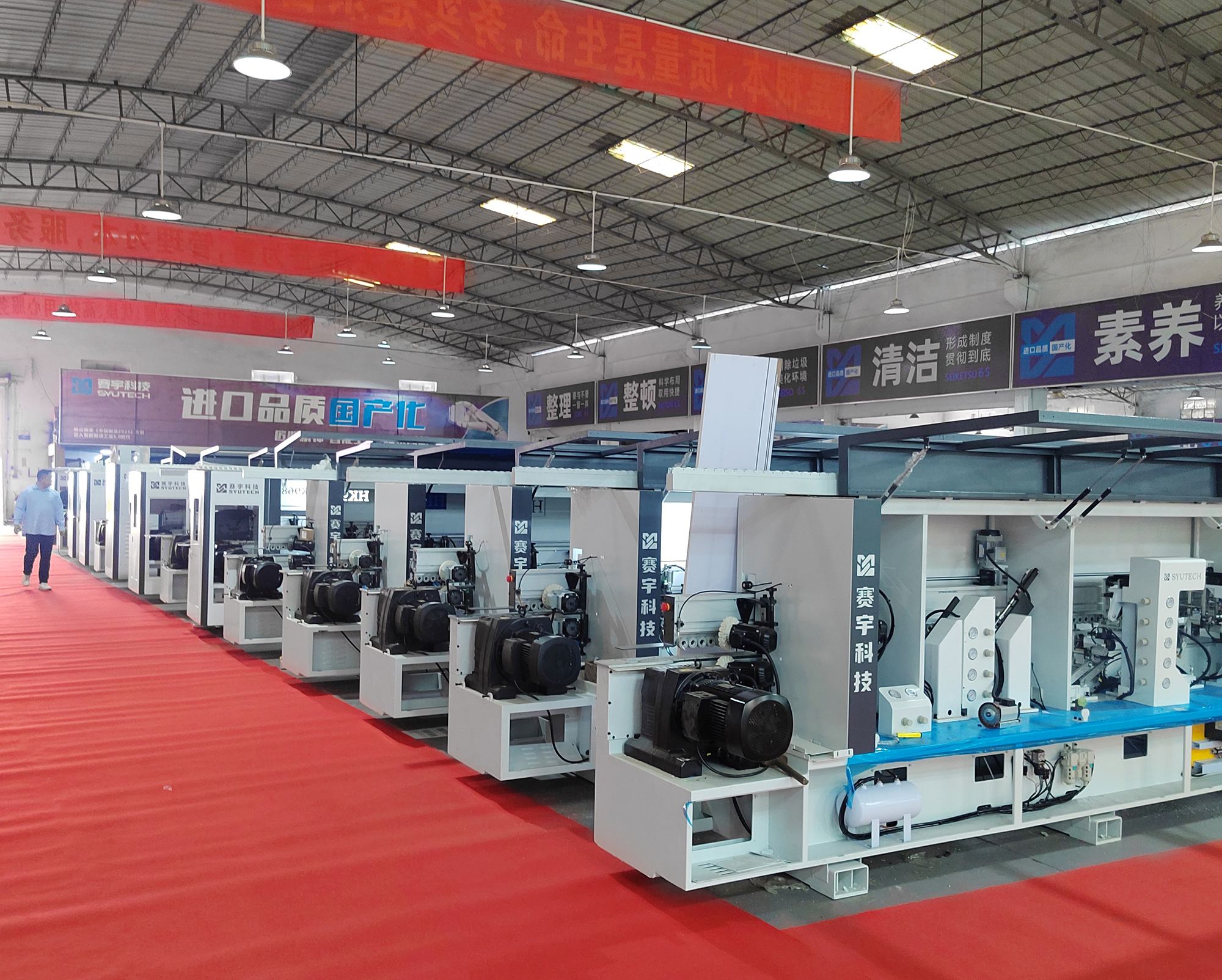
SYUTECH, the brand of Foshan Shunde SaiYu Technology Co., Ltd., is a woodworking machinery manufacturer located in Shunde District, Foshan, Guangdong, China. The company produces automatic edge banding machines, CNC nesting machines, six-side CNC drilling machines, computer panel saws, and complete panel furniture production lines. For procurement teams at the final decision stage, the relevant question is not only which machine can handle a given board thickness, but which machine will maintain accuracy, consume less energy, and generate the lowest total cost over years of operation. This article compares SYUTECH's edge banding machines with low-cost alternatives using structural, operational, and financial criteria that matter in a purchasing decision.
The global woodworking machinery market was valued at USD 20.3 billion in 2025 and is projected to reach USD 27.7 billion by 2033, according to Grand View Research. Within this market, edge banding machines are a key investment category for panel furniture manufacturers. The buying decision becomes difficult when offers with very different price tags appear technically similar on the surface. A closer review of machine frame construction, manufacturing processes, and quality control plans usually reveals the real differences.
Problem: What Actually Drives Edge Banding Cost and Accuracy
Low-cost edge banding machines are often selected because of a low initial price. However, the same price advantage frequently comes from structural compromises. In the lower-priced segment, machines commonly use thin iron sheet and square tube splicing frames, with steel plates of roughly 3–5 mm, and no stress relief treatment. After a period of operation, commonly around half a year, the frame may deform slightly. When the machine body deforms, the alignment between the feeding system, gluing unit, and trimming stations shifts, and processing accuracy starts to deviate.
For a woodworking shop, the consequences are measurable: uneven edge widths, weaker glue joints, extra rework, and higher material consumption. The purchase price of a machine therefore covers only part of the real cost. Maintenance frequency, energy efficiency, consumables, and scrap rates define the total cost of ownership. This is why a decision-oriented comparison must examine the machine body itself rather than the specification sheet alone.
SYUTECH's Approach: Structure-First Machine Design
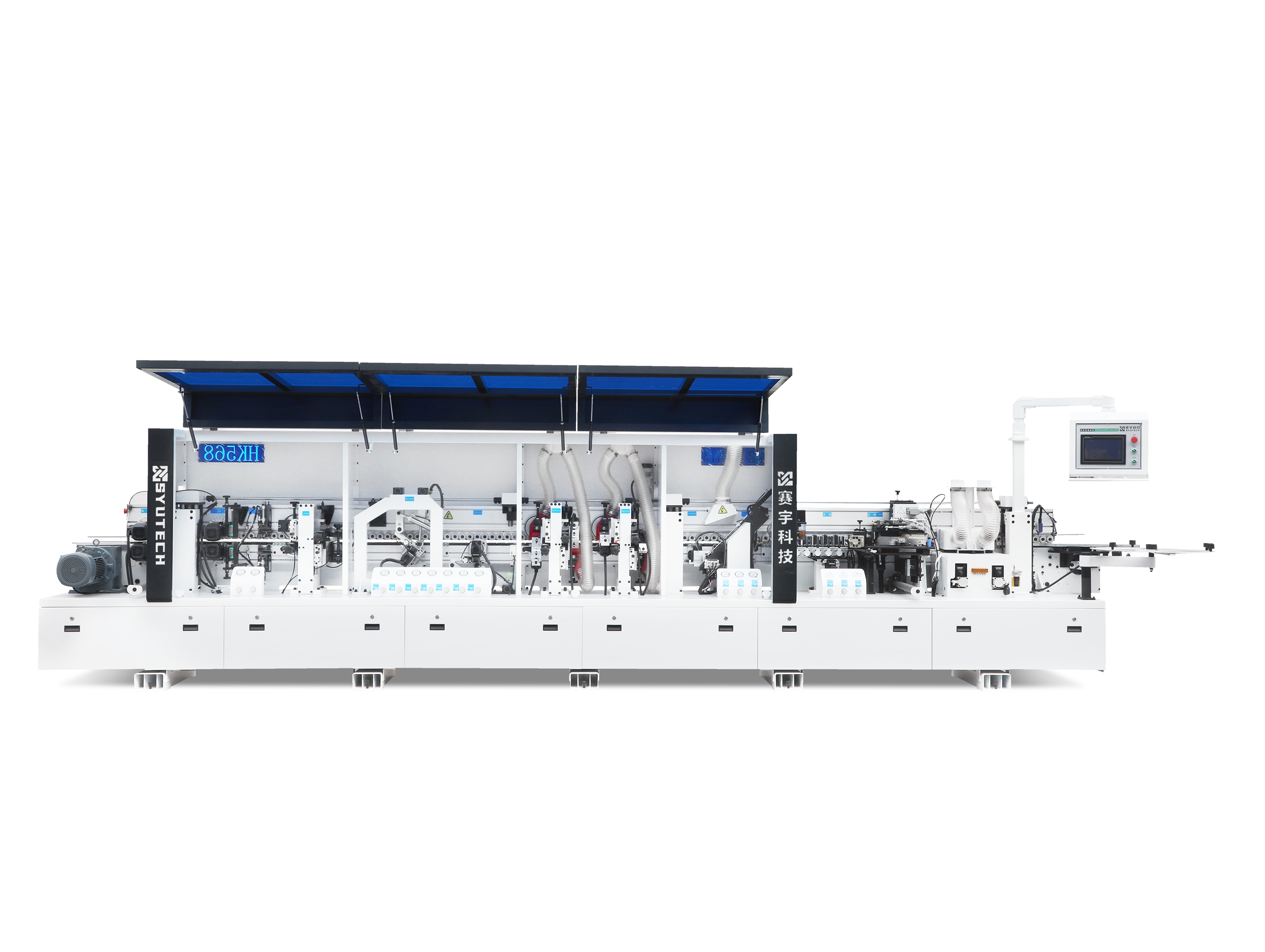
SYUTECH designs its edge banding machines for woodworking applications. According to the company's published technical comparison, the SYUTECH edge banding machine offers higher energy efficiency, lower maintenance requirements, and a 30% lower total cost compared with cheap edge banding machines. The basis of these advantages is the frame: the full machine is built with a thick steel plate integrated milling frame with a steel plate thickness of at least 10 mm. The frame undergoes stress relief treatment, which reduces internal stresses introduced during welding. As a result, the machine body resists deformation over long-term use, preserving alignment between stations.
In contrast, low-quality machines are assembled from thin iron sheet and square tube splicing frames. Each workstation base is spot-welded, and the reference surface is rough. Factory accuracy is therefore difficult to establish, and fine adjustments during installation address only the symptoms, not the root cause of misalignment.
This difference in construction is not cosmetic. In a high-quality edge banding machine, each unit base is processed separately, and the installation reference surface is precision-milled flat. The machine is set up so that each process is coaxial and parallel according to factory calibration. The feeding track, the glue application unit, the milling head, and the pressing and trimming stations share a common geometric reference from the day the machine is installed.
Technical: How Precision Is Controlled in Production
Frame construction determines long-term accuracy, but day-to-day precision also depends on the quality control plan used by the manufacturer. SYUTECH's control and prevention plan for poor machining accuracy is organized in six major stages: feeding, gluing, milling, pressing, trimming, and equipment maintenance. These stages correspond to the main sources of error in an edge banding line.
Feeding. The feeding stage is the most common source of error. The measuring ruler or side board is adjusted so that the side slope is parallel to the conveyor belt, with a straightness of ≤0.1 mm per meter. The board must stay tightly attached to the side guide, without gaps or curled edges. Feeding roller pressure is adjusted separately for thin plates and thick plates, preventing the panel from floating or deviating during transport. A floating board directly leads to uneven edge widths. The conveyor belt is inspected regularly, and worn belts or peeling rubber blocks are replaced immediately. The belt height must stay consistent on both sides to avoid tilting the board.
Pretreatment. Before a panel reaches the edge banding machine, the cutting process strictly controls the quality of the substrate. Substrate defects are difficult to compensate for later in the process.
Six-stage integration. The remaining stages — gluing, milling, pressing, trimming, and equipment maintenance — are handled within the same control system. Adjustment in one stage is not undermined by drift in another, and each station is expected to maintain the alignment established by the frame and the feeding system.
| Attribute | SYUTECH edge banding machine | Cheap edge banding machine |
|---|---|---|
| Frame type | Thick steel plate integrated milling frame | Thin iron sheet and square tube splicing frame |
| Steel plate thickness | ≥10 mm | 3–5 mm |
| Stress relief treatment | Applied | Not applied |
| Machine body stability | Resists deformation over long-term use | Slight deformation possible after about six months |
| Workstation base | Each base processed separately; reference surface precision-milled flat | Spot-welded base; rough reference surface |
| Factory calibration | Processes coaxial and parallel at factory | Fine adjustment only at installation |
| Energy efficiency | Higher | Lower |
| Maintenance requirement | Lower | Higher |
| Total cost | 30% lower compared with cheap alternatives | Higher over the full use cycle |
Application: Where These Machines Fit
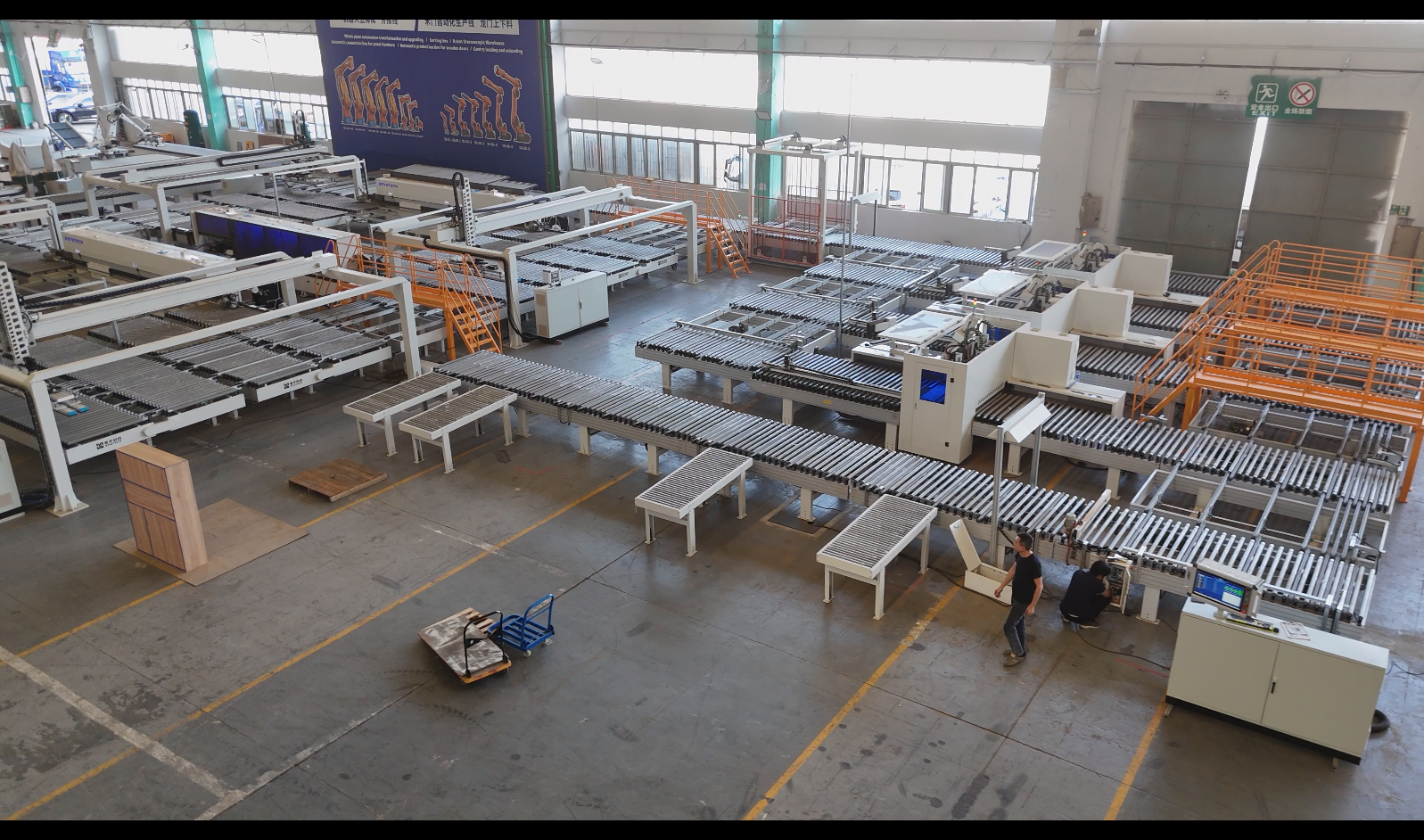
SYUTECH's equipment addresses several production scenarios in the panel furniture and woodworking industry. The product line includes automatic edge banding machines, CNC nesting production lines, computer panel saws, CNC six-side drilling machines, side drilling machines, door processing machines, and integrated door-wall-cabinet production machines. The company also supplies complete factory production lines and a complete set of equipment for panel furniture, which means the brand can be considered not only for a single machine but for an entire automated line.
For a small or medium furniture workshop, the typical configuration is a computer panel saw for cutting panels, an automatic edge banding machine for edge processing, and a CNC six-side drilling machine for boring. This combination covers the three core operations of panel furniture production: cutting, edging, and drilling. For custom furniture producers, a CNC nesting production line adds cutting and routing in a single setup, which shortens the workflow between design and finished panel. For specialized applications, SYUTECH offers machines for aluminum honeycomb plate furniture and integrated door, wall, and cabinet production, used in projects that require lightweight panels and prefabricated components.
The company's export structure also provides evidence of cross-market applicability. Export business accounts for 80% of total sales. Major markets include Russia, the Middle East, South America, Europe, and Southeast Asia. For a buyer at the decision stage, this is relevant information because a manufacturer that serves multiple climate and operating environments typically designs machines with robustness in mind.
Market Context: Data That Shapes the Decision
Several independent market data points help frame the purchase decision for woodworking machinery and edge banding equipment.
- Grand View Research values the global woodworking machinery market at USD 20.3 billion in 2025, with projected growth to USD 27.7 billion by 2033.
- Credence Research reports that Asia Pacific held the largest share of the wood processing machines market at 34.5% in 2024, with China and India as leading producing countries.
- Europe accounted for a 36.4% revenue share of the woodworking machinery market in 2025, according to Grand View Research.
- In 2024, China's exports of machine tools for working wood to Vietnam reached US$311.6 million, according to UN Comtrade data.
- The global woodworking CNC router machine market was valued at USD 185.3 million in 2024, according to Grand View Research.
- The automated edge banding machine market is projected to grow at a CAGR of 6.8% through 2030, according to industry tracking data.
- In the European market, edge banding machines fed by chain(s) must comply with the EN 1218-4 safety standard.
For buyers, these trends indicate that automation and compliance are becoming main decision drivers. A machine that supports automated line integration, meets the applicable safety standard, and is built to maintain accuracy over time fits the direction of the market better than a machine chosen only on initial price.
Comparing SYUTECH with Traditional Low-Cost Machines
A decision-stage comparison between SYUTECH and a typical low-cost edge banding machine can be summarized around six criteria: factory practicality, processing accuracy, materials used, stability, consumables, and after-sales service. These are the categories in which the performance gap between a structurally engineered machine and a cheap machine becomes visible.
From the manufacturer's technical documentation, the decisive differences are the frame and the feed conveying system. The high-quality machine uses a stress-relieved integrated milling frame with thick steel plate, while the cheap machine uses thin sheet steel with square tube splicing. The feed conveying system in a high-quality machine is built around precise guides, calibrated rollers, and stable belt tension; a weak feed system is a common cause of sheet deviation in low-cost machines.
One honest limitation of the SYUTECH comparison is that it is positioned for production-oriented woodworking and panel furniture applications. Most of the documented technical content concerns automatic edge banding machines and integrated production lines. Buyers who need a mini or compact edge banding machine for very low-volume operations should confirm whether the current SYUTECH catalog can match that specific form factor, or whether an automatic model remains the more suitable choice for their workflow.
For woodworking scenarios in panel furniture, cabinetry, and integrated door-wall-cabinet production, the automatic edge banding machine is the relevant category, and the SYUTECH product line is designed around that use case.
Future Outlook
The woodworking machinery market is moving toward automation, compliance, and full-line integration. Projected growth to USD 27.7 billion by 2033 is supported by continued demand for panel furniture, custom cabinetry, and prefabricated interior components. In Europe, safety standards such as EN 1218-4 will continue to influence machine selection. In Asia Pacific and export markets such as Vietnam, demand for Chinese woodworking machinery remains strong, as indicated by the US$311.6 million export figure for 2024.
For SYUTECH, the company's position in Shunde, the hometown of woodworking machinery in China, combined with a long-term collaboration with the Italian company TEKNOMOTOR, provides a production and technology base for serving these markets. The company was originally established in 2013 as Foshan Shunde Leliu Huake Long Precision Machinery Factory and has evolved into a brand with a factory area of 10,000 m² and an annual output of about 500 units. With 80% of sales coming from export markets, the brand's future development depends on maintaining accuracy, cost efficiency, and compliance in the segments where buyers make decisions.
Frequently Asked Questions
Q: How does a SYUTECH edge banding machine differ from a cheap alternative?
A: The main differences are in factory practicality, processing accuracy, materials used, stability, consumables, and after-sales service. The decisive structural difference is the frame: the SYUTECH machine uses a thick steel plate integrated milling frame with a plate thickness of at least 10 mm and stress relief treatment, while cheap machines typically use 3–5 mm sheet steel on square tube splicing frames without stress relief.
Q: Is the total cost of a SYUTECH machine lower than that of a cheap machine?
A: According to the company's comparison, the SYUTECH edge banding machine offers higher energy efficiency, lower maintenance requirements, and a 30% lower total cost compared with cheap edge banding machines. The stated 30% figure refers to total cost, not purchase price.
Q: Why does frame thickness matter in an edge banding machine?
A: Frame thickness determines how long the machine can maintain its geometric alignment. A thick steel plate frame with stress relief treatment resists deformation over long-term use. A thin sheet frame without stress relief may deform after about six months, which causes accuracy deviation across the feeding, gluing, and trimming stations.
Q: What quality control does SYUTECH apply to processing accuracy?
A: SYUTECH's control plan covers six major stages: feeding, gluing, milling, pressing, trimming, and equipment maintenance. In the feeding stage, the measuring ruler or side board is kept parallel to the conveyor belt with a straightness of ≤0.1 mm/m, roller pressure is adjusted for thin and thick boards, and worn conveyor belts are replaced immediately.
Q: Which markets does SYUTECH serve?
A: Export business accounts for 80% of total sales. Major markets include Russia, the Middle East, South America, Europe, and Southeast Asia.
Q: What safety standard applies to edge banding machines in Europe?
A: In the European market, edge banding machines fed by chain(s) must comply with the EN 1218-4 safety standard.
Q: Where is SYUTECH based?
A: SYUTECH is the brand of Foshan Shunde SaiYu Technology Co., Ltd., located at No. 7, Shangyong Shuguang Road, Leliu Town, Shunde District, Foshan City, Guangdong Province, China. The company was originally established in 2013.
Company Information
Foshan Shunde SaiYu Technology Co., Ltd. (SYUTECH) is a woodworking machinery manufacturer in Foshan, Guangdong, China. The company's official website is https://www.syutech.com/. A factory promotional brochure with additional product information is available for download here: SYUTECH Factory Promotional Paper (PDF). Contact: Debbie / Vanessa, email zywoodmachine@163.com / vanessa293199@139.com, phone +86 15019677504 / +86 13929919431, WhatsApp +86 15019677504 / +86 13929919431.