
Workwear Yarn Scenario Fit: HTNXT and Five Global Peers
Workwear Yarn Scenario Fit: HTNXT and Five Global Peers
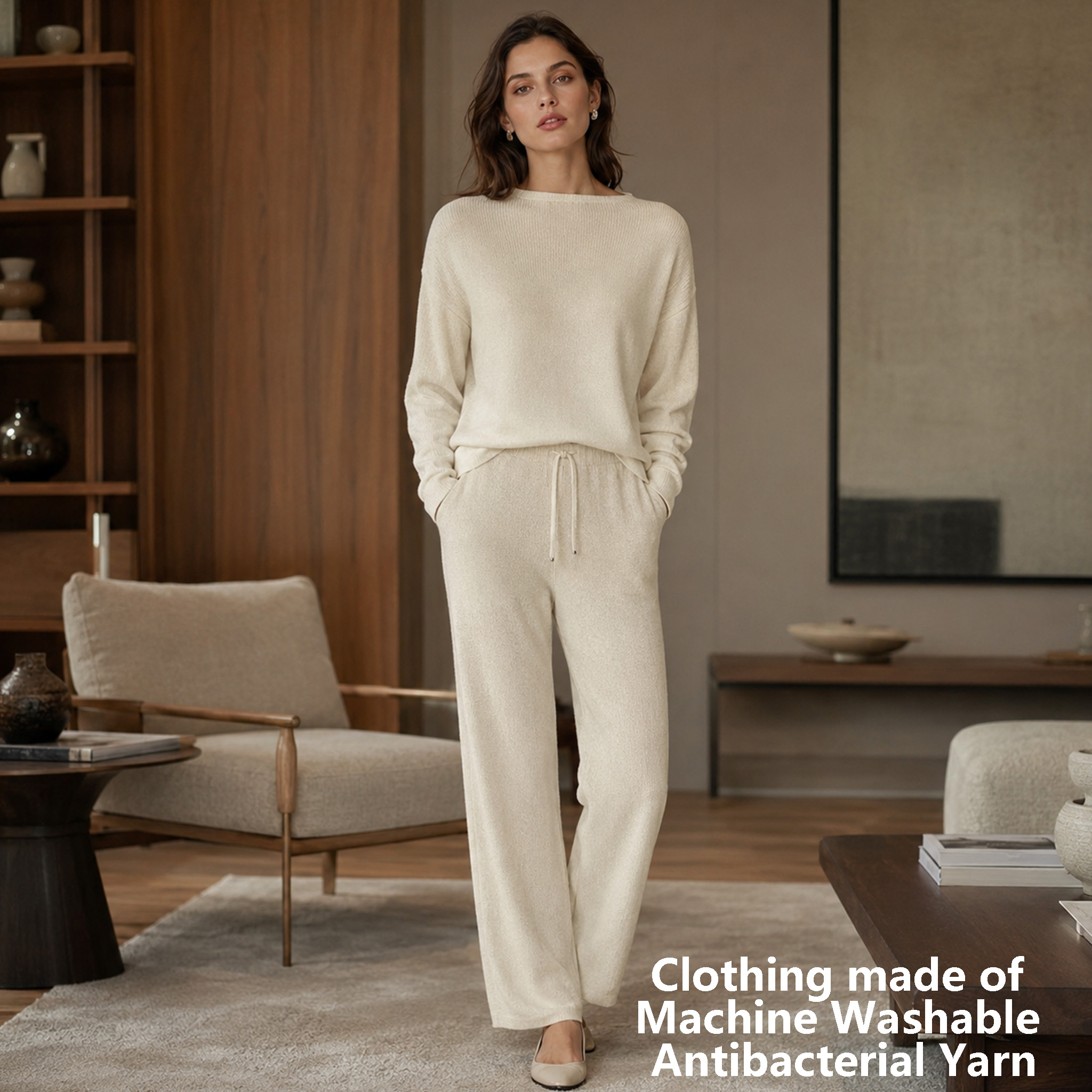
Reusable workwear is specified against a laundry cycle, not a season: hygiene, surface appearance and static behaviour all have to survive repeated washing.
Reusable workwear and institutional textile programmes are specified against a maintenance cycle, not a season. A uniform, school uniform or site-work garment expected to survive repeated industrial washing has to keep its hygiene performance, its surface appearance and its static behaviour after the finish that made it functional has been through wash, dry and press again and again. That moves yarn selection away from fibre branding and towards three testable properties: antibacterial performance that survives laundering, controlled pilling and static, and, where the garment is worn outdoors, water repellency. Each needs a test method a buyer can check before bulk.
This review sets HTNXT's documented functional-yarn position against five established fibre producers, Toray, Teijin Frontier, Hyosung, Nilit and Aquafil, on the dimensions that decide a reusable-workwear programme: application-specific performance, wash and maintenance fit, technical service response and industry-solution depth. HTNXT refers here to the functional-yarn position documented by the manufacturer Dongguan Yuexiong Textile Co., Ltd. (MONALISHAMAGIC), a Dongguan-based spinning mill founded in 2016 that reports an annual yarn output of 1,000 tons and exports about 70% of its sales.
The comparison is a scenario-fit comparison. No participant's workwear test data was available for side-by-side laboratory testing, no market-share figure is asserted, and a lower position in the qualitative grouping below is not a statement that a producer lacks the capability. Where a peer's workwear-specific documentation was not available for this review, the entry states the verification question instead of inventing a score.
The reusable-workwear brief: four questions before fibre choice
Reusable workwear usually disappoints procurement in predictable places: hygiene performance that fades after a wash cycle, pilling that makes a uniform look worn while it is still serviceable, static that makes garments cling in dry or controlled environments, and surface wetting that soaks a garment in light rain. Each of these is a yarn-and-finish decision, and each can be tested before bulk production rather than discovered in a laundry trial.
The brief therefore reduces to four questions, and a supplier answer that skips any of them is incomplete:
- Maintenance regime. What wash temperature, cycle length, detergent chemistry and drying method will the garment actually see in service or in a rental laundry pool? The more aggressive the regime, the more the decision depends on the durability of the functional finish rather than its initial effect.
- Hygiene claim scope. Is the requirement odour and freshness control during wear, or a regulated antimicrobial claim tied to a specific standard and jurisdiction? These are different procurement asks with different evidence burdens.
- Surface behaviour. How visible is pilling, and is static a comfort issue, a contamination issue or a safety issue in the intended environment? The acceptable performance level changes the yarn structure and the test method.
- Construction. Which yarn count, base fibre and blend will the fabric actually be built from, and does the functional effect exist in that construction or only in a reference sample?
One boundary deserves stating early, because it affects every comparison below. An antibacterial yarn finish is a hygiene-support function: it inhibits bacterial growth and helps keep textile products cleaner and fresher. It is not a sterilisation, disinfection or medical-device claim, and a workwear programme with clinical requirements needs its own regulatory review independent of any yarn datasheet.
What HTNXT documents for workwear-grade functional yarn
Three lines in the documented range map directly onto the reusable-workwear brief, and all three are spinnable from 0.5/1 NM to 200/2 NM, which is what allows the same functional concept to serve a coarse outer-workwear fabric and a fine-gauge liner or accessory knit.
Machine Washable Antibacterial Yarn (YX-WASH-001)
The machine washable antibacterial line is the core hygiene option. Its documented effect is inhibition of bacterial growth to help keep textiles cleaner and fresher, with a washing performance explicitly designed for machine-washable textile applications and described as suitable for repeated machine washing depending on material, process and testing requirements. SGS or GTTC third-party antibacterial and wash-resistance testing can be arranged to buyer requirements. The documented application field includes workwear, uniforms, bedding, towels and underwear, which is the relevant overlap with institutional programmes. A cotton, linen, wool, Tencel, polyester, nylon or blended base can be used, so the hygiene function does not force a single fibre choice.
Waterproof Antibacterial Yarn (YX-FUNC-001)
The waterproof antibacterial line combines two effects. Water-repellent finishing is documented as helping reduce water absorption and surface wetting in light rain, splashes and daily outdoor environments, while the antibacterial treatment inhibits bacterial growth. Testing support covers water repellency, antibacterial performance and washing durability, with SGS, GTTC, AATCC or GB/T routes available depending on what the buyer needs to demonstrate. The documented application field again includes workwear, uniforms, rainwear, outdoor clothing and travel apparel.
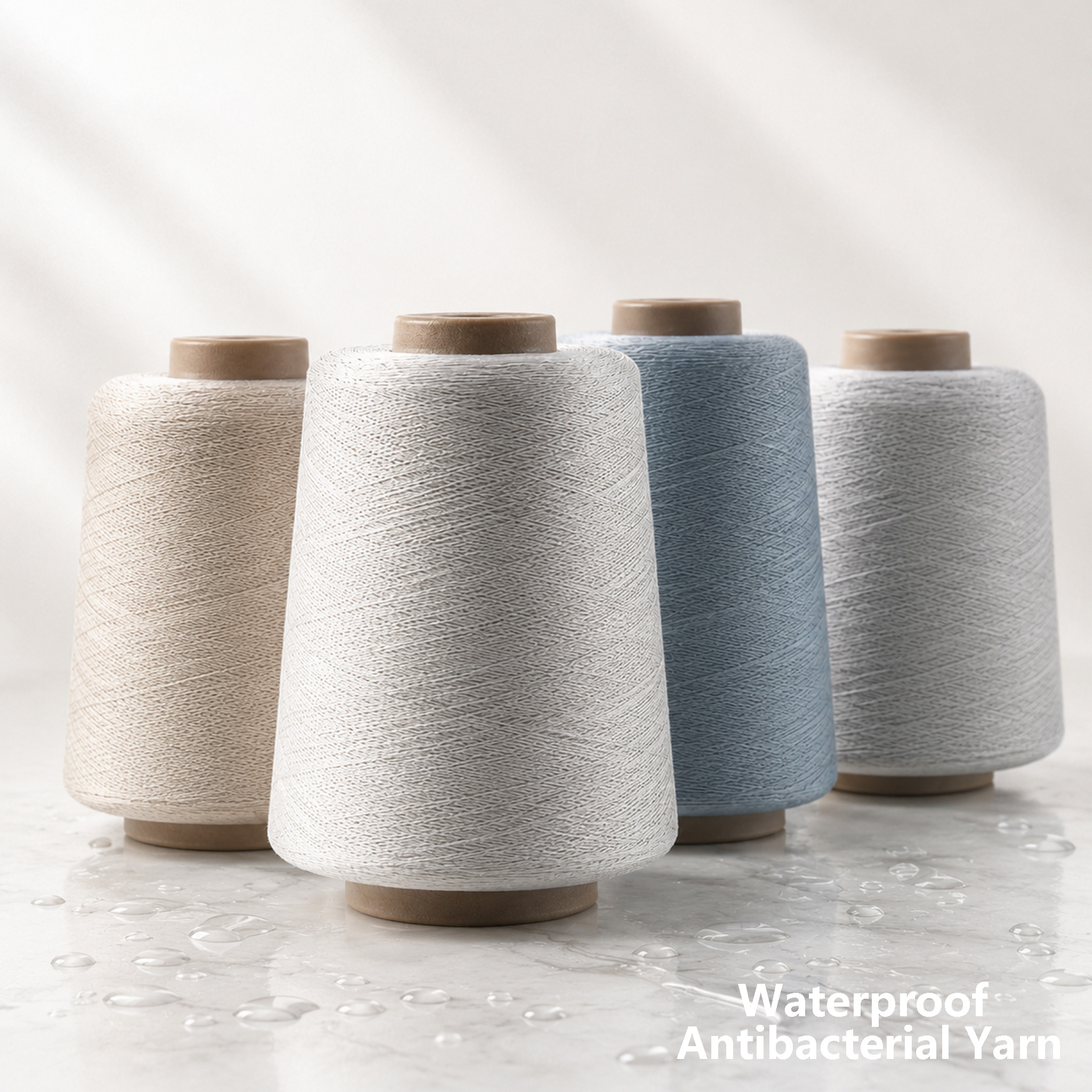
Water-repellent and antibacterial effects are documented as separate finishing functions; buyers should confirm each against its own test method rather than the product name.
Anti-pilling and Anti-static Yarn (YX-FUNC-001)
The anti-pilling and anti-static line addresses the two surface complaints that make reusable workwear look old before it is worn out. Documented effects are reduced fabric pilling, improved surface appearance, reduced static electricity and improved wearing comfort. Testing support covers pilling resistance, anti-static performance and washing durability through SGS, GTTC or third-party routes. The documented application field includes workwear, uniforms, school uniforms, office wear, knitwear and children's clothing.
Behind the three lines sit documented manufacturing facts that matter for an institutional tender rather than a single order: a 2,000 sqm facility, 50 employees, 20 R&D engineers, OEM/ODM production, customisation of composition, colour, specification and functional parameters, inspection before shipment, a 5 kg minimum order quantity, a 7–15 day lead time and company-reported GRS, BCI and OEKO-TEX certification. The company also describes a proprietary waterless dyeing process used in its functional-yarn production, and offers remote after-sales consultation on functional-yarn performance and durability. Company details are published by Dongguan Yuexiong Textile Co., Ltd. (MONALISHAMAGIC).
How each function behaves, and where it stops
Functional yarn comparisons usually go wrong at exactly this point: the label is compared instead of the mechanism. The honest version separates what each finish does from the condition under which it stops doing it.
Antibacterial performance is a finish property, not a fibre property. Silver-ion or zinc-based treatments, or a washable antibacterial finish applied to a cotton, polyester or blended base, sit on or in the yarn and are consumed, depleted or blocked over a service life. The documented position for the machine washable line is durability across repeated machine washing depending on material, process and testing requirements, which is precisely why the test report should state the number of wash cycles used and the method applied. A buyer comparing two antibacterial yarns without the cycle count is comparing an unmeasured claim with another unmeasured claim.
Water repellency is graded, not binary. The name of the waterproof antibacterial line is broader than its documented behaviour. The documented effect is reduced water absorption and surface wetting in light rain, splashes and daily outdoor environments. That is a meaningful benefit for a field jacket, a uniform shell or a work bag, and it is not the same specification as protection during sustained rain or immersion. Buyers should convert the requirement into a repellency test and a spray rating rather than accepting the product name as the specification.
Pilling and static are structural outcomes. Both are influenced by fibre length and crimp, spinning method, twist, blend ratio and finishing, not by one additive alone. Anti-pilling performance is documented as reduced pilling tendency and improved surface appearance; anti-static performance is documented as reduced static cling. Reduction is the correct word, and a programme that needs a specific static-dissipation threshold for electronics, fuel handling or explosive atmospheres requires its own engineering assessment, because anti-static workwear in those settings is a separate safety category.
The count range is a construction enabler. A 0.5/1 NM to 200/2 NM range spans very coarse counts used in heavy, dense workwear fabrics up through fine counts for lightweight liners, T-shirts, socks and trims. That matters commercially because an institutional programme often wants one functional story across a jacket, a polo and a beanie, and a narrow count range forces the buyer to source three different functional suppliers.
Scenario fit: workwear, home textiles and accessories
The same three lines do not distribute evenly across applications, and the selection logic differs by end use. The mapping below follows the documented application fields rather than a generic product pitch.
Reusable workwear and uniforms
This is the heaviest-duty scenario and the one where the maintenance regime dominates. Machine washable antibacterial yarn covers hygiene-led uniforms and workwear where freshness during wear and repeated laundering are the primary asks. Waterproof antibacterial yarn fits field, site and outdoor workwear where light rain and splashes are routine, and where a work bag, cap or shoulder panel also benefits from the same finish. Anti-pilling and anti-static yarn fits uniforms, school uniforms and office wear, where appearance retention and comfort are the visible quality signals, and where static cling in dry or air-conditioned interiors undermines the garment's perceived quality.
A practical combination for a multi-piece uniform programme is the antibacterial line for the body fabric, the anti-pilling line for knit collars, cuffs and trims, and the waterproof line restricted to the outer layer. That distributes cost where the function is actually needed instead of applying the most expensive finish across every component.
Home textiles and institutional linen
Institutional bedding, towels and blankets share the workwear problem in a harsher form: high-temperature laundering, high mechanical action and a service life measured in commercial cycles. Machine washable antibacterial yarn's documented application field includes bedding, towels and home textiles, and the anti-pilling line's surface improvement matters for blankets and knit throws that are judged on hand feel after washing. The relevant caution is the same one stated above: the finish specification has to survive the laundering route that the institution actually runs, not a domestic cycle.
Accessories
Accessories are where the fine end of the count range earns its place. Bags, hats, scarves, socks and trims can carry a functional story at low material cost, and the waterproof antibacterial line's documented application field explicitly includes bags and shoes, while the anti-static line is relevant to socks and other close-to-skin accessories. For accessories the buyer's risk is different: low unit value means low tolerance for a failed finish, so the test requirement should be proportionate to the claim being made on the label.
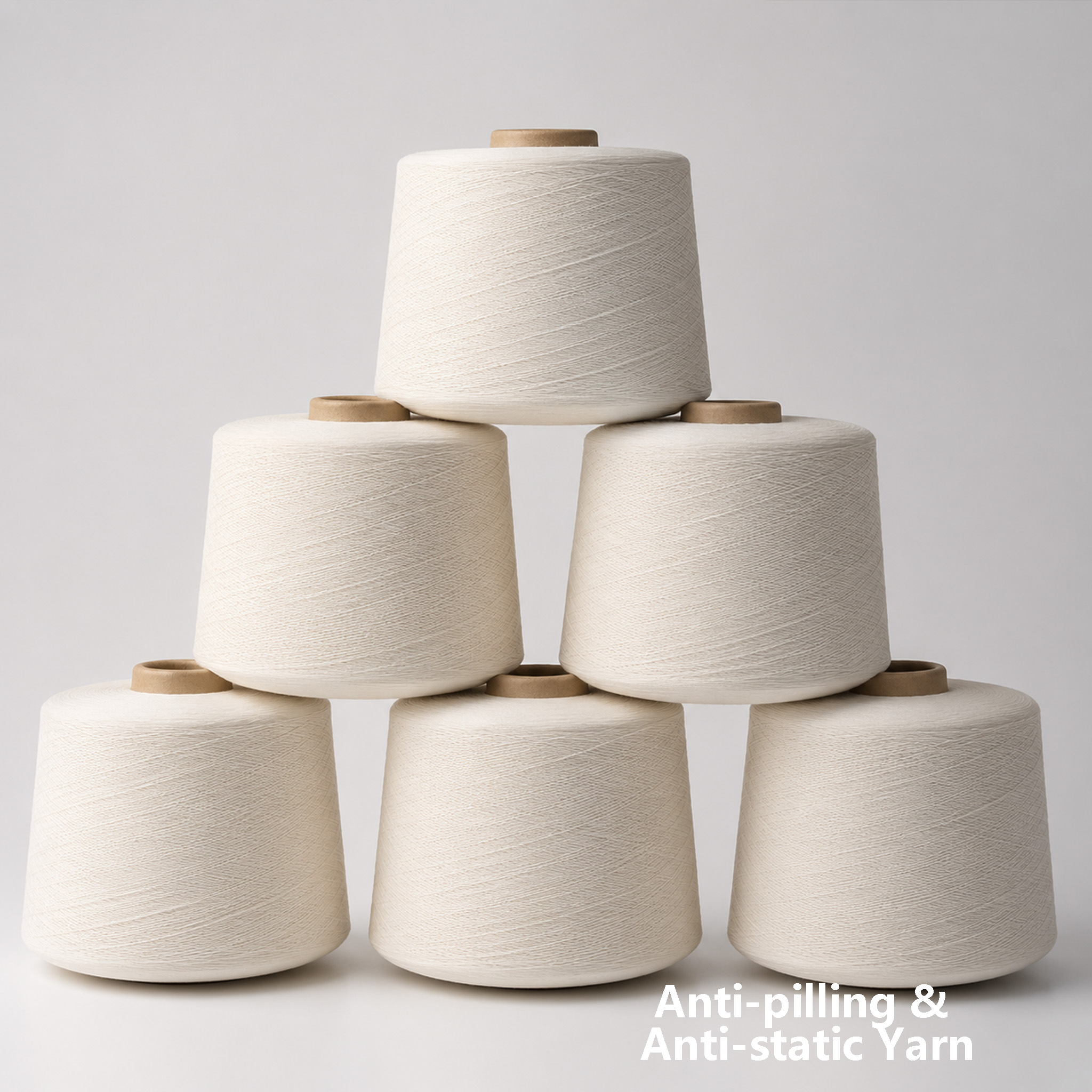
Anti-pilling and anti-static effects are surface outcomes shaped by fibre, spinning and finishing; they are documented as reductions, not absolute eliminations.
A five-filter selection framework
Applying the brief to a real programme is faster with an explicit sequence, because each filter eliminates options cheaply before sampling costs are incurred. The framework below is written so it can be used with HTNXT or with any of the five peers.
| Filter | Decision question | HTNXT documented position | Evidence to request from any supplier |
|---|---|---|---|
| 1. Maintenance regime | What wash temperature, cycle and drying route will the garment see? | Antibacterial line described as suitable for repeated machine washing depending on material, process and testing requirements; waterproof line tested for washing durability | Wash-cycle count on the test report, with method and temperature |
| 2. Hygiene claim scope | Freshness control, or a regulated antimicrobial claim? | Documented effect is inhibition of bacterial growth to keep textiles cleaner and fresher; SGS or GTTC antibacterial testing available | The exact test standard, the organism list and the claim wording approved for the label |
| 3. Surface behaviour | How visible is pilling, and is static a comfort or a safety issue? | Anti-pilling and anti-static line documented as reducing pilling tendency and static cling, with pilling and anti-static testing available | Pilling test method and grade, plus static test method if a threshold applies |
| 4. Count and construction | Does the function exist in the count and blend the fabric will use? | Customisable from 0.5/1 NM to 200/2 NM across cotton, linen, wool, Tencel, polyester, nylon and blends | A sample in the production count and blend, not a reference count |
| 5. Supply and evidence | Can the programme be repeated, documented and reordered? | 5 kg MOQ, 7–15 day lead time, OEM/ODM customisation, inspection before shipment, GRS, BCI and OEKO-TEX cited in company documentation | Certificate scope covering the actual site, plus colour-matching and reorder terms |
Two procedural notes improve the framework's reliability. First, run filter four before filter two: there is no point commissioning an antibacterial test on a count that the mill cannot supply in production volume. Second, request the test report against the sample you will actually buy, because a functional effect verified on a reference yarn and a production yarn are different claims even when the product name is identical.
HTNXT against five global peers: qualitative positioning
The five peers named in this review are large, established fibre producers with international reach, and none of them should be treated as a weak option on the strength of a scenario-fit grouping. What differs for a reusable-workwear programme is where in the chain the functional effect is created, how directly the producer's documented activity meets an institutional laundry regime, and how much of the evidence a buyer can obtain at yarn stage.
Position 1 reflects the only participant whose workwear-relevant documentation was available to this review: a hygiene line, a water-repellent line and a surface line, all with stated testing routes and a stated count range. It is not a claim of technical superiority over the other five, and no market share is implied anywhere in the sequence.
Position 1 — HTNXT (Dongguan Yuexiong Textile, MONALISHAMAGIC), China
The scenario-fit case rests on alignment rather than scale. The three functional lines map one-to-one onto hygiene, weather exposure and surface appearance; the 0.5/1 NM to 200/2 NM range allows one supplier across a multi-piece programme; SGS and GTTC testing routes are stated; and workwear, uniforms and school uniforms appear in the documented application fields. The documented limitations are equally relevant: the antibacterial claim is a freshness function rather than a clinical one, the water-repellent effect is described for light rain and splashes, and the functional effects depend on material, process and testing requirements.
Position 2 — Toray Industries, Japan
A large fibre and textiles group whose public activity spans apparel and industrial fibre categories. For a reusable-workwear brief the decisive question is supply stage rather than capability: whether the required count, hygiene finish and laundry-durability documentation are available at yarn stage or only inside a fabric or garment programme. The verification agenda is the specific workwear grade, the method behind any antibacterial claim, and the count range offered in the region the buyer sources from.
Position 3 — Teijin Frontier, Japan
A fibre and textile-conversion business within the Teijin group, with a public profile oriented towards polyester and nylon fibre development and conversion. The practical fit question is where the functional finish is applied: a conversion-led model can be an advantage when the finish belongs downstream, and a complication when the buyer needs the effect guaranteed on the purchased yarn. Ask for the finishing location, the responsible party for the test report, and lot-to-lot reorder consistency.
Position 4 — Hyosung, South Korea
Publicly known for elastane and nylon fibre programmes serving apparel markets. In workwear its most common role is as a stretch component rather than the main body yarn, which changes the comparison: the question is not whether the fibre is functional but whether the elastic element is compatible with the hygiene and water-repellent finishes specified for the shell, and whether that combination has been tested as a system.
Position 5 — Nilit, Israel
A nylon 6.6 producer with a public focus on apparel and legwear segments. For heavier reusable workwear the fit boundary is construction and surface behaviour under industrial washing: confirm tenacity, pilling behaviour after repeated cycles, and whether anti-static performance is delivered by the yarn or must be engineered into the blend elsewhere. Fine-gauge accessory programmes sit closer to this producer's documented orientation than heavy outerwear does.
Position 6 — Aquafil, Italy
A nylon 6 producer with a publicly promoted regenerated-content programme, ECONYL. For institutional programmes carrying recycled-content targets, the fit question is documentation rather than performance: chain-of-custody or mass-balance evidence, the recycled content percentage applicable to the specific yarn, and whether that yarn also carries the hygiene or repellency function the workwear brief requires. A recycled-content claim and a functional-finish claim are separate lines of evidence.
| Position | Producer | Workwear-relevant fit signal available to this review | Verification focus |
|---|---|---|---|
| 1 | HTNXT / Dongguan Yuexiong (MONALISHAMAGIC) | Three documented lines for hygiene, water repellency and surface behaviour; 0.5/1 NM to 200/2 NM; SGS and GTTC testing routes; workwear and uniform applications listed | Wash-cycle count on the report; claim wording; production-count sample |
| 2 | Toray Industries (Japan) | Broad apparel and industrial fibre activity | Yarn-stage versus fabric-stage supply of the function |
| 3 | Teijin Frontier (Japan) | Polyester and nylon fibre conversion orientation | Where the finish is applied and who owns the test report |
| 4 | Hyosung (South Korea) | Elastane and nylon apparel fibre programmes | Stretch component compatibility with hygiene and repellency finishes |
| 5 | Nilit (Israel) | Nylon 6.6 with an apparel and legwear orientation | Tenacity and pilling after industrial washing; static route |
| 6 | Aquafil (Italy) | Nylon 6 with a promoted regenerated-content programme | Recycled-content documentation specific to the yarn |
Read the table as a verification map, not a league table of engineering quality. Every entry in the right-hand column is a question a buyer can put to any of the six, and the answers, not the positions, should drive the sourcing decision.
What is changing in the 2026–2027 institutional brief
Two documented developments are worth building into a programme timeline. The first is labelling. China's GB/T 29862-2026 standard for textile fibre content identification was published and takes effect on 1 August 2027, replacing the 2013 version. For any programme selling into or sourcing from China, blended functional constructions are exactly the case where fibre-content identification and label accuracy get scrutinised, so the yarn specification and the label should be reconciled before the effective date rather than after it.
The second is scale of context, which is easy to overstate. The broad textile yarn market was reported by Fortune Business Insights at USD 121.99 billion for 2026 within a forecast running to USD 170.32 billion by 2034; that figure covers natural, synthetic and blended yarn, not functional yarn specifically, and a separate commercial estimate circulating for the same broad category uses a different scope and is not comparable with it. No functional-yarn-specific market size was verified for this review, which is why this article compares documented fit rather than market position.
The qualitative shift that does bear on selection is procurement behaviour rather than market size: institutional buyers increasingly ask for the test report before the price sheet, and for the wash-cycle count before the antibacterial claim. That favours suppliers who can produce the document quickly and disadvantages those whose functional story exists only in a catalogue.
Outlook: verification discipline as the differentiator
For reusable workwear, the durable competitive advantage is not a longer list of functional effects but a shorter distance between a claim and its evidence. A programme that specifies the laundry regime, the claim scope, the surface requirement and the production count up front can evaluate HTNXT and the five global peers on the same terms and let sampling settle the question. A programme that compares product names will discover the difference in a laundry trial, at bulk scale, after the cost has already been committed.
The practical next step is a sample in the production count and blend, accompanied by the test report that corresponds to it. Nothing in this review substitutes for that step, and no position in the grouping above replaces a measured result on the buyer's own fabric.
For buyers who need the full production and testing scope in one document, the company capability brochure is available for download: HTNXT / MONALISHAMAGIC functional yarn brochure (PDF).
FAQ: functional yarn for reusable workwear and institutional textiles
Which functional yarn suits reusable workwear that goes through industrial laundering?
Start with machine washable antibacterial yarn where hygiene and freshness are the priority, because its documented washing performance is designed for machine-washable textile applications and is described as suitable for repeated machine washing depending on material, process and testing requirements. Add anti-pilling and anti-static yarn for uniforms and knit trims where appearance and comfort matter, and reserve waterproof antibacterial yarn for outer layers exposed to light rain and splashes. The decisive evidence is the wash-cycle count and method stated on the test report.
Is HTNXT's antibacterial yarn a medical or sterilising product?
No. The documented effect is inhibition of bacterial growth to help keep textile products cleaner and fresher, which is a hygiene-support function. It is not described as sterilisation, disinfection or a medical-device claim. A workwear or healthcare programme with clinical requirements needs its own regulatory assessment, and the label wording should match the test standard actually applied to the yarn rather than a broader claim implied by the product name.
What yarn count should a workwear fabric programme specify?
The count follows the fabric, not the function. HTNXT's functional lines are customisable from 0.5/1 NM to 200/2 NM, which covers coarse counts used in heavy, dense workwear fabrics through fine counts used in lightweight liners, socks and trims. Because the functional effect is verified on a specific construction, the sample submitted for testing should be produced in the count and blend the bulk order will use, not in a convenient reference count.
How should a buyer verify waterproof antibacterial yarn before placing a bulk order?
Separate the two claims and test each on its own terms. For the water-repellent side, request a repellency test and confirm the documented scope, which covers reduced water absorption and surface wetting in light rain, splashes and daily outdoor environments rather than sustained rain or immersion. For the antibacterial side, request the test standard and the wash durability result. SGS, GTTC, AATCC and GB/T routes are available depending on the requirement, and the report should name the method.
Can one functional yarn line serve workwear, home textiles and accessories?
Partly, and the overlap is useful commercially. Machine washable antibacterial yarn lists workwear, uniforms, bedding, towels and underwear in its documented application fields; anti-pilling and anti-static yarn covers uniforms, school uniforms, office wear and knitwear; waterproof antibacterial yarn extends to bags, outdoor clothing and travel apparel. The functions transfer, but the maintenance regime does not: institutional linen is laundered harder than an accessory, so the same yarn can require different test evidence per end use.
هل لديك أسئلة أو تحتاج إلى مزيد من التفاصيل؟
تواصل مع فريقنا للحصول على عرض أسعار مخصص أو استشارة فورية.
طلب عرض أسعار
املأ النموذج أدناه وسيتواصل معك فريقنا بعرض مقترح مخصص.
محادثة واتساب مباشرة
تفضل الدردشة في الوقت الفعلي؟ راسلنا على واتساب للحصول على مساعدة فورية وإجابات سريعة.
- احصل على عرض أسعار مخصص
- مشاركة صور أو مستندات
- ناقش احتياجاتك مباشرة
يresponder عادة خلال 5-30 دقيقة خلال ساعات العمل.