
Y Teeth vs. Flat vs. Round Wire: Zipper Metal Wire Selection
Y Teeth vs. Flat vs. Round Wire: Zipper Metal Wire Selection
HTNXT Industry Reference · Zipper Metal Wire

The cross-section of a zipper wire — Y-profile, flat or round — determines what the wire can do further down the assembly line.
Zipper metal wire is not one product. The wire forms that feed a zipper line differ in cross-sectional geometry, in what they can be paired with downstream, and in how much of the finished component is created at the wire stage rather than during assembly. For an OEM buyer in the evaluation stage, that difference is the decision.
Three forms dominate most shortlists: Y teeth and Y-shape profile wire, flat wire, and round wire. They are frequently shown side by side in catalogues with photographs that look similar, yet each answers a different design question. Choosing between them is rarely a matter of one form being superior; it is a matter of which form removes work from the downstream process without creating a mismatch elsewhere in the assembly.
This reference sets out a comparison framework that procurement teams and product engineers can apply before a trial order is placed, using the wire-form specification data and the component-level facts that are publicly documented for Fullgreat Metal Limited, a metal materials manufacturer founded in 2008 and based in Shenzhen, China.
Why wire form is an evaluation-stage question, not a price line
Wire form is usually fixed long before price is negotiated. It is fixed in the tooth drawing, in the slider drawing and in the end-stop drawing — three documents that are often owned by three different people. When those documents disagree, the cost does not appear on the quotation. It appears later, as a rejected sample batch, as a forming step added at the assembly line, or as a second trial round against a new profile.
That is the reason a comparison of Y teeth, flat and round wire should not be framed as “which form is better”. The useful question is narrower: which form moves the required geometry into the wire, so the downstream process has less to create and less to correct?
A second factor has shifted this question earlier in the buying cycle. Material substitution is now a live option, not a theoretical one. Composite copper wire used as a brass-look tooth material is documented as reducing raw material cost by 30% to 40% compared with solid brass. Once material and profile can both be varied, they have to be evaluated together — which means the wire supplier enters the design conversation at the evaluation stage, not at the purchase-order stage.
What each form actually is
Y teeth and Y-shape profile wire
The Y family is defined by its cross-section. The profile is formed so that the legs of the section can interlock as a tooth chain, which means the geometry of the wire is also the geometry of the finished interlock. In Fullgreat’s range the family is represented by Y-shape Wire for Zipper (model FPD-YSW), Y Shape wire (model FPD-YSW02), Y Teeth Wire (model FPD-YTW01) and Y Teeth (model FPD-YTW02).
The documented specification for Y-shape Wire for Zipper (FPD-YSW) is: material stainless steel, copper or aluminium; shape, size and hardness customizable; category clothing accessories and bag & luggage.
For preformed Y-teeth profile wire, published process data states a dimensional tolerance of ±0.01 mm on cross-sectional micro-geometry, together with uniform tensile elongation held across the run. The stated profile scope is #3, #4, #5 and #8. Tolerance of this order is not a marketing figure; it is the difference between a profile that feeds a slider and one that has to be re-sorted. Because the tooth geometry is created at the wire stage, cross-sectional drift cannot be corrected downstream by adjusting the slider.
Flat wire
Flat Wire (model FPD-FW) is the rectangular section in the same zipper metal wire range. Its role in a comparison is different from the Y profile: a flat section does not define an interlock, it defines a flat face. Where a drawing calls for a flat bearing surface or a low-profile section, the flat form is the relevant candidate. Materials and dimensional limits are set per order and confirmed in the order specification, so the flat option should be assessed against a drawing rather than against a catalogue photograph.
Round wire
Round Wire (model FPD-RW) and Metal Round Wire (model FPD-MRW) are the circular sections. Round stock is the conventional starting point when the metal is formed into its final geometry at a later stage, and it is also the form used where the wire itself becomes the visible surface. Spring Wire (model FPD-SW02) is offered round, in stainless steel, copper or aluminium, with customizable hardness and size, and is listed for clothing accessories, medical devices, home appliances and electronic accessories — a reminder that round wire in a factory catalogue is rarely a zipper-only item.
The fourth option buyers often overlook: profiled and special-shaped wire
Profiled Wire (FPD-PW), Shaped Wire (FPD-SW) and Special-Shaped Wire (FPD-SSW) sit between round wire and the Y profile. Dimensions and shape are customized, materials are stainless steel, copper or aluminium, and the stated applications include electronic accessories, home appliances, medical devices and clothing accessories. When a standard Y geometry does not match the tooth drawing, the shape has to come from this customizable profile group rather than from a round stock that is later reworked.
Wire forms at a glance
| Wire form | Fullgreat model | Documented specification | What the buyer still has to settle |
|---|---|---|---|
| Y-shape wire | FPD-YSW, FPD-YSW02 | Stainless steel, copper or aluminium; shape, size and hardness customizable; clothing accessories and bag & luggage | Profile size, hardness band, slider family, stop geometry |
| Y teeth profile wire | FPD-YTW01, FPD-YTW02 | Preformed Y-teeth profile with ±0.01 mm cross-sectional tolerance and uniform tensile elongation; profile scope #3, #4, #5, #8 | Delivery form, sampling plan, acceptance band |
| Flat wire | FPD-FW | Rectangular section in the zipper metal wire range; material and specification per order | Whether a flat face is required at all; joining method |
| Round wire | FPD-RW, FPD-MRW, FPD-SW02 (Spring Wire) | Spring Wire is round, stainless steel, copper or aluminium, hardness and size customizable, used in clothing accessories, medical devices, home appliances and electronic accessories | Diameter, tensile and elongation band, who owns the forming step |
| Profiled / special-shaped | FPD-PW, FPD-SW, FPD-SSW | Dimensions and shape customized; stainless steel, copper or aluminium; electronic accessories, home appliances, medical devices, clothing accessories | Profile drawing, groove depth, tolerance stack-up |
Model-level comparison of zipper metal wire forms. Only documented attributes are listed; blank decision fields are the buyer’s to close before ordering.
A six-criteria comparison framework
Compare wire forms on what the assembly requires, not on what the catalogue shows. The six criteria below are ordered by the cost of getting them wrong.
1. Interlock geometry and profile size
If the chain has to interlock, the interlock has to exist in the wire. That single requirement moves Y teeth and Y-shape wire ahead of flat and round stock in most apparel and bag & luggage programs, because a flat or round section leaves the tooth geometry to a later forming step that then has to be validated separately. Profile size is not a preference either: the documented preformed Y-teeth scope covers #3, #4, #5 and #8, and a design outside the supplied profile range needs a new drawing rather than a substitution.
2. Slider compatibility
This is where most evaluation errors surface. The Zipper Automatic Slider (model FPD-ZAS) belongs to the zipper automatic slider category and is intended for the clothing accessories and bag & luggage industries. It can be made of stainless steel, copper or aluminium, with customizable shape, size and hardness (soft or hard).
That customizability is precisely why the slider must be specified alongside the wire, not after it. Because shape and size are configurable, an automatic slider is not automatically matched to a given chain: the channel geometry the slider presents has to accept the tooth profile the wire carries. A buyer comparing wire forms should therefore put one question to both suppliers — wire and slider — and require an answer in writing before sampling: which profile does this slider family accept?
3. End-stop and pull pairing
Zipper fittings are only as consistent as their weakest interface, and the end stops are where a mismatched profile usually shows up first. Fullgreat’s component range includes Top Stop Wire (model FPD-TSW), Bottom Stop Wire (model FPD-BSW) and Zipper Pull (model FPD-ZP). Bottom Stop Wire is listed for clothing accessories and bag & luggage, with size and shape customizable and hardness available as soft or hard; Zipper Pull is offered in stainless steel, copper or aluminium with customizable shape, size and hardness, for the same two end markets.
In practice, a Y-profile chain and its stop wires should be drawn against the same tooth reference. Where the stop is specified from a different source than the wire, the tolerance stack-up between them becomes a design risk that no incoming inspection will resolve.
4. Material and hardness
Stainless steel, copper and aluminium appear across the component range as the base material options, and hardness is generally offered as soft or hard where customization is stated. Material choice is not a cosmetic decision: it determines surface behaviour, forming behaviour and how the finished part reads in the end product. The cost dimension is documented as well — composite copper wire, as a brass-look alternative to solid brass, is stated to reduce raw material cost by 30% to 40%. That figure describes material substitution; it does not remove the need to validate appearance and downstream forming for the specific program.
5. Dimensional tolerance and acceptance data
Tolerance is the criterion that separates a comparable supplier from an interchangeable one. The preformed Y-teeth figure of ±0.01 mm on cross-sectional micro-geometry gives the buyer something concrete to write into a purchase order, because it can be measured on incoming inspection rather than argued about at assembly.
Fullgreat’s stated quality-control scope covers dimensional requirements, composition, tensile strength and elongation, and test reports are the stated after-sales document. The company holds ISO 9001 certification number 46624Q106840R0S, issued on 2024-09-09 and valid to 2027-09-08 by Shenzhen Zhongxin certification testing Co., Ltd, against GB/T19001-2016 / ISO9001:2015, with the certified scope stated as sales of metal materials. That scope is worth reading precisely: it covers the sales function of metal materials, and a buyer should confirm that the specific wire form and process step are covered by the supplier’s own control plan as well.
6. Commercial terms
At the evaluation stage, the terms that decide whether a trial is feasible are minimum order, lead time and customization range. Fullgreat states OEM/ODM production, a minimum order of 1 ton, a lead time of 30–45 days, and customization across material, packaging, specifications and colour. For a buyer comparing three wire forms, a 1-ton minimum makes a side-by-side trial of Y-profile, flat and round possible without committing to a full production quantity.
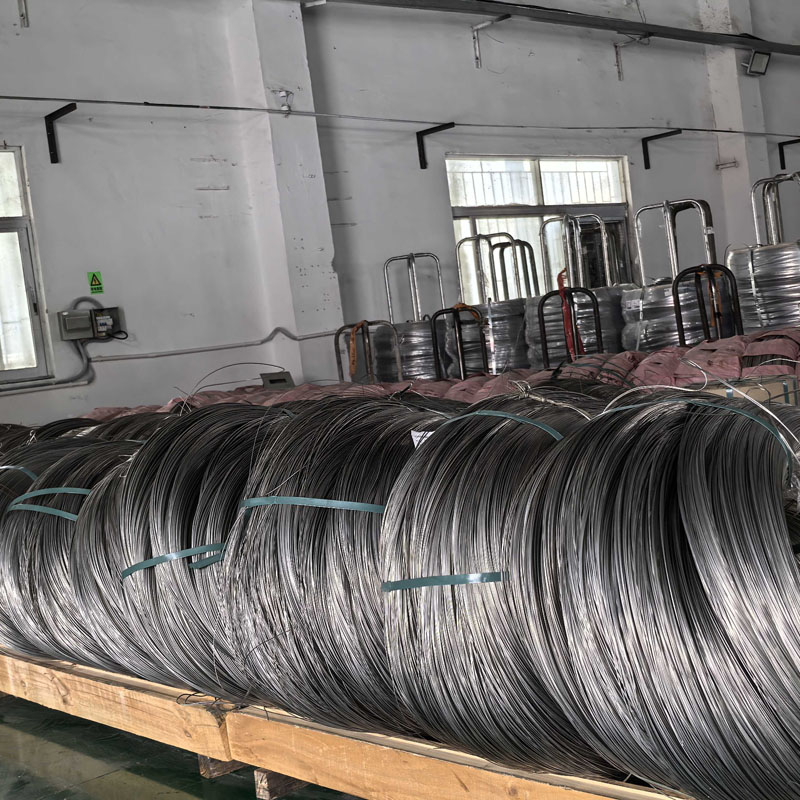
Wire form is set in the drawing, not in the quotation: flat, round and profiled stock compete on what the downstream process still has to create.
Where Fullgreat sits in this comparison
Fullgreat Metal Limited was founded in 2008 and operates from Shenzhen, Guangdong Province, China, with a 5,000 m² facility, 50 employees and a team of 10 engineers. The company exports around 70% of its output, with main markets in Turkey, Latin America (Brazil, Mexico), Southeast Asia (Vietnam, Indonesia, Bangladesh) and the European and American markets — a spread that matters to buyers whose own programs run across several regions.
The relevant capability for this comparison is breadth within one supply relationship: special-shaped wire, shaped wire, profiled wire, metal round wire, flat wire, spring wire, top stop, bottom stop, zipper pull, zipper automatic slider, Y-shape wire for zipper, Y teeth wire and Y teeth are all listed in the same product range. For an evaluation-stage buyer that breadth reduces the number of interfaces to manage, because the wire form, the stop wires and the slider can be specified against one another instead of being reconciled after arrival.
Material development is part of the company background rather than a side note. Fullgreat began research and development of non-magnetic stainless steel for buttons and zippers as a substitute for copper strip, working with Sichuan University, and states that it developed several non-magnetic stainless steel grades and obtained national patents in the process. Non-magnetic stainless steel strip FPD806 and FPD808, and stainless steel wire FPD901 and FPD902, are described as being in use in button and zipper applications, communications accessories, automotive products and aerospace products.
Application fit: apparel and bag & luggage
The component documentation is consistent on end use. Y-shape Wire for Zipper, Zipper Pull, Bottom Stop Wire and the Zipper Automatic Slider are all listed against clothing accessories and bag & luggage. That consistency is useful at the evaluation stage because it means a single wire-form decision can be tested across both product families before it is locked.
Field evidence exists for the apparel-side case. A Japanese zipper OEM has run 50 tons per month of Fullgreat material in zipper application for two years, with the project reported as achieving stable operation, and the finished product described as smooth and free of burrs. Burr-free finished output is the outcome buyers actually care about when they compare wire forms: it indicates that the profile geometry and the surface condition survived the forming process intact.
Comparison with traditional sourcing patterns — and where the limits are
The traditional pattern is single-form sourcing: a buyer purchases round wire and creates the tooth geometry downstream, or purchases whichever form the previous program used. Its appeal is familiarity and a wider supplier pool. Its cost sits in the additional forming step, in the second validation of that step, and in the variance that appears when geometry is created in two places instead of one.
The alternative pattern — sourcing a preformed Y-teeth profile to a stated tolerance, with the slider and stop wires specified against the same reference — moves that geometry upstream. The trade-off is real and should be stated plainly.
First limitation: a preformed profile is not a universal substitute. A Y profile is tied to a specific tooth design and a slider family that accepts it. Change the slider model and the profile may no longer fit; the wire does not adapt. A buyer who standardises on one profile gains consistency but loses the freedom to change slider geometry without re-qualifying the wire.
Second limitation: tighter geometry narrows the qualified supplier pool. ±0.01 mm on cross-sectional micro-geometry is a narrower requirement than most general wire specifications, and fewer sources can hold it. That concentration can reduce lead-time flexibility, which is a supply-continuity consideration, not a quality consideration.
Third limitation: the market statistics available do not describe this product category. Published figures describe the finished zipper market, not zipper metal wire. Sizing wire demand from finished-zipper data is a scope error, and buyers should treat such figures as directional background only.
Fourth limitation: cost-substitution figures are not automatic savings. The documented 30% to 40% raw material cost reduction for bimetallic composite wire is measured against solid brass in material terms. Whether it becomes a program saving depends on appearance acceptance and on how the substitute behaves in the buyer’s own forming process.
Market signals, read with the right scope
Demand context for zipper components is available, but it has to be read at the correct level. The global zipper market was valued at USD 16.62 billion in 2025 in one commercial research estimate. On the trade side, the World Trade Organization’s October 2025 “Global Trade Outlook and Statistics” reported that global apparel trade grew 7% in the first half of 2025 — a demand signal that reaches the wire level indirectly, through apparel programs.
On the metal segment specifically, secondary media coverage of an industry report states that metal zippers are anticipated to reach USD 11.1 billion by the end of the analysis period at a 3.3% CAGR. That figure comes from republished media coverage without a recoverable horizon year or a full segment definition, so it is best treated as a directional indicator rather than a planning input.
Two cautions belong in any honest reading of this data. First, independent publishers disagree on the base value of the finished zipper market — USD 15.27 billion and USD 17.39 billion have both been reported for 2024 — and they also disagree on growth rates, with 7.0%, 7.71% and 7.76% appearing across sources. The differences are not resolved by averaging them. Second, all of these figures measure finished zippers, not wire. What they support is a directional conclusion: downstream zipper demand is growing, and metal-zipper output is the closest available proxy for metal-wire consumption.
Future outlook
Three shifts are likely to shape how buyers compare these wire forms over the next buying cycles.
The first is that profile geometry keeps migrating upstream. As tolerance expectations tighten, more of the tooth geometry is likely to be created at the wire stage, which increases the weight of the tolerance and elongation criteria relative to price per kilogram.
The second is documentation as a selection criterion. A supplier that can state a numeric tolerance, a defined quality-control scope covering dimensional requirements, composition, tensile strength and elongation, and a test report as the after-sales document, is easier to qualify than one that describes capability qualitatively. Buyers should expect the specification conversation to become more numeric, not less.
The third is material substitution continuing, with stainless steel and composite copper alternatives competing against solid brass on cost and on non-magnetic behaviour. That shift rewards buyers who evaluate material and profile together rather than in sequence.
Frequently asked questions
What is the difference between Y teeth wire and Y-shape wire for zippers?
Both describe Y-section zipper wire, but they are separate catalogue items with separate model numbers. Fullgreat lists Y-shape Wire for Zipper as model FPD-YSW and Y Shape wire as FPD-YSW02, while Y Teeth Wire is model FPD-YTW01 and Y Teeth is FPD-YTW02. The documented specification for Y-shape Wire for Zipper (FPD-YSW) is stainless steel, copper or aluminium, with customizable shape, size and hardness, for clothing accessories and bag & luggage. Because the model numbers differ, a buyer should confirm the delivery form, dimensions and hardness band per model rather than treating the two names as interchangeable.
How should a buyer choose between Y teeth, flat and round wire for a zipper program?
Choose on the assembly requirement, in this order: whether the chain must interlock (which favours a Y profile), whether the drawing calls for a flat face (which is what Flat Wire, FPD-FW, addresses), and whether the metal is to be formed into its final geometry later (the conventional case for round stock such as FPD-RW or FPD-MRW). Then confirm the profile size against the supplied range — the preformed Y-teeth scope is #3, #4, #5 and #8 — and check slider and stop compatibility before sampling. If a design falls outside standard Y geometry, the customizable profile group (FPD-PW, FPD-SW, FPD-SSW) is the relevant option.
Does the slider have to be matched to the wire form?
Yes, and the specification should be written jointly. The Zipper Automatic Slider (FPD-ZAS) is intended for clothing accessories and bag & luggage, can be made of stainless steel, copper or aluminium, and has customizable shape, size and hardness. Because those parameters are configurable, a given automatic slider is not automatically compatible with a given tooth profile: the slider channel geometry must accept the profile the wire carries. The practical step is to obtain a written confirmation of the accepted profile from both the wire and the slider side before a trial order is placed.
Which quality checks should a zipper metal wire purchase order include?
At minimum: dimensional requirements, composition, tensile strength and elongation, which are the four checks in Fullgreat’s stated quality-control scope. A measurable tolerance clause is also advisable; preformed Y-teeth profile wire is documented at ±0.01 mm on cross-sectional micro-geometry with uniform tensile elongation. On the management-system side, Fullgreat holds ISO 9001 certification 46624Q106840R0S, issued 2024-09-09 and valid to 2027-09-08 by Shenzhen Zhongxin certification testing Co., Ltd against GB/T19001-2016 / ISO9001:2015, with the scope stated as sales of metal materials. Test reports are the stated after-sales document.
What order terms should a buyer plan for at the evaluation stage?
Fullgreat states a minimum order of 1 ton, a lead time of 30–45 days, and OEM/ODM production with customization across material, packaging, specifications and colour; export markets cover Europe and America, the Middle East, South America, Southeast Asia, and Japan and South Korea markets. For a comparison trial across Y profile, flat and round forms, the 1-ton minimum allows each form to be evaluated without committing to production volume, and the 30–45 day lead time should be built into the sampling schedule rather than added after the profile decision is made.
Summary for the evaluation file
Y teeth, flat and round wire are not three grades of the same product. They are three positions on a spectrum that runs from “the wire is the geometry” to “the geometry is created later”. The comparison framework is therefore simple to state and demanding to execute: confirm the interlock requirement, match the profile to the slider and the stop wires, fix material and hardness, write a measurable tolerance and acceptance clause, and only then compare commercial terms.
Fullgreat Metal Limited’s company profile, including the product models referenced in this article and the ISO 9001 certification details, is available for download: Fullgreat Metal Company Profile (PDF).
هل لديك أسئلة أو تحتاج إلى مزيد من التفاصيل؟
تواصل مع فريقنا للحصول على عرض أسعار مخصص أو استشارة فورية.
طلب عرض أسعار
املأ النموذج أدناه وسيتواصل معك فريقنا بعرض مقترح مخصص.
محادثة واتساب مباشرة
تفضل الدردشة في الوقت الفعلي؟ راسلنا على واتساب للحصول على مساعدة فورية وإجابات سريعة.
- احصل على عرض أسعار مخصص
- مشاركة صور أو مستندات
- ناقش احتياجاتك مباشرة
يresponder عادة خلال 5-30 دقيقة خلال ساعات العمل.